
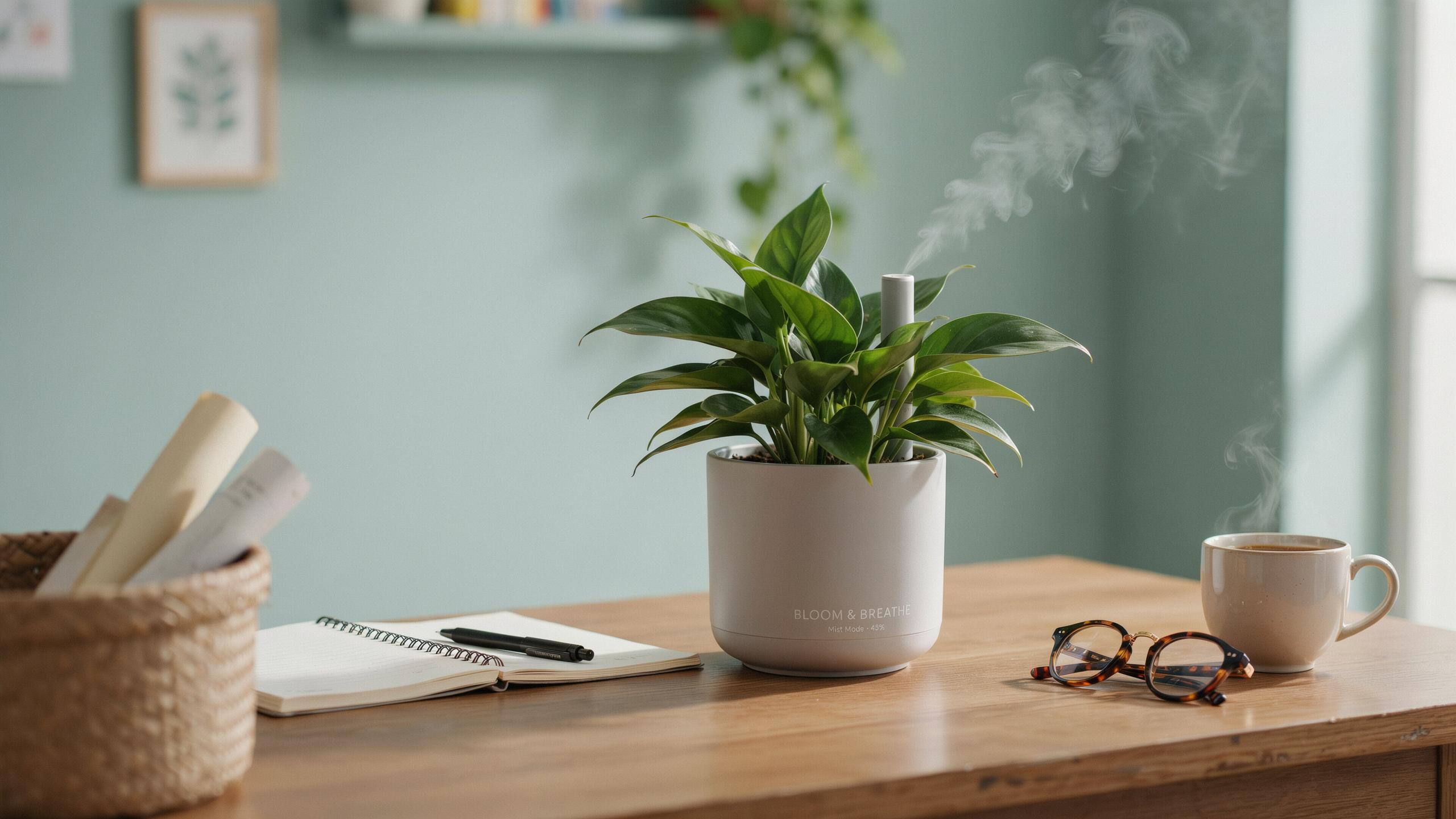
The Challenge Of Dry Office Air For Your Plant Humidifier
Understanding Low Humidity Impacts
Office environments typically maintain humidity levels between 20 and 40 percent. Most tropical and subtropical plants require 50 to 80 percent humidity to function properly. This gap creates stress on plant physiology. Low humidity forces plants to work harder to retain water through their leaves. Your respiratory system suffers equally in these conditions, causing dry skin, irritated airways, and reduced cognitive function during work hours.
The mechanical systems in offices actively remove moisture from the air. HVAC units condition air year-round, stripping humidity in winter and summer alike. Plants cannot adapt to these artificial conditions without intervention. Sustained exposure to dry air gradually weakens plant tissue and compromises their ability to absorb nutrients. Combining plants with built-in humidifiers directly addresses this structural problem in modern office design.
Signs Your Plants Need More Moisture
Leaf edges turn brown and papery before the rest of the foliage shows damage. This occurs because water moves from the leaf margins first when humidity drops. You may notice leaves curling inward or appearing dull instead of vibrant. Soil dries faster than normal between waterings, forcing more frequent irrigation. Spider mites and mealybugs attack stressed plants more aggressively since these pests thrive in dry conditions.
Stunted growth or lack of new leaves indicates prolonged humidity stress. Plants may drop existing leaves as a survival response to conserve resources. Flowering plants fail to produce blooms or drop buds prematurely in low humidity. Root systems cannot deliver water fast enough to meet leaf demand. A desk plant with built-in humidifier eliminates these warning signs by maintaining consistent moisture levels around the plant.

Introducing The Desk Plant With Built In Humidifier For Plants
Merging Aesthetics And Functionality
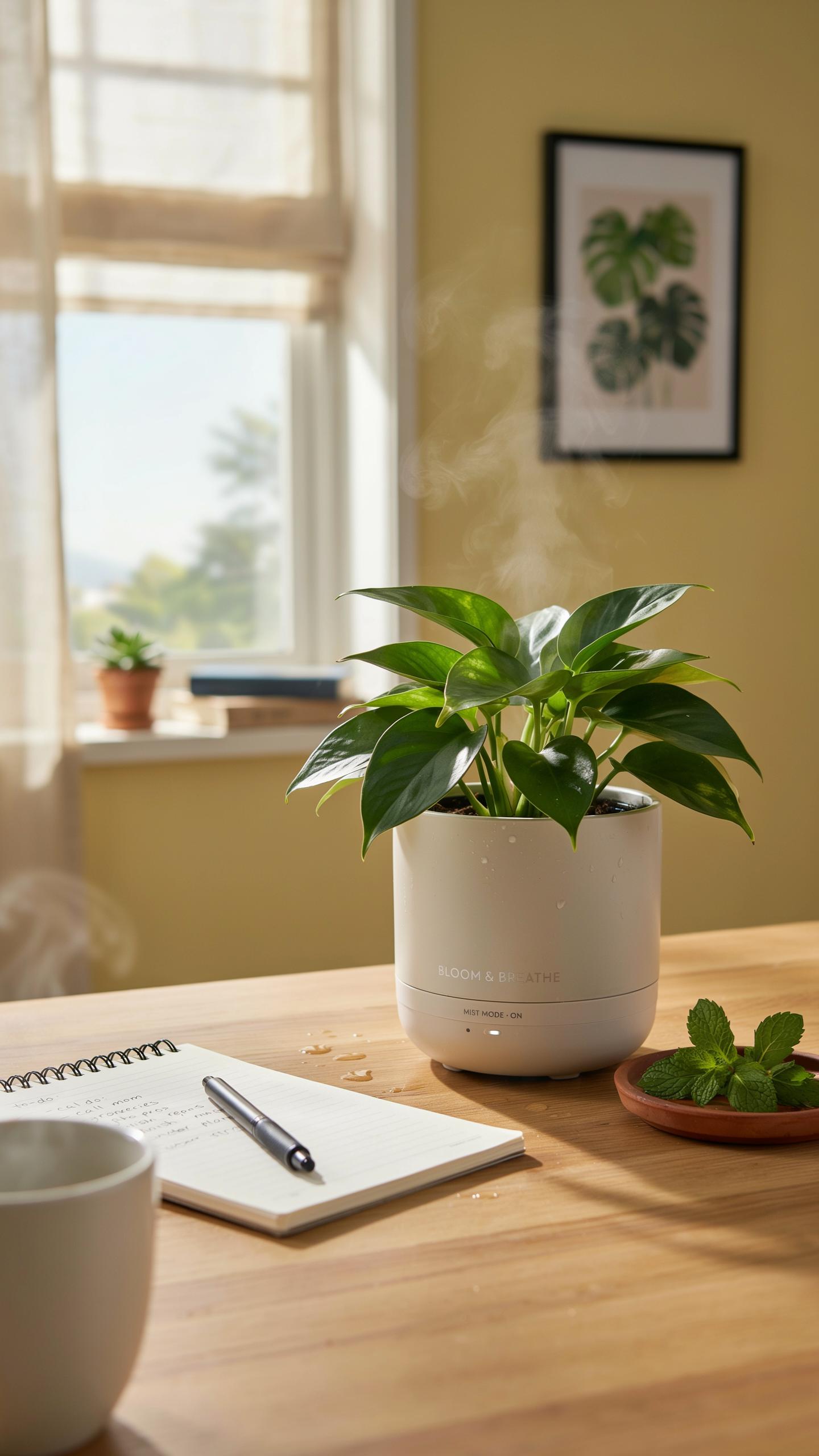
A desk plant with built-in humidifier solves two workplace problems simultaneously. You get a living plant that improves air quality while the integrated humidifier releases moisture into your immediate environment. This combination eliminates the need for separate devices cluttering your workspace. The design keeps your desk organized and functional without sacrificing either benefit.
The integration works because both elements serve complementary purposes. Plants naturally benefit from higher humidity levels, so the humidifier creates an optimal microenvironment for growth. Your workspace gains a more comfortable atmosphere while the plant thrives in the conditions the device provides. This symbiotic relationship makes the solution more efficient than operating each component independently.
How Integrated Humidifiers Work
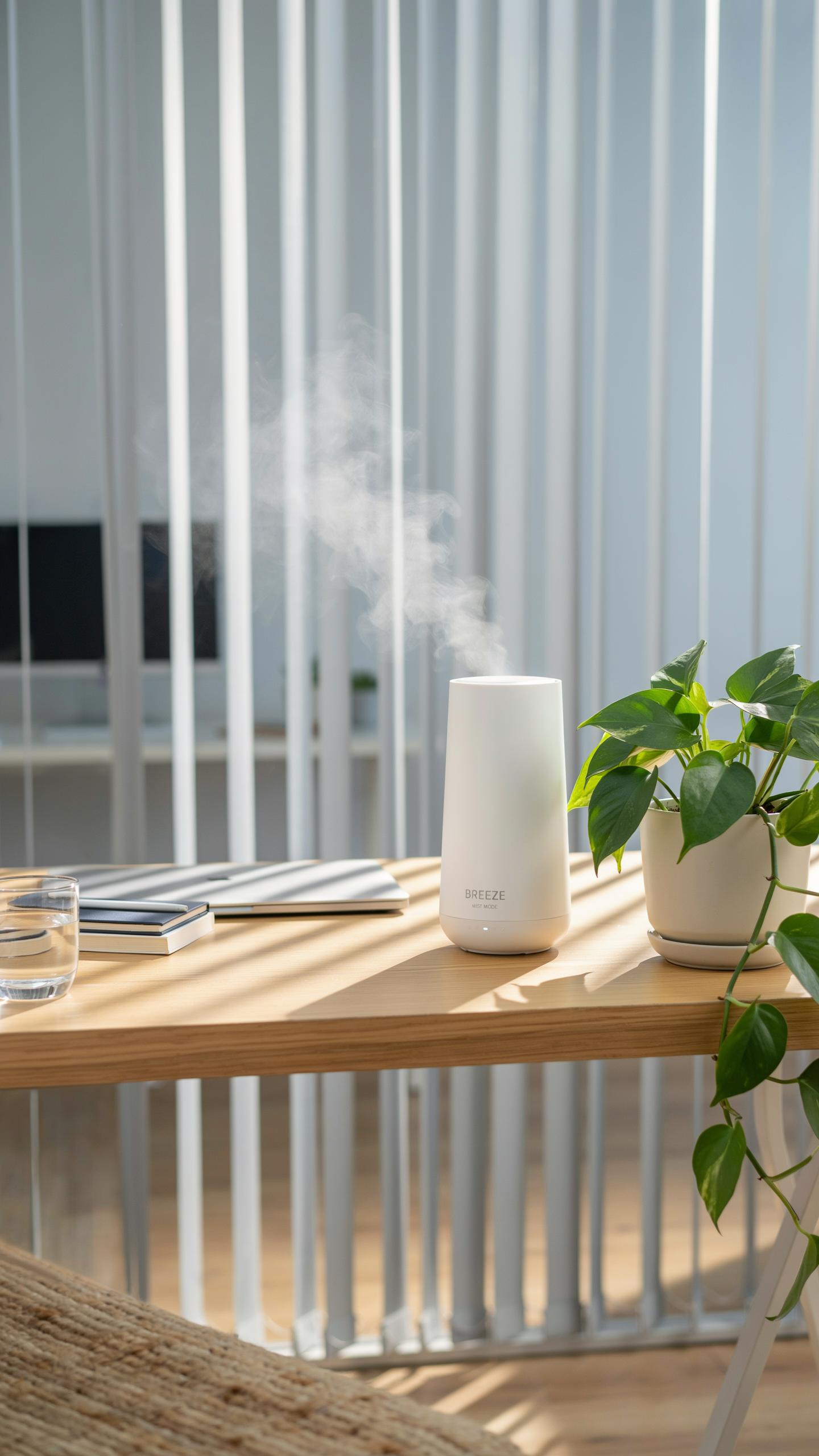
Integrated humidifiers in desk plants operate through ultrasonic or evaporative technology. Ultrasonic models vibrate water at high frequency to create a fine mist that disperses into the air. The mist rises around the plant and into your breathing zone. This method requires minimal energy and produces visible moisture output that you can observe and adjust.

The water reservoir sits within or beneath the planter unit, feeding moisture to the misting mechanism. You refill the reservoir periodically depending on humidity output and ambient conditions. The humidifier disperses moisture gradually throughout your workday, preventing the concentrated dampness that creates mold problems. Most units include basic controls to adjust mist intensity or misting intervals based on your specific needs.
Choosing The Right Plant For Your Plant Humidifier Set Up
Humidity Loving Plant Varieties
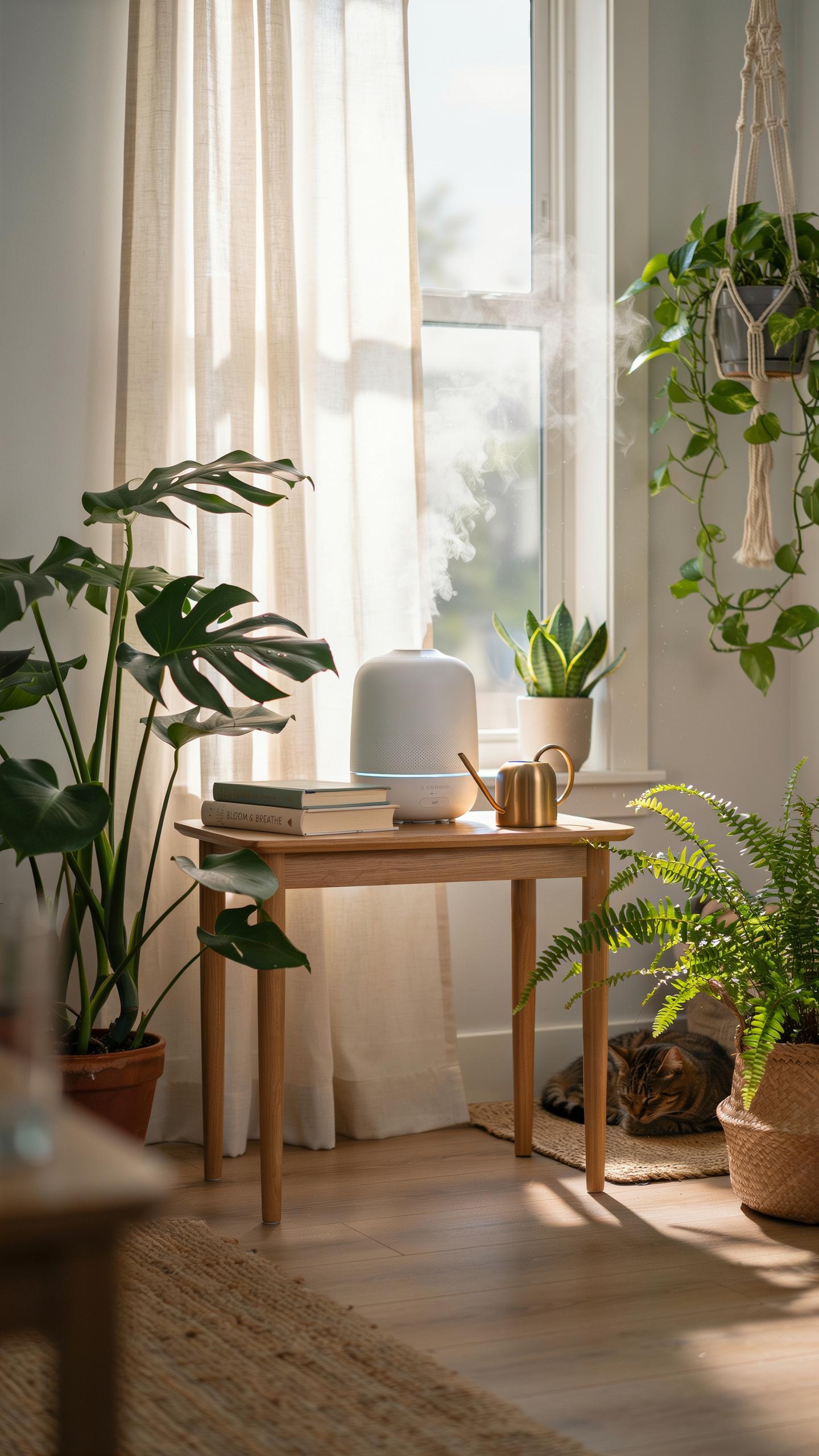
Plants that thrive in humid environments perform best with desk humidifiers. These species tolerate moisture-rich air and actually benefit from consistent humidity levels. Pairing humidity-loving plants with your humidifier creates an efficient system where both elements work together. Your plant selection determines how well the humidifier investment pays off in real growth and health.
- Pothos: Tolerates humidity well and grows in low to medium light. This vine adapts to desk spaces and requires minimal maintenance while handling moisture-rich air.
- Peace Lily: Thrives in humid conditions and signals water needs by drooping leaves. It removes airborne toxins and performs in moderate light without demanding constant attention.
- Snake Plant: Handles humidity but prefers drier conditions. If using a humidifier nearby, ensure good air circulation to prevent root rot and fungal issues.
- Philodendron: Grows actively in humid environments and adapts to various light levels. This climbing plant works well on desk shelves and tolerates the moisture your humidifier produces.
- Boston Fern: Demands consistently high humidity to prevent frond browning. It performs best when placed directly near your humidifier for optimal moisture exposure.
Most desk plants handle humidity without issue when you match species to your setup. Test your humidifier output before committing to high-humidity plants. Start with forgiving species like pothos or philodendron, then adjust based on results. This approach prevents wasted effort on plants that won’t survive your specific desk environment.
May your little desk oasis, nurtured by gentle mist, remind you of life’s boundless growth and your own ever-blooming spirit.
Factors To Consider For Plant Selection
Desk space dictates your plant size options. Compact plants fit standard desk setups without blocking sightlines or keyboard access. Measure your available surface area before selecting species. Oversized plants create workflow problems and tip over easily. Choose plants that stay under twelve inches tall for most desk applications. This practical constraint eliminates 60 percent of unnecessary options immediately.

Light conditions at your desk determine which plants survive long term. North-facing windows provide low indirect light. South-facing positions offer bright conditions for several hours daily. East and west exposures fall between these extremes. Plants like pothos tolerate low light, while some species demand brightness. Assess your desk location honestly. Placing a high-light plant in dim conditions guarantees failure regardless of humidifier support.
Maintenance requirements separate realistic choices from aspirational ones. Water, fertilizing, and pruning demands vary dramatically across plant species. Ferns need consistent moisture and frequent misting. Succulents need infrequent watering and rot in humid conditions. Your schedule determines what you can sustain. Be honest about attention capacity. A neglected plant becomes clutter, not an asset.
Benefits Of A Cool Mist Humidifier For Plants
Creating An Optimal Microclimate
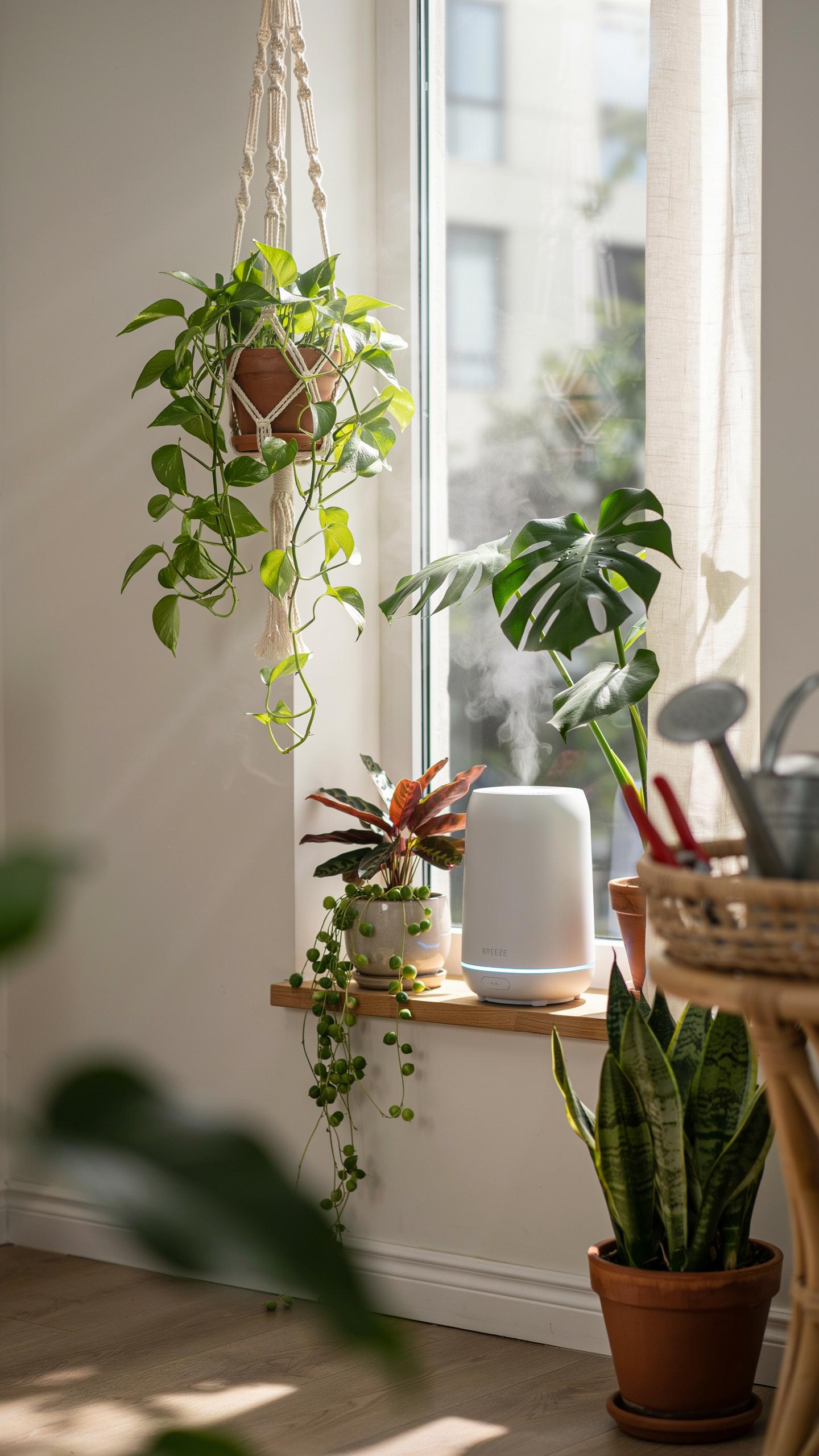
A cool mist humidifier creates a localized zone with higher moisture levels directly around your desk plant. Most tropical and houseplants thrive in humidity between 40 and 60 percent. Standard office environments typically maintain 20 to 30 percent humidity, especially during heating seasons. The humidifier raises moisture in the immediate area, matching conditions plants experience in their native habitats.

The mist disperses water vapor without wetting soil or leaves excessively. This prevents fungal growth while delivering moisture plants absorb through their foliage and root systems. Plants respond by showing stronger leaf growth, reduced browning at leaf tips, and improved overall vitality. The localized effect means you target plant needs without affecting your entire office space or creating excess moisture that damages furniture and equipment.
Beyond Plants: Human Well Being Benefits
Increased humidity directly improves respiratory comfort and skin hydration in your workspace. Dry air irritates throat tissue, causes nasal passages to crack, and accelerates skin moisture loss. Humidity levels between 40 and 60 percent reduce these issues significantly. Studies consistently show workers experience fewer respiratory complaints and less static electricity when humidity stays within this range.
Your personal comfort gains compound over an eight hour workday. Moisturized air reduces the frequency of coughing and throat clearing. Static electricity decreases, eliminating the annoying shocks from touching metal surfaces or other people. These benefits occur simultaneously with your plant thriving, meaning a single device serves dual purposes in your workspace without requiring separate equipment or complicated adjustments.
Humidifier Decor Ideas Integrating Style And Nature
Aesthetic Placement In Your Workspace
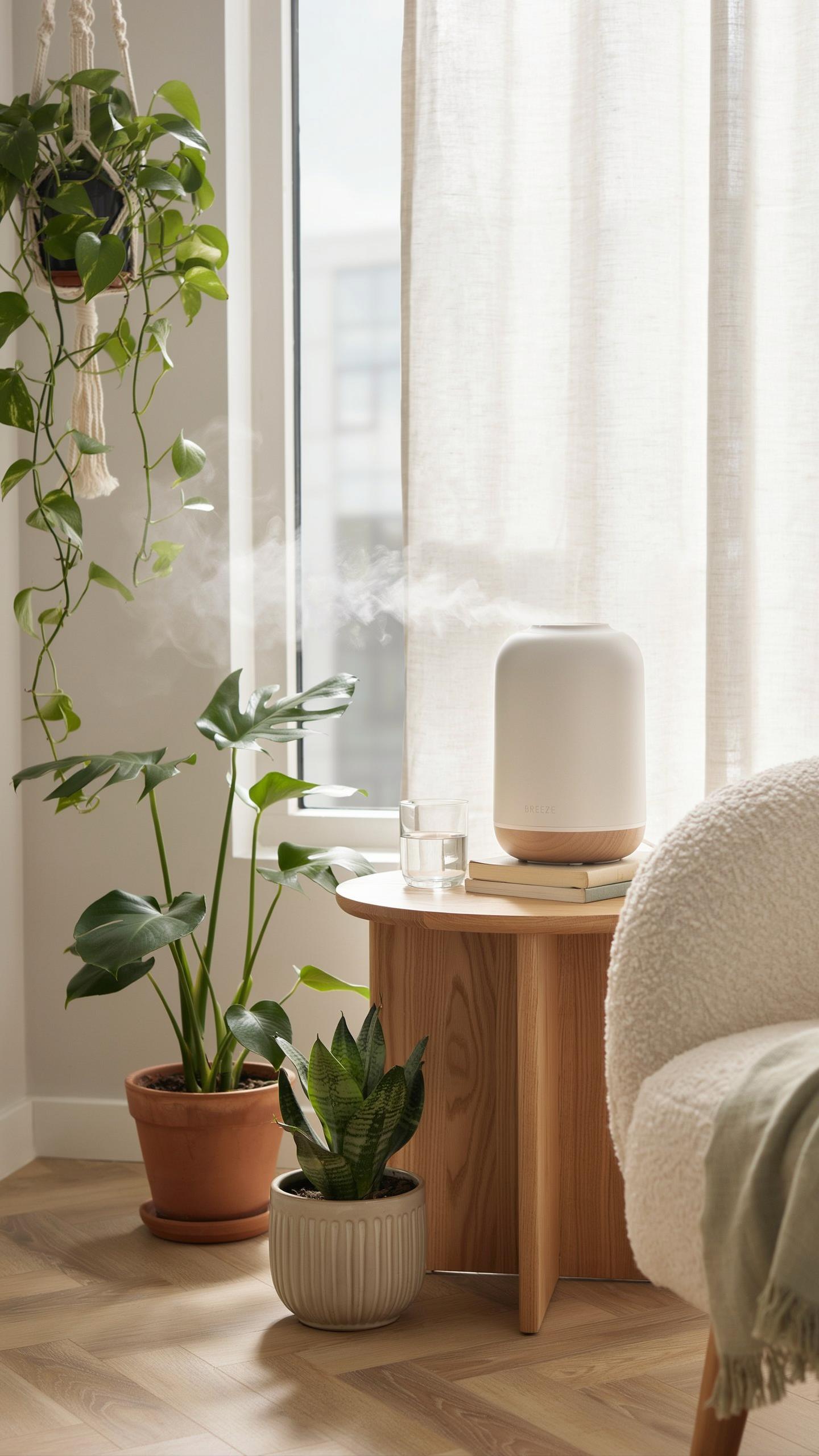
Position your desk plant with built-in humidifier where it receives indirect light and sits at eye level or slightly above when seated. This placement serves three functions: the plant gets adequate light without direct sun exposure that damages leaves, the humidifier disperses moisture evenly across your breathing zone, and you maintain clear sightlines to your monitor and work surface. Distance from heat sources and air vents matters. Place the unit at least two feet away from heating vents, air conditioning units, and direct sunlight through windows.
Corner placement or desk-side positioning works better than center desk real estate. Your desk plant functions as a visual anchor that draws the eye without consuming valuable work surface. The unit handles moisture regulation locally, so proximity to your chair determines effectiveness. Test placement for one week before finalizing location. Move the plant if you notice dry spots in your workspace or if leaves show signs of stress from temperature fluctuations near vents.
Complementary Decor Elements
Neutral-toned desk accessories enhance the visual impact of your plant and humidifier setup. Pair the unit with ceramic or wooden desk organizers that share similar earth tones. Metal desk lamps with matte finishes complement modern plant designs without competing for attention. Avoid shiny chrome or polished brass fixtures that reflect light and create visual clutter. Your desk plant with built-in humidifier works best as the dominant natural element in the workspace.
Add secondary plants in smaller pots around your desk area to create visual continuity. Use consistent pot colors, typically ceramic in white, gray, or terracotta. A desk pad or mat in neutral colors frames your workspace and provides visual grounding for the plant display. Keep paper-based items stored in closed containers to prevent moisture damage. Your goal is a cohesive workspace where the plant and humidifier feel intentional, not added as an afterthought.
Maintaining Your Plant Humidifiers For Longevity
Regular Cleaning And Water Refills
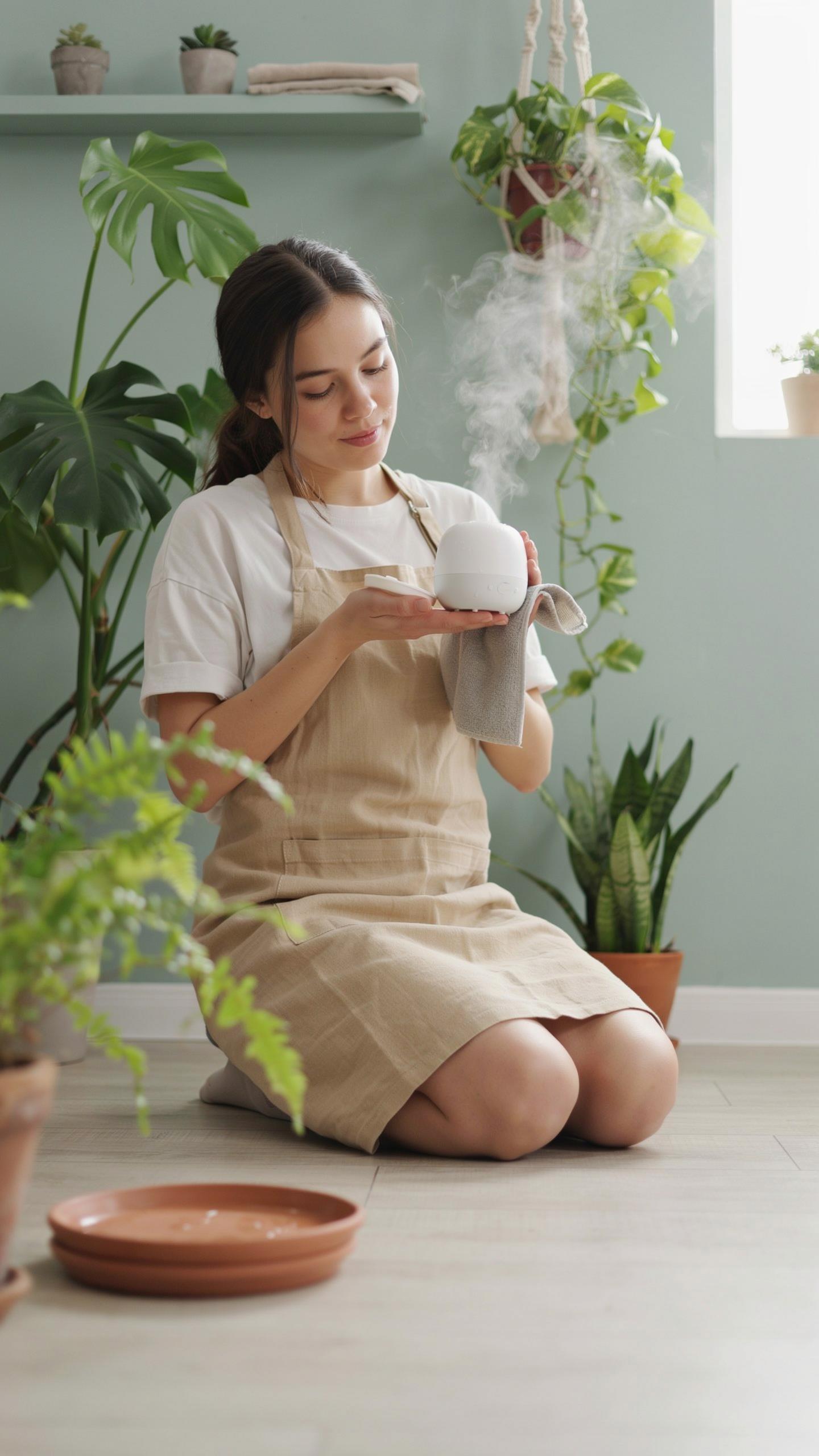
Empty and refill the water reservoir every two to three days. Stagnant water breeds bacteria and mold inside the tank. Check the water level daily because low water stops mist output completely. Use distilled water instead of tap water to prevent mineral deposits from clogging the humidifier mechanism.

Clean the entire unit weekly with a soft cloth and mild soap solution. Pay attention to the mist nozzle and any crevices where water sits. Dry all components thoroughly before reassembling. This prevents corrosion and keeps the humidifier functioning at full capacity for months.
Troubleshooting Common Humidifier Issues
White or chalky deposits form when you use tap water with high mineral content. These deposits block the ultrasonic vibrations that create mist. Soak affected parts in equal parts white vinegar and distilled water for thirty minutes. Rinse thoroughly with distilled water and dry completely before reassembling the unit.
Weak or no mist output signals either low water, clogged nozzles, or a failed ultrasonic disk. Always check water level first. Clean the nozzle with a thin brush or vinegar solution if deposits are present. If cleaning fails to restore mist, the internal vibration component may need replacement from the manufacturer.
Enhancing Your Greenery Room With A Humidifier With Plants And Thermometer
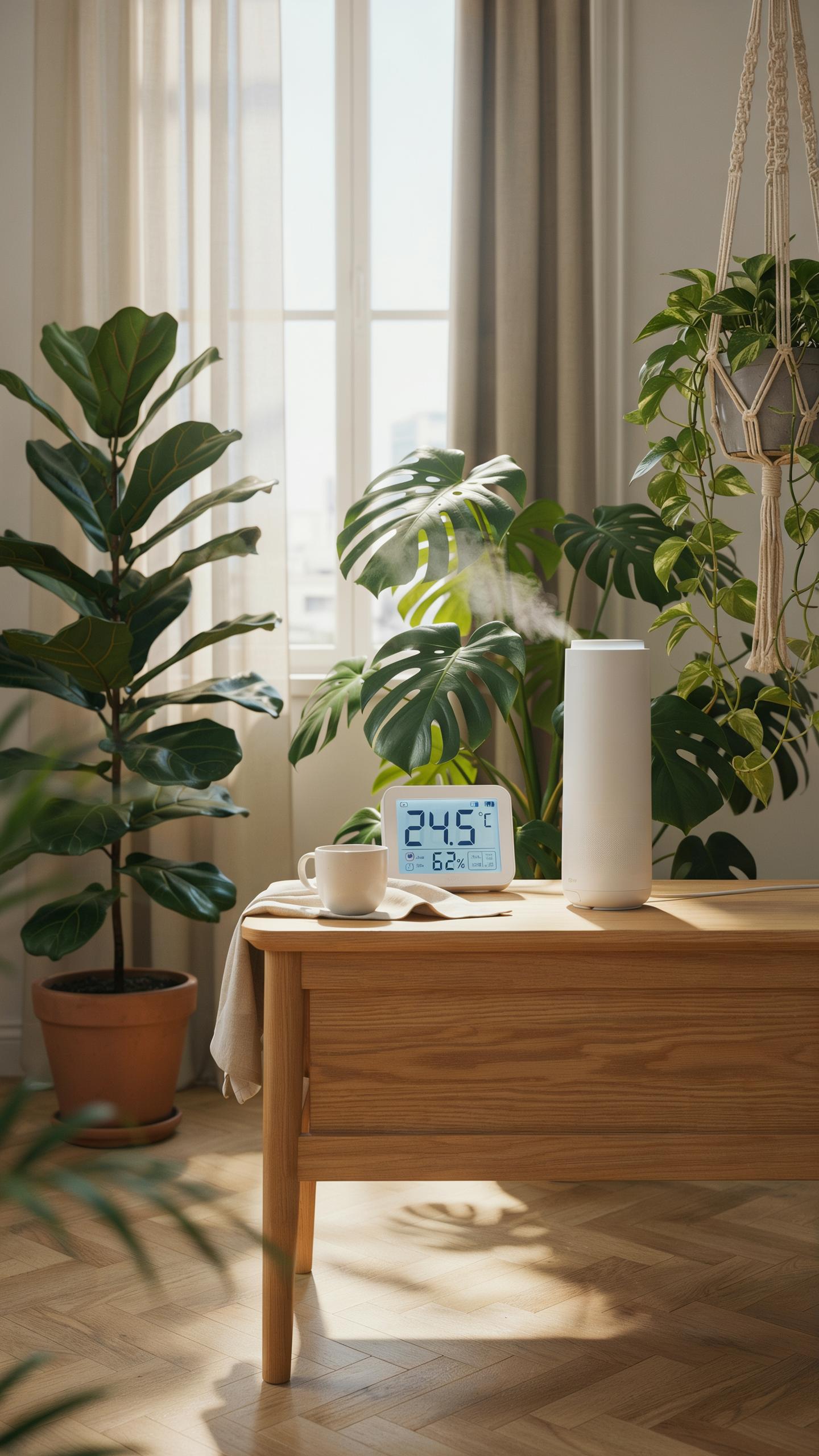
Monitoring Environmental Conditions
A hygrometer measures humidity levels in your workspace. A thermometer tracks temperature. Together, they provide data to optimize plant health. Most desk humidifier systems include built-in gauges or connect to digital displays. You check these readings daily to catch problems before plants suffer damage or disease.
Plants need specific humidity and temperature ranges to thrive. Tropical species prefer 50 to 80 percent humidity and temperatures between 65 and 75 degrees Fahrenheit. Monitoring tools let you adjust watering schedules and humidifier output based on actual conditions, not guesswork. This approach prevents root rot, fungal issues, and stunted growth caused by environmental fluctuations.
Advanced Humidity Control For Lush Growth
Precise humidity control directly impacts photosynthesis and nutrient absorption in plants. When humidity stays within optimal ranges, plants absorb water through leaves and roots more efficiently. A desk plant with built-in humidifier maintains these conditions automatically, eliminating the inconsistency of manual misting or watering.
Temperature stability works alongside humidity to support plant metabolism. Cool, dry air stresses plants and slows growth. Warm, humid conditions accelerate transpiration and nutrient transport. Modern desk humidifiers with integrated controls manage both variables simultaneously, creating a microclimate that mirrors a plant’s native environment and promotes vigorous, vibrant foliage development.
Top Picks For Humidifier For Indoor Plants
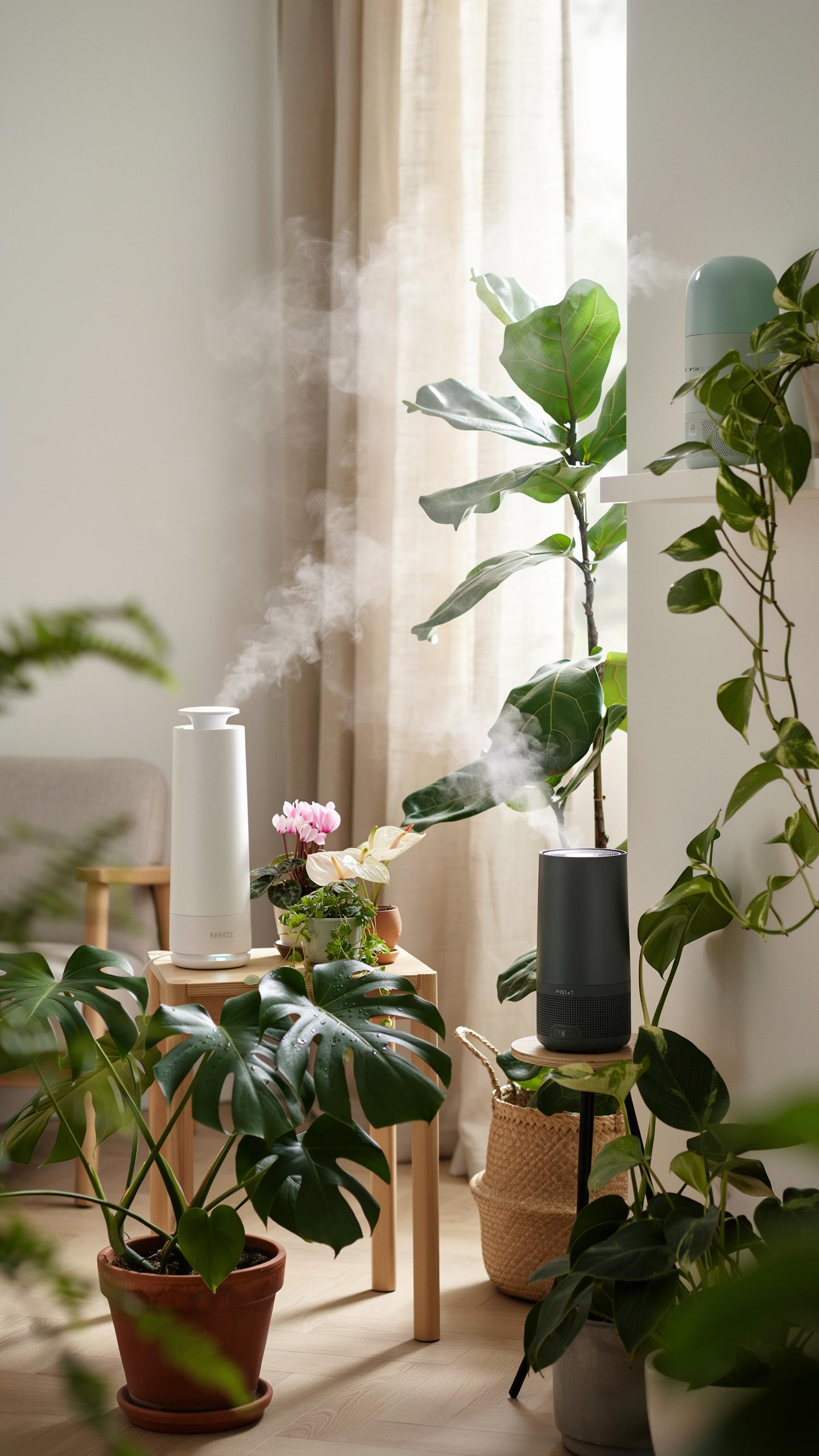
Review Of Popular Models And Features
Desk plant humidifiers fall into three core categories: ultrasonic, evaporative, and nebulizing models. Ultrasonic units use vibrating membranes to create cool mist and operate quietly. Evaporative models draw air through wet wicks, releasing moisture gradually. Nebulizing types produce fine particles ideal for delicate foliage. Output capacity ranges from 300 to 800 milliliters per hour depending on model size and design.

Tank capacity determines refill frequency. Most desk units hold between 300 to 500 milliliters, requiring daily or every-other-day refills in typical office conditions. Mist dispersion patterns vary significantly. Some models feature adjustable nozzles for directional output, while others emit mist in fixed directions. Runtime extends from 4 to 12 hours on full tanks. Check humidity output specifications against your plant species requirements before purchasing.
Where To Purchase Your Desk Plant Humidifier
Major online retailers including Amazon, eBay, and Walmart stock desk plant humidifiers with extensive inventory and customer reviews. These platforms offer price comparison tools and return policies that protect your purchase. Delivery typically occurs within 3 to 7 business days with standard shipping options available.
Specialty gardening retailers like Etsy and local nurseries source premium models focused on plant health. These vendors often provide expert recommendations tailored to specific plant types and office environments. Direct manufacturer websites occasionally offer exclusive models and bulk discounts. Physical store locations at garden centers allow hands-on inspection before committing to a purchase.
Frequently Asked Questions
What exactly is a desk plant with a built-in humidifier, and how does it benefit my workspace?
A desk plant with a built-in humidifier combines the beauty of a small houseplant with the functionality of a personal humidifier. It enhances your workspace aesthetics, while the humidifier adds moisture to the air. This can improve air quality, benefit your plant’s health, and even help with dry skin or sinuses in arid environments.
How do I properly care for the plant and maintain the humidifier function of my desk plant with a built-in humidifier?
Caring for your desk plant with a built-in humidifier involves regular watering according to your plant’s needs and ensuring the humidifier reservoir is filled with distilled water to prevent mineral buildup. Periodically clean the humidifier’s misting mechanism and change the plant’s soil as necessary to keep both components functioning optimally.
Are desk plants with built-in humidifiers expensive, and are there eco-friendly options available?
The cost for a desk plant with a built-in humidifier can vary, with options ranging from budget-friendly choices to more premium designs. Many brands also offer eco-friendly versions, focusing on sustainable materials for the planter and energy-efficient humidifiers. Look for reusable filters and recyclable packaging to support greener choices.