

Why A Standing Desk Converter For Small Spaces
Health Benefits In Confined Areas
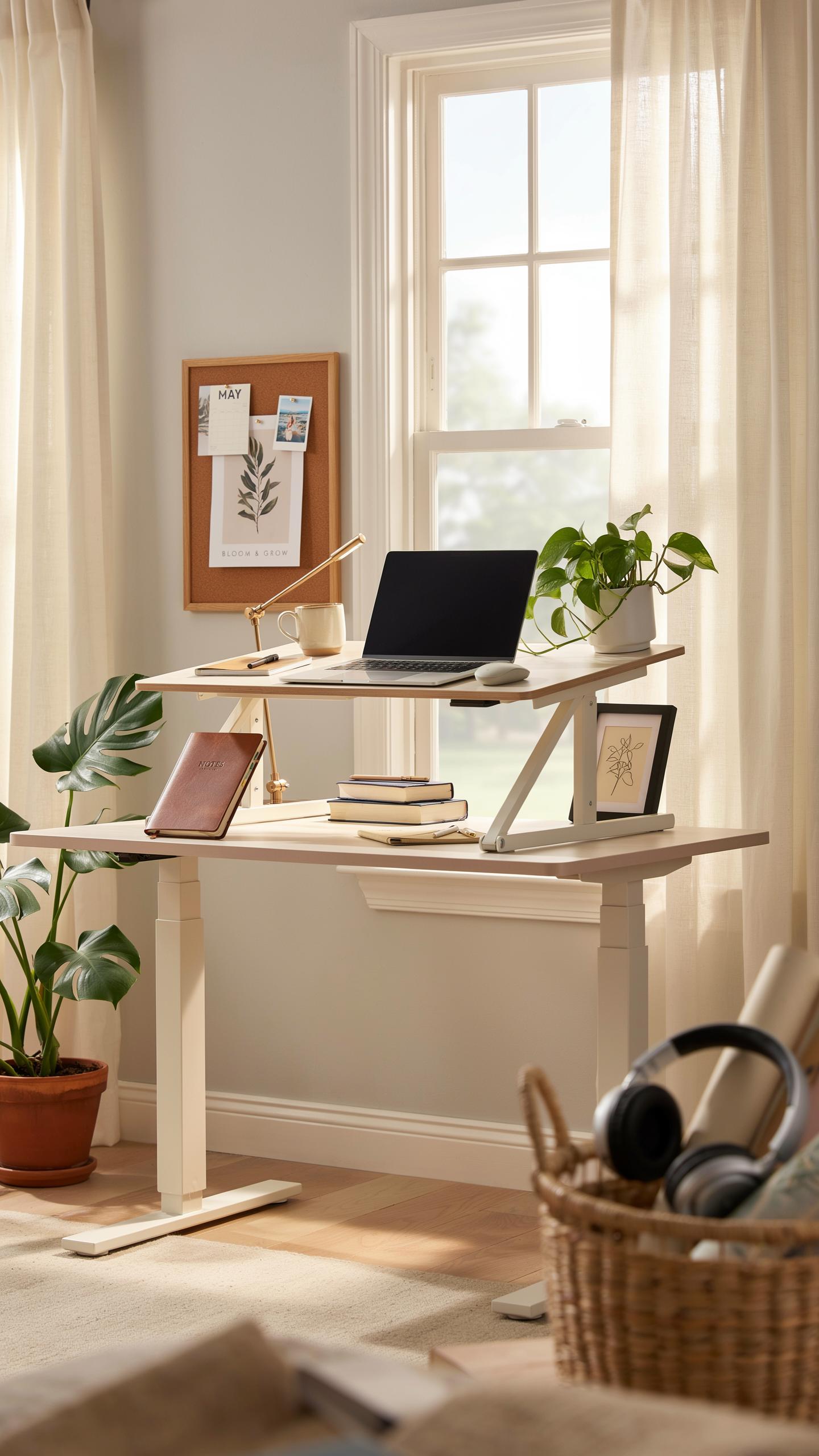
Sitting for eight hours straight triggers physical decline. Your spine compresses, circulation stagnates, and metabolic rate drops. Standing desk converters force movement breaks without requiring floor space. They fit on existing desks, so you alternate positions throughout the day. This shift reduces lower back pain and improves blood flow in tight quarters where traditional standing desks won’t fit.
Prolonged sitting correlates with increased cardiovascular disease risk and metabolic dysfunction. Standing intervals counteract these effects by engaging core muscles and burning calories. Converters work in apartments and small offices where dedicated standing desks occupy too much real estate. You gain ergonomic advantage without sacrificing the compact footprint you already occupy.
Maximizing Small Workspace Efficiency
Converters stack vertically on your existing desk surface instead of replacing it. This approach preserves square footage while adding functional height variation. Your workspace stays contained in one corner or against one wall. No sprawl, no wasted perimeter, no furniture rearrangement required. Small apartments benefit most because converters serve double duty as both desk extender and storage reduction tool.
Small spaces demand multipurpose solutions. A converter raises your monitor to standing height while keeping your desk footprint unchanged. You move between sitting and standing without moving furniture or relocating work materials. Your laptop, documents, and peripherals stay in place during the transition. Efficiency gains compound when you work in confined areas where every inch matters.

Key Features For A Small Workspace
Compact Footprint And Design
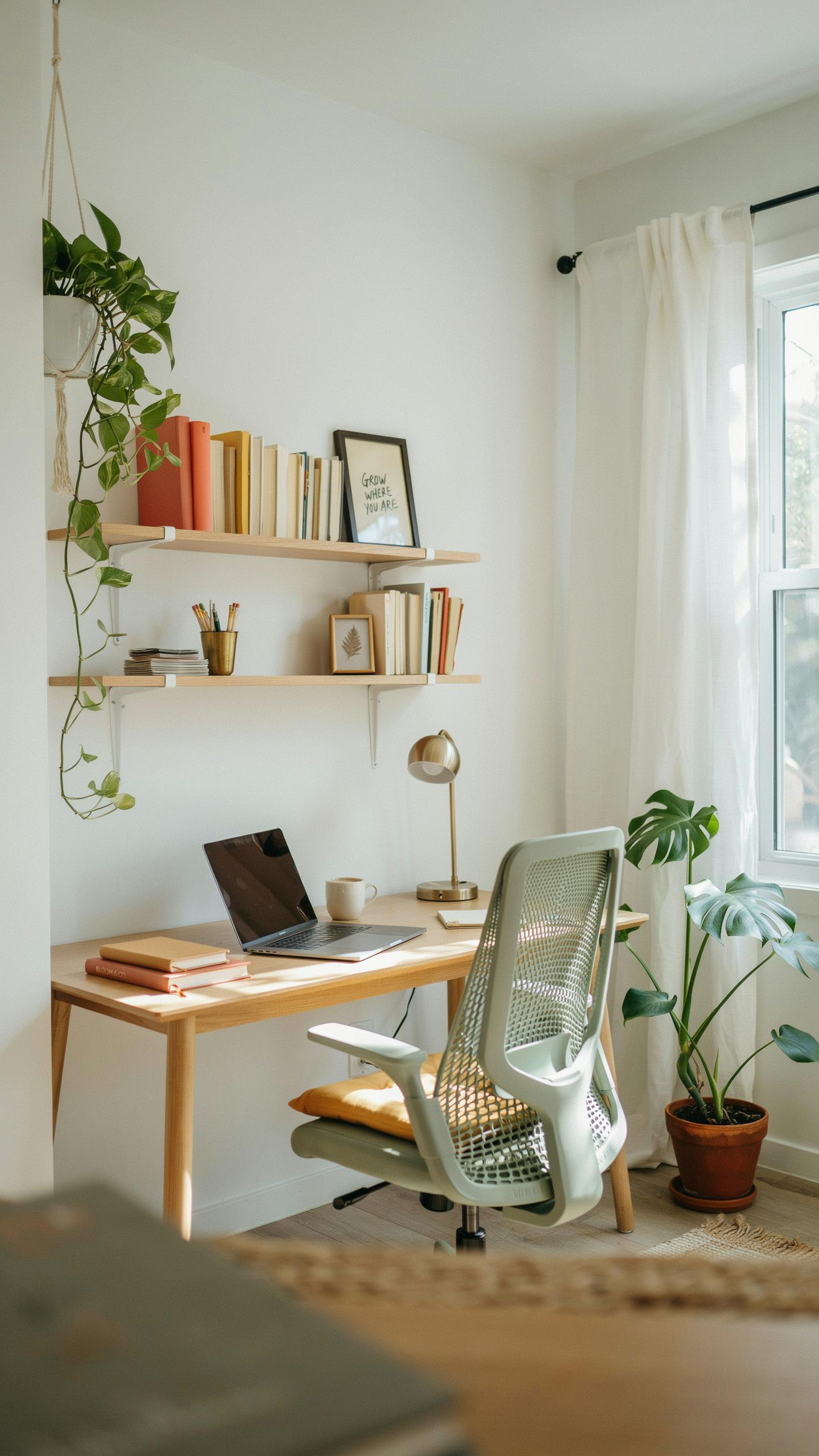
A standing desk converter must occupy minimal surface area to function in tight quarters. The base should not exceed 24 to 30 inches in width for most apartment desks. Height when lowered needs to nest close to your existing desk surface, ideally under 3 inches. This measurement directly determines whether the unit clears your monitor, keyboard, and other work essentials when collapsed.
Sleek design matters because visual bulk makes small spaces feel cramped. Converters with thin vertical supports and minimal side extensions reduce visual clutter. Materials like steel and composite wood reduce apparent mass compared to solid construction. The goal is maximizing functional surface while keeping the overall silhouette narrow and unobtrusive.
Portability And Storage Options
Movement capability separates converters that work in small spaces from those that don’t. Lightweight units under 40 pounds allow you to shift the converter between rooms or tuck it into a closet. Models with built in handles or wheels simplify repositioning. Weight distribution matters too, converters with lower centers of gravity resist tipping when partially raised on cramped desks.
Storage readiness determines whether a converter becomes clutter or stays functional. Units that collapse flat or fold vertically fit behind doors or in closet corners when not in use. Detachable keyboard trays and monitor arms reduce storage footprint further. Plan your storage spot before purchasing so the converter integrates into your apartment workflow rather than consuming permanent desk real estate.
Types Of Standing Desk Converters
Z Lift Vs. X Lift Mechanisms
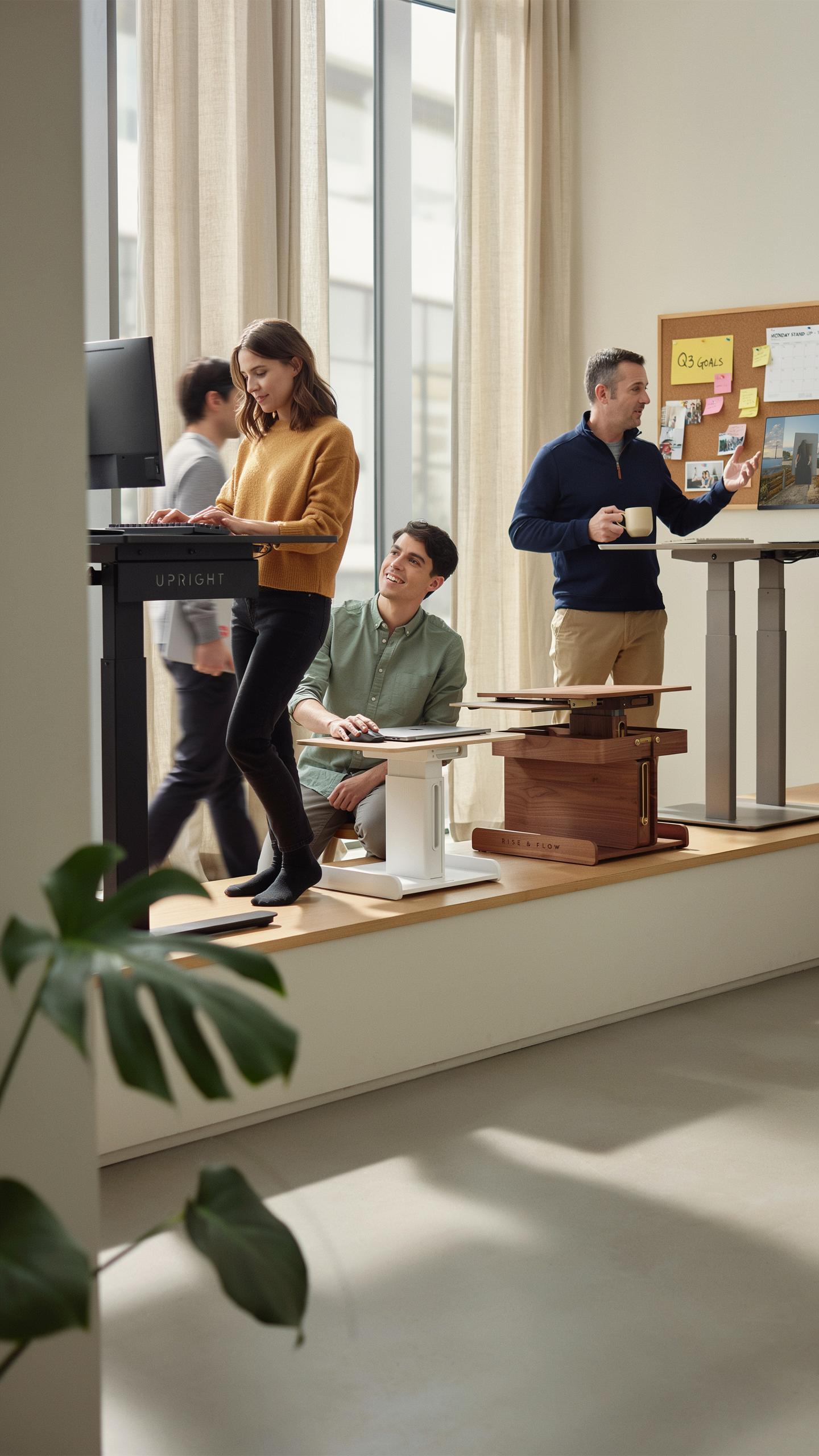
Z-lift mechanisms stack vertically using nested platforms that rise and lower in a compact footprint. This design works well in small spaces because it doesn’t extend outward when raised. The platform moves straight up and down without expanding horizontally, making it ideal for tight desk areas where lateral movement would create obstacles.
X-lift mechanisms use crossing support arms that expand diagonally when raised. This design offers stability but requires more clearance around your desk since the base footprint grows larger during height adjustment. For small apartments, X-lift converters demand careful measurement of surrounding space before purchase. They work best when your desk sits away from walls or obstacles.
Single Vs. Dual Monitor Setups
Single monitor setups require surface areas typically between 20 to 30 inches wide. This narrow platform footprint fits easily on small desks and leaves room for keyboards, mice, and personal items. Single monitor converters work for most apartment dwellers and remote workers handling standard work tasks without extensive multitasking demands.
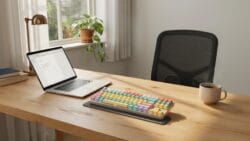
Dual monitor setups demand surface areas of 40 to 60 inches or wider to accommodate two screens side by side. Small desks struggle to accommodate this width plus other workspace essentials. Evaluate your actual desk dimensions before committing to a dual setup. If your desk measures under 48 inches wide, a single monitor converter is the practical choice for apartment living.
Minimalist Standing Desk Converter Options
Sleek Designs For Modern Apartments
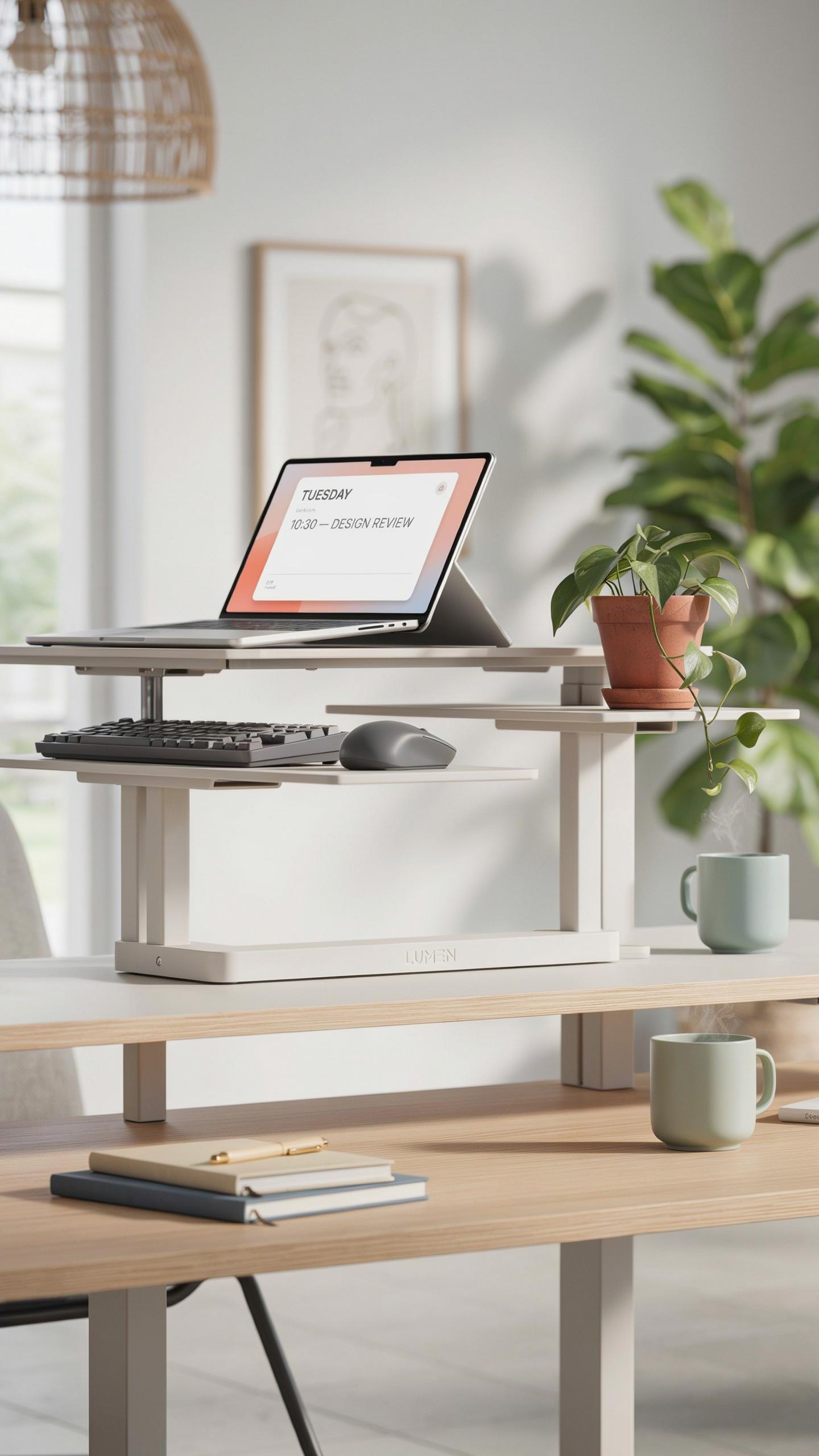
Modern apartment dwellers need converters that disappear into their environment. Minimalist design strips away unnecessary elements, leaving only functional geometry. Clean lines, neutral colors, and thin profiles define this category. These converters avoid ornamental details that consume visual space and mental attention. They work in studios, one bedrooms, and open floor plans where every square inch matters.
Contemporary minimalism draws from mid-century modernism and Japanese design principles. Both movements prioritize function over decoration. Converters built on these principles use simple materials like powder-coated steel or natural wood. They stack vertically or fold completely flat. A minimalist converter occupies less visual real estate than traditional standing desks, which matters in apartments where sightlines and flow dominate perceived space.
Space Saving Features And Aesthetics
Converters with compact footprints solve the apartment paradox: stand more without taking up more room. Designs that stack, fold, or convert from desktop use eliminate storage problems. Some models measure under twelve inches deep when resting. Others collapse to the thickness of a thin book. These features create visual lightness and actual floor space that residents can use for living.

Aesthetic restraint amplifies these practical advantages. A converter with one material, one color, and visible joints reads as intentional rather than cluttered. Exposed mechanical parts become design elements when finished properly. Open frames rather than enclosed cabinets prevent the boxy appearance that makes small spaces feel cramped. This approach means apartment dwellers see their converter as equipment, not furniture taking up precious real estate.
Readydesk Standing Desk Converter And Readydesk Adjustable Standing Desk
Overview Of Readydesk Models
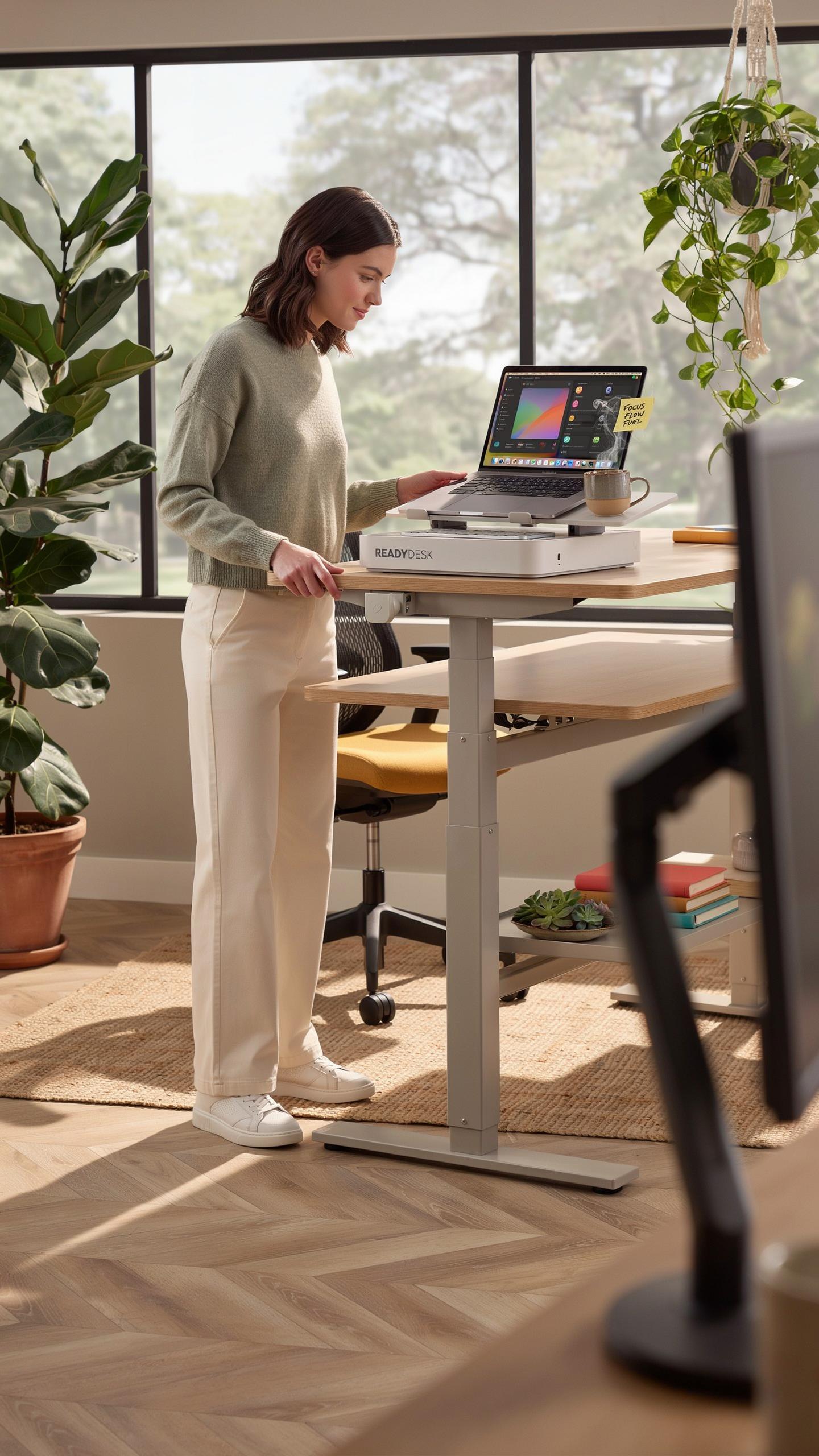
Readydesk produces desktop converters designed for compact workspaces. Their main offering is a monitor arm and keyboard tray system that mounts directly to existing desks. The converter uses a counterbalance mechanism to adjust height without requiring electrical power. This design eliminates the footprint problem of traditional standing desks, making it practical for apartments and small home offices.
The Readydesk converter accommodates monitor sizes up to 32 inches and supports dual monitor setups on specific models. It achieves height adjustment ranges between 12 to 20 inches depending on the configuration. The mounting base attaches to desk edges using clamp systems or bolt-through installation. Users can transition from sitting to standing without moving the primary work surface.
User Reviews And Space Suitability
Apartment dwellers report that Readydesk converters solve the primary constraint of small spaces: they don’t consume floor area. Users appreciate the quick transition between sitting and standing positions throughout the workday. Reviews note that the counterbalance system requires minimal effort to adjust, preventing fatigue during frequent position changes.
Feedback from small space users indicates concerns about desk stability after installation. Heavy monitors or unbalanced loads can cause wobbling on lightweight desks. Weight capacity limitations matter significantly in cramped environments where desk options are already restricted. Users successfully implement Readydesk on IKEA desks and similar compact work tables with adequate thickness and clamping surface.
DIY Standing Desk Adjustable And Mobile
Advantages Of A DIY Approach
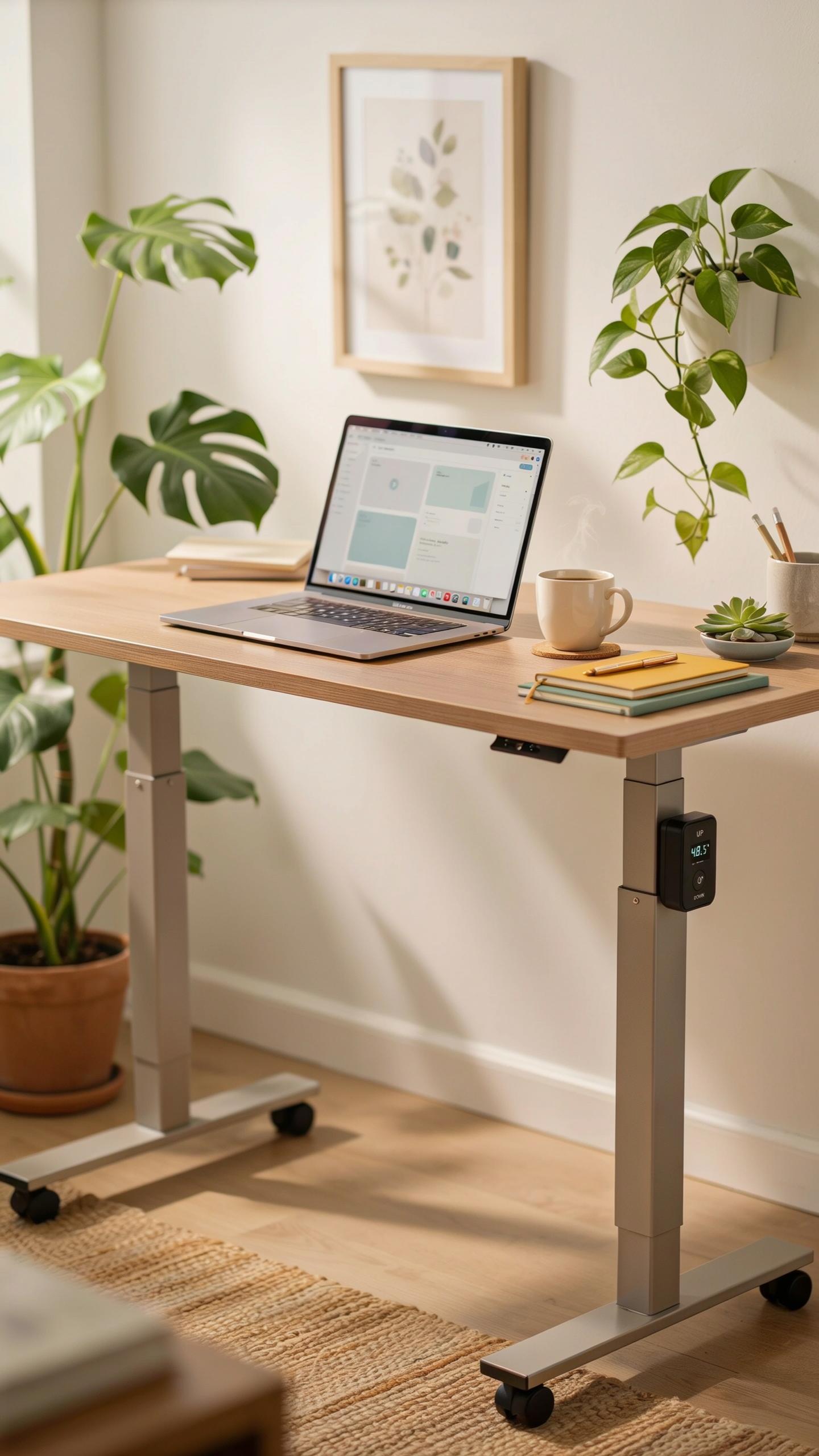
Building your own standing desk converter gives you control over cost, materials, and final dimensions. Commercial converters range from $200 to $800. A DIY build typically costs $50 to $150 in materials. You select exactly what height range you need, which weight capacity matters for your setup, and whether you want manual or motorized adjustment. This approach eliminates markup costs and lets you match your existing desk aesthetic and functionality requirements.
DIY projects teach you how your converter actually works. You understand load distribution, stability points, and adjustment mechanisms. This knowledge helps you troubleshoot issues, make repairs, and upgrade components later. You also build something that fits your workflow instead of adapting your workflow to off-the-shelf limitations. Many people report higher satisfaction with homemade solutions because they solve specific problems rather than generic ones.
Customization For Unique Spaces
Odd shaped desks, alcoves, and corner setups don’t align with standard converter dimensions. DIY builds adapt to your exact layout. You measure your desk depth, width, and any obstacles like shelves or windows. You then build a converter that slides smoothly without hitting walls or other furniture. This solves the primary problem small space dwellers face: most commercial converters assume standard desk configurations.

Unconventional areas often have weight distribution challenges. A DIY approach lets you reinforce specific areas or use materials suited to your exact setup. You can build a converter for a narrow desk, incorporate cable management into the frame, or add storage underneath. You control whether the base needs wider stability legs for carpeted floors or if a compact footprint works for hard flooring. Customization means your converter works in your space rather than fighting against it.
DIY Standing Desk PDF Plans And Resources
Finding Reliable Building Plans
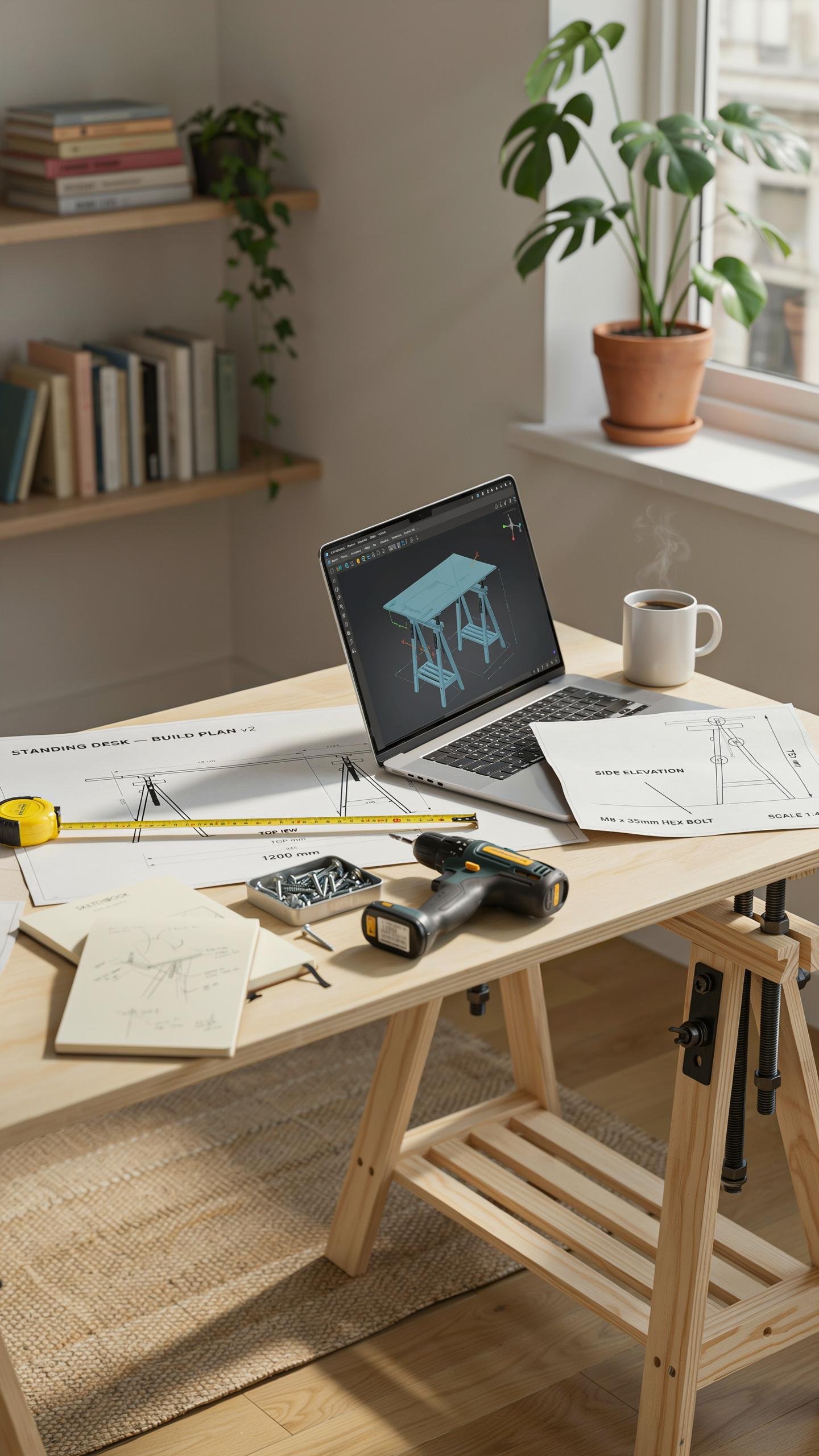
DIY standing desk converter plans exist across multiple platforms. Free options vary in quality and completeness. Paid plans typically include detailed measurements, material lists, and assembly instructions. Your choice depends on your skill level and available time.
- Etsy: Digital plans from woodworkers and makers. Search “standing desk converter plans” for options ranging from basic to advanced designs. Most include PDF downloads and email support.
- Woodworking Blogs: Sites like Instructables and Make Magazine feature free plans with photos and step-by-step guidance. Community comments often provide construction tips from builders who completed the project.
- YouTube Channels: Woodworking creators publish full build videos with linked plans. Videos show actual construction, helping you understand techniques before starting your project.
- DIY Forums: Reddit communities like r/woodworking and r/standingdesk contain user-generated plans and advice. Members answer specific questions about modifications for small spaces.
- Furniture Design Websites: Some retailers publish downloadable plans for their converter models. These plans reflect tested designs already proven to function in apartments and compact areas.
- Local Maker Spaces: Many communities offer plan libraries and expert guidance. Staff can review plans and suggest modifications for your specific space constraints.
Plans for small spaces focus on vertical storage and folding mechanisms. Look for converters that collapse to eight inches or less in depth. This specification matters most when floor space is limited.
Tools And Materials For Construction
Build a standing desk converter with basic hand tools and common materials. You do not need expensive equipment or advanced woodworking machinery. Most projects use wood, metal brackets, and fasteners readily available at hardware stores.

Essential tools include a drill, circular saw or hand saw, measuring tape, level, and screwdriver set. A miter saw cuts angled joints cleanly but a hand saw works if budget is tight. Clamps hold pieces steady during assembly and prevent mistakes.
Materials depend on your chosen design but typically include plywood or solid wood for the platform, steel or aluminum for support brackets, and wood screws for fastening. Gas springs or pneumatic hinges enable smooth height adjustment. Rubber feet prevent sliding on desk surfaces. Buy materials in quantities matching your specific plan to avoid waste and extra expense.
DIY Adjustable Standing Desk Plans
Incorporating Adjustable Features
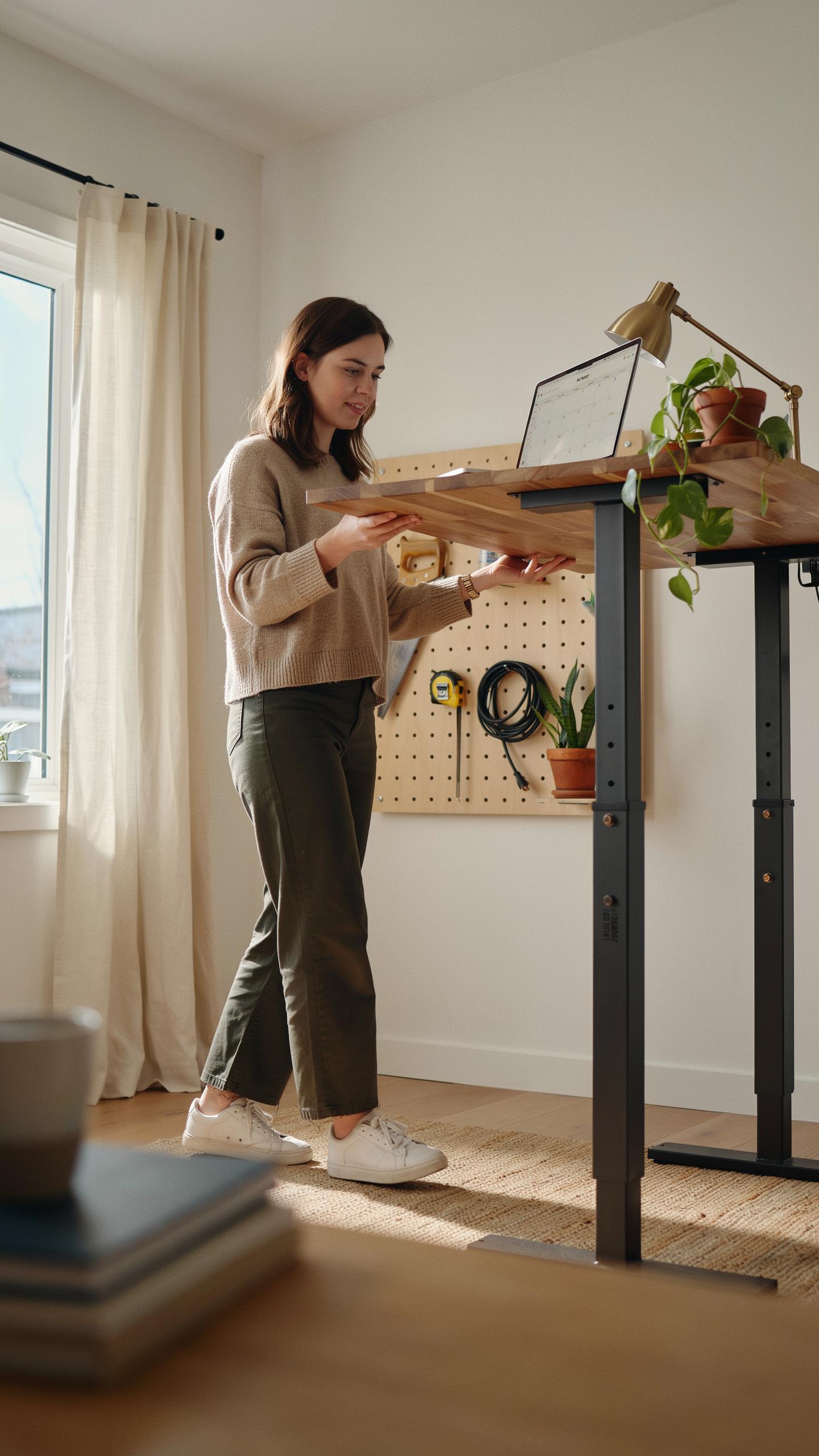
Height adjustment mechanisms determine whether your DIY converter actually works. Gas springs provide smooth, effortless height changes without manual cranking. They support weight reliably and require minimal space. Alternatively, electric actuators deliver powered adjustments with remote controls. Screw-based systems cost less but demand manual effort. Choose based on your budget and how often you’ll adjust throughout the day.

Counterbalance arms offer another approach for small spaces. They mount beneath your work surface and distribute weight evenly as you raise or lower the platform. Ball bearings and pivot points enable smooth motion with minimal friction. Frame materials matter here too. Aluminum tubing resists rust and keeps weight down. Steel provides greater load capacity but adds bulk to your setup.
Safety Considerations For DIY Builds
Stability prevents your converter from tipping or collapsing under load. A low center of gravity comes first. Place weight distribution points as wide apart as your space allows. Bolt everything down securely. Test your build with weight before daily use. Movement should feel smooth without wobbling. Check all joints after two weeks of use, then monthly thereafter.
Load capacity requires honest assessment of your needs. Calculate total weight your converter must support, including monitor, keyboard, and accessories. Most small space converters handle 30 to 50 pounds safely. Overloading causes mechanism failure and creates collapse risks. Document your materials and weight limits. Keep that information visible on your setup as a reminder during use.
Standing Desk DIY Creative Solutions

Upcycling And Repurposing Materials
Existing furniture becomes functional standing desk converters when you apply basic structural thinking. Shelving units, storage cubes, and filing cabinets reach the correct height for monitor placement when stacked properly. The key is measuring your current desk surface to the 28 to 32 inch range where monitors should sit for ergonomic viewing. This approach costs nothing beyond what you already own.
Wooden crates, vintage suitcases, and sturdy cardboard boxes support weight when arranged strategically. Stack and secure items to prevent shifting during work. Books serve as spacers for fine height adjustments. Test stability before placing equipment on top. This method works because you’re using mass and gravity to your advantage rather than fighting against space constraints.
Craft a world of possibility within your coziest corners, for the greatest ideas often spring from the smallest, most thoughtfully arranged spaces.
Temporary And Portable DIY Options
Laptop stands made from folded cardboard or bent wire coat hangers elevate screens to eye level without taking up floor space. You disassemble them in seconds and store them flat. This matters in apartments where square footage demands multipurpose solutions. The monitor sits at proper height while your desk remains clear for other tasks when you’re done working.
Stacked books under one corner of your monitor or keyboard creates an adjustable angle without permanent modifications. You add or remove books to achieve your target height. This approach requires zero tools and zero installation time. You transition from sitting to standing by simply moving the book stack to a different location. Portability and reversibility make this practical for renters.
Making The Right Choice Purchase Vs DIY

Pros And Cons Of Buying A Converter
Off-the-shelf converters arrive ready to use with no assembly required. Manufacturers handle design testing and material sourcing. You get warranty coverage and return options if the product fails. Quality control happens before it reaches you. The trade-off is higher cost compared to building yourself.
Buying converters limits customization to what manufacturers offer. You pay for their overhead and distribution costs. Some models use cheaper materials to hit price points. You’re locked into their dimensions and weight capacity. Custom builds let you control every variable but demand time and skill.
Budget And Skill Set Considerations
Your finances determine what approach makes sense. Converters range from 100 to 500 dollars depending on size and materials. DIY projects cost 30 to 200 dollars if you source materials efficiently. Building yourself saves money only if you already own tools or can borrow them. Factor in your hourly rate when calculating true DIY cost.
Skill gaps cost you time and risk mistakes. Carpentry or metalworking experience accelerates DIY projects significantly. Beginners struggle with stability and weight distribution, creating safety issues. You need knowledge of materials, fastening methods, and load testing. Buying removes this burden but leaves you dependent on manufacturer specifications and support.
Frequently Asked Questions

What exactly is a standing desk converter, and why would it be good for my small apartment?
A standing desk converter is an adjustable unit that sits on top of your existing desk, allowing you to easily switch between sitting and standing while working. For small apartments, it’s ideal because it doesn’t require a whole new piece of furniture, saving precious floor space. It transforms your current setup into an ergonomic workstation without bulky additions.
How do I choose the right standing desk converter for small spaces to ensure it fits my current desk?
When selecting a standing desk converter for small spaces, measure your existing desk’s surface area carefully (width and depth). Also, consider the footprint of the converter when extended upwards. Look for models with a compact base and a design that doesn’t overhang excessively, ensuring it fits your current setup comfortably without feeling cramped.
Are there affordable standing desk converter options that are also suitable for small apartment living?
Absolutely! Many manufacturers offer budget-friendly standing desk converter models perfect for small apartments. Look for manual lift options, which tend to be more economical than electric ones. Prioritize stability and footprint over extensive features to find an affordable yet functional solution that maximizes your small living area.