
Why A Clip On Phone Lens Kit Is A Travel Essential
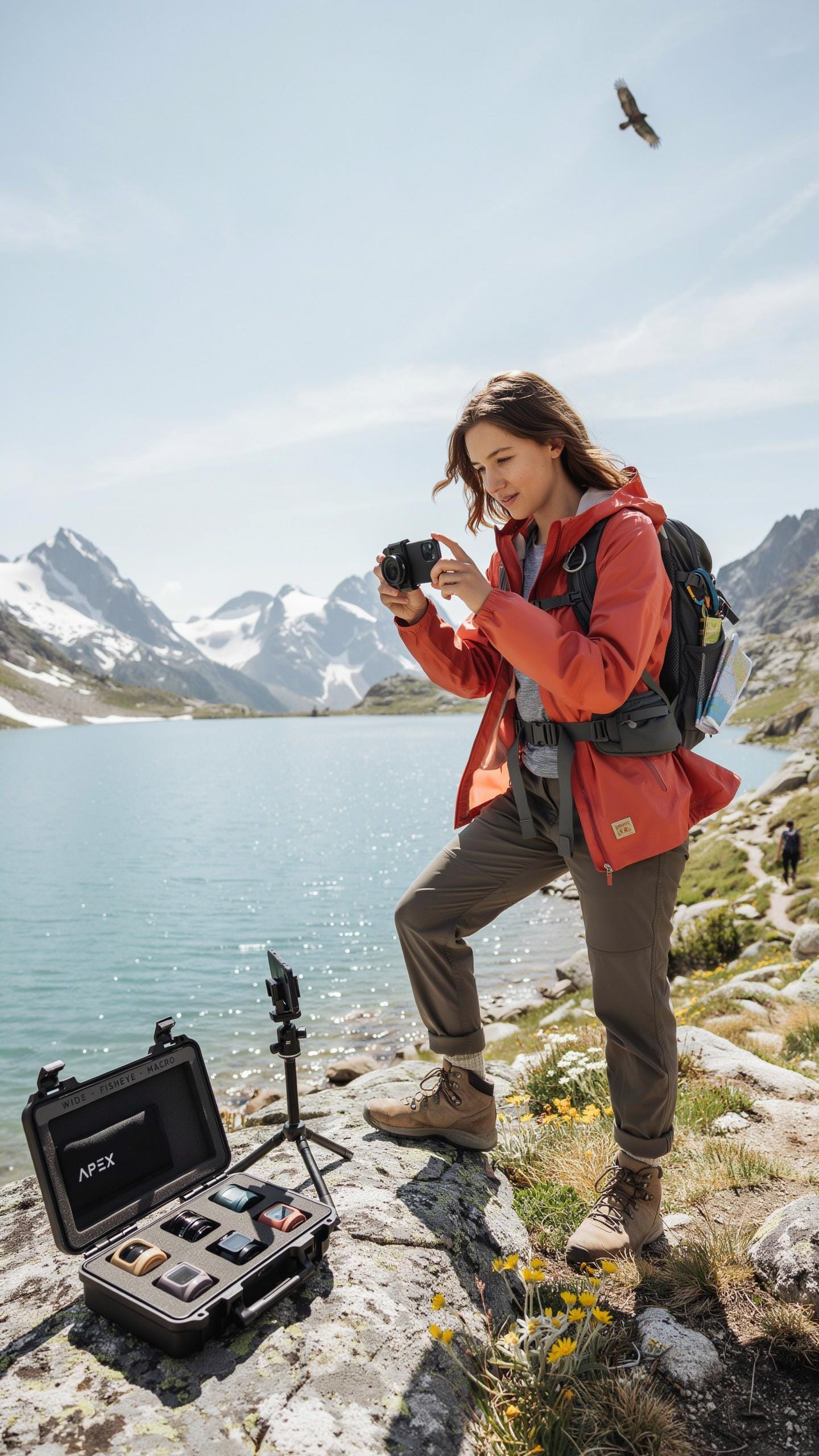
Transforming Your Phone Camera Lens Into A Pro Grade Device
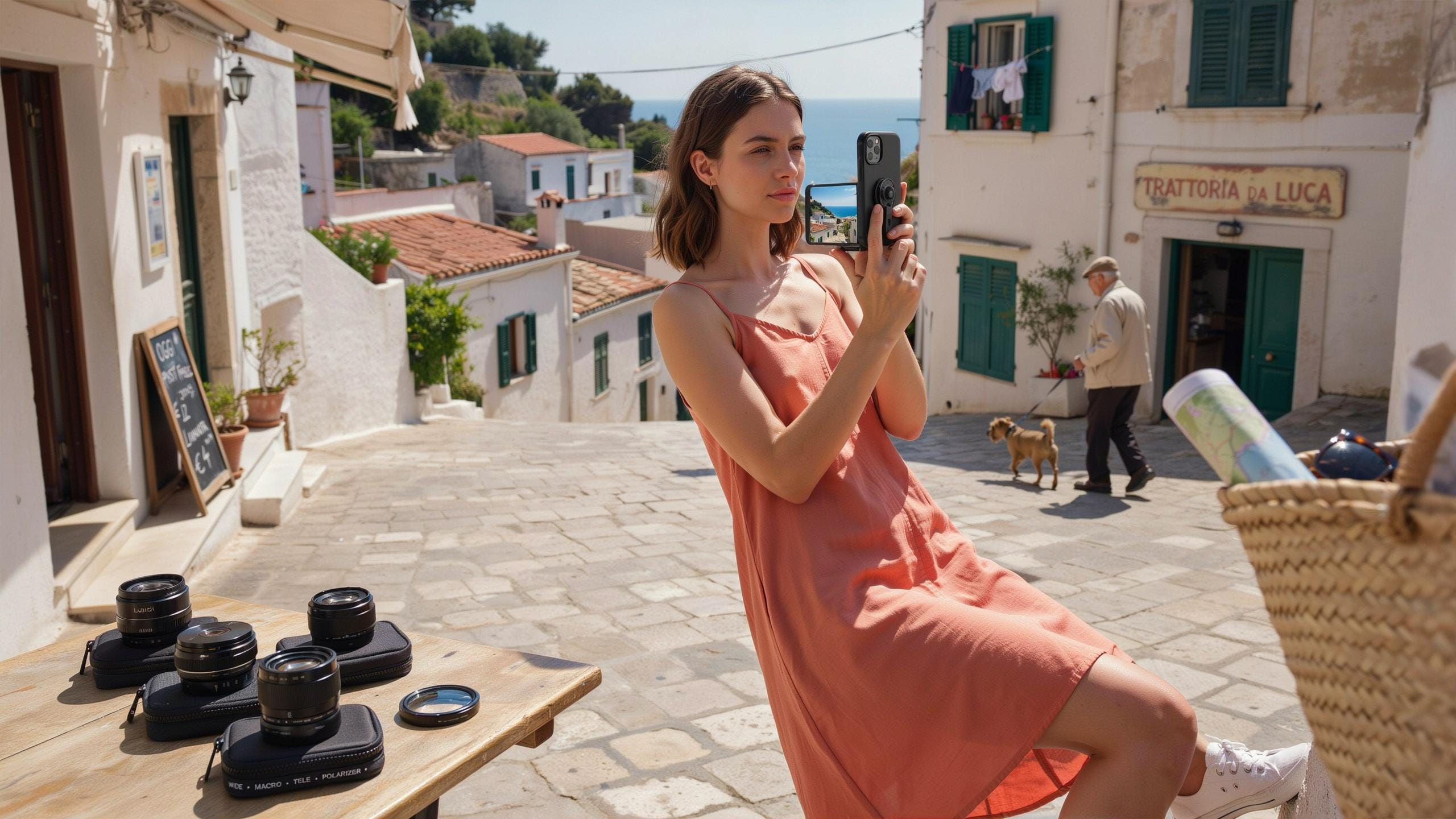
Smartphone cameras have fixed focal lengths and limited optical capabilities. A clip on phone lens kit attaches external lenses to your device, expanding what your camera can capture. Wide angle lenses broaden your field of view. Macro lenses reveal detail in small subjects. Telephoto lenses bring distant objects closer. Each lens type solves specific shooting problems your phone camera cannot handle alone.
Phone lens kits work through simple mechanical design. The clip secures firmly to your phone’s body without blocking sensors or buttons. Optical glass elements in each lens attach via threaded mounts or magnetic connections. Light passes through the external lens first, then through your phone’s camera system. This combination produces images with improved sharpness, wider perspectives, and better subject isolation than phone cameras deliver solo.
The Convenience And Portability Of A Cell Phone Camera Lens
Phone lens kits weigh ounces and fit inside jacket pockets or camera bags. You carry no additional body or batteries. Setup takes seconds. Unclip one lens, clip another. This speed matters during travel when moments shift rapidly. You maintain mobility while upgrading optical capability. Traditional camera systems require body weight, multiple lenses, and carrying capacity that clip on kits eliminate entirely.
Travel photographers face weight constraints and space limits that phone lens kits address directly. A complete kit with three to four lens options typically weighs less than a single professional camera body. Packing efficiency matters during multi day trips. Lens clips store flat against phone surfaces or in small pouches. You stay ready to shoot without the burden of traditional equipment, making lens kits practical for backpacking, hiking, and urban exploration where gear weight directly impacts your experience.
Understanding Different Phone Lens Types
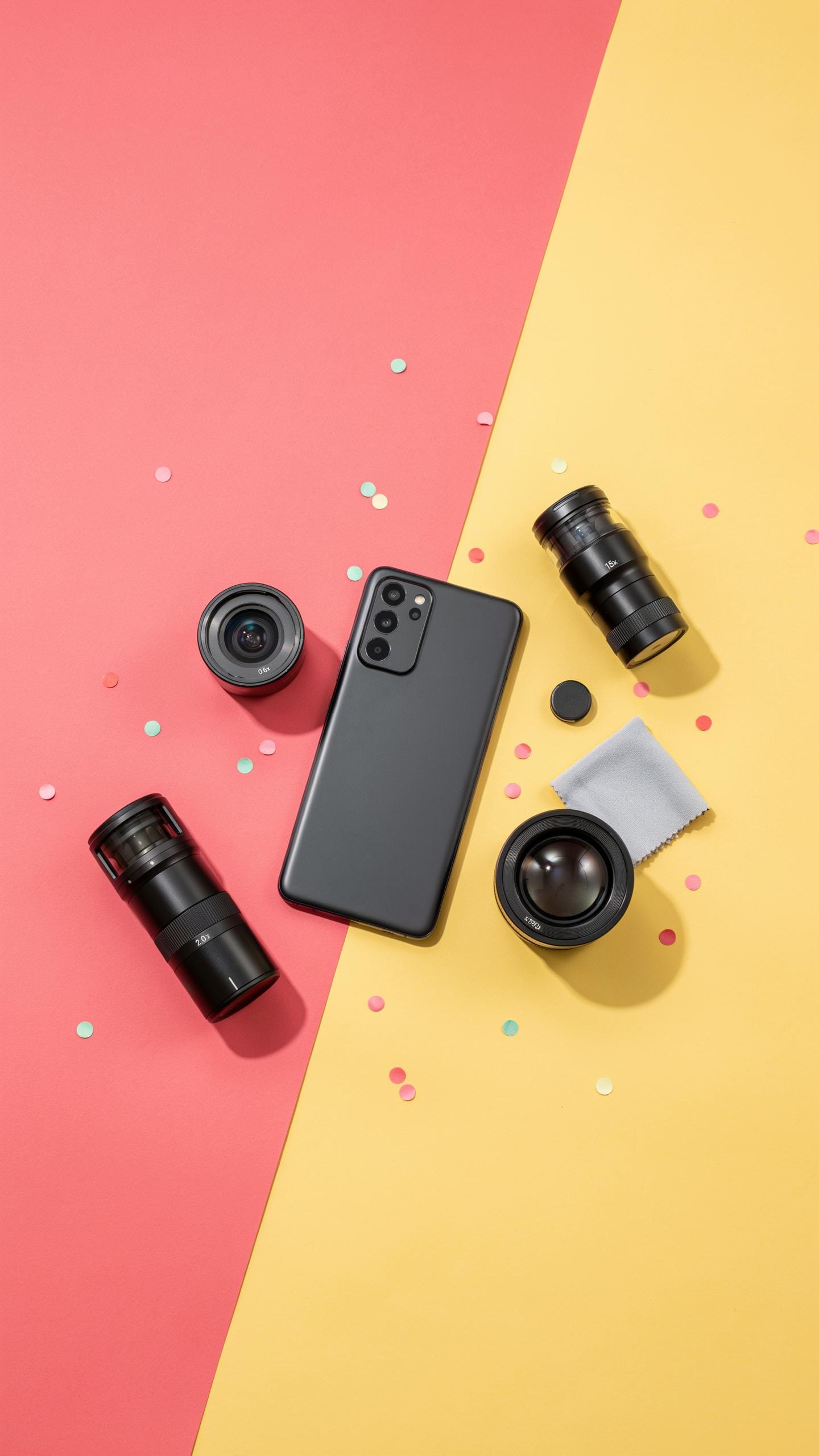
Wide Angle Lens Capturing Expansive Landscapes
Wide angle lenses expand your phone’s field of view beyond what the standard camera provides. Most smartphone cameras capture around 50 to 75 degrees. A clip on wide angle lens pushes this to 100 to 140 degrees. This lets you fit more landscape into a single frame without stepping backward.
Wide angle lenses work best for travel photography when you cannot physically move away from your subject. Mountains, buildings, and group photos benefit from the expanded perspective. The trade off is edge distortion at the frame’s corners. Quality matters here because cheap lenses create noticeable barrel warping.
Macro Lens Exploring The World Up Close
Macro lenses reverse the standard function of a camera by magnifying small subjects to large sizes. They focus at distances from two to six inches from your phone. This reveals detail invisible to your naked eye. Insects, flowers, food textures, and fine craftsmanship become photographic subjects during travel.

Macro lenses require steady hands or a tripod since magnification amplifies every movement. Natural light performs better than flash since close proximity creates harsh shadows. A quality macro lens produces sharp images with minimal color distortion at extreme magnifications.
Diving Deeper Specialty Phone Lens Options
Fisheye Lenses For Unique Perspectives
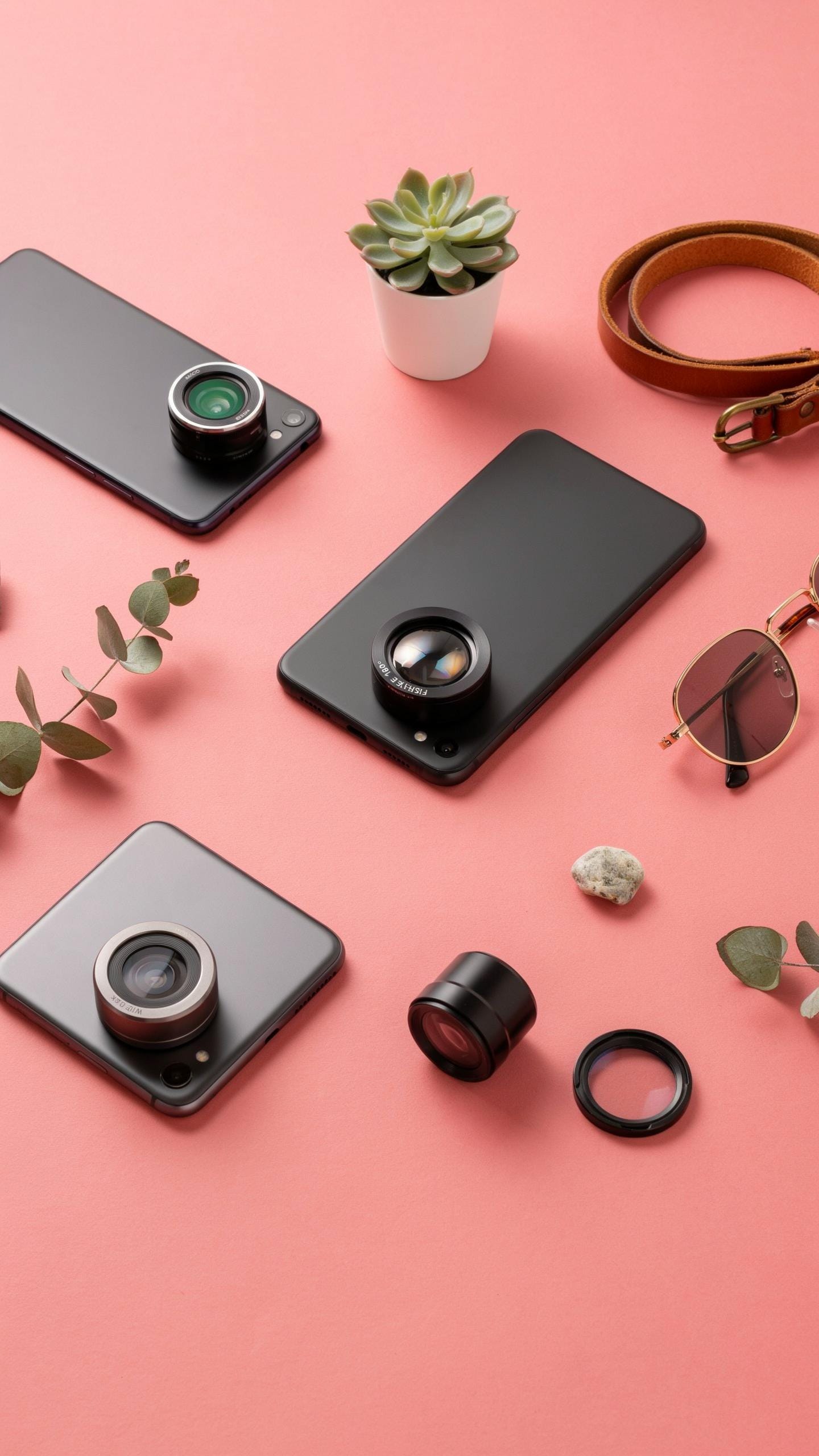
Fisheye lenses in clip on phone lens kits capture an ultra-wide field of view, typically between 170 to 180 degrees. This extreme width distorts straight lines into curves, creating a distinctive visual effect. Travel photographers use fisheye lenses for landscape shots where they need to compress expansive scenes into a single frame. The distortion is not a flaw, it’s the core function that makes these lenses valuable for specific situations.
Fisheye lenses excel in tight spaces where stepping back is impossible. Inside cramped markets, narrow alleyways, or crowded transportation hubs, they capture context that standard lenses miss. The trade-off is obvious: straight subjects curve unnaturally. This works well for architectural interiors and nature scenes but fails for portrait work. Choose fisheye lenses when you prioritize capturing maximum space over realistic representation.
Telephoto Lenses For Reaching Distant Subjects
Telephoto lenses in clip on phone lens kits magnify distant subjects, typically offering 2x to 10x optical zoom. They compress depth, making far-away objects appear closer and larger in the frame. Travel photographers rely on telephoto lenses for wildlife, architectural details, and candid portraits from a distance. These lenses let you capture moments without disturbing subjects or intruding on personal space.

Telephoto lenses sacrifice field of view for magnification power. A 10x telephoto lens captures only what a standard lens sees at one-tenth of the width. Lighting becomes critical because telephoto lenses gather less light than wide options. In low light situations, images shake more easily, requiring steady hands or a tripod. Use telephoto lenses when you need to isolate subjects and distance matters more than context.
The Advantages Of A Polarizing Filter For Your Phone Camera Lens
Reducing Glare And Enhancing Colors
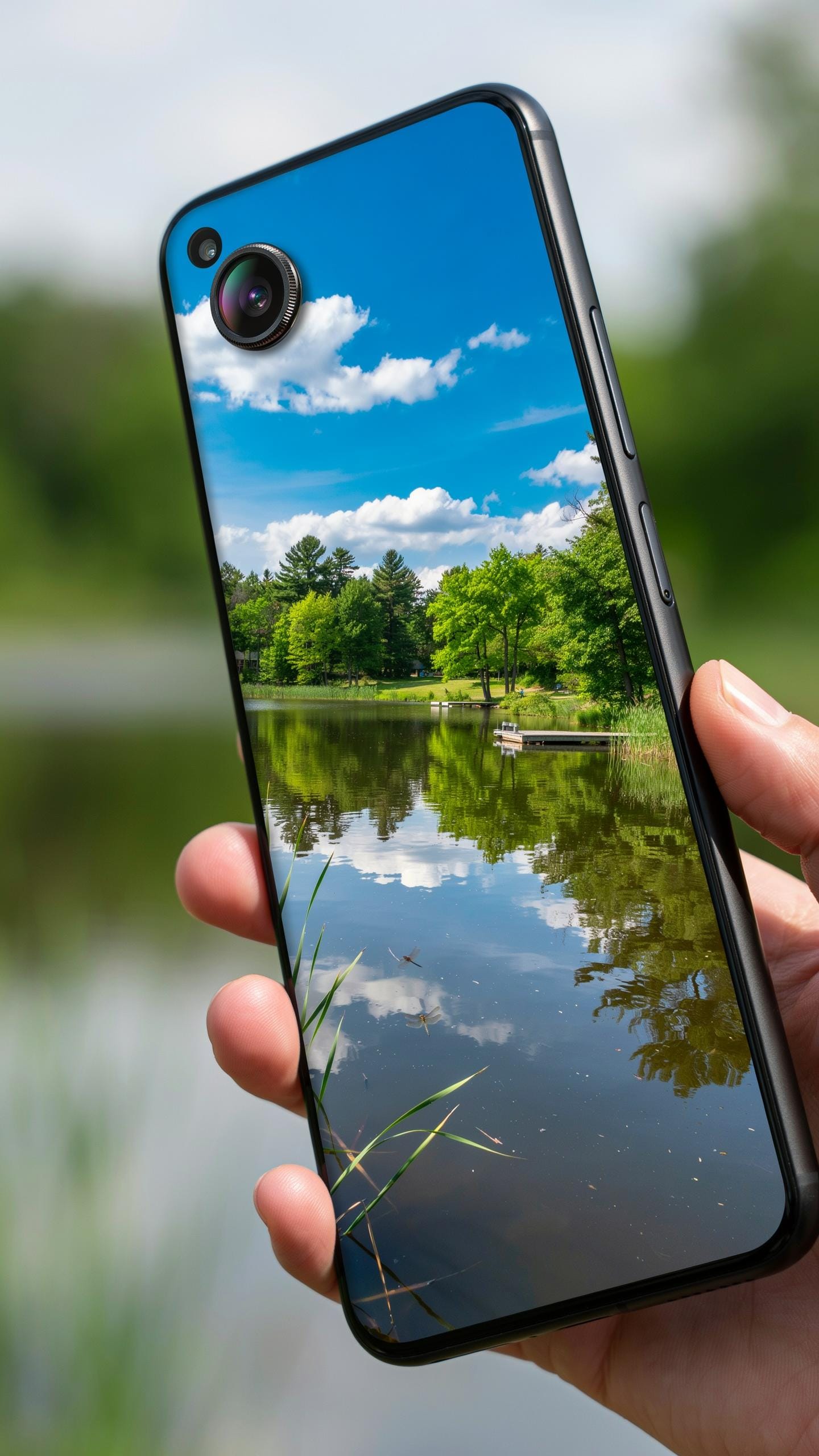
Polarizing filters cut reflections from water, glass, and other reflective surfaces. This matters for travel photography because lakes, oceans, and wet pavement create unwanted glare that washes out your images. The filter rotates to block specific light waves, giving you control over how much reflection disappears from your shot.
Colors become more saturated when you remove glare. Greens appear richer, reds pop more, and overall contrast improves without editing. This happens because the filter eliminates the white light bouncing off surfaces that normally dulls your colors. You get cleaner, more vivid results straight from your phone camera.
Capture the breathtaking beauty of every journey with clarity, transforming precious moments into vibrant, lasting memories. As Ansel Adams once said, “There is nothing worse than a sharp image of a fuzzy concept.”
Achieving Deeper Blue Skies And Richer Foliage
Polarizing filters darken skies by cutting light scattered through the atmosphere. Blue becomes deeper and more defined, separating clouds from the background. This effect works best at 90 degrees to the sun, so angle matters. You rotate the filter to find the sweet spot where the sky reaches maximum saturation.

Trees, plants, and grass show more detail and texture when glare lifts from their surfaces. Leaves display their actual color instead of appearing washed out. The filter removes the reflective sheen that normally hides the true tone of vegetation. Travel photos of forests and gardens benefit significantly from this capability.
Choosing The Right Clip On Phone Lens Kit
Compatibility With Your IPhone Wide Angle Camera Lens Or Android Device
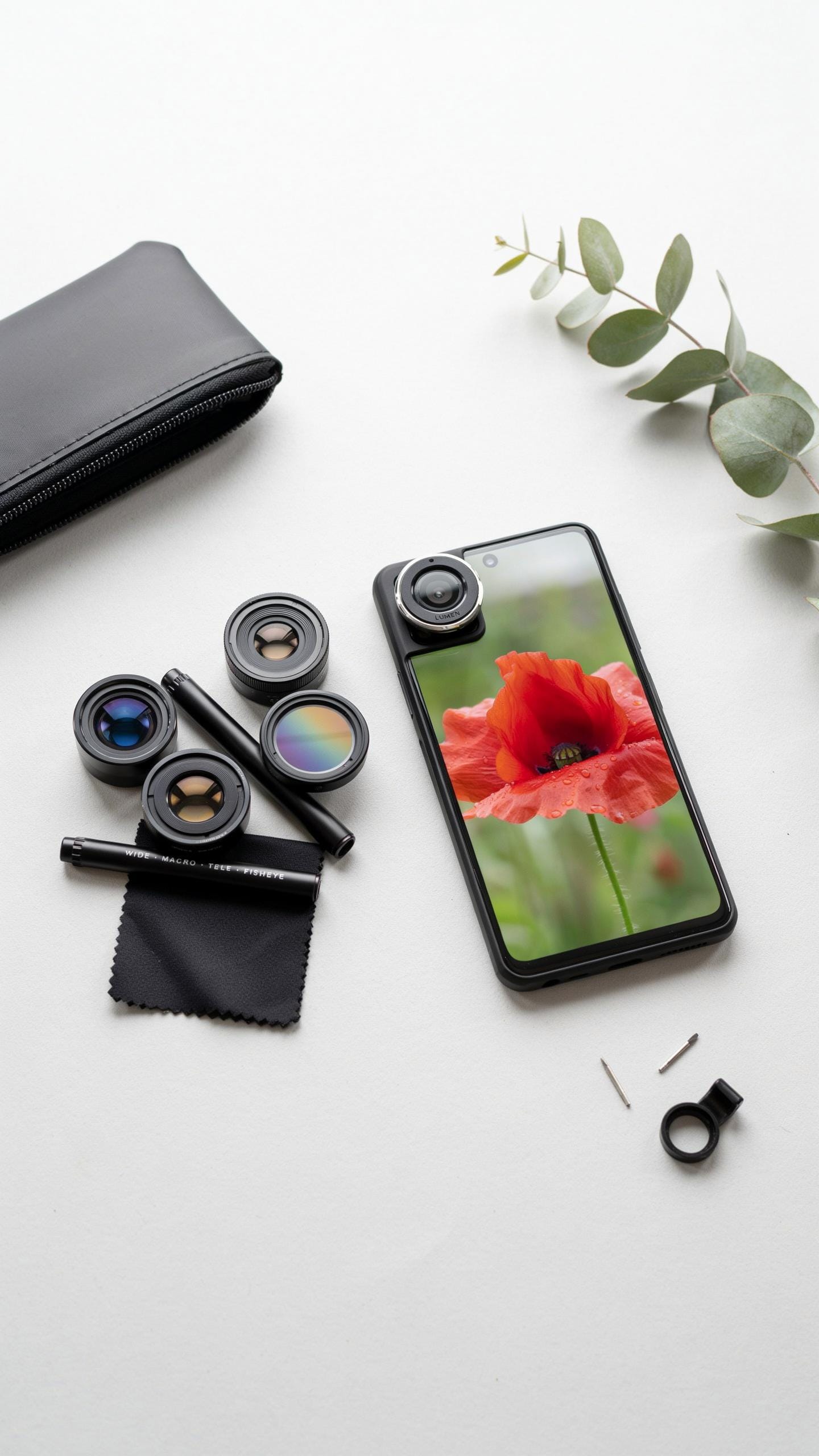
Most clip on phone lens kits mount via a universal clamp that grips your phone’s edges or attaches to your existing case. iPhone and Android devices have different camera placements and lens sizes, so verify the kit works with your specific model before purchasing. Many kits offer adjustable mounts to accommodate various phone widths and thicknesses. Check the manufacturer’s compatibility list or contact support if your device isn’t listed.
The lens barrel diameter matters because it determines how the optics align with your phone’s camera sensor. Wide angle lenses on modern iPhones use different focal lengths than comparable Android phones. Some kits include removable adapters for different phone sizes. Test the alignment with your device to ensure the lens centers properly over your camera without vignetting or image cutoff.
Factors To Consider Build Quality And Ease Of Use
Build quality directly impacts optical performance and durability during travel. Glass lens elements deliver sharper images than plastic, but kits with optical glass cost more. Metal clamps withstand repeated attachment and removal better than plastic versions. Check for anti-reflective coatings on lens surfaces, which reduce internal reflections and improve contrast in your photos.

Ease of use determines whether you’ll actually carry and use the kit consistently. Quick-clip mechanisms save time when switching between devices or storing lenses. Lightweight designs under 100 grams per lens reduce pack weight for travel. Test how quickly you can attach and remove the lens without fumbling. A kit that stays in your bag unused provides no value, so prioritize practical handling over feature overload.
Top Brands And Models Apexel Macro Lens For Phone And Others
Reviewed: Popular Clip On Lens Kits For Quality And Performance
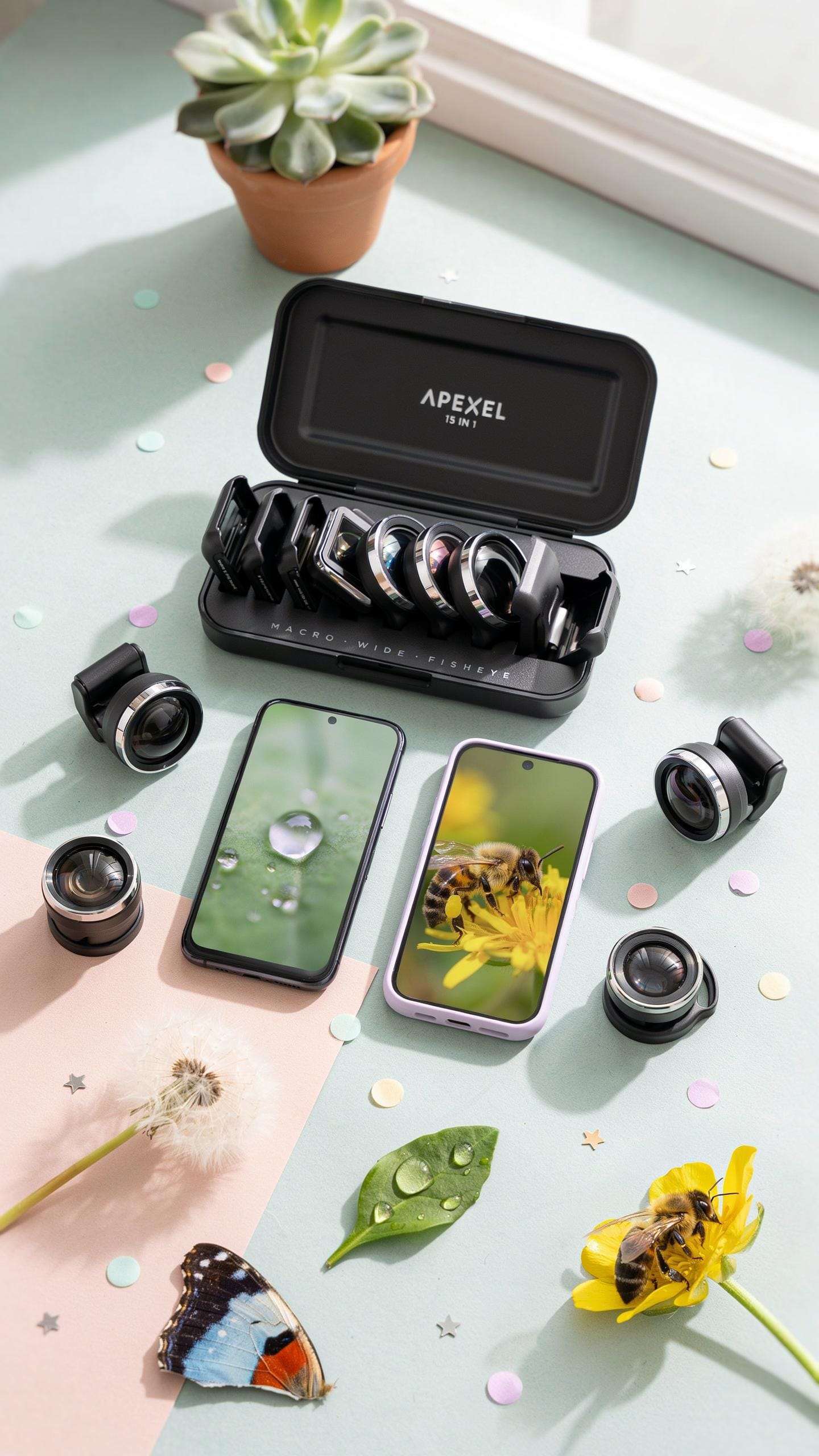
Apexel dominates the clip-on phone lens market with affordable multi-lens kits starting around $20-40. Their macro lens attachment delivers 20x-25x magnification, making it practical for close-up detail work. The brand ships globally and offers consistent quality across their product line. Competitors like Moment, Olloclip, and Neewer occupy different price tiers. Each brand targets specific user needs, from budget travelers to professionals requiring optical precision.
- Apexel Macro Lens Kit: Includes macro, wide-angle, and telephoto lenses with clip mechanism compatible with most smartphone models. Magnification ranges from 4x to 25x depending on lens type.
- Moment Telephoto Lens: Premium option around $80-100 with optical glass construction. Better suited for professionals prioritizing image sharpness over cost efficiency.
- Olloclip Four Lens System: Combines macro, wide-angle, fisheye, and telephoto in one connected unit. Mechanical alignment ensures consistent optical results across different phones.
- Neewer Clip On Lens Set: Budget-friendly kit under $30 featuring 0.67x wide-angle and 15x macro lenses. Popular with casual travelers seeking basic zoom capability.
- Sandmarc Macro Lens: Mid-range option at $50-70 featuring multi-element optical design. Reduces lens aberration and chromatic distortion compared to budget alternatives.
Travel photographers gravitate toward Apexel kits because they balance cost and performance effectively. The clip mechanism works with phone cases, eliminating the need to remove protection during shoots. Macro functionality proves especially useful for capturing food, insects, and architectural details on trips. Users consistently report the wide-angle lens distorting edges, a limitation inherent to the price point.
User Experiences And Recommendations From Travelers
Travelers using clip-on kits report faster setup compared to carrying dedicated cameras and lenses. The macro lens addresses the smartphone’s fixed focus limitation, enabling close-ups impossible with native cameras. Weight and portability matter significantly for backpackers and multi-day trips. Most users tolerate minor image quality trade-offs for the convenience factor.

Real-world feedback highlights recurring issues. The clip mounting can loosen during transport, requiring periodic tightening. Lens caps get lost frequently, and replacement packs cost extra money. Optical degradation occurs at maximum zoom levels, particularly with budget kits under $35. Experienced travelers recommend purchasing lens protector cases and securing caps with small tether cords to prevent damage and loss during travel.
Mastering Your Macro Lens Tips For Stunning Close Ups
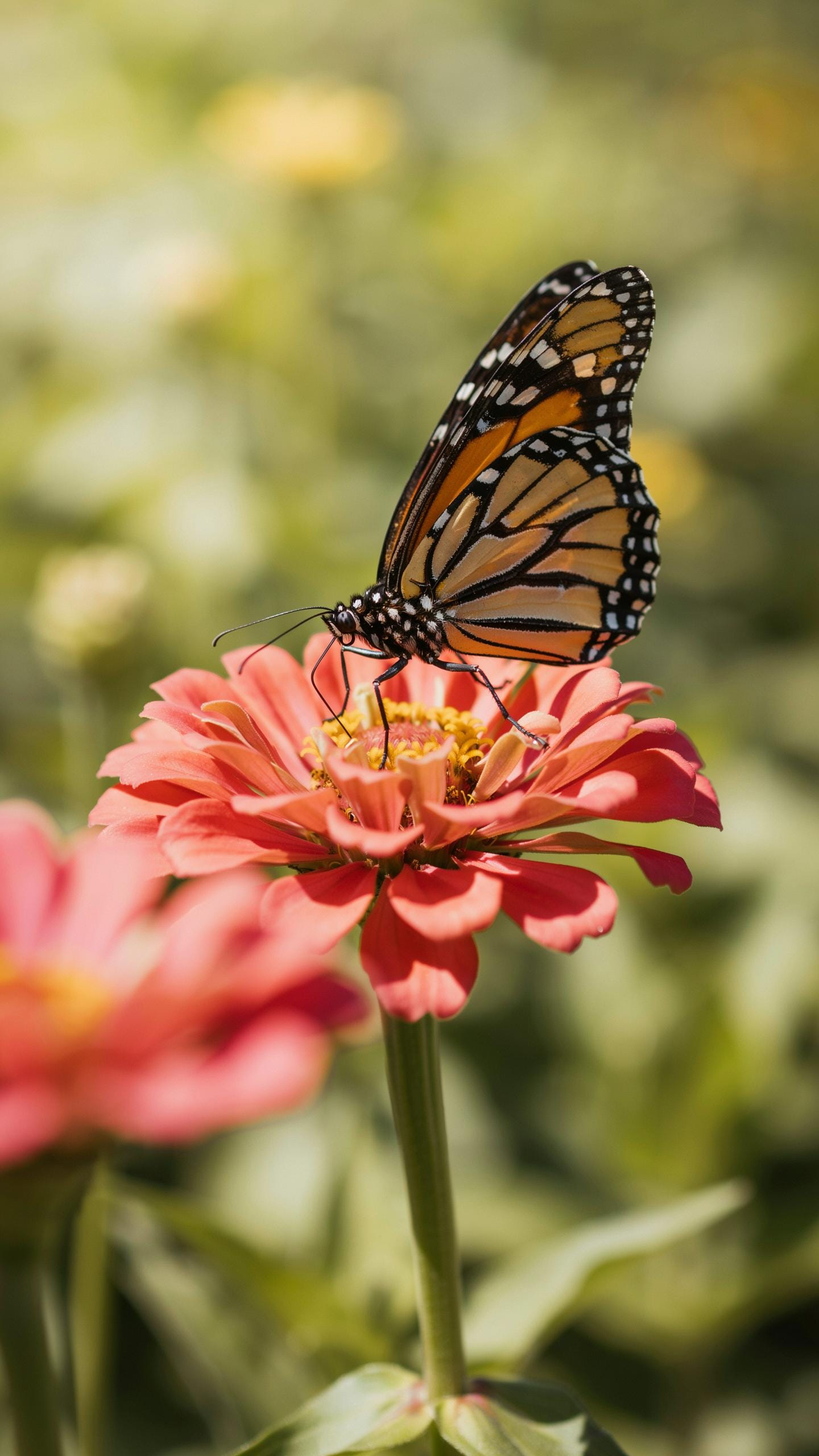
Techniques For Achieving Sharp Focus With A 2x Macro Lens For Phone
A 2x macro lens on a clip on phone lens kit reduces your depth of field significantly. This means only a thin slice of your subject stays sharp. Move slowly when focusing. Even small movements blur the image. Use your phone’s tap to focus feature to lock on your target point before shooting.
Lighting becomes critical in macro work. Shadows and uneven light create soft focus areas. Position your subject near natural light sources. Avoid shooting directly into shadows. A small reflector or white card bounces light onto dark areas, keeping your entire subject sharp and properly exposed.
Creative Compositions For Macro Photography
Get close enough that your subject fills the frame. This eliminates distracting backgrounds and forces viewers to focus on details. Position your phone parallel to flat subjects like leaves or coins. Angled shots cause parts of your subject to fall outside the sharp focus zone. Test different angles before committing to shots.

Use macro photography to reveal texture and pattern. Flower stamens, insect wings, and fabric weaves become dramatic subjects at 2x magnification. Frame these details with intentional space around them. Negative space balances busy texture and guides the viewer’s eye. This approach transforms ordinary travel subjects into compelling images worth keeping.
Beyond The Lens Accessories For Your Cell Phone Camera Lens Kit
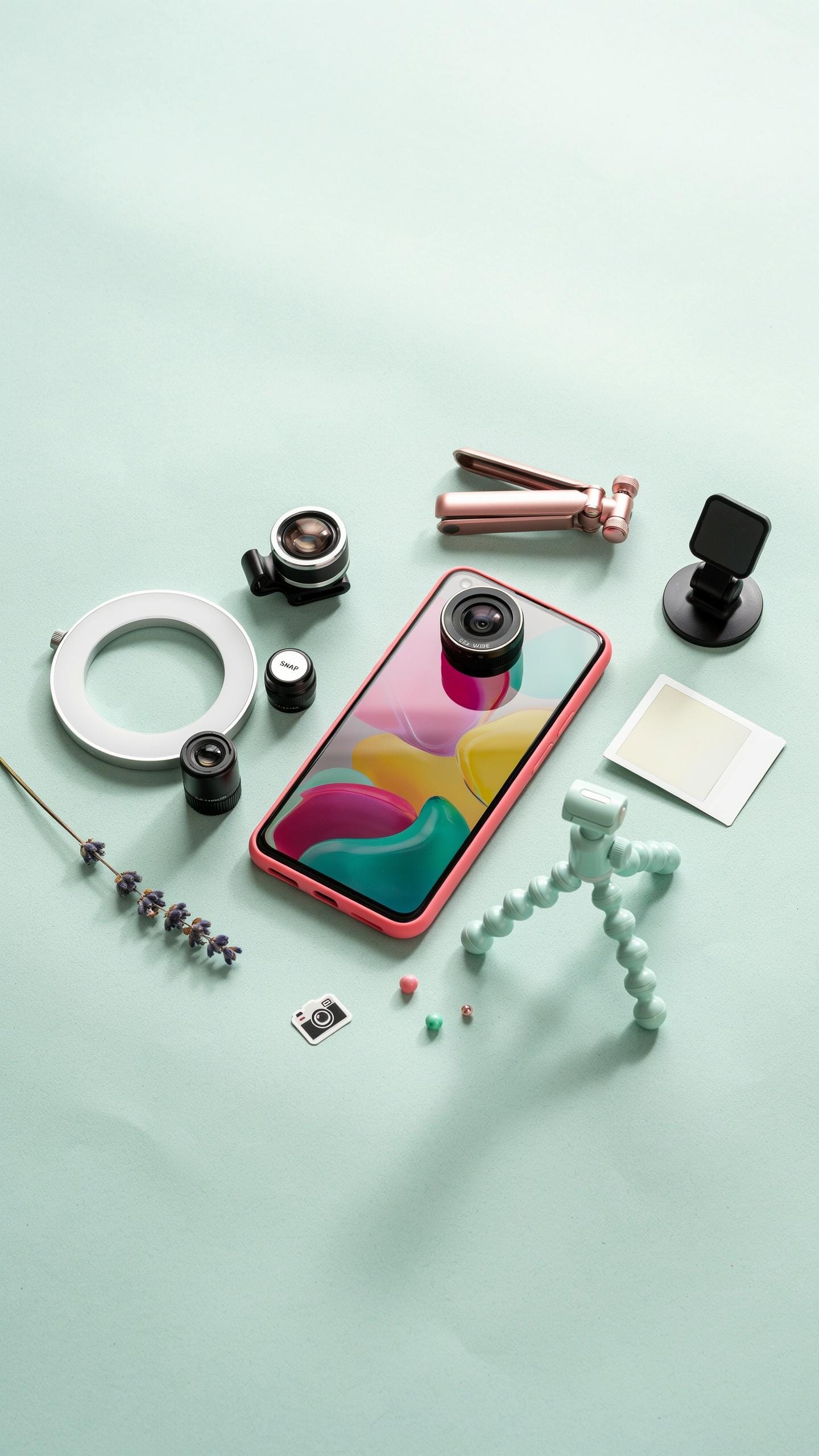
Portable Tripods And Stabilizers For Steady Shots
A clip on phone lens kit delivers sharper images only when your phone stays still. Camera shake ruins detail, especially when using telephoto or macro lenses that magnify movement. Portable tripods solve this problem by anchoring your phone during shots. Choose models that weigh under one pound and fold to fit travel bags.
Stabilizers work differently than tripods. Gimbals use motors to counteract hand movement in real time. Phone stabilizers mount your device on a motorized arm that keeps it level during pans and walks. Both tools address the same core issue: eliminating blur that lens quality cannot overcome. Test stability on uneven surfaces before buying, since many travel destinations have rough terrain.
Lighting Solutions For Optimal Image Quality
Phone cameras struggle in low light even with quality lenses attached. The clip on phone lens kit cannot gather more light than the phone sensor allows. External lighting fills this gap. LED panels attach to your phone or tripod and provide consistent, adjustable illumination.

Reflectors offer a simpler alternative that requires no power. White or silver surfaces bounce available light onto your subject, reducing shadows without adding equipment weight. Position reflectors opposite your light source to brighten dark areas. For travel, collapsible reflectors pack small and cost less than LED systems while delivering measurable results in outdoor and window-lit settings.
Maintaining Your Phone Camera Lens Kit For Longevity
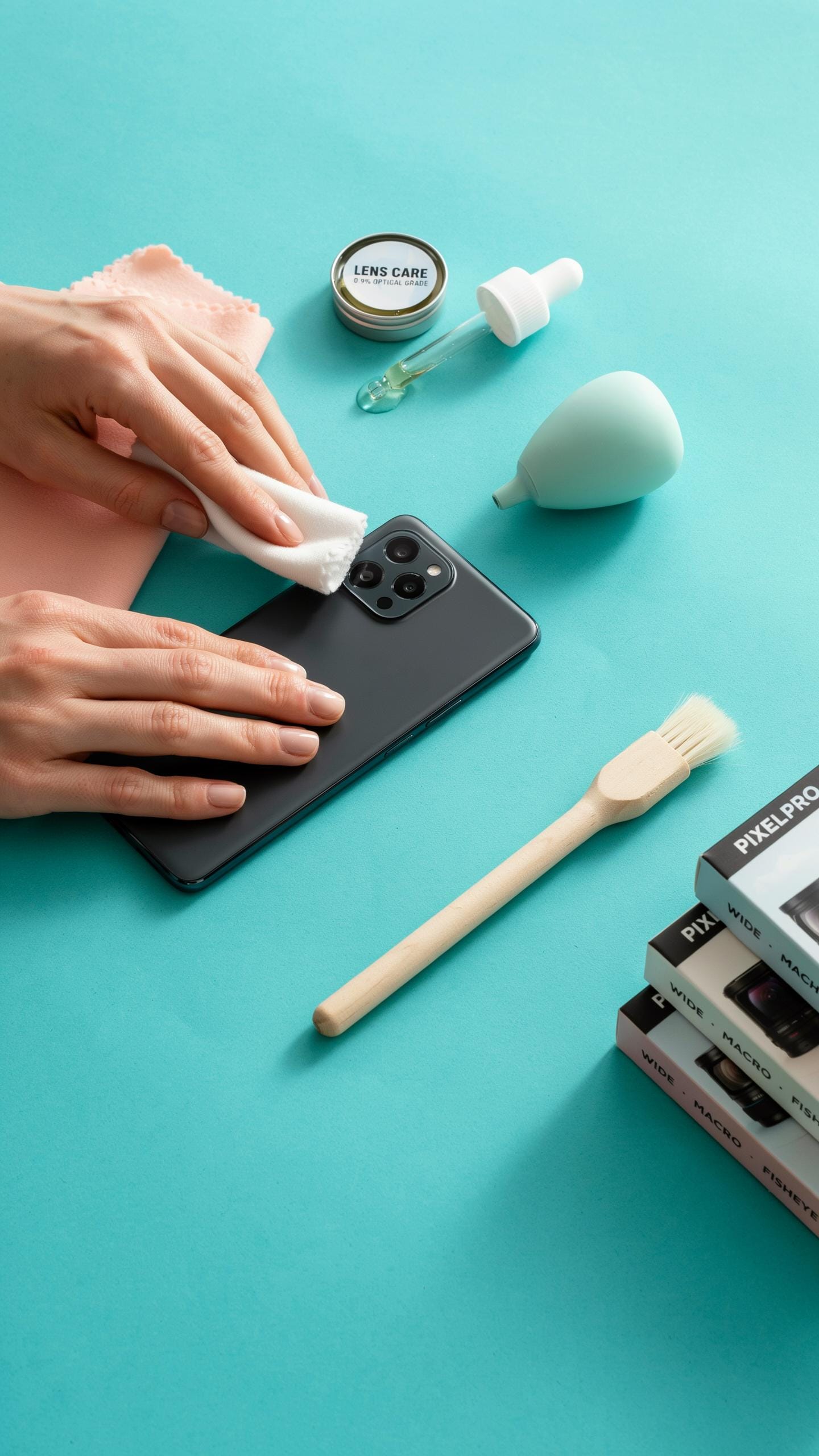
Cleaning And Storage Best Practices
Dust and fingerprints degrade optical performance faster than normal wear. Clean lens surfaces with a microfiber cloth after each use. Use a rocket blower to remove particles before wiping. Never use your shirt or paper towels, which scratch coatings. Store lenses in a dry case with silica gel packets to prevent moisture buildup.
Store your kit in a temperature-stable location away from direct sunlight. Extreme heat warps lens adhesives and degrades optical coatings over time. Keep clip mechanisms free of debris by wiping them monthly. Replace silica gel packets when they become saturated. Check storage cases for cracks or damage that expose lenses to environmental hazards.
Troubleshooting Common Issues With Clip On Lenses
Loose connections happen when clip mechanisms wear out from repeated attachment and removal. Inspect the clip arms for cracks or bent metal. If the clip wobbles, test whether the phone case causes the problem by trying a different one. Tighten any accessible screws on the clip assembly carefully. Replace the entire clip if it no longer holds the lens steady.
Haze or internal reflections indicate moisture inside the lens barrel or between optical elements. Remove the lens and let it air dry for 24 hours in a warm room. Never force the lens apart yourself, as you risk misaligning the optics. If haze persists after drying, the optical assembly likely needs replacement. Contact the manufacturer about warranty repair options before purchasing a new kit.
Frequently Asked Questions

What exactly is a clip on phone lens kit, and how can it improve my travel photos?
A clip on phone lens kit enhances your smartphone camera by providing additional lenses like wide-angle, macro, or telephoto. These simply clip onto your phone, offering versatility to capture stunning landscapes, intricate details, or distant subjects, transforming everyday travel snaps into professional-looking photographs with ease.
How do I properly attach and use a clip on phone lens to ensure the best photo quality?
To properly attach your clip on phone lens kit, ensure it’s centered and flush over your phone’s camera, with no obstruction. Clean both your phone and the lens before attaching to avoid dust spots. Experiment with different lenses for various shots – a wide-angle for scenery, macro for close-ups, and telephoto for faraway details.
Are there affordable options for a quality clip on phone lens kit, or do I need to invest a lot?
Absolutely! You don’t need to break the bank for a good clip on phone lens kit. Many excellent, budget-friendly options on the market offer impressive quality without a hefty price tag. Look for kits that include a few essential lenses like wide-angle and macro to start your photographic journey.