
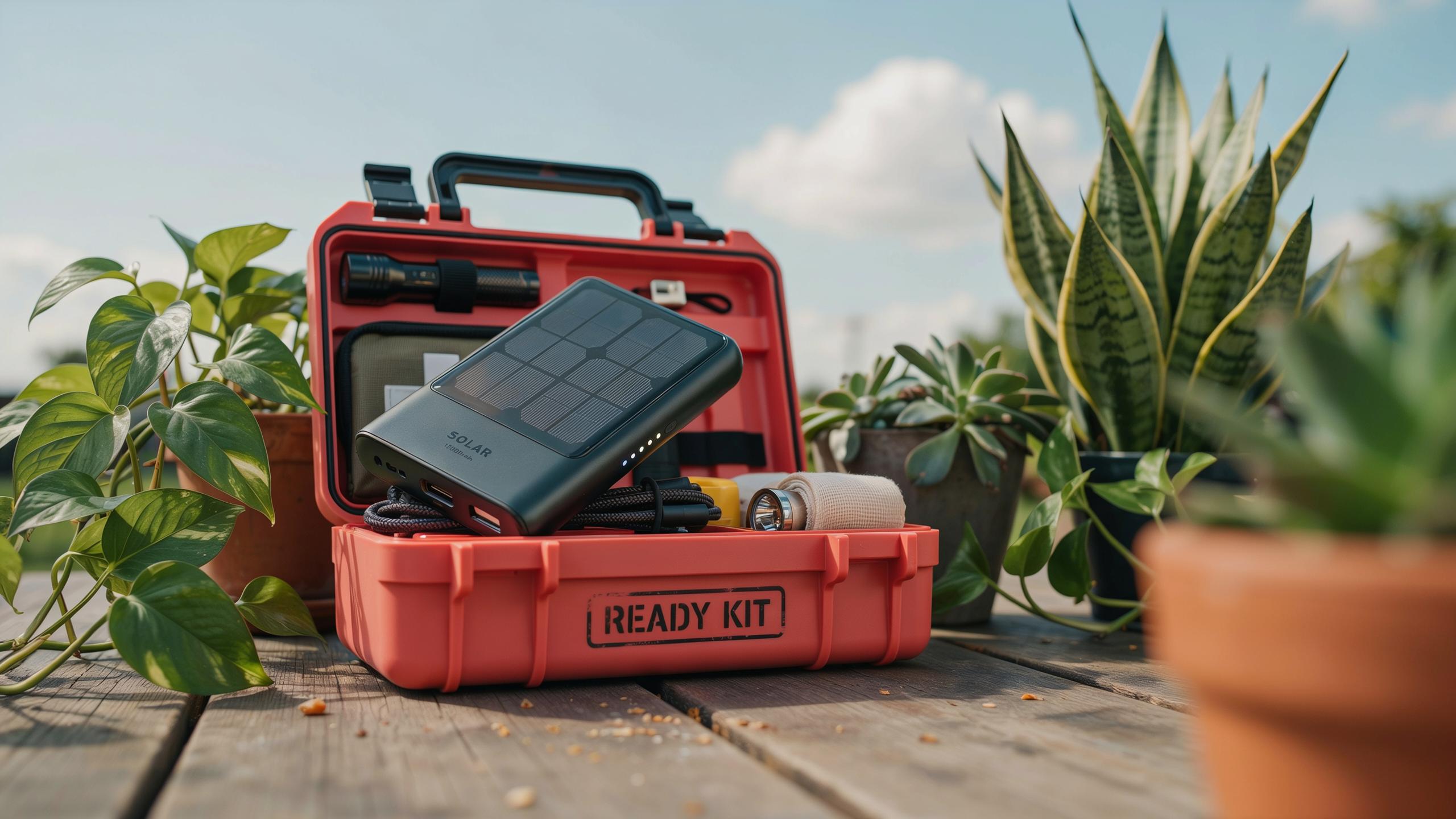
The Indispensable Role Of A Solar Power Bank In Emergency Preparedness

Why Traditional Power Sources Fall Short In Disasters
Wall outlets become useless within seconds of a power grid failure. During widespread outages from storms, earthquakes, or infrastructure damage, electricity stops flowing to homes and businesses. You cannot charge devices. You cannot power medical equipment. Disposable batteries deplete quickly when demand spikes. A single family running flashlights, radios, and phones simultaneously exhausts battery supplies in hours, not days. Replacement batteries may not be available during extended emergencies.
Traditional backup generators require fuel storage and maintenance. Gasoline degrades over time and creates safety hazards indoors. Generators demand regular servicing to function reliably when needed. They produce noise that broadcasts your location and create carbon monoxide risks. Battery backups stored at home offer limited capacity before depletion. None of these options provide the sustained, renewable charging capability required for multi-day or multi-week emergency scenarios.
How A Solar Power Bank Provides Sustainable Power
Solar power banks convert sunlight directly into electrical energy through photovoltaic cells. These devices store energy in internal batteries, creating an independent power source that does not rely on grid infrastructure. During daylight hours, the panels recharge the battery. At night or during cloudy conditions, the stored energy powers your devices. This cycle repeats indefinitely as long as sunlight exists. The system requires no fuel, produces no emissions, and generates no noise.
Energy independence becomes critical when normal supply chains fail. A solar power bank charges phones, tablets, radios, and medical devices without external infrastructure. Capacity ranges from 10,000 to 30,000 milliamp hours in portable consumer models, sufficient for multiple full smartphone charges. The charging speed depends on panel wattage and sunlight intensity. Unlike disposable batteries or fuel-dependent systems, solar power banks provide ongoing access to electricity throughout extended emergencies without resupply requirements.

Understanding Solar Power How Solar Chargers Work
The Fundamentals Of Photovoltaic Technology In Portable Devices
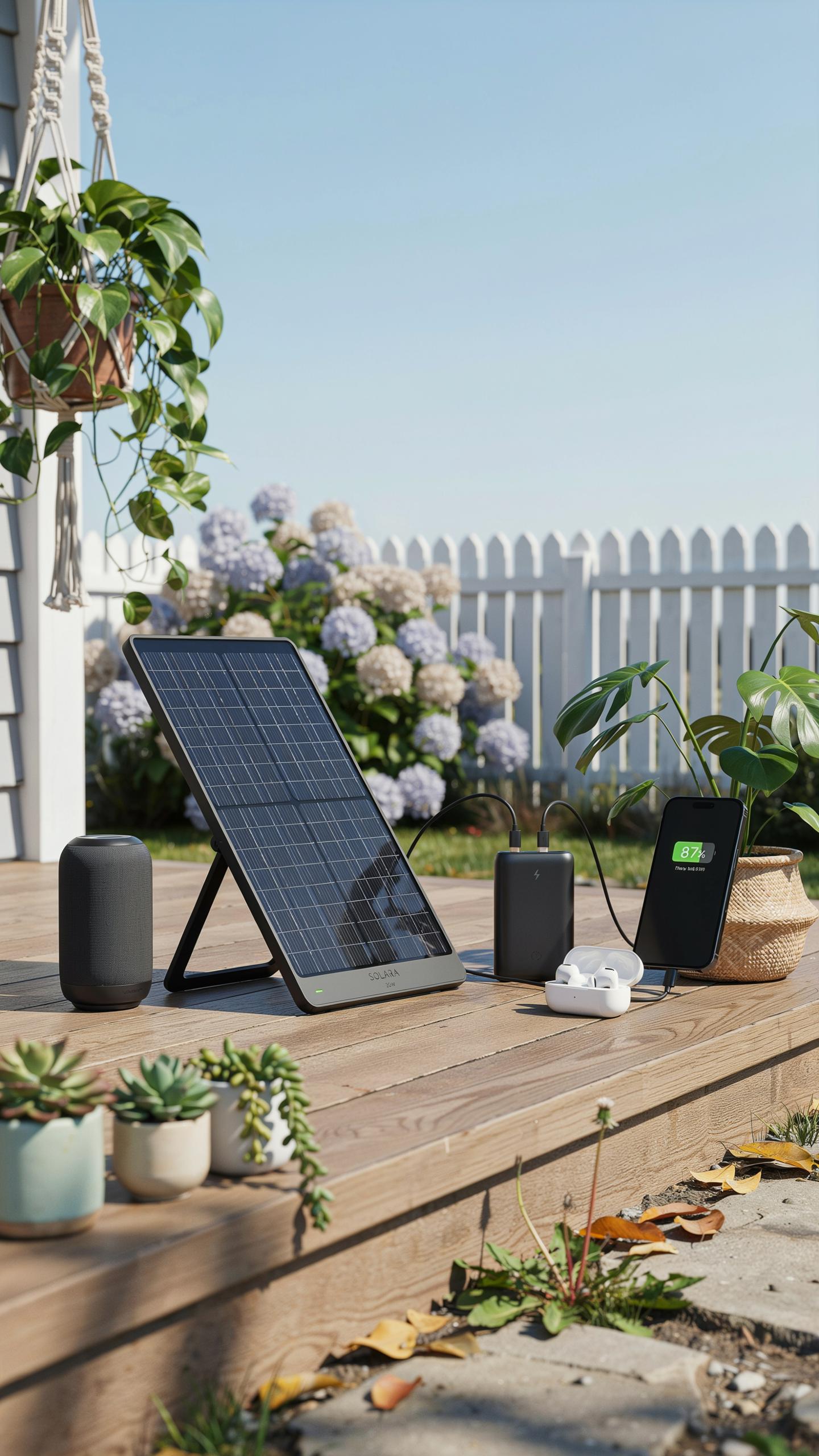
Solar panels contain photovoltaic cells made from semiconductor materials, typically silicon. When sunlight hits these cells, photons transfer energy to electrons. This energy excites electrons, causing them to move and create electrical current. The panel’s design channels this current through an internal circuit to your device’s charging port.
Portable solar chargers convert DC power generated by the panels into usable current for phones, tablets, and other gear. Most units include built-in charge controllers that regulate voltage and amperage to prevent device damage. The conversion happens continuously while sunlight strikes the panel surface. This direct conversion process requires no moving parts or fuel, making solar chargers reliable for emergency situations.
Key Factors Affecting Solar Charging Efficiency
Panel size directly impacts charging speed and total output capacity. Larger panels capture more sunlight and generate higher wattage. A five-watt panel charges slowly compared to a twenty-watt panel under identical conditions. Emergency kits should match panel size to realistic charging needs based on the devices you plan to use.

Sun exposure determines actual charging performance regardless of panel rating. Direct sunlight produces maximum output. Clouds reduce efficiency significantly, sometimes by fifty percent or more depending on cloud density. Weather conditions, time of day, and geographic location all affect how quickly a solar charger replenishes your device’s battery during an emergency.
Choosing The Best Portable Solar Power Bank For Your Kit
Capacity And Output Matching Your Power Needs
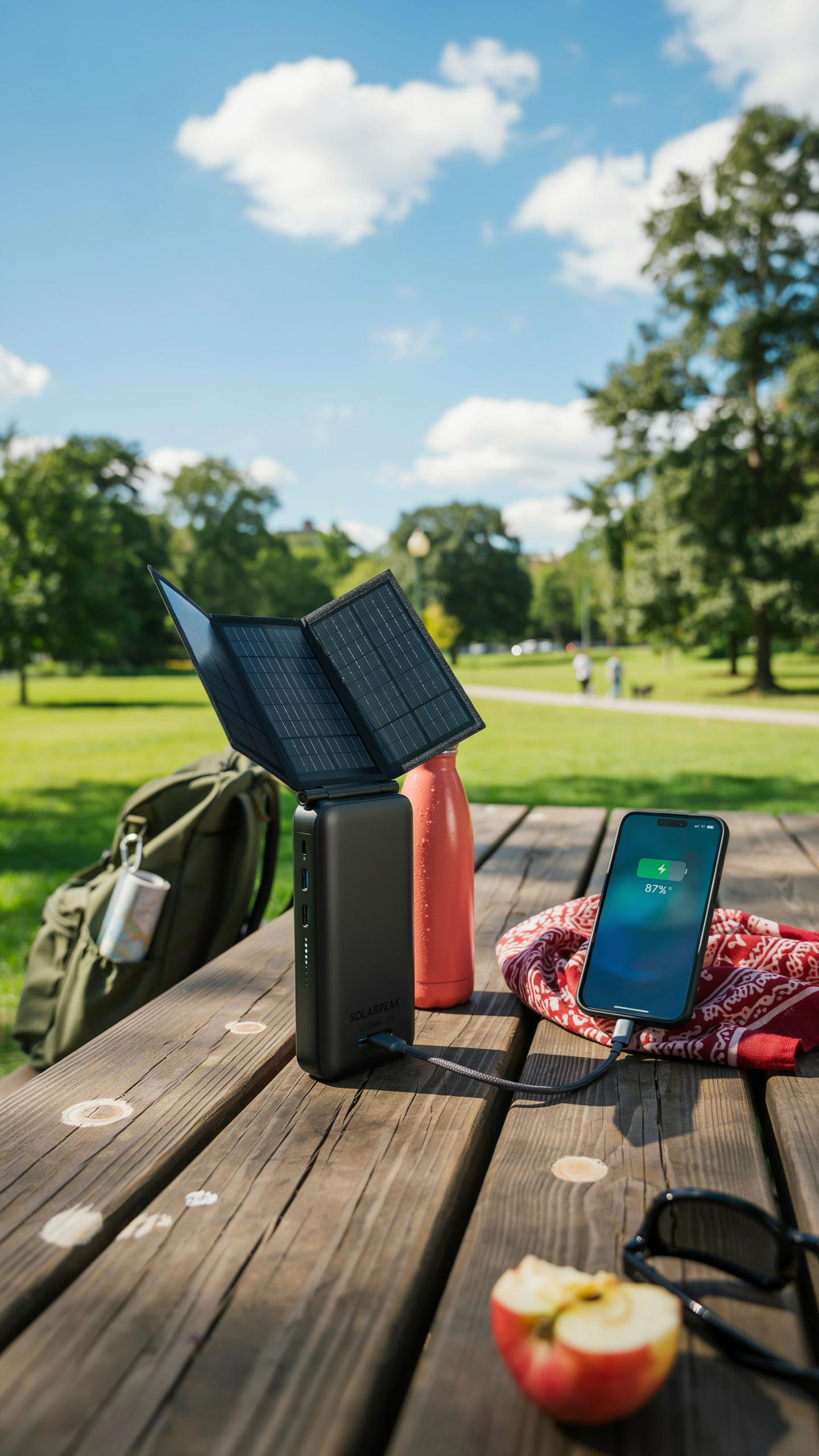
Capacity determines how many times you can charge your devices before the solar bank needs recharging. Measured in milliamp hours (mAh), higher ratings store more energy. A 20,000 mAh bank charges most smartphones three to four times. Calculate your actual needs by counting devices and usage frequency during emergencies.
Output ports determine which devices you can charge and how fast. USB-A ports work with older devices and many accessories. USB-C ports charge modern phones and laptops faster. Wireless charging adds convenience but wastes energy through heat. Match port types to your specific devices before purchase.
Durability And Features For Emergency Use
Water resistance ratings matter because emergencies involve unpredictable conditions. Look for IP65 rating or higher, meaning the unit survives dust and water spray. Most solar banks rated IP65 or above withstand temporary submersion. Drop protection requires rugged materials like rubber casing and reinforced corners.
Built in flashlights serve dual purposes in emergencies: charging your devices and providing light when power fails. The brightest models use LED technology producing 100 lumens or more. Some include SOS modes for signaling. Flashlights consume minimal battery, making them practical additions without sacrificing charging capacity.
Integrating A Solar Power Bank Into Your Emergency Preparedness Kit
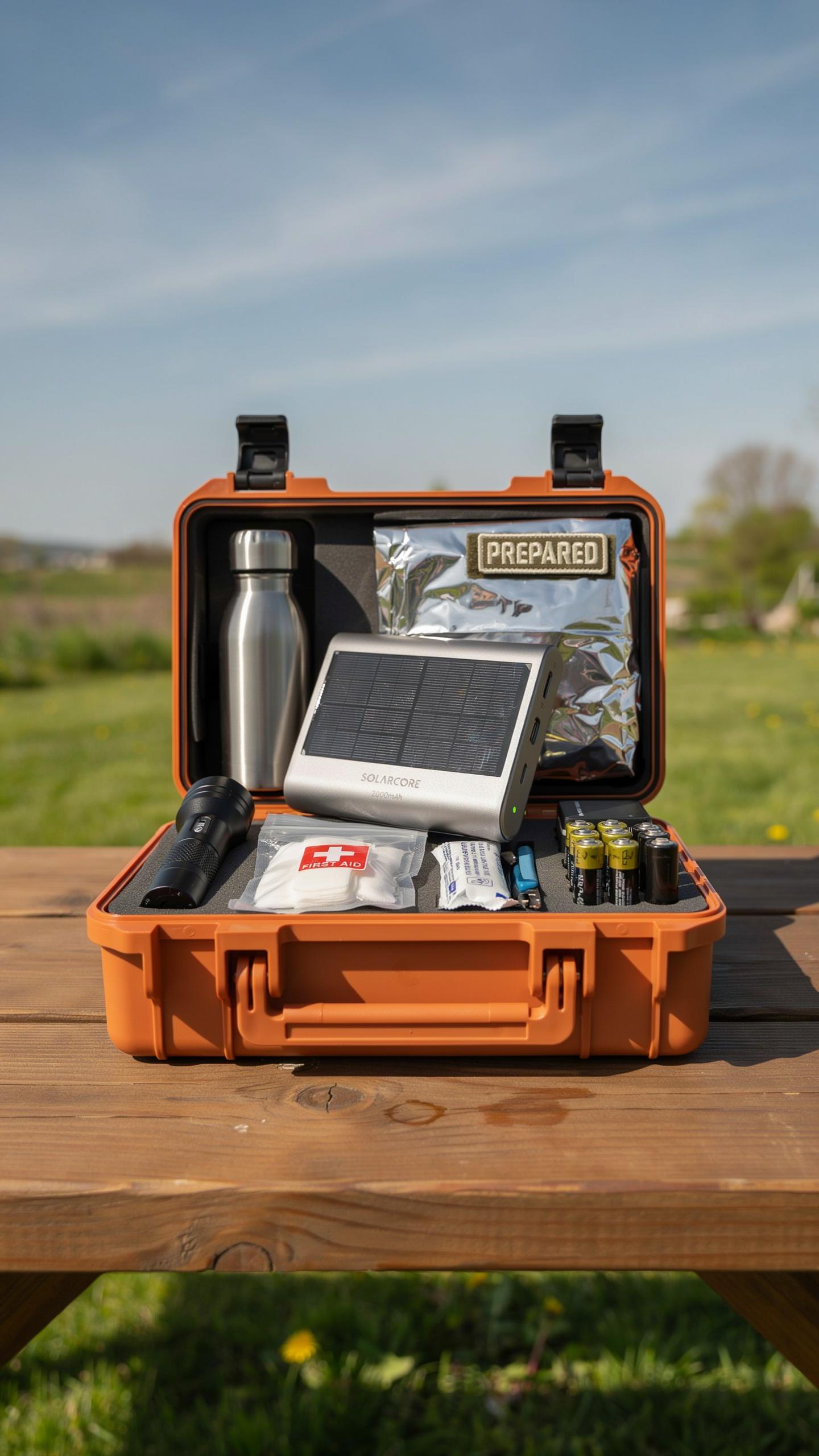
Essential Devices To Power During An Emergency
Power outages cut off access to critical information and safety tools. Your solar power bank must prioritize devices that enable survival, communication, and medical care. Identify which devices your household depends on most. Run through realistic scenarios to determine what loses power first and causes the most immediate risk.
- Mobile phones: Enables emergency calls to 911, receives alerts from authorities, and accesses maps and critical information. Most households rely entirely on mobile communication during disasters.
- Flashlights and headlamps: Provides visibility after dark when grid power fails. Battery-powered lights drain quickly, making a solar power bank essential for extended use.
- Portable radios: Delivers emergency broadcasts and weather alerts when internet and television fail. Battery-powered or hand-crank models need backup power sources to maintain continuous operation.
- Medical devices: CPAP machines, insulin pumps, and hearing aids require consistent power to sustain life. Patients dependent on these devices face immediate danger without backup power capacity.
- Portable power tools: Flashlights, fans, and air pumps help manage immediate threats. Solar power banks supply steady output for these safety-critical applications during extended outages.
Capacity matters directly. Calculate total power needs by adding device wattages and expected runtime. A 20,000 milliamp-hour solar power bank typically charges a smartphone four to six times. Match your bank capacity to the devices you must power, not the devices you might need.
Strategic Placement And Accessibility In Your Kit
Store your solar power bank where you can grab it immediately. Keep it in the same container as charging cables, adapters, and backup batteries. Label everything clearly so anyone in your household can locate critical gear in the dark or under stress. Your kit location must be known to all adults and older children.

Position the solar power bank near the top of your emergency kit, not buried at the bottom. Keep charging cables coiled and attached to the bank with cable organizers. Separate adapters by device type and store them in a small pouch. Test access to your kit monthly to confirm you can retrieve the solar power bank and cables in under thirty seconds without fumbling.
Maximizing Solar Charging Efficiency In Emergency Situations

Optimal Placement For Sun Exposure
Position your solar power bank at a 45-degree angle toward the sun when possible. This angle captures direct rays effectively across most latitudes and times of year. Face the panel south in the Northern Hemisphere and north in the Southern Hemisphere. Rotate the device every hour to track the sun’s movement and maintain peak exposure throughout the day.
Avoid placing your solar power bank flat on the ground or against vertical surfaces. Ground placement reduces light capture by up to 50 percent due to reflection loss and ground-level shade. Elevate the panel using rocks, sticks, or equipment to create clearance. Test positioning by observing where shadows fall on the panel and adjust accordingly to eliminate obstructions.
Tips For Charging In Less Than Ideal Conditions
Cloudy days reduce solar charging output to 10 to 25 percent of optimal conditions. Your power bank will still charge, but expect longer wait times for full battery capacity. Use cloudy periods for slow charging of low-priority devices while preserving battery reserves for critical communications. Extend charging time significantly and plan charging schedules around weather patterns you observe during your emergency.
Partial shade and indirect light require strategic repositioning. Move the solar panel frequently to catch direct sunlight between cloud breaks and shadows. Remove the power bank from backpacks or cases during charging sessions to expose panels fully. Keep backup power sources available because solar charging becomes unreliable as weather conditions worsen, making redundancy essential for emergency preparedness.
Beyond Phones Other Uses For A Portable Power Bank In Emergencies
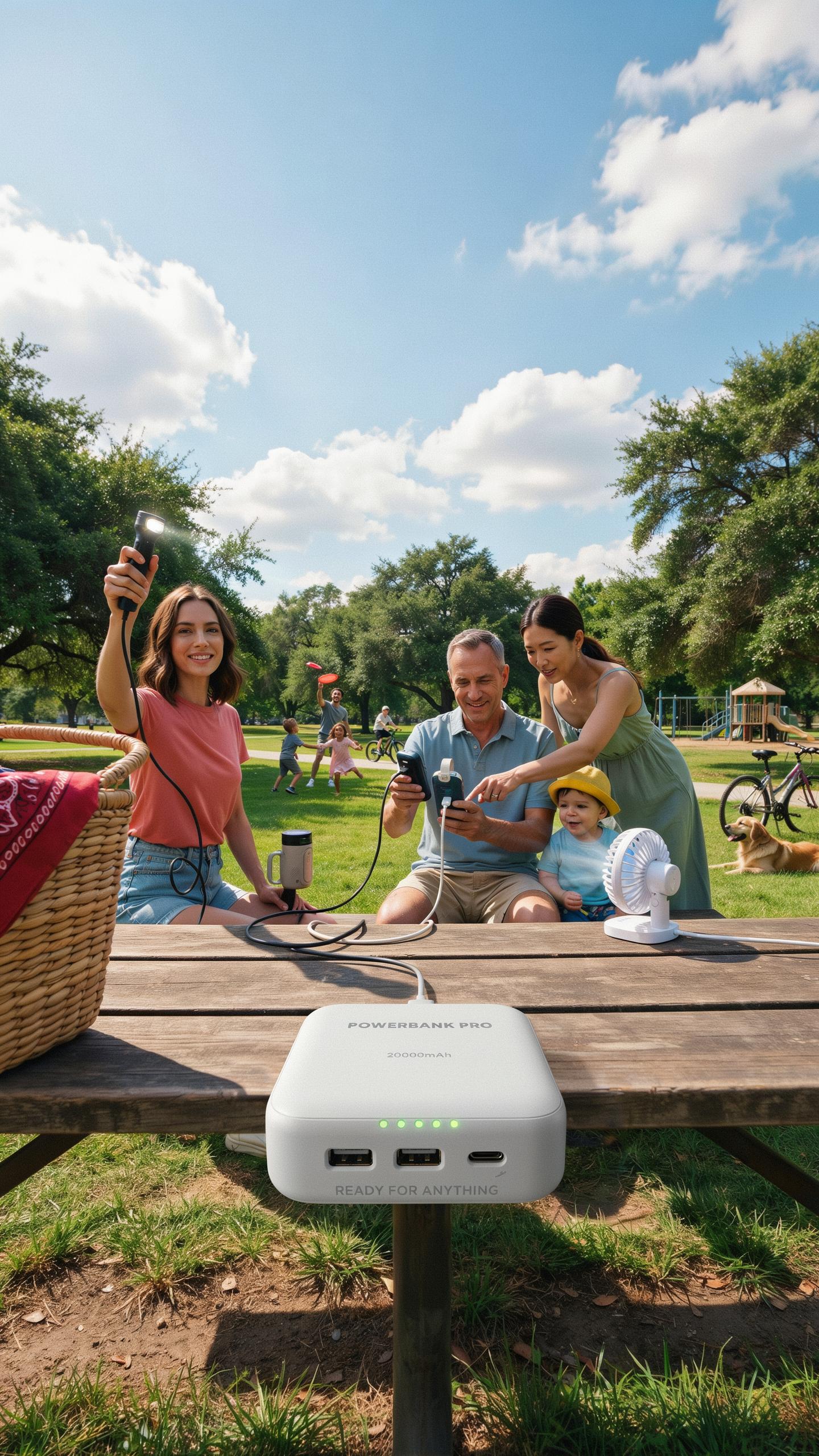
Powering Essential Medical Devices And Radios
A portable power bank keeps life-critical medical equipment running when the grid fails. CPAP machines, insulin pumps, and nebulizers depend on steady power during emergencies. A solar power bank with adequate capacity ensures these devices operate through extended outages. Medical device manufacturers specify power requirements. Match your power bank’s output voltage and amperage to your device’s needs. Underestimating capacity wastes critical time during a crisis.
Emergency radios demand consistent power for communication when infrastructure collapses. Weather radios, two-way radios, and ham radio equipment require reliable charging. A power bank rated for your radio’s draw prevents mid-transmission shutdowns. Solar charging extends operational time indefinitely if sunlight remains available. Test your setup before emergencies strike to confirm compatibility and performance under real conditions.
In every emergency kit, a solar power bank is a whisper of hope, a reminder that even in darkness, the sun’s embrace can illuminate our path home.
Lighting And Navigation Tools
Headlamps and flashlights represent force multipliers during power outages and evacuation scenarios. These tools demand rapid, sustained power delivery for hours of continuous operation. A power bank rated at 10,000 mAh or higher charges multiple lighting devices multiple times. Direct USB connections eliminate the need for additional batteries. Confirm your light fixtures accept USB charging before purchasing.

GPS devices and mapping tools guide you through unfamiliar terrain when roads become impassable. Navigation equipment drains batteries quickly under constant use. A power bank supplies extended runtime without relying on satellite-dependent backups or unstable networks. Solar charging capability adds operational days to your navigation capacity. Pair your power bank with a dedicated GPS unit designed for emergency use.
Maintenance And Longevity Of Your Solar Power Bank
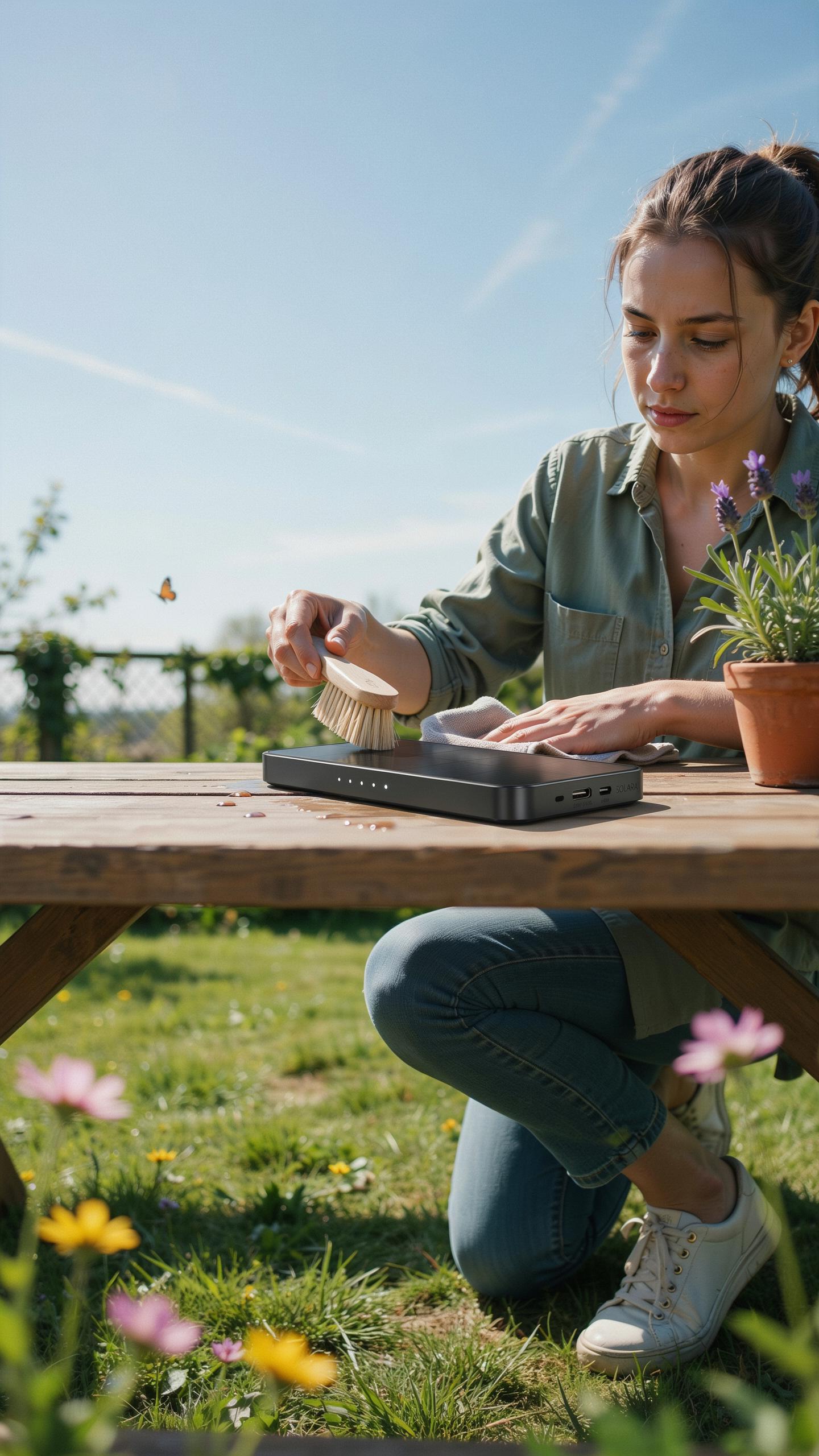
Proper Storage And Periodic Charging
Store your solar power bank in a cool, dry location between 50 and 85 degrees Fahrenheit. Extreme heat degrades lithium battery chemistry faster than anything else. Keep it away from direct sunlight when not in use, despite its solar capability. This prevents unnecessary heat buildup inside the unit. A desk drawer or storage box works fine for long-term readiness.
Charge your power bank fully every three to six months, even if unused. Battery chemistry deteriorates when sitting at zero charge for extended periods. Connect it to a wall outlet rather than relying solely on solar panels for these maintenance charges. This ensures consistent voltage delivery that batteries need to stay healthy. Mark your calendar or set a phone reminder to make this routine automatic.
Troubleshooting Common Charging Issues
Slow charging typically stems from weak solar panel output or a damaged charging cable. Test the cable first by connecting it to another device. If that device charges normally, your solar panels need cleaning or repositioning toward direct sunlight. Dust and debris reduce panel efficiency significantly. Wipe panels with a soft, dry cloth and angle them perpendicular to the sun.

Non-charging scenarios require systematic diagnosis starting with the power source. Try charging from a wall outlet first to isolate whether the problem is solar-related or internal. If wall charging works, your solar panels or their circuitry need inspection or replacement. If wall charging fails, the battery or internal charging circuit is faulty and the unit requires warranty service or disposal. Document what you tested so you can explain the issue clearly when contacting the manufacturer.
Wireless Charging And Advanced Features In Solar Powerbank Technology
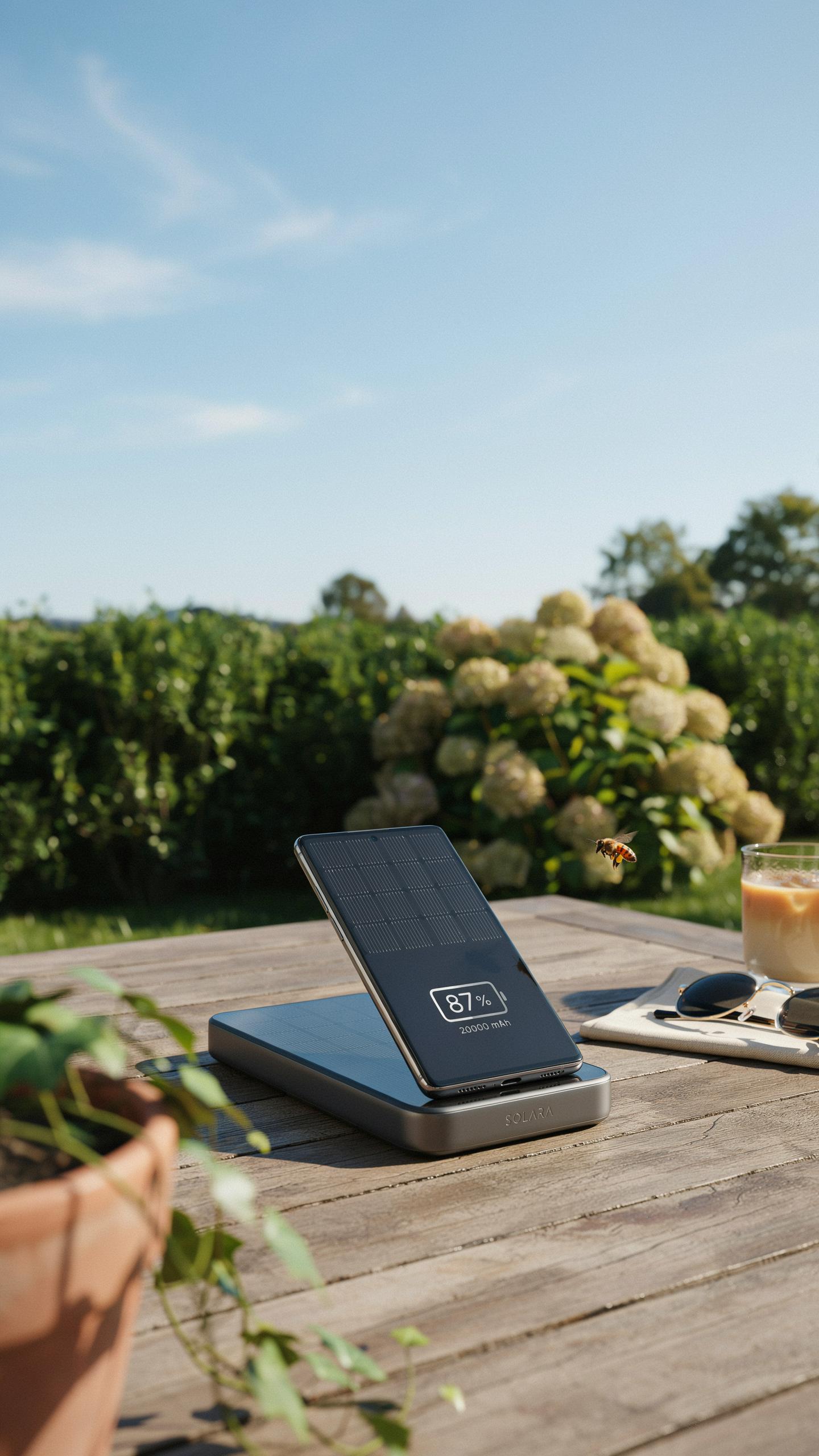
The Convenience Of Solar Power Bank Wireless Charger Options
Wireless charging eliminates cable management during emergencies when you need speed and reliability. Qi-standard wireless chargers work with compatible phones, reducing clutter in your emergency kit. You avoid wear on charging ports that fail under stress. The tradeoff is slower charging speeds compared to wired connections and energy loss through inefficiency.
Wireless charging adds weight and cost to solar power banks. Most emergency-grade units prioritize wired output because it delivers power faster when minutes matter. If you choose wireless capability, verify the wattage output. Test the feature before an actual emergency to confirm compatibility with your specific devices.
Future Trends In Portable Solar Power
Efficiency gains in photovoltaic cells continue incrementally as manufacturers refine silicon technology and explore perovskite alternatives. Battery storage capacity grows through lithium chemistry improvements and solid state development. Faster charging protocols emerge as manufacturers adopt new standards. Integration with IoT features allows devices to report charge status and optimize power distribution automatically.

Durability enhancements focus on weatherproofing and rugged materials that survive extreme conditions. Power output per square inch of panel continues rising through better cell design. Manufacturing costs decline as production scales, making solar power banks more accessible. Real-world emergency performance remains the critical metric that separates marketing claims from actual reliability.
Real World Scenarios The Impact Of Portable Solar Power

Case Studies Of Solar Power Banks In Disaster Relief
During Hurricane Maria in Puerto Rico in 2017, residents faced prolonged power outages lasting weeks in some areas. Solar power banks enabled families to charge critical devices including phones for emergency communication and medical equipment requiring battery power. Local relief organizations distributed solar units to shelters and evacuation centers where grid power remained unavailable.
The 2016 Ecuador earthquake demonstrated how solar power banks functioned in remote mountainous regions where fuel delivery for generators proved difficult. Emergency responders used portable solar units to charge communication devices and lighting equipment in areas cut off from infrastructure. Solar devices required no logistics chain, making them faster to deploy than traditional fuel based power solutions.
Personal Testimonials And User Experiences
A family in California experiencing the 2020 wildfire evacuations reported that a 20,000mAh solar power bank kept their phones operational during the three day evacuation period. They charged devices using stored battery capacity since cloudy smoke conditions limited direct sunlight. The ability to maintain contact with family members and receive emergency alerts proved critical during the evacuation process.
A Florida resident who weathered Hurricane Ian in 2022 stated that a solar power bank charged his wife’s insulin pump during a four day power outage. The device powered the medical equipment through multiple daily charging cycles without requiring fuel or external power sources. He emphasized that the backup power source prevented a dangerous medical emergency when conventional power remained offline.
Frequently Asked Questions

What exactly is a solar power bank and why is it useful for emergencies?
A solar power bank is a portable battery that can be charged using sunlight, offering a renewable energy source for your devices. It’s incredibly useful for emergency preparedness kits because it provides off-grid power for essential electronics like phones and radios, ensuring communication and information during outages.
How do I efficiently charge my solar power bank for emergency preparedness?
To efficiently charge your solar power bank for emergency preparedness, place it in direct sunlight, ideally angled towards the sun for maximum exposure. Avoid shaded areas or charging through windows, as these significantly reduce efficiency. Most models have indicator lights to show charging progress.
Are reliable solar power banks for emergency preparedness expensive, or are there affordable options?
You can definitely find reliable solar power banks for emergency preparedness across various price points. While high-capacity models can be pricier, many affordable options exist that still provide sufficient power for essential devices. Look for reputable brands and consider your specific power needs to find the best value.