The “Visual Guesswork” Fallacy: Why Your Eyes Lie

Wood Veneer Doesn’t Tell You When It Was Built
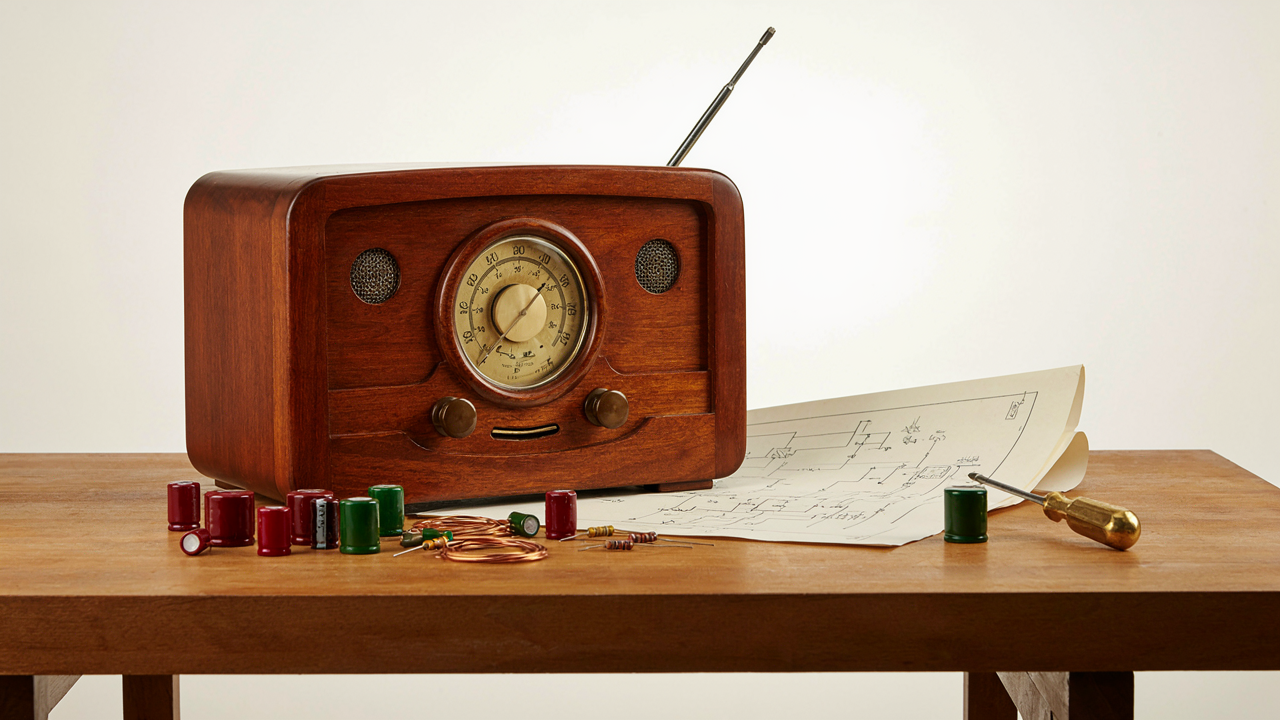
You want to feel like an expert without doing the actual work. Here’s what kills that fantasy: the exterior cabinet tells you almost nothing about when a radio was manufactured. A 1935 Philco radio in mahogany veneer looks nearly identical to a 1938 model with the same finish. Manufacturers didn’t change cosmetics every year because retooling the cabinet dies cost serious money. They kept the same wooden shell for three, sometimes five years while swapping out every internal component.
The mechanism at work here comes from industrial economics, not design. You’re looking at the symptom, not the cause. A gorgeous Art Deco wooden cabinet with rounded edges doesn’t prove age—it proves a designer made choices about appeal that lasted longer than the radio’s actual circuit inside. Philco, Zenith, RCA, and Majestic all operated on the same logic: maximize the cabinet lifespan while updating tubes, condensers, and transformers when new technology demanded it. To identify an antique radio correctly, you have to ignore what your eyes are drawn to and start reading serial numbers and component dates instead.
Clone Designs And The Brand Confusion Trap
Most vintage radio identification guides tell you to spot differences between brands by looking at dial faces and trim details. This advice is incomplete because it misses the real problem: manufacturers actually copied each other relentlessly, and smaller companies licensed designs from larger ones. A radio that looks like a Philco might carry Crosley, Sparton, or Emerson branding. The cabinet shape alone proves nothing about who actually designed or built it.
This happened because tooling costs were prohibitive. A small manufacturer could license a proven cabinet design from a larger competitor, swap out the internal components, and stamp their own nameplate on the front. You’ll find dozens of radios from the 1930s and 1940s with identical wooden bodies but different maker badges. The only way past this trap is checking the tube configuration, the transformer specifications, and the internal layout before you trust the exterior branding. Serial numbers and component sourcing matter far more than whether the wood looks “authentic.”
The Component Cartography Protocol: A Retro Radio Breakdown
Tube Types And Their Evolutionary Timeline
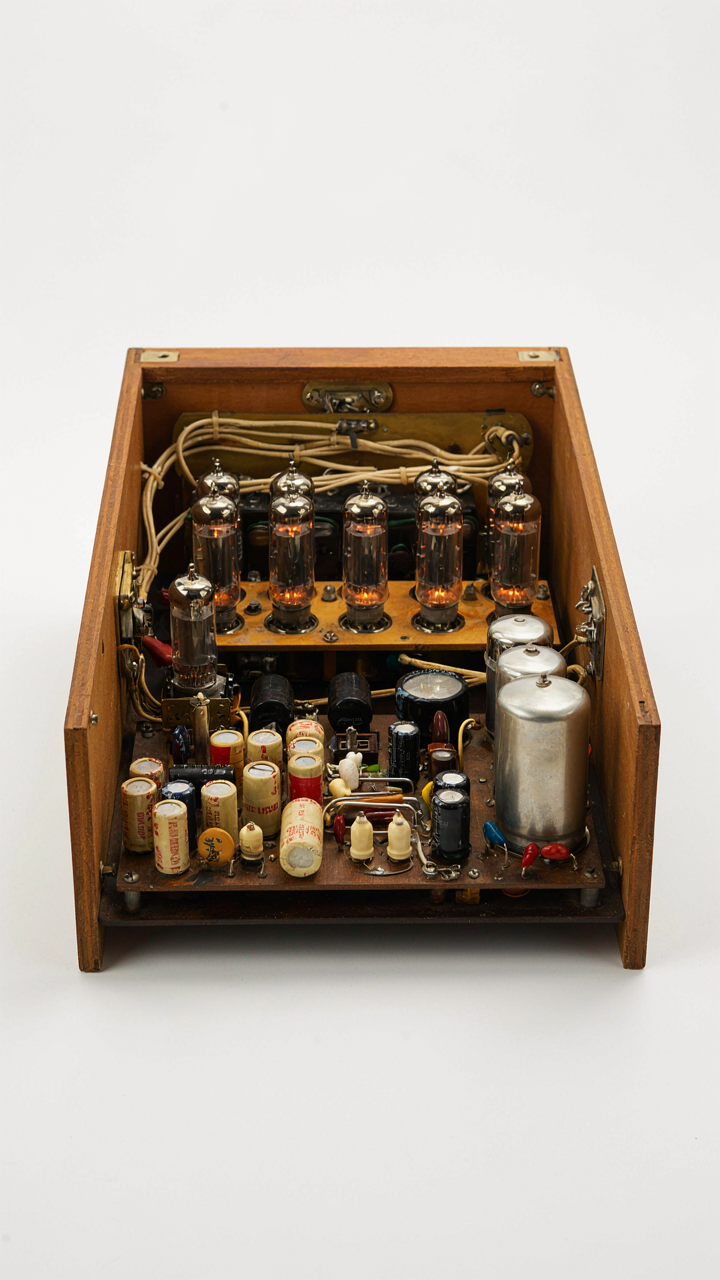
You want to feel confident you’re not getting ripped off, and tubes are the fastest way to separate actual vintage from assembly-line reproduction. Think of tubes like geological strata in archaeology: each layer tells you when the radio was built. Radio manufacturers didn’t upgrade tubes for fun. They switched when the industry standardized new models, and that shift creates a datable fingerprint.

The most common tubes in radios from 1920 to 1945 were octal base designs like the 6L6, 6V6, and 12AX7. By the late 1940s, manufacturers started using miniature tubes with noval bases, signaling a move toward smaller chassis and lower power consumption. If you crack open a radio claiming to be from 1935 and find noval-base tubes, something’s wrong. The tube type alone narrows your date window down to a five-to-ten-year range in most cases.
Capacitor Signatures: Identifying Manufacturing Eras
Most people look at capacitors last, which is why they miss the clearest manufacturing date on the radio. Capacitor construction evolved dramatically, and each generation left a material signature. From 1920 to 1945, electrolytics came in cardboard tube housings wrapped in wax paper. The 1950s introduced metal cans. By the 1960s, you see molded plastic bodies. No manufacturer jumped backward.
Check the capacitor labels and construction method first. Wax paper wrapping with cardboard tubes means pre-war or early war production. Metal-canned electrolytics with solder-tag terminals point to mid-1940s through 1950s. Plastic bodied capacitors mark anything from the early 1960s onward. The materials reveal the decade faster than any other single component because capacitor suppliers didn’t maintain old stock formats. When the supply chain shifted, every radio manufacturer shifted with it.
Transistor Transition: Pinpointing 1950s Transistor Types
When Germanium Ruled The Early Years
You want to feel like you know what you’re holding. The truth is simpler: most people confuse transistor type with actual age because they skip the physical evidence. Germanium versus silicon isn’t abstract—it’s material science that changed manufacturing constraints, and those constraints show up in the chassis itself.

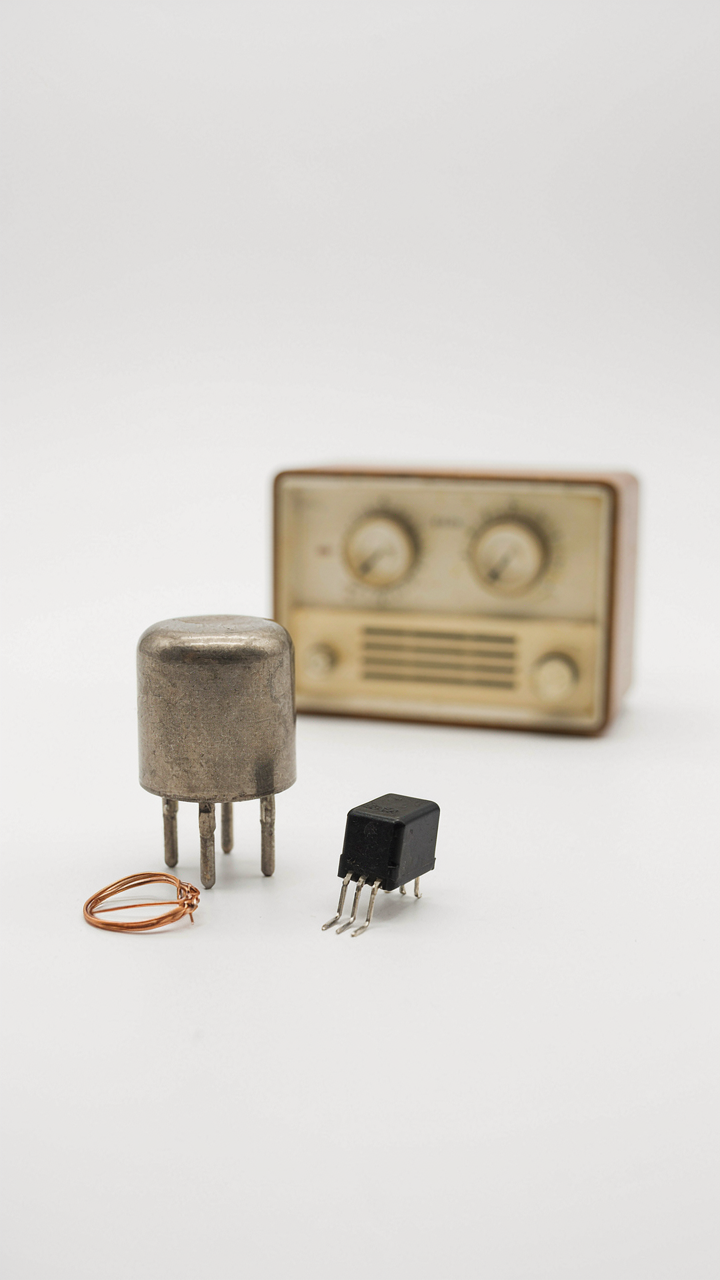
Germanium transistors dominated from 1947 through the mid-1950s because silicon remained expensive and difficult to process reliably. Germanium radios ran hotter, required larger heat dissipation, and broke down faster in high-temperature environments. A radio stuffed with germanium means pre-1955 or early-1955 at the latest. Silicon transistors arrived around 1954 but didn’t displace germanium in consumer radios until the late 1950s. The physical size of the radio tells you which one won: germanium designs stayed bulkier longer because the transistors themselves needed more support circuitry to compensate for thermal drift.
Open the back of a radio and look at the component density. Tight packing with smaller transformers signals silicon. Loose arrangement with larger components signals germanium. This matters because manufacturers didn’t retrofit—they redesigned from scratch when switching materials. The transition period created a short window where you’ll find both types in different models from the same brand in the same year.
Compact Design Changed Everything After 1957
Industrial design borrowed from electronics here—form followed the constraints of the available parts. Smaller transistors meant smaller capacitors, smaller transformers, smaller everything, which meant the radio itself could shrink. This wasn’t aesthetic choice. Miniaturization directly followed material advancement and manufacturing yield improvement.
By 1957, silicon yields had improved enough that manufacturers could pack more transistors into less space. The pocket radio became viable. A radio that fits in your palm came after 1958. A radio that barely fits your hand came before. Size becomes your most reliable dating tool when combined with transistor type. The physical dimensions also correlate with battery configuration—early germanium radios needed higher current draw, so they used larger battery cells or multiple cells in series. Later silicon designs ran cooler and used smaller batteries or fewer of them, which drove the external form factor smaller. Check the battery compartment. Large cells or multiple compartments point backward in time. Compact single-cell design points forward.
The “War Economy” Ripple: Old Radios And Material Scarcity
Materials Tell Time Better Than Serial Numbers
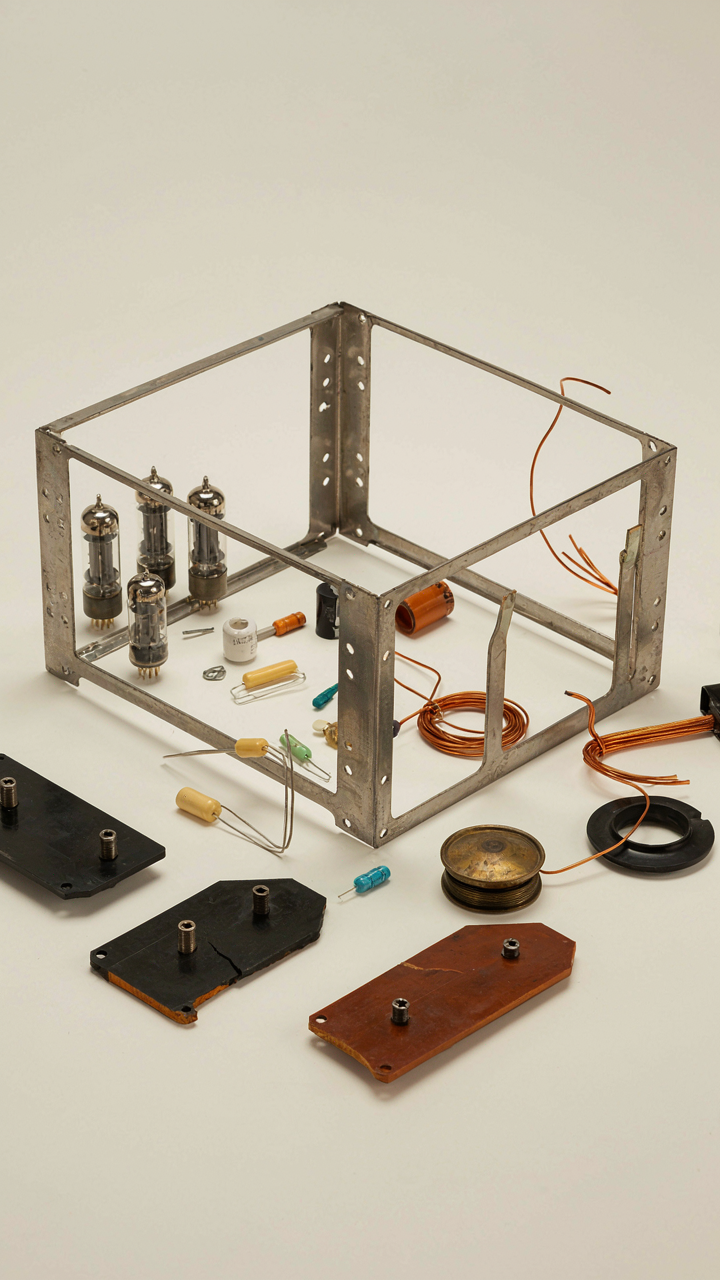
You want to believe the manufacturer’s stamp proves everything. It doesn’t. What actually dates a radio is what it’s made from, because material availability followed wartime constraints like a supply chain shadow. From 1942 onward, copper, brass, and aluminum vanished into military production. Manufacturers switched to phenolic plastic, Bakelite substitutes, and steel chassis where they’d used other metals before. These shifts happened fast and regionally uneven. Spot the material swap and you’ve narrowed the date window more reliably than hunting for a logo.

Pre-war radios used genuine Bakelite for cases and phenolic compounds for internal parts because they were cheaper and plentiful. By 1943, makers abandoned these for whatever didn’t feed the war machine. Post-war sets revert to the materials again, but the transition years show the desperation in the substitutions. A cabinet that should be wood but is painted metal. Chassis components made from inferior alloys. These aren’t manufacturing defects. They’re timestamps printed in chemistry. Examine what the chassis is actually made from, not what the label claims it should be, and you cut years off your identification work.
Stamps From Uncle Sam’s Procurement Office
Military contract stamps don’t prove a radio was military issue. They prove a manufacturer filled a government order, which happened across civilian models too. The War Department bought stock radios and rewired them for field use, or manufacturers dual-produced civilian and military runs on the same assembly line. You’ll find an alphanumeric code, often “JAN” (Joint Army Navy), or contract numbers stamped into the chassis. These codes point to specific procurement periods and military specifications, but they don’t automatically make the radio a collector’s prize or prove its original function.
What matters tactically is that military contract work concentrated from 1942 to 1945 in specific regions and specific factories. If you find a JAN stamp, the radio dates to that window and came from a manufacturer deemed reliable enough for government contracts. Cross-reference the manufacturer against known military supplier lists from that era. Surplus radios from government liquidation sales often retained their stampings but sold as civilian stock after 1946. Check the transformation: look for evidence of military wiring removed, civilian components retrofitted, or original military specifications stripped away. The stamp dates the production run. Everything else requires inspection of the actual modifications.
The Circuit Board Archeology Method: Tracing Vintage Radio Components

When The Wiring Tells The Real Story
You want to feel like an expert without actually learning the hard skill. The circuit board won’t let you fake it. Like paleontologists read sediment layers, radio collectors read component placement and construction method as direct evidence of when a radio was built. The layout isn’t decoration—it’s a decision tree frozen in time that reveals the manufacturer’s capabilities, cost constraints, and access to materials at that exact moment.

Early radios hand-wired every connection with cloth-covered wire and point-to-point soldering. Later models moved to turret terminals and eventually printed circuits. The density and organization of components on the board tells you which era the radio comes from. A loose, spacious layout with large transformers means pre-1935. Tighter component clustering suggests 1940s or later. Military contracts drove miniaturization faster than consumer models did, so military spec radios often show denser layouts than their civilian equivalents from the same year.
Hand Soldered Versus Factory Automated
The difference between hand-wired and early automated assembly isn’t just efficiency—it changes what you actually see when you open the back.
- Hand soldered joints (pre-1945 typical): Joints appear bulbous and uneven, with excess solder pooled at connection points. Wires loop and spiral with no particular geometry. Each joint looks slightly different from its neighbor because a human made every single one.
- Turret terminal boards (1945-1955 common): Wires wrapped around small brass posts soldered to a fiberglass or phenolic board. Wrapping appears consistent and tight. Joints are smaller and more controlled than hand work, indicating mechanical wrapping tools.
- Wave soldering evidence (1960s onward): Solder appears uniform across multiple joints simultaneously. Component leads poke through a printed circuit board rather than sitting on top. No visible cloth-covered wires—everything is on the board itself.
- Cold solder joints (quality control failure, any era): Dull, grainy solder appearance rather than shiny. Indicates rushed work or inadequate heat. More common in cheap consumer models and wartime production.
- Military spec soldering (any era with military contracts): Joints are uniformly shiny and smooth. Wires are bundled with rigid precision. Excess solder removed completely. Reflects government inspection standards that exceeded civilian manufacturing.
Run your finger across the board without touching components. Smooth, uniform solder means factory process. Lumpy, varied joints mean hand work. This tactile check takes five seconds and eliminates guessing about whether you’re looking at 1930s handcraft or 1960s automation.
Market Forces As Chronometers: The 1950s Radio Collection Boom

When Scarcity Ended
You want to know the 1950s because that’s when radio stopped meaning something. Post-war factories retooled fast. Returning soldiers had cash. Consumer demand hit levels manufacturers had never seen. This isn’t nostalgia talking—it’s economics as a dating mechanism. The sheer volume of radios produced after 1945 means a radio from this era tells you exactly when it was made based on what was competing for shelf space that year.

RCA, Philco, Zenith, Motorola, and Emerson flooded the market with overlapping model lines. Each brand chased market share through design cycles that moved yearly, sometimes twice yearly. This rapid production meant radios from 1951 look visibly different from 1954 models. The cabinet styling, dial design, tube configuration, and materials changed constantly. Identifying a 1950s radio requires matching these design markers to documented production windows—not guessing.
Portability Changed What Got Made
Everyone says portability killed the console radio. That’s incomplete. Transistors didn’t exist in volume until 1954, and they were expensive. What actually killed the living room radio was the car. Manufacturers designed portables first to capture road-trip buyers, then miniaturized everything afterward. This shift shows up in your radio through materials, form factor, and power requirements. A 1948 radio and a 1958 radio solve different problems—and their physical construction proves it.
The shift toward portability created a clear visual dividing line. Early 1950s sets still used large paper capacitors and tube arrays that required inches of depth. By 1957, manufacturers packed circuits tighter, used plastic chassis instead of metal, and standardized smaller speakers. These weren’t improvements—they were cost cuts driven by competition. When you identify an antique radio from this era, you’re actually reading the manufacturer’s choice about which customer segment they wanted to reach that year.
Deconstructing Aesthetic Eras: Beyond 60s Aesthetic Vintage Labels
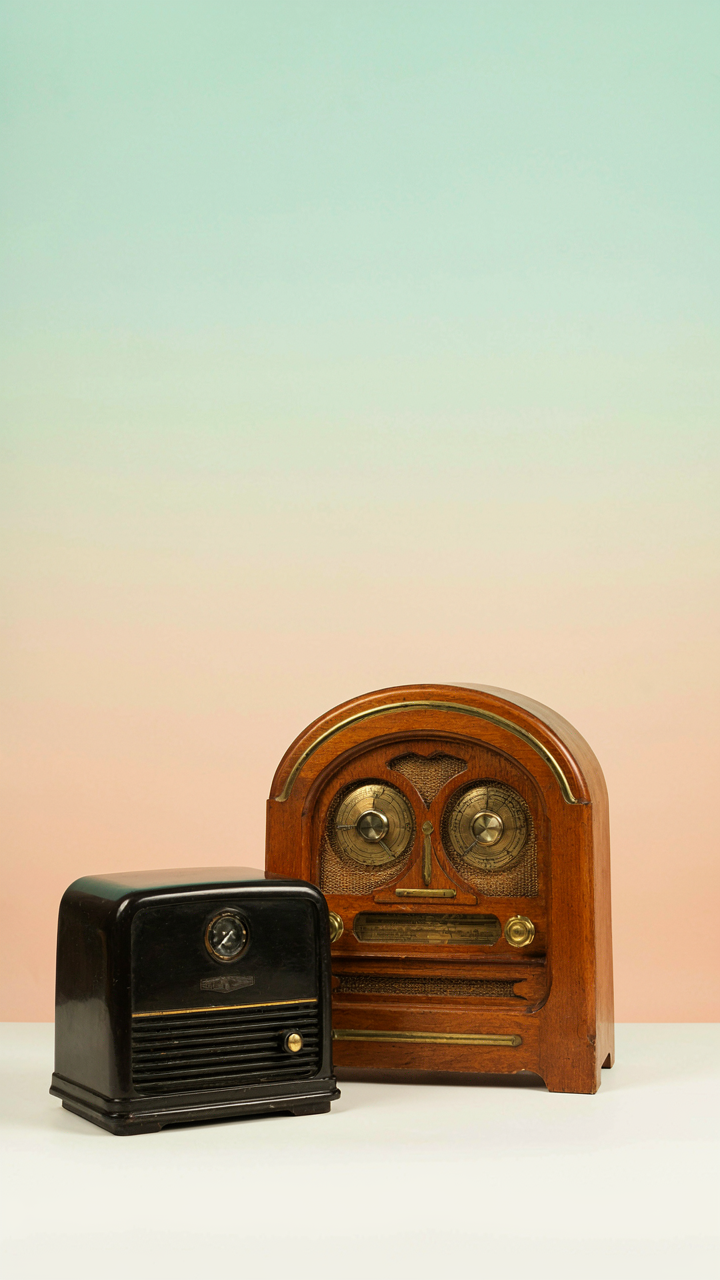
Form Follows The Engineering Constraint
You want to believe the radio’s shape tells you everything. It doesn’t. The real mechanism is this: industrial design didn’t happen in a vacuum. Each era’s radio form solved a specific engineering problem first, then dressed it up second.

Take the transition from wooden cathedral radios to bakelite sets in the 1930s. Bakelite wasn’t chosen because designers thought it looked modern. It was cheaper to mold, didn’t require hand carpentry, and could be mass-produced without skilled labor. The aesthetic followed the production method, not the other way around. Understand the constraint and you decode the design.
The cabinet size itself reveals manufacturing limits of the era. Larger tubes required larger chassis. Smaller tubes arrived in the 1950s, so radios got compact. When transistors replaced tubes in the late 1950s and early 1960s, radios became pocket-sized not because design trends shifted, but because the technology finally allowed it. The form is a fossil record of what was technically possible and economically viable.
What The Materials Really Meant
Materials signal economic reality and available infrastructure more than aesthetic preference. Most people assume a radio is “retro” based on its outer shell. Wrong angle. The case material reveals when and where it was built.
Wood-veneer radios dominated through the 1940s because radio manufacturers were often furniture companies first. Bakelite and Catalin took over in the 1930s and held through the 1950s because plastic injection molding solved the labor problem. Aluminum chassis and steel frames weren’t style choices either. They came standard because the war effort in the 1940s normalized metal fabrication, and surplus equipment flooded the market afterward.
The material combination you’re holding tells you the manufacturer’s supply chain and cost structure. A radio mixing wood cabinet with metal trim and bakelite knobs didn’t reflect mixed aesthetics. It reflected what was available when that specific factory ordered its parts. Check the solder joints, the rivet patterns, and the material thickness. These aren’t decorative. They’re fingerprints of the decade that made the object.

The Fake Out Factor: Spotting Modern Replicas (Gaming Decor)
Where The Shortcuts Show
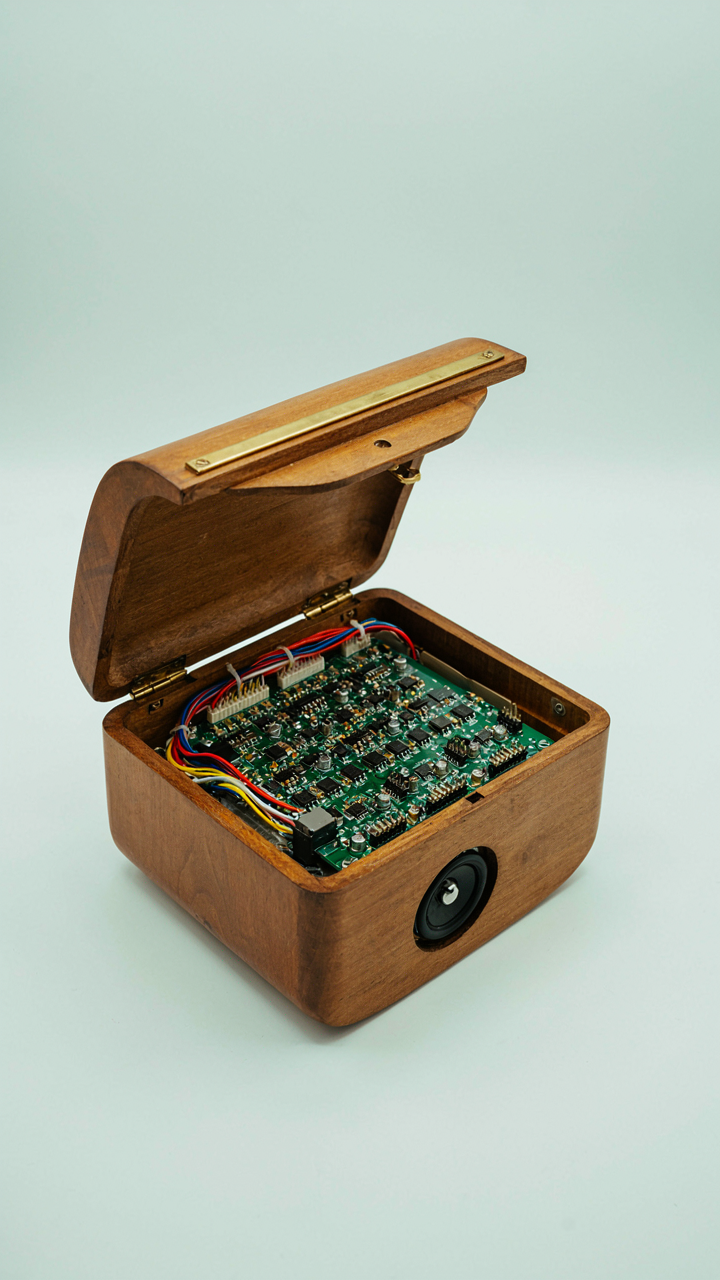
You’re afraid you paid for history and got mass production instead. Here’s what actually happens: modern manufacturers cut corners on the exact processes that consumed time and cost in the 1930s through 1970s. Real vintage radios used hand-wound coils, point-to-point wiring, and chassis stamping that required tooling investment. Replicas use injection molded plastic cases, printed circuit boards, and stamped components designed for speed. The mechanism is simple: examine where time was spent.
Check the chassis interior first. Vintage radios show solder joints that vary slightly in size and color because they were hand-soldered by different workers on different days. Modern replicas show uniform, machine-soldered joints with consistent bead geometry. Look at wire routing inside the cabinet. Authentic sets route wires around the chassis to avoid heat sources, with cloth insulation that yellows predictably. Replicas bundle wires tight and use modern plastic insulation that doesn’t age the same way. The interior tells the real story before you ever plug it in.
Modern Parts In Vintage Skin
The common advice says “check if it powers on.” Wrong. That’s the trap. Replicas now integrate switching power supplies, LED backlighting, and modern transformers inside bodies that look period-correct from the outside. You’re looking at industrial design theater, not authenticity. The mechanism here is simple: modern components generate different heat signatures and failure modes than their predecessors.
Open the back of the set. A real radio from 1945 has a large, heavy transformer that fills space visibly. Replicas cram efficient modern transformers into corners to leave room for speakers or hidden USB ports. Check tube sockets if the set uses tubes. Vintage sets have sockets made from bakelite or ceramic that show specific wear patterns matching their age group. Modern replicas use modern socket materials that don’t discolor or crack the way period components do. Photograph the power supply from multiple angles, then cross-reference it against documented schematics for that model.

The Provenance Principle: Unearthing True Antique Radio Lineage

Serial Number Decoding And Factory Batch Tracing
You want proof you own something real, not a reproduction someone’s uncle built in 1987. Serial numbers are the forensic evidence. Manufacturers encoded production data into these strings using factory-specific systems, and learning to read them separates collectors from guessers.
Each major manufacturer used distinct numbering logic. RCA stamped production year and plant location into their sequences. Philco embedded week-of-manufacture codes. Zenith used alphabetic prefixes tied to specific cabinet styles and chassis generations. The key is finding the manufacturer’s documentation that maps the code to actual production records, usually preserved in radio collector archives or museum databases. Without the codebook for that specific brand, you’re reading tea leaves.
Historical Advertising And Catalog Cross Referencing
Most people skip this part because it feels like tedious research. It’s actually the fastest way to nail down a model year and confirm authenticity, because manufacturers rarely advertised discontinued designs or models that never existed. Period advertisements and sales catalogs are primary sources that lock down exactly what year a radio hit the market and which variants were actually produced.
Trade publications like Radio News and RCA Victor’s own sales catalogs documented every model released. Newspaper advertisements from local retailers show what was actually available in specific regions and years. Cross-referencing your radio’s cabinet design, dial configuration, and tube arrangement against these printed records creates an irrefutable timeline. If you find your exact radio in a 1938 RCA catalog with matching specs, you’ve eliminated fifty years of guesswork in one document.
Your Fear Of Misidentification Isn’t About The Radio; It’s About Your Ego. The True Obstacle Is Your Unwillingness To Deconstruct

You don’t need permission to open that radio and look inside. You don’t need a PhD to read a serial number. The real block isn’t information. It’s your resistance to appearing wrong in front of people who don’t exist. Pick up that radio today. Flip it over. Find the maker’s mark. Stop waiting for certainty that never comes. Identification isn’t a destination you reach. It’s a skill you activate by refusing to stay comfortable.