
Why A Heated Camping Blanket Is A Game Changer For Outdoor Enthusiasts

Combatting Cold: The Primary Benefit Of A Heated Blanket During Camping
Cold nights destroy sleep quality and force early camp breakdowns. A heated blanket with USB power solves this by maintaining consistent warmth through the night. Your core temperature stays stable, reducing shivering and muscle tension. This means better recovery and more energy for the next day’s activities. The blanket works independently from your sleeping bag, adding thermal layers without bulk or weight penalties.
USB power makes heating practical in remote settings. Most heated camping blankets draw 5 to 10 watts, running 8 to 12 hours on a standard 20,000mAh power bank. This efficiency matters when you’re miles from outlets. You control heat settings manually or via simple dial switches, adjusting warmth to match dropping nighttime temperatures. No dependency on fire, fuel, or complex setups required.
Versatility And Comfort: How A Heated Blanket Enhances The Camping Experience
A heated blanket functions beyond just sleeping gear. Use it inside a tent for evening comfort before bed, in a vehicle during road trips, or at base camp during extended expeditions. The USB connector works with any portable power bank you already carry for phones and devices. This single-use design eliminates carrying extra equipment, freeing up pack space for necessities.
Temperature control transforms comfort levels across seasons and environments. Mountain camps drop below freezing even in summer months. Desert nights swing from hot days to cold evenings. A heated blanket adapts to these shifts in minutes, providing relief without layering multiple blankets that restrict movement. You stay warm without overheating, maintaining the balance needed for quality sleep in variable outdoor conditions.

Understanding Electric Blankets How They Work To Keep You Warm

The Science Of Warmth: Heating Elements And Insulation In Electric Blankets
Electric blankets generate heat through resistive wire circuits embedded within fabric layers. When USB power flows through these wires, electrical resistance creates thermal energy. The blanket traps this heat close to your body, raising core temperature without heating the surrounding air. Camping blankets typically use thin resistance wire to keep weight minimal while maintaining consistent warmth output across the fabric surface.
Insulation quality determines how efficiently a heated camping blanket retains warmth. Multiple fabric layers sandwich the heating element, preventing heat from radiating downward into the ground or mattress. Modern camping blankets use synthetic materials like polyester fleece or microfiber for insulation because they trap air pockets effectively while remaining lightweight and packable. USB-powered designs operate at lower wattages than household electric blankets, typically between 5 to 10 watts, making them suitable for portable battery power.
Safety Features: What To Look For In A Reliable Electric Blanket
Overheat protection mechanisms automatically cut power when blanket temperature exceeds safe limits. Quality heated camping blankets include thermal cutoff switches that prevent fabric damage and reduce fire risk during extended use. USB-powered models have an advantage here because lower voltage inherently limits maximum heat output compared to standard 110V household blankets. Check that the blanket shuts off completely when disconnected from power, with no residual heating.

Durable insulation around the heating wire prevents electrical contact with skin or moisture. Look for blankets with reinforced seams and waterproof backing, especially for camping applications where ground moisture poses real risks. The USB connector itself should feature strain relief where the cable enters the blanket fabric, preventing wire breakage from repeated bending. Test the connector’s durability before purchasing by examining how securely it attaches and whether the cable moves freely without stress.
The Convenience Of A Battery Heated Blanket For Camping
Portability And Power: The Advantages Of Battery Operated Heating
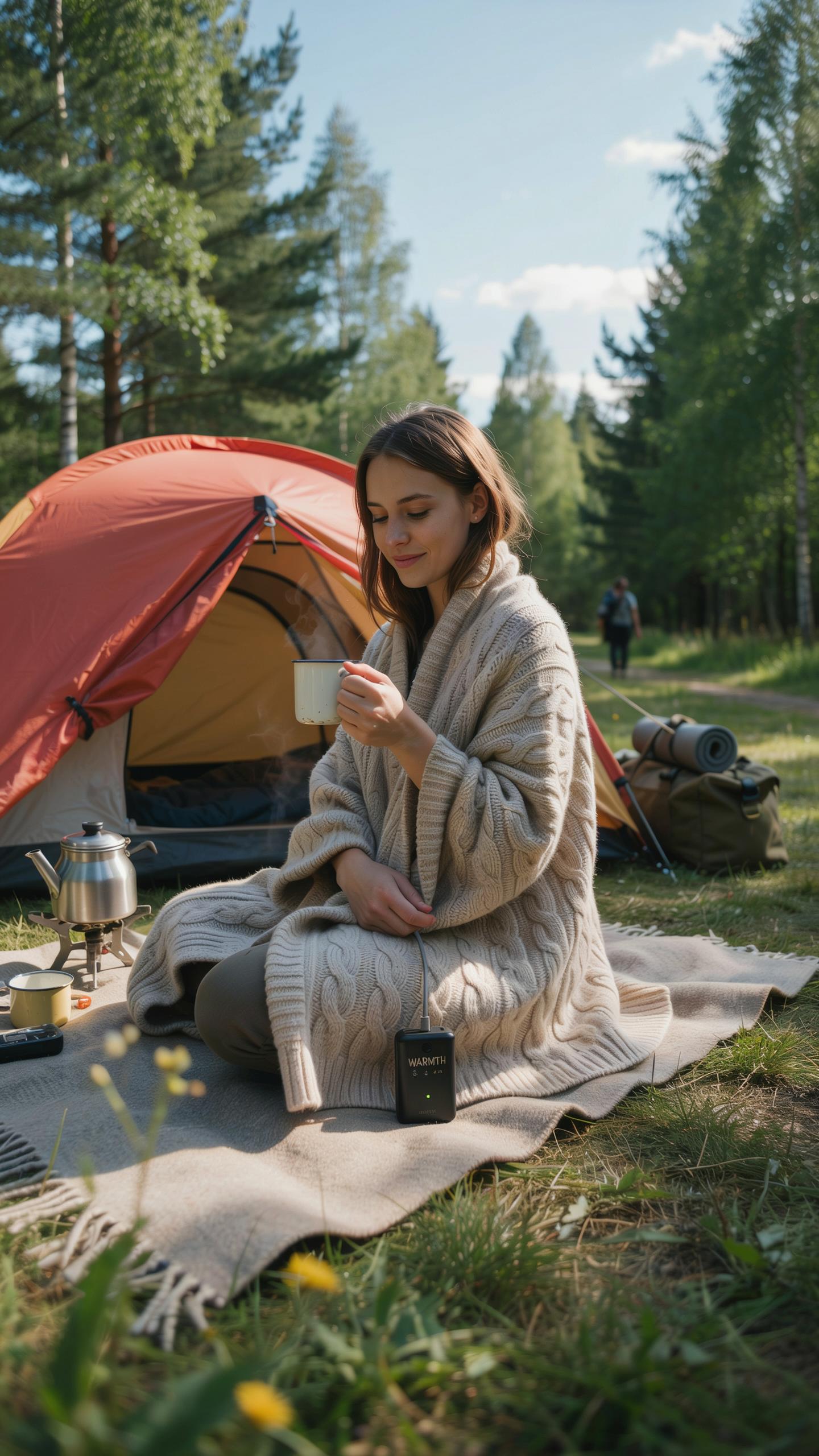
Battery-operated heated blankets eliminate dependence on campfire proximity or vehicle power sources. You place the blanket where you need it, not where infrastructure exists. Most models weigh between two and four pounds, making them pack efficiently in camping gear. Lithium ion batteries power modern versions, delivering consistent heat output for six to twelve hours depending on settings and battery capacity. You control temperature independently from your campsite setup.
Battery power gives you flexibility that traditional heating methods cannot match. You move the blanket to different locations without losing heat or safety. Low battery indicators alert you before power depletes, preventing cold surprises during the night. Multiple heat settings let you adjust output based on actual temperature conditions and personal preference. This direct control reduces wasted energy and extends usable heating time per charge cycle.
USB Charging: Keeping Your Devices And Blanket Powered On The Go
USB charging ports on heated blankets serve dual purposes in your camping setup. You charge the blanket using any standard USB power source: power banks, solar chargers, or vehicle adapters. A five thousand milliamp hour power bank typically charges a heated blanket in four to six hours. Most camping trips involve multiple devices needing power, and USB standardization solves this problem through compatibility. Single charging cables handle blankets, phones, and lights without carrying separate adapters.

The USB port design shifts heating blankets from single use to practical camp infrastructure. Modern power banks charge from solar panels or car chargers, creating renewable energy loops for extended trips. You prioritize charging based on immediate needs: blanket first for evening warmth, then phones and headlamps. This flexibility matters in remote camping where power access is limited or nonexistent. USB standardization means replacement cables cost dollars, not replacement blankets.
Key Features To Look For In A Heated Throw For Camping

Material And Durability Choosing The Right Fabric For Outdoor Use
Polyester and fleece dominate heated blanket construction because they retain warmth and resist moisture. Polyester withstands repeated washing and UV exposure without degrading. Fleece offers softness and insulation but absorbs water slower than natural fibers. Your fabric choice determines how long the blanket survives camp conditions and maintains performance through multiple seasons.
Outer materials need abrasion resistance for ground contact and snag prevention. Ripstop nylon reinforces seams and high-wear areas to prevent tears. Waterproof backing protects internal heating elements from moisture damage. Reinforced stitching at seams prevents unraveling when folded or dragged across rough surfaces. Budget models skip these features and fail faster.
Temperature Settings And Controls Customizing Your Warmth
USB powered blankets operate between 50 to 120 degrees Fahrenheit, depending on the model. Three to five heat levels give you control over power consumption and comfort. Lower settings preserve battery life on portable power banks. Higher settings activate all heating zones for maximum output on extremely cold nights.

Control interfaces vary between simple switches and digital displays. Basic models use single buttons to cycle through heat levels. Advanced versions feature time delay functions that auto shut off after 30 to 60 minutes. Digital controls let you check current temperature without guessing. Choose based on your tolerance for complexity versus functionality.
Comparing Heated Blankets What Makes A Good Electric Throw Blanket

Size And Weight: Important Considerations For Backpackers And Campers
A heated camping blanket with USB port needs to balance coverage with portability. Most quality models range from 50 to 60 inches in length and weigh between 1 to 2 pounds. Heavier blankets deliver more thermal mass but create pack burden. Lighter options sacrifice heat retention for mobility. Your choice depends on trip duration and distance traveled.
Dimensions matter more than you think for campsite setup. A 50-inch blanket fits most camping chairs and small cots comfortably. Oversized blankets exceed 60 inches but add significant weight when wet. You pack every ounce, so verify dimensions against your shelter size before purchase. Test fit in your actual tent or sleeping arrangement to avoid costly mistakes.
Even under the chilli
— Unknown
Water Resistance And Washability: Maintaining Your Blanket In The Wilderness
Water resistance separates functional gear from failed investments in camp conditions. Most heated camping blankets use polyester or microfiber outer shells that repel moisture without full waterproofing. Complete waterproofing traps condensation and reduces breathability. Choose models with water resistant coatings that shed light rain while allowing sweat to escape. Check manufacturer specs for specific water repellency ratings before committing.

Washability determines your blanket’s lifespan in field conditions. Remove the USB heating element before cleaning to prevent electrical damage. Machine wash on gentle cycles with cold water using mild detergent. Most blankets dry completely within 24 hours at room temperature. Regular cleaning prevents mold growth and extends usable life in damp camping environments.
Powering Your Adventure Battery Operated Heated Blanket Solutions

Battery Life And Charging: Maximizing Usage During Your Trip
Most heated camping blankets with USB ports draw between 2 to 5 watts on low settings and 5 to 10 watts on high settings. Runtime depends directly on your power source capacity measured in milliamp hours (mAh). A 10,000 mAh battery typically powers a blanket on low for 8 to 12 hours, while high settings drain that same battery in 3 to 5 hours. Charging time matters for multi-day trips since most blankets charge fully in 2 to 4 hours via standard USB ports.
Plan your charging strategy around your trip length and available power sources. Charge your blanket during daylight hours when you can monitor the process. Many modern blankets include temperature settings that extend battery life significantly. Switching from high to medium or low heat cuts power consumption in half. Know your blanket’s exact wattage and your battery capacity before departing.
Portable Power Banks: Essential Companions For Extended Warmth
Portable power banks rated 10,000 mAh or higher provide reliable backup charging for heated blankets in the field. Higher capacity banks like 20,000 mAh or 30,000 mAh models extend your heating sessions across multiple nights without needing external power. Choose banks with multiple USB ports so you can charge your blanket and other devices simultaneously. Weight matters on backpacking trips, so balance capacity against portability. Solar charging power banks offer flexibility if your trip spans several days without access to electrical outlets.

Invest in power banks rated for fast charging with stable voltage output to protect your blanket’s heating element. Low quality banks deliver inconsistent power that damages battery circuits or reduce heating performance. Verify your power bank outputs at least 2 amps at 5 volts for optimal blanket charging. Store banks in an insulated pouch to prevent cold temperatures from reducing their effective capacity. Test your entire power setup at home before your camping trip.
Safety First Using Your Heated Blanket For Camping Responsibly

Overheating Protection: Understanding Built In Safety Mechanisms
Most heated camping blankets with USB ports include automatic shutoff systems that activate when internal temperatures exceed safe limits. These mechanisms typically trigger between 131 and 149 degrees Fahrenheit, depending on the manufacturer. The shutoff prevents fabric degradation and reduces burn risk. Quality blankets use thermal fuses or electronic sensors to monitor heat output continuously. Understanding your specific blanket’s shutoff temperature helps you use it safely without interruption during cold nights.
Temperature regulation varies by model and power source capacity. Lower wattage USB blankets generate gentler heat that rarely triggers shutoff systems during normal use. Higher powered models may cycle on and off to maintain target temperatures. Check your product manual for the exact shutoff threshold and heating range. This information determines how the blanket behaves during extended camping trips in extreme cold.
Proper Storage And Maintenance: Extending The Life Of Your Heated Gear
Store your heated blanket in a dry location away from direct sunlight and moisture when not in use. Humidity damages electronic components and weakens fabric over time. Keep the USB cable coiled loosely without kinks or tight wrapping that stresses internal wires. Store at room temperature rather than in hot vehicles or damp basements. Proper storage adds years to your blanket’s functional lifespan and prevents performance degradation.

Clean your heated blanket according to manufacturer specifications before long-term storage. Most models allow spot cleaning with mild soap and water on fabric surfaces only. Never submerge electrical components or run the blanket through washing machines. Inspect the USB port and cable for corrosion or damage before each camping trip. Regular maintenance catches issues early and keeps your gear ready for emergency use.
Beyond Camping Other Uses For Your Electric Heating Blanket
Home Comforts: Using Your Heated Blanket Indoors
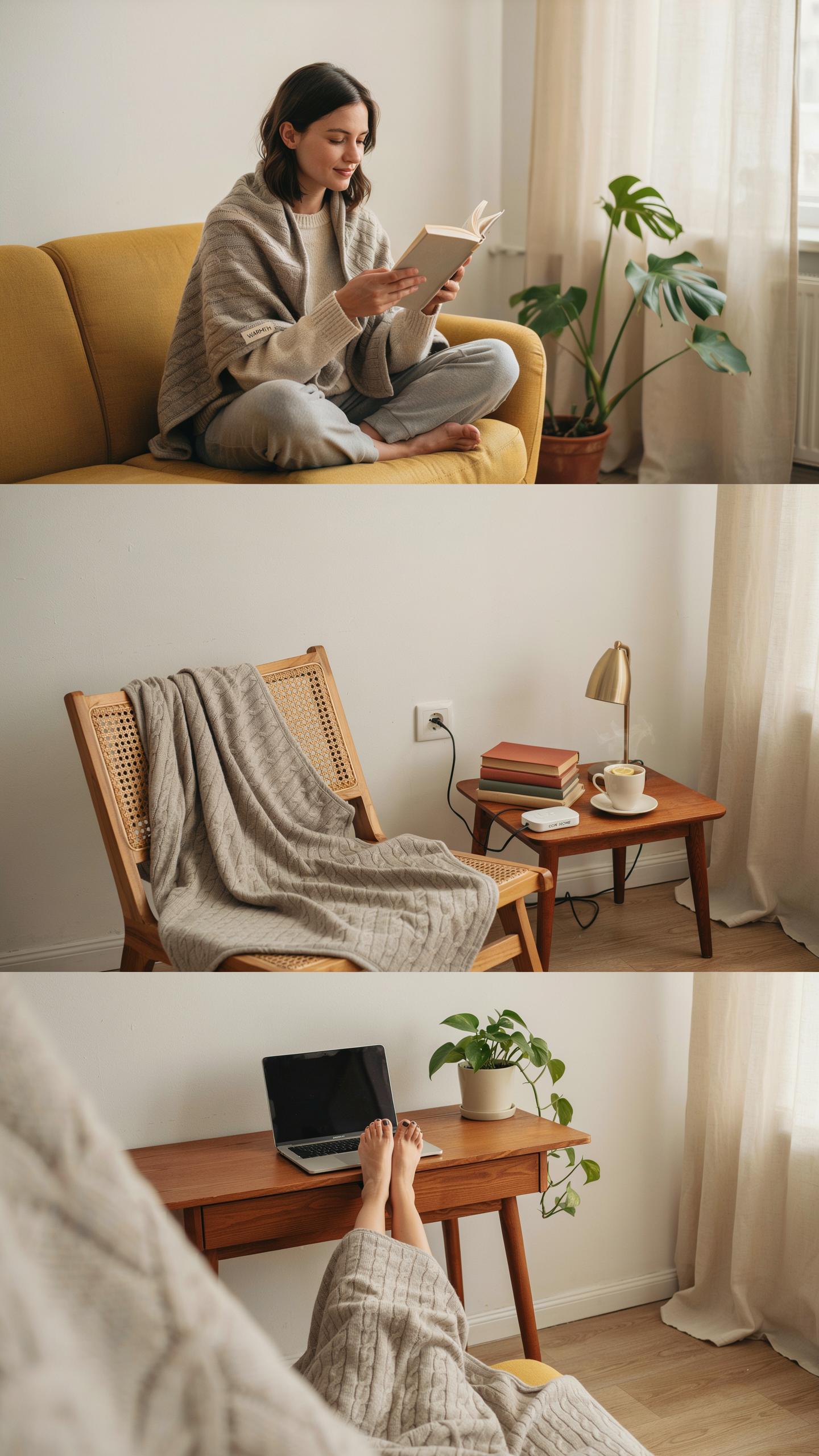
A USB heated blanket performs effectively in home settings where you control the environment. Indoor use eliminates exposure to elements and allows extended operation without battery drain concerns. You can drape it over furniture, use it while working at a desk, or layer it on your bed during winter months. The consistent power supply from household outlets or power banks removes dependency on portable batteries.
Indoor applications often justify the investment faster than occasional camping trips. Renters benefit since heated blankets require no installation or permanent modifications. People with circulation issues or chronic pain use them for targeted warmth without adjusting home thermostats. The USB port design allows operation from laptop chargers, wall adapters, or dedicated power supplies already present in most homes.
Emergency Preparedness: A Valuable Addition To Your Survival Kit
A heated camping blanket with USB port serves as practical emergency equipment for power outage situations. When grid power fails, you can operate the blanket from portable power banks or vehicle chargers if you plan accordingly. The blanket provides dry, localized warmth without requiring fuel or creating carbon monoxide risks like space heaters do. Hypothermia prevention during extended outages makes this tool tactically sound for emergency kits.

Disaster response scenarios benefit from the blanket’s portability and minimal power requirements compared to traditional heating methods. During evacuation situations or temporary shelter placement, the blanket occupies minimal space while providing critical thermal protection. Pairing it with a quality power bank rated for extended discharge ensures functionality when conventional utilities remain offline for days or weeks.
Choosing The Best Heated Camping Blanket With USB Port
Top Brands And Models A Brief Overview Of Popular Options
Several manufacturers dominate the heated camping blanket market with USB-powered designs. These brands focus on practical features like temperature control, material durability, and power efficiency. Most options range from 5 to 10 watts, balancing warmth output with battery drain. Understanding available models helps you match specifications to your actual camping conditions and power availability.
- Decathlon Quechua Range: Offers entry-level USB heated blankets with basic temperature settings. Design emphasizes affordability and weight reduction. Models integrate heating wire into fleece construction. Suitable for casual campers prioritizing portability over advanced features.
- Alpinizm Heated Camping Blankets: Features carbon fiber heating elements distributed across the blanket surface. Includes multiple heat settings and auto-shutoff timers. Works with standard USB power banks. Targets mid-range buyers seeking reliable performance and safety controls.
- Outland Gear Heated Blankets: Uses heating pads positioned for core body warmth. Includes waterproof outer shell and temperature regulation options. Compatible with high-capacity USB power supplies. Designed for three-season camping in variable conditions.
- Coleman Heated Throw Models: Integrates USB heating with traditional blanket construction. Offers single or dual heat zones for targeted warming. Works with portable battery systems. Appeals to campers transitioning from standard camping gear.
- Higher-End Options: Brands like Milliamp and EnerPlex produce heated blankets with smart temperature sensors and app connectivity. These models cost more but provide precise heat management and longer operational time on portable power sources.
Real-world performance depends on ambient temperature, blanket size, and power source capacity. A 10,000 mAh power bank typically runs a 5-watt blanket for 15 to 20 hours. Higher wattage models consume batteries faster but deliver more warmth. Match wattage to your expected temperature range and available power supply before purchasing.
Customer Reviews And Ratings Learning From Other Campers Experiences
Actual user feedback reveals consistent patterns about USB heated blanket performance. Most campers report that these blankets work best as supplementary warmth rather than primary sleep systems. Users prioritize lightweight designs for backpacking, while car campers value larger sizes and higher wattage. Durability issues emerge after one to two seasons of regular use, particularly with heating wire failures.
Reviews highlight practical concerns that manufacturers don’t emphasize in marketing materials. Power bank compatibility varies across models, with some blankets requiring specific voltage outputs. Users report uneven heat distribution in cheaper options, creating warm spots and cold zones. Washability becomes critical for durability, yet many heated blankets require hand washing or specific detergent to prevent wire damage. Experienced campers note that layering lightweight heated blankets with traditional insulation outperforms using heated blankets alone in extreme cold conditions.
Tips For Maximizing Heat And Comfort On Cold Nights

Layering Techniques Combining Your Heated Blanket With Other Gear
Position your heated blanket as a middle layer, not your only insulation. Place it over a base layer of wool or synthetic material against your skin. Add a sleeping bag on top of the heated blanket to trap warm air. This sandwich approach prevents heat loss to the ground and surrounding environment. The USB power source runs the blanket while external layers amplify its effectiveness.
The ground pulls heat away from your body faster than cold air. Use a sleeping pad or foam mat beneath your blanket to block ground cold. Position the heated blanket directly over this pad. A tarp under everything prevents moisture from rising into your insulation. This setup keeps heat concentrated where it matters most: around your core and torso.
Insulating Your Tent Additional Ways To Stay Warm While Camping
Seal air gaps in your tent before using your heated blanket. Check zippers, seams, and door overlaps for leaks. Tape small holes with gear repair tape. Reduce interior volume by using a smaller tent or hanging an interior liner. These steps contain the warmth your blanket generates instead of letting it escape through gaps.
Ventilation prevents condensation but creates cold drafts. Balance this by cracking vents slightly rather than leaving them wide open. Position your heated blanket away from direct tent walls to avoid melting fabric. Keep the USB cord away from moisture. These precautions protect both your gear and maximize the blanket’s heat retention in the tent environment.
Frequently Asked Questions

What exactly is a heated camping blanket with USB port and why would I need one?
A heated camping blanket with USB port is a portable blanket featuring integrated heating elements, powered by a USB connection, typically to a power bank. It’s perfect for adding extra warmth on chilly outdoor adventures, ensuring you stay cozy in your tent, by the campfire, or even during cool evenings outdoors.
How do I power and recharge my heated camping blanket with USB port while off-grid?
You power your heated camping blanket with USB port by connecting it to a portable power bank, which acts as its battery. To recharge, simply plug your power bank into a portable solar panel, a car adapter, or a wall outlet before your trip or during breaks in your journey.
Are heated camping blankets with USB ports generally affordable, or are they a significant investment?
The cost of a heated camping blanket with USB port can vary widely depending on features, size, and brand. While some premium models might be a larger investment, many affordable and effective options are available. Consider your specific needs and camping frequency to find the best value within your budget.