
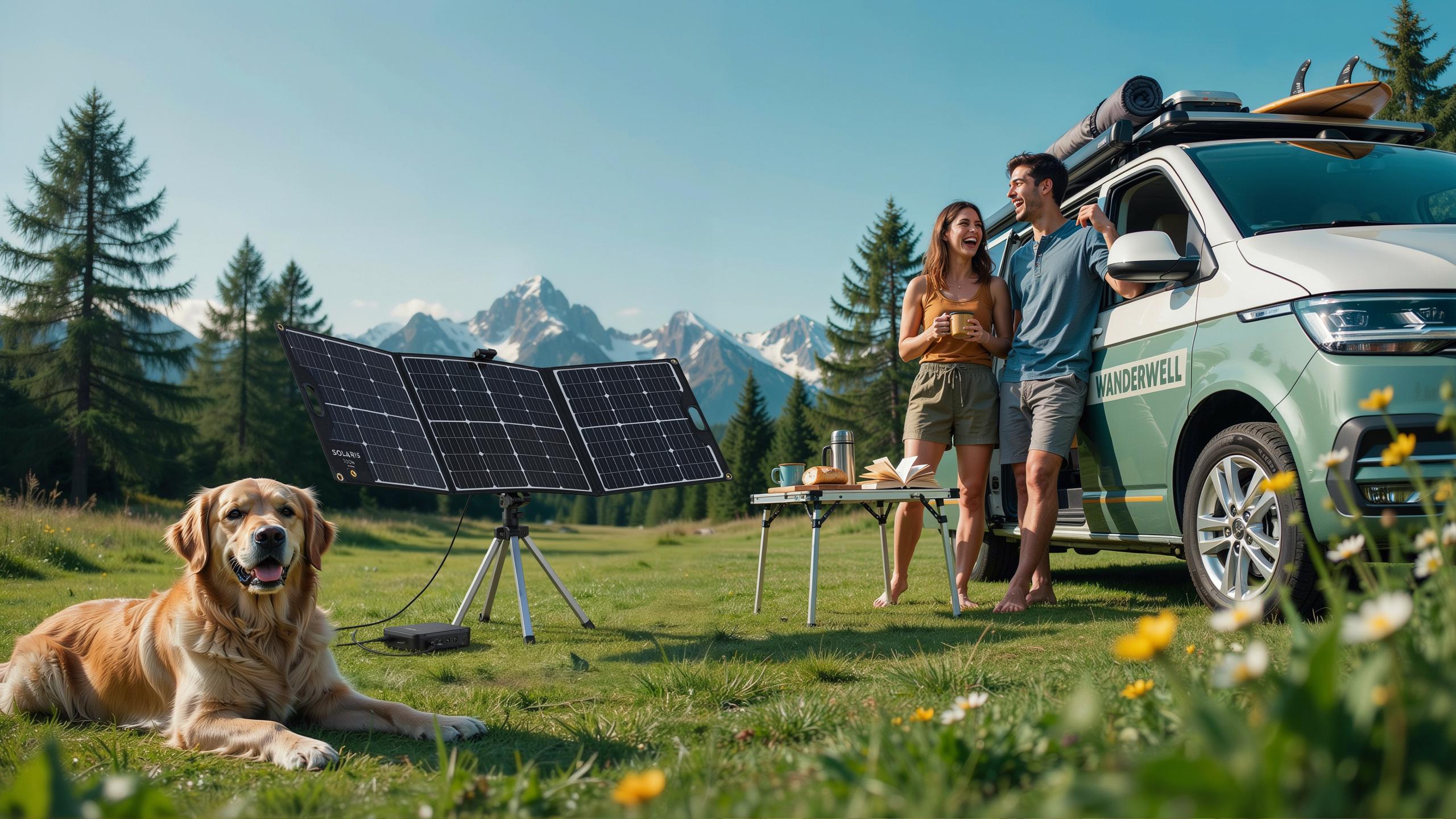
The Appeal Of Collapsible Solar Panels For Van Life

Space Saving Design
Van living demands ruthless space optimization. Every square inch matters when your bedroom, kitchen, and workspace occupy the same 150 square feet. Collapsible solar panels solve this directly. When folded, they compress to briefcase dimensions and store under a bed, in a cabinet, or against a wall. Deployed panels mount to roof racks or lean against the van exterior. This flexibility means you gain power generation without sacrificing living quarters.
Traditional rigid solar arrays bolt permanently to roofs, consuming valuable real estate and limiting interior headroom. Collapsible panels eliminate this trade-off entirely. You deploy them only when stationary and stow them instantly when mobile. Most fold to roughly 24 by 48 inches when closed, occupying negligible storage footprint. This design directly addresses the core constraint of mobile living: doing more with minimal physical space.
Portability And Flexibility
Collapsible panels weigh between 7 and 15 pounds depending on wattage, making them genuinely portable by one person. You carry them from vehicle to campsite without equipment. This mobility opens tactical advantages. Position panels toward the sun throughout the day without roof modifications. Place them on the ground, lean them against structures, or angle them manually for optimal solar exposure.
This repositioning capability matters in real conditions. Morning sun and afternoon sun come from different angles. Collapsible panels track these shifts while rigid panels remain fixed. You also deploy them away from the van when working outside, maintaining charging distances from your living space. In shadowy campsites surrounded by trees or cliffs, you move panels to clearings instead of accepting suboptimal angles. This active positioning increases energy generation on challenging terrain where fixed installations fail.

Understanding Collapsible Solar Panel Technology
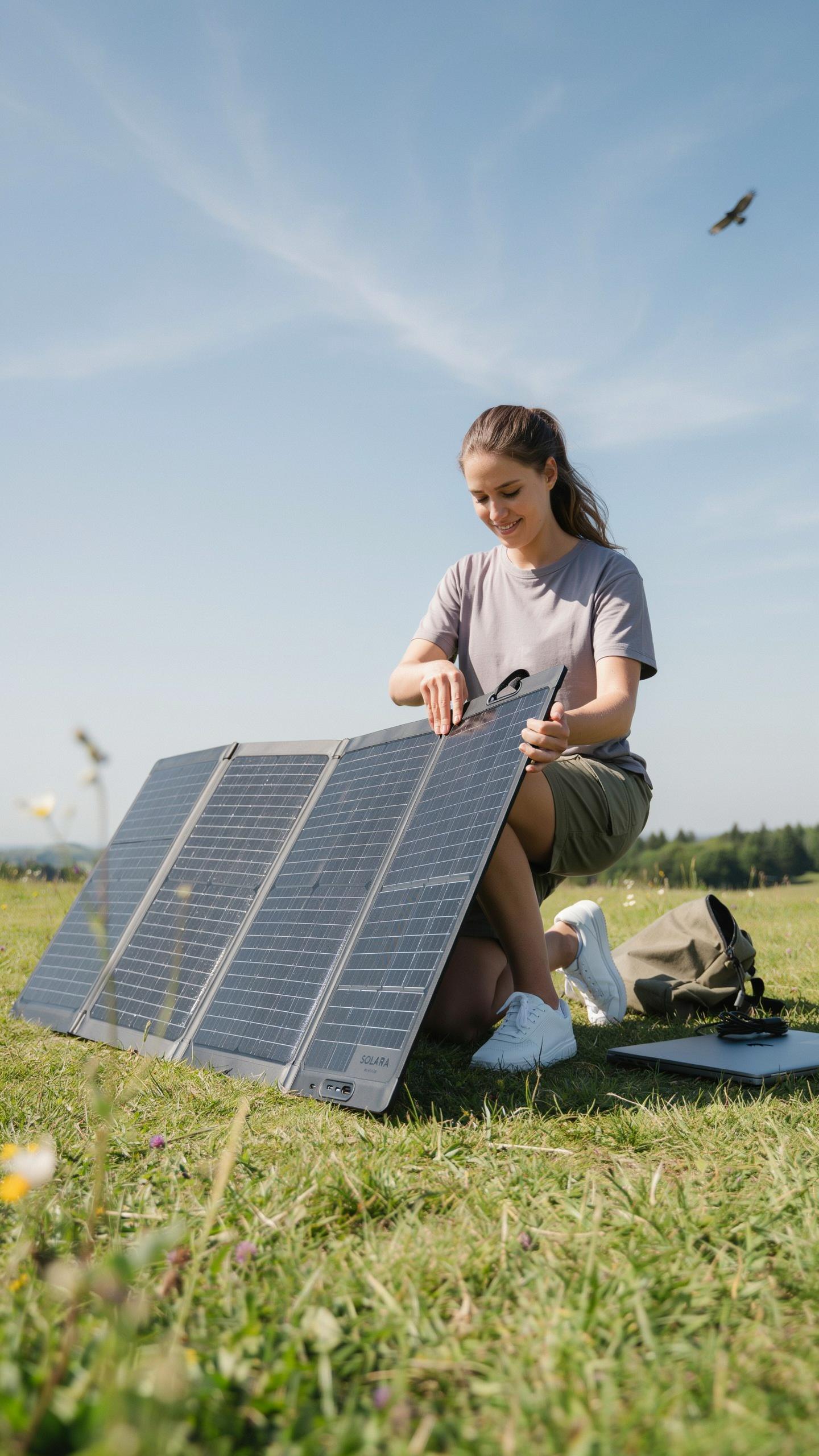
Types Of Foldable Panels
Monocrystalline panels dominate the portable solar market because they deliver the highest efficiency rates, typically between 18 and 22 percent. They use single-crystal silicon and occupy less space, making them ideal for van life where square footage matters. Monocrystalline cells perform better in low-light conditions and degrade slower over time. Their higher upfront cost gets offset by superior long-term performance and durability in mobile environments.
Polycrystalline panels cost less than monocrystalline options but deliver lower efficiency, usually between 15 and 17 percent. They use multiple silicon crystals fused together, creating a less uniform cell structure. For van dwellers on tight budgets, polycrystalline panels work adequately for basic charging needs. Thin-film technology exists as a third option but rarely appears in portable setups due to poor efficiency rates and rapid degradation in direct sunlight conditions.
Every journey under the sun is a chance to recharge, and with a portable panel, your freedom shines brighter still. May your wanderlust always find its power source.
Power Output And Efficiency
Wattage measures the maximum power a panel produces under ideal conditions, with portable models ranging from 50 watts to 400 watts. Higher wattage correlates directly to faster charging speeds, but larger wattage panels require more roof space and weight capacity on a van. Most van dwellers operate panels between 100 and 300 watts as a balance between charging capability and practical installation. The specifications listed on panels assume peak sun conditions at specific angles, so real-world output runs lower.

Voltage and current ratings determine compatibility with your battery bank and charge controller setup. Standard panels operate at 12, 24, or 48 volts, with 12-volt systems most common in smaller van conversions. Amperage output determines how quickly the panel charges your battery during peak hours. Understanding these specifications prevents buying incompatible equipment and ensures your entire electrical system functions without bottlenecks or damage.
Choosing The Right Foldable Solar Panel For Vanlife
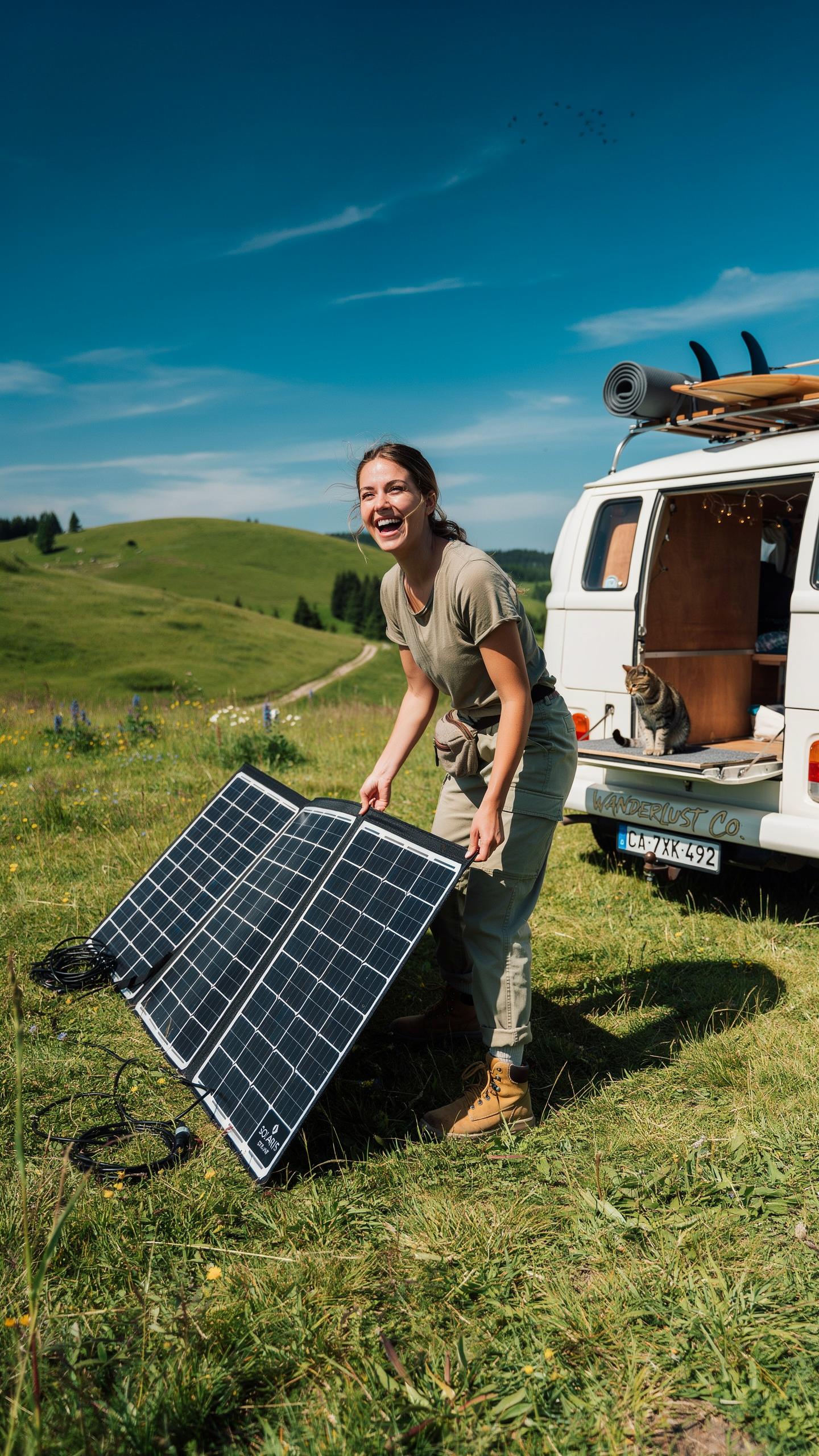
Assessing Your Power Needs
Calculate your daily watt-hour consumption first. List every device you run: refrigerator, laptop, lights, water pump, phone chargers. Check each device’s power draw in watts and multiply by hours used daily. Add totals together. This number determines the minimum panel capacity you need. Most van dwellers consume between 1,000 and 3,000 watt-hours per day depending on appliances and usage patterns.
Panel size matters because it directly affects charge speed and system reliability. A 100-watt panel generates roughly 400 to 600 watt-hours daily under ideal sun conditions, accounting for angle and cloud cover. If you consume 2,000 watt-hours daily, you need at least 300 to 400 watts of panel capacity to maintain battery charge in winter months. Underestimating needs forces you to rely on generator backup or shore power constantly, defeating the point of solar independence.
Durability And Weather Resistance
Foldable panels face constant stress from temperature swings, UV exposure, and vibration during travel. Check the frame material: aluminum frames resist corrosion better than steel but weigh more. Tempered glass fronts withstand impact and thermal shock. Verify the backing material resists moisture penetration, which causes internal corrosion and electrical failures. Seams and connectors must be sealed properly to prevent water intrusion into the panel’s electrical components.

Test the hinge mechanisms before purchase if possible. Poor hinges fail within months of regular folding and unfolding. Look for stainless steel or marine-grade hinges designed for frequent movement. The carrying case protects panels during transport but adds weight and bulk. Prioritize panels with proven track records in harsh climates, particularly desert heat and coastal salt spray environments where van life typically occurs.
Van Life Solar Panel Installation Essentials
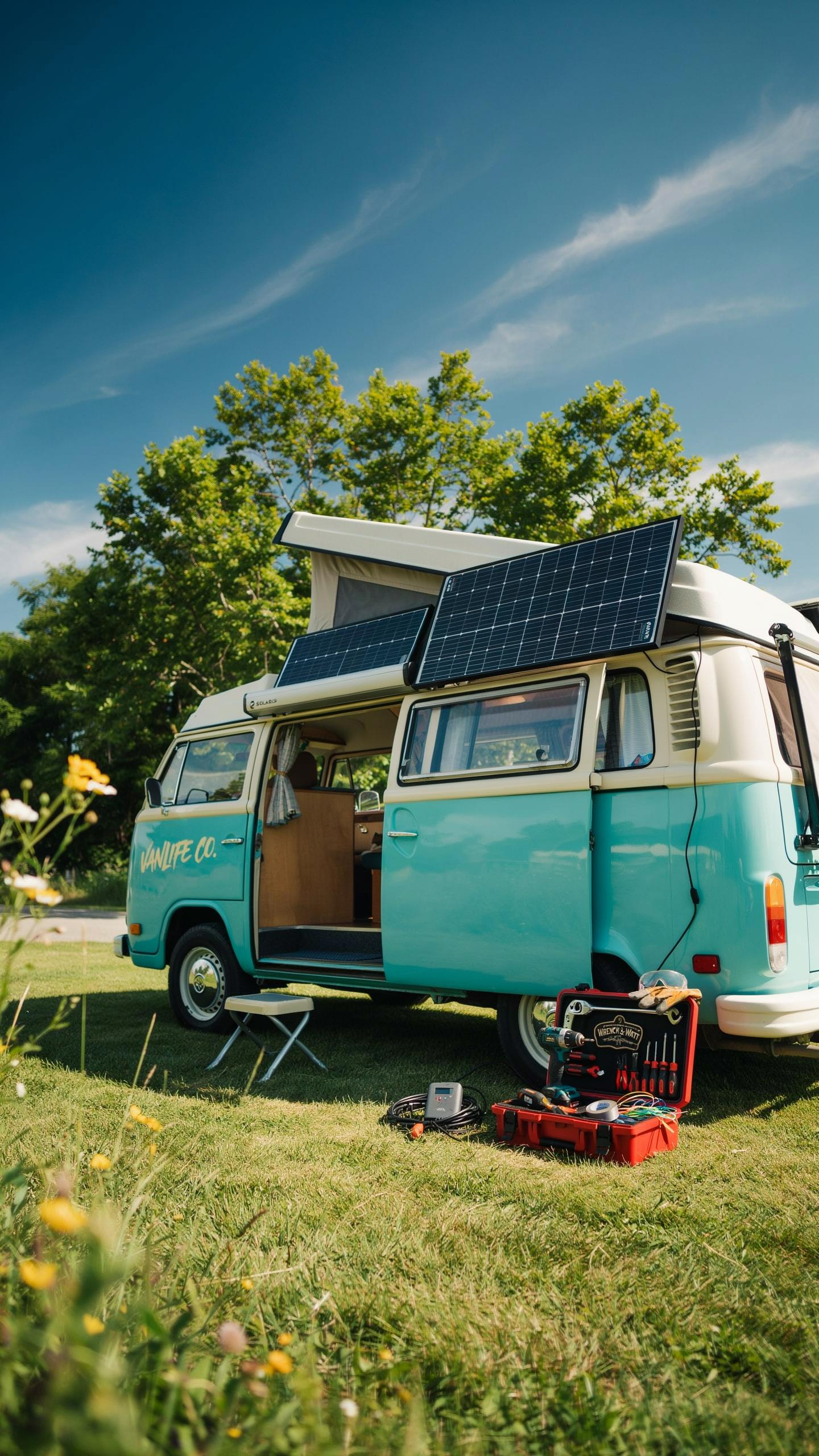
Components Of A Solar Setup
Your collapsible solar panel is just one piece. You need a charge controller to regulate power flowing into your battery bank. The controller prevents overcharging and manages voltage conversion. An inverter converts stored DC power to AC power for standard appliances. The battery bank stores energy when sunlight isn’t available. These components work together as a system, not independently.
Sizing each component matters. A 100-watt collapsible panel typically pairs with a 30-amp MPPT charge controller and a 200-400 amp-hour lithium or lead-acid battery bank. Your inverter size depends on what devices you run simultaneously. Undersizing any component creates bottlenecks. Oversizing wastes money. Match components to your actual power consumption, not your wishful thinking.
Connecting Your Collapsible Panel
Start by running the panel’s output cables directly to your charge controller. Use appropriately sized wiring, typically 10 AWG for most collapsible 100-200 watt panels. Secure connections prevent voltage drop and fire risk. Connect the charge controller to your battery bank using heavy gauge cable rated for your system amperage. Never skip the disconnect switch between controller and batteries. This safety device isolates your system during maintenance or emergencies.

Wire your inverter directly to the battery bank using the shortest cable run possible. Position the inverter in an accessible location with proper ventilation. Ground all metal components to prevent electrical shock hazards. Test your system with a multimeter before powering devices. Most failures trace back to loose connections or undersized wiring. Double-check every connection before you hit the road.
Optimizing Your Campervan Solar Panel Installation
Maximizing Solar Gain
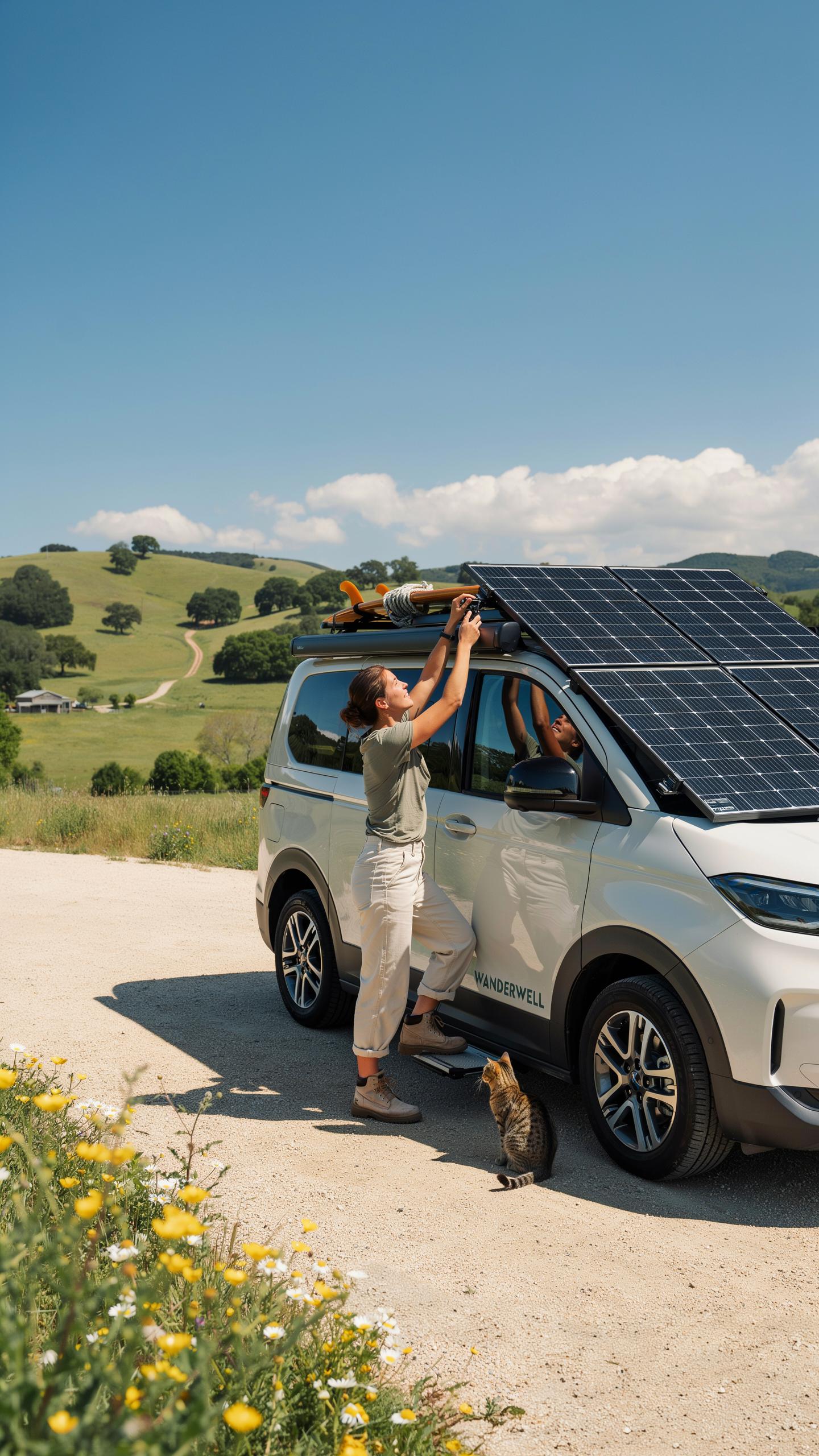
Position your collapsible panel to face true south in the Northern Hemisphere and true north in the Southern Hemisphere. Angle the panel between 30 and 45 degrees from horizontal during winter months. Adjust the angle seasonally to match your latitude. Mount the panel on your van’s roof when stationary to capture direct sunlight without obstruction. Track the sun’s path throughout the day and reposition portable panels every two to three hours for maximum output.
Battery charge rates depend on panel angle relative to the sun. A panel perpendicular to incoming rays generates 25 to 40 percent more power than one at shallow angles. Shadows from antennas, vents, or trees reduce output exponentially. Remove obstructions within a 180-degree arc in front of your panel. Start the day facing southeast and end facing southwest to optimize across daylight hours.
Monitoring And Maintenance
Check your charge controller display daily to confirm voltage and amperage readings match your system specifications. Clean panel surfaces every two weeks with distilled water and a microfiber cloth. Dust, pollen, and bird droppings reduce efficiency by 15 to 25 percent. Inspect wiring connections quarterly for corrosion or loose terminals. Test your system’s output against weather conditions to identify degradation patterns early.

Monitor battery voltage trends weekly to catch charging issues before they damage your batteries. Record ambient temperature, panel angle, and power output simultaneously to establish baseline performance. Compare current readings against historical data to spot declining efficiency. Replace damaged cables immediately. Verify that your charge controller settings match your battery type and capacity specifications.
Integrating Collapsible Solar Panels With Van Solar Panel Mounting
Temporary And Flexible Mounting Options
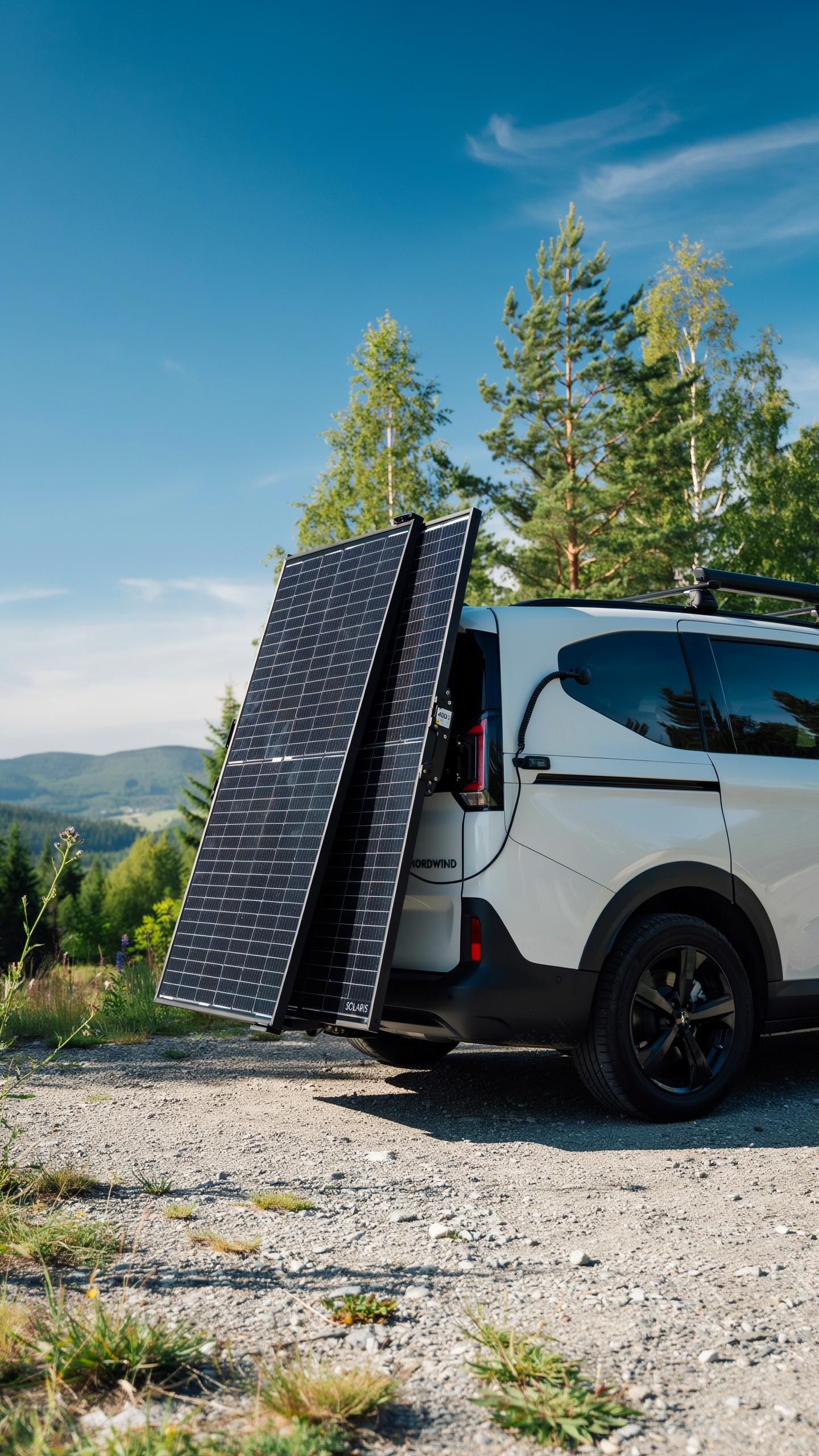
Collapsible panels need mounts that work fast. Ground stands with adjustable legs let you angle panels toward the sun without roof installation. These stands pack down small and deploy in minutes. Suction cup mounts attach to van windows for temporary positioning. Ball joint mounts enable 360-degree rotation on existing roof racks. Choose mounts rated for your panel weight and wind speed in your region.
Magnetic feet work on metal surfaces and release without residue. Velcro straps secure panels to roof racks during transport without permanent fasteners. Quick-release clamps let you remove panels daily if theft is a concern. Test any mount system in calm conditions first before relying on it during travel. Weight distribution matters. Unbalanced panels catch wind and create stress points that fail.
Considerations For Wind And Security
Wind creates lateral force that pushes panels off mounts. Higher wind speeds demand heavier duty hardware and lower profile angles. Angle your panels 15 to 25 degrees in high wind areas instead of the typical 30 to 40 degree solar angle. Diagonal bracing between panels and the van frame prevents movement. Cable ties alone won’t hold during gusts. Use redundant attachment points on every panel edge.

Theft happens at campsites and rest stops. Tether cables through panel frames and secure van frames with cable locks. Remove panels entirely when parked overnight in unfamiliar areas. Mark panels with VIN numbers or tracking tags. Store panels inside the van when not in use. Motion sensor lights mounted near panels deter thieves but drain battery power. Weigh the cost of deterrents against the replacement value of your specific panel model.
Advantages Of Foldable Solar Panels Over Solar Panel Van Roof Installations
Shade Avoidance And Angle Adjustment
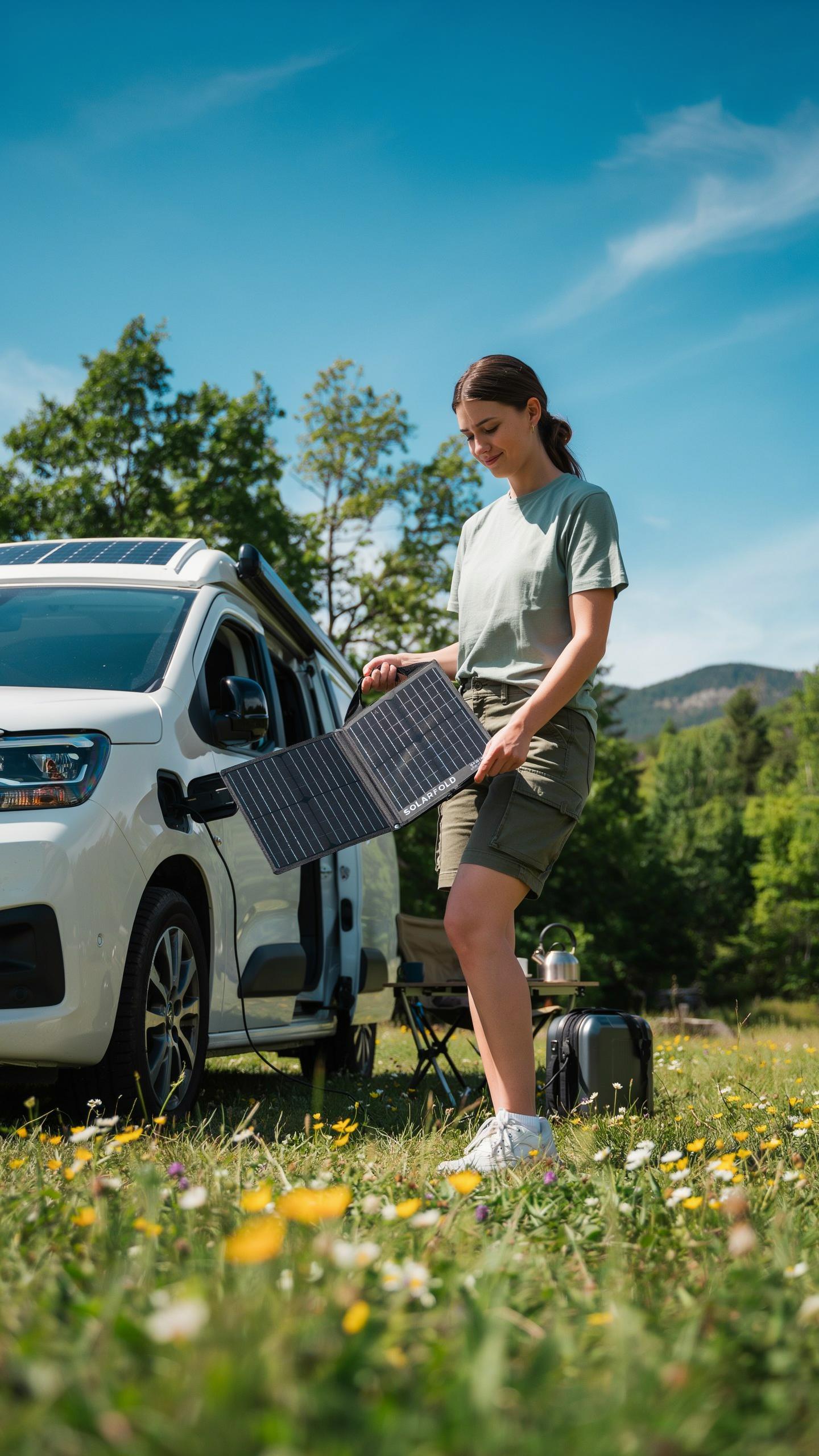
Fixed roof panels sit at one permanent angle determined during installation. This creates dead zones where shadows from trees, buildings, or the van itself block direct sunlight. Collapsible panels deploy anywhere on your property, letting you position them in full sun regardless of obstacles. You reposition throughout the day as the sun moves, maximizing exposure hours and output.
Roof-mounted systems lock you into whatever angle matched your van’s pitch during setup. Most vans sit at roughly 15 degrees, which rarely aligns with optimal solar angles at your current latitude. Foldable panels adjust to 45, 60, or 90 degrees depending on season and location. This directional control produces measurably higher wattage from the same panel size compared to fixed installations.
Easy Storage And Deployment
Collapsible panels collapse into compact bundles taking up minimal space when not in use. You store them inside your van, in a cabinet, or under a bed. During travel or overnight parking, you pack them away instead of exposing expensive equipment to weather and theft. Deployment takes minutes, not hours of roof work.

Roof installations remain exposed and vulnerable constantly. Once mounted, they stay there through all conditions and in all locations. Removing them requires tools, time, and roof access, making redeployment impractical. Foldable systems give you control over when your panels work and when they stay protected.
Future Of Collapsible Solar Panels For Van
Advancements In Material And Design
Perovskite solar cells represent the most significant shift in portable panel efficiency. These materials convert sunlight to electricity at rates approaching traditional silicon panels while remaining lightweight and flexible. Manufacturers now laminate perovskite onto thin substrates, cutting panel weight by 40 percent compared to rigid alternatives. This advancement directly impacts van dwellers by reducing structural load requirements and expanding roof real estate for additional panels.
Foldable designs are evolving beyond simple accordion frames. Engineers now integrate kickstands that eliminate mounting hardware needs, while improved hinge mechanisms withstand thousands of open-close cycles without degradation. Monocrystalline cells embedded in flexible backing materials deliver consistent output across temperature ranges common in mobile environments. These design improvements mean faster deployment times and longer product lifespans for van applications.
Sustainable And Off Grid Living
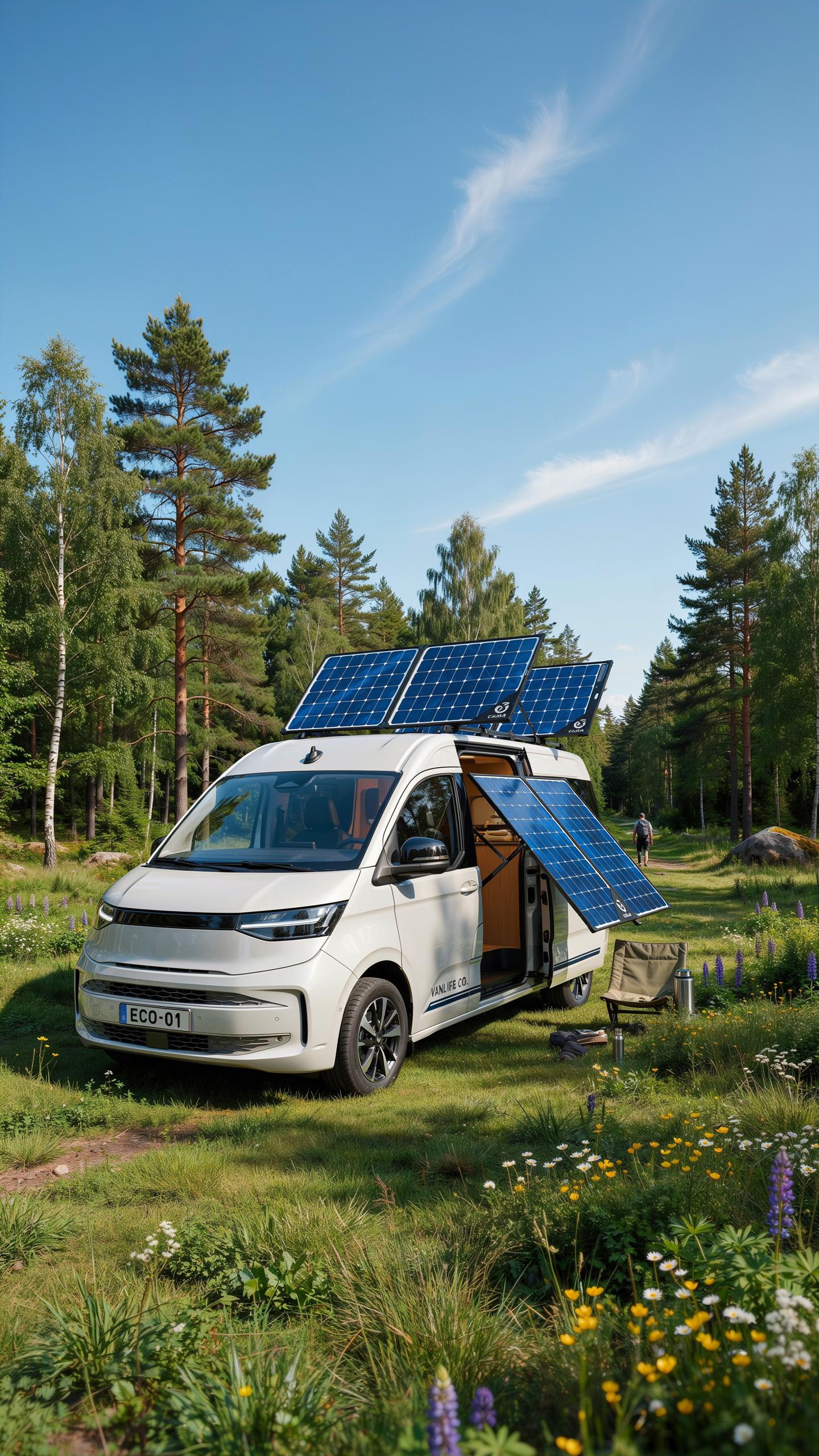
Collapsible solar panels enable genuine energy independence for extended van travel. Users eliminate reliance on generator fuel and grid charging, reducing operational costs over multi-year travel periods. This autonomy appeals directly to individuals prioritizing environmental impact and remote destination access. The technology supports the practical reality that van dwellers need reliable power sources independent of infrastructure availability.

Growing adoption reflects market demand rather than trend cycles. More manufacturers enter the collapsible solar space annually, driving competition that improves specifications and lowers prices. Off-grid van communities now share performance data openly, validating collapsible panel reliability in real-world conditions. This feedback loop accelerates product refinement and positions portable solar as essential infrastructure for sustainable mobile living rather than optional equipment.
Frequently Asked Questions

What exactly is a collapsible solar panel for van life, and why would I need one?
A collapsible solar panel for van life is a portable, foldable device that converts sunlight into electricity to power your electronics. It’s essential for off-grid living, allowing you to charge devices like phones, laptops, and mini-fridges without relying on shore power. Their compact design is perfect for maximizing space in small living environments.
How do I properly set up and position a collapsible solar panel for optimal charging?
To set up a collapsible solar panel for van life, simply unfold it and angle it directly towards the sun. For best results, ensure there are no shadows falling on the panels, and adjust its position throughout the day to follow the sun’s path. Connecting it to your van’s charge controller and battery is usually a straightforward plug-and-play process.
Are collapsible solar panels for van life affordable, and what should I look for in a good budget option?
Yes, there are many affordable collapsible solar panel options available. When looking for a budget-friendly choice, prioritize panels that offer a good wattage-to-price ratio, durability for outdoor use, and necessary output ports (like USB and DC). While they might not be the most powerful, they can still significantly enhance your off-grid capabilities.