
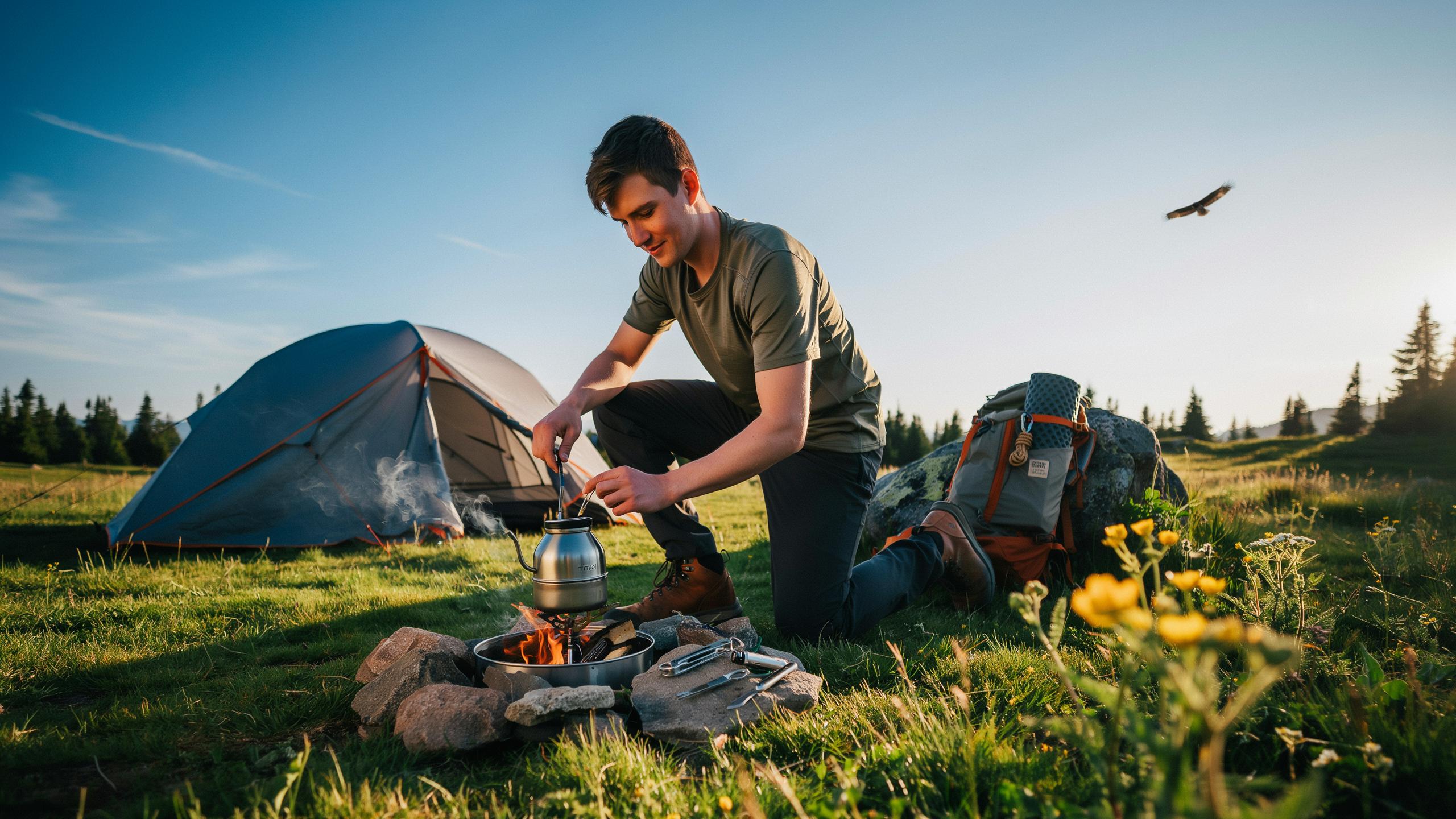
Why Lightweight Campfire Cooking Gear Matters For Backpackers
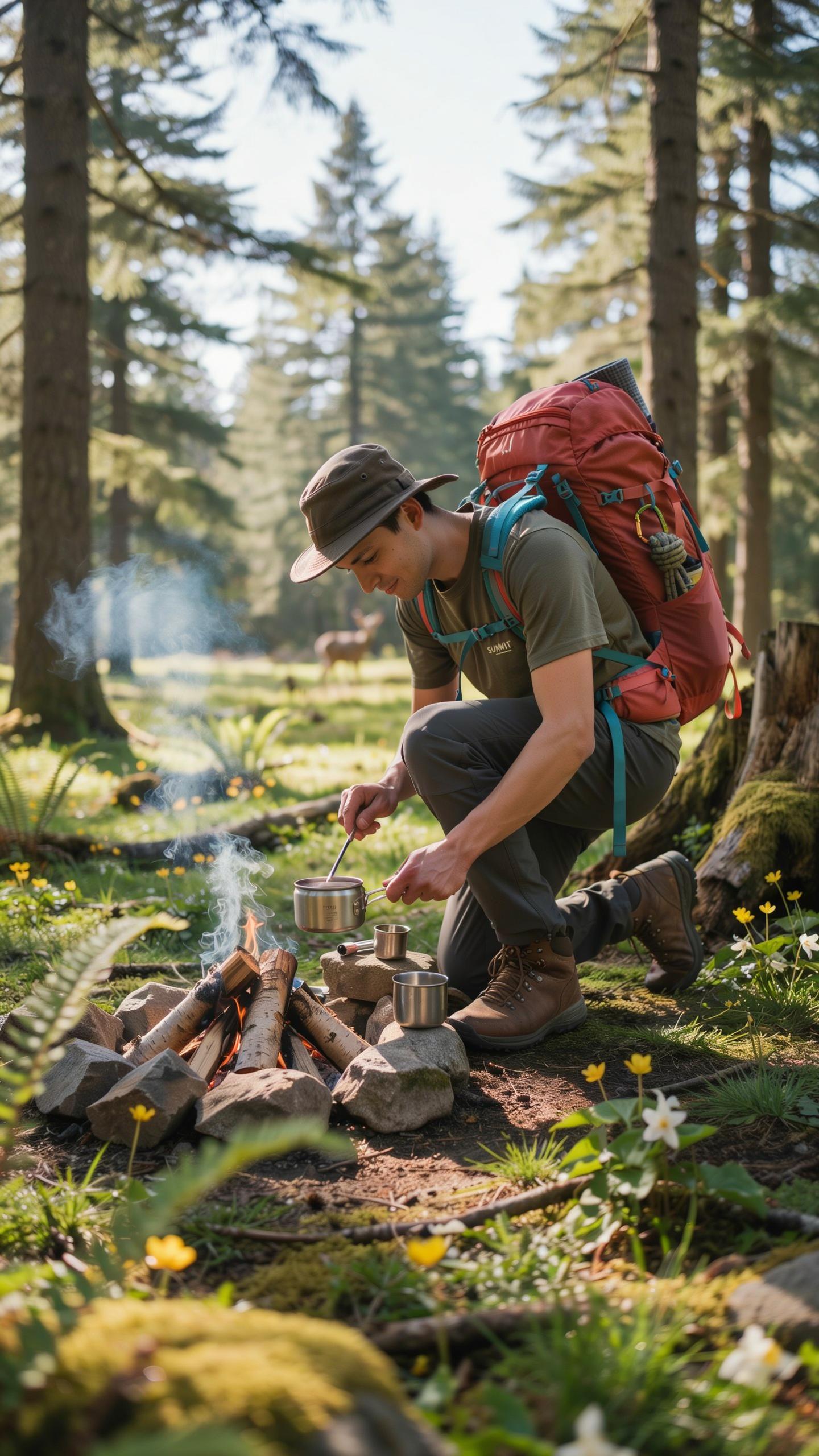
Understanding The Impact Of Pack Weight On Your Journey
Every pound in your pack directly affects your body. Backpackers carry gear an average of 8 to 15 miles per day across varied terrain. Heavy cooking equipment forces your legs to work harder, burns calories faster, and increases injury risk. A bulky camp stove setup adds 3 to 5 pounds. Lightweight alternatives accomplish the same cooking task while keeping your total pack under 20 pounds.
Pack weight compounds over time. On a week-long trip, carrying an extra 5 pounds means moving 35 additional pounds in total distance. Your feet, knees, and hips absorb this repeated impact. Ultralight cookware saves energy for actual hiking and camp setup. The goal is reaching your destination capable of enjoying the experience, not depleted.
Balancing Culinary Ambition With Backpacking Practicality
You don’t need restaurant-quality meals in the backcountry. Backpackers eat for fuel and morale, not gourmet experiences. Heavy cast iron skillets and full utensil sets create unnecessary burden. A single lightweight pot, a spoon, and a heat source cover 95 percent of backpacking meals. Accept functional simplicity as your framework.
Lightweight gear forces honest meal planning. Dehydrated foods, instant oatmeal, and one-pot meals pair naturally with minimal cookware. Your options shrink by design, which actually simplifies decision-making at camp. You cook faster with fewer tools, leaving more time for rest. This constraint builds efficiency into your entire trip structure.
Essential Portable Outdoor Cooking Tools For Every Trip
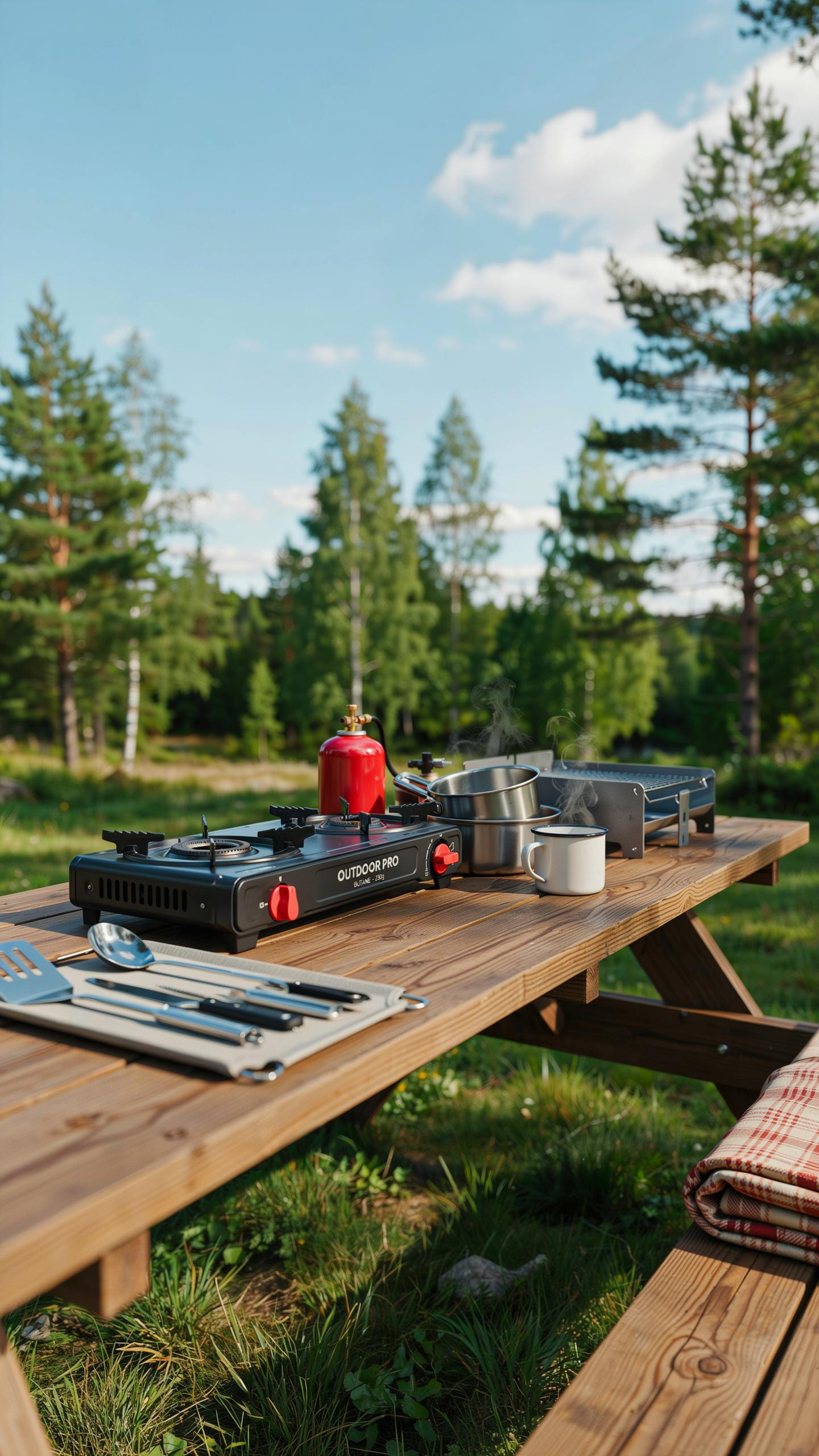
Multi Functional Cookware Pots Pans And Kettles
Titanium and aluminum dominate backpack cookware because they shed weight without sacrificing function. Titanium costs more but resists corrosion and lasts decades. Aluminum spreads heat faster and weighs less, making it the practical choice for most trips. Nesting designs stack cookware into single bundles, cutting pack space by half compared to separate pieces.
Capacity matters more than variety. A single 2 to 3 liter pot handles boiling water, cooking pasta, and heating soup. Add a titanium kettle if you drink coffee or tea daily—they weigh under 200 grams and fold flat. Skip the frying pan unless your trip demands fried food. Backpackers cook rice, pasta, and freeze dried meals, none requiring a dedicated skillet.
Utensil Selection Sporks Tongs And Compact Spatulas
Sporks eliminate the need to carry a fork, knife, and spoon separately. Quality sporks cut through food and scoop liquids without breaking. Lightweight models weigh around 30 grams. Avoid flimsy plastic versions that snap under minimal pressure. One spork per person covers eating and cooking tasks adequately.

Tongs extend your reach over flames and lift hot cookware without burning your hands. Compact tongs fold to six inches, fitting easily in pack pockets. A collapsible spatula scrapes pot bottoms and transfers food without taking up space. Buy silicone or titanium versions—they withstand direct flame contact without melting. Two utensils beyond a spork cover nearly every cooking scenario backpackers encounter.
The Versatility Of A Camping Tripod Grill
Setting Up Your Camping Fire Tripod For Optimal Cooking
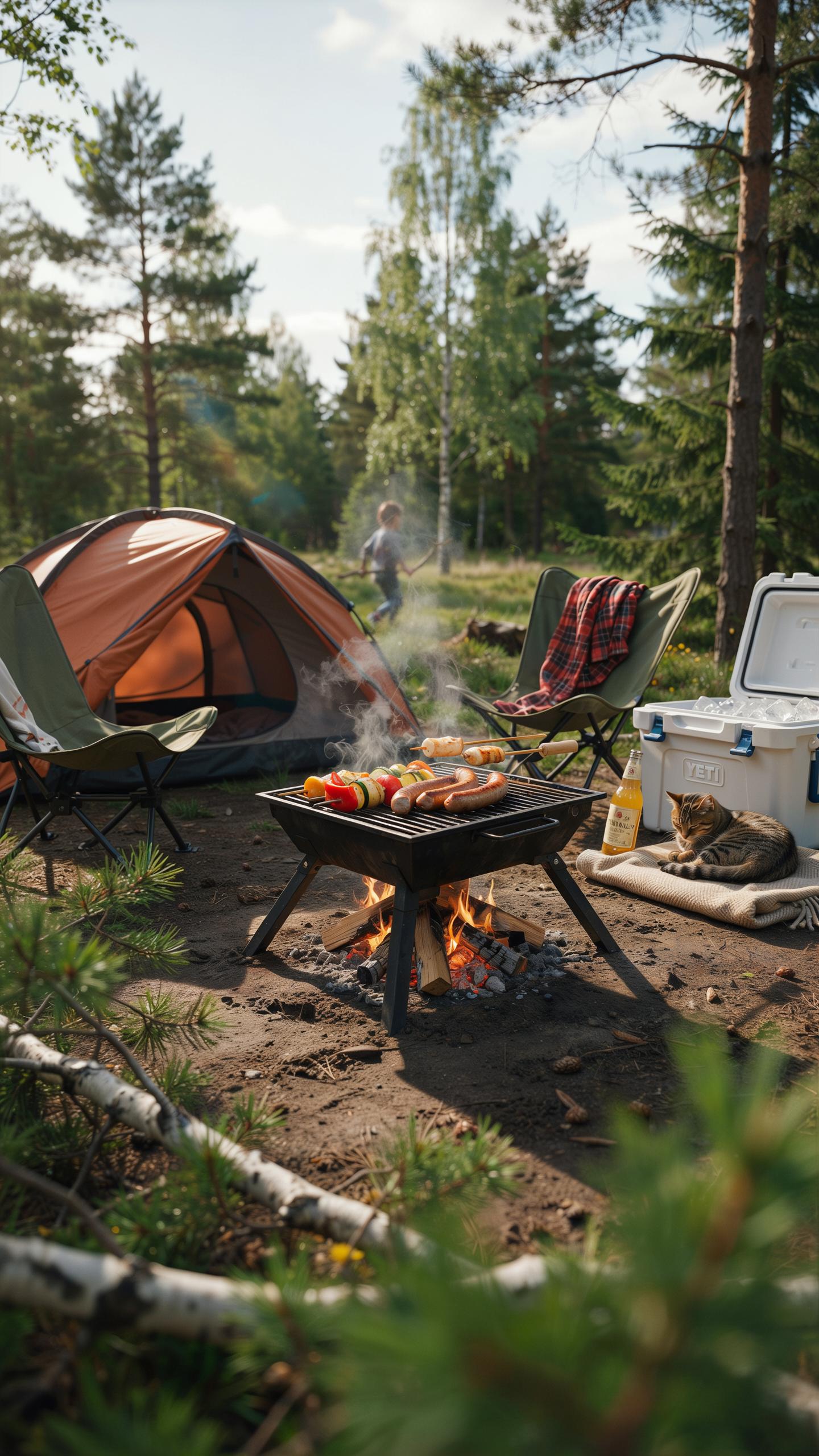
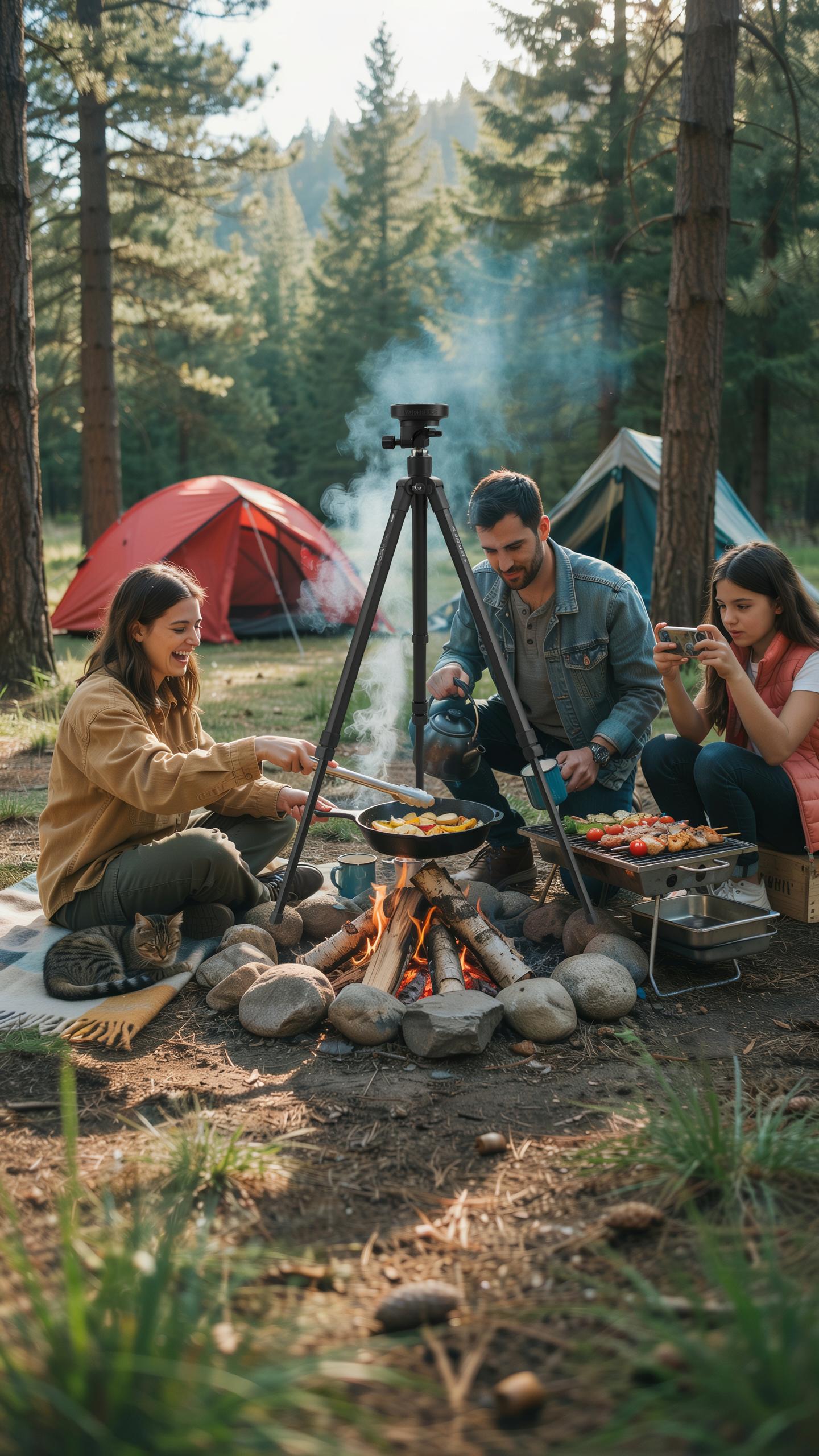
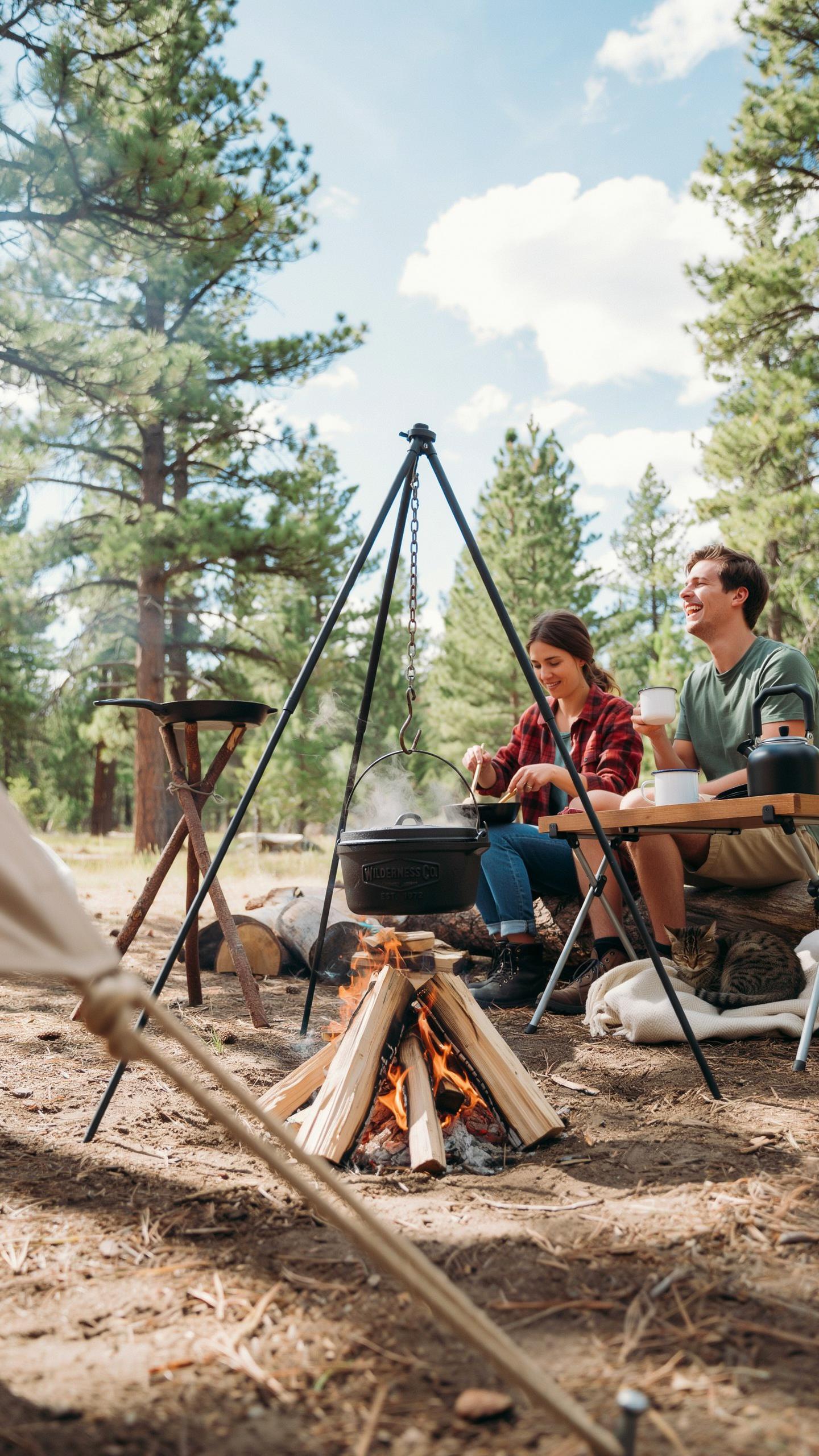
A camping tripod grill consists of three legs, a central pivot point, and a grate or chain system. The tripod design distributes weight evenly across three contact points, making it stable on uneven ground. Most models weigh between two and five pounds, keeping pack weight reasonable. Steel construction provides durability, while adjustable chain heights let you control cooking distance from the flame.
Position your tripod on level ground before assembling it. Lock all three legs firmly into place. Hang your cooking grate at a distance that matches your fire’s heat output. Most backpackers keep grates six to twelve inches above flame level for standard cooking. Adjust height by raising or lowering the chain before placing food on the grate.
Grilling Techniques And Best Practices Over An Open Flame
Open flame cooking requires constant attention to heat distribution. Move food away from hot spots to prevent burning. Rotate items every two to three minutes for even cooking. Use the tripod’s adjustability to raise food if flames spike, then lower it again once the fire settles.
Coals produce steadier heat than active flames. Wait fifteen to twenty minutes after building your fire for coals to form and stabilize. Cook directly over coals rather than over flame when possible. This method prevents flare ups and cooks food more evenly. Keep a metal spatula and tongs within reach to adjust or flip items quickly.
Innovative Campfire Cooking Accessories For Enhanced Meals
Grates And Grids Expanding Your Campfire Menu
Grates and grids solve a fundamental problem: direct flame contact burns food unevenly. Steel grates sit directly over coals and distribute heat across a wider cooking surface. They work with existing campfire setups without requiring additional gear. Backpackers choose between folding models and compact designs that pack flat into packs.
Grid spacing determines what you can cook. Wider spacing works for larger items like steaks or vegetables. Tighter grids handle smaller foods and prevent items from falling into coals. Most aluminum models weigh under one pound. Steel versions weigh more but conduct heat better and last longer across multiple trips.
Dutch Ovens And Skillets Cast Iron Vs Lightweight Alternatives
Cast iron dominates campfire cooking because it retains heat and distributes it evenly. A 10 inch Dutch oven weighs around 8 pounds and handles bread, stews, and roasted meats. Cast iron requires seasoning maintenance and develops better cooking properties over time. Backpackers using high-mileage trips rarely carry cast iron due to weight penalties.
Lightweight alternatives include aluminum and stainless steel skillets. Aluminum skillets weigh 1 to 2 pounds and heat quickly but cool down fast. Stainless steel versions last longer and resist rust but cost more upfront. Modern titanium skillets exist but carry premium pricing. For backpackers, aluminum wins on weight while stainless steel wins on durability.
Choosing The Right Camping Tripod Board Or Campfire Tripod Stand
Factors To Consider Stability Portability And Material
A tripod stand must support cookware weight without tipping. Steel tripods handle heavy cast iron and full pots better than aluminum. Test stability on uneven ground before committing to a model, since campsites rarely offer level terrain. Weight matters on long hikes, so aluminum tripods save pounds despite slightly lower load capacity than steel options.
Material choice determines durability and maintenance. Steel tripods rust without proper care and require regular cleaning. Aluminum resists rust but dents more easily and may not last through years of hard use. Stainless steel costs more but eliminates rust concerns. Pick based on trip length and storage conditions between adventures.
With every lightweight gadget you pack, you’re not just carrying less; you’re embracing the simple, honest joy of a meal made under an open sky.
DIY Solutions And Creative Improvised Cooking Setups
Experienced backpackers skip commercial tripods entirely and build setups from found materials. Two sturdy sticks lashed together with cord form a functional A-frame stand for hanging cookware over flames. This approach costs nothing and reduces pack weight significantly compared to purchased equipment.

Rock formations and natural features often serve as cooking anchors on established campsites. Stack rocks to create a stable platform for a grill grate. Use tree branches wedged between two points to suspend cookware. These methods work only when materials exist onsite and require knowledge of fire safety principles.
Fuel Sources And Fire Starters For Efficient Camp Cooking
Natural Tinder And Firewood Gathering Techniques
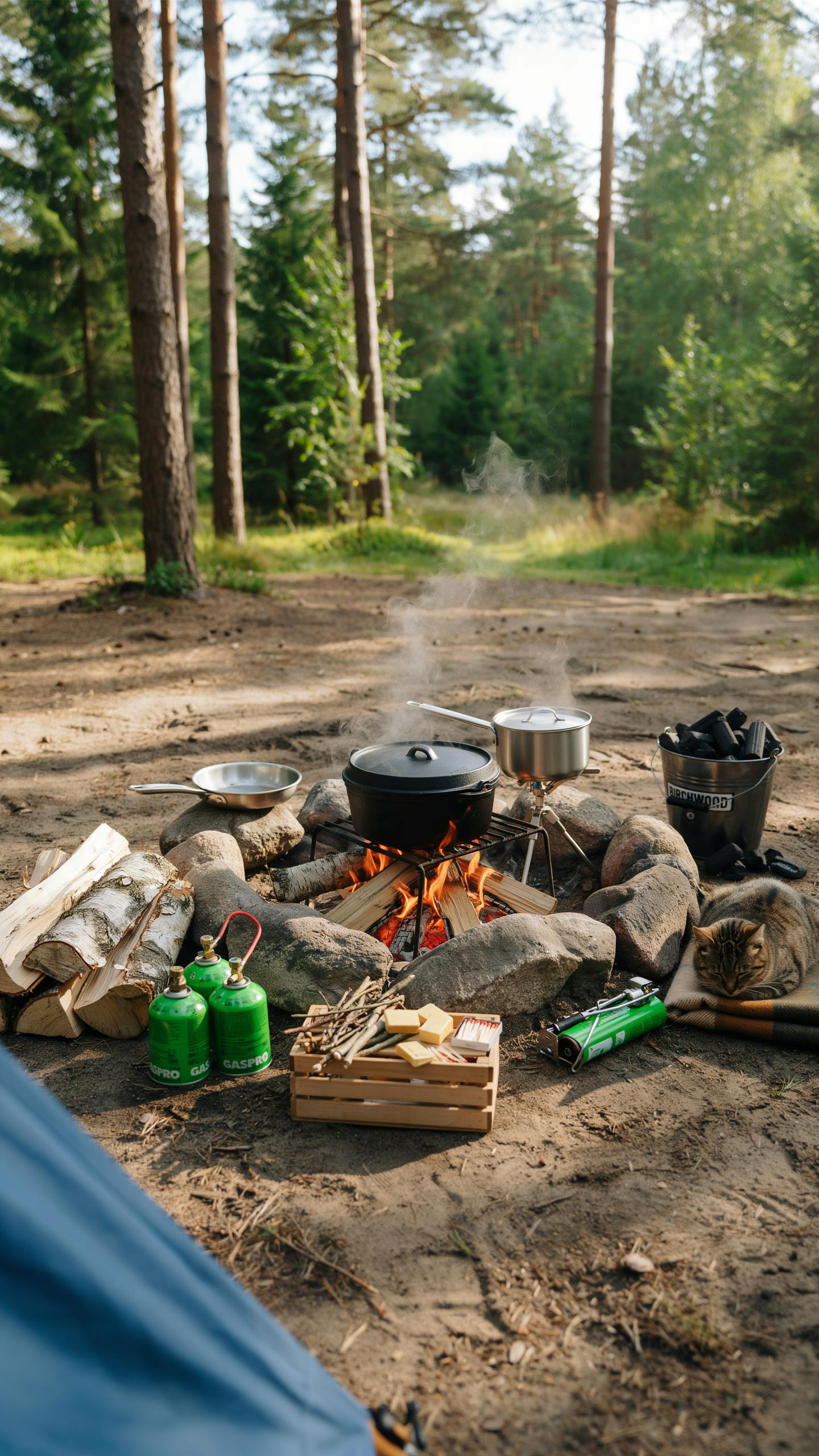
Tinder determines whether your fire starts on the first attempt or fails when you need heat most. Dry leaves, bark, and grass ignite with minimal effort. Pine needles and birch bark work reliably in most conditions. Gather tinder before you need it, storing it in a waterproof container. Test material by snapping it. If it breaks cleanly instead of bending, moisture content is low enough to catch flame.
Firewood quality directly impacts cooking efficiency and fuel consumption. Dead standing wood burns hotter and faster than ground wood because it contains less moisture. Split wood ignites easier than whole logs. Gather an arm’s length of pencil-thin kindling, wrist-thick fuel wood, and forearm-thick hardwood logs. Hardwoods like oak and maple burn longer than softwoods. Never strip bark from living trees. Dead, downed wood provides adequate fuel without damaging the ecosystem.
Compact Fire Starters: Ferro Rods, Lighters, And Matches
Ferro rods generate sparks through friction and work in wet conditions where matches fail. Strike the rod away from your face and toward tinder. A single ferro rod produces thousands of strikes before wearing out. Cost runs under fifteen dollars for quality models. Weight stays under two ounces. Ferro rods function at high altitudes and in cold temperatures where lighter fuel becomes unreliable.
Waterproof matches and lighters offer backup redundancy in your fire starting kit. Windproof lighters resist gusts that blow out standard flames. Store matches in waterproof containers with strikepad attached. Butane lighters fail in cold below freezing. Carry matches as your primary backup option. Pack all three methods: ferro rod, waterproof matches, and lighter. One method failing doesn’t leave you without fire.
Safety First Campfire Cooking Ethics And Practices
Leave No Trace Principles And Fire Safety Guidelines
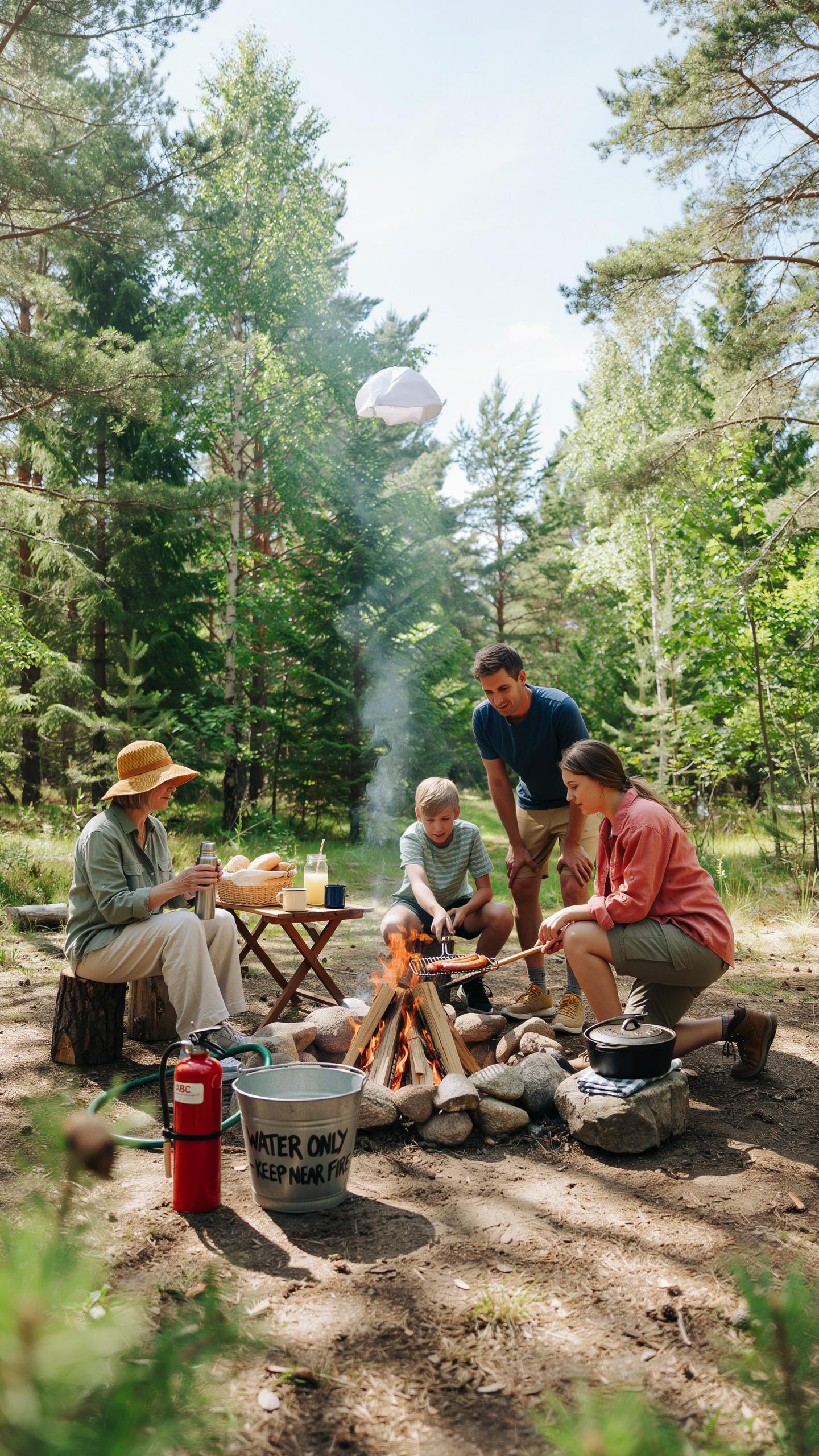
Leave No Trace is a framework developed in the 1960s that became standard practice for backcountry users. The core principle relevant to campfire cooking is minimizing your impact on the landscape. Use established fire rings when available. Never create new fire scars. Cook on existing ring sites or use portable stoves instead when fire rings don’t exist.
Fire safety demands you understand local regulations before you go. Many areas restrict open fires during certain seasons or ban them entirely. Never leave a fire unattended. Always fully extinguish your fire with water and stir the ashes until cool to touch. Pack out all unburned trash that won’t burn completely. This prevents resource damage and protects future users.
Proper Food Storage And Waste Disposal In The Backcountry
Bears and other wildlife will destroy your campsite if you leave food exposed. Store all food, trash, and scented items in bear canisters or hang them in trees at least 12 feet high and 6 feet from tree trunks. This applies even to what seems inedible like empty cookware and food scraps. Bears learn quickly and become dangerous when they associate humans with meals.
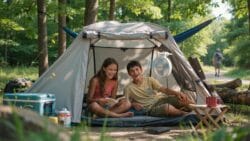
Dispose of greywater and food scraps responsibly. Strain food particles from dishwater and pack them out with your trash. Pour strained water at least 200 feet from water sources and camp areas. Never dump anything into water sources. Burn nothing except natural wood. Everything else goes in your pack, including foil, packaging, and plastics. Leave the site cleaner than you found it.
Recipes And Meal Planning For The Ultralight Camp Cook
One Pot Wonders Simple And Savory Campfire Meals
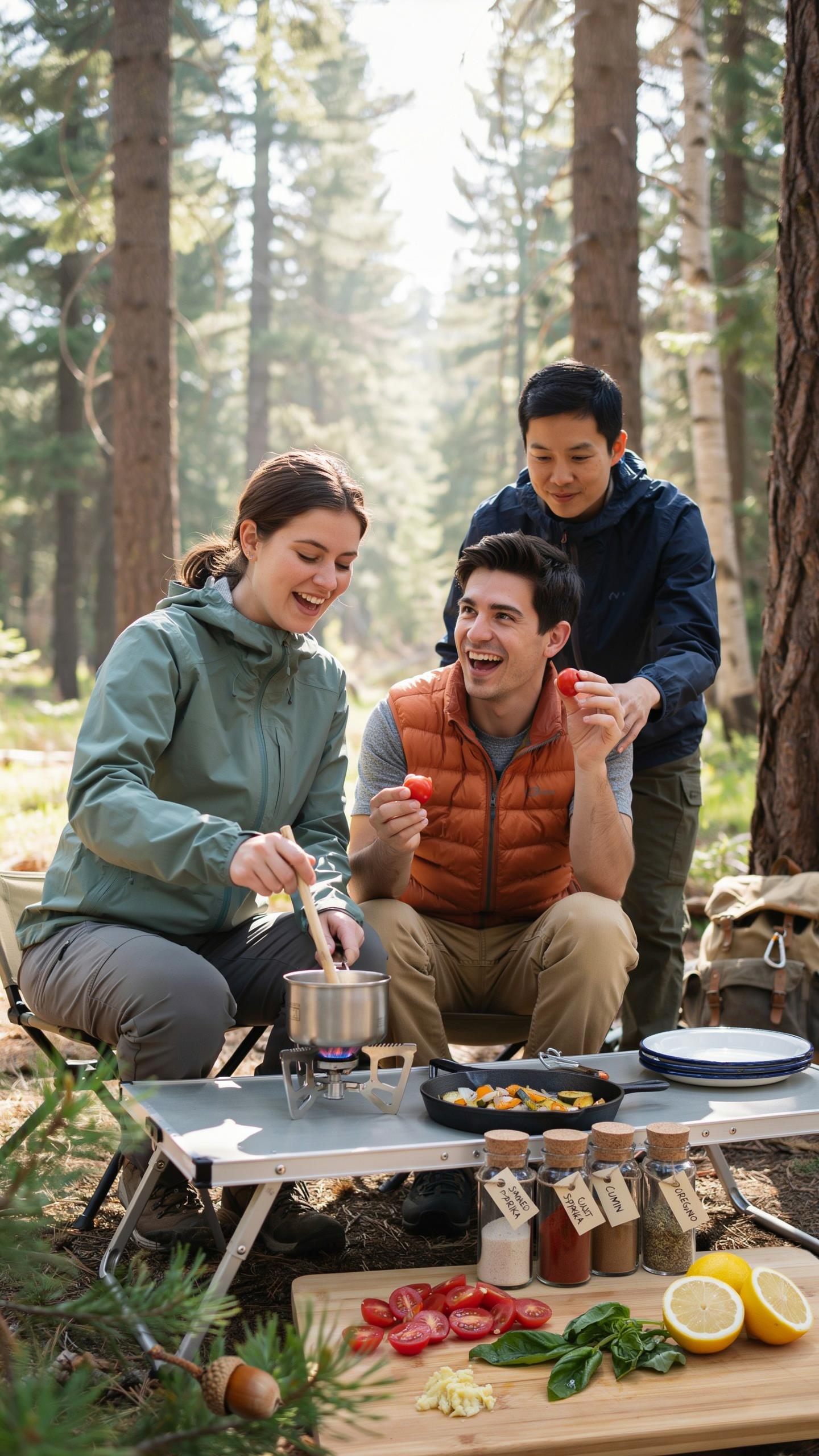
One-pot meals dominate ultralight backpacking because they minimize gear, fuel consumption, and cleanup. A single pot handles boiling, simmering, and serving. Rice, pasta, and legumes form the base. Add dehydrated vegetables, cured meats, or freeze-dried proteins. Seasoning packets or salt and pepper complete the dish. Cook time ranges from 15 to 30 minutes depending on ingredients and altitude.
The gear math works in your favor. One titanium or aluminum pot replaces multiple cookware pieces. You use one burner, one fuel canister lasts longer, and you carry one lid. Most backpackers pair a 1.5 to 2-liter pot with a spork or spoon. Boil water first, add ingredients in order of cooking time, then cover and simmer. This method requires no skill beyond reading package directions.
Dehydrated And Packaged Food Hacks For Flavor And Nutrition
Commercial dehydrated meals sell convenience but lack flavor depth without tweaks. Buy base meals cheap from bulk retailers. Add your own spice blends, hot sauce packets, or bouillon cubes. Powdered cheese, nutritional yeast, and dried herbs weigh nothing and transform taste. This approach costs less than brand-name backpacking meals while delivering better results.
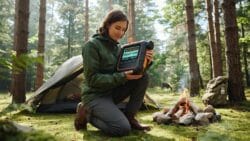
Nutrition requires intentional planning. Carbs provide energy, but protein and fat sustain you longer. Add instant mashed potatoes or ramen as carb bases. Mix in cured salami, beef jerky, or protein powder for muscle maintenance. Include peanut butter packets or coconut oil for caloric density. Track macros before your trip so you eat enough fuel for your mileage and elevation gain.
Maintenance And Care For Your Camp Cooking Gear
Cleaning And Storing Your Cookware After Each Use
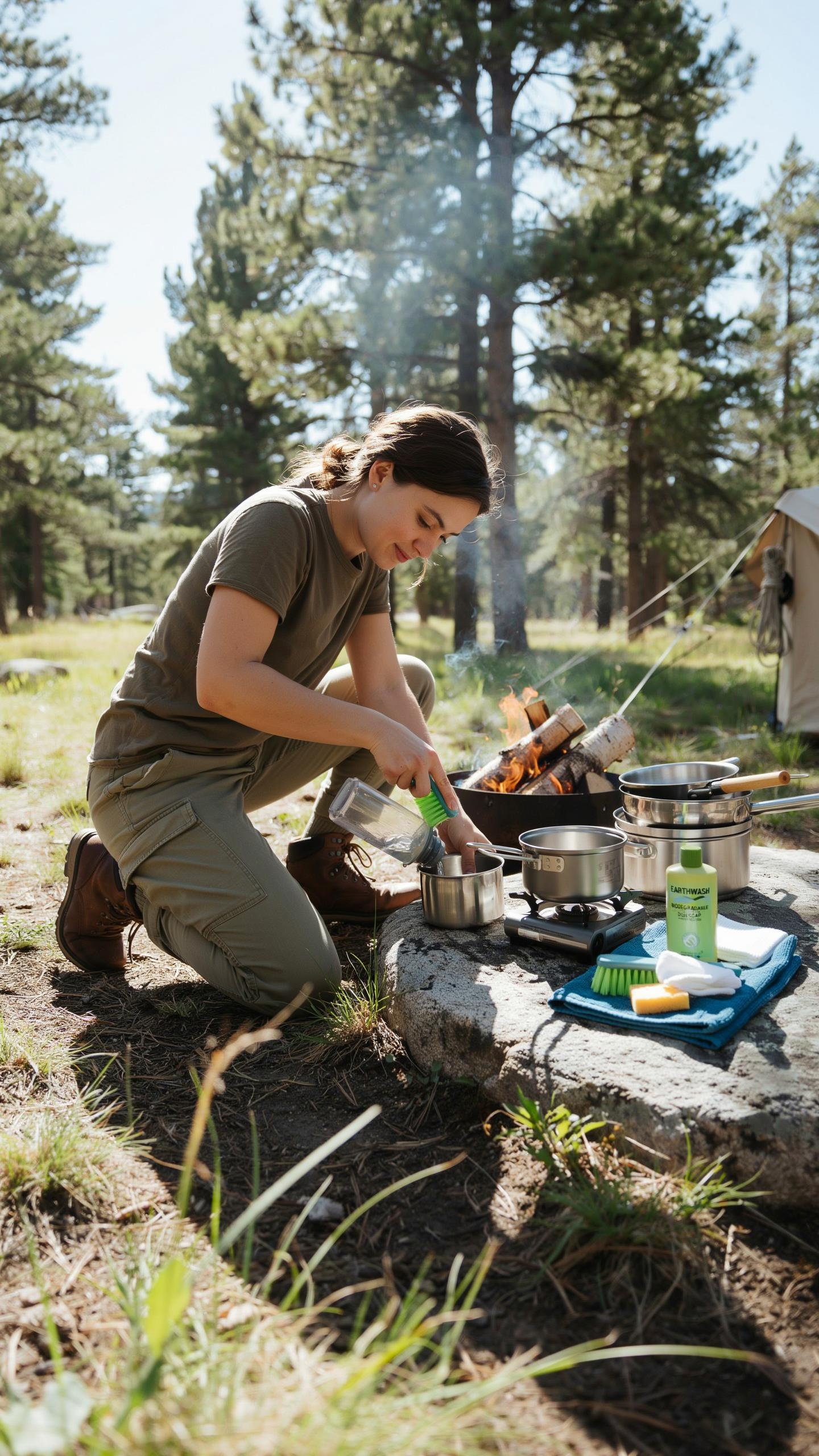
Clean your cookware immediately after each meal. Food residue hardens as it cools, making removal harder later. Use water and a scrub pad or cloth. Sand or dirt works as abrasive cleaners when you lack soap. Dry everything completely before packing to prevent rust and mold growth inside your pack.
Store cookware in a dedicated stuff sack or mesh bag. This keeps soot and food particles off your other gear. Ensure all items are fully dry before sealing the bag. Stack nested pieces to save space. Check that pot lids fit securely so they don’t shift during transport and damage your equipment.
Inspecting And Repairing Gear For Longevity
Inspect your gear at the start of each trip and after heavy use. Look for dents, cracks, warping, and corrosion on metal cookware. Check handles for loose rivets or cracks in wood or metal. Replace damaged handles immediately because they fail during cooking and cause burns. Test tripod joints and hanging mechanisms for stability before relying on them over fire.
Small dents in cookware don’t affect function and can stay. Cracks in metal pots require replacement since they allow heat escape and create hazards. Tighten loose rivets with a hammer and nail from underneath. Rust spots on steel respond to scrubbing with a steel wool pad or vinegar soak. Bent pot rims can sometimes flatten with careful tapping, but severe warping means replacement.
The Future Of Camp Cooking Innovations And Sustainable Practices
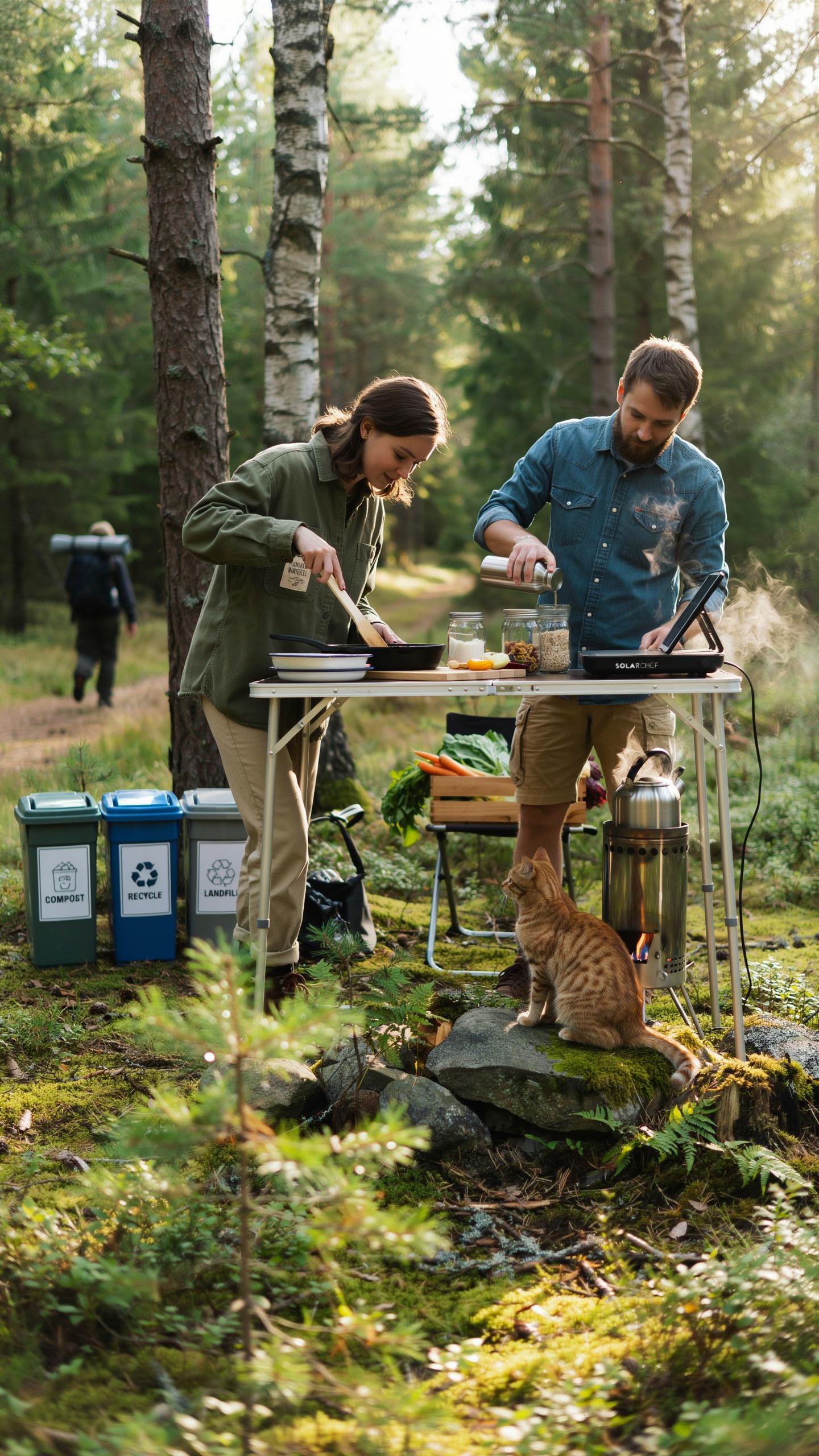
Emerging Technologies In Lightweight Camp Cooking Gear
Manufacturers now use titanium and advanced aluminum alloys to cut weight without sacrificing durability. These materials reduce pack burden while maintaining heat distribution efficiency. Collapsible designs with segmented components allow gear to compress into tighter spaces. Some brands integrate modular systems where individual pieces attach to create multiple cooking setups from one kit. The shift toward lighter materials reflects demand from long-distance backpackers who calculate every ounce.
Compact stove designs now feature integrated windscreens and heat reflectors built into the base structure. This eliminates the need for separate accessories, dropping total weight and complexity. Some models use passive airflow channels instead of moving parts, improving reliability in harsh conditions. Fuel efficiency has improved through better burner geometry and nozzle design. These refinements translate directly into fewer refill cycles during extended trips.
Eco Friendly Approaches To Outdoor Culinary Adventures
Leave-no-trace cooking practices mean using stoves that burn completely, producing minimal ash and residue. Backpackers now favor fuel canisters designed for full depletion to reduce waste. Reusable cookware replaces disposable options, cutting trash that accumulates at established campsites. Water management strategies involve collecting runoff for cleaning rather than contaminating natural sources. These methods preserve fragile ecosystems while reducing a backpacker’s environmental footprint.
Biodegradable soaps specifically formulated for camp use break down faster than conventional options. Backpackers can use minimal water quantities since these soaps require less rinsing. Some outdoor enthusiasts choose to forgo soap entirely, using only hot water and mechanical scrubbing with natural materials. Solar-powered camp lighting eliminates fuel consumption for nighttime cooking tasks. Strategic gear selection directly supports ecosystem health without compromising meal preparation capability.
Frequently Asked Questions

I’m new to backpacking. What are the absolute essentials in terms of campfire cooking gadgets for backpackers who travel light?
For beginners focused on traveling light, prioritize a lightweight pot/mug combo, a compact spork, and a small, foldable grill grate. These essentials allow for boiling water for dehydrated meals, simple cooking, and enjoying the campfire experience without adding significant bulk.
How can I safely and efficiently use my compact campfire cooking gadgets to prepare a meal in windy conditions?
To cook efficiently in wind, find natural windbreaks or create a small rock barrier around your cooking area. Angle your stove or grill grate to minimize direct wind exposure. Using a pot with a lid will retain heat much better, ensuring your campfire cooking gadgets for backpackers perform optimally.
Are there affordable options for campfire cooking gadgets for backpackers, or do I need to invest in expensive gear?
Absolutely! You don’t need to break the bank. Many excellent and lightweight campfire cooking gadgets for backpackers are available at budget-friendly prices. Look for stainless steel or anodized aluminum options from reputable outdoor brands, or even consider repurposing durable kitchen items.