The Illusion Of Impenetrable Anti Theft Bag Features
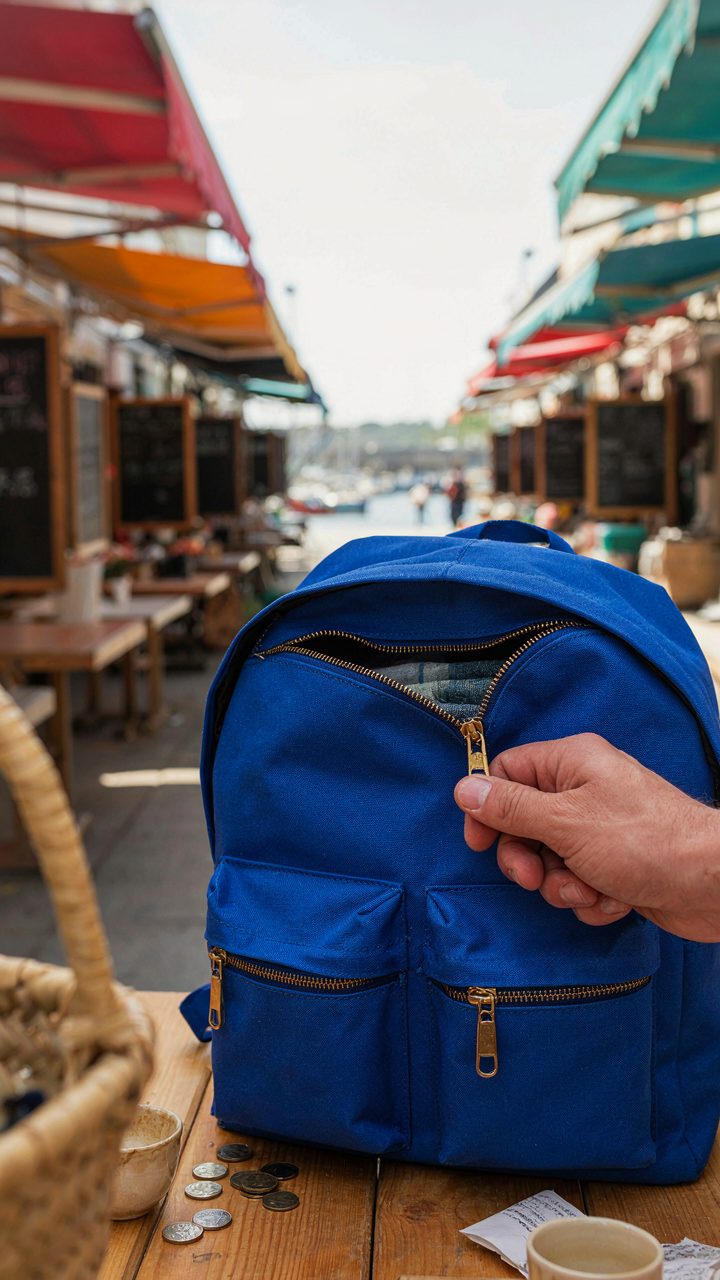
Why Basic Locks Breed False Confidence
You want to believe a lock solves the problem so you can stop thinking about theft. It doesn’t work that way. In security engineering, the concept of a “single point of failure” means one weak link collapses the entire system. Most anti theft bags rely on a TSA approved lock or basic zipper lock as their foundation, which is precisely that weak link. These locks deter casual hands but crack under thirty seconds of deliberate pressure. The lock becomes permission to ignore the actual vulnerability.
A basic lock’s real function isn’t prevention. It’s delay. It buys seconds when a thief weighs effort against reward in a crowded space. The moment you believe the lock itself protects your bag, you stop managing your actual exposure. You leave the bag unattended longer. You relax your positioning in transit. You stop noticing who’s near your stuff. The lock inverts your behavior in exactly the wrong direction.
Slash Proof Fabric Is Not What Marketing Claims
The common advice says slash proof materials protect your bag from knife attacks. That’s incomplete. Marketing conflates two different threats: slashing and structural penetration. Slash proof fabrics like Cordura or ballistic nylon resist abrasion and blade contact on the surface. They do not make a bag impenetrable. A sustained knife attack, or even moderate force with a sharpened edge at the fabric’s seam, defeats these materials. The seams are the real vulnerability, and no fabric overcomes bad stitching.
Slash resistant material also creates a false behavioral shift. You place expensive items deeper inside the bag because the exterior “feels” secure. This actually concentrates your risk. A thief who gains access finds more consolidated value in one location. The tactical move is distribution: scatter valuable items across multiple compartments and pack layers so the marginal effort of each retrieval increases. Fabric properties matter less than how you arrange what’s inside the bag.
The “Target Denial” Protocol: How To Disappear

Look Ordinary On Purpose
You want people to see your bag and think nothing. That’s the real reason this matters—not safety theater, but actual invisibility. Predators operate on pattern recognition. They scan crowds for signals: branded logos, tactical stitching, or anything screaming “I contain expensive gear.” A bag that reads as generic kills the entire targeting sequence before it starts.
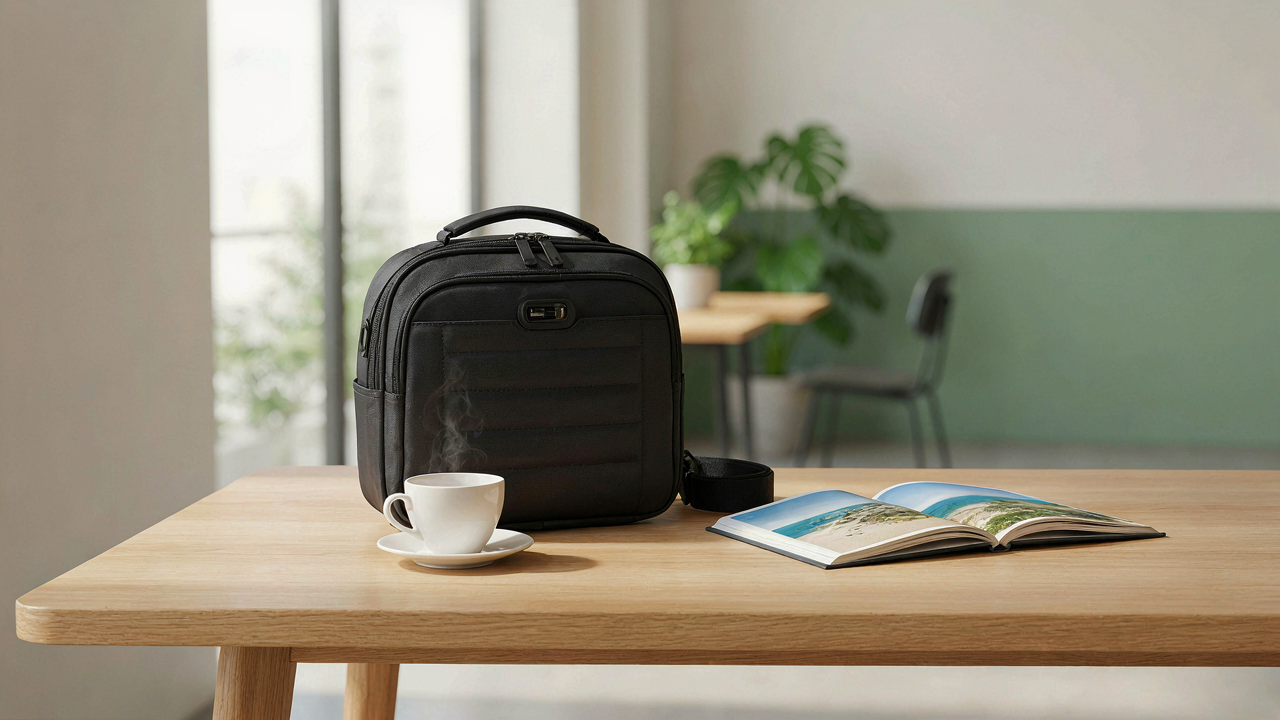
The best anti-theft bags reject the “anti-theft” aesthetic entirely. They use muted colors, minimal hardware, and construction details that signal “everyday work bag” rather than “fortress.” Ballistic nylon or treated canvas without visible reinforcement panels works. The bag should look expensive enough to own quality items, but boring enough that theft calculus shifts toward easier targets. This is visual camouflage, not protection.
Hidden Compartments That Actually Work
Most travel bags advertise secret pockets. This is backwards. The moment a compartment becomes known, it becomes searched. Real concealment works through layering and spatial deception—forcing a thief to choose between surface speed and deep searching, knowing surface access appears sufficient.
Effective hidden storage places valuables in dead zones: between the bag’s outer and inner shells, sewn into seams with micro-zippers, or in flat pouches that compress into the bag’s frame rather than creating visible bumps. RFID-blocking sleeves embed into laptop compartments. Money belts convert into flat pouches. The mechanism is simple: valuables occupy spaces that don’t announce themselves through texture, weight distribution, or silhouette. A thief grabs the obvious pocket. You never put critical items there.
Active Deterrence: Your Body As The First Line Of Defense

Keep Your Bag Where Your Eyes Can Reach
You want to believe a bag with enough zippers and locks will protect your stuff while you’re distracted. It won’t. The real mechanism is possession—the physics principle that proximity equals control. A crossbody bag worn tight against your ribs stays under constant tension. Your body registers movement against it before your conscious mind does. Thieves operate on efficiency. They want bags that dangle, shift, or sit where hands can work unnoticed.

Crossbody positioning forces the thief to work directly against your body awareness. The bag sits where your arm naturally rests or where you can feel weight distribution shift. Many travelers still use backpacks in crowded spaces, which positions your valuables where you cannot see or feel access points. A crossbody bag, worn across the front or diagonally tight to your torso, eliminates this blind spot entirely. This is not comfort optimization. This is tactical placement that makes the theft cost higher than the potential reward.
The Attention Economy Is Your Real Defense System
Thieves don’t target the aware person. They target the distracted one. Situational awareness beats any lock because it operates upstream of the theft attempt. The mechanism comes from threat assessment in security work: a target who actively scans their environment signals competence. A criminal evaluates risk before committing. They skip the tourist checking their phone every five seconds and eyes the person scanning exits, watching hand patterns, noting crowd density shifts.
Active attention means specific behaviors, not vague “stay alert” thinking. You notice when someone’s hand enters your peripheral space. You track unusual approach angles. You register when someone positions themselves to your blind side repeatedly. You move away from walls that restrict your vision. You know the crowd rhythm and spot when someone breaks that pattern. These actions form a decision loop that makes you economically unviable as a target. The attention itself becomes the anti-theft device, rendering the bag’s features secondary.
Beyond The Bag: Environmental Control For Your Anti Theft Backpack

The Perimeter You Actually Control
You want to believe a bag solves theft. It doesn’t. The mechanism that matters is how you manage the space around yourself, not the locks on your gear. Theft happens when a target sits unattended or when a thief gains physical proximity without your attention. A bag is passive defense. Environmental control is active.
Most travelers focus on bag design and miss the real vulnerability: the gap between leaving your bag and the moment someone notices it’s gone. This window exists whether your pack costs fifty dollars or five hundred. Situational awareness, seating position, and how you physically occupy space determine whether theft occurs. Choose seats against walls in cafes. Keep your bag between your feet or against your leg. Never drape it over a chair back where hands can reach it unobserved.
Securing Luggage When Conditions Change
The advice to use cable locks and anchor points assumes those anchors exist and that you’ll remember to use them. Neither assumption holds in reality. What actually works is treating luggage placement like a perimeter defense problem from security operations: you establish layers of friction between a thief and your bag.
In hostels, rooms with multiple occupants create natural surveillance. Your bag in a shared room with witnesses deters theft more than a lock on a private room’s door. In airports, luggage sits in blind spots by design. Position bags where staff pass regularly or near security checkpoints. In hotels, use the safe for documents and valuables. For carry-on gear in transit, never place bags on the ground where they roll easily. Overhead bins require someone to reach past you or draw attention. The cable lock matters less than the environment forcing a thief to operate visibly.
The “Friction Economy” Of Theft: Wasting A Thief’s Time
Layered Defenses Force Decision Points
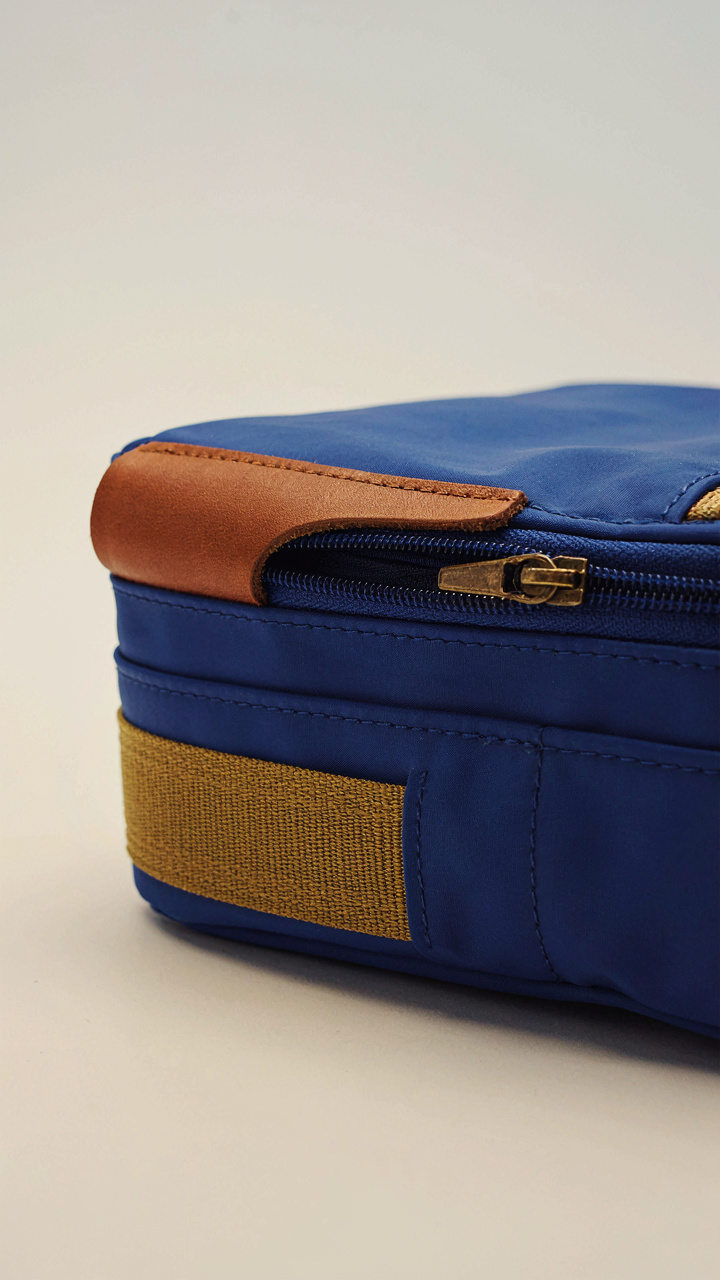
You want to believe a single feature will save your stuff. It won’t. Military strategists learned centuries ago that attackers quit when each barrier costs more time than the target’s perceived value. Anti theft travel bags apply this principle through stacked obstacles: a slash resistant exterior panel stops blade entry, then a hidden zipper pocket forces the thief to search, then RFID blocking adds uncertainty about what’s inside. Each layer doesn’t need to be impenetrable. It just needs to create friction.

The mechanism is straightforward. A thief scanning a crowded airport has maybe ninety seconds per target. They move on if your bag requires thirty seconds just to open properly, then another thirty to locate a money belt hidden in an interior sleeve. A standard backpack with external pockets and exposed zippers gets flagged and worked in under two minutes. The difference between a conventional bag and a friction-designed one isn’t protection. It’s making you the wrong math problem.
An Unprofitable Target Stays Untouched
Economics teaches that criminals operate on risk versus reward calculations. Make yourself an unprofitable target and the decision is made before the attempt starts. Anti theft bags signal this through visible design choices: hidden pockets create uncertainty about where valuables actually sit, locking zippers suggest monitoring or cameras, and materials that resist cutting increase tool wear. A thief doesn’t need to know the truth about your bag’s contents. They only need to perceive that opening it costs more effort than the expected payoff.
The real tactic is visibility of friction, not friction itself. TSA approved locks on external zippers tell a thief you’ve thought about security. An interior cut resistant panel visible through positioning telegraphs resistance. Straps that thread through bag loops force a two step removal process instead of a shoulder slice. You’re not actually preventing a determined attacker. You’re making sure casual or time pressed thieves choose the person three feet away with an open daypack and dangling headphone wires instead.
Unsung Heroes: The True Value Of Pacsafe Metrosafe & Alternatives

Where Features Actually Stop Theft
You want to know which anti theft bag will make you feel safe. That’s not the same as being safe. The mechanism that matters: theft is a speed game. A thief has seconds. Your bag’s job is to make those seconds too expensive, either in effort or attention cost. Pacsafe Metrosafe bags use slashproof fabric and lockable zippers as friction. Not invincibility. Friction.

The real application separates casual theft from organized crime. A drunk pickpocket on a crowded train won’t work through slashproof mesh. A professional bag snatcher who targets specific items will. Metrosafe’s steel wire mesh, lockable compartments, and RFID blocking all function as speed bumps. Each feature forces a decision: is this bag worth the extra thirty seconds? Most thieves choose the next target. That’s the entire game.
Crossbody Design Against Body Separation
Pacsafe crossbody bags for travel work because they eliminate a fundamental vulnerability: the bag hanging at your side where hands operate unseen. Biomechanics from theft prevention research show that crossbody positioning forces a thief’s angle. They can’t work perpendicular to your body. They must work against your torso, which means friction against your clothes, your movement, your awareness. Your body becomes an obstacle.
The design stops incremental theft. Someone unzips a front pocket during a crowd surge? Crossbody placement puts the action in your peripheral vision instead of behind you. Someone reaches for your daypack shoulder strap? You feel it immediately. Pacsafe and competitors like Travelon use this principle with small compartments sewn close to your torso. You carry less in each pocket specifically so a thief gets minimal payoff for the effort. The protocol: crossbody positioning works only if you keep high-value items in the innermost compartments closest to your body.
The “Decoy” Method: Misdirection For Your Travel Bag
The Accessible Pocket Trap
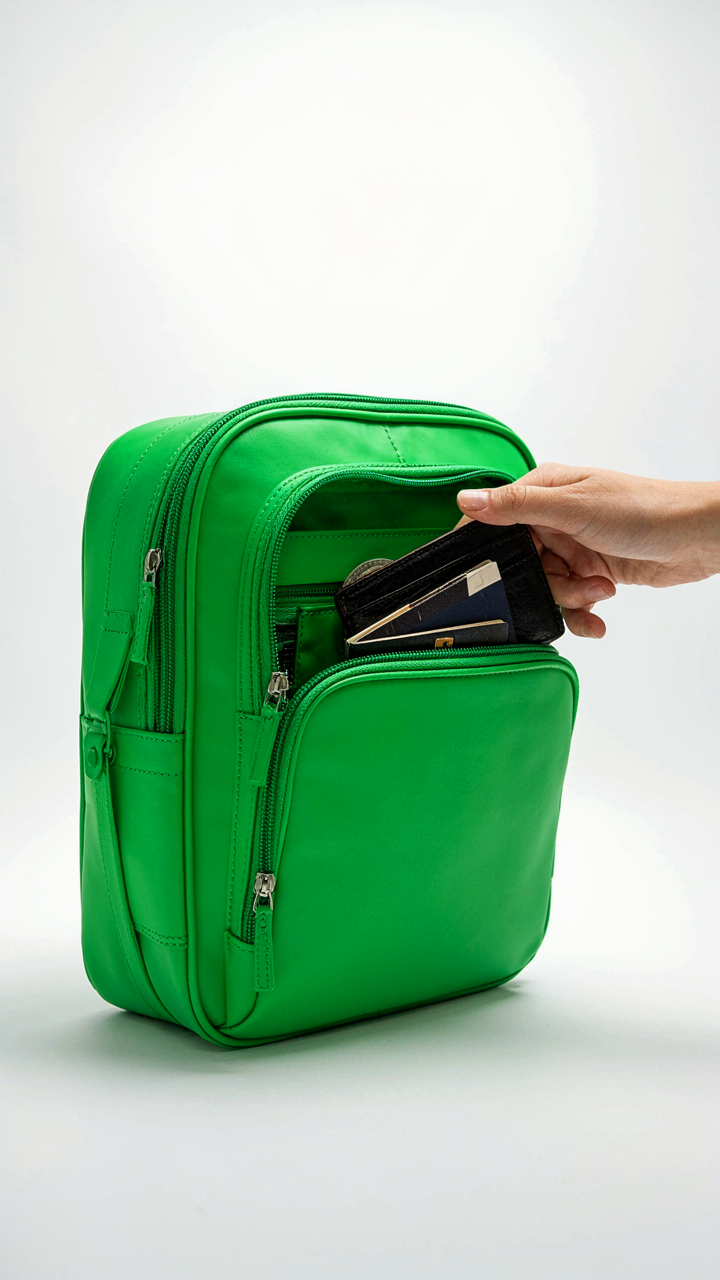
You want to believe a thief will take what’s easiest and leave. That’s the real draw here, and it’s not entirely wrong, but it’s incomplete. In military deception strategy, this is called creating a “false center of gravity”—a decoy target that redirects enemy focus from your actual objective. An anti theft travel bag with a deliberate low-security outer pocket creates exactly this. The thief sees cash, a phone, or a cheap watch positioned where it’s easy to grab. They take it and move on.

The mechanism works because opportunistic theft operates on speed and risk calculation. A thief spends thirty seconds on your bag. If they find something valuable in the first ten, they’re done. The external pocket—slightly easier to access than the main compartment—serves as bait. You populate it with replaceable items: expired credit cards, small bills, a burner phone. The real assets stay deeper, behind multiple locks and zippers.
Compartmentalization With Friction
The real mistake people make is thinking all pockets serve the same purpose. They don’t. Effective decoy bags separate layers of access intentionally. The outermost pocket has minimal friction: one zipper, one motion, contents visible immediately. The next layer adds friction: hidden zippers, internal organization, a small lock. The innermost compartment requires deliberate effort: a combination lock, RFID blocking, or a TSA-approved locking system that still takes time to breach.
This tiering isn’t about security theater. It’s about matching item value to retrieval cost. A five-dollar item in a thirty-second pocket is acceptable loss. Your passport, cards, and phone require a three-minute extraction. By the time a casual thief realizes they need to work for the real valuables, they’ve already moved to an easier target. The friction you build into your bag’s architecture determines how long a theft attempt actually takes.
Digital Defense: The Overlooked Anti Theft For Luggage And Backpack

RFID Blocking: Essential Or Overstated Concern?
You care about this because you want proof that you’re taking security seriously without actually changing your behavior. Here’s what matters: RFID skimming operates on electromagnetic field theory, where a reader broadcasts a signal to activate a chip’s response. RFID blocking uses conductive material to create a Faraday cage effect, interrupting that signal before it reaches your card or passport data. The mechanism works. But the threat level is wildly overstated in marketing.

Most credit cards issued in developed countries now include EMV encryption and fraud protection that makes skimming data functionally useless without the physical card present. Passports do contain RFID chips, but they’re harder to read at distance than marketing suggests, and passport fraud typically requires additional identity documents anyway. You don’t need RFID blocking to feel secure. You need it only if you carry multiple unencrypted payment cards across high-density crowded areas regularly, which most travelers don’t.
Protecting Devices Within Your Anti Theft Travel Accessories
The real loss during travel isn’t theft. It’s device failure from impact, humidity, and pressure changes during transit. Your anti-theft bag compartment design matters far more than locks do here. Look for dedicated tech pockets with padding that absorbs shock from the bag’s movement, not just from external collision. These should isolate your devices from other cargo that shifts during transport.
Separate power cables from devices in your bag. Cord tangles create stress on charging ports and connectors during movement, which fails before theft ever happens. Electronics also need humidity control in tropical or coastal destinations. Use silica gel packets in sealed inner compartments where you store phones, tablets, and laptops. Check and replace them every few days depending on climate. This prevents corrosion and battery degradation more reliably than any anti-theft feature does.
The Obstacle Isn’t The Thief; It’s Your Misplaced Reliance On Material Solutions Over Mindful Travel

You can buy every anti theft travel bag feature available and still get robbed because you weren’t paying attention. The real protection comes from situational awareness. Today, ditch the assumption that zippers and RFID blocking solve your problem. Spend an hour mapping the neighborhoods you’re visiting. Know where tourists cluster. Know where locals avoid. Your bag’s security features matter, but your brain matters infinitely more. A thief targets the distracted person, not the prepared one.