
The Unseen Battlefield: Understanding Global Electrical Grids

Why Voltage Differs Across Continents
You care about this section because you don’t want to fry your laptop at a conference and look incompetent. The real mechanism is historical accident combined with engineering lock-in. In the early 1900s, different countries built electrical infrastructure independently. Edison pushed 110V in America. European engineers standardized on 220-240V. Neither was objectively superior. Both worked. Once millions of outlets existed, switching became economically impossible. Every country’s grid became frozen in its choice.
Today, 110-120V dominates the Americas and parts of Asia. 220-240V dominates Europe, Africa, the Middle East, and Australia. China split the difference regionally. Your device doesn’t care which voltage won—it just needs to match what powers it. A converter changes voltage. An adapter just changes the physical plug shape. Most travelers confuse these because marketing blurs the line. Understanding the split matters because it determines which tool you actually need.
The Frequency Problem Nobody Mentions First
Voltage gets the attention, but frequency is the silent killer that converters alone can’t fix. Think of frequency like the tempo in an orchestra—the synchronization mechanism that tells every component how fast to cycle. North America runs 60 hertz. Most of the world runs 50 hertz. A converter handles voltage conversion. It does not handle frequency conversion. Your hair dryer motor designed for 60Hz will spin slower on 50Hz current. Your phone charger doesn’t care. This inconsistency is why generic advice fails.
Most dual voltage devices you buy specify “100-240V, 50-60Hz” because manufacturers built in automatic frequency tolerance. Your electronics actually don’t need a converter in most cases—they need the right plug and enough voltage flexibility. When you hit a device that demands exact frequency, you need a frequency converter, which is expensive and rarely sold as travel gear. Check your device’s input label before traveling. If it says “50-60Hz,” a simple adapter works. If it lists only one frequency, you’ve found the real constraint.
The Adapter Plug Delusion: Why It Only Solves Half The Problem

Mechanical Fit Versus Electrical Function
You want the adapter because you think it solves the problem, but it only solves the part you can see. An adapter is a purely mechanical device. It changes the physical shape of your plug so it fits into a foreign outlet. That’s it. The prongs go in. Nothing else happens. Your device still receives whatever voltage and frequency that outlet delivers.

Electrical function is the mechanism that actually matters here. Think of it like shipping: the adapter is the box that lets your package fit on the truck, but it doesn’t change what’s inside or whether the destination can handle it. A US phone charger outputs 120 volts. A UK outlet delivers 230 volts. The adapter lets the charger’s plug physically enter the socket. The voltage still kills the charger. You’ve solved logistics, not physics.
The Myth Of Universal Compatibility
The travel industry sells adapters as if they’re universal keys that unlock any outlet anywhere. They’re not. Common advice treats all adapters the same. This is wrong. An adapter solves one problem only: physical fit. It guarantees nothing about whether your device survives what flows through it. You can plug a 120-volt device into a 230-volt outlet with the right adapter and watch it burn.
Compatibility requires two separate checks. First, your plug must fit the socket shape, which an adapter handles. Second, your device’s voltage and frequency tolerance must match the outlet’s specs, which an adapter completely ignores. A device rated 100-240V with 50-60Hz adapts automatically to most global outlets. A device rated only 120V does not, no matter which adapter you buy. Check your charger’s label. If it doesn’t list a voltage range, an adapter alone puts it at risk.
The Voltage Converter Guide: Protecting Your Investment

Step Down And Step Up Converters
You’re worried about frying your expensive device and looking for someone to tell you it’ll be fine. It won’t be if you pick the wrong converter type. Think of converters like pressure regulators in plumbing: they don’t just move electricity around, they transform it fundamentally by stepping voltage up or down to match what your device needs.

A step-down converter reduces voltage from high to low. Most travelers need this one. You’re moving from 220V countries to plug in 110V devices, so the converter takes the higher input and outputs lower voltage your device expects. Step-up converters do the opposite, raising voltage from low to high, which is rarer because fewer people travel with devices requiring higher voltage than what’s available.
Travel Converter Decisions
Forget the generic advice that converters work everywhere. They don’t. The real question isn’t whether to bring one, it’s which devices actually need one and which ones already handle dual voltage without any adapter at all.
- Dual voltage devices: Check your device label. If it reads 100-240V, it needs only a physical adapter for the plug shape, not a converter. Most modern phones, laptops, and chargers already handle this range.
- Hair dryers and heating appliances: These almost always require conversion because they use resistive heating and can’t tolerate voltage mismatches. Bringing one means bringing a converter, period.
- Power tools: Check the voltage rating. Most modern cordless tools accept 100-240V input on their chargers, but the tool itself may not. Verify before traveling.
- Kitchen appliances: Blenders, coffee makers, and kettles typically don’t have dual voltage. If you need one abroad, buy it there instead of converting.
- Cameras and small electronics: Nearly all modern cameras, portable speakers, and tablets have dual voltage chargers built in. Don’t convert what already converts itself.
The real mistake is assuming all converters work the same way. Wattage matters more than voltage alone. A 50W converter won’t run a 1500W hair dryer, no matter what the packaging claims. Match the converter’s wattage rating to your device’s actual power draw before you leave.
The Travel Adapter And Converter Fallacy: One Box, Different Functions

Integrated Units Solve One Problem, Create Another
You want one device so you don’t look unprepared at the airport. Here’s the real mechanism: most “all-in-one” converter-adapter units do neither job well because the engineering demands conflict. A true converter generates heat while stepping voltage down. An adapter just routes power through different socket shapes. Cramming both into one housing forces compromises that weaken performance in both functions.

Manufacturers market integrated units as convenience. What they deliver is mediocrity packaged as flexibility. The device gets hot because the conversion circuitry has nowhere to dissipate energy inside a compact shell. Meanwhile, the adapter portion uses cheaper materials to save cost. You end up carrying something that works adequately for low-draw devices but fails when you need actual power conversion for a high-wattage appliance. The trade-off isn’t convenience. It’s capability surrendered for compactness.
True Conversion Requires Actual Circuitry, Not Pass Through
The common advice says “just get a converter and you’re covered.” That’s incomplete. Real voltage conversion needs transformer coils or electronic switching circuits. They transform 220V down to 110V or vice versa by physically altering the electrical signal. A simple adapter does nothing of the sort. It only changes the shape of the plug so it fits the outlet.
This distinction matters because manufacturers label products deceptively. A “travel converter” that’s actually just an adapter with a misleading name will brick your device or cause it to malfunction. Check the product spec sheet for mention of voltage transformation, wattage capacity, or transformer components. If the spec says it only matches plug types, it’s an adapter. If it lists input and output voltages as different values, it’s a converter. The label on the box means nothing. The electrical specification means everything.
The Joule’s Law Protocol: Applying Physics To Prevent Meltdowns

Resistance As Friction Heats Everything Down
You’re reading this section because you don’t want to fry your laptop in a hostel bathroom and look stupid. Here’s the actual mechanism: physics treats electrical resistance exactly like mechanical friction. Heat is wasted energy, and a converter generates massive heat because it’s fighting against resistance to transform voltage.

A converter changes voltage by forcing current through resistive coils. This resistance creates heat as a byproduct, just like rubbing your hands together fast. An adapter merely redirects the current without transforming it, so it generates almost no heat. The device getting plugged in demands a specific voltage. A converter has to work against the electrical system to provide it. That work becomes heat. More heat means more energy lost, more stress on the converter, and faster failure.
Power Ratings: Demand Always Exceeds Supply
The advice most travel blogs give is backwards: they tell you to match wattage numbers. Wrong. The real issue is that your device’s peak demand spikes the moment you turn it on, and most converters cannot sustain that spike for extended use.
A 100-watt converter cannot safely run a 100-watt device continuously. Converters lose efficiency under load, meaning they generate heat and drop voltage as they work harder. Your phone charger demands 18 watts, but if you stack three chargers on a 100-watt converter, you’re at 54 watts of continuous draw plus the converter’s own heat losses. The converter was never designed to be at capacity. Run the converter at 60 percent of its rated power maximum, or buy one rated double what you actually need. Check your device manual for peak wattage, add 30 percent for safety margin, then match the converter. This is the only protocol that prevents failure mid-trip.
Travel Voltage Adapter Needs: Decoding Device Labels

What Your Device Input Label Actually Means
You’re checking labels because you’re afraid of frying something expensive and looking stupid in a foreign country. The real mechanism is simple: every device has an input voltage range printed somewhere, and that range tells you exactly what electrical pressure it can handle without breaking.

The input specification appears on the device itself, usually near the power port or on the charger block. It reads something like “Input: 100-240V, 50-60Hz.” This is not a suggestion. The voltage numbers are the safe operating window your device accepts. Anything outside that range causes immediate damage. The Hz number refers to frequency, which matters less for travel but appears on the same label because both voltage and frequency define the electrical signal’s shape.
Dual Voltage Devices: The Real Exception
The common advice says “just buy a dual voltage device and you’re done.” That’s incomplete. Dual voltage means the device works at both 110-120V and 220-240V, but this capability is not built into most things you own. Only certain categories of devices actually ship dual voltage by default: phone chargers, some laptop power supplies, hair dryers marketed for travel, and shavers. Everything else is single voltage, period.
When a device is dual voltage, the label will explicitly state it. You’ll see “Dual Voltage: 110-240V” printed directly on the charger or device housing. This matters because it changes your entire travel strategy. A dual voltage device needs only a plug adapter, not a converter, because it handles the voltage difference internally. Check your actual devices before traveling, not after. Most people assume their stuff is dual voltage and get surprised at the airport.
The Travel Electrical Adapter Guide: Strategic Packing For Power

What Actually Gets Packed First
You’re worried about looking unprepared. Here’s the mechanism: most travelers obsess over adapters and converters but never audit what actually draws power. This kills efficiency before departure. Start with demand, not supply. List every device that needs charging. Phone, laptop, camera, headphones, watch, portable battery. Check each one’s wattage and input voltage. This inventory determines everything else. You can’t pack smart without knowing what you’re powering.

The common advice is “just bring adapters.” That’s incomplete. An adapter changes the plug shape. A converter changes voltage. A device rated 100-240V needs only an adapter. A hair dryer rated 110V only needs a converter in Europe. Most travelers own a phone that handles both already. Know this distinction before you leave, not when you land.
Consolidation Through Honest Assessment
The economics of travel power management work like supply chain logistics. You minimize points of failure by reducing total components. One multi-port charger with the right wattage output replaces three separate chargers and saves space. But only if it handles your actual simultaneous demand. A 30W charger runs a phone and headphones. A 65W charger runs a laptop and phone together. A 100W charger handles all three. Calculate what you’ll charge at the same time, not everything you own.
Multi-port chargers with universal voltage input eliminate the need for separate converters in most cases. They accept 100-240V, so one unit works worldwide. The trade is higher upfront cost and slightly more weight than a basic adapter. The return is fewer cables, fewer devices to track, and fewer failure points when moving between countries. Pack one quality multi-port charger with appropriate wattage over five individual chargers and adapters.
Travel Adapter For Worldwide Use: Beyond The Gimmicks

Which Brands Actually Work
You want the reassurance that spending more means you won’t fry your phone in a hostel bathroom. The real mechanism is thermal stability under sustained load. Cheap adapters use undersized internal components that generate heat during extended use, causing solder joints to fail or internal contacts to oxidize faster than name brands can replace them.

Anker, Belkin, and RavPower design their adapters with copper windings and surge protection circuits that dissipate heat instead of concentrating it. They also publish actual voltage tolerance specs instead of hiding behind vague marketing. Buy from brands that list their output stability within plus or minus 5 percent, not ones that claim universal compatibility without data. Your device draws current based on its own requirements, not based on what the adapter claims to provide.
Emergency Power When The Outlet Fails
When you’re stranded without power, your adapter becomes useless if the outlet is dead or damaged. The real solution is redundancy, not a backup adapter. Carry a portable power bank rated for at least 20,000 mAh alongside your standard travel adapter. One solves the outlet problem. The other solves the timing problem when you need charge but have no electricity source.
If the power bank fails or runs dry, use USB charging ports in hotels, airports, or coworking spaces instead of hunting for another adapter. Outlets fail everywhere. Devices with USB input ports fail less often. Your emergency protocol is this: adapter first, power bank second, USB charging station third, nothing else. When you reach step three, you’ve already solved the actual problem.
Your Electrical Ignorance Isn’t Bliss; It’s A Ticking Time Bomb For Your Devices
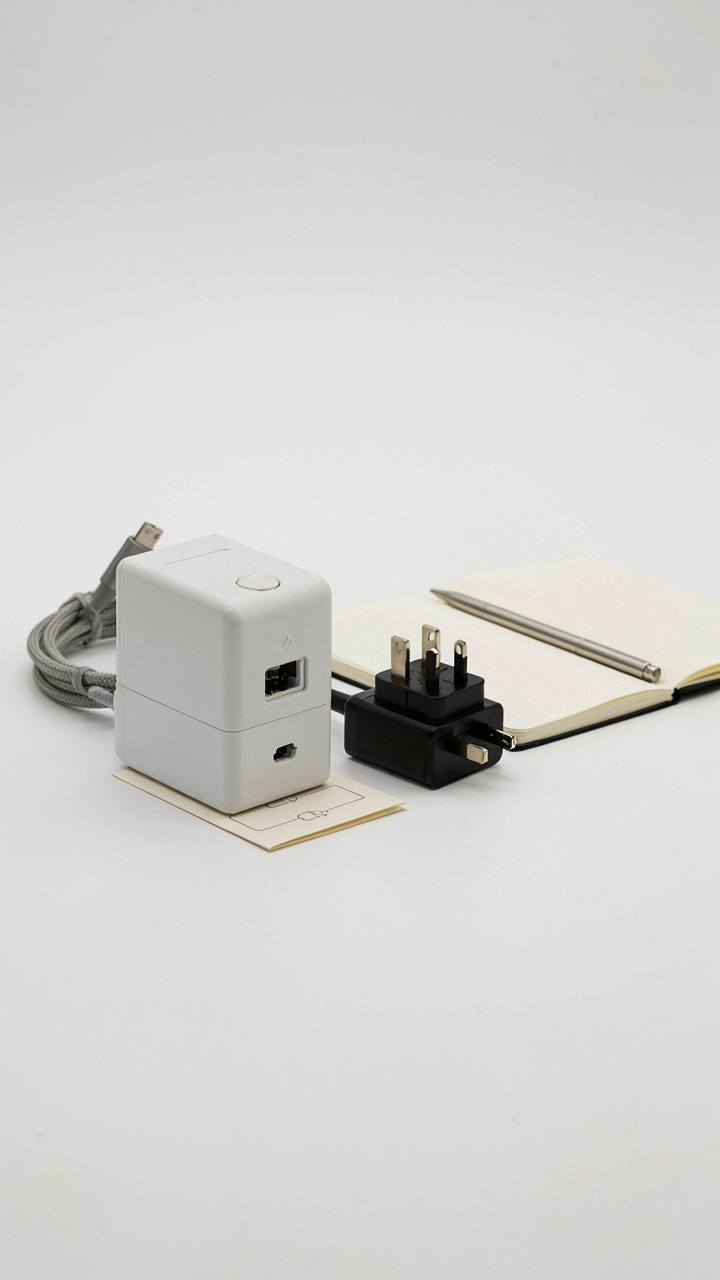
Most travelers grab whatever plug adapter sits in their drawer and call it done. That apathy will fry your laptop. The difference between a converter and adapter isn’t semantic—it’s the difference between your device working and your device becoming an expensive paperweight. Stop assuming they’re interchangeable. Check your device’s voltage requirement today, not at the airport. One wrong choice doesn’t just waste money. It burns your gear to the ground.