
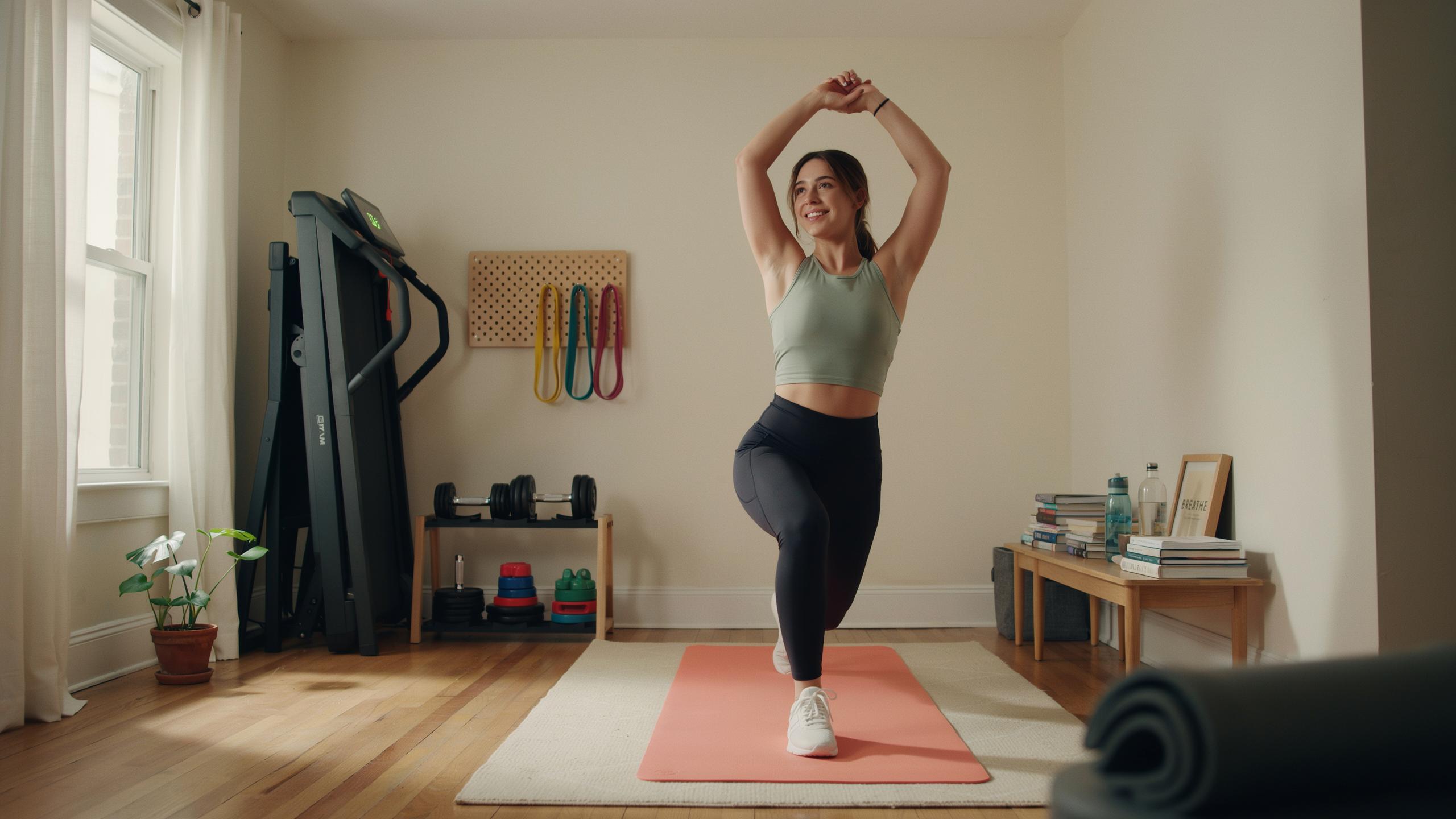
The Allure Of A Small Home Gym
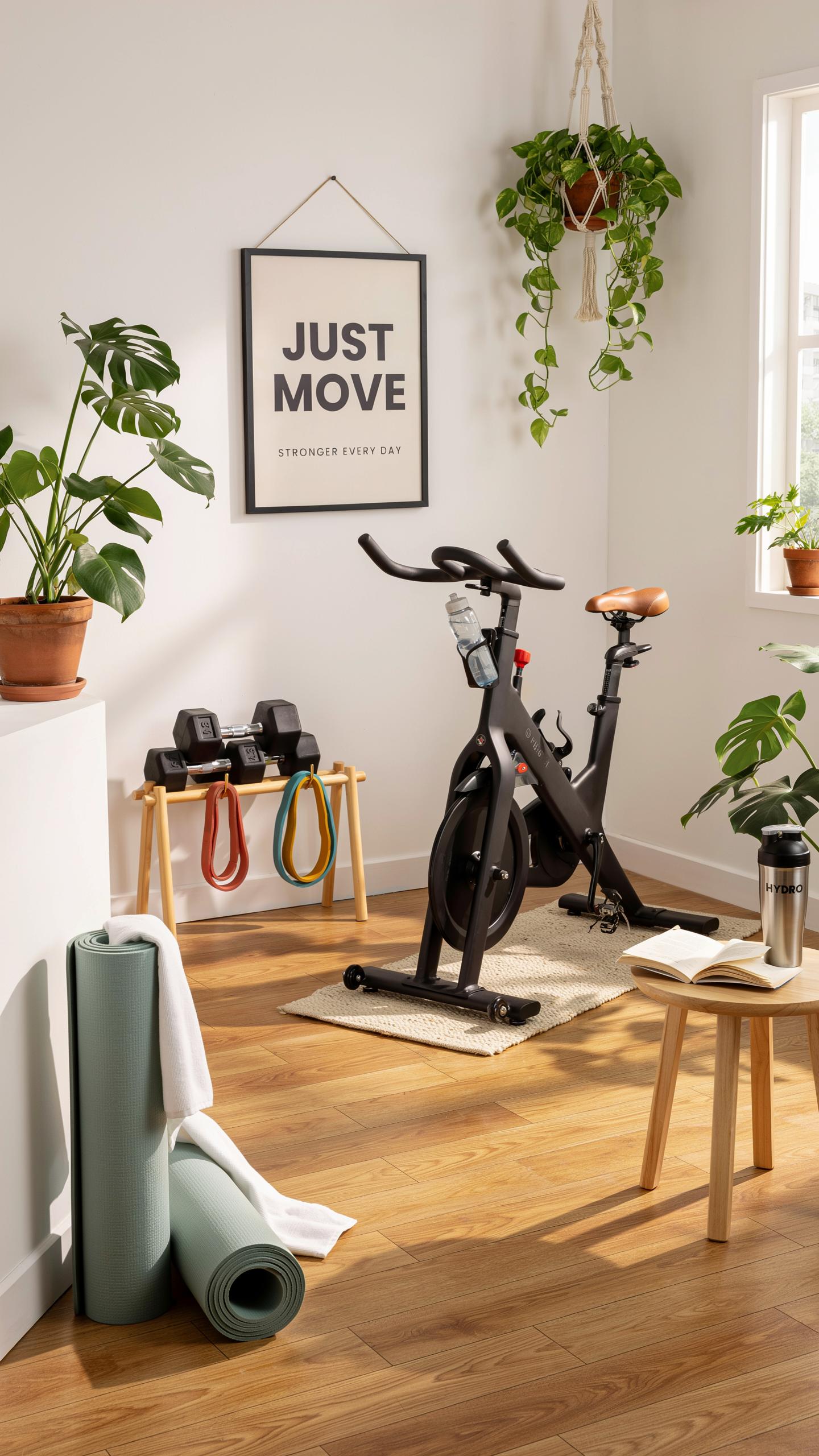
Why A Home Gym In A Small Space
Urban living shrinks square footage fast. Apartments and compact homes dominate major cities where real estate costs prohibit spacious layouts. Traditional gym memberships demand commute time and monthly fees that add up. A small home gym eliminates both barriers. You train when you want. Equipment stays accessible without leaving your residence.
Space constraints force equipment selection discipline. You cannot waste room on machines that serve single purposes. Small space gyms demand multi-functional tools that deliver results in tight quarters. This reality actually improves training outcomes because you focus on proven, efficient equipment rather than novelty purchases that collect dust.
Benefits Of Compact Fitness Solutions
Equipment efficiency becomes your competitive advantage in small spaces. Resistance bands, adjustable dumbbells, and suspension trainers deliver full-body workouts using minimal floor area. A single adjustable dumbbell replaces an entire rack of traditional weights. Compact solutions eliminate the excuse of lacking equipment while keeping your living space usable for other activities.
Cost control matters when you work with limited space. Small home gyms require lower initial investment than commercial setups. You buy only what you need. Monthly gym fees disappear entirely. The money saved redirects toward higher quality, multi-use equipment that compounds your training effectiveness over time without financial strain.
Smart Home Workout Storage Solutions
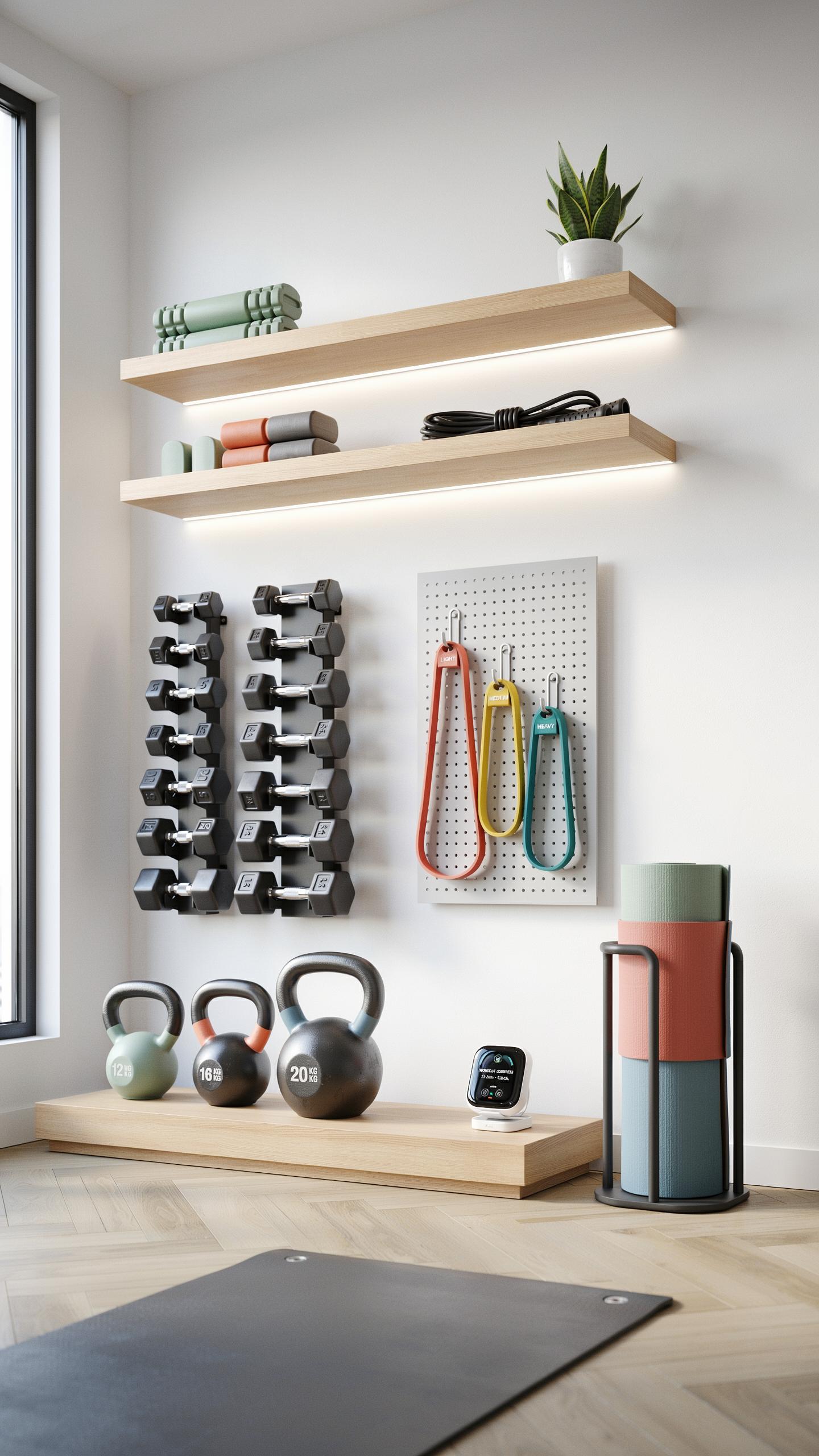
Vertical Storage For Equipment
Wall-mounted systems handle equipment without consuming floor space. Install pull-up bars, resistance band hooks, or dumbbell racks at eye level or higher. Pegboards work well for organizing smaller items like jump ropes and foam rollers. These solutions keep gear visible and accessible while maximizing usable floor area for actual workouts.
Vertical storage requires basic installation. Most systems use wall anchors or studs for secure mounting. Measure your wall space before purchasing to ensure equipment fits without obstruction. Consider weight capacity carefully, especially for heavier dumbbells or cable machines that demand solid anchoring.
Multi Functional Furniture For Fitness Gear
Benches with storage compartments serve double duty as workout stations and storage containers. Storage ottomans hold resistance bands, yoga mats, and smaller accessories while providing seating. Tables with shelving underneath accommodate equipment vertically. These pieces replace standard furniture while maintaining your room’s aesthetic and function.

Select furniture rated for the combined weight of stored equipment plus active use. Ensure access points remain unobstructed during workouts. Measure doorways and hallways before purchasing larger pieces. Multi-functional furniture eliminates the need for separate storage units, freeing up valuable square footage in compact living spaces.
Essential Gym Room Small Spaces Equipment
Resistance Bands And Loop Bands
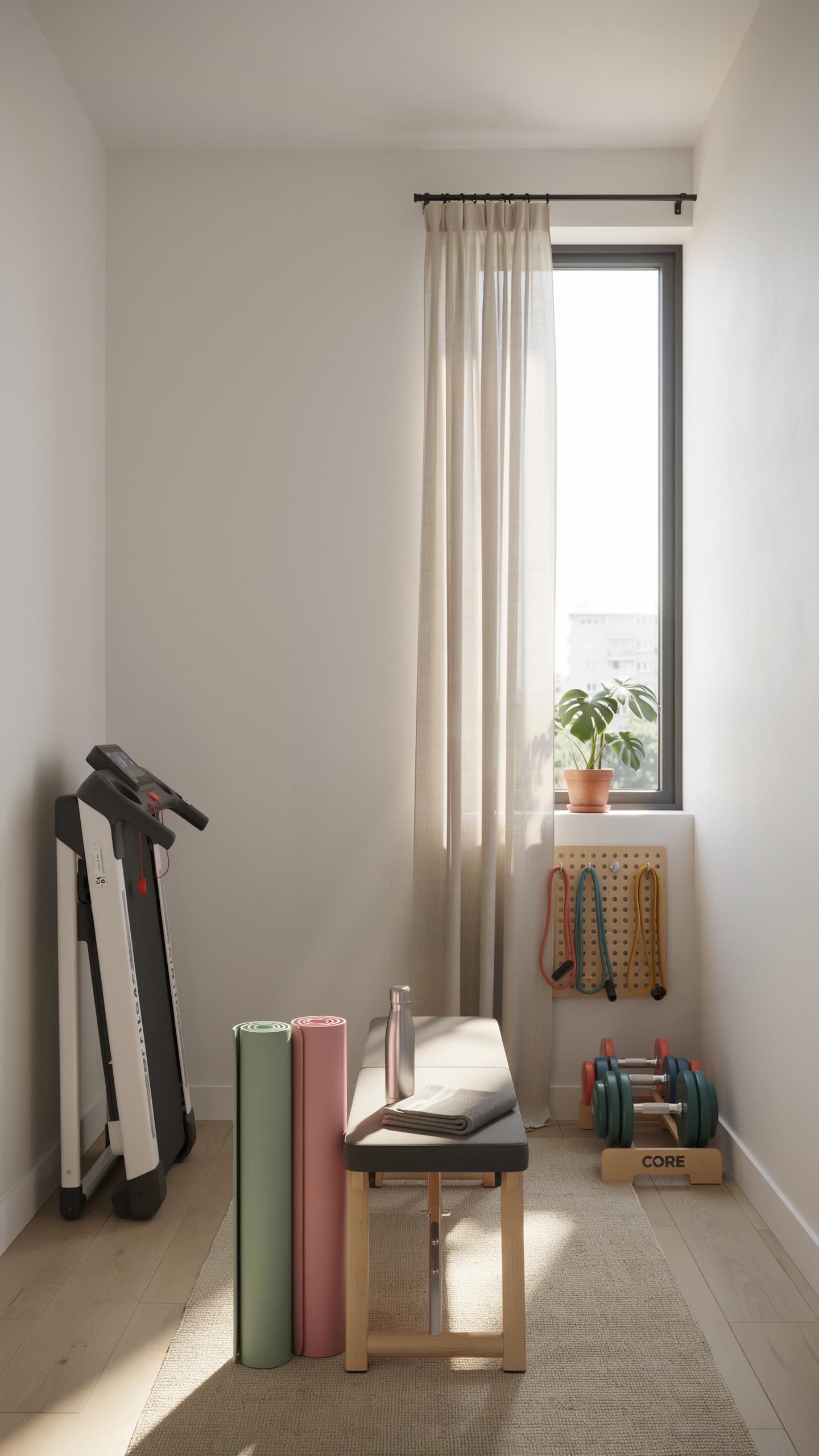
Resistance bands deliver serious training output with zero floor footprint. They create variable resistance that increases as you stretch the band, forcing your muscles to work harder at peak contraction. Store a full set in a drawer. Bands cost between 15 and 60 dollars depending on resistance levels and material quality. They work for upper body, lower body, and core training without noise or impact.
Loop bands and therapy bands handle specific movement patterns that dumbbells cannot replicate effectively. They anchor to doorframes or light fixtures to create dozens of exercise variations. Fabric loop bands outperform latex versions for comfort and durability during repeated use. You can layer multiple bands to increase resistance without adding storage demands. This tool solves the space problem while delivering measurable strength gains.
Adjustable Dumbbells And Kettlebells
Adjustable dumbbells replace 15 to 20 traditional dumbbells with a single rotating dial or pin system. Models range from 5 pounds to 90 pounds per dumbbell, covering beginner through advanced training. Quality versions from reputable manufacturers cost between 300 and 800 dollars for a pair. They occupy shelf space equivalent to two standard dumbbells while delivering full strength training capacity for your apartment gym.

Adjustable kettlebells offer similar space efficiency with different loading mechanics that emphasize explosive movement and grip strength. The offset load in a kettlebell creates different muscle activation patterns than dumbbells, making them worth including. Pin-select models work faster than spin-lock designs during workout transitions. A single adjustable kettlebell covers 12 to 15 traditional kettlebell weights, making it essential for small space training.
Innovative Home Gym Essentials
Compact Cardio Machines
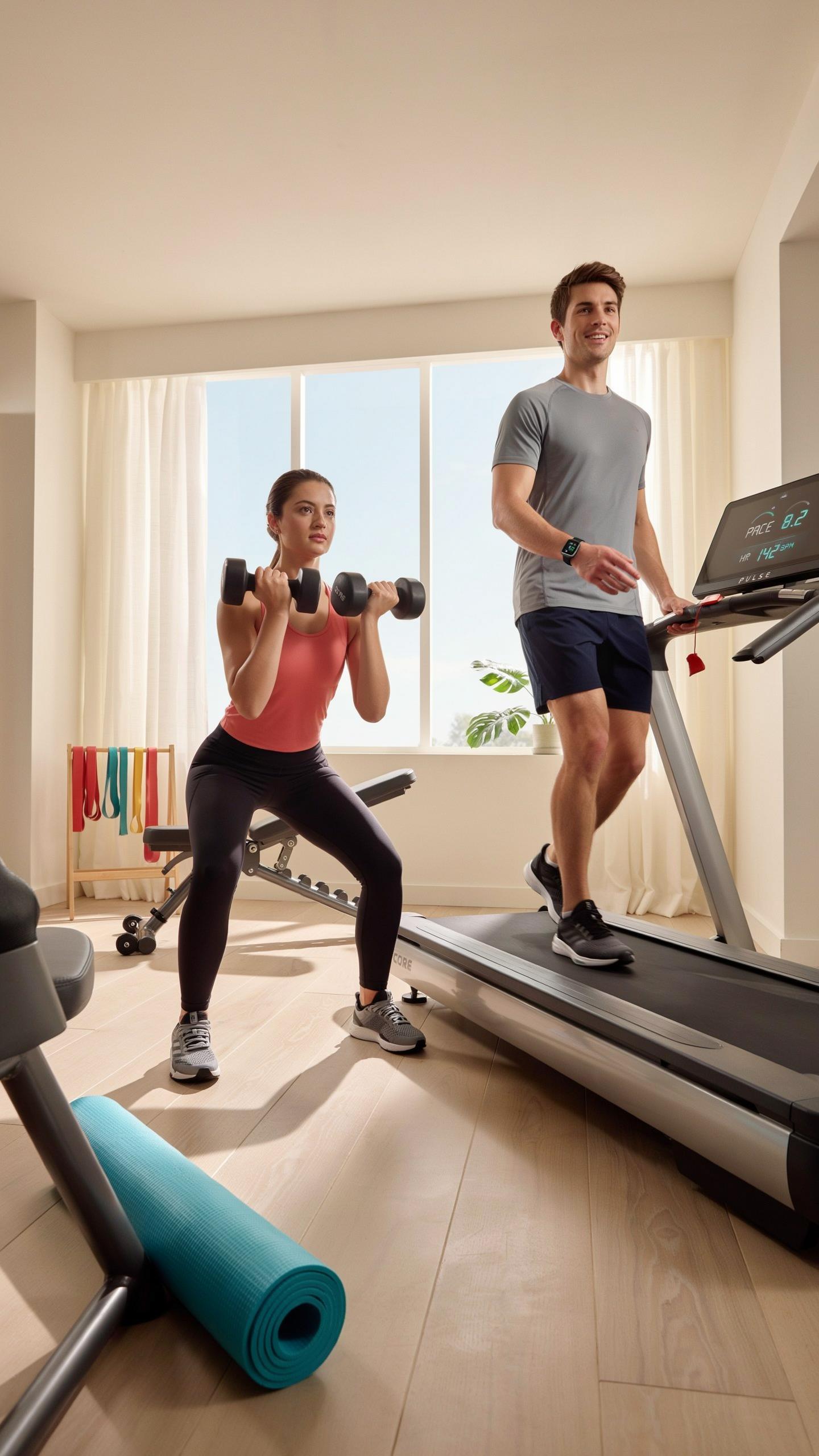
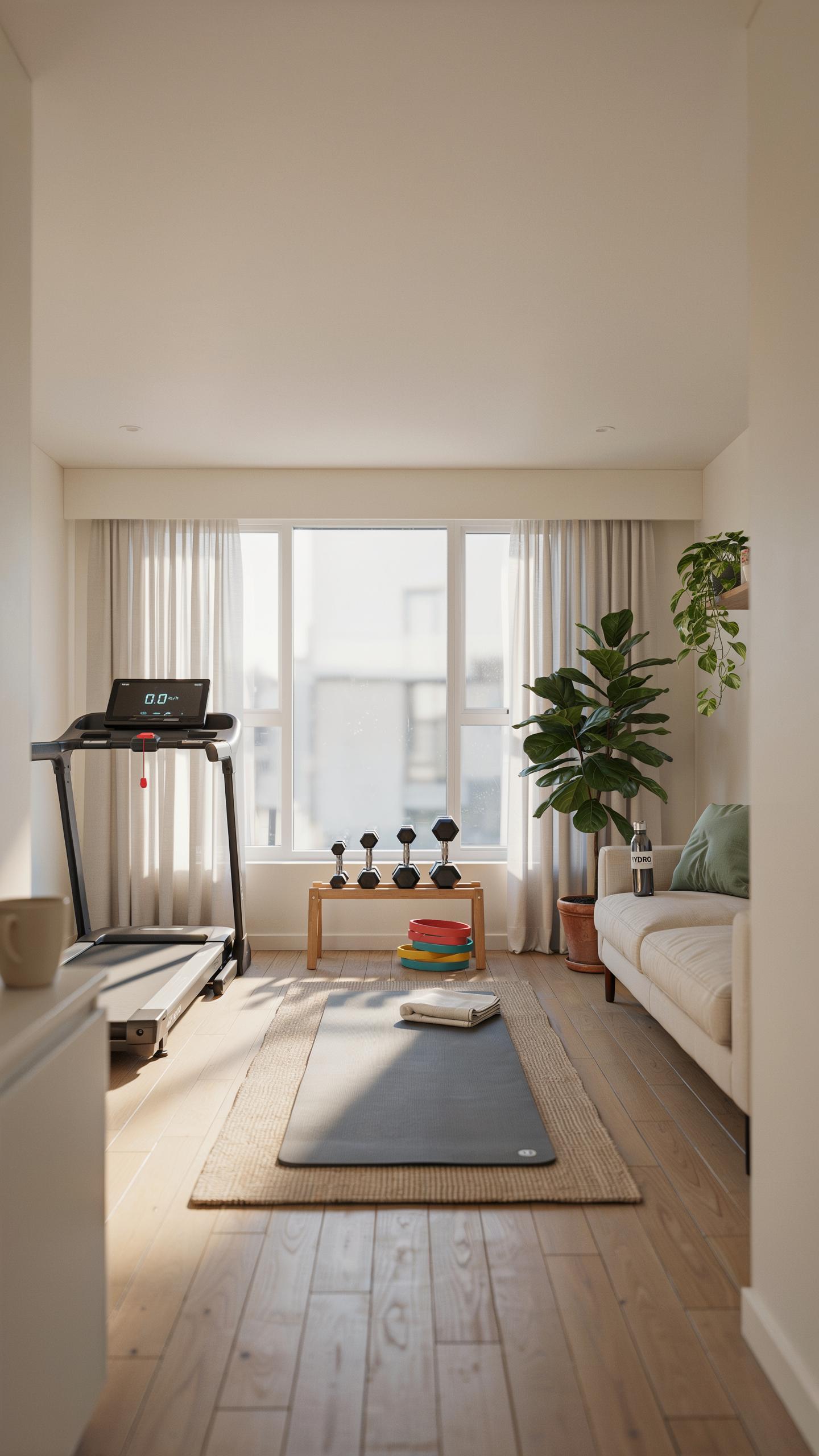
Compact cardio machines solve the space constraint problem without sacrificing workout intensity. Folding treadmills reduce footprint by 40 to 50 percent when stored upright. Rowing machines occupy minimal floor space while engaging multiple muscle groups in single movements. Jump ropes require only overhead clearance and cost under fifty dollars. Stationary bikes with smaller frames fit apartments while delivering the same cardiovascular benefits as full-size equipment.
Vertical storage transforms how you use apartment square footage. Wall-mounted pull-up bars occupy negligible space yet provide functional upper body work. Resistance bands store in a drawer and deliver variable resistance comparable to dumbbells. Stair steppers with compact designs deliver high-intensity cardio in under two square feet of floor space. These machines operate quietly, which matters in shared housing where noise travels between units.
Smart Home Gym Systems
Smart systems track performance metrics and eliminate guesswork from your training approach. Connected mirrors display live classes while monitoring form through built-in cameras. Apps sync with wearable devices to log calories burned and workout duration automatically. Smart dumbbells adjust resistance digitally without requiring separate weight plates stacked in a corner. These systems cost between two hundred and four thousand dollars depending on features and technology.
Integration with your existing devices streamlines workout management and motivation. Leaderboards and social features create accountability when training alone in a small space. Real-time feedback corrects form mistakes before injuries occur. Cloud storage preserves your workout history indefinitely. Smart systems require consistent internet connection and technical setup, so verify your apartment has reliable WiFi before purchasing.
Creative Home Gym Design For Tight Areas
Zoning Your Workout Area
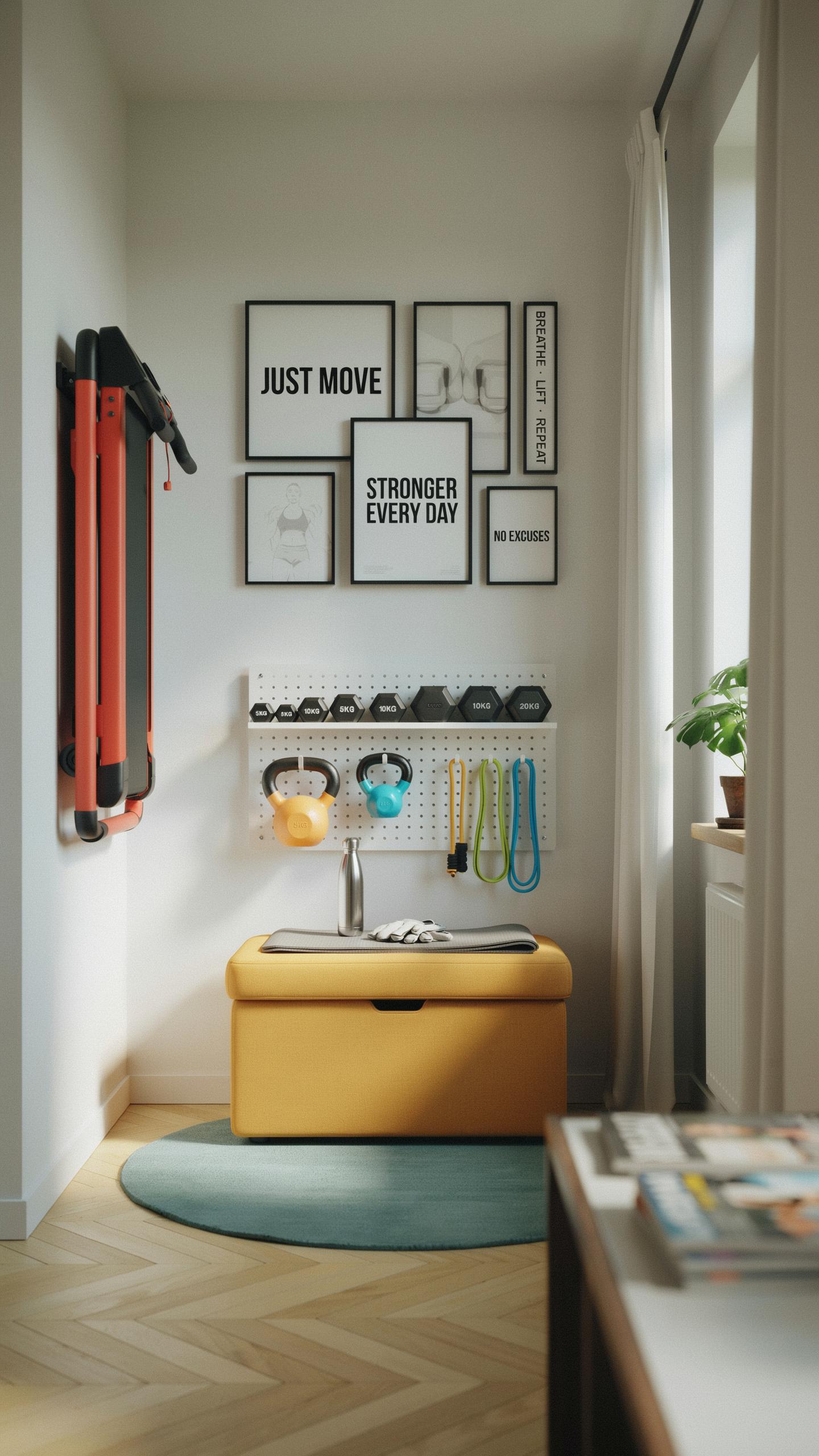
Define your workout space by function, not by walls. Small apartments need clear boundaries between zones to prevent clutter and confusion. Use furniture placement, floor mats, or tape lines to mark cardio, strength, and stretching areas. This separation keeps equipment organized and maximizes your mental focus during workouts. Your brain performs better when zones have purpose.
Vertical storage dominates small space strategy. Wall-mounted racks, pegboards, and shelving keep equipment off the floor and accessible. Designate one wall as your equipment hub. Resistance bands hang on hooks, dumbbells sit on shelves, and yoga mats roll into wall-mounted holders. This approach frees up floor space for actual movement while keeping everything within arm’s reach.
Mirrors And Lighting To Expand Space
Mirrors serve dual purposes in compact gyms: they improve form visibility and create depth perception. Position mirrors across from your workout zone to reflect light and make the space feel larger. You’ll spot movement errors in real time while training. Mirror placement matters most behind strength training areas where you check posture during lifts.

Lighting directly impacts how spacious your gym feels and your workout intensity. Bright, cool-toned LED lights (5000K color temperature) simulate daylight and boost alertness. Install overhead panels or wall-mounted strips rather than relying on room lamps. Multiple light sources eliminate shadows in corners. Better visibility means safer workouts and a psychologically larger training space.
Maximizing Your Gym Room Potential
Foldable And Portable Equipment
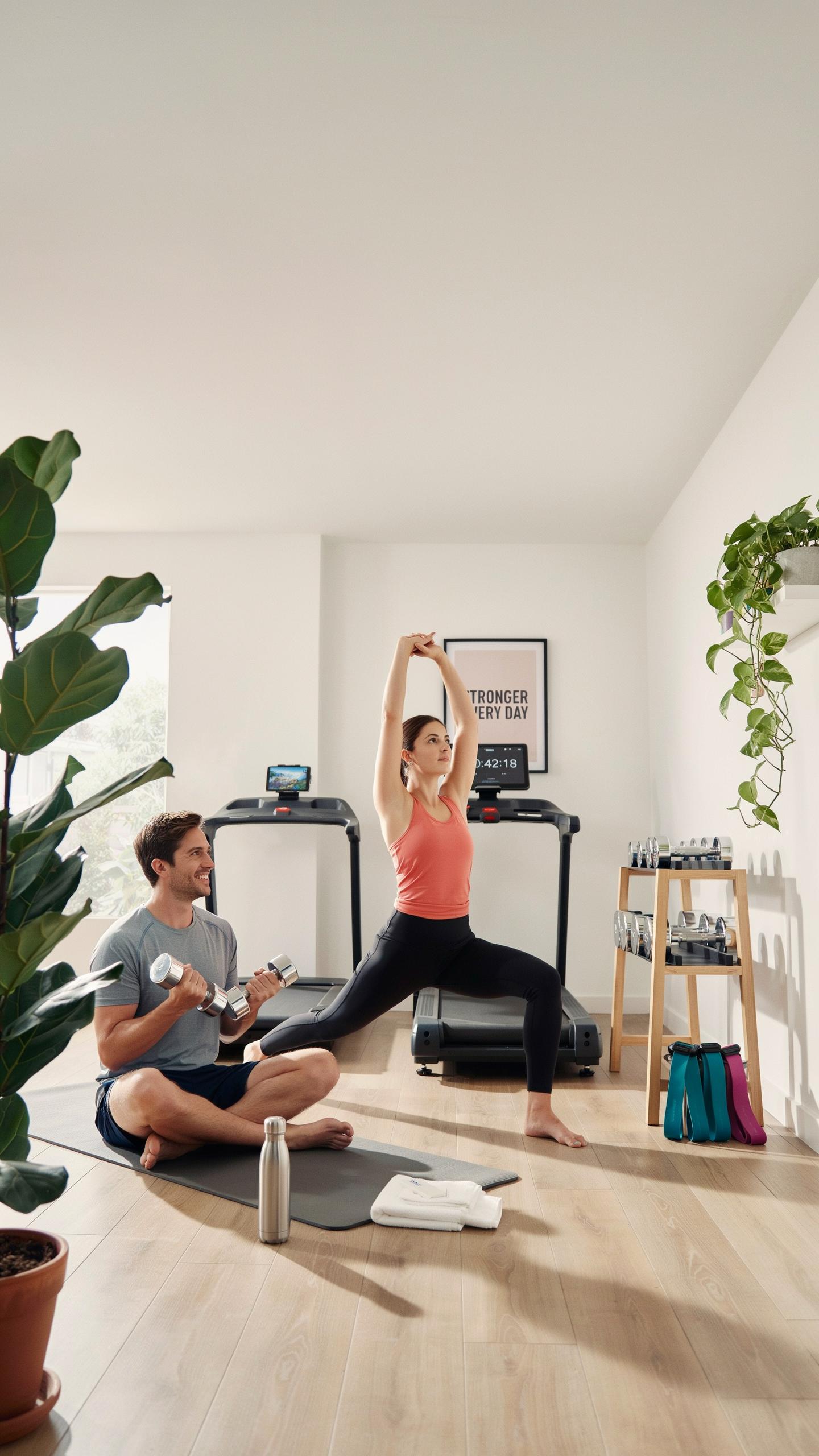
Foldable equipment solves the core problem of small spaces: permanent footprint. Folding dumbbells, adjustable benches, and collapsible treadmills store in closets or under beds when not in use. Resistance bands and suspension trainers pack into drawers. This approach lets you train hard without sacrificing living space. The trade-off is setup time before each session, but that’s minimal compared to reclaiming square footage daily.
Portability matters equally. Equipment on wheels moves between rooms based on your layout needs. Folding squat racks and adjustable cable machines roll into corners when done. Weight plates stack vertically to reduce floor space demands. Buy equipment designed for frequent movement, not one-time installation. This flexibility transforms a cramped apartment into a functional training environment.
Even in the coziest corner, the right tools can turn your small space into a haven of health, a daily practice woven into the fabric of home.
Utilizing Wall Space Effectively
Wall-mounted systems eliminate floor competition entirely. Pull-up bars, wall-mounted cable machines, and TRX anchors attach to studs and deliver full workouts vertically. Pegboard walls hold dumbbells, kettlebells, and accessories without eating into your training area. Mounted shelving stores smaller items above head height. This approach doubles usable training space without renovation. Installation is permanent but requires finding studs and using proper anchors.
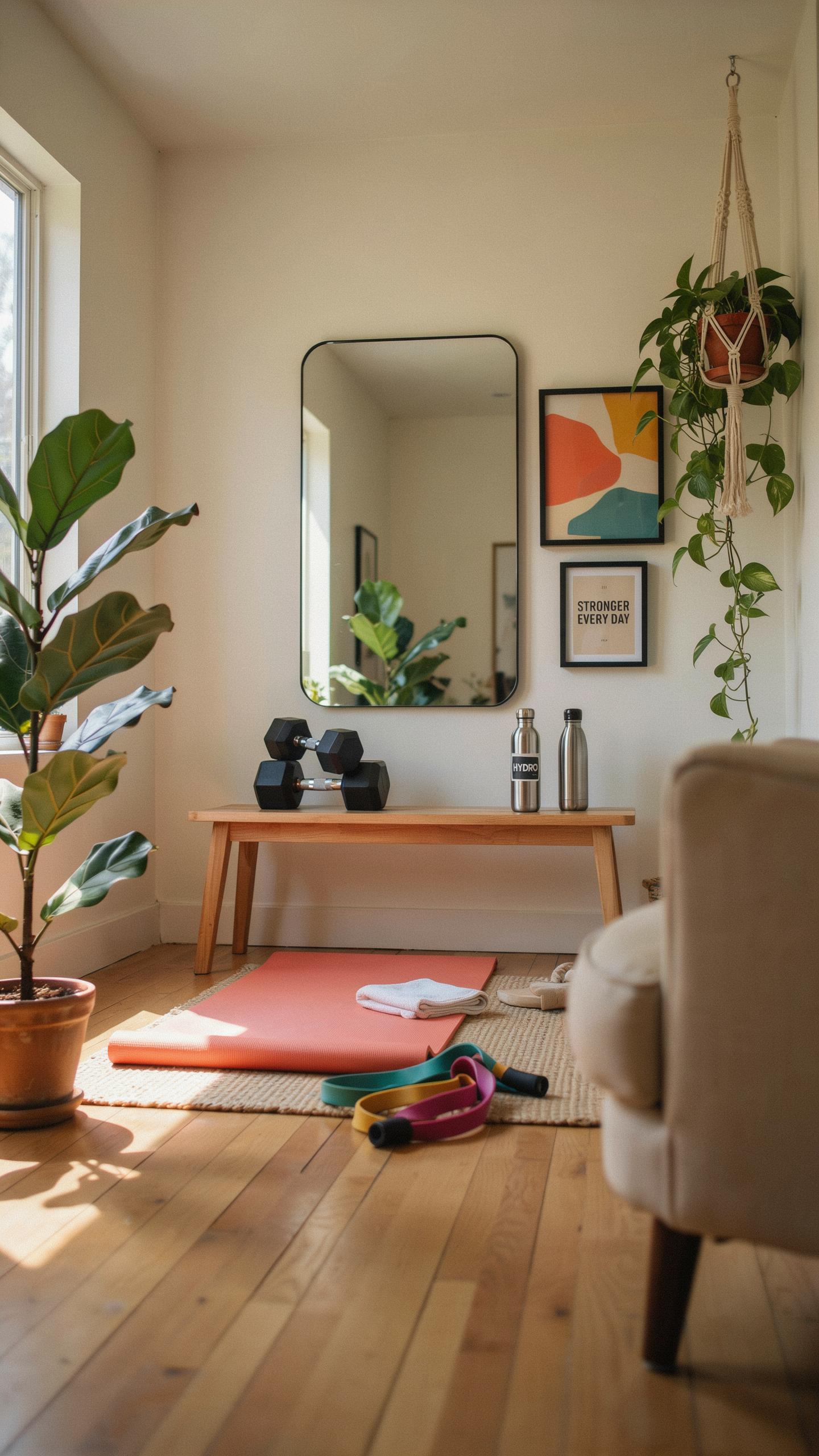
Mirrors serve dual tactical purposes on walls. They track form and movement quality during exercises, which prevents injuries and improves technique consistency. Mirrors also create visual space expansion, making cramped rooms feel larger. Mount mirrors across from windows to multiply natural light. These aren’t aesthetic choices but practical tools that enhance both safety and perception of available room.
Stylish Home Gym Decor For Small Spaces
Selecting Colors And Textures
Neutral backgrounds maximize perceived space. Light grays, whites, and soft beiges reflect available light and prevent visual clutter. These colors create a clean foundation that keeps focus on equipment rather than overwhelming walls. Dark colors absorb light and shrink room perception, making already tight spaces feel cramped. Matte finishes reduce glare from equipment and mirrors while maintaining a professional appearance without unnecessary shine.
Texture choices affect both function and perception. Textured walls using materials like shiplap or acoustic panels absorb sound and hide imperfections common in apartments. Rubber flooring provides grip and noise reduction while adding subtle visual interest beneath equipment. Cotton, wool, and natural fiber textiles on small storage benches or yoga mats introduce warmth without bulk. Avoid glossy or reflective surfaces that create visual confusion and make compact spaces feel chaotic.
Incorporating Greenery And Art
Plants serve practical purposes beyond aesthetics. Small potted plants or wall-mounted planters improve air quality and require minimal floor space in apartments. Trailing plants like pothos hang vertically and occupy no horizontal real estate. Green walls made from preserved moss panels demand no watering while adding depth and dimension. Strategic plant placement creates focal points that draw attention away from space limitations.

Art placement demands intentionality in small rooms. A single large framed poster above equipment creates a focal point without fragmentation. Mirrors function as both art and space expansion tools by reflecting light and creating depth perception. Motivational wall decals remain removable while adding character without commitment. Keep pieces aligned horizontally to emphasize width and counteract vertical constraints typical in apartments and small rooms.
Setting Up Your Home Gym Small Space
Ergonomic Layout Considerations
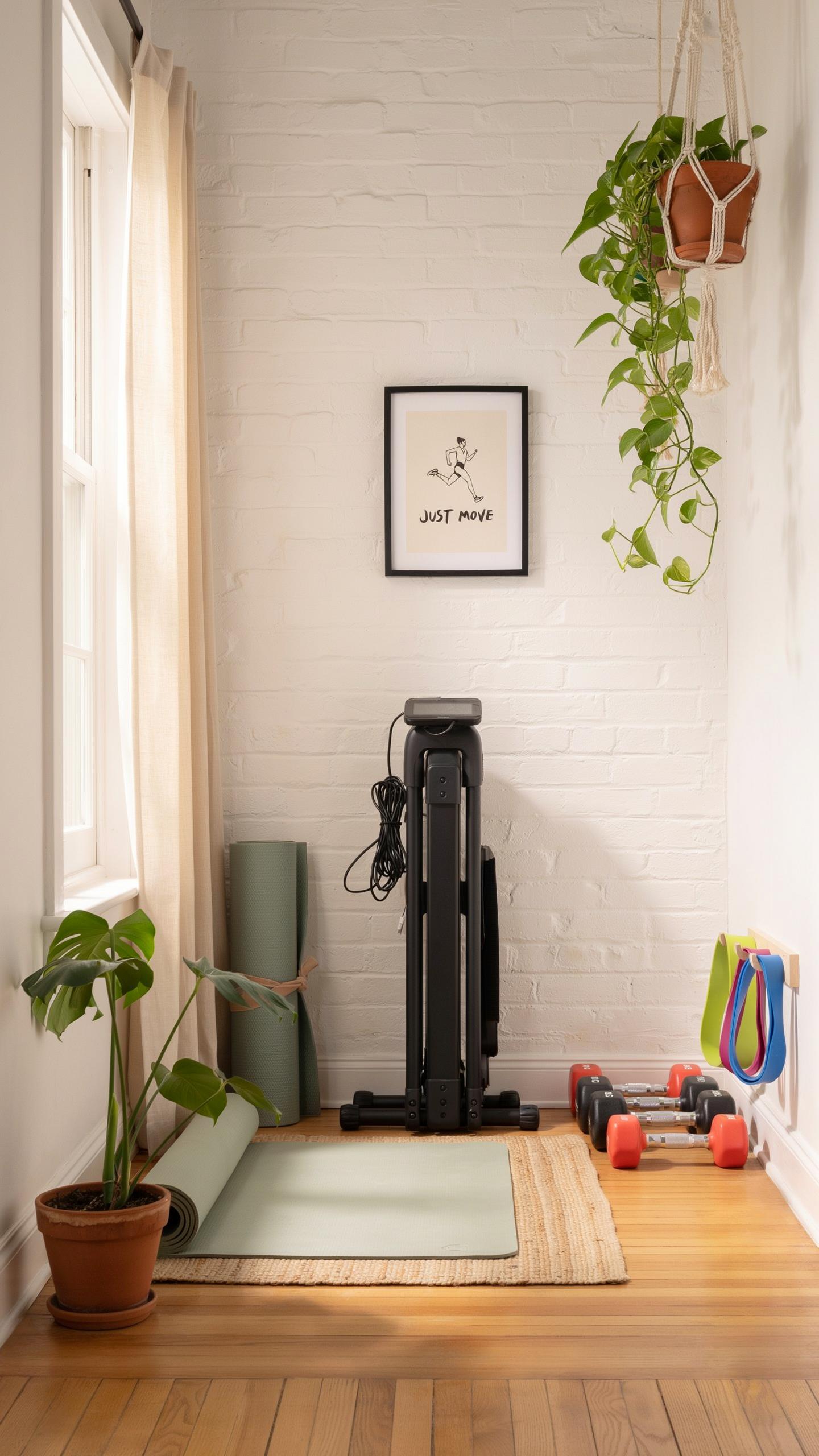
Position your equipment to match your natural movement patterns. Place resistance bands and dumbbells within arm’s reach of your workout area. Keep cardio gadgets like rowing machines or stationary bikes where you can access them without moving obstacles. Your body mechanics matter more in confined spaces because poor positioning forces compensation patterns that cause injury. Test your layout before committing to equipment placement by doing a few movements in your chosen spot.
Measure your ceiling height and floor space before buying anything. Tall equipment like pull-up bars or adjustable squat racks need clearance above and around them. Account for the space needed to extend your limbs fully during exercises. A 6-foot by 8-foot area works for most small apartment setups when organized vertically. Store heavy items on lower shelves and lighter gadgets higher up to maintain balance and accessibility during workouts.
Safety Tips For Compact Workouts
Clear your workout zone of furniture, cords, and clutter before each session. Falling into a coffee table or tripping on a power cable stops progress and causes real damage. Use rubber flooring or mats to reduce impact and define your exercise boundary. This also protects your flooring from dropping weights and prevents noise complaints in apartments. Non-slip surfaces are essential because sweat makes tiles and hardwood dangerous during dynamic movements.
Secure wall-mounted equipment with proper anchors rated for your body weight plus dynamic force. A pull-up bar or suspension trainer needs fasteners designed for shear and pull forces, not just weight. Test installation by applying body pressure before full workouts. Keep gadgets away from edges where they could fall and hit you or damage your living space. Start with lighter loads in new setups to identify weak points before going heavy.
Top Workout Equipment For Home Apartments
Space Saving Strength Training Options
Resistance bands deliver measurable strength gains without requiring floor space or permanent installation. They work through variable resistance, meaning tension increases as you stretch the band. This makes them effective for muscle building across major movement patterns. Bands cost between 15 and 50 dollars depending on resistance level. They store in a drawer or bag when not in use.
- Adjustable Dumbbells: Replace 15 to 20 standard dumbbells with one set. They use a dial or pin system to change weight instantly. Storage footprint measures roughly 2 feet by 1 foot. Price ranges from 300 to 800 dollars for quality brands.
- Resistance Bands: Offer progressive overload through varying thicknesses and tension levels. Loop bands and bands with handles provide different grip options. Cost between 15 and 100 dollars for quality sets. Roll up to fit in a shoebox.
- TRX Style Suspension Trainers: Anchor to a door frame or pull up bar using bodyweight. Adjustable straps allow exercise modification for any fitness level. Footprint is zero when not in use. Professional models cost 150 to 200 dollars.
- Kettlebells: Single implement trains multiple muscle groups in compound movements. Cast iron construction provides durability through years of use. One 35 pound kettlebell occupies minimal floor space. Pricing starts at 40 dollars for entry level options.
- Weight Plates and Barbell: Stack horizontally under a bed or in a closet corner. Olympic plates and bars allow progressive loading for strength progression. Total investment for a basic set ranges from 150 to 400 dollars.
Apartment dwellers benefit most from equipment serving multiple exercises per item. Adjustable dumbbells replace entire dumbbell racks. Suspension trainers use gravity and bodyweight, eliminating the need for large machines. These tools produce real strength results within practical space constraints.
Compact Flexibility And Recovery Tools
Foam rollers address muscle tension and soreness through myofascial release. Standard models measure 12 to 24 inches long and 4 to 6 inches in diameter. They cost between 25 and 100 dollars depending on material density. Apartments can store them vertically in a closet or under a bed without issue.
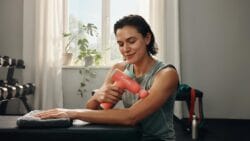
Massage guns provide targeted muscle recovery in areas foam rollers cannot reach effectively. The percussive action increases blood flow and reduces delayed onset muscle soreness. Battery life typically extends 2 to 3 hours per charge on quality models. Prices range from 80 to 300 dollars. Compact designs store easily in nightstands or gym bags for portable use between workouts.
Frequently Asked Questions

I live in a tiny apartment and want to start working out at home, but I don’t know where to begin. What are some essential home gym gadgets for small spaces?
Welcome to the world of home fitness! For small spaces, focus on compact and multi-functional items. Resistance bands, a jump rope, and a set of adjustable dumbbells are fantastic starters. These versatile home gym gadgets for small spaces offer a full-body workout without cluttering your living area.
How can I maximize the limited space I have in my apartment to set up an effective home gym?
Strategic organization is key! Utilize vertical space with wall-mounted resistance band anchors or shelving for smaller equipment. Opt for foldable equipment like a compact exercise bike or a yoga mat that rolls up easily. Choose home gym gadgets for small spaces that can be stored away neatly when not in use.
I’m on a tight budget. Are there affordable home gym gadgets for small spaces that still offer a good workout?
Absolutely! You don’t need to break the bank to get fit at home. Resistance bands, glute bands, and jump ropes are incredibly effective and very budget-friendly. Even a set of reusable water bottles can serve as makeshift weights. Look for sales and consider second-hand options for slightly larger items.