
What Is A Circuit Board Kit For Kids
Defining Electronics Kits For Young Learners
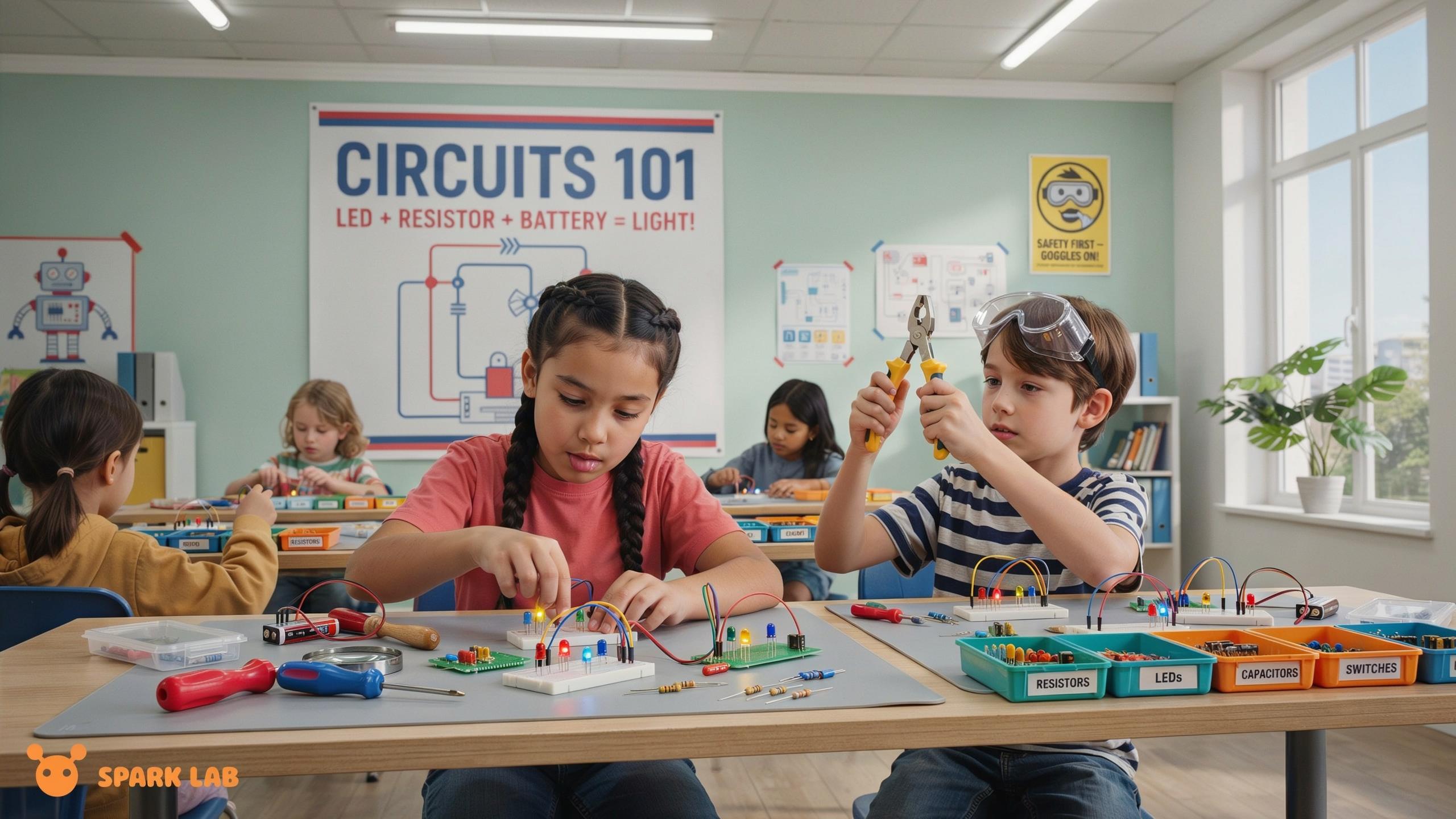
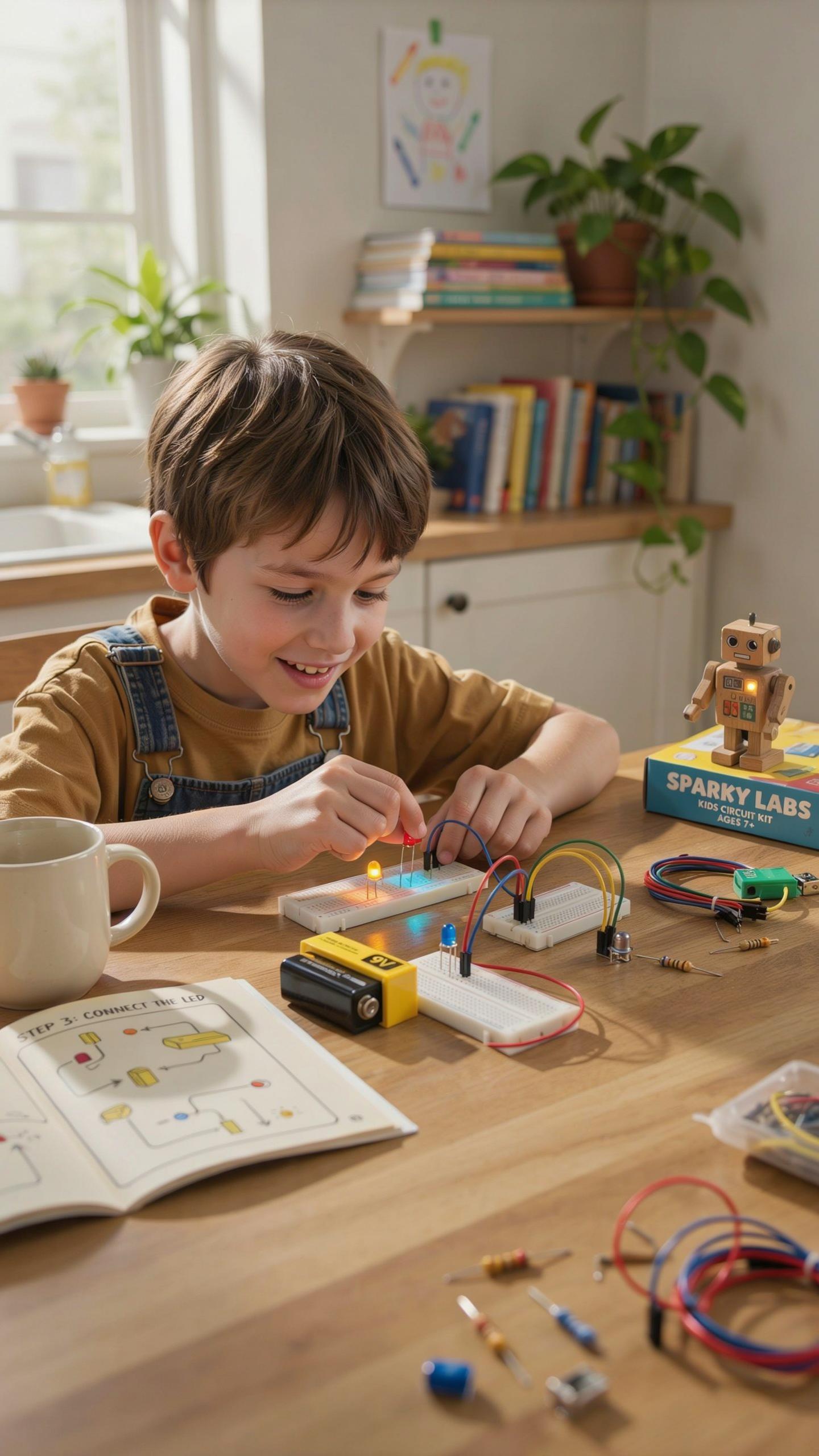
An electronics kit for kids is a packaged learning tool that contains components and instructions to build working electrical circuits. These kits teach fundamental principles of electricity, conductivity, and circuit function. They bridge theory and hands-on experience by letting children construct real circuits that produce measurable results like light, sound, or motion. Kits range from simple single-circuit projects to complex multi-experiment collections.
The core purpose of these kits is teaching electronics literacy without requiring expensive lab equipment or advanced math skills. Children learn through trial and error while building confidence in problem-solving. Kits eliminate guesswork by providing pre-selected components that work together reliably. Parents and educators use them as structured entry points into STEM fields because they deliver immediate, visible outcomes that maintain engagement.
The Components Of A Basic Electrical Circuits For Kids
A basic circuit kit contains a power source, conductors, loads, and control switches. The battery or power supply provides electrical energy to the circuit. Wires or conductive strips act as pathways for electricity to travel. LEDs, buzzers, and motors serve as loads that consume power and produce observable effects like light or sound.
Additional components typically include resistors, which limit electrical flow and protect sensitive parts, and switches that control when electricity flows through the circuit. Breadboards or pre-drilled circuit boards provide mounting points for components without requiring soldering. Instructions show children how to arrange these parts in specific configurations to create functioning circuits. This standardized approach ensures success and teaches proper component placement and circuit logic.
Why Learning Electronics With Kits Benefits Kids

Fostering Problem Solving And Critical Thinking Skills
Circuit board kits force kids to follow sequences and troubleshoot when connections fail. A child building a simple LED circuit learns cause and effect immediately. When the light doesn’t turn on, they trace the problem back to the power source, the component, or the connection. This direct feedback loop trains the brain to isolate variables and test solutions methodically. No guessing. No abstract theory. Just results.
Debugging becomes a repeatable skill kids apply beyond electronics. They learn to ask specific questions: Is the battery dead? Is the connection loose? Is the component broken? This systematic approach transfers to other subjects and real world situations. Kids stop making random attempts and start making informed decisions based on evidence they observe themselves.
Introducing STEM Concepts Through Hands On Learning Science
Electronics kits anchor abstract STEM concepts in physical reality. Kids see voltage, current, and resistance as tangible forces that produce light, sound, or motion. A resistor isn’t a number in a textbook. It’s a component that visibly controls brightness. A capacitor stores energy kids can measure. This concrete experience builds mental models faster than lectures or videos ever will.

Hands on learning activates multiple senses and memory pathways simultaneously. When a child solders a joint, identifies a component by color bands, and watches a circuit function, their brain encodes that knowledge across visual, tactile, and logical processing centers. The retention rate increases dramatically. They remember what they built and how it worked because they made it work with their own hands.
Types Of Circuits For Kids From Simple To Advanced
Exploring Simple Circuit Projects For Beginners
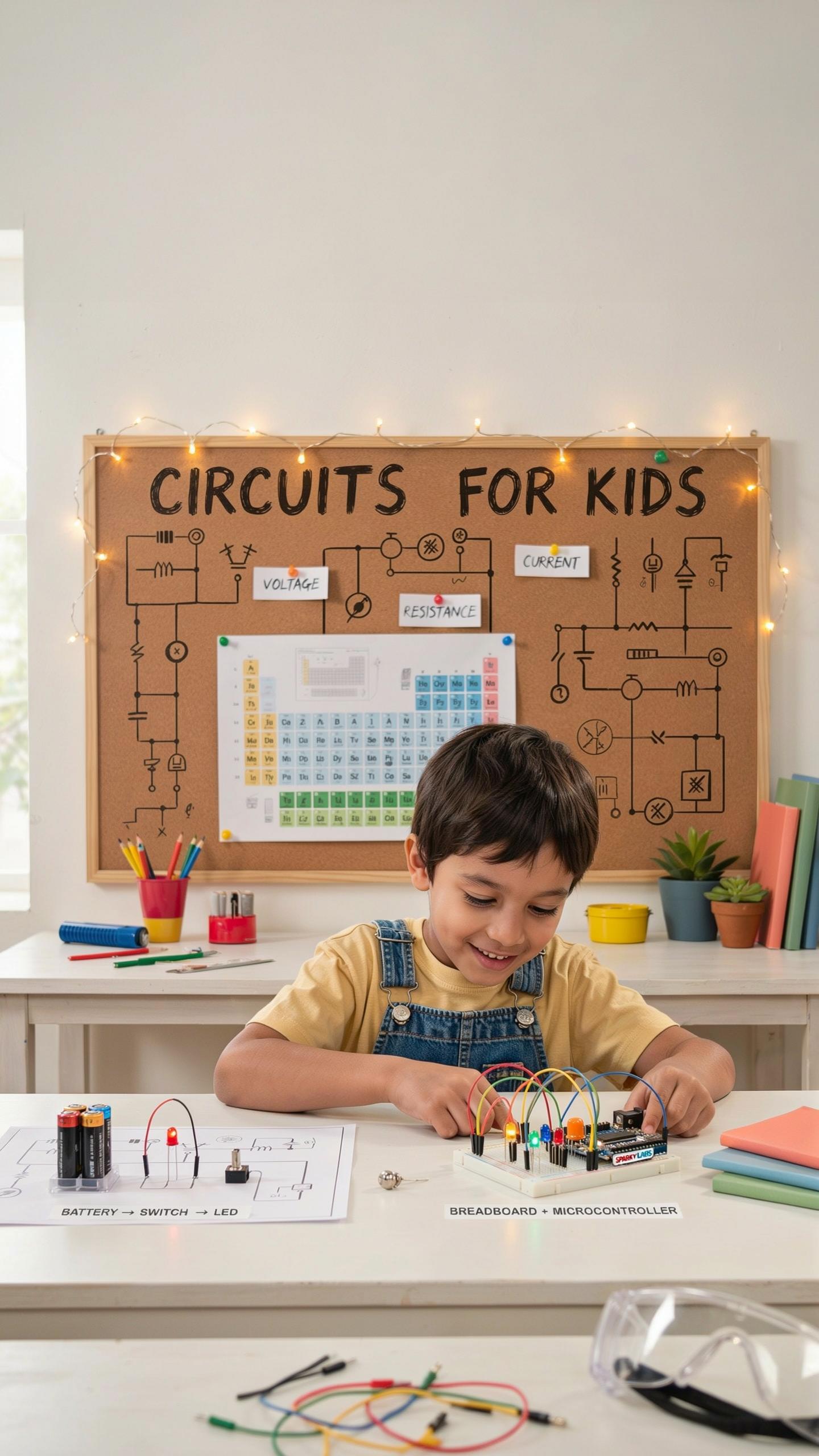
Simple circuits teach foundational principles through hands-on assembly. A basic circuit requires a power source, a load like an LED, and a complete path for electricity to flow. Kids learn that breaking the circuit stops current. Battery-powered flashlight circuits and single-LED projects demonstrate this directly. These projects take minutes to build and show immediate results.
Beginner kits typically use breadboards or pre-soldered components to eliminate assembly barriers. Breadboards accept jumper wires and components without soldering, letting kids focus on circuit logic rather than technical skills. Battery holders, single resistors, and LEDs become the core toolkit. This approach builds confidence before moving to soldering or circuit design complexity.
Building circuits as a child unlocks a universe of ingenuity, where sparks of curiosity illuminate the path to future innovations.
Graduating To More Complex Circuit Design Challenges
Intermediate circuits introduce series and parallel configurations. Kids discover that connecting components in series reduces brightness while parallel connections maintain it. They learn why engineers choose one configuration over another based on voltage and current requirements. These projects require 20 to 60 minutes and demand deliberate component selection. Students start sketching circuit diagrams before building physically.
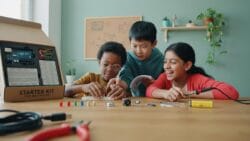
Advanced kits incorporate additional components like switches, buzzers, sensors, and basic integrated circuits. Kids design circuits that respond to light, sound, or temperature changes. Soldering skills become necessary at this level. Projects now demand planning and troubleshooting skills. Students encounter real engineering constraints like power consumption and component compatibility for the first time.
Understanding Electrical Circuits For Kids Key Concepts

The Role Of Electricity, Voltage, And Current
Electricity is the flow of electrons through a conductor. Current measures how many electrons move through a circuit per second, measured in amperes. Voltage is the force pushing those electrons forward, measured in volts. Kids need to understand that voltage creates the pressure and current is the actual flow. Think of it like water in a pipe: voltage is the pump pressure, current is the water flowing through.
A simple battery demonstrates these concepts immediately. A 9-volt battery provides nine volts of pressure. When you connect that battery to a circuit, current flows from the positive terminal through the circuit to the negative terminal. The circuit path determines how much current flows based on resistance. Kids observe this by watching LEDs brighten or dim depending on the voltage and current in the circuit they build.
Series Vs. Parallel Circuits Explained
A series circuit connects components in a single loop where current flows through one component, then the next in order. If one component fails or disconnects, the entire circuit stops working. Adding more components in series increases total resistance, reducing current flow. The voltage divides among components. Kids should understand that series circuits are simple but fragile because one broken connection breaks everything.

A parallel circuit connects components on separate branches where current splits and flows through multiple paths simultaneously. If one component fails, current still flows through the other branches. Adding more components in parallel decreases total resistance, increasing current flow. Voltage stays the same across each branch. Parallel circuits are reliable because failure in one branch does not stop the entire circuit. Most household wiring uses parallel circuits for this reason.
Choosing The Best Circuit Board Kit For Beginners
Factors To Consider Age Appropriateness And Safety
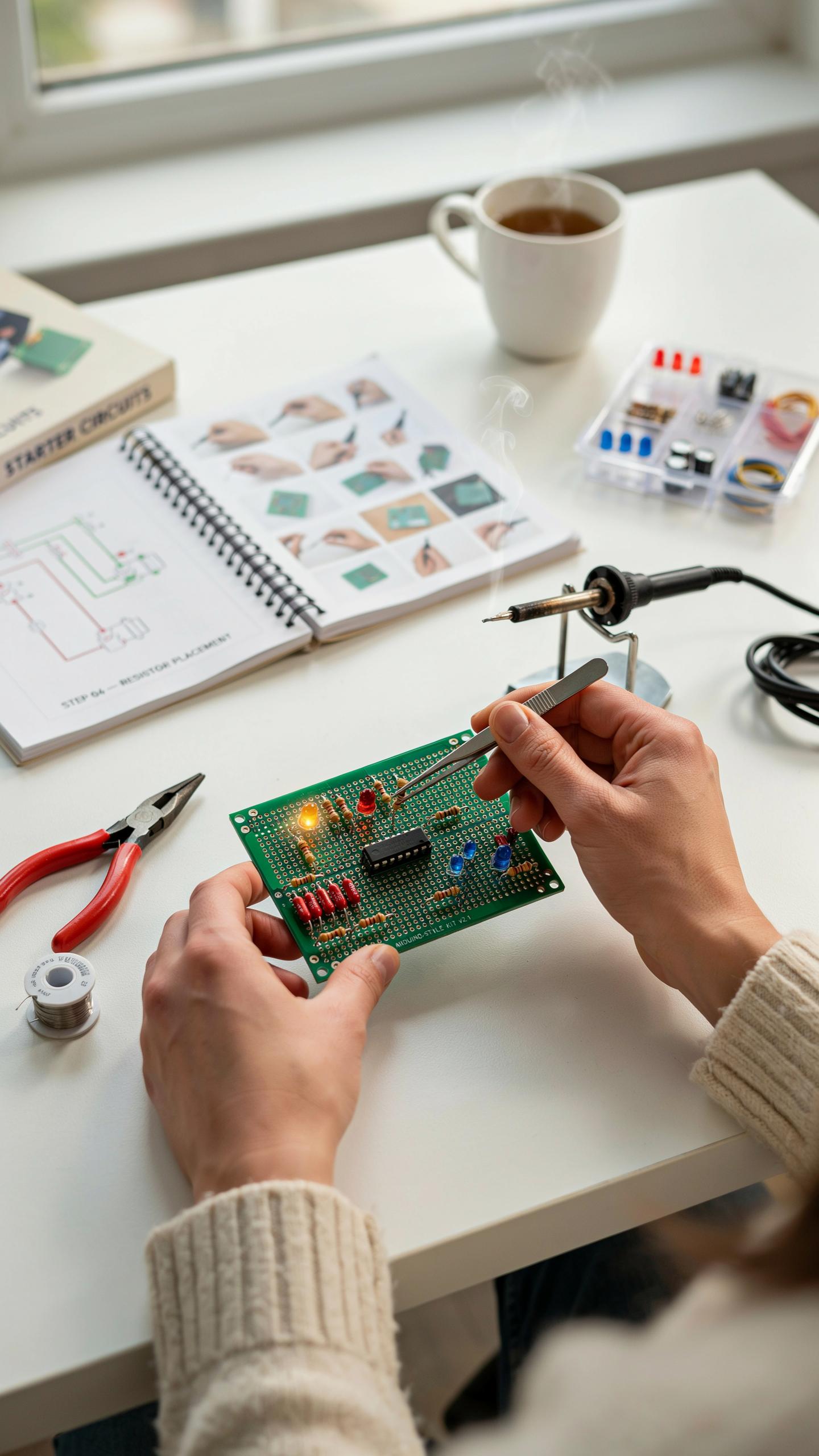
Age determines which kit works. Kids under eight need solderless breadboards and large components. They lack fine motor control for soldering irons. Kits with small parts or open flames create choking and burn hazards. Check the manufacturer’s recommended age range. It reflects testing for that developmental stage. Don’t assume older kits work for younger kids.
Safety features matter more than kit complexity. Look for low voltage components, typically under 9 volts. Battery-powered kits eliminate line voltage dangers. Solderless breadboards prevent burn injuries that soldering irons cause. Wire gauges should be thick enough for small hands to grip. Components should not have sharp edges or broken leads. Parental supervision requirements vary by kit design and your child’s experience level.
Recommended Features For An Electronics Circuit Kit
Quality components determine learning outcomes. Resistors, LEDs, capacitors, and transistors must meet stated specifications. Cheap components fail unpredictably and teach wrong lessons. Breadboards need tight spring contacts that hold wires without slipping. Wires should have solid cores for kids who lack dexterity. Instruction manuals must explain what each component does and why circuits work.
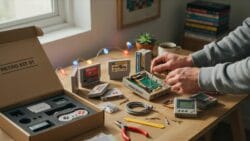
Durability extends kit life across multiple projects. Plastic breadboards crack under pressure but survive normal use. Metal components resist corrosion better than cheap alternatives. Included storage containers keep parts organized and prevent loss. Instruction clarity separates learning tools from frustrating experiences. Step by step guides with circuit diagrams beat vague descriptions. Replenishment packs for common components extend the kit’s usable life beyond initial projects.
Getting Started With Your Snap Circuits Educational Toy
Setting Up Your First Basic Electrical Circuits For Kids Project
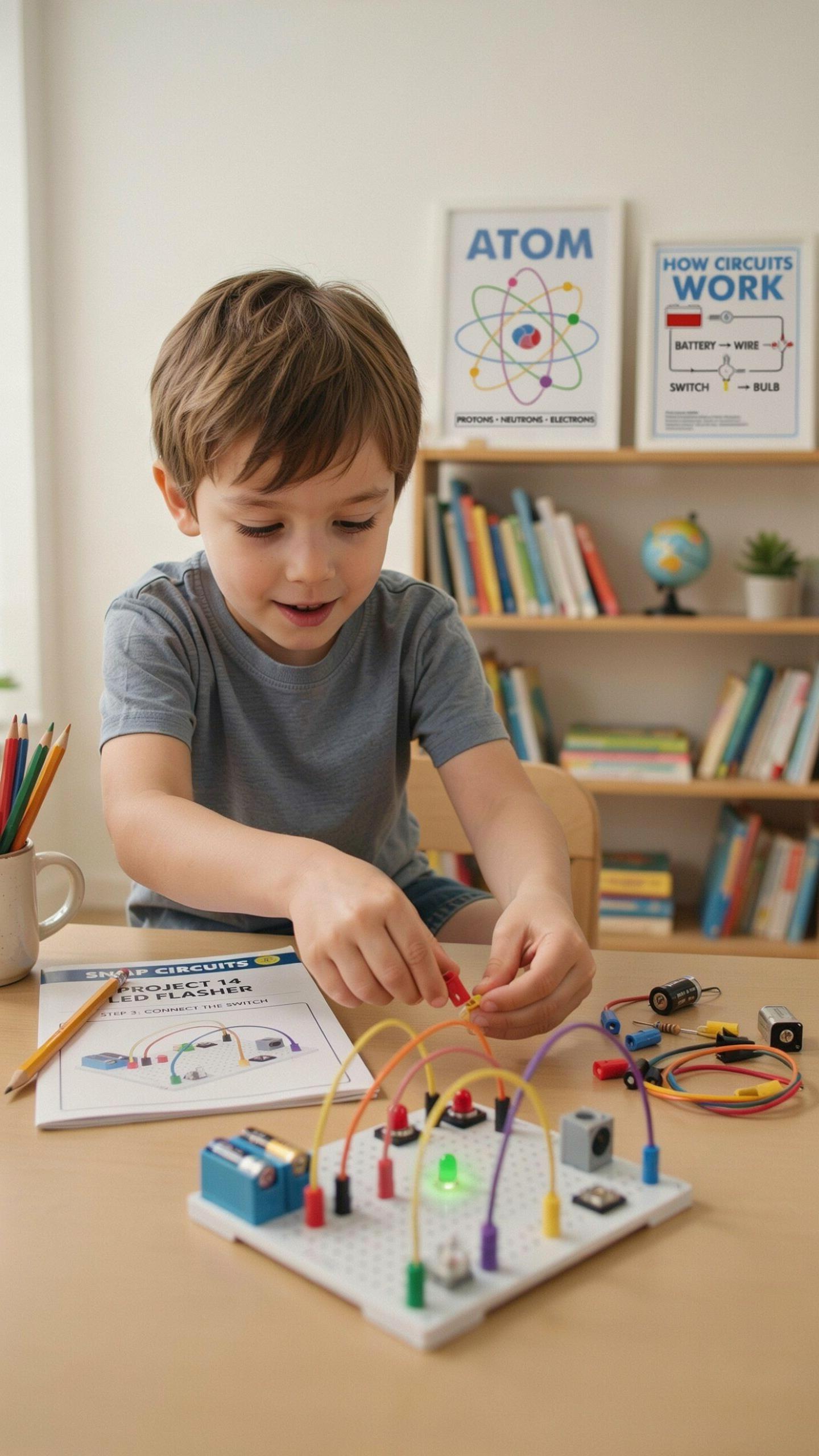
Snap Circuits kits use a grid-based design with snap connectors that attach components to a plastic board. Start by identifying the power source, typically a battery module. Place it on the board first. Follow the project manual step-by-step without skipping connections. Each component snaps into designated positions. Do not force parts together as the connectors are precision-engineered. Verify every connection before powering the circuit.
Test your circuit immediately after assembly. If nothing happens, power down and recheck each snap connection for gaps or misalignment. Most failures stem from loose connections rather than defective parts. Work in a well-lit area to catch visual errors. Keep the manual nearby as reference. Take photos of successful builds to replicate them later. Document which projects work so you understand what does and does not function.
Tips For Troubleshooting And Experimentation
Your first troubleshooting step is always to verify the battery has charge. Replace it with a fresh battery to eliminate power as the problem. Then systematically disconnect and reconnect each component one at a time. This isolates which part causes the malfunction. Most Snap Circuits kits include replacement components for this exact reason. Never assume a part failed without testing it in a working circuit first.
- Check Battery Orientation: Batteries must face the correct direction. Reversed polarity prevents current flow. Consult your manual for the correct placement diagram.
- Inspect Snap Connectors: Look for dirt, corrosion, or plastic debris blocking the metal contacts. Clean connectors with a dry cloth if needed.
- Test Components Individually: Remove suspect parts and substitute known working ones. This identifies defective components versus connection problems.
- Modify Working Circuits: Once a project works, remove or swap components to see how changes affect the outcome. This teaches cause and effect in electronics.
- Document Your Changes: Write down what you modified and the result. This builds your personal reference guide for future projects.

Experimentation works best when you change one variable at a time. Add an LED to a working circuit and observe what happens. Remove a resistor and test again. Swap a buzzer for a light and compare the power draw. These controlled tests teach you how components interact. Keep failed attempts as learning records, not setbacks.
Beyond The Kit Expanding On Learning Science

Integrating Circuit Knowledge With Other STEM Subjects
Circuit board kits teach electrical principles, but they connect to broader STEM disciplines. Physics concepts like voltage, current, and resistance apply directly to circuits. Mathematics enters when calculating power consumption or component values. Students learn to measure, predict outcomes, and test results systematically using the scientific method throughout hands-on building.
Programming extends circuit learning significantly. Many modern kits integrate microcontrollers that require coding to function. Students write instructions that control LED brightness, sensor responses, or motor speeds. This connection between hardware and software demonstrates how computers actually work at a fundamental level. Chemistry also appears when discussing how batteries generate electricity through chemical reactions or how solder creates metallic bonds between components.
Resources For Continued Learning In Electronics
Online platforms offer structured pathways beyond basic kits. YouTube channels dedicated to electronics fundamentals provide free video tutorials on topics like semiconductors, circuit analysis, and troubleshooting methods. Websites hosting circuit simulations let students design and test circuits virtually before building physical versions. These tools reduce cost and prevent component damage during experimentation phases.
Formal resources include university extension courses, community college electronics programs, and certification tracks through organizations like CompTIA or the IEEE. Public libraries often stock electronics books covering theory and practical projects. Maker spaces and community workshops provide access to advanced tools like oscilloscopes and multimeters that home learners cannot afford individually. These environments connect young learners with mentors who work in electronics professionally.
The Future Of Young Engineers Circuit Design And Innovation

Encouraging Creativity And Invention With Circuits
Circuit kits give kids hands-on control over how electricity behaves. They build real components, test ideas, and see immediate results. This direct feedback teaches problem-solving faster than theory alone. Kids learn that failure is data, not defeat. They modify designs, swap components, and discover what works.
Creativity emerges when constraints are clear. A circuit kit provides boundaries: available components, power limits, physical space. Within these limits, kids design solutions to problems they care about. They build LED displays, sound effects, or light sensors based on their interests. This approach connects abstract electronics to concrete goals that matter to them.
Pathways To Advanced Electronics And Engineering
Circuit kits serve as entry points to formal electronics study. Kids who master basic components understand what happens inside phones, computers, and industrial equipment. They recognize resistors, capacitors, and transistors in real devices. This foundation makes advanced coursework less intimidating and more relevant. They have vocabulary and intuition before textbooks arrive.

Professional electronics careers require sustained engagement with circuits. Kids who build kits early develop comfort with soldering, breadboarding, and circuit simulation software. They join robotics teams, maker spaces, and engineering clubs with existing skills. These environments connect them to mentors, competitions, and opportunities in STEM fields. Early exposure creates momentum toward technical careers.