
The Myth Of Universal Connectivity: Why Cell Service Fades

Where The Grid Actually Stops
You want to believe your phone works everywhere because admitting otherwise means you’re genuinely on your own out there. The mechanism is simple: cell towers require dense population or major corridors to justify their cost. Carriers build infrastructure where revenue density works. Beyond that threshold, coverage vanishes not from technical limitation but from basic economics. Most overland routes cross these dead zones regularly.
A single tower covers roughly 20 to 40 square miles in optimal terrain, less in mountains. Rural areas might have one tower per 500 square miles or fewer. The math reveals the hard truth: coverage is designed for highways and towns, not wilderness travel. Your expectations of connectivity were never realistic. Overland communication devices exist because the grid was never meant to reach where you’re headed.
How Mountains And Weather Actually Break Signals
Physics calls this “attenuation,” but overland communication devices fail because radio waves travel in straight lines until obstacles block them. Line-of-sight transmission is the rule, not the exception. A ridge, canyon, or dense forest doesn’t slow your signal down. It stops it cold. Atmospheric conditions amplify this problem. Rain, snow, and ionospheric activity degrade propagation further. Standard cellular bands operate at frequencies that struggle through physical barriers.
The device you’re carrying assumes flat ground and clear air. Neither exists on real overland routes. Terrain acts as a wall to UHF and cellular frequencies. Water vapor in atmosphere scatters signals across broader distances. This explains why you lose service the moment you descend into a valley or drive behind a ridge. You can’t engineer your way around geometry. You have to choose a communication tool that works within these constraints instead of fighting them.
The Redundancy Protocol: Layering Your Overland Communication Devices
When Your Primary Tool Fails
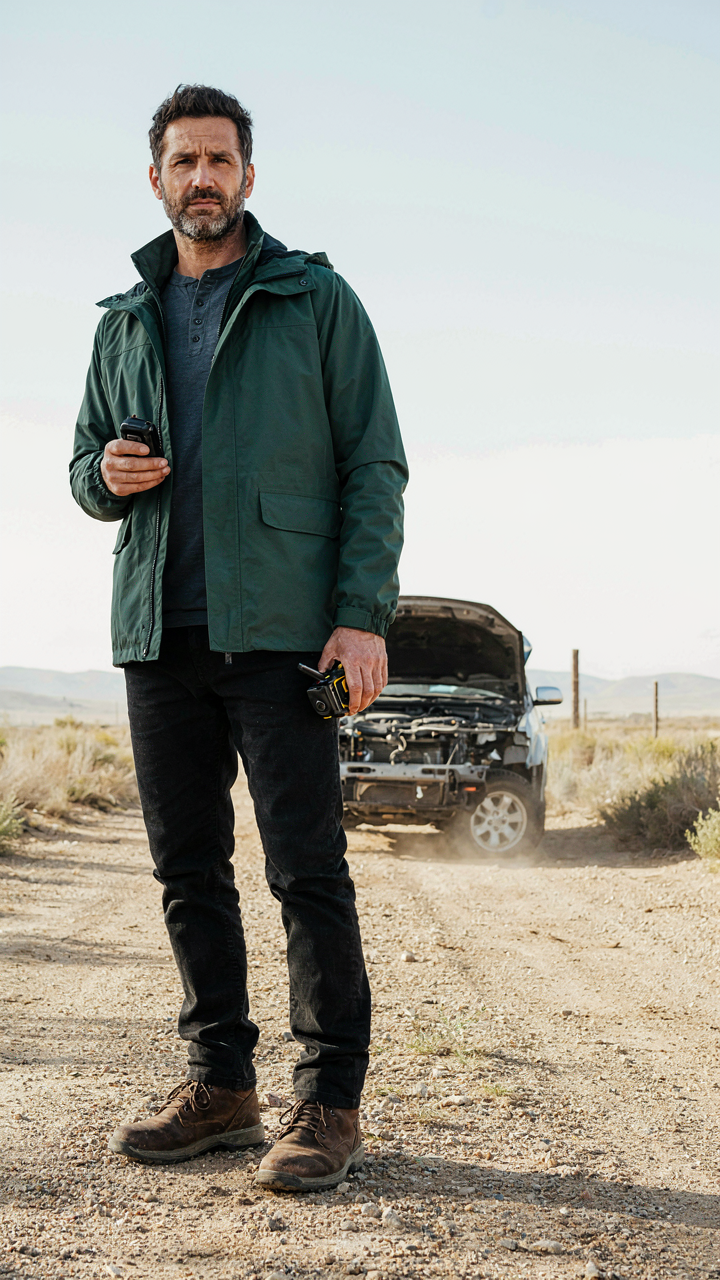
You want to feel secure without actually changing your behavior. That’s the gap redundancy fills. In military strategy, “layering” means positioning assets so one failure doesn’t cascade into total loss. Overland communication devices work the same way: you don’t stack backups for comfort. You stack them because your primary device will fail exactly when you need it most.

Most people carry one satellite communicator or one radio and call it covered. They’re wrong. Weather degrades signals. Batteries die faster at altitude. Antenna orientation matters more than people admit. A single device failure in remote terrain becomes a genuine emergency. The mechanism is simple: each communication layer handles different failure modes your primary device cannot predict.
The Trade Between Speed And Range
Satellite messengers send location pings and short text. Two-way radios transmit voice across line-of-sight distance. Each solves a different problem, which is precisely why you need both. Satellite messengers reach beyond radio range but move slowly and cost per message. Radios transmit instantly but only work when both parties occupy the same terrain and frequency. Neither replaces the other.
- Garmin inReach or similar messengers: Reliable two-way messaging and SOS triggering through satellite constellation. Works where radios cannot reach beyond immediate terrain.
- VHF radios (GMRS or marine band): Instant voice communication across 5 to 20 miles depending on terrain and antenna. No subscription, direct peer-to-peer contact.
- CB radio: Extended range in open terrain, used by overland community and emergency services. Lower cost of entry than GMRS licensing.
- Personal locator beacons (PLBs): Emergency-only devices that trigger rescue coordination centers. One-way transmission, no interaction, reserved for life-threatening situations.
- Cellular boosters: Amplify weak signals from your phone. Only function where cell towers exist, making them secondary to satellite and radio systems.
The decision isn’t which device wins. It’s what message you need to send and how fast. A broken wheel in cell coverage means you call a tow truck. A broken wheel two hundred miles from the nearest tower means you hit the satellite messenger first, then monitor the radio frequency for your recovery crew.
Garmin Inreach Messenger Features: Beyond The SOS Button

Real Time Tracking And Two Way Messaging
You want the Inreach because it makes you feel prepared, but the real mechanism is that it collapses response time into something manageable. Military strategy calls this “situational awareness,” and the Inreach achieves it by broadcasting your GPS position every ten minutes to people you designate, whether they’re on the map or checking a web interface from home.

The two-way messaging works through the Iridium satellite network, not cellular towers. You send text messages from the device itself or from paired apps. Responses come back the same way. No satellite subscription equals no messages. The battery drains faster when you’re transmitting than receiving, so treat outbound communication as the premium resource, not the backup plan.
Weather Data And Route Coordination
Most people think the Inreach weather feature is a convenience. It’s actually a decision-making tool that prevents you from making the same route choice twice. The device pulls forecasts directly from satellite data and displays precipitation, temperature, and wind every few hours without eating your message quota.
Navigation integration means you load waypoints and tracks before departure, then the screen guides you without cellular dependency. You can upload route corrections to paired devices in real time through the messaging system. This only works if your planned route points exist before you leave cell coverage. Send the corrected track file through Inreach messaging, and your partner receives it instantly on their device or phone.
Off Road Vehicle Communication Gear: Integrating Into Your Rig
Mounting Solutions And Power Considerations
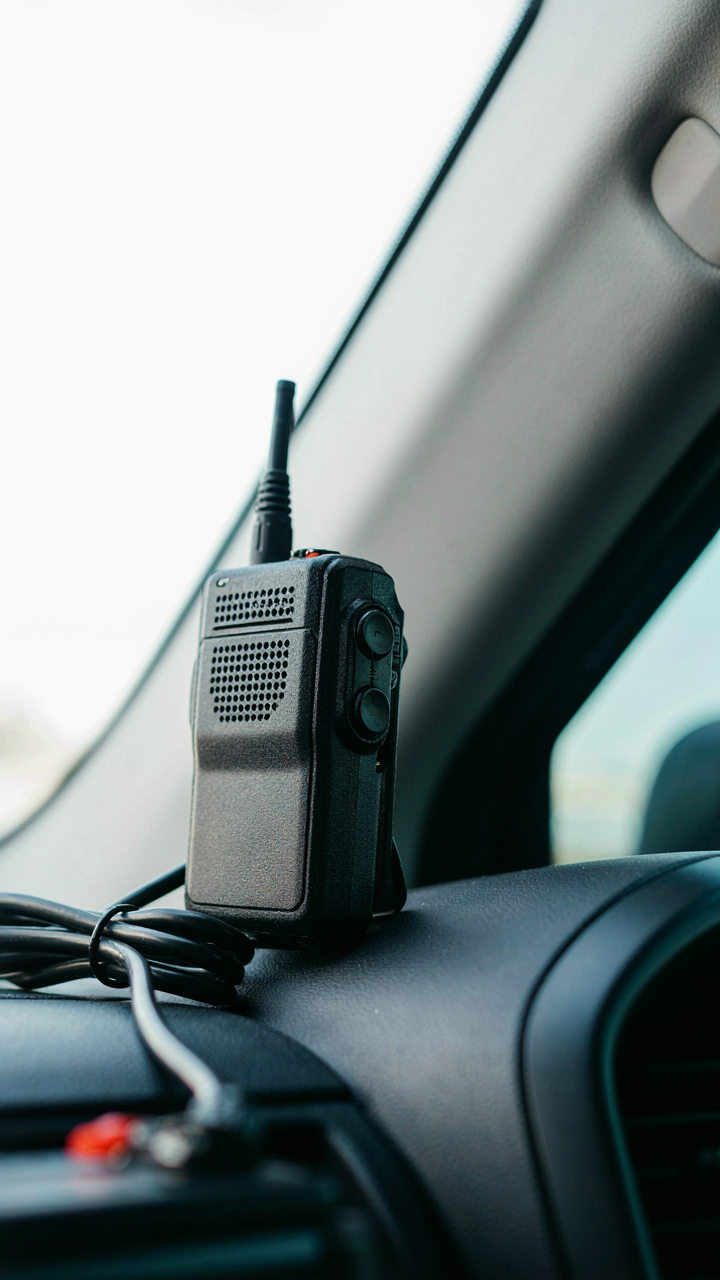
You want your gear bolted down so you don’t have to think about it during a recovery or rough terrain. The real mechanism here is load distribution and electrical draw management, not just finding space on your dashboard.

Radio equipment needs rigid mounting because vibration degrades antenna tuning and loose connectors fail under shock. Use aluminum or steel brackets that bolt to existing frame points, not suction cups or adhesive tape. SAE J1211 standards dictate electrical socket positioning for redundancy. Mount your primary unit low and centered to maintain weight distribution. Your secondary backup unit should have independent power, never daisy-chained from the main radio. Run power directly from the battery with an inline fuse rated 20 percent above the device’s continuous draw. This eliminates voltage drop across existing circuits and prevents one failed device from killing both systems simultaneously.
Most people miss that battery capacity determines transmission time, not just radio wattage. A 100Ah lithium battery supports sustained radio operation for days. Lead acid cuts that to hours. Calculate your actual runtime by multiplying battery amp hours by 0.8, then dividing by the device’s draw rate in amps. If your radio pulls 5 amps during transmission and you transmit 10 minutes per hour on a 100Ah lead acid, you get roughly 16 hours of operation. This is why expedition vehicles carry dual batteries or auxiliary packs.
External Antennas For Enhanced Range
The antenna is the only part of your system that physically touches the electromagnetic field, and that single fact makes it do or die for distance. Most factory vehicle antennas are designed for highway speeds and urban repeaters, not backcountry line of sight to distant bases.
External antennas gain range through two mechanisms: height and impedance matching. A 10-foot whip antenna mounted on your roof sees the horizon roughly 4 miles farther than a 2-foot cabin mounted unit, following line of sight geometry. VHF and UHF propagate in straight lines over terrain, so elevation matters more than wattage. Mount your antenna on the rear of the roof for unobstructed 360-degree coverage. Use quality coaxial cable rated for your frequency band and install it with proper connectors, not solder joints that corrode and degrade signal by 6 to 10 decibels over months. Antennas must match your radio’s impedance at 50 ohms, or reflected power wastes transmission energy and creates heat in the cable.
Magnet mounts are quick but weaker than permanent bolts through the roof. They work for testing or temporary setups. For vehicles you actually use in remote terrain, drill through the roof and use a mounting bracket with ferrite isolation to prevent ground loop interference. If you transmit through a magnet mount long-term, water infiltrates around the base and corrodes the connector inside the vehicle.
The OODA Loop Of Outdoor Communication Gear
Observe, Orient, Decide, Act In The Field
You want to feel prepared so you don’t have to think when things break. The military’s OODA loop—Observe, Orient, Decide, Act—maps directly onto communication gear selection. Each device sits at a different point in that cycle. A satellite messenger lets you observe your location and problem. A radio lets you orient yourself to others’ positions. Knowing which tool handles which layer prevents frozen decision-making when service dies.
Most people skip the observe phase entirely and jump to buying redundancy. That’s backwards. Before you pack a PLB, inReach, or radio, you need to know what you’re actually trying to detect. Are you tracking weather windows? Monitoring group position? Sending distress signals? Each requires different observation capabilities. Your device choice should follow from what information you need first, not from fear of worst-case scenarios.
Speed Decides Which Device You Grab
Real communication failures don’t happen in ideal conditions where you have ten minutes to deliberate. The mechanism is simple: slower devices get skipped when decisions matter. A satellite communicator takes seconds to activate and send a preset message. A hand-crank radio takes longer to power up and requires two-way protocol. An emergency locator transmitter works only for distress—but works instantly with zero decision overhead.
Orient your gear collection around response time, not capability breadth. If you’re alone and injured, an inReach’s auto-SOS function beats a radio that requires you to operate it and find someone monitoring that frequency. If you’re with a group in navigation failure, a radio’s real-time back-and-forth beats waiting for satellite reply windows. The device you’ll actually use under stress is the one with the lowest activation friction.

Tough Durable GPS Device: Investing In Resilience

When Failure Costs More Than Durability
You want a GPS device that won’t embarrass you when things go wrong. That’s the real calculation here. Military and aerospace engineering borrowed a term from systems theory called “failure modes and effects analysis”—basically mapping what breaks and what happens when it does. A GPS unit fails through impact, water intrusion, temperature swings, and battery depletion. The device’s durability rating directly determines which failure modes you prevent versus which ones you accept.
Most overland GPS units claim waterproofing but don’t specify the depth or duration. IP67 means submersion to one meter for 30 minutes. IP68 means deeper, longer exposure depending on the manufacturer’s spec. Temperature resistance matters equally: lithium batteries degrade in cold, LCD screens freeze, and circuit boards crack under thermal shock. A device rated to minus 10 Celsius performs differently than one rated to minus 40. Read the actual spec sheet, not the marketing copy. The gap between claimed toughness and real-world performance is where your device either survives or leaves you navigating by compass.
Battery Life Determines Your Actual Operating Range
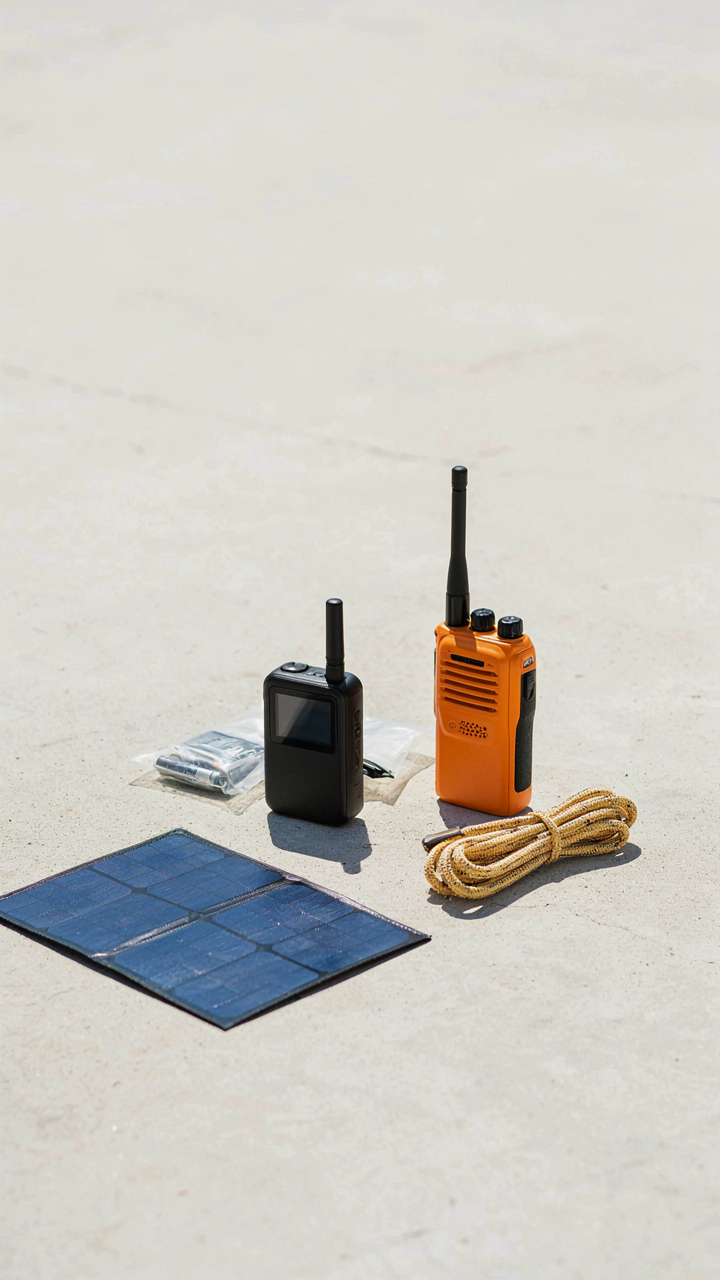
Battery longevity isn’t about how long a device lasts on a single charge—it’s about how much navigation you can accomplish before you’re forced to stop and recharge. That distinction changes your route planning entirely. A GPS unit drawing 500 milliamps per hour dies faster than one drawing 200 milliamps, but the display brightness, antenna power, and processor speed are the real culprits. Lower refresh rates and dimmer screens cut consumption dramatically.
Power management protocols separate capable devices from dead weight. Some units switch to low-power mode automatically when the battery drops to 20 percent, extending runtime another 8 to 12 hours. Others force you to manually toggle settings. The best approach is matching device capabilities to your actual trip length, then adding a portable solar charger or spare battery pack. Calculate your daily mileage, number of days offline, and battery consumption rate before purchasing. Don’t buy a device expecting you’ll manage power better in the field than you do at home—you won’t.

The Human Element: Communication Protocols, Not Just Devices

Before You Leave: What Actually Needs To Happen
You want to feel prepared without admitting you’re scared of being unreachable. Here’s the mechanism: a pre-trip briefing is liability reduction disguised as safety. In military and search-and-rescue doctrine, the briefing creates a shared reference point. Everyone knows the same story about where you’re going, when you’re coming back, and what silence means. Your device only works if the people on the other end know what to do when it doesn’t.
Document your route, expected check-in times, and the exact protocol for when you miss a window. Give this to someone who won’t move, forget, or decide you’re probably fine. Include your vehicle description, license plate, and GPS coordinates of your departure point. Specify which device you’re carrying and its limitations in the terrain you’re entering. This isn’t paranoia. It’s the only reason your PLB or satellite messenger gets noticed by rescue teams instead of ignored as background noise.
Message Discipline Under Pressure
The common advice is “keep it short.” That’s incomplete. You keep it functional. Under stress, people dump information instead of transmitting intent. Military communication doctrine calls this noise: data that doesn’t change behavior on the receiving end. Your message must survive being read by someone tired, in poor light, or on a small screen.
Use position, status, and need in that order. Position first because location is the only fact that matters for rescue. Status second because it tells them whether you’re in motion or static. Need last because it tells them what to do. Don’t apologize. Don’t narrate. Don’t use abbreviations unless you’ve drilled them beforehand. Send the same critical information twice through separate channels if your device allows it. The second transmission costs nothing and doubles the chance of reception.

Beyond The Buzzwords: True Outdoor Communication Equipment Value

Where Money Actually Stops Wasting
You want to feel like you made the smart choice. That’s why you’re here reading about cost versus reliability instead of just buying whatever gets recommended on forums. The real mechanism is simple: overland communication gear fails along two independent timelines—purchase price and operational failure rate—and most people optimize for the wrong one.
A satellite messenger costs $350 to $400. A VHF radio costs $150 to $300. A personal locator beacon costs $300 to $500. None of these prices correlate with how often they actually work when you need them. A $150 Baofeng radio fails in a canyon. A $400 Garmin InReach succeeds where cell towers stop existing. The failure isn’t about money spent upfront. It’s about whether the device’s core mechanism matches your terrain and use case. Budget for what fails, not what costs less.
What You’re Actually Buying
Peace of mind is not an emotion. It’s operational bandwidth. Borrowing from systems engineering, you reduce cognitive load by eliminating decision points during high-stress situations. A satellite communicator doesn’t just send messages—it removes the question of whether you have signal entirely. You press a button. The protocol works. No negotiation required.
When your vehicle breaks down ten miles from the nearest road, the actual value of a working communication device isn’t the message sent. It’s the mental clarity to solve the mechanical problem without simultaneously managing rescue logistics in your head. You stop dividing attention between two survival problems and focus on one. The device creates that separation. That’s the mechanism. Buy communication gear that operates independent of infrastructure, then test it in the exact conditions where you’ll use it—not at home, not in clear weather, but in the failure mode you’re insuring against.
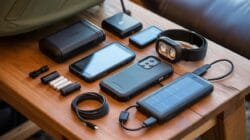
The Illusion Of Preparedness Stems Not From Lacking Gear, But From Ignoring System Fragility

Most people buy overland communication devices and call themselves ready. They’re not. Readiness means stress-testing your entire system before you need it. Pick one device today. Activate it. Send a message to someone fifty miles away. Find where it fails. Fix it. This single action exposes more gaps than buying three devices ever will. The gear doesn’t save you. The person who knows exactly how it breaks does.