
The Pre Trip Data Reconnaissance Protocol

Know Your Actual Bandwidth Requirements
You want to feel prepared without admitting you don’t know what data you actually need. Here’s the mechanism: most travelers wildly overestimate consumption because they assume international roaming costs match their anxiety level, not reality. Calculate backwards from behavior. Maps and navigation consume 5-10MB per hour. Messaging apps use minimal data if you’re on WiFi for video. Streaming video kills your limit in minutes. A week abroad with WiFi at accommodations and occasional map usage typically requires 2-5GB, not the 20GB bundle you’re tempted to buy.
Test your specific usage at home first. Track what you actually consume over three days, then multiply by your trip length. This number beats every generic recommendation because it’s tied to your behavior, not someone else’s worst case scenario. Most people discover they need far less than they thought, which changes which SIM option makes economic sense. That gap between perceived need and actual need is where you save money and avoid carrier waste.
Verify Network Quality Before Arrival
The standard advice is to pick the biggest carrier in any country. That’s incomplete. Carrier size correlates with coverage area, not signal strength in the specific neighborhoods where you’ll spend time. Network performance varies drastically by region, frequency band, and time of day. Research matters because you’ll encounter dead zones no coverage map displays. Check Reddit threads and local expat forums for the destination neighborhoods you’re using, not the country in general. Ask about 4G availability and whether carriers actually deliver the speeds they advertise in urban centers.
Contact local carriers directly or check their coverage maps against your accommodation address and regular destinations. Test their signal strength in the exact locations you’ll frequent, not just downtown tourist areas. Some regions show strong coverage on paper but deliver unreliable speeds during peak hours. This reconnaissance prevents the scenario where you buy a SIM from a “premium” carrier only to discover their network congests daily at 6PM. Document which carriers perform best in your specific locations before purchasing.
Why Your Phone Is Not A Global Citizen (Yet)

Band Compatibility Is The Real Gatekeeper
You want to think your phone works anywhere because it makes you feel prepared. Here’s what actually matters: your phone is a radio that only talks on specific frequencies, and countries mandate different ones. Think of band compatibility like a military communications protocol—your device must transmit and receive on the exact frequencies that country’s infrastructure uses, or the network won’t recognize it exists. Most phones support multiple bands, but rarely all of them.

The unlock status of your phone is separate from band support, and that confusion costs people money. A locked phone from your carrier simply won’t accept another SIM card, period. An unlocked phone will accept the SIM, but if that phone lacks the bands the new country uses, you get no signal anyway. Check your phone’s band specifications against your destination country’s networks before departure. This takes fifteen minutes and prevents twelve days of no connectivity.
The Myth Of The Truly Global Phone
Every phone marketing department uses the word “global,” and every one of them is lying by omission. No phone ships with every band every country uses. The iPhone 15 Pro supports more bands than almost anything, yet it still lacks certain frequencies used in parts of Asia and Africa. The real mechanism at work here is market segmentation—manufacturers build different hardware for different regions to lock you into regional carriers and prevent arbitrage.
When you buy a phone in North America, it’s optimized for North American bands. When you travel to Southeast Asia or Eastern Europe, that optimization becomes a liability. Check the specific model number of your phone, not just the brand name, because variants exist within the same model line. Your carrier’s support page lists your bands. Cross-reference those bands against the destination country’s major networks before you board. This is the actual step that determines whether your phone works or becomes an expensive brick.
The ESIM Imperative: Ditching Physical Plastic
Activation Without The Friction
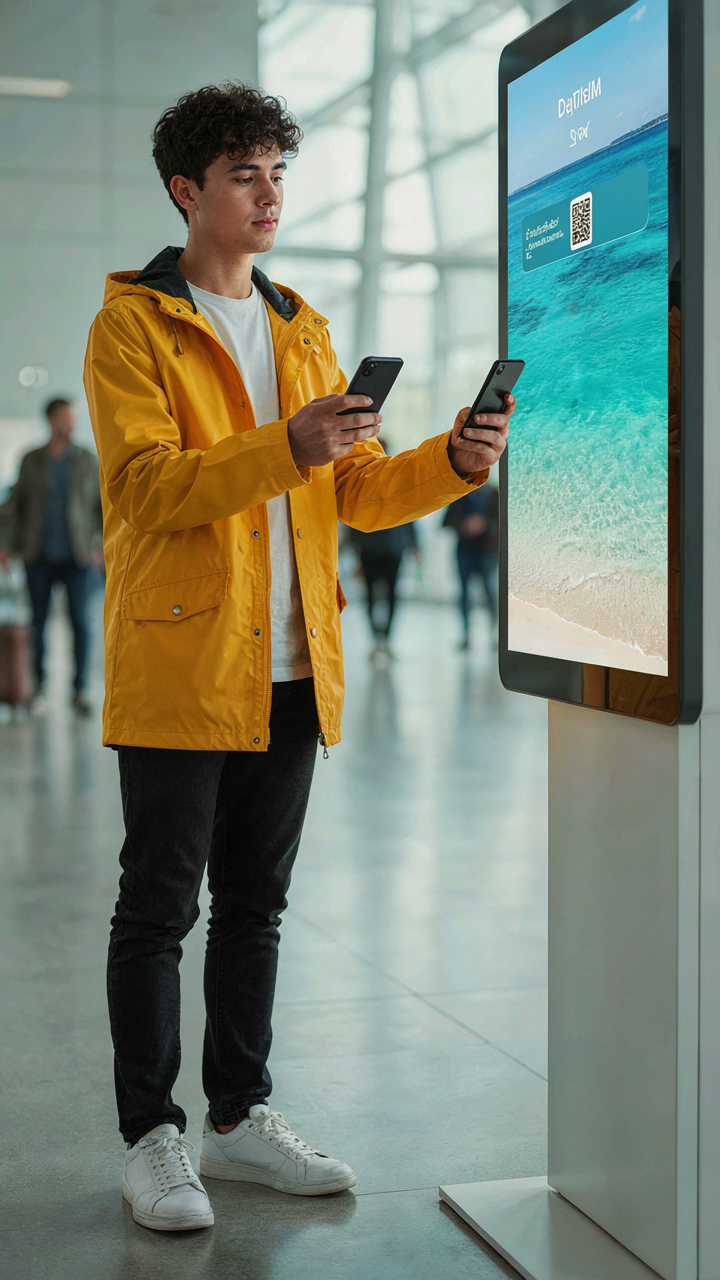
You want to feel like you have your life figured out, which means you don’t want to hunt for a SIM card shop in an airport you can’t read. eSIM works like a supply chain problem solved: instead of physical inventory moving through distribution, the carrier pushes a digital profile directly to your phone’s embedded chip. You scan a QR code or enter an activation code, and within minutes your phone connects to a new network without touching hardware.

The mechanism is straightforward. Your phone contains a programmable chip that stores multiple carrier profiles simultaneously. When you activate an eSIM, you’re not swapping physical cards, you’re writing new carrier data to that chip’s existing memory. This eliminates the dead time between landing and having connectivity. Most modern phones support this. Your carrier sends the profile; your phone installs it; you’re live. No middleman, no waiting for a local shop to open.
When Plastic Still Wins
The common advice says eSIM is the future and plastic is dead. That’s incomplete. Physical SIM cards remain necessary in specific, tactical situations that eSIM doesn’t yet solve. Some carriers in certain regions don’t offer eSIM profiles. Older phone models lack the hardware to support it. If your device fails and you need emergency connectivity in a remote area, a physical SIM from a local vendor works on almost any phone you can borrow or buy. eSIM ties you to your device’s compatibility.
There’s also the switching cost issue. A physical SIM lets you move between phones instantly without carrier approval or digital reactivation delays. In countries where you need multiple local numbers for business and personal use, buying two cheap phones with two physical SIMs remains cheaper than waiting for dual eSIM support. Carriers control the eSIM activation timeline. You control a plastic card. When speed and independence matter more than seamlessness, plastic still holds the edge. Check your destination’s carrier roster before booking to know which format actually works there.
Affordable Europe Roaming Plans: Beyond The Tourist Traps

Where Local Carriers Hide Their Real Deals
You want to feel smart about saving money without looking like you don’t belong. The mechanism is this: European carriers use economic segmentation. They price plans differently for residents versus visitors because residents have switching costs and long-term contracts. Tourists don’t. So they mark up the “traveler” SIM cards sold in airports and tourist shops by 40 to 60 percent.

The real deals sit in carrier stores in residential neighborhoods where locals buy prepaid plans. Vodafone Spain, Orange France, and Deutsche Telekom Germany all offer month-to-month prepaid data plans that cost half what you pay for the equivalent “international” package. Walk into a carrier shop in a neighborhood, not near a train station. Ask for their standard prepaid plans, not travel plans. The clerk won’t upsell you because the margin is lower.
Why Travel Plans Are A Scam Wrapped In Convenience
The common advice says travel plans trade affordability for simplicity. That’s incomplete. Travel plans exploit a specific cognitive bias: you’ll pay more to avoid the friction of setup. The markup exists because friction is real, and the industry knows you’ll pay for certainty over research.
Prepaid plans in Europe require a local address for billing. This isn’t a deal breaker. Use your hotel address or hostel address. Most carriers accept it. Some require a local bank account for autopay, but many still accept cash in-store. You spend 15 minutes on this instead of 30 seconds buying a travel plan, but you pay 50 percent less. The protocol is: find the carrier store, bring your passport, ask for their cheapest prepaid data plan with no contract, provide the local address where you’re staying, and pay cash upfront.
The “Short Trip” Sim Strategy: Minimize Overhead
Prepaid Data Packs For Specific Durations
You want to feel like you’re not bleeding money while traveling, but the real problem is you’re buying connectivity as if you’ll stay forever. Think in terms of inventory management from logistics: your data is a resource with a shelf life, and the moment you cross back into your home country, it expires or converts to a worthless rate. Most carriers offer tiered prepaid packages tied to calendar days, not activation date, which means a 7-day pack buys you data access during a 7-calendar-day window regardless of when you activate it.

The mechanism is simple. Carriers front-load their margin into weekly and monthly plans because they assume abandonment. A 30-day pack costs less per gigabyte than a 7-day pack, but only if you’re certain you’ll use it all. For trips under ten days, buy the exact duration that covers your stay plus one buffer day. Check the carrier’s terms: some pause your plan if you go offline, others don’t. Staying connected to exactly the trip you’re taking kills the psychological trap of buying overage protection you’ll never need.
Daily Versus Weekly Data Consumption Math
Most people guess their data use and overshoot by 40 percent, wasting money on bandwidth they never touch. Real consumption depends on three variables: whether you’re streaming video (which you shouldn’t on international data), whether you’re using maps offline or live, and whether you’re tethering devices. Calculate backward from your trip purpose, not forward from habit.
If you work remotely and need email, messaging, and light web browsing, you’ll burn 500MB to 1.5GB daily. A week of that is 3.5GB to 10.5GB depending on video habits. Weekly plans let you front-load that math and buy once instead of negotiating daily auto-renewals that carriers use to trap you into overage charges. The protocol is this: disable auto-renewal on your carrier’s app before your trip ends, or you’ll find charges hitting your card in your home timezone when the plan expires.
Choosing Best Mobile Network: The Local Intelligence Advantage

Ask Before You Arrive
You want to feel like an insider who made the smart call, not a tourist stuck on dead bandwidth. Here’s the mechanism: network coverage maps from carriers are marketing documents, not truth. Ex-pat forums and local Reddit communities contain real-world signal data from people who live there, not from sales teams optimizing for optics. They report where networks actually fail, which neighborhoods drop calls, and which carrier performs in the exact area you’re staying.

Start three weeks before departure. Find subreddits for your destination city. Search “[city name] best mobile network” or “[city name] mobile coverage.” Ask directly which carrier people use in your specific neighborhood or district. Most responses will come fast because ex-pats solve this problem repeatedly. Take notes on which network appears in multiple replies, and which one people explicitly warn against.
Signal Strength Varies By Terrain, Not Promises
Coverage density matters more in built environments than in open space, following urban density principles. A carrier claiming “national coverage” means nothing if their infrastructure clusters around downtown zones. Rural areas, mountain regions, and industrial corridors show radically different signal performance from the same provider. You need to know which network invested in your specific geography.
Ask ex-pats the exact same question twice: “Which network works best downtown?” and “Which network works best outside the city?” The answers often split. One carrier dominates urban areas while another wins in suburbs or coastal towns. Don’t assume nationwide coverage means consistent coverage. Get the local report, compare the two answers, then buy your SIM with that provider for the region where you’ll spend most time.
Mobile Data As A Strategic Asset: The Game Theory Of Connectivity

How To Ration Data Like A Supply Chain
You want to feel in control abroad. The truth is simpler: data scarcity forces decisions, and most travelers make them wrong because they never map the problem. Military logistics calls this “supply distribution under uncertainty.” Your international SIM card data works the same way. You have a fixed pool. Consumption happens in real time. You cannot resupply instantly. The only variable you control is allocation.

Start by separating data into mission-critical and discretionary buckets before landing. Maps, translation apps, and work email run on different SIM strategy than social scrolling. Disable auto-play on your messaging apps. Turn off background refresh for everything except your navigation tool. Run a speed test on your target network’s actual speeds before committing your data to video. Poor signal burns data faster than fast signal because your phone retransmits packets. Most travelers ignore this and waste 30 percent of their data on failed transmissions in dead zones.
When Scarcity Becomes Your Actual Risk
Economics teaches us that scarcity creates value through constraint. When your data is finite, the real cost of a decision becomes visible. You stop treating connectivity like a utility and start treating it like capital. Most travel guides will tell you to “just buy a local SIM.” They miss the mechanism: running out of data in an unfamiliar city at night is not inconvenient. It is exposure.
Build a fallback protocol now, not when you need it. Identify which apps work on 2G speeds. Know which cafes have reliable wifi and whether they require payment or ID. Understand your carrier’s roaming policy if your primary SIM fails. Document one offline map app with your destination pre-loaded. Have a second SIM card from a different carrier in your bag as a dead-man’s switch. Scarcity is manageable only if you plan for the moment when your primary allocation runs out.
Beyond The Phone: Staying Connected Without A SIM

Portable Wi Fi Hotspots And Their Real Trade Offs
You’re considering a hotspot because you want the illusion of control—one device, one bill, no dependency on local carriers. Here’s the mechanism: a portable hotspot is a battery-powered cellular repeater that converts a SIM card’s connection into Wi-Fi. It solves nothing you couldn’t solve with a local SIM, but it costs more and dies when the battery dies.

The common pitch is convenience. The reality is friction. You’re now managing two devices instead of one. Your hotspot burns through battery in six to ten hours depending on the model and usage intensity. You pay premium pricing to carriers for the hotspot data plan itself, then face overage fees if you miscalculate usage. A local SIM with a data plan costs a fraction of what you’ll spend on a roaming hotspot in the same week.
Extracting Value From Free Public Networks
Most people treat public Wi-Fi like a free meal and wonder why they get food poisoning. You don’t use public Wi-Fi for banking, email access, or anything tied to financial accounts. The vulnerability isn’t theoretical—it’s architectural. Anyone on the same network can intercept unencrypted traffic.
Use public Wi-Fi for consumption only: maps, directions, translation apps, content streaming. Reserve communication and transactions for cellular data or a paid VPN with a no-log policy. Better yet, pair your phone with a local SIM card’s data plan for under five dollars a day in most countries. You get encryption by default, you own your connection, and you stay off networks where packet sniffing is the entry price.
Best Sims For The Discerning Traveler: Quality Over Quantity
The Real Speed That Matters
You want the fastest connection so you look competent on video calls and don’t waste time waiting. That’s the real calculation. But here’s the mechanism: speed depends on network infrastructure, not the SIM itself. The SIM is a key that unlocks access to towers. The towers determine your actual throughput.

Latency matters more than raw speed for remote work. A 4G network with 30ms latency beats 5G with 200ms latency every time. Test before committing: use OpenSignal or RootMetrics data for the country you’re visiting to see which carrier owns the best infrastructure. Most travelers pick the wrong provider because they chase brand names instead of reading network performance reports.
- 4G vs 5G Coverage Maps: Check each carrier’s live coverage tool for your specific city, not national averages. Urban areas have 5G; remote regions often don’t.
- Latency Testing: Run ping tests to local servers before purchasing. Less than 50ms is viable for video calls; above 100ms creates noticeable lag.
- Network Congestion Hours: Peak times (evenings, weekends) crush speeds on smaller carriers. Request speed data for off-peak hours too.
- Customer Support Availability: Choose providers with live chat in English during your timezone. Phone support through automated systems wastes hours.
- Historical Uptime Records: Search Reddit and travel forums for that specific carrier in that country. Anecdotal data beats marketing claims.
Most travelers ignore uptime because they assume all carriers perform equally. They don’t. Pick the carrier with the best infrastructure in your destination, test it before arrival if possible, and move on.
Pricing Without The Traps
Everyone knows to avoid “unlimited” plans that throttle after 10GB. That’s baby advice. The real trap is daily rates disguised as convenience. A provider charges you 5 dollars per day for data access instead of selling you a plan. You pay 150 dollars for thirty days without realizing it because the billing structure obscures the math.
Read the SIM provider’s terms document, not their marketing copy. Search for these phrases: “daily charge,” “inactivity fee,” “automatic renewal,” “data expiration.” Most hidden fees live in those sections. Transparent carriers publish their full pricing on one page without requiring you to dig through FAQs. Verify the exact cost by calculating total spend for your exact trip length, not their advertised daily rate. Before activating, confirm zero charges apply outside your chosen plan window.
The Best Small Phones For Travel: A Minimalist Approach
Weight And Battery Matter More Than Specs
You want people to think you’re serious about travel, which means carrying less stuff. The real mechanism here is constraint: a smaller phone forces you to make choices about what data actually matters, which is the opposite of how most people approach international SIM cards. They chase coverage maps and dual-SIM slots when the actual problem is decision fatigue in airports at midnight.
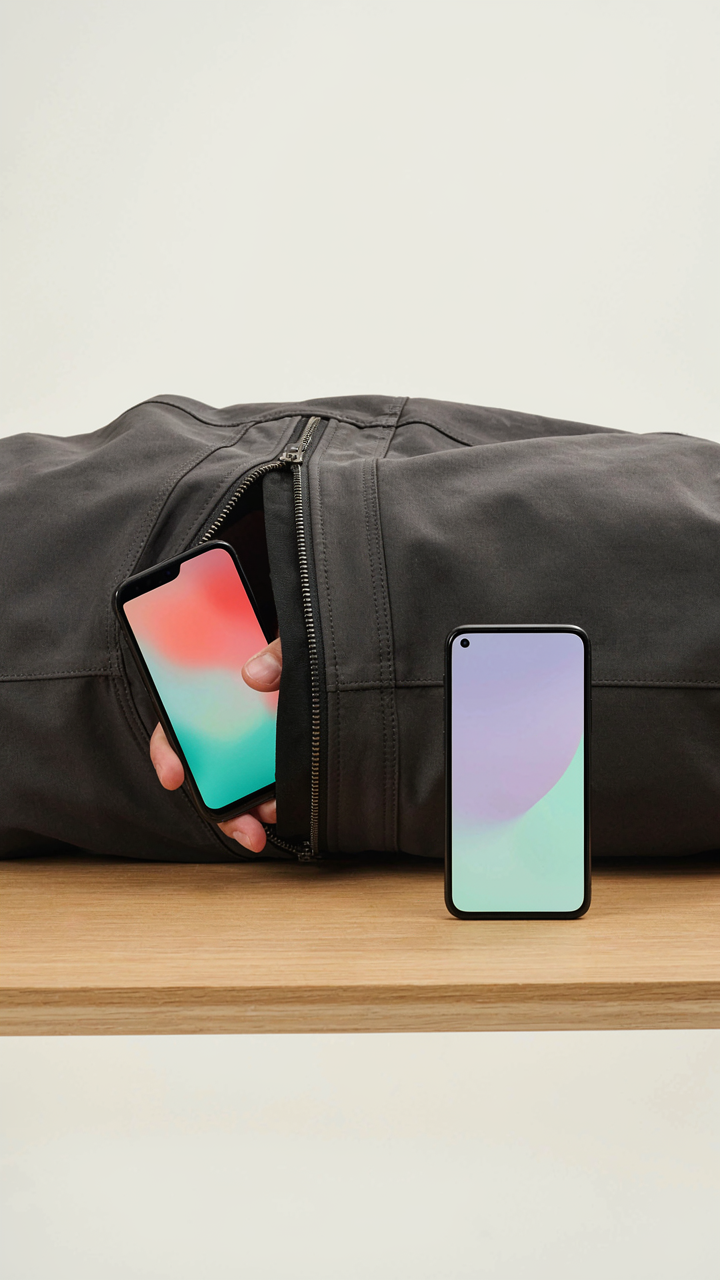
A phone under 170 grams with two-day battery life solves the core friction. You stop hunting for outlets. You stop second-guessing which SIM to activate. Your brain has bandwidth for actual navigation instead of worrying about whether your device will die in customs. The secondary benefit is that smaller phones fit in cargo pockets, which means you’re not constantly reaching for a backpack to check your connection status. That’s not comfort. That’s operational efficiency.
The Redundancy Play Most Travelers Skip
Borrowing from systems engineering, redundancy means building in backup capacity so a single failure point doesn’t collapse the whole operation. A dedicated travel phone is your redundant communication node. Not a backup. A parallel system.
Here’s what people get wrong: they think a backup phone means carrying a second expensive device. Wrong. Buy a used phone from three generations back, dirt cheap, unlock it if needed, and configure it with a different carrier’s SIM before you leave. Your primary phone fails, gets stolen, or the SIM gets corrupted? You pull out the backup and you’re live again in ninety seconds. No insurance claims. No waiting for a replacement. No emergency calls home from an internet café. The backup phone costs seventy to one hundred fifty dollars and solves the actual catastrophic scenario nobody plans for until it happens.
Your Fear Of Being Offline Is A Luxury, Not A Necessity

Most people treat connectivity like oxygen. They panic at the thought of missing messages, emails, notifications. Here’s the shift: an international SIM card isn’t about never disconnecting. It’s about choosing when you disconnect on your terms, not your carrier’s. Today, grab a local SIM from any convenience store in your destination country. Spend one afternoon offline. You’ll realize the world doesn’t burn when you’re unreachable, and that freedom costs almost nothing.