
The Evolution Of Led Ceiling Lights Beyond Basic Illumination
From Incandescent To Intelligent: A Brief History Of Home Lighting
Incandescent bulbs dominated residential lighting for over a century because they were cheap to produce and simple to use. Thomas Edison’s carbon filament bulb became the standard in the 1880s and remained largely unchanged through the 20th century. These bulbs wasted energy as heat and burned out frequently, but consumers accepted the tradeoff because alternatives didn’t exist until fluorescent technology emerged in the 1930s.
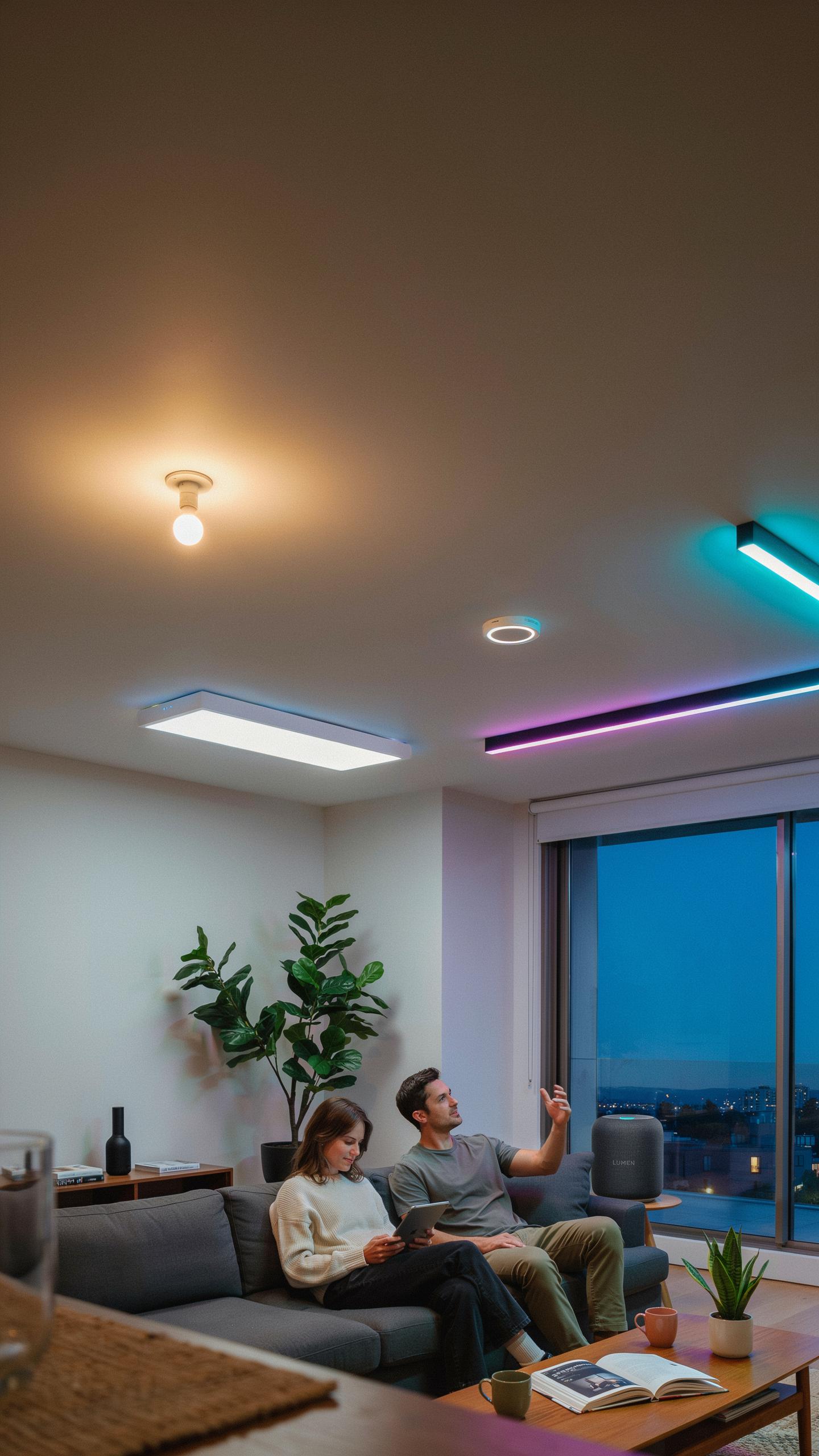
Fluorescent lights improved efficiency but created new problems. They produced a harsh, cold light that many homeowners disliked. The technology also contained mercury and took time to reach full brightness. LED technology arrived in the early 2000s and shifted everything. LEDs converted electrical current directly to light with minimal heat loss. By the 2010s, smart home integration became standard, allowing users to control brightness and color temperature through apps and voice commands. This transformed ceiling lights from passive fixtures into active components of home automation systems.
Why Dimmable Led Lights Are The Future Of Home Illumination
Dimmable LED ceiling lights solve three critical problems that older lighting couldn’t address. First, they reduce energy consumption by up to 80 percent compared to incandescent bulbs. Second, dimming extends bulb lifespan to 25,000 to 50,000 hours, meaning replacements happen once a decade instead of annually. Third, app control lets users adjust lighting without physical switches, which matters for accessibility and convenience in modern homes.
The shift to dimmable LED ceiling lights represents a move toward personalized environments rather than one-size-fits-all illumination. Users can match light levels to activities, time of day, and mood preferences. Smart home ecosystems now integrate these lights with schedules, motion sensors, and voice assistants. This capability drives adoption faster than previous lighting upgrades because the value proposition extends beyond energy savings to lifestyle improvement and home automation integration.
Understanding Dimmable Led Technology And Benefits
How Dimmable Led Technology Works A Technical Overview
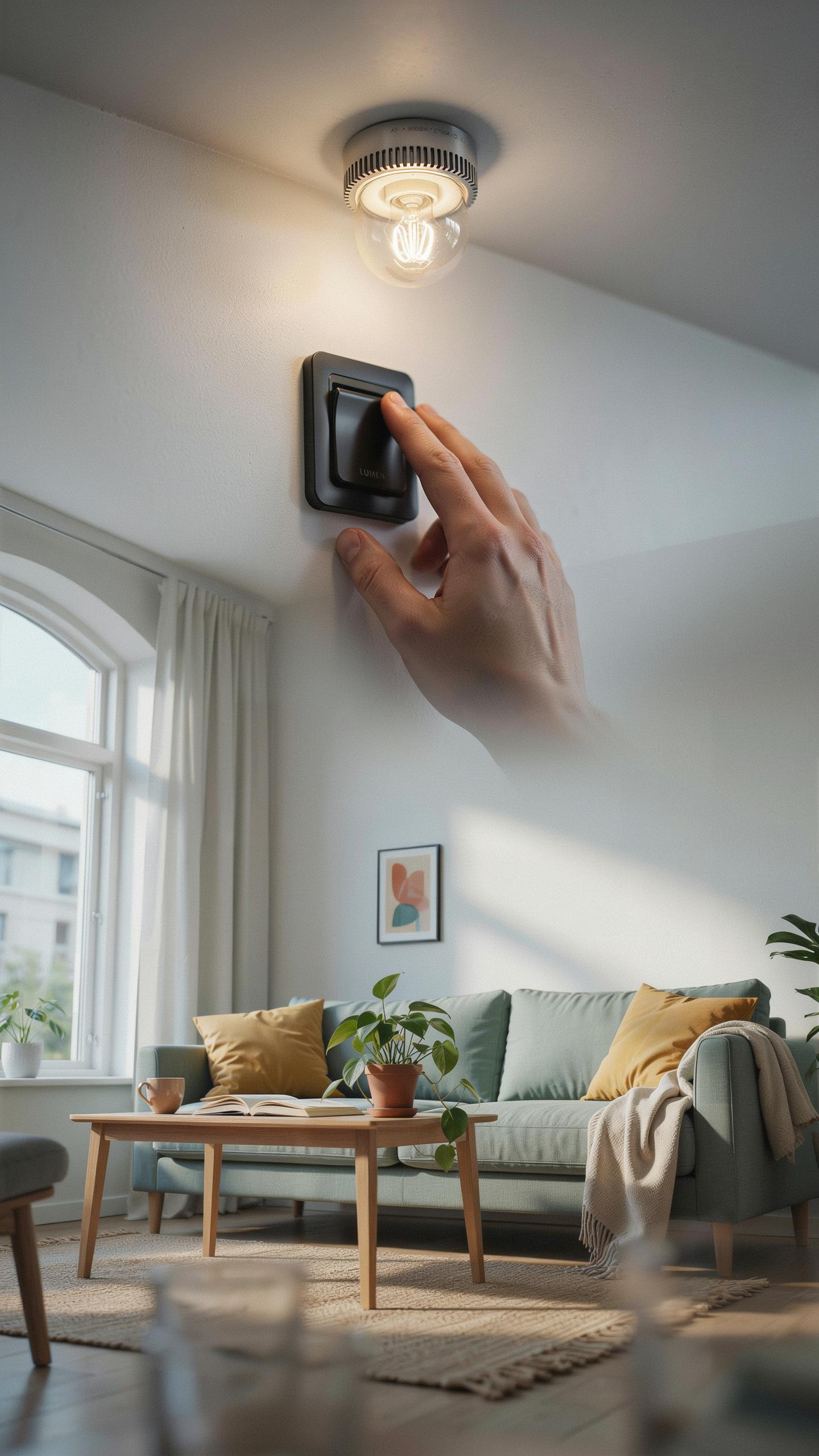
Dimmable LED lights use pulse-width modulation or PWM to control brightness. The LED cycles on and off at frequencies humans cannot detect, typically between 200 and 1000 hertz. By adjusting the ratio of on-time to off-time, the system reduces perceived brightness without lowering voltage. This differs from old incandescent bulbs, which dimmed by reducing electrical current directly through the filament.
An app controls the dimming process through wireless protocols like Wi-Fi, Bluetooth, or Zigbee. The app sends dimming commands to a receiver inside the light fixture or a separate control module. This receiver interprets the signal and adjusts the PWM frequency accordingly. The LED driver circuitry manages the actual power delivery to maintain stable light output at any brightness level.
Energy Efficiency And Longevity The Key Advantages Of Dimmable Led
Dimmable LED fixtures consume significantly less power than traditional lighting at all brightness levels. LEDs convert electricity into light more efficiently than incandescent or halogen sources, wasting less energy as heat. When you dim an LED to 50 percent brightness, power consumption drops proportionally. This direct relationship between dimming and energy use means lower electricity bills and reduced environmental impact.

LED lifespan extends far beyond older lighting technologies, typically lasting 25,000 to 50,000 hours depending on quality and usage patterns. Dimmable LEDs maintain their longevity advantage since dimming reduces heat stress on components. Lower operating temperatures prevent premature degradation of the LED chip and driver electronics. Fewer replacement cycles mean lower maintenance costs and less waste over the fixture’s lifetime.
The Power Of App Control Smart Lighting At Your Fingertips
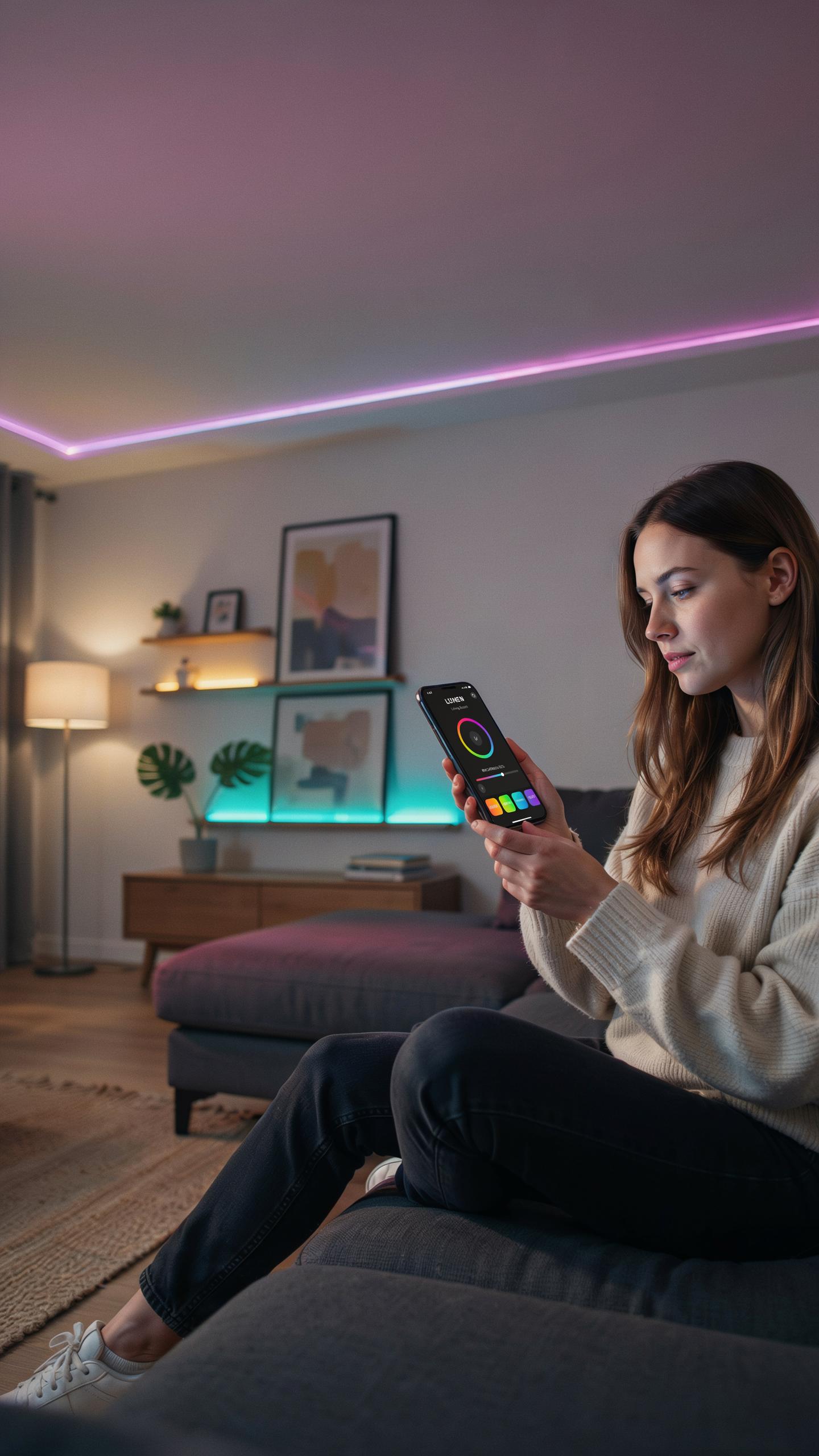
Seamless Control: Connecting Your Led Ceiling Lamp To Smart Devices
Most dimmable LED ceiling lights with app control connect via WiFi or Bluetooth to your smartphone or tablet. The connection process typically requires downloading the manufacturer’s app, creating an account, and pairing the fixture to your home network. Once connected, the light responds to commands sent through the app from anywhere in your home or remotely when you have internet access.
The technical foundation relies on a wireless module built into the fixture’s driver or control board. This module communicates with your device through standard protocols like WiFi 2.4GHz or Bluetooth Low Energy. Compatibility matters here. Check whether the system works with iOS, Android, or both before purchasing. Some fixtures integrate with broader smart home ecosystems like Google Home or Amazon Alexa, expanding control beyond the dedicated app.
Customizing Your Ambiance: Exploring App Features For Mood Lighting
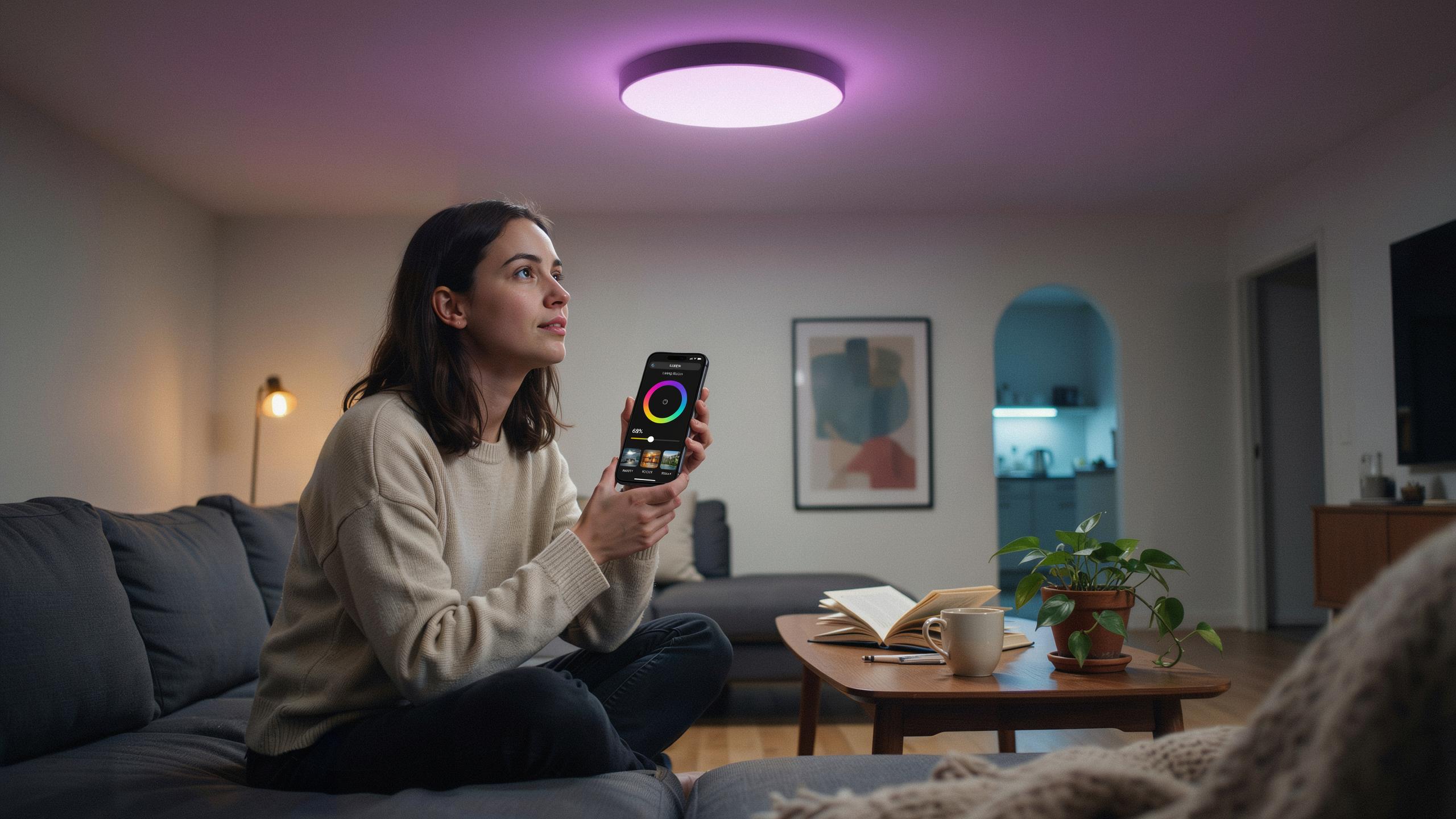
App interfaces for dimmable LED ceiling lights deliver core functionality through straightforward controls. You adjust brightness using a slider that typically ranges from zero to one hundred percent. Color temperature adjustment moves between warm white and cool white on fixtures offering this feature. Most apps display the current settings and allow you to save presets for quick access.

Advanced app features enable scheduling and automation. You can program the light to turn on at specific times or follow sunset schedules. Some apps include scene creation where you combine brightness and color settings into named profiles like reading mode or movie mode. Scene switching happens instantly through app buttons rather than manual adjustment each time you want a different mood.
Designing With Light Creating Moods With Your Led Ceiling Lamp
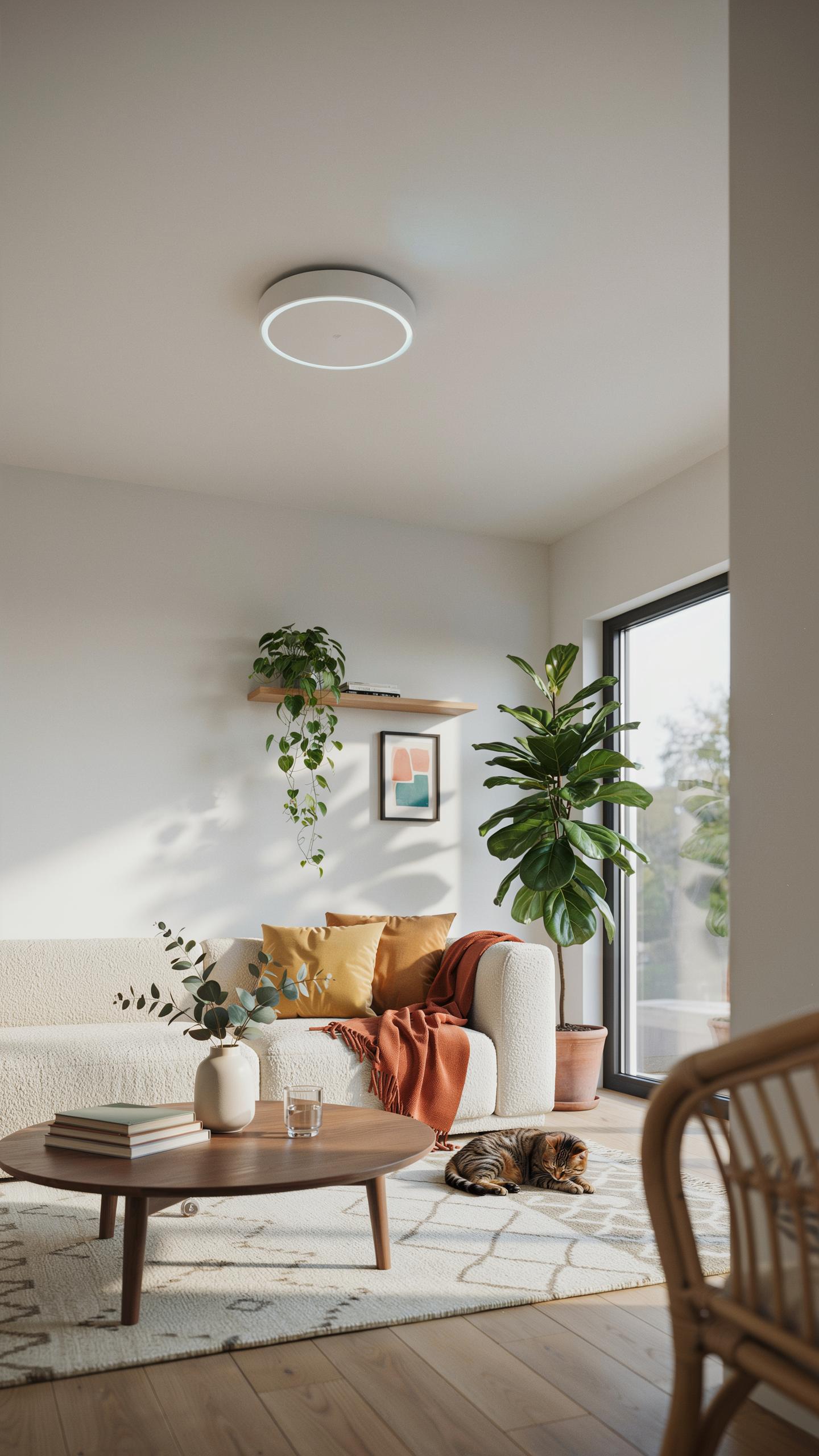
Warm White To Cool Blue: Setting The Perfect Atmosphere With Color Temperature
Color temperature directly affects how your brain perceives a space. Warm white light between 2700K and 3000K triggers relaxation by mimicking sunset and candlelight. Your dimmable LED ceiling light with app lets you shift this spectrum throughout the day without changing fixtures. Cool blue light above 5000K increases alertness and productivity. The science is straightforward: light wavelengths influence circadian rhythms and melatonin production in your body.
Your app controls this spectrum with precision unavailable in traditional lighting. Bedrooms perform best at 2700K to 3000K for sleep preparation. Living areas work well at 3000K to 4000K for balance between comfort and function. Home offices need 5000K to 6500K for sustained focus. Adjust temperature in real time based on activity rather than fighting against fixed color outputs. This tactical flexibility solves the core problem traditional ceiling lights cannot address: one light type does not work for all situations.
Dynamic Lighting Scenes: Enhancing Your Home With Personalized Presets
Preset scenes eliminate decision fatigue by automating your ideal light settings for common activities. Your dimmable LED ceiling light with app stores multiple configurations that activate instantly through single taps. Movie mode dims brightness to 20 percent and shifts to warm amber tones. Reading mode increases brightness to 80 percent and moves toward neutral white. These presets save time and ensure consistency without manual adjustments.

Presets also handle transitions between activities without interruption to your day. Morning scenes gradually increase brightness and shift toward cool white to support wakefulness. Evening scenes reverse this process, dropping intensity and moving warm to prepare for sleep. Some apps include scheduling features that trigger scenes automatically at set times. This removes the human element from lighting decisions and lets your system adapt to your routine instead of you adapting to static lighting conditions.
Installation And Compatibility Integrating Dimmable Led Lights Into Your Home
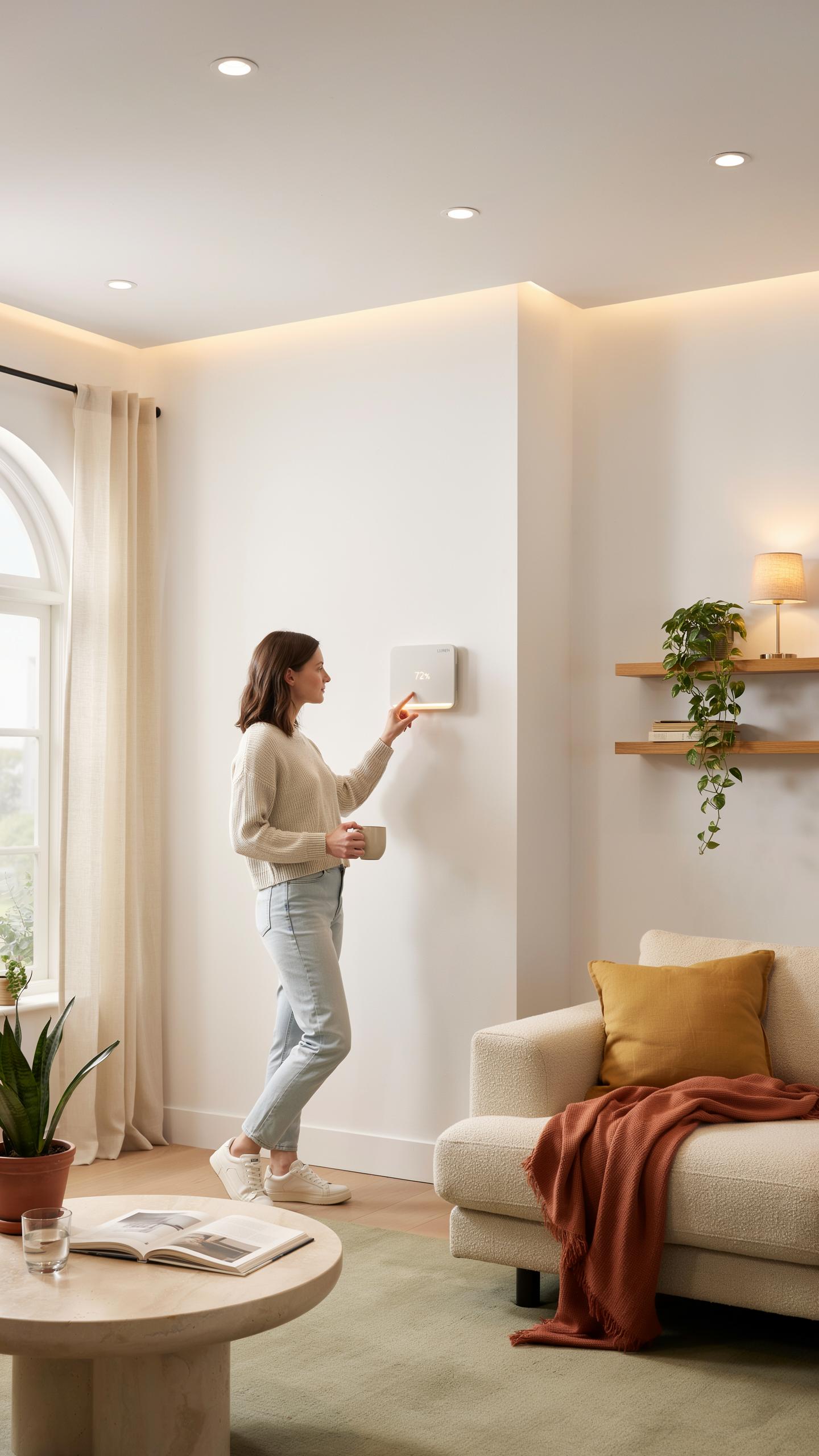
DIY Or Professional: What To Consider For Installation
DIY installation works if you have basic electrical knowledge and your ceiling fixture has a standard mounting bracket. Most dimmable LED ceiling lights connect to existing wiring through quick-connect terminals. You need a screwdriver, wire strippers, and a voltage tester. Shut off power at the breaker before starting. The process typically takes 30 to 60 minutes for a single fixture replacement.
Call a licensed electrician if your home has outdated wiring, aluminum wiring, or no existing ceiling fixture. Professional installation costs between 100 and 300 dollars but ensures safety and proper code compliance. Electricians also identify issues like insufficient power supply or incompatible dimmer switches that DIY installers might miss. This investment protects your equipment and your home from electrical damage.
Compatibility With Smart Home Ecosystems: Google Home, Alexa, And More
Check the app requirements before purchasing. Most dimmable LED ceiling lights work with either Amazon Alexa, Google Assistant, or both platforms. Some brands require their own proprietary app as the primary control method with smart home integration as a secondary feature. Verify that your WiFi network supports the light’s connection protocol, whether that is WiFi or Bluetooth. Incompatible ecosystems mean you cannot voice control or automate the light.

Setup involves downloading the manufacturer’s app, creating an account, and connecting the light to your home network. Once connected, you link the light to your preferred smart home platform through account linking or skill activation. Response time varies by brand but typically ranges from instant to five seconds. Test voice commands immediately after setup to confirm everything functions before relying on automation routines.
Flush Mount Ceiling Fan With Integrated Led Ceiling Lamp A Dual Purpose Solution
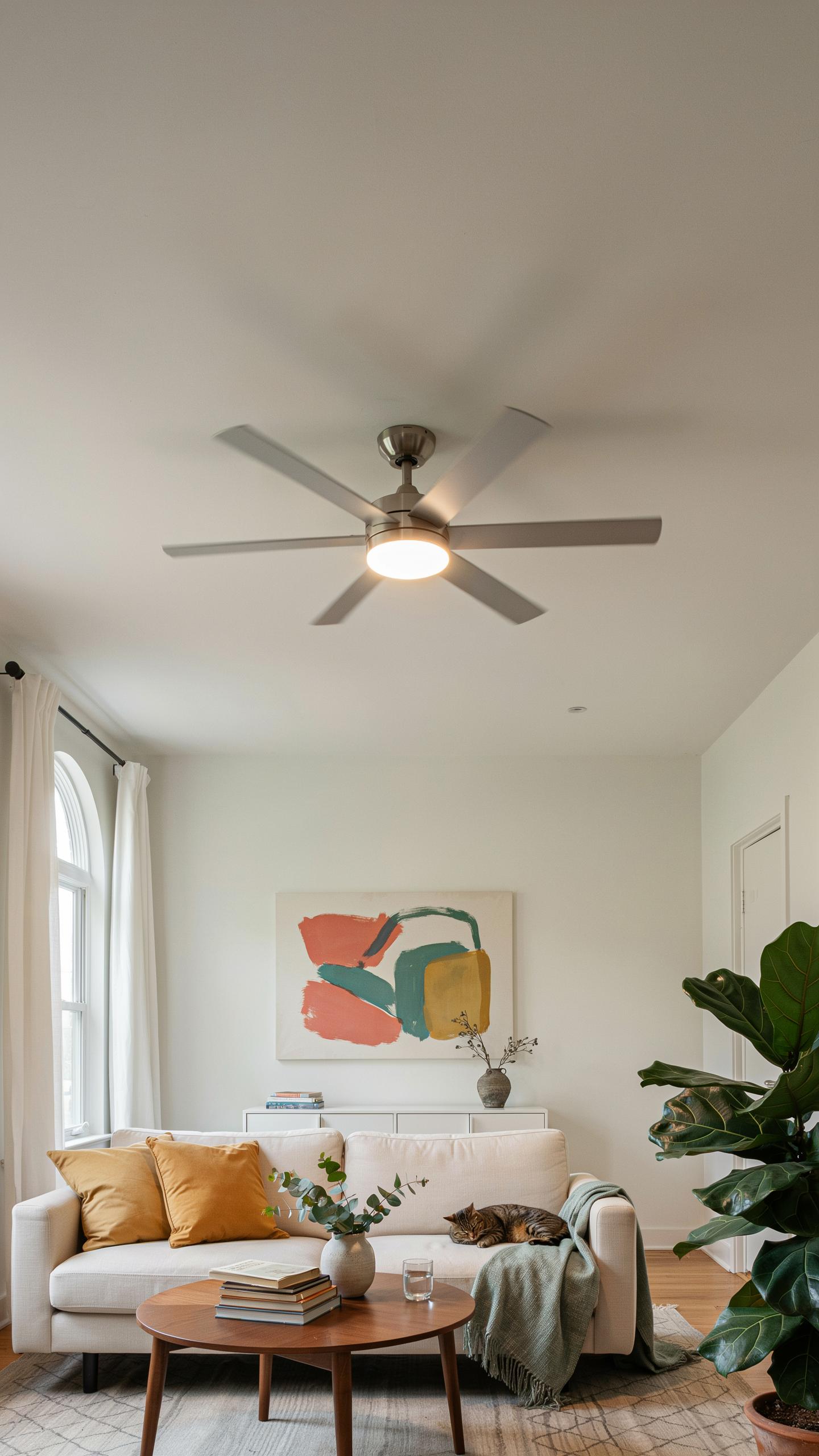
Combining Comfort And Illumination: The Benefits Of Integrated Designs
Integrated ceiling fan and light combinations reduce installation complexity and cost. You mount one fixture instead of two separate units, cutting labor time and electrical work. This design saves ceiling space, which matters in rooms with low ceilings or compact layouts. The unified approach also simplifies wiring and dimming controls through a single app connection.
App control works across both functions simultaneously or independently. You adjust fan speed and light brightness from your phone without multiple apps or remotes. This consolidated control reduces the number of devices you manage and creates a streamlined user experience. Integrated designs also offer better weight distribution on ceiling joists compared to stacking separate fixtures.
Let your home’s glow tell a story, softly shifting to match every treasured moment, just as a conductor guides an orchestra of light.
Choosing The Right Model: Factors To Consider For Your Space
Room size determines the fan blade length and light output you need. Measure your ceiling height and square footage before purchasing. Rooms under 75 square feet work with 36 to 42 inch blades. Larger spaces require 52 inch blades for effective air circulation and adequate lighting coverage.

Verify your electrical setup matches the fixture requirements. Check if your existing ceiling box supports the combined weight of fan and light assembly. Standard boxes handle most integrated units, but older homes may need reinforcement. Confirm your wall switch or smart home system integrates with the app control before purchasing to avoid compatibility issues.
Selecting The Perfect Ceiling Lamp For Every Room
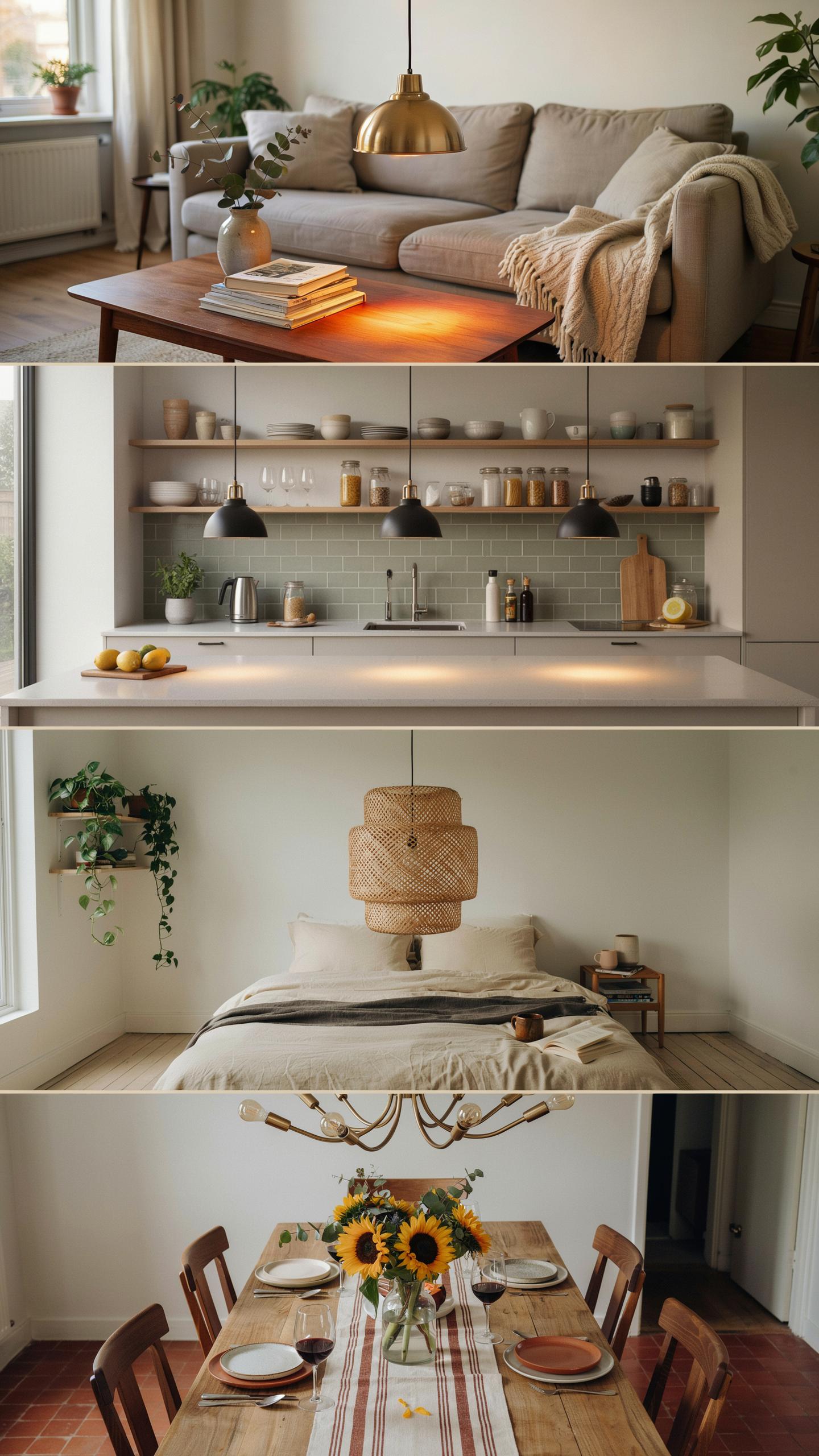
Beyond Functionality: Aesthetic Considerations For Your Ceiling Lamp
Your dimmable LED ceiling light with app must match your room’s design language. Consider the fixture’s shape, finish, and profile against your walls and furniture. Flush mounts sit tight to ceilings and work in rooms with lower heights. Semi-flush designs drop several inches and suit standard eight-foot ceilings. Surface finishes like matte black, brushed nickel, and white coordinate with modern, industrial, and transitional styles. The fixture’s visual weight matters: heavy designs dominate small rooms, while delicate frames disappear in larger spaces.
App control adds functional value but doesn’t override poor aesthetics. Choose fixtures with clean lines if you prefer minimalism. Select ornate designs if your space embraces traditional or eclectic themes. The trim ring color and material affect how the light integrates into your ceiling. Mismatched finishes between your lamp and other hardware create visual discord. Test fixtures in your space before purchasing whenever possible. Dimmable LED ceiling lights now come in enough style options to satisfy any design preference without sacrificing performance.
Specialized Lighting Needs: Kitchens, Bathrooms, And Outdoor Spaces
Kitchen lighting demands brightness and color accuracy. Kitchens need 3000K to 4000K color temperature for task visibility and food appearance. A dimmable LED ceiling light with app lets you reduce intensity for ambient evening use while maintaining full output for cooking and prep work. Ensure your fixture handles moisture from steam and cooking heat. Kitchens benefit from multiple light sources: ceiling fixtures plus under cabinet and island lighting. App control helps coordinate brightness across zones without manual adjustment.

Bathrooms require moisture-resistant fixtures rated for damp or wet locations. Vanity lighting should be bright and cool-toned around 4000K to 5000K for accurate makeup and grooming tasks. Exhaust fans create humidity, so select fixtures with sealed components and corrosion resistant finishes. Outdoor spaces need weather-resistant ratings and appropriate color temperatures. Covered patios use 2700K to 3000K for comfort. Exposed areas need fixtures rated for direct rain and UV exposure. Dimmable LED options work in bathrooms and covered outdoor areas but require weather-rated housings and app-compatible components that resist moisture damage.
Low Ceiling Solutions Maximizing Space With Led Flush Mount Fixtures
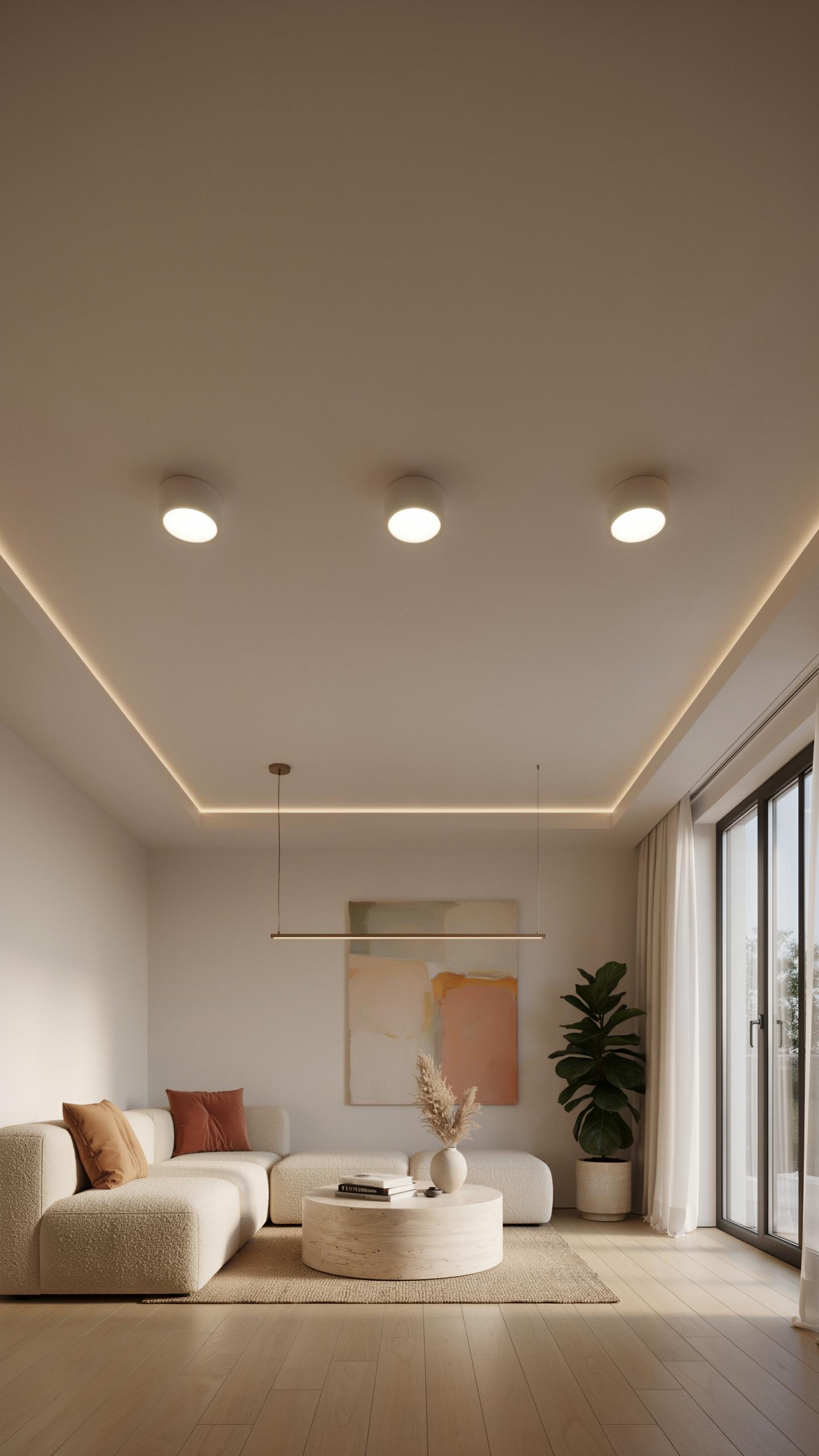
The Advantages Of Led Flush Mount Designs For Compact Spaces
LED flush mount fixtures sit directly against your ceiling. They eliminate the gap that pendant lights and chandeliers create. This design choice removes visual clutter and keeps sight lines clean. Rooms feel more open because nothing hangs down to interrupt the space. A dimmable LED ceiling light with app control in flush mount form gives you brightness control without sacrificing headroom.
Flush mounts deliver practical benefits beyond aesthetics. They distribute light evenly across the room without creating shadows or dark corners. The fixture housing stays compact, so installation requires minimal clearance above the ceiling. You can dim these lights through your app to set different moods without physically adjusting anything. This combination of form and function makes flush mounts essential for low ceiling environments.
Illusion Of Height: Lighting Techniques For Low Ceilings
Upward-facing light creates the perception of higher ceilings. When you direct light toward the ceiling surface itself, your brain registers more vertical space. A dimmable LED ceiling light with app functionality lets you adjust color temperature to enhance this effect. Warmer tones at lower brightness make spaces feel larger than cooler, brighter settings do. This control requires intentional positioning and dimming strategies.

Layering different light sources amplifies the height illusion. Use your flush mount as ambient lighting, then add wall sconces or task lighting at specific points. This multi-level approach prevents flat, oppressive lighting that emphasizes ceiling proximity. Your app control enables you to adjust each zone independently throughout the day. Strategic dimming and color shifts compound the effect of perceived vertical space.
Future Trends In Dimmable Led Lighting Innovations And Beyond
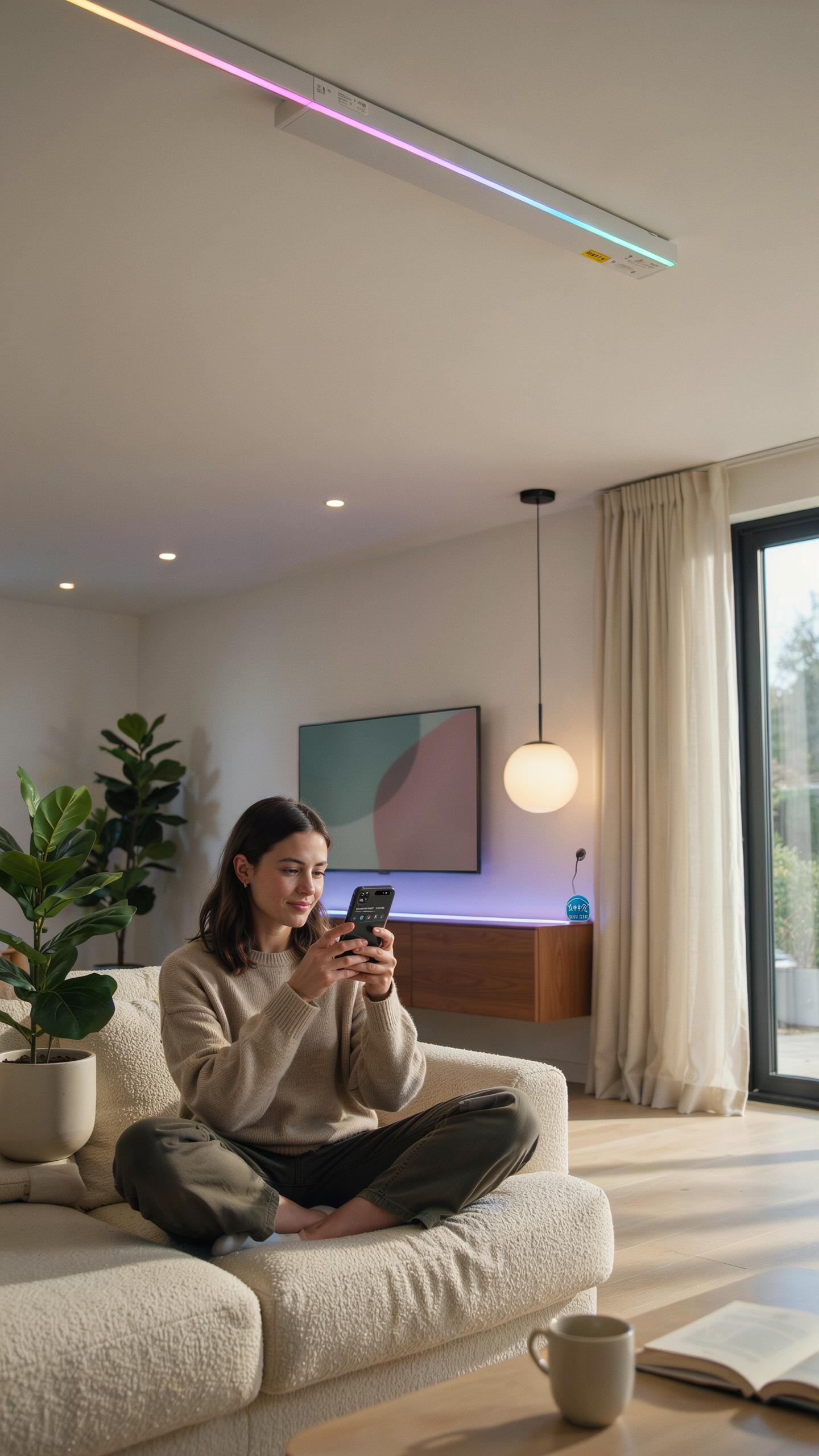
Emerging Technologies: What’S Next For Smart Illumination
Voice control integration is moving beyond basic on-off commands. Systems now respond to natural language requests for specific brightness levels and color temperatures. Manufacturers are embedding this functionality directly into fixtures rather than relying on external hubs. Response time matters for user adoption. Faster processors mean lights adjust within milliseconds of commands.
Mesh networking technology eliminates single points of failure in smart home systems. Multiple fixtures communicate with each other to relay signals across larger spaces. This approach reduces dropped connections and dead zones that plague older WiFi-dependent systems. Installation becomes simpler because fixtures don’t need direct router access. Users control larger installations from single app interfaces without lag.
Sustainable Lighting: The Environmental Impact Of Dimmable Led
LED technology consumes 75 percent less energy than incandescent bulbs at full brightness. Dimmable models amplify this advantage because reduced brightness draws proportionally less power. A fixture dimmed to 50 percent output uses roughly half the electricity. This translates to measurable reductions in household energy consumption and lower utility bills over product lifetime.
Fixture lifespan directly impacts environmental footprint. Modern dimmable LED ceiling lights operate for 25,000 to 50,000 hours before degradation. Longer operational life means fewer replacements and less electronic waste entering landfills. Manufacturing impact decreases when products function for decades rather than years. App-controlled dimming extends bulb life by preventing unnecessary maximum brightness operation during routine use.
Frequently Asked Questions

What exactly is a dimmable LED ceiling light with app control, and why should I consider one for my home?
A dimmable LED ceiling light with app control allows you to adjust brightness, color temperature, and even color directly from your smartphone or tablet. This offers unparalleled convenience and fosters a custom ambiance for any mood or activity, making it a smart upgrade for modern homes.
How do I connect my new dimmable LED ceiling light with app to my existing smart home system?
Connecting your new dimmable LED ceiling light with app typically involves downloading the manufacturer’s app, pairing the light via Bluetooth or Wi-Fi, and then integrating it with your smart home hub (like Alexa or Google Home) through their respective apps. Follow the specific instructions provided with your light for seamless setup.
Are dimmable LED ceiling lights with app control generally expensive, or are there budget-friendly options available?
While some high-end dimmable LED ceiling light with app models can be an investment, there are many budget-friendly options available that still offer excellent functionality and mood lighting capabilities. You can find quality lights at various price points, making smart lighting accessible to almost any budget.