The Illusion Of Necessity: Why Most Packing Lists Are Trash

Your Closet Is Full Of Decoys
You think you need more because admitting you don’t means confronting how much you actually wasted on clothing. The mechanism here mirrors inventory bloat in retail: stores stock items they never sell because the sunk cost fallacy makes them feel safer than bare shelves. Your luggage works the same way. You pack redundant pieces—three shirts that do the same job, backup toiletries for backups—because empty space feels like failure. It isn’t. Empty space is efficiency.
Most packing guides tell you to “lay everything out first.” That’s backwards. Start instead by naming the actual activities you’ll do: meetings, dinners, workouts, sleep. Then assign one piece to each. Not three options per activity. One. Redundancy masquerades as preparedness when it’s really just anxiety spending closet space. Strip your carry-on down to pieces that earn their spot by doing something the others can’t.
The Just In Case Trap Costs You Mobility
The “just in case” mindset treats luggage like an insurance policy instead of a tool. You pack medications you won’t use, chargers for devices you’re not bringing, outfit combinations for scenarios that won’t happen. Economics calls this optimization for tail risk—preparing for unlikely events while ignoring the cost of that preparation. Here, the cost is weight, bulk, and mental load. A week trip doesn’t require hedge betting.
The real answer: pack for what you know will happen, then add one multipurpose backup item max. One pair of shoes that works for multiple contexts. One layer that handles temperature swings. Not five contingencies. If something genuinely matters and fails, you buy it or improvise on-site. That’s cheaper than carrying dead weight for seven days.
Carry On Only Packing: The Immutable 3x3x3 Protocol For Any Trip
The Math Behind Your Wardrobe Limit
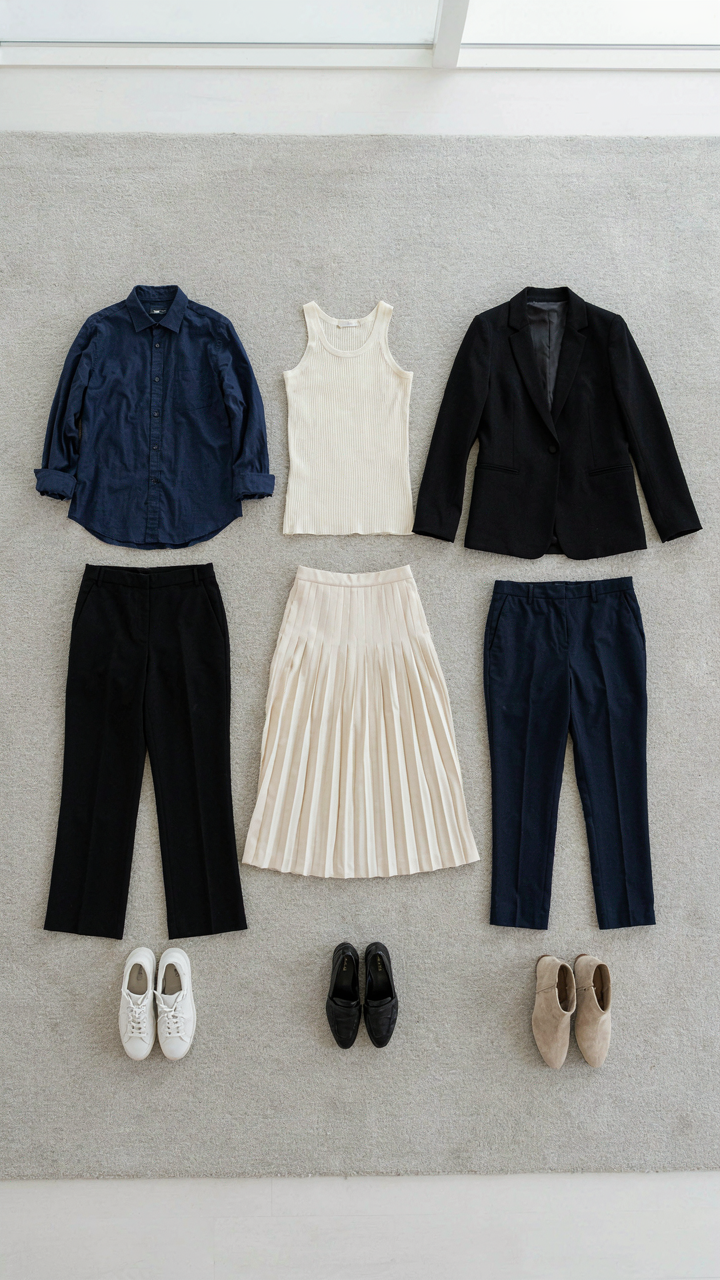
You want to look put together without dragging a bag through an airport. That’s the real reason this matters. The 3x3x3 system works because it mirrors inventory constraint thinking from retail operations: limit your SKUs, maximize your output. Three tops, three bottoms, and three shoes force you to build outfits around constraint rather than choice paralysis. You stop buying flexibility and start buying only pieces that layer across each other.
- Three Tops: One casual layer (t-shirt or sweater), one neutral base (plain shirt or long-sleeve), one statement piece (patterned or textured). Choose neutral colors for two of them.
- Three Bottoms: One dark pair (jeans or chinos), one lighter alternate (khakis or light jeans), one flexible option (shorts or joggers, depending on climate). All should be neutral.
- Three Shoes: One casual everyday shoe (sneaker or loafer), one dressier option (leather flat or boot), one climate backup (sandal or weather-appropriate secondary). Test each for comfort before packing.
- Color Alignment: Every top pairs with every bottom. Every shoe works with every outfit combination. No item should sit unused because it clashes with something else.
- Fabric Consideration: Pack materials that don’t wrinkle easily or that wrinkles won’t show on. Knits and blends perform better than pure linen in carry-on conditions without access to pressing.

The constraint is the feature, not the bug. You will wear everything. Nothing rides in your bag as insurance. This eliminates decision fatigue at 6 AM when you’re already halfway through the trip and tired of thinking about clothes.
Stacking Utility Into Every Fiber
Most carry-on advice treats outfit combinations like a math problem, but misses the actual mechanism: you’re not maximizing variety, you’re maximizing the number of distinct scenarios each piece handles. A neutral base layer doesn’t just pair with multiple bottoms, it becomes a layering tool for temperature shifts, a backup if something spills, and a workout option if needed. One piece absorbs multiple roles.
This is why color choice determines whether the system works or fails. If you pack a white top, black jeans, and brown shoes, you’ve already locked yourself into combinations that don’t feel versatile because the colors don’t create visual cohesion across different outfit pairings. Build instead around a single color family: navy, gray, and cream, paired with black and khaki bottoms, and one neutral shoe that spans the range. Every combination will look intentional because the colors speak the same language. The redundancy you feared becomes your actual freedom because each piece pulls its weight across multiple outfits without looking like you’re repeating yourself.
Deconstructing The Travel Capsule Wardrobe Women Actually Need

The Only Currency That Matters
You want a capsule to feel effortless and look intentional without overthinking it—that’s the real fear underneath. The mechanism is simple: each piece must earn its weight by working with at least three other items in the bag. One shirt that pairs with two bottoms and a jacket creates three outfits. One shirt that pairs with nothing creates bulk and regret.

Economics calls this “marginal utility”—the value you get from adding one more unit. In carry on packing, each garment’s utility multiplies or dies based on color compatibility and silhouette neutrality. A camel blazer works over a white tee and black pants. A printed blouse works with almost nothing else. The math is brutal and non-negotiable.
Fabric Selection Over Fashion
Most packing advice tells you to pick quality fabrics and leave it at that—lazy guidance that misses the actual decision tree. Synthetic blends beat natural fibers for one week trips because they compress without creasing, dry in hotel sinks, and require zero maintenance. Merino wool and linen wrinkle on contact. Polyester, nylon, and spandex blends stay flat.
Test any fabric by hand before buying it for travel. Grab a section, crumple it hard for ten seconds, then release and observe. If wrinkles vanish in under a minute, it travels. If they linger, it doesn’t. Buy a sample garment, pack it damp in a ball for two days, then check the result before committing to a full capsule built on that material.
Packing In A Carry On: Military Logistics For Civilian Travel
The Constraint Is Your Advantage
You want to feel smart about traveling light, but the real reason you’re reading this is control. Control over what happens at the gate, control over baggage claim time, control over the narrative you tell yourself about being efficient. The mechanism that makes carry on packing work is constraint-based design, borrowed directly from military supply chain optimization. In logistics, “throughput” means moving maximum output through minimum resources. Your carry on is a throughput problem: you need maximum functionality through minimum volume and weight. Military planners solved this decades ago by eliminating redundancy at the source, not by cramming smarter. The principle transfers directly. You don’t pack more efficiently by folding better. You pack by removing the items that create duplicate functions in the first place.
Start by auditing your packing list for what supply chain managers call “SKU bloat”—too many variations of the same function. Most travelers pack five shirts when two work. Three pairs of shoes when one handles the trip. This isn’t about deprivation. It’s about recognizing that each item you add creates a cascade problem: it takes volume, adds weight, increases decision fatigue at the destination, and complicates laundry logistics. The constraint forces you to choose items with higher utility density. Once you accept the carry on limit as fixed, your only lever is choosing gear that does more per ounce. This is the actual work of packing light. Execute it at the purchase phase, not at your suitcase.
The Multi Tool Principle
Redundancy elimination via gear selection means buying items that serve multiple functions, but most people get this wrong. They pack a hoodie that’s “also a pillow” or socks that “breathe and dry fast.” That’s marketing framing, not design thinking. Real multi-functionality means an item solves two genuine problems you actually have, not problems the product copy invented. A merino wool shirt handles odor management, temperature regulation across seasons, and compresses smaller than cotton. That’s functional stacking, not gimmickry. A lightweight travel pant with zip-off legs lets you move from a flight to a hiking trail to a dinner without changing entirely. Each function serves a real constraint of your trip, not a hypothetical scenario.
The mechanism here is “modal shifting”—one item performs across different contexts without compromise. Don’t pack a dedicated gym shirt if your regular wear can handle a workout. Don’t pack a separate travel towel if you can use your t-shirt. The elimination happens at design selection, not through magical packing techniques. When you reach your destination, you should own fewer pieces but each one handles multiple demands your trip actually places on you. This cuts your total volume by 30 to 40 percent without forcing you to rewear the same outfit or compromise function.
How To Pack A Carry On Bag: The Zen Of Negative Space

Compression Cube Mastery For Spatial Efficiency
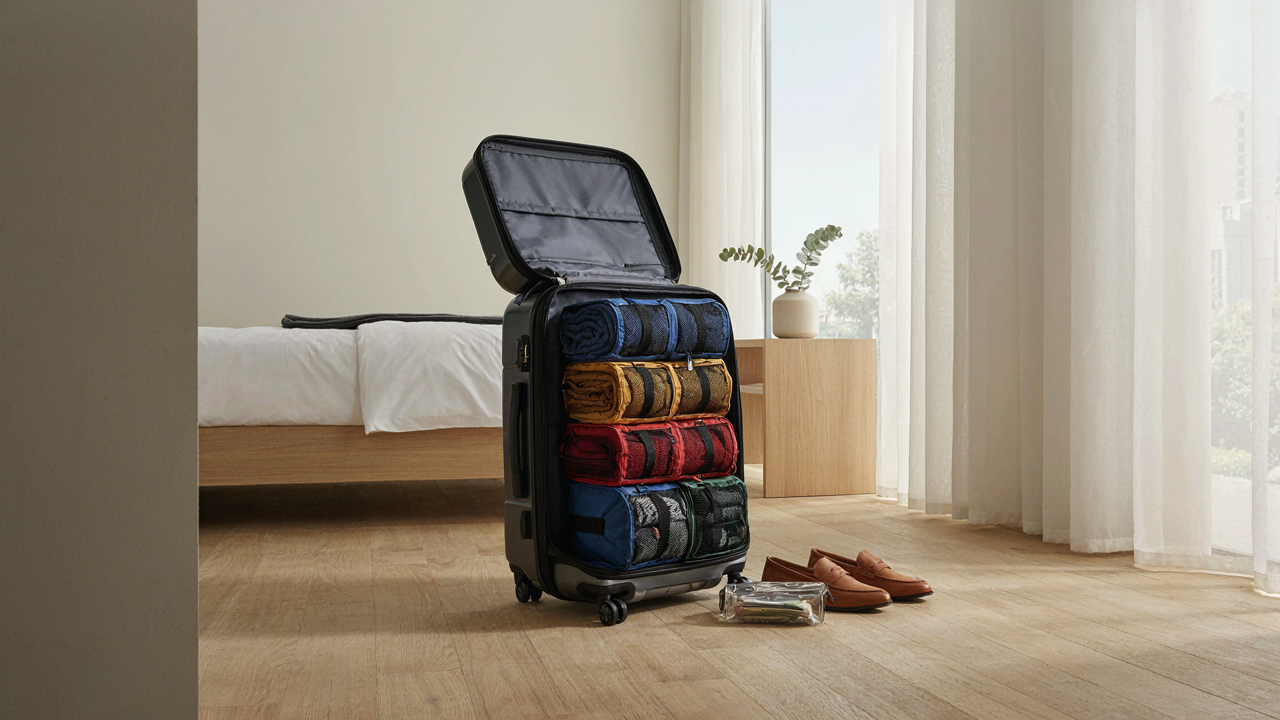
You want this to work because admitting you need a system feels like admitting you’ve wasted money on luggage in the past. The mechanism is simple: compression cubes force you to make decisions about volume before you touch your bag. Borrowed from industrial logistics, think of each cube as a “load unit”—a fixed container that determines what fits, not the other way around. Most people stuff randomly and wonder why they have empty pockets and overstuffed sections. Compression cubes eliminate that chaos by pre-defining space.

A cube works best when you assign it a category: one for tops, one for bottoms, one for undergarments. Fill each cube completely, then compress it. The vacuum seal removes air but keeps your clothes protected and stacked vertically. This approach works for a week trip because you’re not fighting against floppy fabric that shifts during transport. Each cube becomes a predictable unit you can arrange in your carry on like blocks. Stack them spine-out against the bag’s back wall and you’ve created an organized grid your brain can actually scan.
Strategic Void Filling Without Random Stuffing
The common mistake is treating empty space like a problem to solve by jamming things in. That’s backwards. Void filling is about using the gaps that exist after your main items are placed—not creating urgency to pack more. Your socks, belts, and chargers go into those pockets and corners deliberately, not because you found room. Map out where your cubes sit first. Then identify the remaining pockets and crevices. Now match items to spaces by size and shape, not by availability.
Shoes go in the bag’s bottom corners or against the exterior walls, not mixed in with clothing. Small electronics and cables fit in jacket pockets or dedicated pouches. Underwear and socks fill the gaps between cubes and the bag’s side panels. This sounds obsessive but it’s the opposite: you pack once with intention and never rearrange during the week. The result is a bag that opens predictably, nothing shifting mid-flight, and every item exactly where you put it. When your bag is organized by protocol, not luck, you move faster and carry confidence.
Eliminating Dead Weight: Packing Light For Europe And Beyond

The Toiletries Trap
You’re afraid of looking grimy in front of people who won’t remember you. That’s the real equation here. Most travelers pack toiletries using scarcity logic: they assume hotels won’t have anything, so they bring redundancy. Wrong frame. Think in terms of inventory rotation like a restaurant kitchen does. You use what you bring before it runs out, then you replace it. One week means you don’t need a full-size anything.
- Solid deodorant: Takes up 1/10th the space of liquid, lasts longer, passes TSA instantly without questions or delays at security.
- Bar soap or solid shampoo: One bar handles body and hair for a week. Hotels provide soap anyway, so use theirs and skip packing entirely.
- Travel toothpaste tablets: Weigh almost nothing, take no liquid allowance, dissolve in water. One tube lasts a week with room to spare.
- Sunscreen stick or powder: Solid forms cut weight by 70 percent compared to cream. Apply only to face and ears on a one-week trip, not full body.
- Blister pack medications: Buy individual packets of ibuprofen, antacids, or allergy meds instead of full bottles. You’ll use three tablets maximum.

The mechanism is brutal: every toiletry item you pack beyond a toothbrush and deodorant adds weight without solving a real problem. European hotels stock basics. Pharmacies sell everything else within a block. You’re not climbing Everest. Stop treating a carry on like a supply depot.
Paper Documents Meet Your Phone
Hotels, flights, and borders now run on screens. You know this. Yet travelers still print boarding passes, hotel confirmations, and insurance documents to feel safe. That sensation is the problem, not a valid reason. Your phone stores everything legally binding. Take screenshots of your passport photo page and store them encrypted in a notes app as backup. That’s it. One action replaces an entire folder.
Digital versions work everywhere that matters: airlines scan your phone directly at check in, hotels pull up reservations on their system without your printout, and European border agents don’t need paper proof of insurance. The only exception is specific visas that require physical stamps or documentation by law, which you verify before traveling, not while packing. Entertainment follows the same logic: Netflix, Kindle, podcasts, and audiobooks weigh zero ounces and require no power planning beyond one cable. Download them before your flight so airplane mode doesn’t kill access. Replace the habit of bringing books and documents with the habit of preparing your phone once.
The One Week Audit: How To Pack For A 6 Day Trip (or 10 Days)

Test Every Item Before It Enters Your Bag
You want to feel prepared without actually doing the work of knowing what works. The mechanism is simple: untested gear fails under real conditions, and real conditions are where you actually live. Wear-test means putting on every single item you plan to pack and moving through a full day. Not trying it on. Wearing it. Walking, sitting, climbing stairs, transitioning between temperature zones. You catch fit problems, chafe points, and pocket functionality that static inspection never reveals. This is why seasoned travelers pack half of what novices do—they’ve eliminated invisible failures before departure.

The wear-test also exposes emotional attachment to items that don’t earn their weight. That shirt you like in your closet? You discover it bunches under a jacket or the fabric feels wrong after eight hours. That “just in case” sweater? You realize you have three others that do the job better. Do this test at minimum three days before your trip. If something fails the wear-test, it doesn’t get packed. If it does, you pack it with confidence because you already know it works. No surprises. No regret buys at the airport.
The Utility Score Cuts Through Sentiment
Economics calls this comparative advantage—the principle that you should focus on what something does best relative to alternatives. Apply this to packing: every item gets a utility score based on how many outfits it works with and how many days you’ll actually wear it. A navy sweater that pairs with three pairs of pants over six days scores higher than a graphic tee you like but wear twice. Calculate ruthlessly. An item that works with two or fewer outfits doesn’t justify the luggage space on a one-week trip. Most people pack based on what they own, not what they need. The utility score flips this by forcing comparison against every other option competing for space.
Create a grid: one column lists each clothing item, the next lists compatible pieces you’re already packing, the third lists how many outfit combinations it enables. Items scoring under three combinations get eliminated. This isn’t about deprivation—it’s about density of function. A pair of neutral pants that works with five tops beats a specialty item you wear once. You’ll notice patterns emerge quickly. Neutral colors cluster at the top. Statement pieces cluster at the bottom. Follow the data, not your feelings about the item. When you board the plane, you’ve already committed to wearing everything you packed.
The Real Weight You’re Carrying Isn’t In Your Bag; It’s The Mental Overhead Of Needless Options
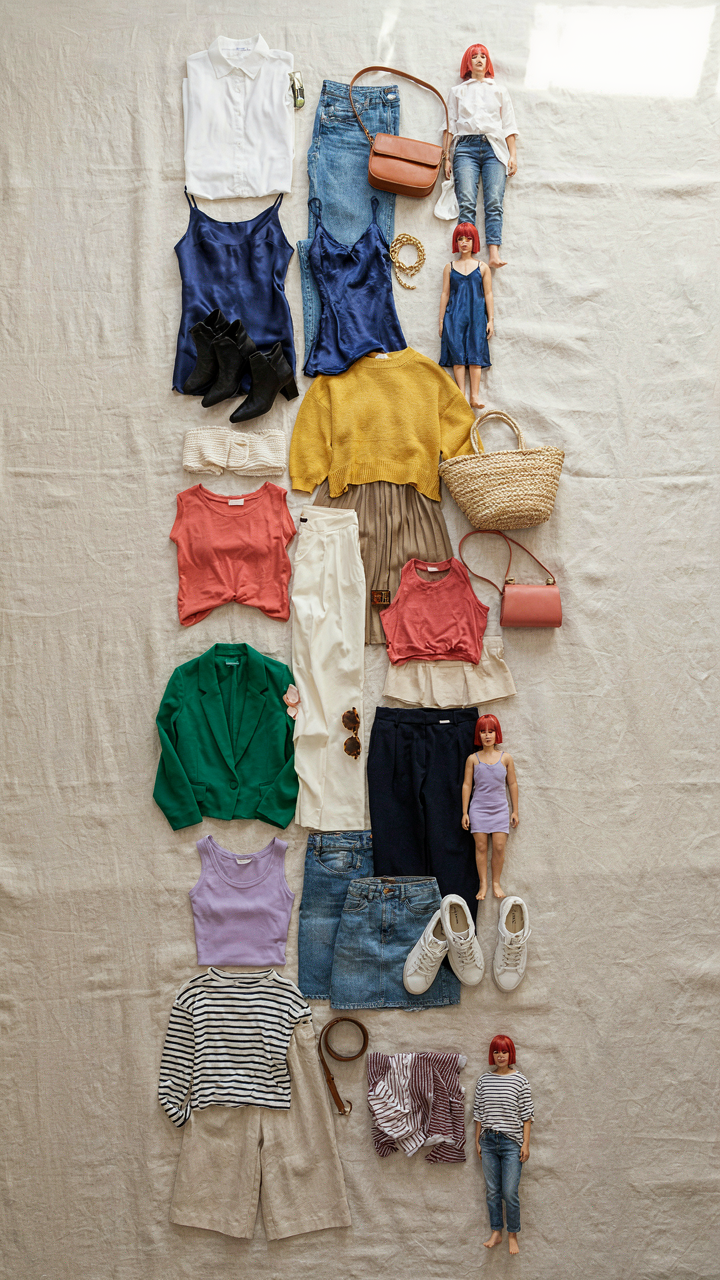
Most people pack too much because they’re afraid of making the wrong choice. You’re not. Pick seven outfits today. Just seven. Lay them out. Take a photo. You’re done deciding. Every future trip uses this as your template. Decisions made once never drain you again. The freedom isn’t in owning less stuff. It’s in refusing to think about stuff at all.