The Illusion Of Abundance: Why Wall Outlets Are Never There

Airport Design Flaws Create Deliberate Scarcity
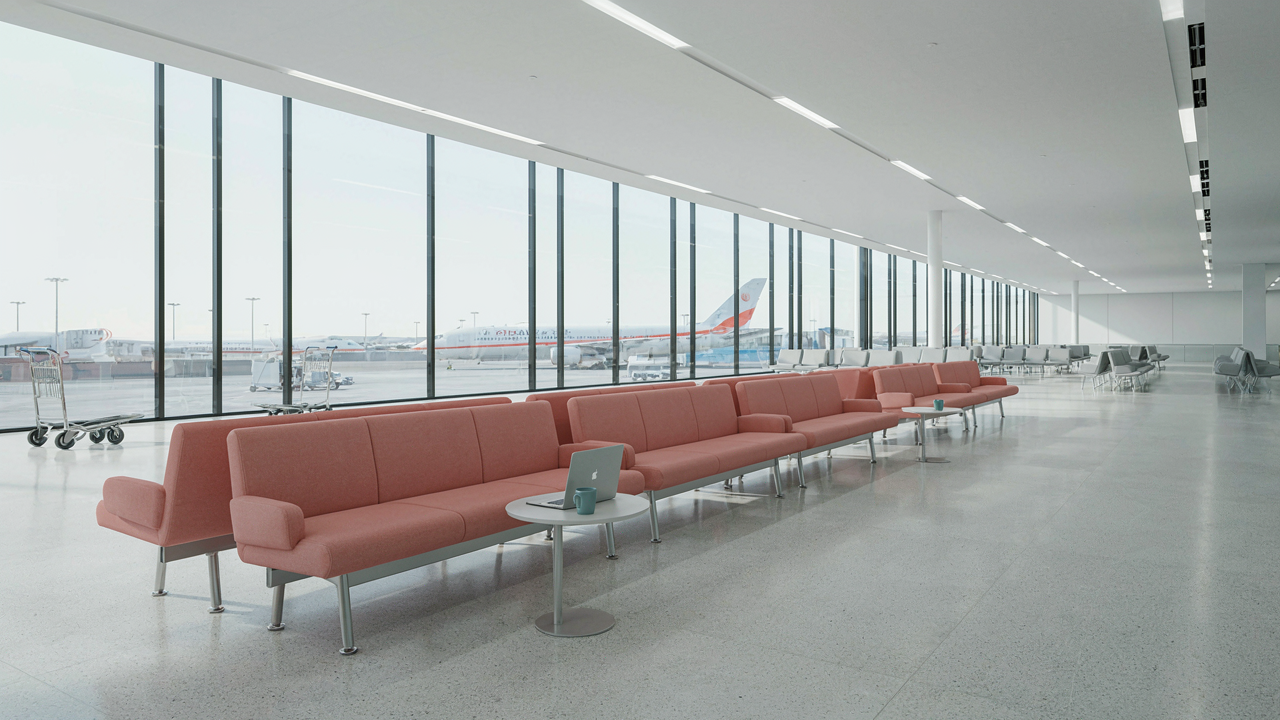
You want to believe the outlets exist but you’re just looking in the wrong spot. The truth is harder: airports engineer power scarcity into their terminals. During the mid to late 2000s, when terminals underwent major renovations, charging infrastructure was treated as afterthought infrastructure, not core design. Architects prioritized foot traffic flow and retail visibility. Electrical runs to seating areas cost money upfront with no direct revenue. Result: outlets cluster in specific zones while vast seating areas remain powerless by design.
The scarcity isn’t accidental or accidental negligence. Airports benefit from controlled power placement. It forces travelers into branded charging stations, kiosks, and retail corridors where they spend money on coffee and merchandise while waiting. When outlets are scarce, the ones that exist become real estate. Airports lease that real estate to vendors. The mechanic is pure economics: make the resource valuable by restricting supply. Every empty outlet you find near a gate is an exception, not the standard.
The Search Itself Becomes The Trap
Scarcity in economics teaches us one term: artificial demand. At airports, the hunt for outlets manufactures artificial urgency around charging. You accept a worse seat to be near an outlet. You move gates three times. You camp in a corridor. The airport didn’t need to add outlets because the scarcity itself drives behavior they wanted anyway, keeping you in controlled zones longer and closer to revenue streams.
This psychological mechanism works because you’re already in a state of constraint. You’re traveling, time-pressured, and your device battery is dropping. The desperation amplifies the value of any outlet you find. Airports understand this and exploit it. Stop searching randomly. Instead, identify the exact zones where outlets cluster (usually near restaurants, business centers, or airline lounges) before you land. Move directly there. The trap closes only if you waste time wandering.
The Portable Charger: Your Only True Power Play

Capacity Metrics And Real Charge Cycles
You want a portable charger because you’re afraid of that moment when your phone dies mid-flight and you look helpless. Here’s the mechanism: capacity ratings are marketing theater. A 20,000 mAh battery doesn’t give your phone 20,000 mAh of usable power. Conversion losses from the battery’s voltage regulation consume 15 to 30 percent. A modern phone needs roughly 10 to 15 watt-hours per full charge. Multiply that by how many devices you’re charging to find the real capacity you need, not the advertised number.

The term “charge cycle” from battery physics tells you something airports won’t: one cycle equals a full discharge from 100 to zero. Most portable chargers survive 300 to 500 cycles before capacity degrades. You’re not hitting cycle limits in two weeks. The real cost happens if you buy a charger rated for phones only, then plug in a laptop and watch it shut down mid-charge. Buy capacity that exceeds your worst-case scenario by 40 percent, not your average scenario by 10 percent.
Beyond Phones: Laptops, Tablets, Accessories
Conventional advice says bring a charger for your phone and call it solved. That’s incomplete. Your laptop needs 45 to 100 watts depending on the model. Most portable chargers max out at 25 to 65 watts. A charger that claims “laptop support” often means it tops up a MacBook Air, not a 15-inch Pro. Check your laptop’s wattage requirement first. Then find a portable charger that exceeds it by 20 percent, because charging slows when batteries near full capacity.
Tablets and wireless earbuds add invisible power drain to your mental math. A tablet can consume 20 to 40 watts. Earbuds consume minimal power individually but fully draining multiple charging cases compounds fast. Buy a charger with at least two USB-C ports and one USB-A port to charge devices simultaneously without negotiating which device gets priority. Simultaneous charging drops overall wattage per device, but it beats dead time waiting for one device to finish before starting the next.
The USB Charging Station Deception: Public Traps

When Free Charging Isn’t Actually Free
You’re worried about data theft because you’ve heard the term “juice jacking” and now you’re afraid every port is a trap. The mechanism is simpler than the fear. USB ports transmit data and power on the same physical connector. A malicious device can intercept that data stream during charging. But here’s what matters: most airports use dumb chargers—hardware with no processing capability. They push power, nothing else. Real data theft requires both a compromised device and user-level vulnerability on your phone.

The actual risk lives in a narrow band. Your phone must have USB debugging enabled, security settings disabled, or outdated software with known exploits. Most travelers don’t meet these conditions. Airport operators have shifted toward USB-C power delivery and Lightning cables specifically to avoid the data layer entirely. If an airport still runs older USB-A ports, they’re typically installed by vendors focused on liability reduction, not data harvesting. Use a data blocker if paranoia helps you sleep, but recognize this is security theater for 99 percent of users.
The Slow Charge Trap Nobody Mentions
Airport power delivery operates on voltage regulation principles identical to electrical engineering. Think of it like water pressure: you need sufficient force to move volume. Most airport outlets and USB ports deliver standard 5V at 1-2 amps. That’s 5-10 watts of power. Your phone’s charger at home likely outputs 18-30 watts. The math is brutal: a phone requiring 4,000 mAh to full charge gets roughly 50 percent of the speed it’s designed for. You’re not charging slower because outlets are weak. You’re charging slower because airports deliberately install underpowered hardware to reduce electrical load and infrastructure costs.
Terminals won’t upgrade this because demand management is their priority. A single gate-area outlet serving 200 travelers burns differently at 5 watts per device versus 25 watts. The charging station “deception” isn’t malice—it’s engineering constraint disguised as public service. Most airports install chargers to say they have them, not to move meaningful power. If your phone isn’t at critical low battery, charging at an airport is time wasted. Bring your own wall outlet adapter and locate a gate-area power outlet where you can occupy a seat for 20 minutes rather than standing at a charging station pretending 15 percent gained is progress.
The Charging Commandment: Always Carry A Power Brick

Pack Light, Power Heavy
You want to look like you travel constantly without the burden of looking like you’re preparing for war. The real mechanism is economics: a power brick costs thirty dollars and solves the entire problem of outlet scarcity. Most travelers skip this because they assume airport outlets exist in sufficient quantity. They don’t. A single USB-C power brick with fast charging output eliminates your dependence on finding a wall outlet at all.

The power brick strategy works because it inverts the scarcity problem. Instead of hunting for outlets, you hunt for a seat. Any seat becomes viable charging real estate if your device charges in ninety minutes instead of three hours. Choose a brick rated for at least 65 watts if you own a laptop. For phone and tablet only, 30 watts suffices. Weight under four ounces means you notice it zero times during travel.
The Protocol For Shared Space
Common airport charging advice tells you to find an outlet and camp there. That’s wrong. You create friction and signal to other travelers that you’re hoarding. The real rule mirrors territorial biology: occupy space proportional to your needs, not your anxiety. Charge your device to eighty percent, then move.
This isn’t politeness doctrine, it’s operational. An eighty percent charge carries you through most airport scenarios and off the plane with battery remaining. You free the outlet for someone who genuinely needs a full charge. Bring your brick to a seat away from the outlet clusters. Charge from your lap. You maintain dignity, avoid confrontation, and keep your device powered without creating the visual of someone locked to a wall socket for three hours.
The “Scarcity Economics” Protocol For Phone Charging
When Demand Exceeds Supply
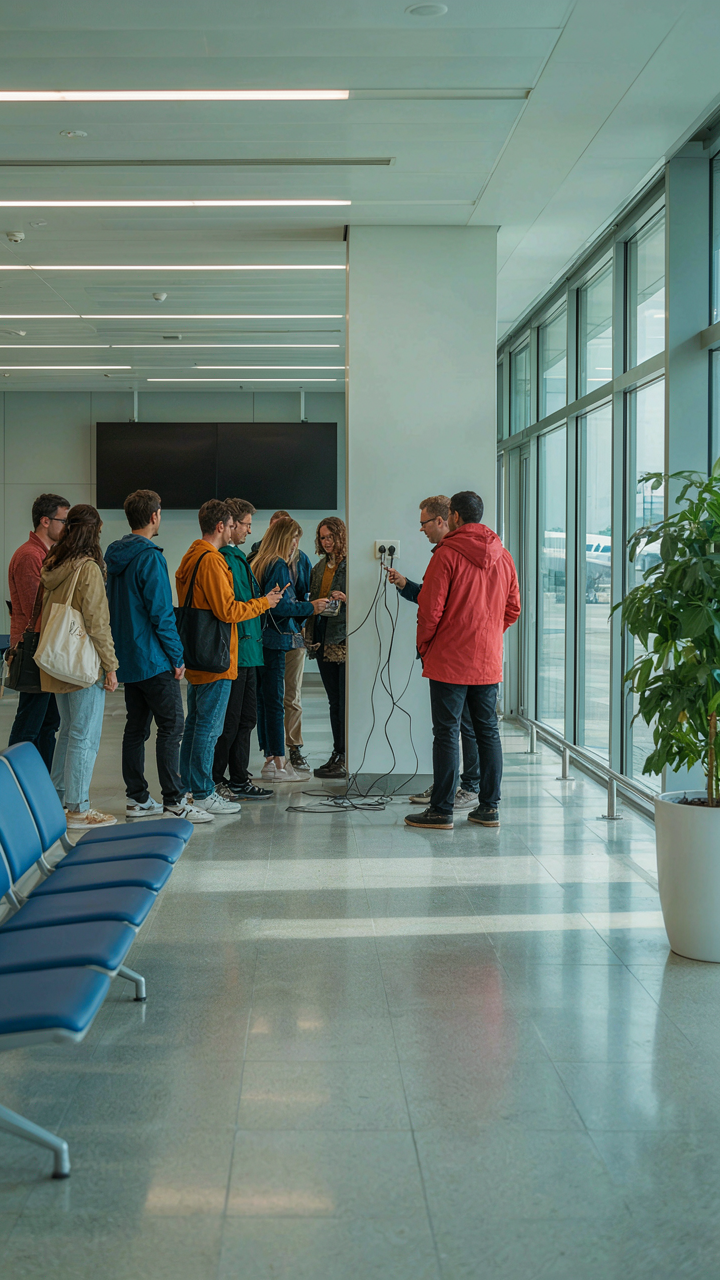
You want a charging outlet because you’re terrified of a dead phone, not because you’re curious about electrical infrastructure. That fear is rational. But here’s what most people miss: airports function under strict scarcity economics. Outlets are fixed assets. Travelers multiply during peak hours. The gap between supply and demand doesn’t close—it widens. This gap creates competition that blinds people to better strategies than hunting for the last available plug.

Scarcity economics teaches us one principle: when a resource becomes rare, its perceived value rises faster than its actual utility. An outlet at 6 AM has the same charging capacity as an outlet at 3 PM. The only difference is desperation. Your brain treats the 3 PM outlet as more valuable because everyone else wants it. This misreading costs you time. Most travelers waste thirty to forty minutes searching for outlets when alternative charging methods exist that require zero competition.
The Hidden Cost Of Hunting
Opportunity cost is the mechanism everyone ignores when they circle a gate area looking for outlets. Every minute spent searching is a minute not spent on work, rest, or movement toward your gate. Airport terminals are architecturally designed to funnel you toward retail and food vendors, not toward charging stations. This is intentional. When you spend mental energy finding an outlet, you’re not evaluating whether you actually need a full charge right now.
The real decision isn’t “find an outlet.” It’s “what happens if I board with 30 percent battery instead of 100 percent?” Most short flights don’t require full charge. Medium flights do. Long flights might. You make this calculation once at the beginning of your airport visit, not repeatedly as you hunt. Once you know your actual need, you either charge strategically during low-traffic windows or you accept partial charge and move on. The moment you choose hunting over calculation, you’ve already lost.
Best Locations For Charging Stations: The Strategic Hunt

Gate Proximity Versus Secluded Corners
You want the outlet near your gate because you’re afraid of missing your flight, but that fear locks you into the worst real estate in the airport. Think like a real estate market: high-demand zones command premium prices in the form of competition, noise, and zero availability. Gates are theaters of constant turnover. Everyone converges there in the final hour before boarding, which means every outlet is occupied by someone who will abandon it the moment they board. You’re not hunting for outlets near gates. You’re hunting for the lag zone.

The mechanism is simple: airports compress passenger flow into gates, but they spread infrastructure evenly across the terminal. The outlets in hallways connecting lesser-used concourses, near restrooms, or in the scattered seating areas between food courts have the same power as the ones at the gate, but the demand is fractional. Scope the terminal map on your phone immediately after landing. Find a seating cluster three to five minutes from your gate. Sit there. Charge. Move to your gate fifteen minutes before boarding. You’ll board with a full battery while gate-camp people are still arguing over the one working outlet.
Restaurant Bars, Airline Lounges, And Hidden Spots
Bars inside restaurants have more outlets than you think, and they’re designed for people who sit for thirty minutes or longer. Most travelers don’t think to look because they’re trained to hunt public seating. The real advantage isn’t the outlet count. It’s the duration people spend there. A person ordering food sits for twenty to forty minutes. A person at a gate sits for five.
- Airport restaurant bars: Outlets are installed along the bar counter and under tables to accommodate laptop workers and diners. Staff doesn’t police charging time like gate agents do.
- Airline lounges: Access is gated behind status or a ticket purchase, which means half the crowd is filtered out. Lounge charging stations are abundant and rarely congested during off-peak hours.
- Airport bookstores and retail shops: These spaces have cashier stations and stockroom areas with accessible outlets. Staff is trained to allow charging if you’re a customer or nearby.
- Family bathrooms and accessible restrooms: Single-occupancy restrooms often have outlets installed for accessibility equipment. Check the wall behind the door or near the sink before using the space.
- Airport hotel business centers: Open to the public, these rooms house multiple workstations with dedicated power. Hotels allow non-guests to use them if you ask management directly.
- Quiet gate areas in low-traffic concourses: Research your airport’s layout before arrival. Identify gates used for regional or early-morning flights. These zones are ghost towns during peak hours.
The move is to charge while you’re already paying for something or while you’re occupying a space for a legitimate reason. Never charge in a public hallway and expect it to work. Airports staff these areas specifically to prevent long-term occupation. Use charging as a secondary benefit to sitting somewhere you’d sit anyway.
How To Use Public Charging Stations: The Risk Mitigation Playbook

The USB Condom Defense
You want to charge without admitting your data matters enough to protect. Here’s the mechanism: public USB ports are dumb endpoints. They don’t distinguish between power lines and data lines unless something blocks the handshake. A USB data blocker, also called a USB condom, physically interrupts the data pins while allowing power to flow. It’s a passive device—no batteries, no software, no failure points except physical damage.

This isn’t security theater. Juice jacking attacks require active interception hardware on the port side. A data blocker makes that attack pointless because the device never receives the signal. Buy blockers from known manufacturers and inspect them before use. Carry two or three. They cost under five dollars each and weigh nothing. Use them on every public port, airport or not.
Situational Awareness At The Outlet
Military strategy calls this “control of the perimeter”—you own what happens in your immediate space. At an airport charging station, your perimeter is the outlet itself and what you can see while charging. Sit with the outlet or station in your direct line of sight. Never charge a device and walk away. Never leave a phone plugged in unattended while you use a bathroom or grab food.
Position yourself so you see who approaches your device and your cable. Theft of phones at charging stations is common because devices sit vulnerable and cables get cut. Use a short cable whenever possible. Wrap excess cable around your leg or bag. Charge only what you need to full, then unplug and move. This reduces dwell time and exposure window.
Finding Phone Charging Stations: Beyond The Obvious

Check The Airport Map First
You want to feel like you have a plan so you don’t look lost or unprepared in front of strangers. The real mechanism is information asymmetry: most travelers never consult the physical map or ask staff because it feels inefficient compared to wandering. Airport maps posted near entrances and security checkpoints show charging locations the airport operator actually maintains. Information desks staff know which outlets function and which terminals have recent upgrades. This eliminates guesswork and dead zones where you’d waste fifteen minutes hunting outlets that don’t exist.

Call the airport’s main line before arriving or pull up their website terminal map. Most major airports publish charging station locations by gate area and terminal section. Staff can tell you which zones have the highest outlet density and which areas renovated recently. This single step cuts your search time by two-thirds because you arrive with coordinates, not hope.
Airline Kiosks And Perimeter Zones
Most charging advice tells you to camp near restaurants and shops where outlets cluster. That’s partially true but incomplete. Apply scarcity economics here: high-traffic zones mean competition for limited outlets. Airline ticket counters, employee break rooms visible through service corridors, and gate areas near less popular routes all have charging infrastructure most travelers never find. Airlines install outlets for staff operations, not passenger comfort, which means they remain underutilized during off-peak hours.
Walk the perimeter hallways and check gate seating areas for routes departing in three hours or more. Those gates sit nearly empty while popular departure gates stay packed. The outlet is identical to the crowded zone, but you face zero competition. Board your flight fully charged while others stand in line for a single available plug near Hudson News.
Travel Tips: The Power Independence Mindset

The Pre Flight Charge Protocol
You want to feel in control before you board, which is why you’re reading this. The real mechanism is simple: airports exploit a predictable human behavior pattern. Most travelers charge their devices at the gate, within two hours of departure. You beat this by charging during layovers, at off-peak hours, or before you even enter the terminal. The math is brutal. If you arrive three hours early and charge immediately upon entry, you secure a socket when demand is lowest and you’re guaranteed a full battery before boarding. Most people wait until anxiety kicks in. Don’t be most people.

The protocol: arrive, find a charging station in a low-traffic zone, plug in while you eat or work, and leave with a full device. Terminal restaurants and lounges have outlets that sit empty most hours. Shops near gates rarely fill to capacity until thirty minutes before departure. Charge in these windows, not during the rush. You control your power state by controlling the timing, not by hunting for outlets like everyone else does.
Backup Power Without The Backup Plan Illusion
The common advice here is garbage: bring a power bank, problem solved. That’s incomplete thinking. A power bank is useful only if you’ve charged it beforehand, which most people forget. Economics teaches us about diminishing returns and resource allocation. Your backup power source has diminishing returns if you haven’t built redundancy into your redundancy. One power bank dies or runs empty. Now you’re back to zero. The real system requires layered contingencies.
Carry two independent power sources: a power bank with 20,000mAh capacity minimum and a second smaller bank with 5,000mAh. Charge both before departure. Pack a multi-port USB-C cable in your carry-on. At the airport, charge your phone from one bank, then swap to the other if the first depletes. Never rely on finding an outlet during your layover. The outlet is a bonus, not the plan. Your independence comes from assuming the outlet doesn’t exist and building your system anyway.
The Real Scarcity Isn’t Outlets, It’s Your Foresight. The System Isn’t Broken, Your Preparation Is

You’re fighting for outlets because everyone else waited until boarding time to panic. They didn’t pack a portable charger. They didn’t charge the night before. They didn’t map the airport layout. You can’t control the outlet shortage, but you control whether you show up prepared. Buy a high-capacity power bank today, charge it at home before you travel, and never compete for an outlet again. Desperation is a choice.