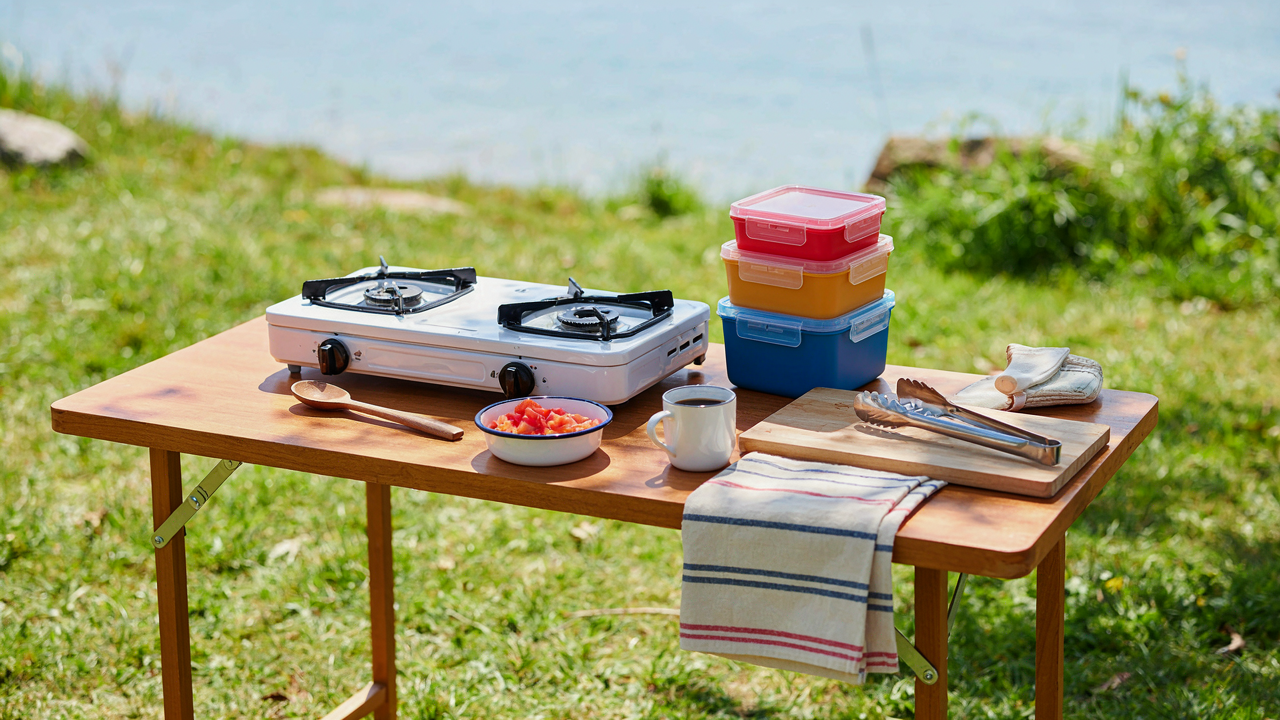
The Minimalist Camp Kitchen Manifesto: Less Is The Only Leverage

Distinguish Needs From The Gear Catalog
You want the setup to look intentional because you’re afraid a sparse kitchen signals incompetence. Here’s the mechanism: every item you bring trades against weight, space, and decision fatigue. Cook the meals you actually eat, not the meals you imagine eating. Most campers pack for a fantasy version of themselves.
Identify what you’ll prepare in the first 48 hours. Write it down. Then write down every tool that touches those meals. Boiling water, frying protein, holding food. That’s your baseline. Everything else is negotiation you’ll lose when you’re tired and hungry.
One Tool, Multiple Jobs
Economics calls this resource stacking. Load each piece of gear with as many functions as it can handle without breaking function. A wide-mouth pot becomes your cookware and your water carrier. A cutting board becomes prep surface and serving platform. A cast iron skillet becomes frying pan, oven, and heat distributor for warming.
The tension point: specialized tools work better at one job. Accept this. A dedicated griddle outperforms a skillet at pancakes. But you’re not optimizing for perfection. You’re optimizing for moving through meals without hauling a trailer. Choose tools that do three things adequately rather than one thing perfectly.
The “Chuck Box” Fallacy: Why Dedicated Storage Often Fails
Specialization Kills Flexibility
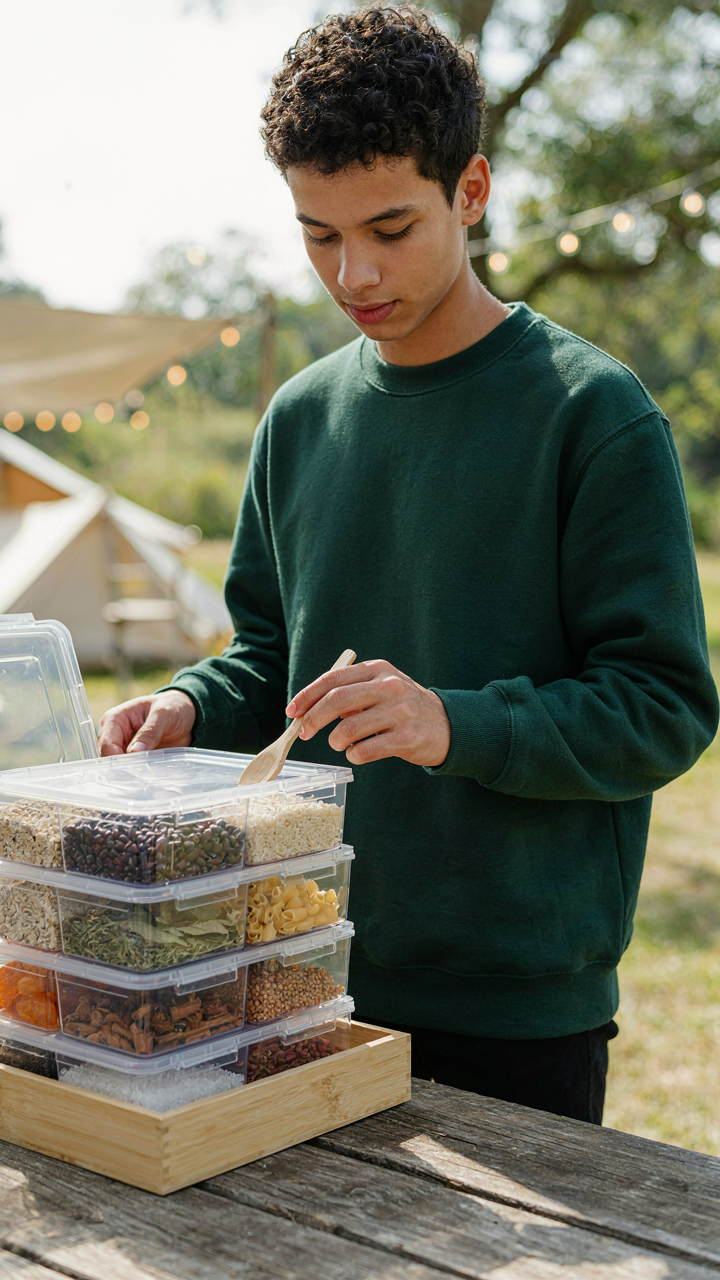
You want a system that makes you feel organized because chaos feels like failure. Here’s the mechanism: dedicated storage boxes optimize for one meal type or cooking method, which means you’re locked into that assumption every time you pack. A chuck box designed for breakfast cooking won’t adapt when you need to make dinner. A utensil organizer designed for cast iron won’t fit your griddle. The more compartments you add, the more your system demands you follow its logic instead of your actual needs.
Most camp kitchens fail because they treat storage like a puzzle that gets solved once. You build a box, fill it, and then friction compounds every time conditions change. Weather shifts. Group size changes. Your cooking priorities shift mid-trip. The box stays rigid. You end up either repacking it constantly or just grabbing what you need and leaving the whole system behind. That’s wasted investment in both money and setup time.
The Real Cost Of Static Systems
People don’t talk about the labor hidden inside pre-built systems. Every specialized container requires you to remember what goes where, to pack around its constraints, and to unpack the whole thing to find one item. That’s not efficiency. That’s friction disguised as organization. A Dutch oven doesn’t fit in a tall narrow box. Your fuel canisters don’t pack neatly around your spice jars. So you either buy multiple boxes or you compromise the box design, which defeats the purpose.
The mechanism is simple: static systems save setup time once, then cost you time every single trip after that. You’re paying a recurring penalty for a one-time gain. Better approach: use modular containers with clear visibility, group by function not by meal type, and leave empty space for adaptation. Keep your chuck box under 60 percent capacity so you can rearrange when needed without repacking everything.
The Expeditionary Kitchen Set Up: Design For Dynamic Environments
Build Around Constraints, Not Comfort
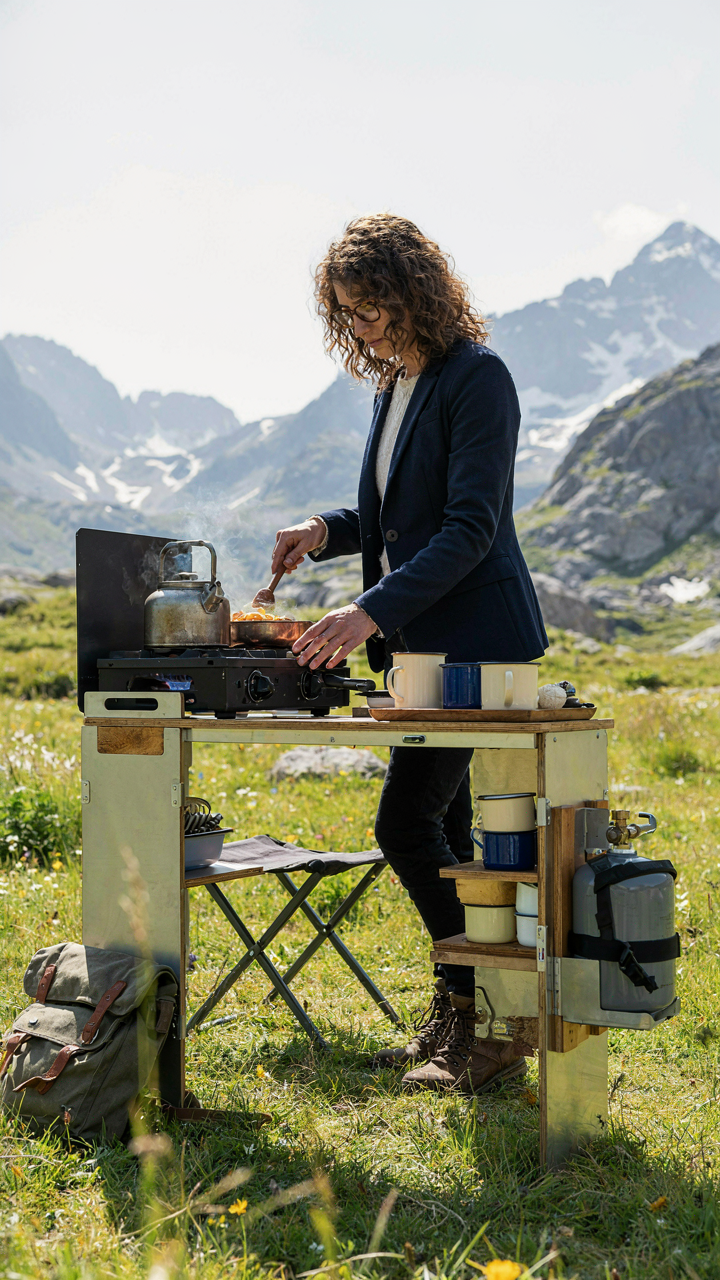
You want a camp kitchen that makes you look organized and competent. The real mechanism is this: military logistics borrowed the modular component approach because constraints force efficiency. In field kitchens, nothing gets packed unless it serves multiple functions or stacks into something else. Your setup succeeds by treating every container, tool, and surface as a building block that connects to the next one, not as standalone gear you haul because it seemed useful.
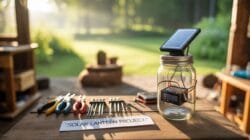
The modular frame starts with a base unit, not a collection of items. Think of it as a container that holds your stove, fuel, and work surface in fixed positions relative to each other. Everything else attaches or nests into that frame. This isn’t about buying matching gear or fancy organization systems. It’s about designing a structure where each component has a specific vertical and horizontal position, and removing one piece destabilizes nothing because nothing depends on it alone.
Reach For What You Need, Not What You Packed
You organize a camp kitchen to feel prepared. The real pressure is managing cognitive load under fatigue and hunger. The go-bag principle from field medicine applies here: items you need in the first five minutes of cooking stay in the outermost tier, accessible without moving anything else. Your most-used tools, salt, and quick-start fuel occupy the top layer or front pocket. Everything else lives behind or below in order of frequency of use.
Accessibility kills the friction that makes camp cooking feel harder than it is. You don’t dig through seven containers to find your knife. You don’t hunt for matches because they’re buried under your backup fuel. Set up one zone for immediate cooking needs and one zone for ingredients and backups. When you cook, you should move your arm to reach something, not your whole body or your entire setup.
Deconstructing The Family Camping Kitchen: Size Doesn’t Justify Waste
The Constraint That Fixes Everything
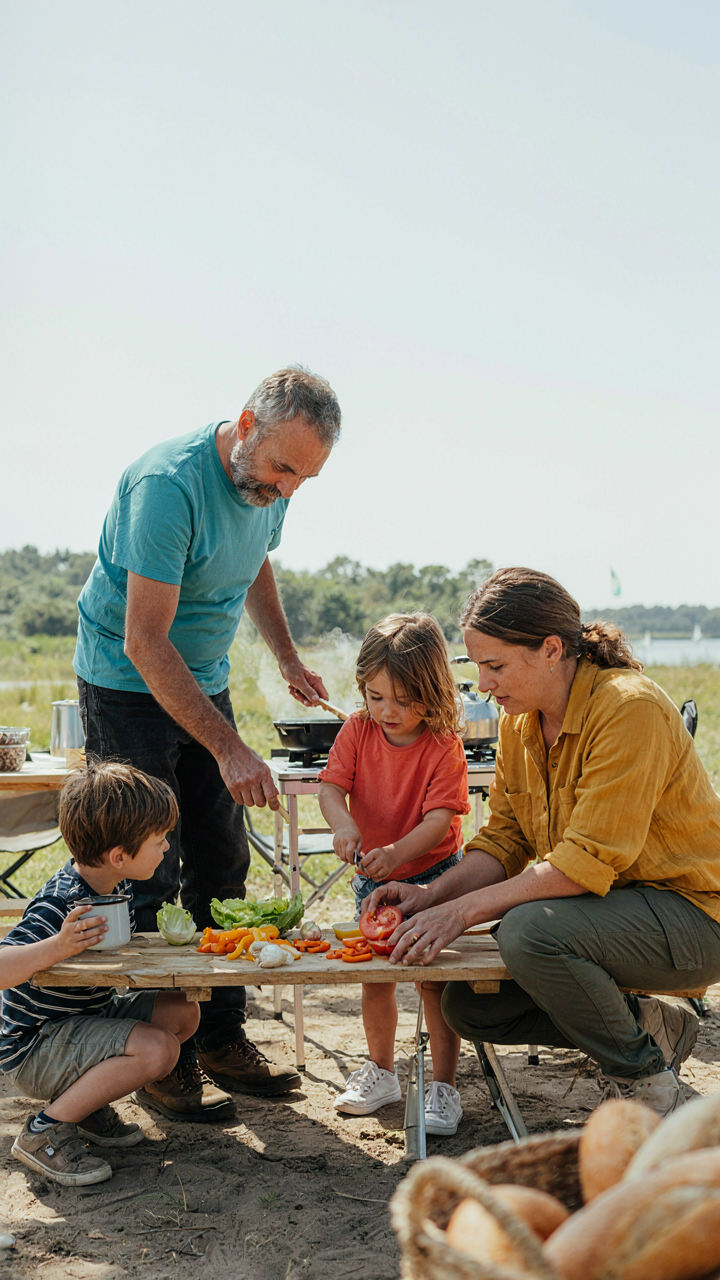
You think more people means you need more equipment. You don’t. The real issue is you’re afraid of looking unprepared, so you overpack to cover every scenario nobody will face. Here’s the mechanism: constraint forces efficiency. In systems design, constraints are the boundaries that prevent waste. A small camp kitchen with one cutting board and one pan per person forces you to batch tasks, clean as you go, and stop pretending you’ll cook three separate meals. The family that camps with half the gear actually eats better because someone has to think about sequence instead of just grabbing another tool.
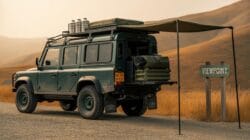
Scaling down means choosing one cooking method and building around it. A two-burner stove with a grill grate handles ninety percent of camp meals. Add a Dutch oven for bread or stews. That’s the full toolkit. Multiple griddles, camp ovens, and backup cookers sit unused because they solve problems that don’t exist. The families eating the best camp food I’ve seen use one primary heat source and adapt recipes to fit it, not the reverse. This isn’t deprivation. It’s precision.
Who Does What, And Why It Matters
Delegation in a camp kitchen isn’t about fairness or taking turns. It’s about reducing decision fatigue and preventing the bottleneck where one person becomes the default cook. Divide by task type, not by person. One person preps and cuts. One person manages heat and timing. One person cleans and maintains water supply. One person stores and inventories food. When these roles don’t shift every meal, people develop competence fast and stop duplicating effort.
The shared utility model works because it kills the illusion of choice. If the cutting board is communal and there’s only one, people use it efficiently and pass it on. If everyone has their own knife and cutting surface, you’ve created storage problems and confusion during service. Camp kitchens fail when they’re designed for independence instead of flow. Assign stations before the trip, not during setup. Walk through one meal prep together on day one. After that, the system runs itself because the structure does the thinking.
The Entropy Reversal Protocol For Outdoor Camping Kitchen
Prep Work Stops Chaos Before It Starts
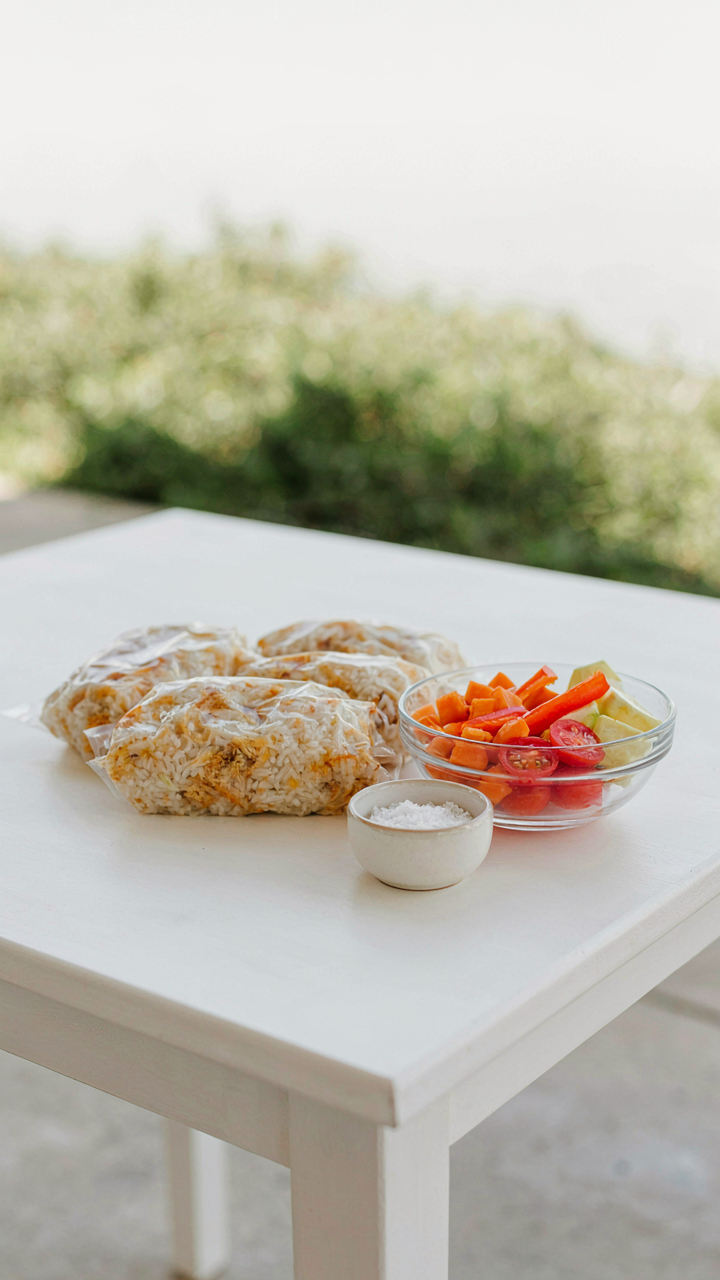
You want this section to work because you’re tired of standing at a camp stove at dusk, hungry, improvising. The real mechanism is this: entropy in a camp kitchen compounds faster than at home because you have fewer resources and no muscle memory for the space. Pre-computation stops that spiral. You freeze time by deciding meals before you arrive, then preparing components at home that only need assembly or heat on-site.
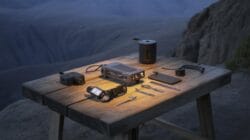
This isn’t meal prep marketing. It’s supply chain logic applied to food. You eliminate decision fatigue, reduce cooking time by 60 percent, and cut waste because you bring exactly what you need. Most camping advice says “plan ahead.” That’s useless. Here’s what actually works.
- Protein parcels: Cook chicken or ground beef at home, cool, portion into vacuum-sealed bags. Thaw overnight or cook straight from frozen over coals. Cuts prep time from 30 minutes to 5.
- Grain batches: Make rice or quinoa at home, store in airtight containers. Reheat in a covered pot with a splash of water. No guessing on cooking times at altitude or over open flame.
- Chopped vegetables in brine: Dice onions, peppers, garlic at home and store in small jars with vinegar or oil. They last five days and arrive ready to throw into any dish without a cutting board.
- Sauce bases: Prepare tomato sauce, pesto, or curry paste at home in squeeze bottles. Cook at full intensity in your kitchen, then deploy instantly. Flavor doesn’t degrade in transit.
- Dry ingredient kits: Combine flour, spices, and baking powder for specific dishes in labeled bags. Mix with water or oil on-site. Removes the cognitive load of remembering ratios.
The payoff is mechanical. You arrive at camp and execute, not experiment. Every meal takes 15 to 20 minutes from decision to plate. That’s the gap between camping feeling like a chore and feeling like control.
The Mise En Place Discipline
Mise en place isn’t a prep philosophy. It’s a workflow protocol that kills the scramble. The term comes from restaurant kitchens because restaurants would collapse without it. Every ingredient, tool, and station sits in its exact spot before service starts. You apply this to camp by building identical zones before you cook any meal, then treating them as fixed.
Your cutting zone has a board, knife, and small trash container. Your cooking zone has pots, spoons, and heat source in arm’s reach. Your plating zone holds plates, utensils, and any garnish or condiment. Between meals, you reset each zone to its baseline state, not leave it scattered. This isn’t obsessive. It’s the only way to cook fast over a fire or camp stove without burning things or forgetting ingredients halfway through. Doing mise en place takes five minutes. Doing it wrong costs you fifteen.
DIY Camp Kitchen Ideas: Engineered Simplicity Outperforms Off The Shelf
Where Real Friction Lives
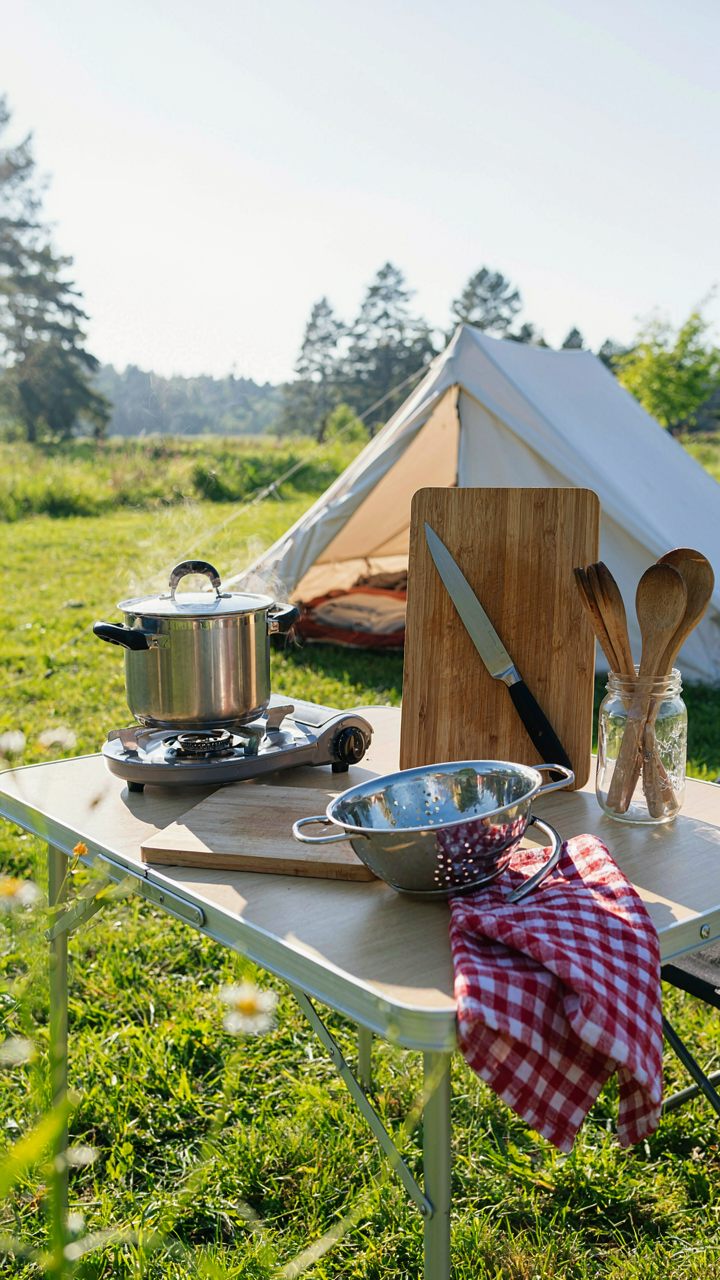
You want to feel like you have your setup dialed in without spending three months researching gear that promises to solve problems you haven’t faced yet. Here’s the mechanism: off-the-shelf camp kitchens fail because they solve for the average camper, and you’re not average. Borrow from systems engineering—identify the constraint first. Your constraint is space, fuel type, weather exposure, or cooking style. Build around that one thing. Everything else gets cut. A premade system tries to handle all four at once, which means it handles none well.
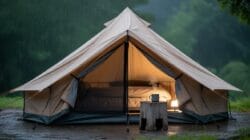
Most people buy a compact camp stove setup, use it twice, then realize the burner height doesn’t match their pots, or the wind protection blocks heat. They wasted money on a solution that created new problems. Instead, audit your actual trips. What do you cook? How long does it take? What fails every time? Build your kitchen to answer those three questions, not to look complete in a catalog. Start with the single constraint that kills your meals most often.
Build From What You Already Own
The container you already have sitting in your garage beats the specialized container you don’t. Stainless steel mixing bowls nest better than marketed “camp bowls” and cost nothing if you own them. Aluminum sheet pans fit standard coolers and serve as cutting boards, grease traps, and wind breaks. Your cast iron skillet works better at camp than at home because heat distribution matters more when fuel is limited. Don’t buy camp-branded versions of things that already work.
Inventory your kitchen now. Grab three things you use weekly and test them outside. If they work, they’re part of your camp kitchen. This saves money and eliminates the decision fatigue that leads to duplicate gear. Stack containers inside each other to save space. Use what you have until it fails, then replace it with the specific tool that solves that failure. This approach builds a kitchen that actually matches how you cook.
The “First Principles” Camp Kitchen: Beyond The Obvious Utensils
Fuel Efficiency Beats Cookware
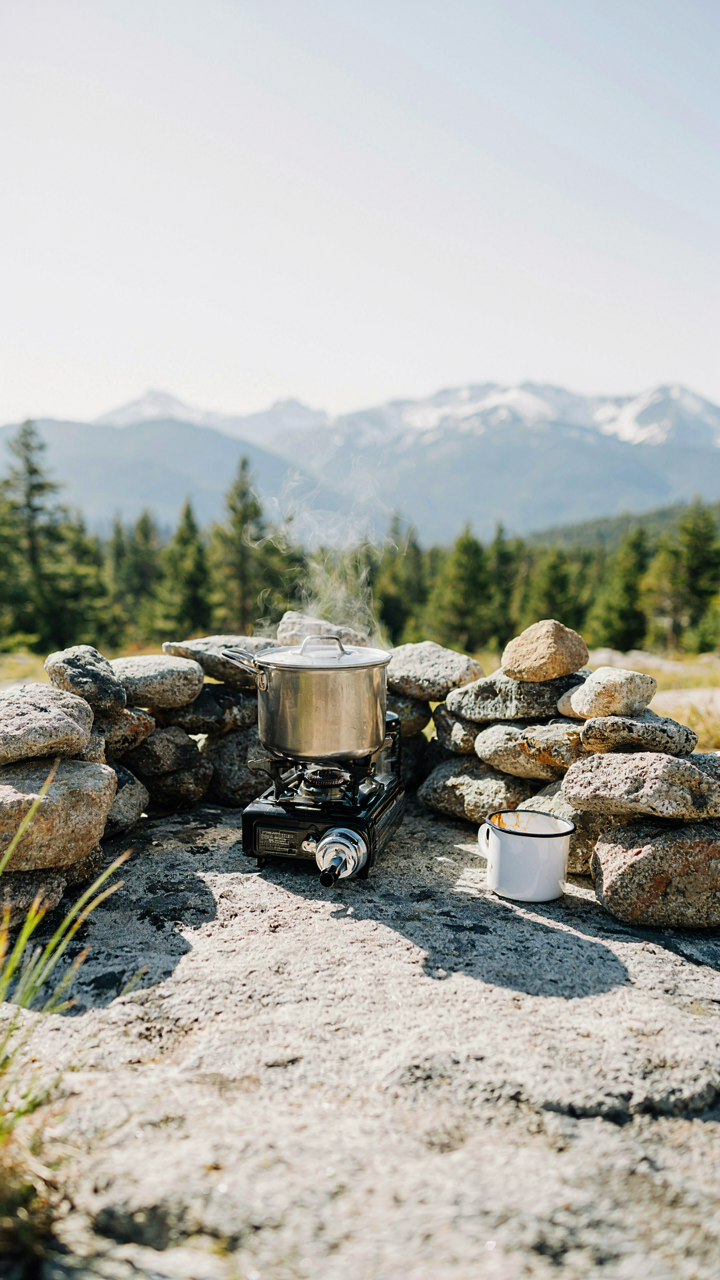
You want a camp kitchen that makes you look resourceful without actually learning thermodynamics. Here’s what actually matters: heat transfer is pure physics. You’re not cooking better with more gear—you’re cooking faster by moving energy from fuel to food with zero waste. Most people buy cast iron and call it done. Wrong move. Cast iron has high heat capacity but poor thermal conductivity. It takes forever to heat, wastes fuel, and sits heavy in a pack.
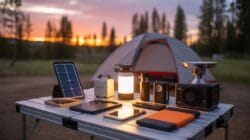
The real play is thin aluminum or steel cookware with tight-fitting lids. Aluminum transfers heat three times faster than cast iron. A lid traps radiant energy and cuts cooking time by 40 percent, which means less fuel burned per meal. Wind blocks matter more than pot quality. Fuel burns at different rates depending on oxygen flow and ambient temperature. A simple barrier—rocks, logs, or a purpose-built reflector—cuts fuel consumption and stabilizes flame. Your stove setup determines everything downstream. Position your pot centered over the flame with no air gaps. Every gap is wasted BTU.
Water Chemistry Kills Grease Better Than Scrubbing
Most camp cleanup advice is garbage because it ignores water chemistry. You’re told to boil water and scrub harder. That’s labor disguised as wisdom. Grease is lipid. It doesn’t dissolve in pure water. You need a surfactant to break the molecular bonds, which is what detergent does at a chemical level. But you don’t need commercial soap—you already have a surfactant in camp.
Wood ash from your fire contains potassium carbonate, a mild alkali that saponifies grease on contact. Sprinkle ash into warm water, let it sit for two minutes, and grease wipes clean without scrubbing. This works because alkaline environments hydrolyze fats into soap. If you have no fire, salt and vinegar create a weak acid that breaks down mineral deposits and grease residue. The real efficiency move: wash immediately while cookware is still warm. Cold grease hardens fast and bonds to metal. Temperature preserves your energy and halves your cleanup time. Hot water plus ash equals done in five minutes instead of twenty.
Mastering The Camp Kitchen Station: The 3 Zone Efficiency Model
Where You Actually Prep Food Without Losing Your Mind
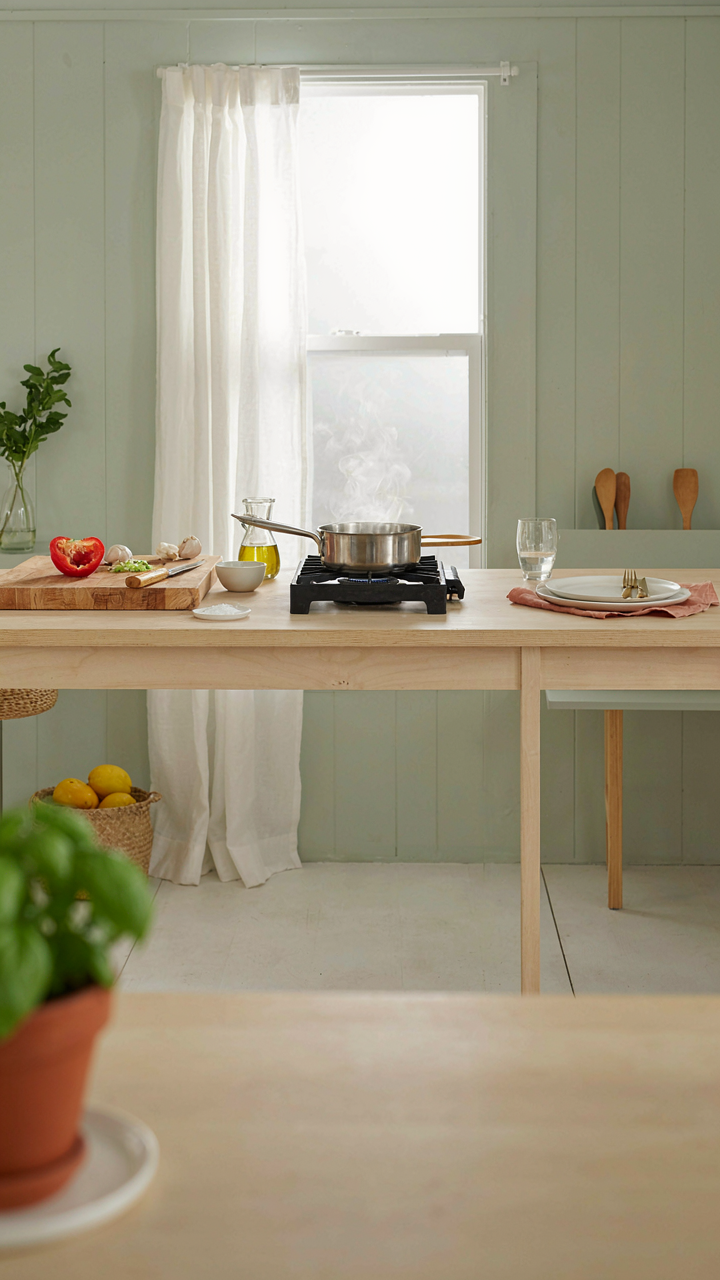
You want this section because you’re tired of hunting for a cutting board while your stove runs hot and someone else needs the cooler. The mechanism is workflow separation, borrowed directly from manufacturing efficiency: stations exist to eliminate motion waste. Your prep zone must be physically distinct from your cooking zone. Distance kills momentum. Set your cutting board, mixing bowls, and ingredient staging on one stable surface at elbow height. Use a camp table or the lid of a large cooler as your prep platform. This isn’t optional if you cook more than once a trip.
The prep station survives on three rules: dry hands only, cold ingredients staged in order, tools within arm’s reach. Wet hands contaminate dry goods and slow you down. Group your knife, cutting board, and bowls in one quadrant before you start. A small camp organizer or hanging caddy holds spices, oil, and seasonings so you stop reaching into bags. You execute prep once, without backtracking, then move to heat. The difference between a chaotic meal and a smooth one is whether your hands stayed in one place or wandered across three tables.
Containing Heat And Keeping Service Clean
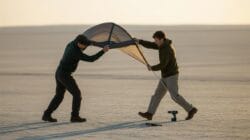
Heat management is pure physics: BTUs concentrate in small spaces and radiate outward in all directions. Your cooking zone must sit downwind and at least six feet from your prep table. Use a portable camp stove with a windscreen or establish your fire pit in a separate cleared area. Keep your serving surface—plating station, cutting board for final assembly—between prep and heat. This creates actual workflow, not a scattered operation. Never prep and cook on the same table. Temperature, grease splatter, and steam destroy food safety and your efficiency simultaneously.
The serving zone holds your plates, utensils for plating, and a clean towel. Position it so you move hot food directly from heat to plate without crossing paths with raw ingredients. A small folding table perpendicular to your stove works. Control your flame to medium or lower whenever possible—wild heat means wandering attention and food that burns before it cooks through. You plate in one motion: hot food on plate, condiments added, hand it off. This single protocol prevents the chaos of half-cooked meals and multiple trips back to the stove.
Beyond Gear: The Mindset Of The Efficient Camp Chef

Plan Before You Pack
You want this section to make you feel like you’ve got it figured out. The real issue is that most people show up to camp with gear but no system, then blame the equipment when the system fails. Anticipation works like a supply chain in logistics: you map dependencies before they become problems. A camp kitchen depends on water access, fuel availability, and prep surfaces. If you don’t know where water comes from or how long it takes to heat, you’ve already lost time you can’t recover.
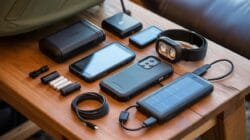
The mental game starts three days before you leave. You don’t plan meals on site. You plan the sequence of meals, the ingredients each requires, the tools each demands, and the exact order you’ll need them. Write this down. Take a photo. Reference it at camp instead of reinventing the wheel while hungry people wait. This eliminates decision fatigue and stops you from forgetting the one item that breaks your cooking flow.
Skill Lives In Constraints
The conventional take is that outdoor cooking teaches you to adapt. That’s incomplete. Adaptation without constraint is just improvisation, and improvisation at scale creates waste and failure. Embracing imperfection means accepting your limitations upfront, then working inside them instead of against them. A single burner stove isn’t a handicap if you sequence your cooking to match its capacity. Cook proteins first, set them aside, use residual heat for sides.
Most camp cooks fail because they treat outdoor cooking like indoor cooking with worse conditions. That’s backwards. Work with what the setup actually allows. If your grill runs hot on one side and cool on the other, use that unevenness intentionally. High heat for searing, low heat for holding. Your ingredients won’t be perfect, your timing won’t be flawless, and your plating won’t Instagram well. None of that matters if everyone eats warm food on schedule. Document your cooking temperatures, timings, and tool placement so the next trip repeats what worked instead of starting from zero.
The Illusion Of Preparedness Is Your Heaviest Burden; True Freedom Is Found In The Few, Mastered Tools
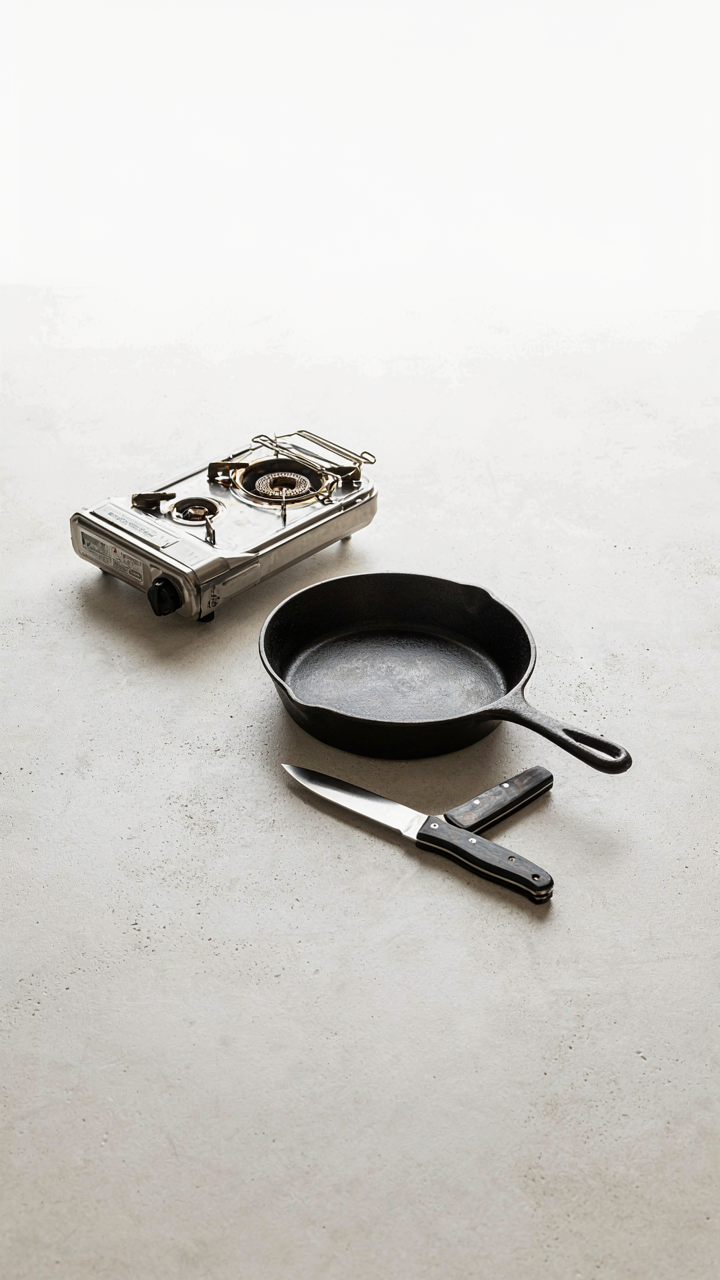
Most campers fail because they chase completeness instead of competence. You don’t need fifteen tools. You need three you actually use. Pick your camp stove, your pan, your knife. Master them. Stop scrolling gear lists and start cooking meals outside. The weight you shed isn’t physical. It’s the mental load of choice paralysis. Strip everything away until only the essential remains. That’s when camping stops being a production and becomes a life.