The Illusion Of More: Why Most Camp Coffee Gadgets Fail You
More Features Mean More Failure Points
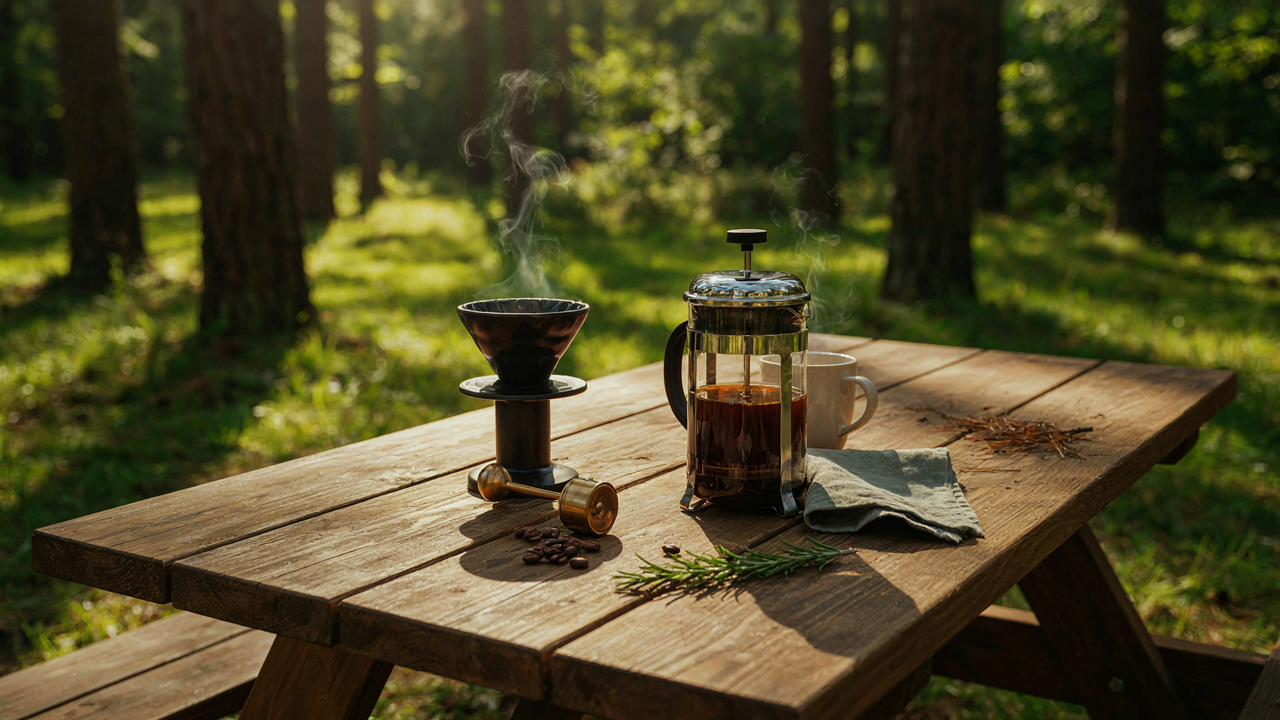
You want to believe that buying the right gadget will fix your mornings, but complexity is the real enemy. In economics, there’s a concept called diminishing returns—the idea that each additional unit of input produces less output than the one before it. Camp coffee gadgets follow this curve exactly: a French press does the job; a pour-over with a gooseneck kettle, a scale, and a timer adds friction without proportional improvement.
Most camp coffee gear fails because it multiplies variables you must control in an environment where you control almost nothing. Wind kills your flame. Cold water takes longer to heat. Your scale reads differently at elevation. Each added feature compounds the number of things that can go wrong. The mental load alone drains the purpose of a morning ritual: to ground yourself before the day starts, not to troubleshoot equipment.
The Weight Tax You Don’t Calculate
Nobody talks about the actual cost of “convenience” because it hides in distributed friction. You pack a 12-ounce pour-over setup to save five minutes brewing, but that five minutes is paid for in pack weight every single day you camp, whether you use it or not. The gadget industry sells you the feeling of control, and you pay the tax without knowing you’re paying it.
Start here: weigh everything you bring. Then ask what percentage of your pack weight goes toward coffee. If it’s more than 2 to 3 percent, you’re optimizing the wrong problem. A manual pour-over weighs roughly half what an electric camping percolator does, and a simple immersion method in your existing cookware weighs nearly nothing. The mechanism is simple: lighter pack equals more miles, more comfort, fewer trade-offs. Choose the gadget by subtracting options, not adding them.
The Minimalist’s Manifesto: Essential Camp Kitchen Gear For Peak Performance
Stop Confusing Gear With Capability
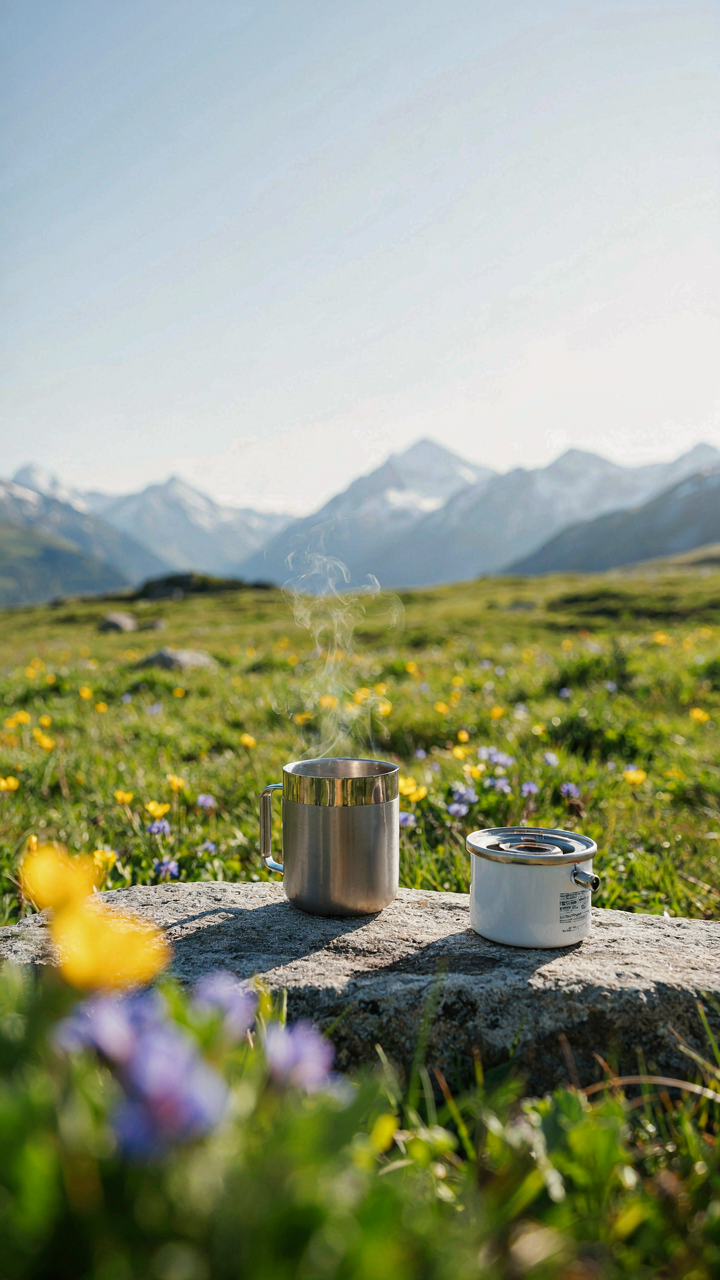
You want to believe more equipment makes you more prepared. It doesn’t. The mechanism is simple: every item you carry trades weight and pack space for a single function you might need once. Camp coffee demands the opposite logic. You need gear that performs one job exceptionally well, not gear that performs six jobs adequately. A pour-over cone does one thing. A French press does one thing. A titanium mug does one thing. The best campers aren’t the ones with the most toys. They’re the ones who picked the right toy and learned it completely.
Most advice tells you to “bring versatile items.” That’s incomplete. The real strategy isn’t versatility for its own sake. It’s choosing items where secondary functions emerge naturally from their primary design, not items forced into multiple roles. A metal kettle boils water. It also doubles as a pot for heating food or washing gear. That’s earned versatility, not manufactured. The difference shapes everything about what you actually use versus what sits unused in your pack.
The Pareto Principle Of Camp Coffee
Economics calls this the 80/20 rule: eighty percent of results come from twenty percent of inputs. Applied to camp coffee, this means two or three core items handle ninety percent of your morning. A single-burner stove. A kettle or pot. A brewing vessel. Everything else is negotiable. Most campers carry redundant heat sources, backup grinders they never touch, and specialty items for scenarios that never materialize. You will use your brewing method every morning you’re out there. You will use your heat source every morning. Everything else competes for real estate in your pack and gets eliminated first when weight matters.
The strategic move is ruthless subtraction before you buy anything. Ask what breaks your coffee experience without it. Not what makes it slightly better. Not what you might need. What actually breaks it. A grinder breaks it if you carry whole beans and prefer fresh grounds. A burner breaks it if you have no fire. A container breaks it if you have nowhere to hold hot liquid safely. Stack only the items that answer that question. Bring exactly what solves your specific camp coffee problem, nothing more.
The 3 Tier Extraction Protocol: From Bean To Bold
Grind Consistency: The Forgotten Foundation
You want to believe that bean quality matters most because that lets you ignore the actual work. It doesn’t. Borrowing from particle physics, extraction is about surface area exposure. A French press needs coarse grounds because fine particles over-extract in prolonged immersion, releasing bitter compounds. A pour-over demands medium-fine grounds to slow water passage just enough for proper contact time. Most people grind wrong because they copy what worked at home without understanding why camp conditions change the equation.
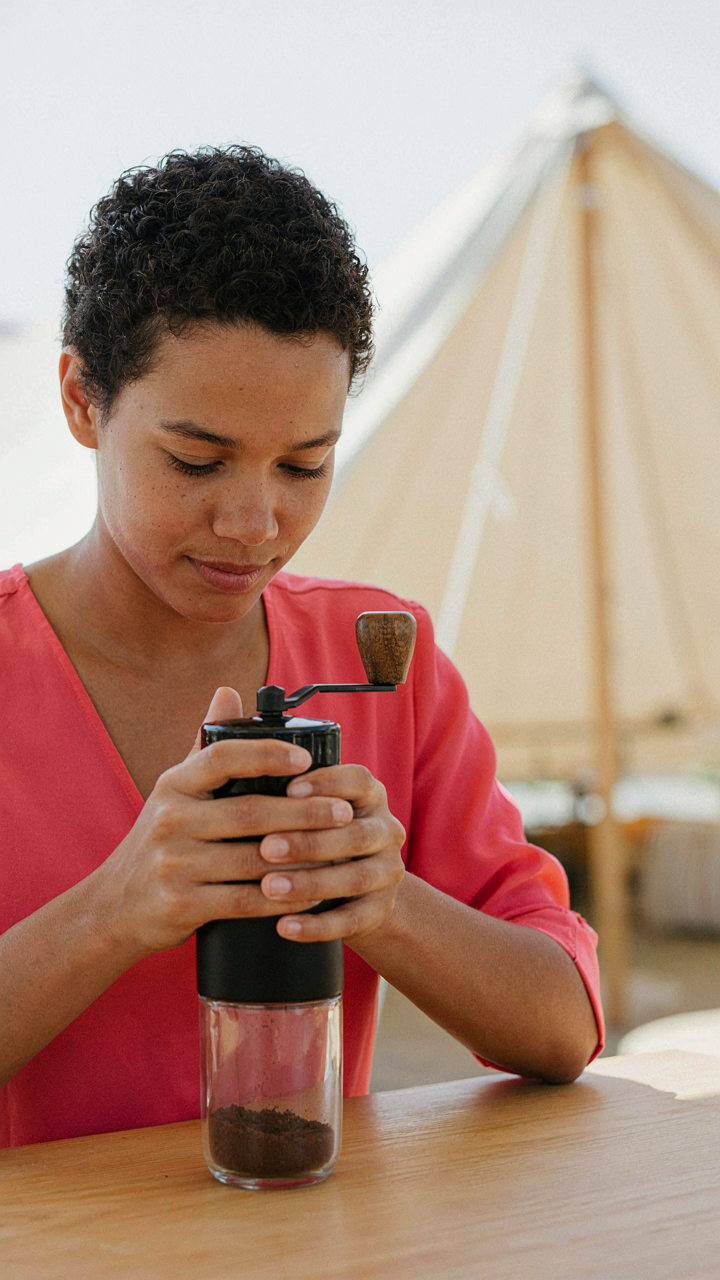
Burr grinders beat blade grinders because they produce uniform particle size. Consistency means predictable extraction, which means repeatability outdoors where variables already compound. Hand grinders work camp-side because they require no electricity and let you control grind speed. The mechanism is simple: inconsistent particle size means some grounds extract too fast, others too slow. You end up with bitter and sour notes in the same cup. Buy a burr grinder, use it the same way every morning, dial in one grind size per gadget type, then stop adjusting.
Temperature Mastery For Optimal Flavor
Water temperature determines extraction rate, not just taste preference. The common advice to “use hot water” misses the point entirely. Optimal extraction happens between 195 and 205 degrees Fahrenheit for most coffee. Below 190 degrees, you under-extract and get sour, thin coffee. Above 210 degrees, you over-extract and get astringent, burnt notes. Camp gadgets fail here because most people boil water and pour immediately, shooting straight past the optimal window into destruction.
A basic digital thermometer takes the guesswork out. Let boiling water cool for 30 seconds to reach the target range, then pour. AeroPress users should preheat the chamber with hot water before brewing to maintain temperature during the four-minute cycle. French press requires longer steeping, so start with water at 200 degrees and it’ll naturally cool toward 180 by the end of the four-minute brew. Temperature consistency across multiple mornings creates the feedback loop you need to actually learn what your specific gadget wants.
Portable Coffee Maker Camping: The Leveraged System
Why Extraction Variables Matter Before Anything Else
You want better coffee without buying expensive gear or waking up earlier. Here’s what actually controls the cup: extraction is physics, and physics doesn’t negotiate. Pressure, time, and grind size form a triangle. Change one variable and you shift the whole equation. Most camp coffee fails because people treat these as independent choices when they’re locked together.
A finer grind increases surface area and slows water movement through grounds, extending extraction time. Coarser grinds do the opposite. Pressure (from devices like AeroPresses or Moka pots) forces water through grounds faster, which means you need finer grinds or longer brew times to avoid under-extraction. Camp stoves give you heat but not pressure control, so you’re really working with time and grind. Get the grind wrong and no amount of wait time fixes it.
The One System That Scales Without Complexity
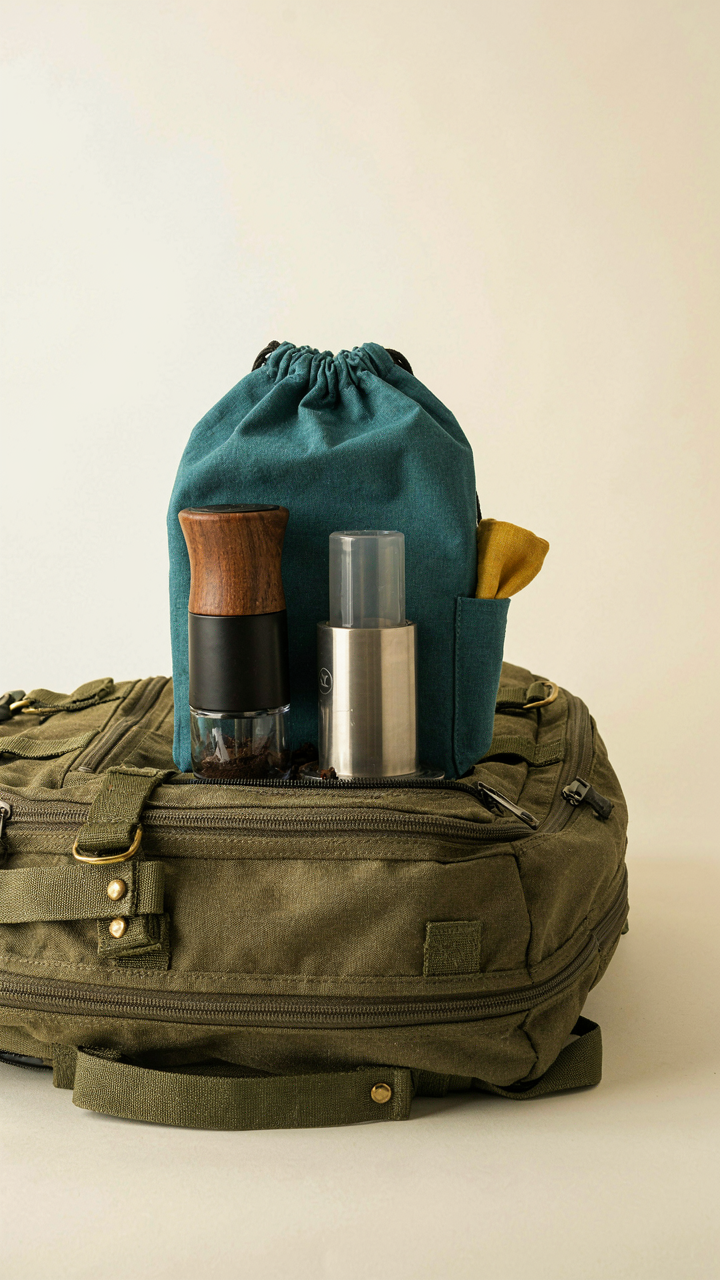
Stop buying ten different brewing methods. Systems thinking means identifying the input that changes the output without adding steps. For camp coffee, that input is grind size. One quality hand grinder at camp replaces the need for pre-ground coffee, multiple brewing devices, or backup plans when one gadget fails.
A manual grinder is leverage: it costs under forty dollars, weighs under a pound, takes two minutes to grind enough for two cups, and works identically at sea level or altitude. Pair it with whatever brewer you already own—French press, pour over, or even a mug with a metal filter. The grind size adapts to your water temperature, brew time, and available pressure. This is the mechanism: one variable controlled at the source eliminates most camp coffee problems downstream.
Beyond The Press: Elevating Fresh Coffee Outdoors
The Physics Of Water And Grounds
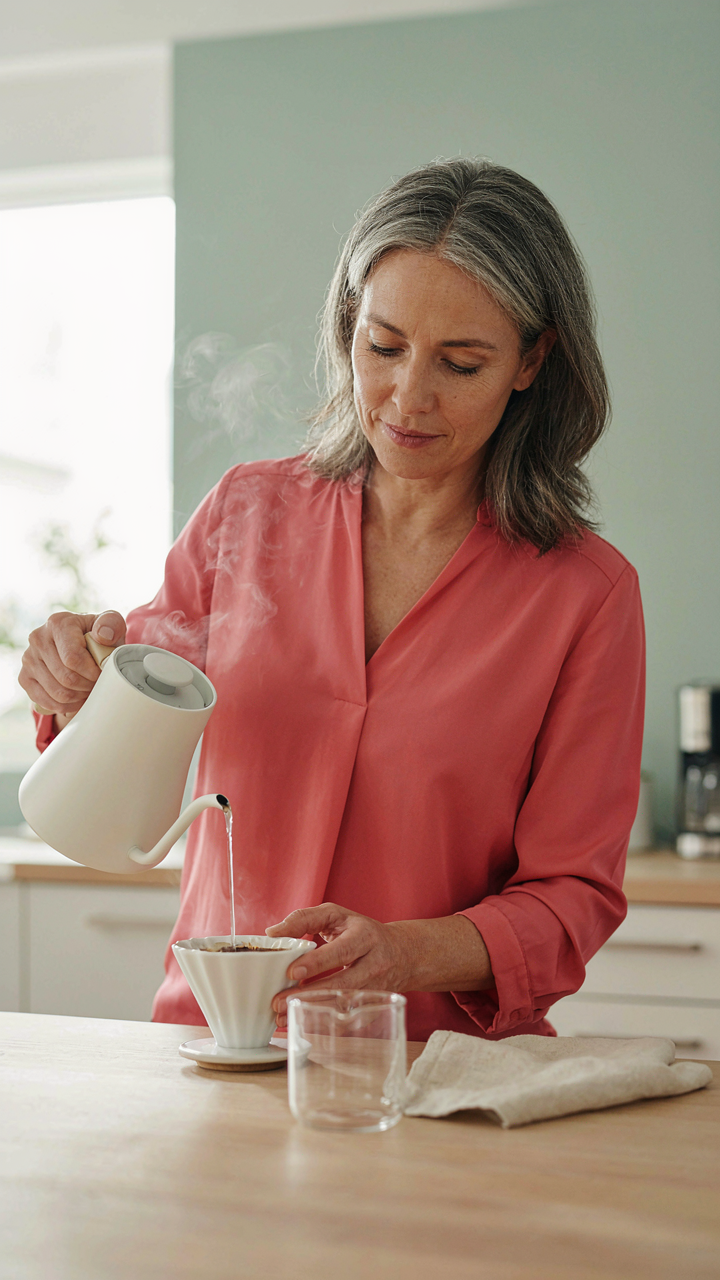
You want to look like you know what you’re doing with coffee. Here’s what actually matters: pour-over coffee works because of diffusion, the same mechanism that spreads ink through water. Gravity pulls hot water down through a bed of grounds, dissolving soluble compounds as it moves. The contact time, water temperature, and ground size control extraction rate. Get one wrong and you taste it immediately.
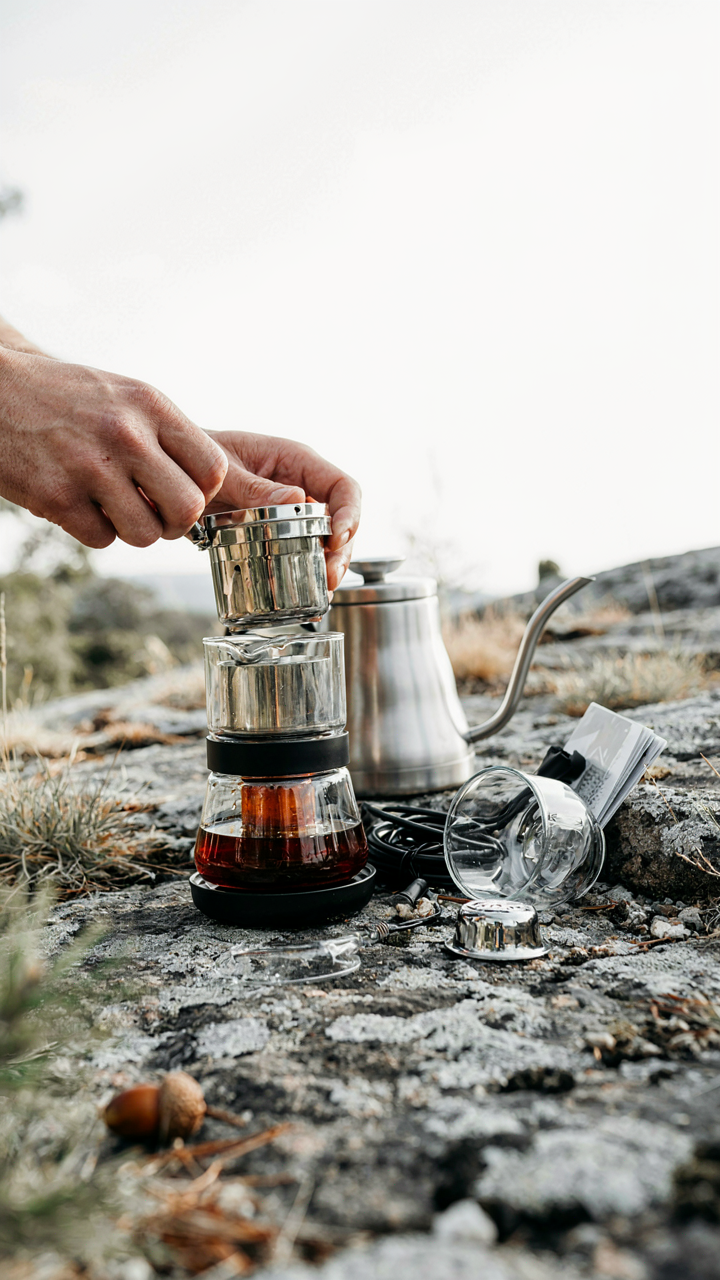
A pour-over’s real advantage outdoors is control without electricity. You choose your pour speed, water temperature, and brew time. Most people rush the pour because they’re impatient, which under-extracts the coffee and wastes the grounds you packed in. Slow your pour to a steady stream that takes three to four minutes total. The Melitta or Chemex style both work fine in camp conditions, but the flat-bottomed dripper gives you more margin for error when brewing on uneven ground.
Espresso When The Situation Demands It
Portable espresso makers solve a specific problem: you need concentrated caffeine fast and you’re willing to add weight and complexity to get it. Not everyone needs this. Most camp mornings don’t require espresso, which means most people buying a portable espresso maker are buying status, not function. Deploy one only if you actually drink espresso at home and know how to dial in grind size and tamping pressure without electricity or scales.
The manual lever devices like the Flair or ROK require real skill to operate consistently in a tent. You must pre-heat the chamber, tamp the grounds precisely, and apply even pressure downward. Cold temperatures at high elevation make this harder because water cools faster and extraction slows. If you commit to carrying an espresso maker, practice the full sequence at home ten times before taking it camping. One mediocre cup of espresso tastes worse than good filter coffee because you can’t hide mistakes in a two-ounce drink.
The Coffee Press Conundrum: Simple, But Not Simplistic
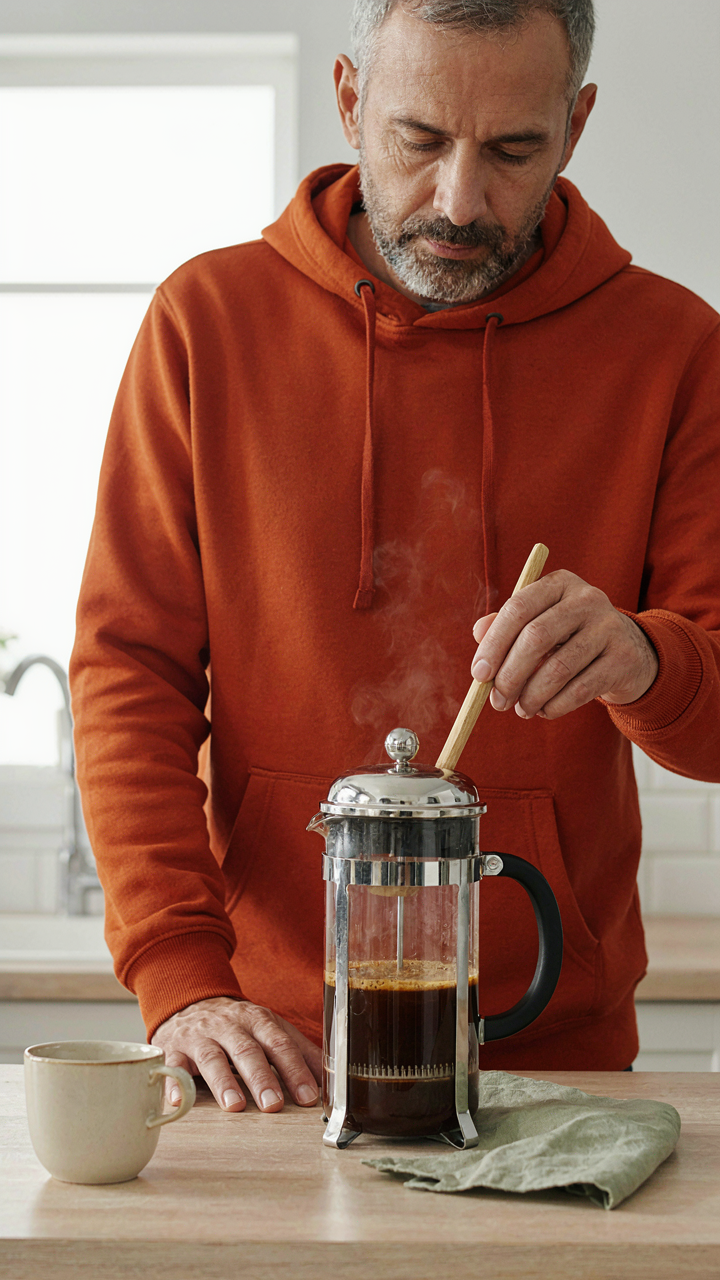
Mastering Immersion For Sediment Free Results
You want to look competent pouring coffee at camp. That matters less than understanding why most people fail at the basic mechanics. A French press uses immersion brewing, borrowed from chemistry’s principle of contact time and surface area. The grounds stay in contact with hot water for a fixed period, which extracts oils and solids that a filter would trap. Get the timing wrong and you extract bitterness or under-extract and waste coffee. Most people blame the press when they blame their timer instead.
Coarse grounds are non-negotiable. Fine grounds accelerate sediment through the metal filter mesh because they compress and create channels water runs through. A four-minute steep at 195-205 degrees works for standard camp presses. The mistake people make is stirring aggressively after pouring, which suspends particles that settle into your cup. Stir gently once at thirty seconds to break the crust and saturate all grounds evenly. Then leave it alone.
Keeping Your Press Clean Between Uses
Neglected presses degrade fast because old oils turn rancid and gunk hardens inside the metal cylinder. This isn’t a minor aesthetic problem. Rancid coffee tastes acrid and vinegary no matter how fresh your beans are. Rinse immediately after brewing while the press is still warm. Hot water releases residue that cold water leaves behind.
Disassemble the plunger and filter unit after every camp use. Mineral deposits build on the mesh filter and on the metal stem. Soak the mesh in hot water for five minutes, then scrub with a soft brush or old toothbrush to dislodge buildup without bending the mesh. For the cylinder, fill it halfway with hot water, add a tablespoon of coarse salt, and shake aggressively for thirty seconds to scour the interior walls. This removes the oily film that causes stale flavors on your next brew.
Strategic Kit Assembly: Your Portable Coffee Maker Set Blueprint
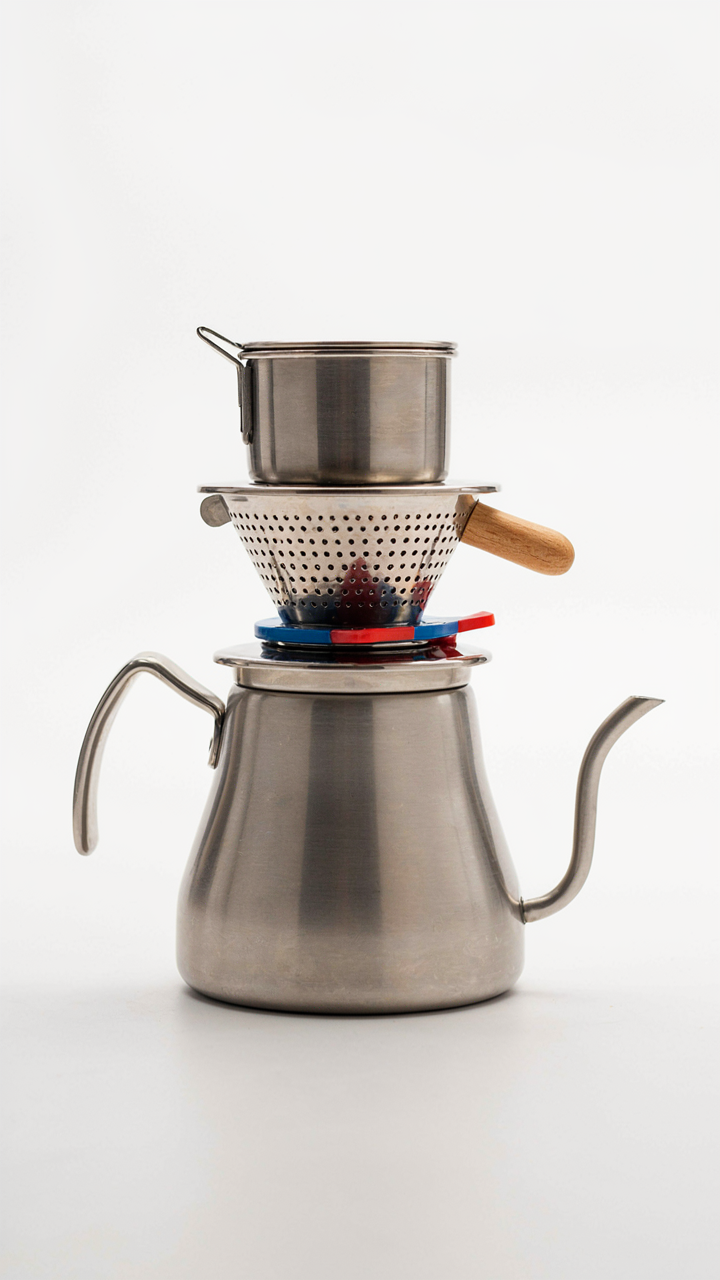
Choose Gear That Survives Repeated Use
You want your kit to feel lightweight so you’ll actually bring it instead of leaving it in the car. That’s the real motive here: logistics trump performance every time. Think of durability as load capacity in structural engineering. A component fails not because it’s weak but because it absorbs repeated stress without reinforcement. Metal bodies outlast plastic under thermal cycling because metal conducts and dissipates heat evenly. Ceramic and borosilicate glass crack from uneven temperature distribution, not from a single shock. Pick materials that handle the specific abuse camp conditions deliver: temperature swings, moisture, abrasion from pack friction.
- Stainless Steel Dripper: Handles thermal cycling and won’t degrade from acidic coffee oils. Lasts years of daily use without replacement cost.
- Titanium or Aluminum Kettle: Titanium resists corrosion in damp conditions; aluminum is lighter but requires care against dents that trap water.
- Borosilicate Glass Carafe: Won’t shatter from sudden temperature change if preheated with hot water first. Significantly heavier than alternatives.
- Stainless Steel Filters or Metal Mesh: Reusable indefinitely. No dependency on paper filter supply chains. Rinse and dry thoroughly to prevent rust.
- Silicone or Neoprene Sleeves: Protect kettle and carafe from impact. Silicone resists temperature better; neoprene holds shape longer under compression.
Weight matters only if you’re hiking more than two miles to camp. Most people overestimate this concern. A complete pour-over setup with kettle weighs under two pounds. A French press adds one more pound. Your pack accommodates this. The real constraint isn’t weight, it’s volume in tight bags and protection during transport, which determines whether your gear survives the trip intact.
Pack With Purpose, Not Paranoia
The mistake most people make is wrapping everything individually like each piece is irreplaceable. Wrong approach. Group components by access order: kettle and heat source together, dripper and filters with your morning mug, grinder in the front pocket. This isn’t just organization. It’s recognizing that protection and efficiency work against each other. Separate wrapping creates bulk. Logical grouping reduces overall volume and lets you grab what you need in sequence without unpacking the entire bag.
Your kettle and heat source should sit lowest and most stable in your pack because they’re used first and weigh most. Dripper, filters, and coffee grounds go in a secondary compartment that’s accessible but not so exposed that vibration during transport dislodges components. Grinder goes where you can pull it immediately after arriving. Protect the carafe or mug with a padded sleeve or nest it inside a stuff sack with your drinking vessel. This stacking approach prevents breakage and cuts packing time to under ninety seconds each morning.
The Morning Ritual Unchained: True Freedom From Mediocrity

Waking Up To What Actually Matters
You want this section because you’re tired of mornings that feel like you’re playing catch-up before the day even starts. The mechanism is simple: routine compounds. A camp coffee ritual isn’t about the coffee. It’s about owning the first decision of your day so every decision after that lands with intention instead of drift.
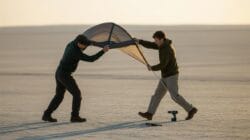
Most people treat camp coffee prep as logistics to get through. Wrong angle. The act of grinding beans, heating water, and waiting teaches you patience under conditions you didn’t design. That’s the opposite of home. At home, everything bends to convenience. In camp, you adapt to the environment. This reversal rewires how you approach problems. You start asking what the situation demands instead of what you prefer.
The Neurochemistry Of Ritual Mastery
Ritual taps into the same neurological pathway that military units use for operational readiness. You’re building what neuroscience calls “implementation intention”: a specific if-then sequence that bypasses decision fatigue. Caffeine amplifies this by increasing dopamine sensitivity, but the real edge comes from the predictability of the sequence itself. When your hands know what comes next without your brain having to negotiate, you enter flow state before 7 AM.
The coffee tastes better because you earned it through deliberate steps. That’s not sentiment. That’s perception shifting based on effort expended. A pour-over made in a 3-minute mechanical sequence hits different than a button-press at home because your nervous system registers the work. Consistency matters more than gadget quality here. Master one method so completely that you execute it identically every morning, no variations, no options to consider.
The Real Obstacle Isn’t The Gadget; It’s Your Resistance To Disciplined, Intentional Preparation
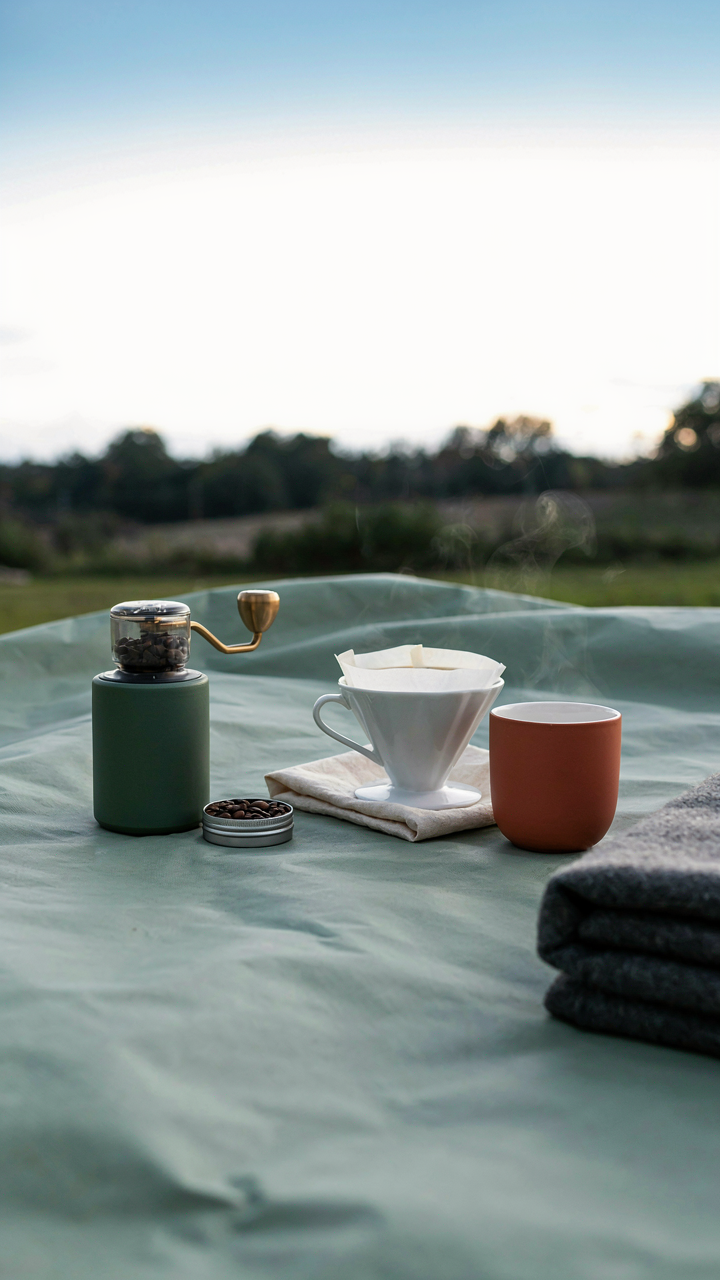
You don’t need a better camp coffee gadget. You need to stop treating mornings like they happen to you. Every great camping coffee ritual starts the night before, when you lay out your gear and commit to showing up before everyone wakes. The gadget just forces you to stay intentional. Pick one today. Pack it tonight. Stop waiting for the perfect setup to exist—build the discipline first, and the coffee tastes better because you earned it.