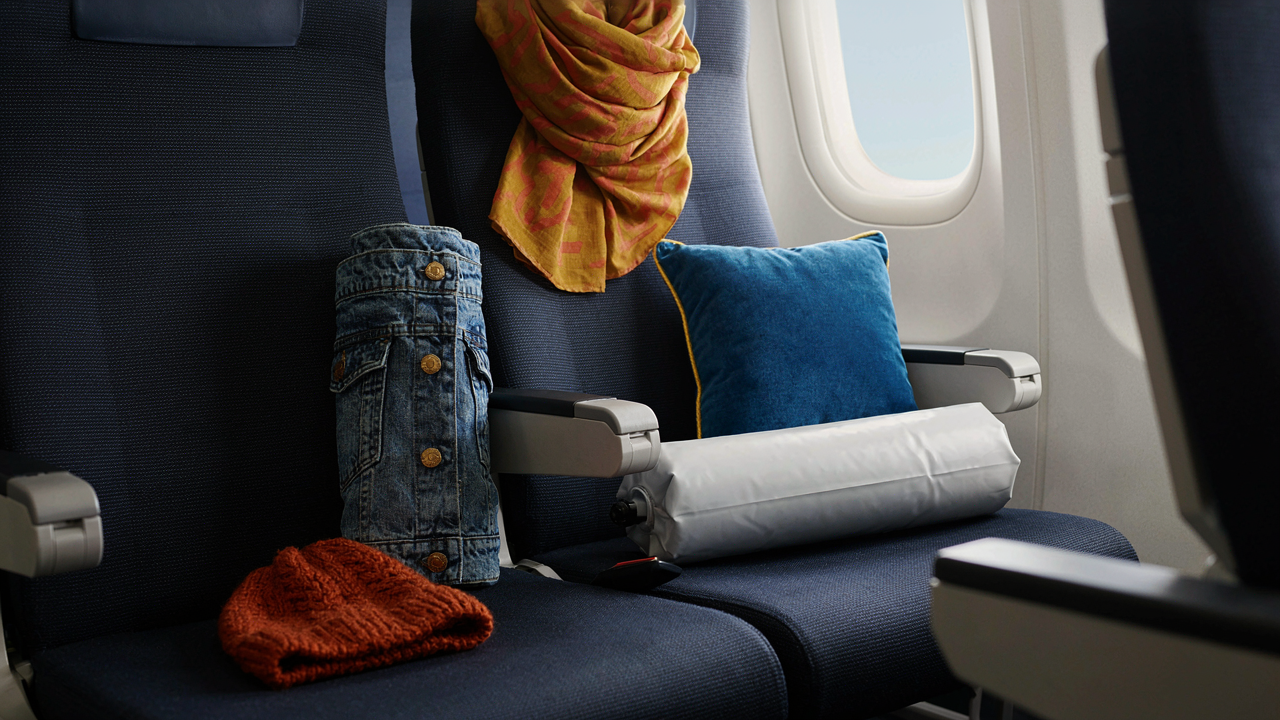
The Myth Of The Perfect Travel Neck Pillow: Why Your Current Strategy Fails
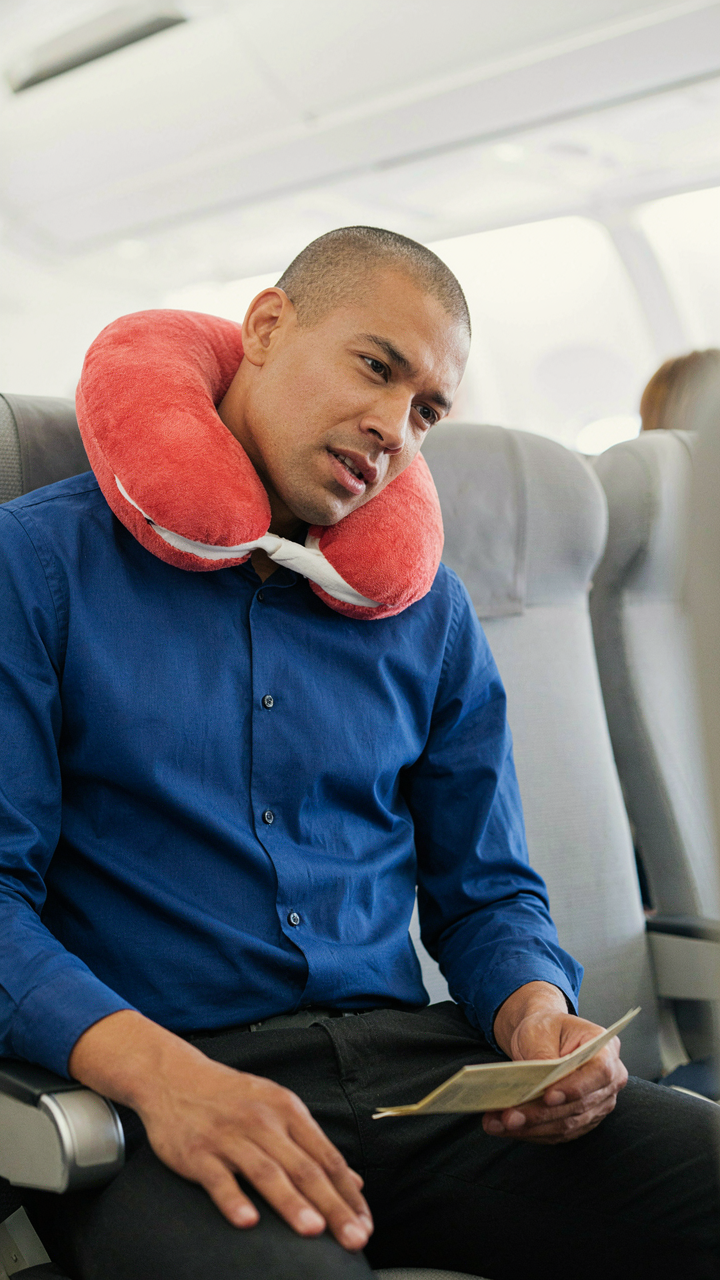
Your Neck Isn’t Generic
You bought the neck pillow because you wanted proof that you solved the problem. That’s the real reason. The mechanism here is simple: your cervical spine has a unique curve. Most people’s necks fall between 10 and 40 degrees of lordosis variation. A standardized pillow doesn’t account for this. It assumes your anatomy matches an average that doesn’t exist. You’re paying for comfort that’s engineered for nobody in particular.
The industry sells one solution to millions of different necks. Shoulder width, head size, sleeping position preference, existing muscle tension—none of this factors into mass production. A pillow that works for a 5’2″ side sleeper will actively harm a 6’4″ back sleeper. You’re not failing at using the pillow correctly. The pillow was never designed for your specific structure.
Structural Problems Built Into Standard Design
The typical U-shaped neck pillow has a fatal flaw rooted in biomechanics. Biomechanics is the study of how forces act on biological systems, and the force distribution in most travel pillows creates pressure concentration rather than support distribution. The pillow’s walls are too rigid and too high. They push your head upward at angles that extend your neck past neutral. This isn’t comfortable. This is compression.
Most neck pillows also assume you’ll stay still. Your head shifts during sleep. A rigid structure can’t adapt. It fights your natural micro-movements instead of accommodating them. The foam inside compresses unevenly over time. After two flights, the pillow loses 20 to 30 percent of its structural integrity. You’re not using a deteriorating product poorly. The product was engineered to fail at its primary job within weeks.
The Ergonomic Blueprint: Engineering Your Seat For Optimal Neck Support
Lower Back First, Then Neck
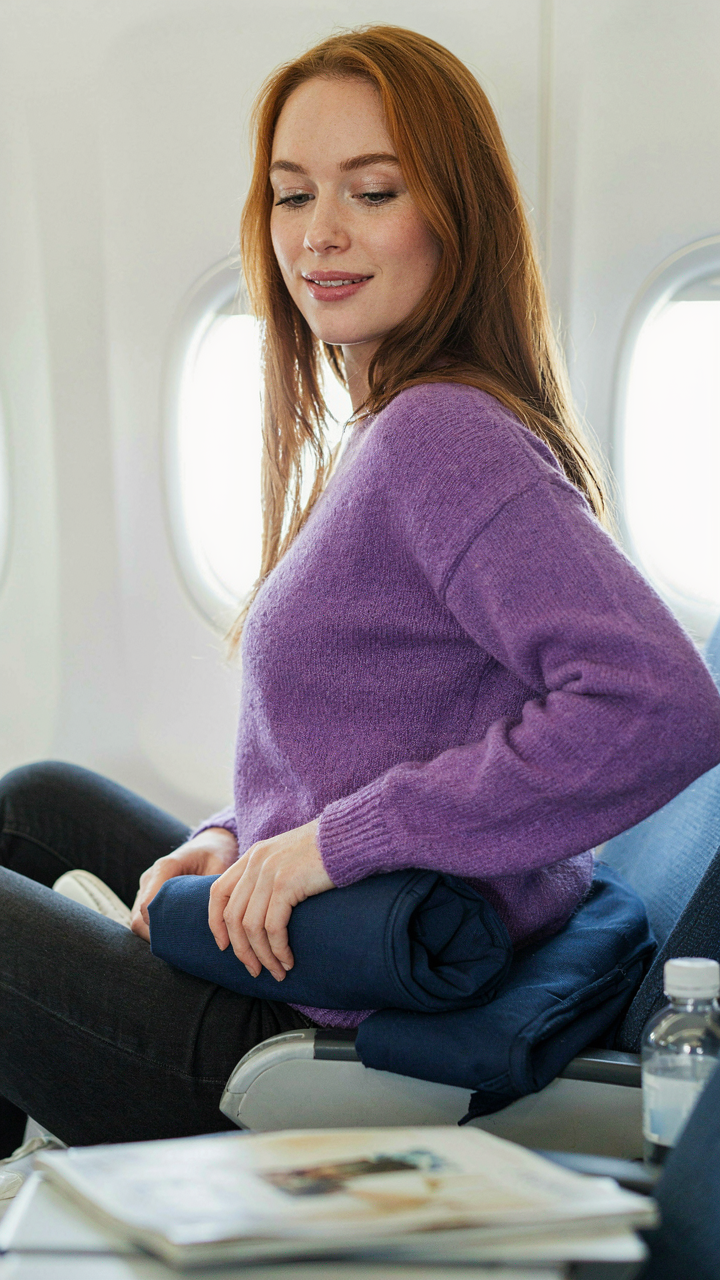
You think the problem is your neck. It’s not. Your lower back is collapsing, and your neck is compensating by twisting into whatever position lets your head stay upright. This is basic spinal mechanics: your lumbar spine is the foundation. When it fails, everything above it fails.

The seat pocket in front of you becomes your tool. Stuff it with your jacket, a sweater, or the airline pillow itself. You’re building a wedge that props your lower back into its natural curve. This isn’t comfort theater. A supported lumbar spine maintains cervical alignment without forcing your neck into weird angles. Your neck stays neutral because your base is stable.
Recline Angle And Spinal Tension
Most people recline too far or not at all. Both break your spine’s curve. The ideal range is 100 to 120 degrees from vertical, which matches the angle at which your lumbar and cervical regions maintain tension symmetry. Recline the seat slowly while watching your shoulders. When they stop pulling toward your ears, you’ve hit the angle where your trapezius muscles disengage.
Once reclined properly, your neck pillow alternative finally works because it’s stabilizing a spine that’s already in position. Without this adjustment, no pillow variant solves the problem. You can strap anything around your neck and your body will still search for a comfortable position because the foundation underneath denies it. Adjust your recline angle first, then add support.
The Minimalist’s Arsenal: Everyday Items As Neck Pillow Alternatives
Clothing Layers As Structural Support
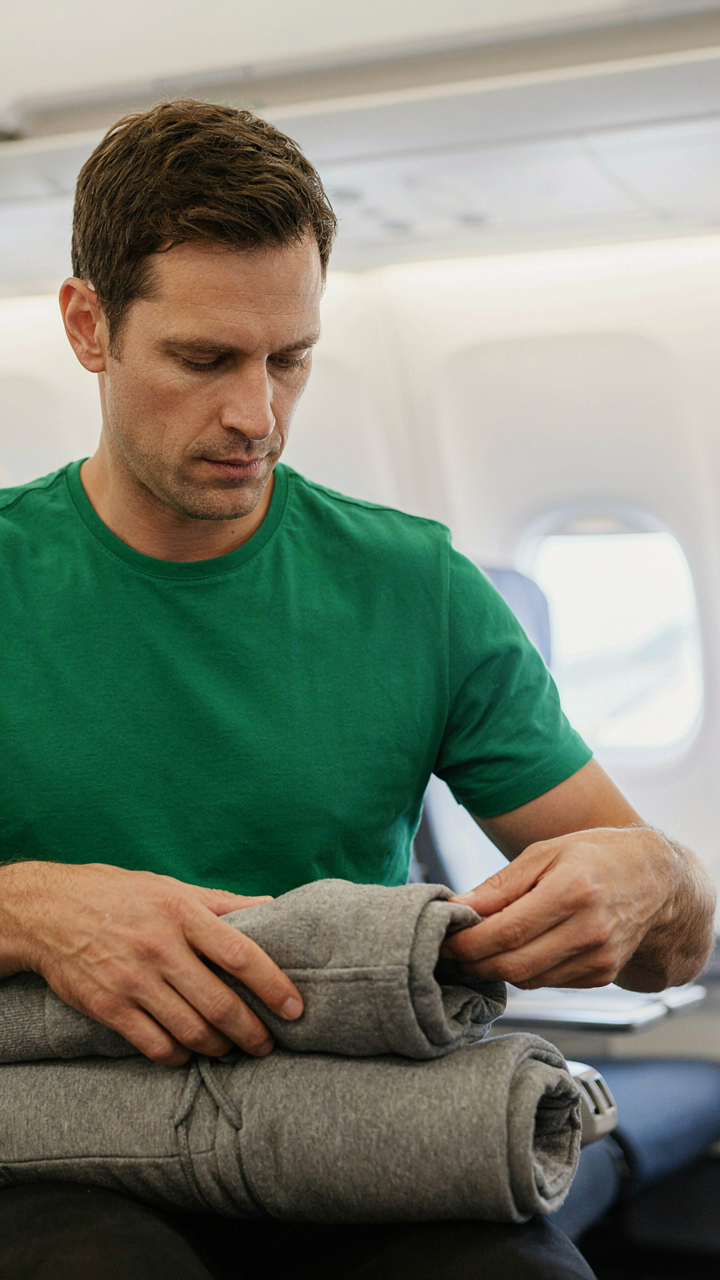
You want to travel light without looking cheap. The real mechanism here is that fabric has memory only when compressed against a structure—your neck needs support geometry, not just softness. A rolled hoodie or sweater creates a semi-rigid tube that maintains shape under your head’s weight. The fabric’s weight distribution matters more than its thickness. Cotton and wool hold their form better than synthetics during compression, which is why your t-shirt collapses but a structured sweatshirt doesn’t.

The execution is straightforward. Roll a medium-weight layer tightly, compress it into a U-shape, and secure the roll with a hair tie or your own arms during the flight. Avoid thin dress shirts—they compress too easily and won’t support your cervical spine. The roll must be dense enough to resist flattening under pressure. Position it at the base of your skull, not higher, since your neck’s weight sits there naturally. This costs zero dollars beyond what you’re already packing.
Bags And Pouches For Targeted Pressure
Most people treat bags as containers only. They’re actually load-bearing structures that can distribute pressure across soft tissues. A half-full backpack, crossbody bag, or even a canvas tote can be positioned against the window as a wedge. The key variable is fill level—overstuffed bags lose their moldable quality, empty ones provide nothing. Semi-full bags conform to the curve between your shoulder and head.
Fill a small backpack or shoulder bag with soft items like socks, underwear, or scarves to create a adjustable firmness. Position it between your head and the window, angling it so pressure hits your trapezius and upper back, not your cervical vertebrae directly. This setup works better on window seats where you control the angle. The bag’s strap becomes a handle for repositioning during the flight. Test the firmness on the ground before takeoff—you’re looking for support that resists sudden shifts but doesn’t feel rigid.
The Inflatable Pillow Deception: When Less Weight Means More Problems
Density That Collapses Under Pressure
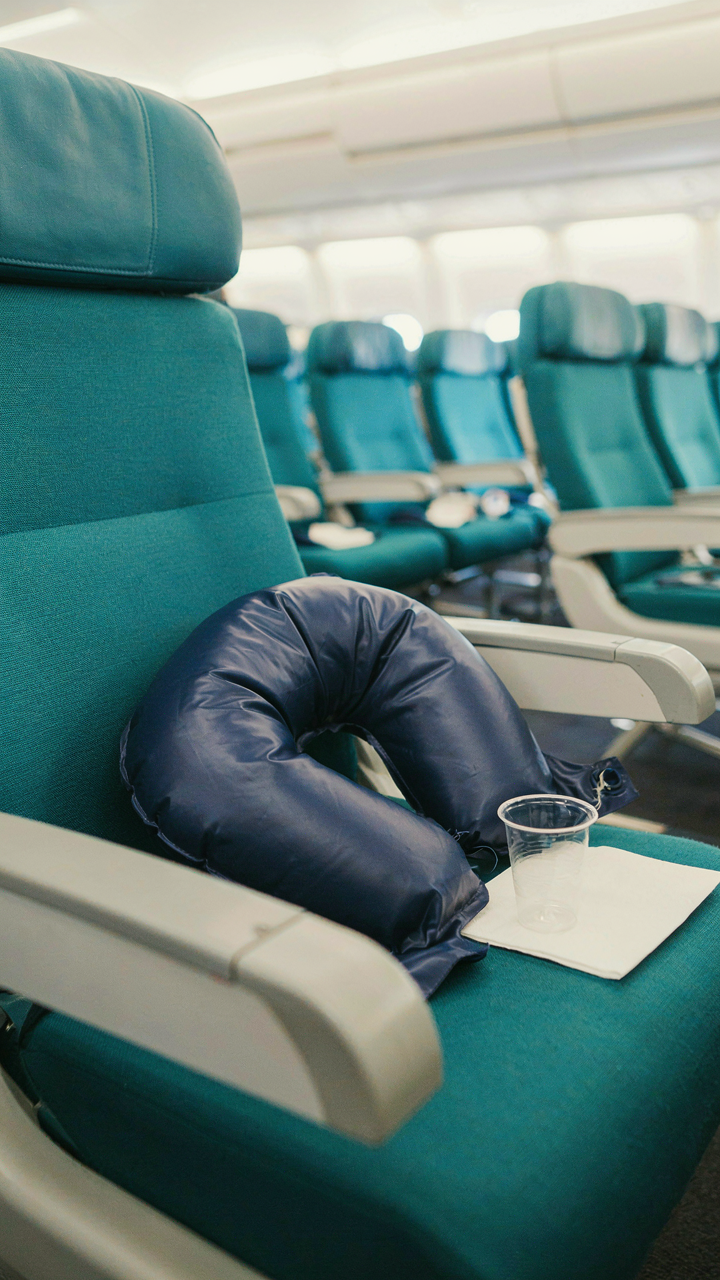
You want inflatable pillows because they pack small and weigh nothing. That’s not why they fail. Inflatable pillows suffer from a materials problem: the air inside them has zero structural integrity. Physics calls this load distribution. A pillow must spread pressure evenly across your neck. Inflatable designs create pressure points because air compresses unevenly. Your head sinks into one spot while other areas stay hollow. This isn’t user error. The design itself guarantees inconsistent support the moment you add weight.
Traditional foam or memory foam pillows maintain their shape because the material resists compression. Inflatables don’t. You can inflate them to maximum firmness, but the second your head makes contact, localized collapse begins. The air molecules move. Your neck finds no stable platform. Airplane seats amplify this problem because the armrest forces your head into one fixed angle. An inflatable pillow degrades faster under those constraints than any other alternative available.
The Leak You Don’t Notice Until It’s Too Late
Inflatable pillows fail silently. Most people assume a slow leak takes hours to become a problem. It doesn’t. A hairline puncture from a seatbelt clasp or armrest corner starts invisible deflation within thirty to forty minutes of contact. By hour two of your flight nap, your pillow has lost twenty to thirty percent of its air. Your head drops lower. Your neck angles sharper. You wake up with soreness that lasts three days because you slept on a partially deflated rubber sack.
The repair-during-flight option doesn’t exist. You can’t patch a pillow mid-air, and you can’t re-inflate without a pump you don’t carry. Even the compact hand pumps TSA allows take two minutes per inflation and require you to leave your seat. One deflation event ruins the entire flight. Solid alternatives like memory foam or microbead pillows don’t have this failure mode. They maintain support for every flight you’ll ever take.
The ‘Side Sleeper’ Protocol: Reclaiming Comfort In A Confined Space

Weight Distribution Through Lateral Support
You want to sleep on a plane without looking like you’re struggling. The real issue isn’t comfort—it’s stability. Naval architects solve confined-space problems using ballast principles: strategic weight placement creates equilibrium without bulk. Your body needs the same logic. A side-sleeping setup requires load distribution across three contact points: shoulder, hip, and knee. Standard neck pillows fail here because they only anchor the head, leaving your torso and legs unsupported and prone to rolling. Use a combination of a small firm pillow under your head, a compressed jacket or thin cushion wedged between your ribs and the armrest, and a second compressed item between your knees. This triangulated support prevents micro-adjustments that wake you mid-cycle.

The mechanism is simple: your body stops fighting against gravity when pressure distributes evenly. When one point bears too much load, your nervous system keeps muscles semi-engaged to prevent collapse. Distribute that load across three zones and muscle tension drops. Compress a sweater or use a travel pillow designed for lumbar support as your hip wedge. Position it so your spine stays neutral, not twisted. The goal is to eliminate the constant micro-corrections that masquerade as “restlessness” but are actually your body protecting itself from poor alignment.
Counteracting Movement Through Targeted Friction
Turbulence derails sleep because your body braces involuntarily against unexpected motion. Most advice says “relax and accept it”—useless. The real solution involves self-stabilization: create enough friction and contact surface that you don’t need muscular effort to stay in place. Wrap a lightweight scarf or thin fabric around your torso and the armrest. This acts as a low-tension anchor without restricting breathing. Your body recognizes the external reference point and stops micro-tensioning to compensate for drift.
Position a compression bag or rolled sweater on your far side (the side facing the aisle if you’re against the window). When the plane banks or hits rough air, this barrier prevents your entire body from shifting sideways. Your nervous system relaxes because it has external confirmation of position. The friction itself matters more than cushioning here. Rough texture fabric grips better than smooth cotton. This keeps you anchored during the 10-second bursts of turbulence that wake light sleepers. Test your setup during the first 15 minutes of flight—adjust friction before you actually need it.
The Circulatory Advantage: Avoiding Neck Pain And Stiffness
How Neck Position Kills Circulation
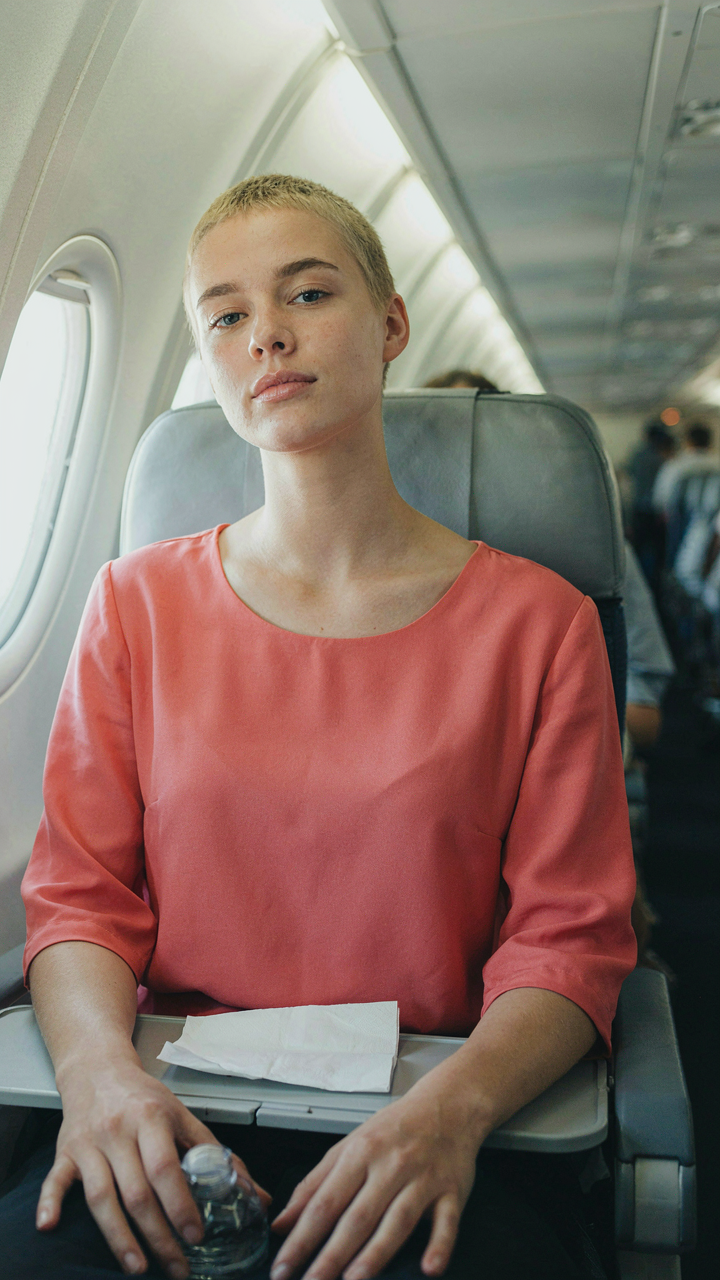
You want to avoid waking up with dead arms and that shoulder pain that lingers for days. The real issue isn’t comfort—it’s that a standard neck pillow compresses the carotid artery and traps your brachial plexus during the four to six hours you’re asleep. Think of circulation like supply lines in military logistics: restrict the route and everything downstream starves.
A neck pillow that props your head at a forced angle creates sustained pressure against soft tissue. Your body compensates by tensing muscles, cutting blood flow further. You need a solution that keeps your head supported without creating a pressure point where your neck contacts the support surface. Flat surfaces with strategic height work better than curved designs that cradle and compress.
Movement Breaks The Stiffness Trap
The conventional advice tells you to find the perfect pillow and stay still. That’s incomplete. Your neck needs repositioning every 45 to 90 minutes, not because comfort matters but because static positioning accelerates muscle fatigue and lactic acid buildup. Small deliberate adjustments reset the pressure points before they trigger pain.
Most travelers skip this because movement feels like disruption. It’s not. Shift your head side to side for ten seconds every hour. Roll your shoulders backward three times. Change which side you lean on. These aren’t stretches—they’re circulatory resets that prevent the stiffness that hits you on landing. The mechanism is simple: movement restores blood flow to compressed areas before damage accumulates.
Beyond The Headrest: Securing Your Entire Torso For Sleep
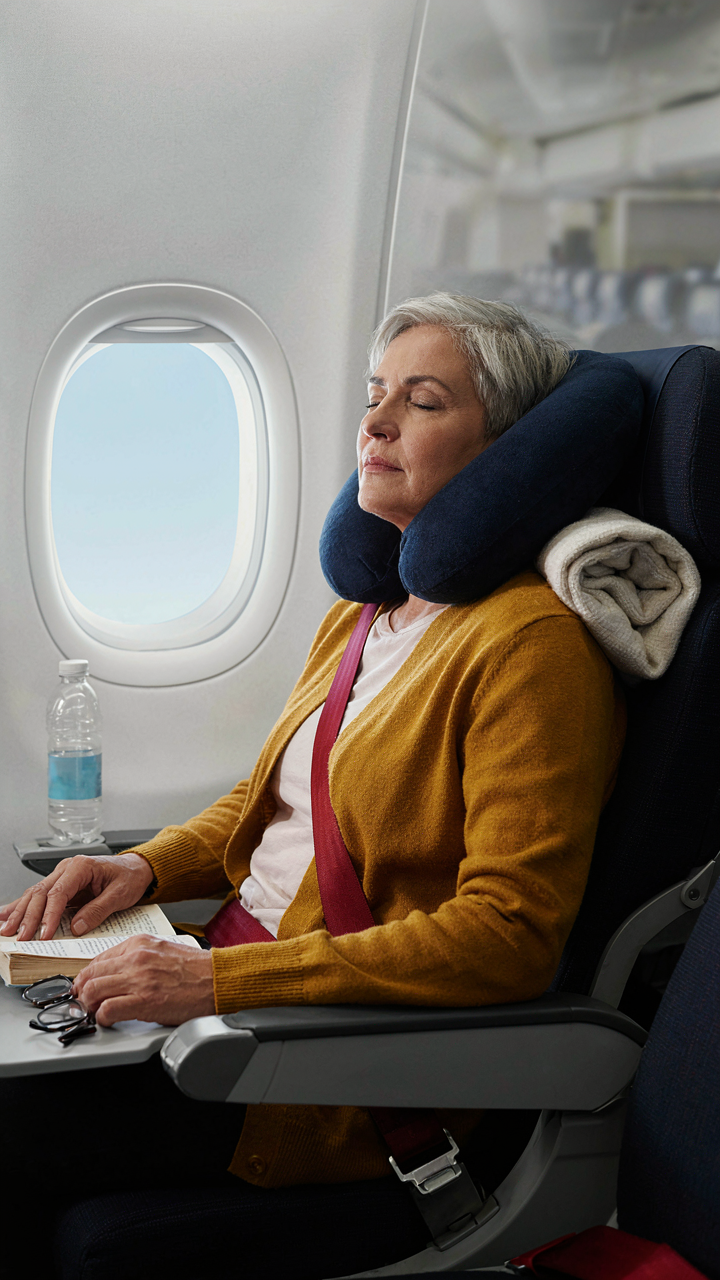
The Seatbelt Recline Anchor
You want to believe a neck pillow alone solves this, but it doesn’t, because your head isn’t the problem—your torso sliding forward is. Physics calls this translational drift, and airplane seats enable it by design. The seatbelt becomes a static anchor point when you pull it tight across your lap at a slight upward angle, locking your pelvis against the seat back. This prevents the cascade collapse that wakes you when your head lurches forward.

Fasten the seatbelt snug but not cutting off circulation. Recline the seat to around 30 degrees maximum—more than that and you slide regardless. The belt’s tension keeps your lower body fixed while your neck pillow now only handles head stabilization, not compensating for a sliding torso. This is the actual mechanism most travelers skip because they focus entirely on the neck.
Bracing Against The Cabin Structure
The wall or fuselage gives you a solid reference point your seat frame cannot. Tilt your seat slightly toward the window or aisle wall, then position your torso so your shoulder blade, not your shoulder joint, makes contact with the hard surface. This distributes pressure and prevents the rolling motion that collapses your airway during REM sleep.
Use your carry-on or a folded blanket as a shim between your ribs and the wall to maintain that brace angle without muscle tension. The goal is passive structural support, not active clenching. Once the contact point locks in place, your neck pillow stabilizes only lateral head movement, and your entire upper body stays geometrically positioned for the full sleep cycle.
The Environmental Control Hack: Optimizing Cabin Conditions For Rest
Layering Strategy Over Thermostat Complaints
You care about this because you want to blame the airline for your failed sleep, not admit you packed wrong. The real mechanism is simple: your body cannot reach deep sleep while managing temperature variance. Think of thermoregulation like a military supply line—the moment you force your system to defend against thermal threats, your nervous system stays in alert mode. A neck pillow does nothing if your core temperature keeps shifting.

The cabin temperature sits around 72 degrees Fahrenheit, but air distribution is uneven. Row position, proximity to vents, and window exposure create micro-climates. Wear a base layer you can remove without undressing completely. Pack a merino wool sweater that compresses small and a lightweight fleece. Start with the fleece on your lap, then layer up as the cabin cools during cruise. This gives you granular control without the disruption of pulling a full blanket over your head, which restricts neck positioning and defeats any neck pillow alternative you’re using.
Sound Isolation Without Generic Earplugs
Standard foam earplugs reduce volume but don’t address the problem: your brain stays alert because it’s still processing sound patterns. The issue isn’t decibel reduction, it’s pattern recognition. Your auditory cortex treats inconsistent cabin noise like a threat signal that never resolves. Noise-canceling earbuds work here, but the real leverage is layering: earplugs plus white noise at low volume plus ambient sound masking.
Insert earplugs first to handle high frequencies and sudden shifts in engine noise. Then run a white noise app or YouTube video at just barely audible volume through earbuds or a single earbud in your less-pressured ear. This creates predictable sonic consistency that your brain stops fighting. Your nervous system stops scanning for new threats. The neck pillow alternative you’ve chosen—whether it’s a travel pillow, rolled jacket, or inflatable—works only when your auditory system isn’t keeping you in a state of low-level alert. Consistency in sound prevents the micro-awakenings that destroy flight sleep.
The Post Flight Reintegration: Preventing Persistent Neck Pain
Cervical Spine Recovery Through Strategic Movement
You want to avoid looking weak or admitting the flight actually hurt you. Here’s the mechanism: your cervical spine compressed under uneven support for hours, and static loading creates adhesions between muscle fibers. Movement breaks those adhesions before they calcify into chronic restriction.

Forget generic “neck rolls.” Those waste time and often reinforce bad positioning. Instead, perform isometric holds: place your palm against your forehead and push without moving your head for six seconds, rest, repeat three times per side. This engages deep stabilizers without the momentum that creates compensation patterns. Do this immediately after landing, then every four hours for 48 hours.
Hydration’s Direct Effect On Tissue Elasticity
Muscle biology isn’t metaphorical here. Dehydration literally reduces intracellular water volume, which means less fluid inside muscle cells to absorb load and dissipate stress. Your neck muscles need hydration status to recover their baseline elasticity after compression.
Most people hydrate after the flight ends. That’s late. Start drinking 16 ounces of water two hours before boarding, then eight ounces every hour inflight. Post-flight, drink 24 ounces within the first two hours, then maintain consistent intake for 72 hours. Your cervical spine recovers its range of motion faster when muscle tissue maintains proper hydration balance throughout the reintegration window.
The Real Obstacle Isn’t Your Neck; It’s Your Unwillingness To Master Your Environment
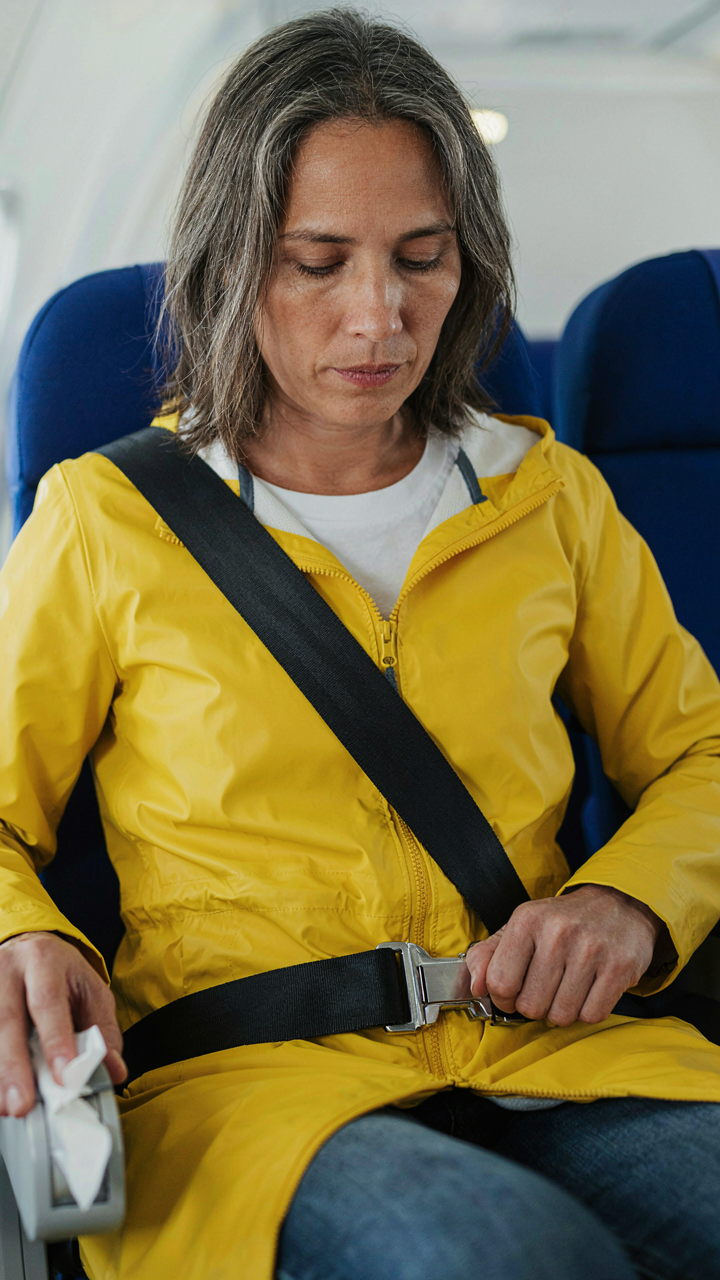
Stop Treating Comfort As Accident
You want to believe a $40 pillow will solve this. It won’t. The real problem is you’ve never designed your flight environment on purpose, so you chase products instead of systems. You’re hoping to buy comfort when you should be building it. Every alternative to the standard neck pillow works only because it addresses one variable you’re currently ignoring: pressure distribution, airflow, posture angle, or sleep surface continuity.
Systems thinking teaches us that problems arise from how components interact, not from single failures. Your neck pain isn’t a neck problem; it’s an environment problem. The seat recline angle, armrest height, blanket placement, hydration timing, and pillow choice form a chain. Break one link and the whole system fails. Most travelers obsess over the pillow and ignore the other five variables that matter more.
- Seat Position Calibration: Recline to 40-45 degrees, not fully flat. This maintains neck alignment while preventing the head-drop that causes pain on short flights.
- Armrest Utilization: Lower the armrest and position it under your thigh or hip, not raised at shoulder height. This shifts your entire spine into neutral.
- Blanket Layering: Use two thin blankets instead of one thick one. Fold the first into a wedge under your lumbar spine, wrap the second for warmth.
- Hydration Protocol: Drink water every 45 minutes before you feel thirsty. Dehydration stiffens neck muscles and masks the real problem as pain.
- Pre-Flight Movement: Walk the terminal for 15 minutes before boarding. Muscles that are already slightly fatigued relax faster and deeper once seated.
The neck pillow industry exists because people want a single product fix. It doesn’t work that way. You need a protocol, not a gadget.
Execute On Your Next Flight
This is the part where most advice dies: people read it and do nothing. Your next long-haul flight is the test. Arrive at the gate with a specific checklist, not vague intentions. You’ll seat yourself differently. You’ll position your armrest with intention. You’ll have water ready before boarding. You’ll know exactly where your blanket folds go. The pillow alternative you choose matters, but only after you’ve locked in the environment variables that account for 70% of your comfort.
Bring two items: a compression neck support sleeve (not a pillow) for the first three hours when you’re most alert and likely to move, and a small travel pillow for hours four through landing when you’re actually sleeping. Alternate them. The sleeve prevents muscle fatigue during the transition to sleep. The pillow maintains cervical alignment once you’re unconscious. Start the protocol on your next flight. Measure your sleep quality and neck pain on a 1-10 scale when you land. Adjust one variable at a time. That’s how you actually solve this.
The Real Obstacle Isn’t Your Neck; It’s Your Unwillingness To Master Your Environment

You don’t need a better pillow. You need to stop accepting discomfort as inevitable. Every neck pillow alternative we covered works because you decided to test it, not because it’s magic. The real skill is recognizing that comfort on planes comes from intentional choices, not luck. Before your next flight, pick one alternative and commit to it for three trips. Stop rotating through options like a tourist. Your neck will thank you, but your mind will thank you more for finally taking control of what you can actually control.