The “Airport Food Trap” Deception: Why You’re Still Getting It Wrong

Price Isn’t The Real Enemy
You care about this because you hate feeling stupid at checkout. But the actual mechanism at play uses economics terminology: airports operate as monopolistic markets where vendors capture consumer surplus through scarcity, not just markup. A bottle of water costs four times retail price not because supply chains are broken but because you cannot leave and buy elsewhere. The real cost isn’t dollars—it’s decision fatigue and the psychological surrender that happens when you realize you’re trapped.
Most advice stops at “bring your own snacks” and pats itself on the back. That’s lazy. The deeper issue is that airport retailers engineer the buying environment to exploit your specific weakness: time compression combined with limited options forces faster purchasing decisions than you’d make at ground level. You cannot comparison shop. You cannot walk to another store. You accept prices you’d reject anywhere else because the friction of alternatives exceeds the friction of paying. Recognizing this mechanism is the first step toward immunity.
Hunger Isn’t Why You’re Eating
Travel creates a specific neurological state that has nothing to do with actual caloric need. Military psychologists call this “situational stress response”—your nervous system interprets the airport environment as a threat and seeks immediate reward, typically through consumption. You’re not hungry. You’re managing anxiety through the only socially acceptable dopamine hit available in a security line. Most people misread this signal entirely and blame actual hunger.
The mechanism triggers before boarding and compounds during flight. Your body registers the unfamiliar space, the crowds, the loss of control, and the time distortion as danger. Food becomes a control mechanism—something you can choose when everything else feels predetermined. Pack snacks with this truth in mind: bring options that address boredom and anxiety, not just hunger. Nuts, seeds, or jerky occupy your mouth and hands for extended periods, satisfying the need for engagement rather than nutrition. This distinction changes what you pack completely.
The Minimalist’s Manifesto: TSA Approved Snacks, Not Your Entire Pantry

What The TSA Actually Cares About
You want to look smart by knowing the rules without asking. Here’s the mechanism: the TSA doesn’t ban snacks based on nutrition or brand. They ban based on physical state. Solids pass through security. Liquids, gels, and spreads don’t. Peanut butter is a gel. Yogurt is a liquid. A protein bar is a solid. The rule exists because screening equipment can’t reliably detect threats inside opaque pastes and creams. Know the state, not the name.

Most people memorize a list and feel secure. That’s backwards. You need one principle: if it holds its shape at room temperature and doesn’t require refrigeration past security, it clears. Hard cheeses clear. Soft cheeses don’t. Granola bars clear. Honey doesn’t. This isn’t arbitrary. The TSA publishes this standard on their website under “What Can I Bring.” The people who get held up at security missed this step.
Density Wins Over Volume
Physics teaches load distribution. In aviation, weight and space matter. Apply that to your carry on: you’re not optimizing for quantity. You’re optimizing for calorie density per ounce. This shifts everything. A standard granola bar delivers 200 calories in one ounce. A rice cake delivers 30 calories in one ounce. One bag of carry on snacks should fuel your flight without expanding to fill your entire overhead bin.
Build your snack selection around this metric. Nuts deliver nine calories per gram. Dried fruit delivers three calories per gram. Trail mix combines both. Protein bars are engineered for density and last for months. A single ounce of almonds outperforms six ounces of pretzels. Your carry on becomes a concentrated calorie source, not a snack drawer. Pack for efficiency, not variety.
The “Cognitive Load” Reduction Protocol: Effortless Fueling
Decision Fatigue Kills Your Trip Before You Board
You want to feel in control at the airport, but that illusion costs you energy you’ll need later. Decision fatigue is a documented psychological drain: each choice your brain makes depletes the same finite resource. Apply this to carry on snacks and you see the real problem. Most people decide what to eat at the gate, standing in a overpriced shop, tired and hungry. That’s three decisions collapsing into one moment of weakness.

Pre-selecting your snacks removes the decision point entirely. You pack specific items the night before. You know exactly what’s in your bag. At the airport, you don’t choose between options. You eat what you brought. This isn’t about willpower or discipline. It’s about architecture. You’ve designed a system where the hard choice happens when you’re rested, not when you’re depleted.
Batch Prep Locks In Consistency
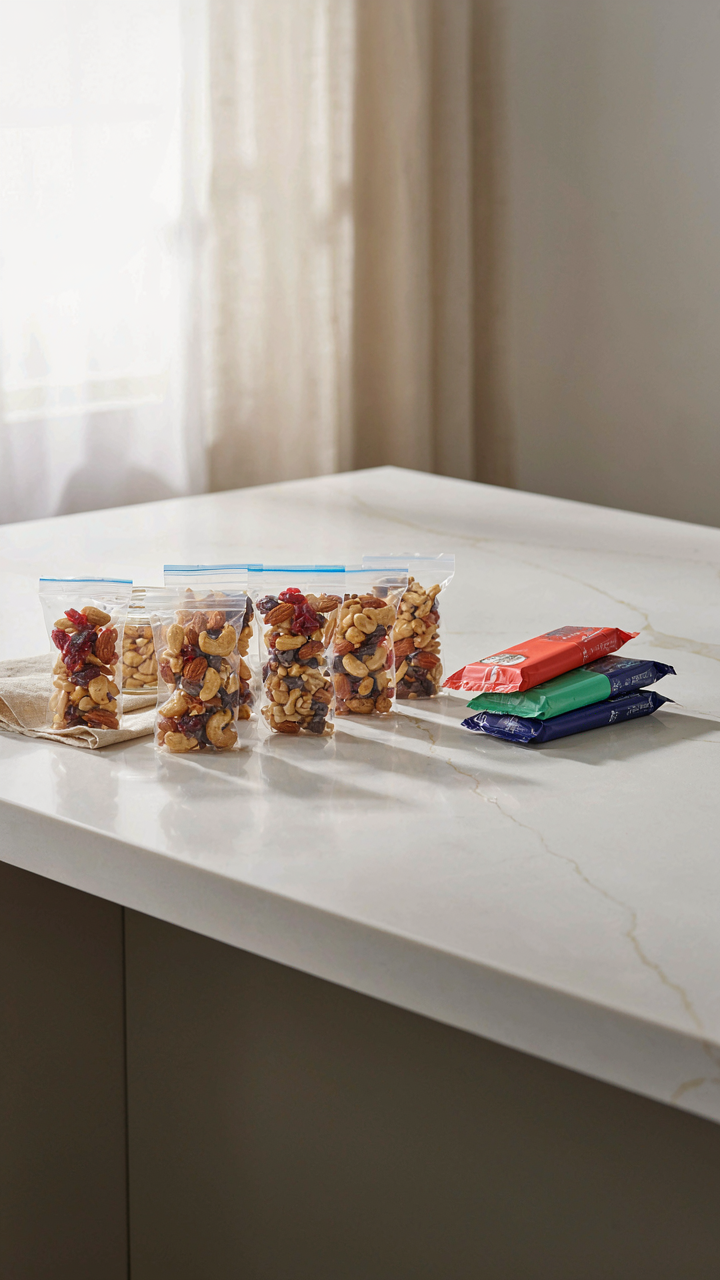
The common advice says “just pack snacks,” which is useless. Real preparation means treating snack packing like a repeatable system, not a spontaneous task. Batch preparation removes the variability that makes every trip feel different. Set one afternoon each month to portion nuts, dried fruit, or protein bars into containers. Label them by day or by flight type. This single session eliminates the need to think about snacks for weeks.
Consistency breeds efficiency. Once you’ve done this once, you run it again the same way. You don’t debate portion sizes or wonder if you brought enough. You know the exact weight, calorie count, and satiation profile of each container. When you board, you execute the plan you already made. No decisions at altitude. No hunger driving impulse purchases. The mechanism is simple: batch your work on snacks once, then deploy the same output across multiple trips.
The Travel Snacks Power Index: Maximize Energy, Minimize Bulk

Density Wins Over Volume
You care about this because you don’t want to look like an amateur fumbling through a bag for food while everyone else sits composed. The real mechanism here is calorie density, borrowed from physics. Think of it as mass-to-energy ratio. A gram of fat delivers 9 calories. A gram of carbohydrate delivers 4. On a flight, you’re not optimizing for nutrition labels. You’re optimizing for sustained function in the smallest footprint possible.
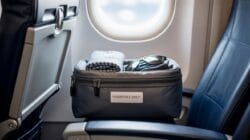
Nuts, seeds, and nut butters are the baseline. A two-ounce bag of almonds packs 340 calories into something that occupies less space than a deck of cards. Dried fruit concentrates carbohydrates because water weight is gone. Beef jerky delivers protein in solid form. The mistake people make is bringing variety. They pack six different snacks to feel prepared and end up carrying dead weight. Pick two high-density options and commit.
The Window, The Boarding, The Landing
Nutrient timing isn’t mystical. It’s predictable. Your body enters a mild stress state during takeoff and landing. Cabin pressure changes. Dehydration accelerates. Blood sugar drops because you’re sitting still. Three hours into flight, your mental focus collapses if you haven’t eaten since security. The fix is crude but effective: eat protein and fat thirty minutes before departure, then again at the two-hour mark if your flight extends beyond that. This prevents the energy cliff that makes the last hour miserable.
Salty snacks trigger thirst, which forces hydration, which actually helps with cabin pressure adaptation. That’s not accidental. Pack your snacks in small portions so you can graze without committing to a full meal. One handful of mixed nuts every ninety minutes beats one large snack that sits in your stomach. Your protocol: identify your flight duration, divide it by ninety, and portion accordingly before you leave home.
The Adaptability Framework: Snacks For International Travel & Beyond

Your Gut Doesn’t Care About Your Itinerary
You want to feel prepared, in control, unaffected by travel. Reality: your digestive system enters a hostile environment the moment you change time zones. Borrowed from biology, the concept of “immune priming” applies directly to carry-on snacks—you’re not just eating, you’re preemptively stabilizing your microbiome before stress and unfamiliar food sources destabilize it. Travel dehydration, altitude, and bacterial exposure create a cascade your body didn’t evolve for. The snacks you pack are biological insurance, not luxury.

Pack shelf-stable protein and fermented foods before departure. Nuts, seeds, and shelf-stable yogurt packets stabilize blood sugar during layovers when food quality varies wildly. Your gut flora needs recognizable inputs—foods your system already processes efficiently—to maintain function across time zones and continents. This isn’t optional optimization. This is metabolic continuity.
Position Your Resources Before You Need Them
Military strategy calls this “pre-positioning”—placing critical supplies where they’re needed before the operation begins, not during it. Apply this to carry-on snacks: you don’t buy airport food because you’re hungry. You buy it because you didn’t pre-position anything better. The TSA allows solid foods through security. Most travelers ignore this and pay $18 for a protein bar at the gate.
Pack nutrient-dense, non-perishable items the night before travel, not the morning of. Dried fruit, nuts, seeds, and protein bars survive security screening, long flights, and connections without refrigeration. Position these items in your carry-on before you reach the airport. The moment you’re in the terminal, your options collapse and your prices triple. Strategic positioning eliminates the desperation that creates bad decisions.
Best Plane Snacks For Kids: Beyond Sugary Distractions

Snacks That Don’t Announce Themselves
You want your kid quiet on a plane because you’re terrified of being judged by strangers. The real mechanism is this: loud snacks trigger attention. The moment your child crunches, rustles, or creates mess, you’re visible to everyone in a confined space with no escape. Pick snacks that operate silently.
- Dried fruit: Apricots, mango, or raisins require no chewing sound and won’t scatter across seats. Pack in small containers to control portions.
- Nut butter packets: Single-serve almond or peanut butter packs are quiet to consume and deliver sustained energy without the crunch factor.
- Cheese cubes or string cheese: Soft texture, minimal noise, no crumbs. Stays contained in your hand or a small container throughout consumption.
- Protein bars: Choose dense, chewy varieties over crunchy ones. They’re compact, quiet, and won’t trigger the snack aisle sensation around you.
- Pretzels or puffed snacks wrapped individually: Keep them sealed until eating. The wrapper absorbs sound and prevents scattered debris on the plane floor.

The TSA allows all of these through security. Pack them in ziplock bags to flatten your carry on space and control mess at the source. A quiet snack is a snack that buys you two more hours of peace.
Nutrition That Sustains Attention
Most parents hand kids sugar because it’s fast relief, not because it’s smart feeding. The issue: a sugar spike lasts thirty minutes, then crashes into boredom or irritability right when you need compliance most. Use nutrition as your actual lever for behavior.
Pair protein with fat and carbs to extend satiation and mental clarity. A handful of almonds with a dried fig works better than a cookie because it doesn’t spike blood glucose then tank it. Your kid stays regulated, stays seated, stays occupied with actual digestion instead of restlessness. The texture matters too. Chewy snacks occupy the mouth longer than crunchy ones. That’s not distraction through novelty, that’s sustained engagement through biology. Pack a mix that hits different sensations: something creamy, something chewy, something you can portion into small amounts. Spacing snacks across the flight prevents early consumption and boredom, not behavior.
The “Adult Fuel” Matrix: TSA Friendly Snacks For Productivity

Sustained Energy Without The Crash
You want to feel sharp on arrival, not wired then useless. The real mechanism here comes from biochemistry: glucose metabolism versus sustained fuel sources. Your brain doesn’t care about willpower or motivation. It cares about stable blood sugar and steady fuel delivery. Most people pack candy or granola bars and wonder why they crash halfway through the flight. That’s spiking insulin, not productivity. Complex carbs with protein and fat slow digestion and keep your cognitive load stable for hours. Nuts, seeds, dried fruit with whole grain crackers, or nut butter packets paired with apple slices work because they’re engineered for steady release, not the sharp spike-and-plummet cycle.

Your carry-on snack strategy should mirror a long-distance athlete’s fueling protocol, not a convenience store run. Almonds, cashews, and pumpkin seeds contain magnesium and fat that your nervous system actually uses. Jerky or protein bars add the amino acid component without requiring refrigeration. Mix them. A handful of mixed nuts with dried apricots gives you three macronutrient streams hitting your metabolism at different rates. Pack double what you think you’ll need. TSA approves all of this. The flight’s stress hormones deplete your reserves faster than ground-level sitting does.
Water Intake And Cabin Pressure
Most travel advice skips this entirely because it sounds boring. Cabin air humidity sits at twelve percent. Your body loses water constantly at altitude, and dehydration accelerates mental fatigue faster than skipping breakfast does. Pressurized cabins force your blood vessels to work harder. Your kidneys compensate by holding sodium, which creates a feedback loop that makes you thirsty at the wrong times. The fix isn’t complicated, but it requires a protocol you actually execute.
- Empty water bottle pre-security: Fill it after passing through TSA. A liter bottle costs two dollars at any airport, but carrying an empty one avoids the liquid restriction entirely and saves money.
- Electrolyte packets: Liquid IV, Nuun, or salt stick packets weigh nothing, cost under ten dollars for ten servings, and restore sodium balance that cabin pressure disrupts naturally.
- Coconut water powder packets: Potassium content matches what your cells need at altitude. Mix into your water bottle for hydration that actually holds instead of passing straight through.
- Tea bags (herbal or caffeine): Caffeine slightly restricts blood vessels, which helps oxygen absorption in low-pressure cabins. Herbal tea provides warmth and ritual without dehydration, a net win for four-plus hour flights.
- Salty snacks paired with water: Pretzels, seaweed snacks, or salted nuts trigger thirst signals that match your body’s actual sodium needs, creating a self-regulating hydration rhythm without constant mental math.
Drink half a liter before takeoff, then one liter per two flight hours after that. Set phone reminders if you have to. Dehydration compounds with snack choices. If you’re eating dense protein or salty foods without water intake, you’re creating a metabolic bottleneck that no snack quality fixes. The snacks matter only when hydration works in parallel.
The “No Compromise” Carry On Snack System: Your Personal Advantage
Build What You’ll Actually Eat
You want a system that makes you feel prepared without the guilt of wasted food. Here’s the mechanism: most travelers pack snacks based on what sounds healthy or impressive, not what they’ve proven they’ll consume under travel conditions. Your arsenal starts with honesty about your actual eating patterns. Review the last three flights you took. What did you buy at the airport? What sat untouched in your bag? That’s your baseline. Now work backward from there.

Your system needs three layers: immediate hunger (first two hours), mid-flight energy (hours two through five), and backup protein (anything beyond). Immediate hunger snacks should be something you’ve eaten in the last month. Mid-flight options need to be less aromatic and less crumbly than immediate hunger choices. Backup protein means shelf-stable items like nuts or jerky that don’t degrade in a pressurized cabin. Build this arsenal by actually testing snacks on short trips before committing them to long-haul flights.
Stress Test Before Your Next Trip
The common advice is to pack variety. That’s incomplete. What matters is identifying which snacks perform under actual flight conditions, not theoretical ones. Cabin pressure, dry air, and seat-confined eating change how food tastes and how your body responds to it. Salt intensity increases. Sweetness flattens. Texture matters more than flavor.
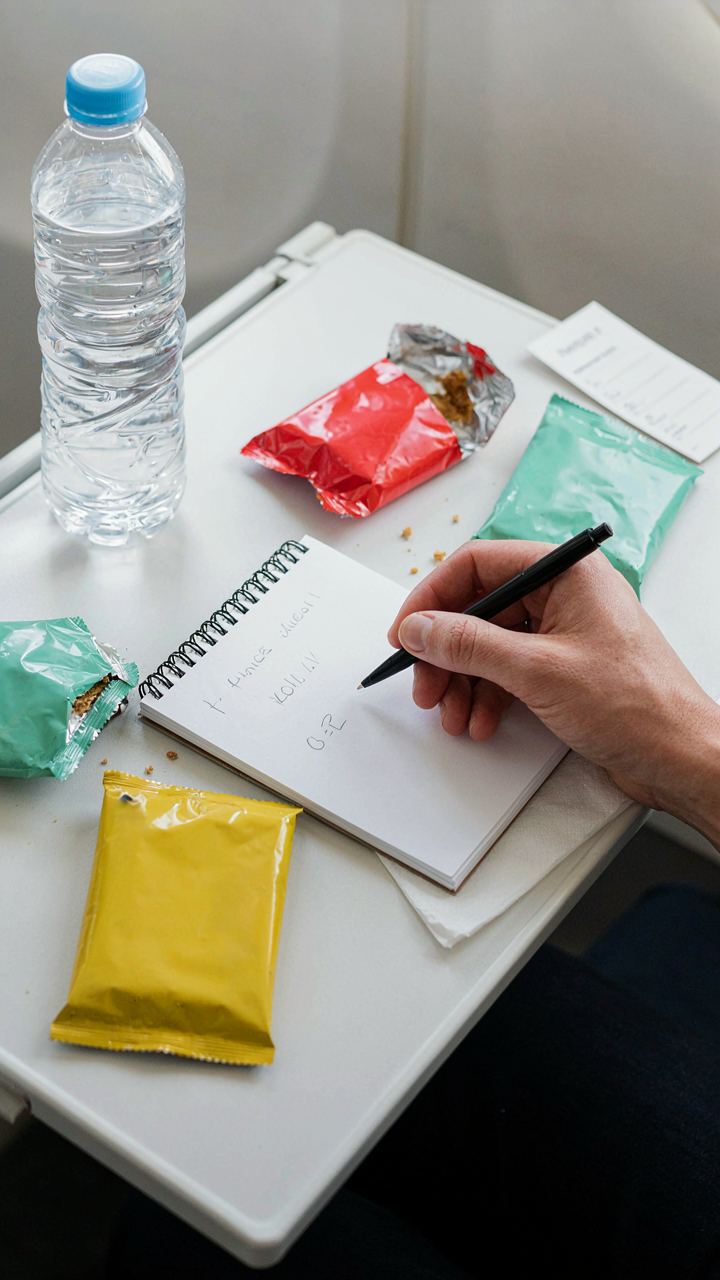
Before your next flight, run a single-flight audit. Pack your current snacks. Track which ones you opened, how much you ate, and whether you felt satisfied afterward. Note which ones created crumbs, which ones left your hands sticky, and which ones triggered thirst. After landing, revise your system based on actual behavior, not assumptions. This becomes your protocol for every future trip: pack, observe, refine. The snack system that survives three flights of actual testing is the one worth keeping in rotation.
The Real Obstacle Isn’t The Snack Itself, But Your Inability To Simplify And Execute A Repeatable System
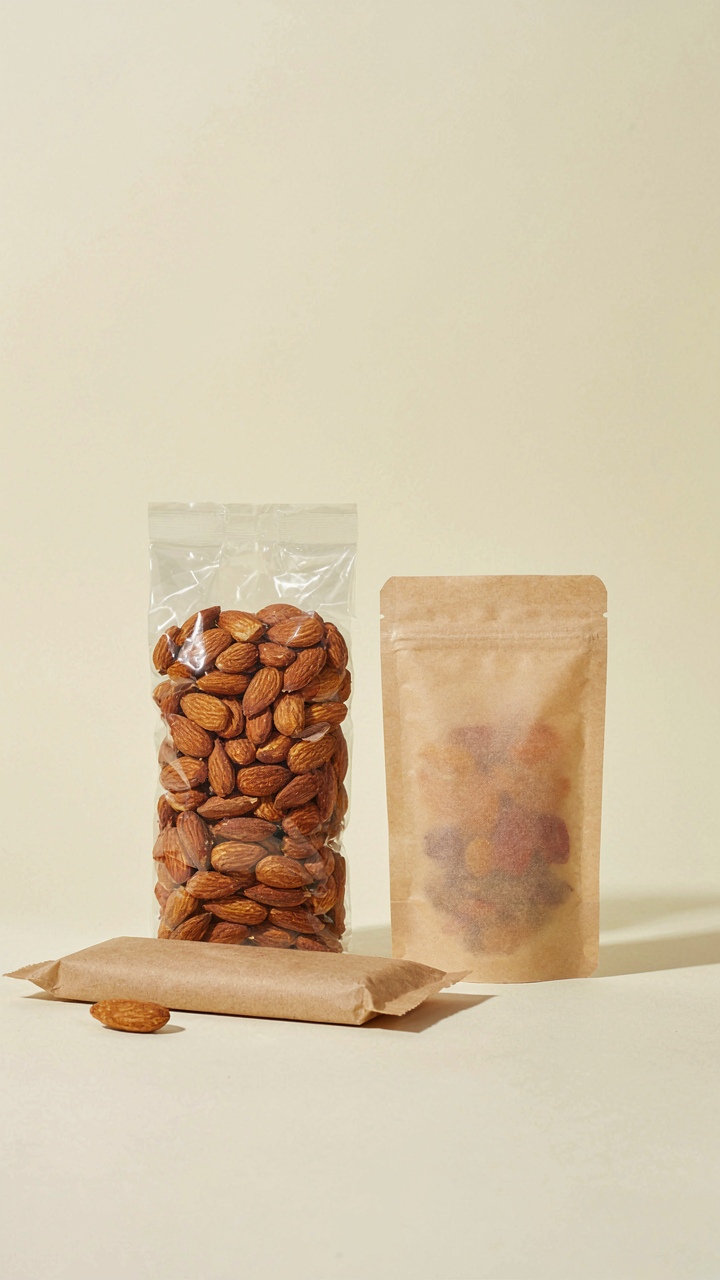
Most people fail at carry on snacks because they overthink it. They debate, research, procrastinate. The mechanism that works is stupidly boring: pick three snacks you actually eat, buy them tomorrow, pack them the night before every flight. Done. Your problem was never the snack. It was your refusal to commit to something simple enough that it requires zero willpower. Stop designing the perfect snack strategy and start building the one you’ll actually repeat.