The Unseen Burden: Why More Storage Often Means Less Freedom
Weight Penalties Kill Fuel Efficiency, Wear, And Tear
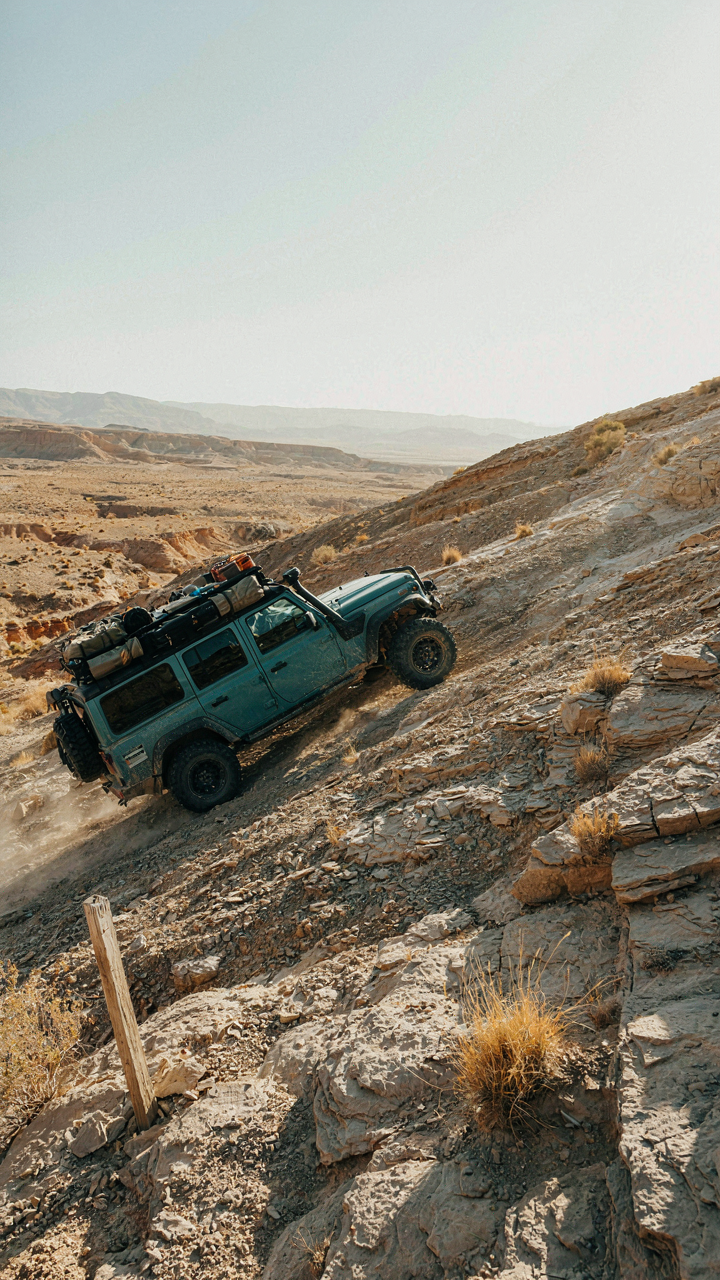
You think more storage means more capability. What it actually means is you’re paying every single mile for decisions you made months ago. This is basic thermodynamics: energy cost scales with mass. Every pound of storage, gear, and water increases rolling resistance and engine load, directly reducing fuel economy and accelerating component wear.
A fully loaded roof rack or external storage adds 200-400 pounds. That’s not just a number. On a 4,000-mile expedition, that weight costs you fuel money, burns through brake pads faster, strains suspension geometry, and forces your engine to work harder in heat. The math is mechanical, not theoretical. Lighter storage systems with higher density packing outperform heavy external rigs every time over distance.
Accessibility Versus Capacity Demands A Choice
Common advice says build bigger storage. That’s wrong. Big storage encourages you to carry items you’ll never touch, creating access friction when you actually need something. Mechanics call this the load-bearing principle: what you carry must earn its space through use or it’s dead weight stealing accessibility from what matters.
Real storage strategy inverts the problem. Design for the 20 percent of gear you use 80 percent of the time. Keep frequently accessed items in shallow, accessible compartments. Bury seasonal or emergency-only gear deeper. This forces discipline: you stop carrying redundancy, you access what matters in seconds, not minutes digging through layers. The result is a vehicle that moves faster and feels responsive instead of sluggish.
The “Single Purpose Purge” Protocol: Essential Overland Gear Selection
Multi Functional Items First
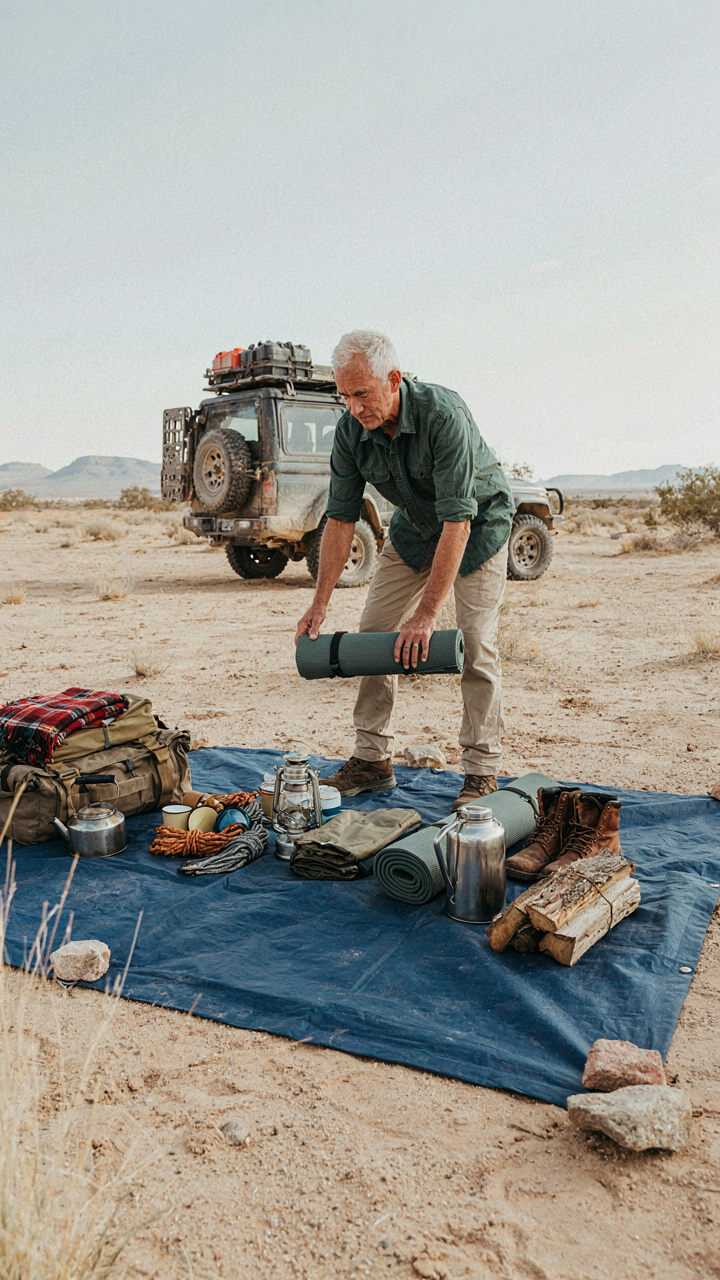
You want to believe your gear collection is lean because you’re smarter than other people. The mechanism is actually simpler: you haven’t forced yourself to count the identical functions hiding inside redundant items. Borrowed from industrial engineering, this is “functional consolidation”—mapping every task your gear performs, then eliminating duplicate pathways to the same outcome.

Start by listing what each item actually does, not what it claims to do. A quality multi-tool with pliers, knife, and screwdriver replaces three separate tools. A heavy-duty storage bag that clips to your vehicle frame doubles as a weatherproof container and mounting point. The rule is brutal: if two items serve the same primary function, one gets removed before anything touches your vehicle.
Eliminate What You’re Lying About
The common advice says “be honest about what you use.” That’s incomplete. Most people lie to themselves about frequency, not just honesty. You carried that item three times in two years but tell yourself it’s “essential backup.” That’s not essential—that’s insurance against a scenario you haven’t actually encountered in your use pattern.
Pull every item from storage right now and sort into three piles: used in the last six months, used in the last year, and never touched. Everything in pile three either leaves or gets stored at home, not in your vehicle. The weight penalty of dead gear costs you fuel efficiency, payload capacity, and actual functionality on terrain where grams matter. Keep your vehicle light enough to move, heavy enough only with what moves you forward.
The “Tetris Matrix” For Efficient Off Road Vehicle Storage Setup
Modular Packing Systems Beat Fixed Layouts
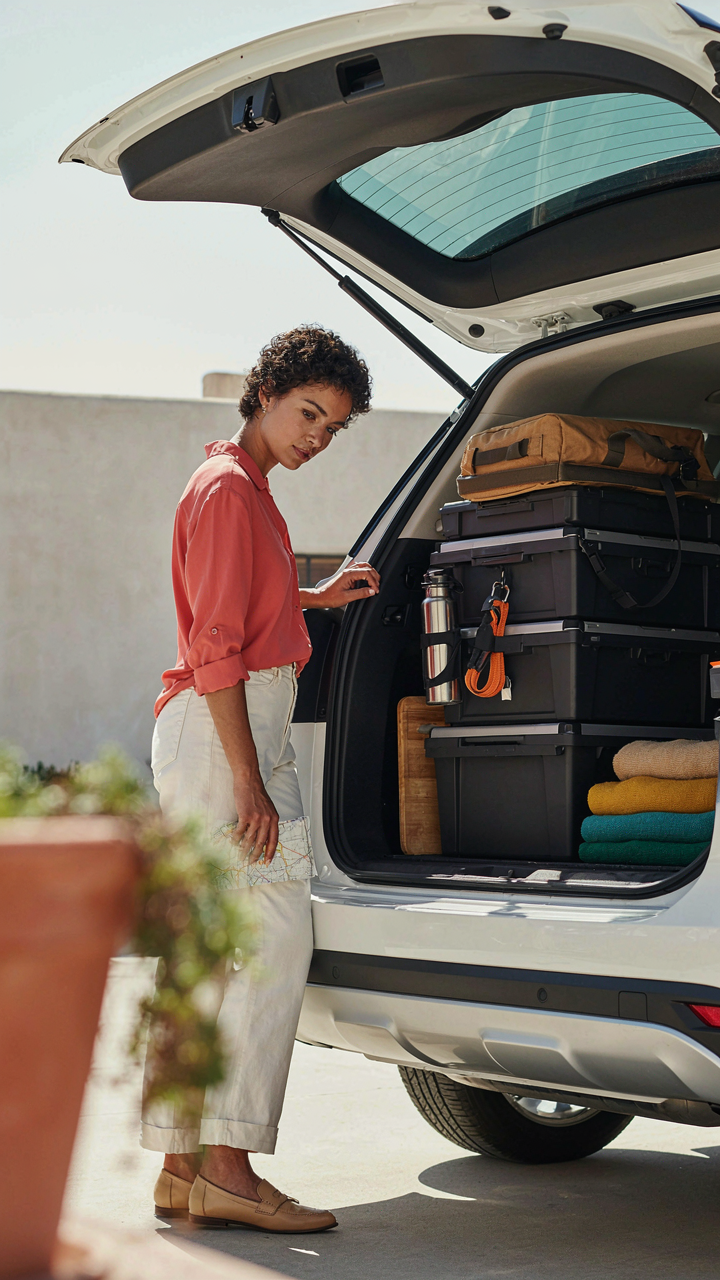
You want your gear organized so you look competent and don’t waste time searching for tools in the field. What actually matters is that modular systems let you reconfigure storage based on trip length, terrain type, and payload weight without rebuilding your entire setup. Fixed shelving forces you into one rigid configuration. Modular bins and drawers move, stack, and adapt. This flexibility means you’re not paying weight penalties for gear slots you don’t need on a given expedition.

The real mechanism here is load distribution. Different terrain demands different weight placement. Rocky terrain requires lower center of gravity. Long highway stretches tolerate higher placement. A modular system lets you shift components vertically or horizontally between trips in under an hour. Non-modular vehicles trap you with the same configuration regardless of conditions, which means either over-packing or making multiple trips to swap gear. That’s inefficiency baked into steel.
Vertical Space Uses Physics, Not Hope
Gravity isn’t your enemy in storage design, it’s your constraint you leverage. Most people treat vertical space as leftover room and stuff it with light items they rarely need. Wrong approach. The physics principle here is moment arm: the farther weight sits from your vehicle’s center of gravity, the harder it works against stability and fuel economy. Keep heavy items low and centered. Stack lighter, frequently accessed gear vertically around the perimeter.
The protocol is simple. Reserve floor and low mounting positions for tools, water, and recovery gear. That’s your 40 to 60 percent of total weight. Use vertical wall space and roof rails for sleeping systems, clothing, and camp equipment. Drawer systems that pull out vertically give you access without unpacking the entire vehicle. This arrangement cuts your setup time by half because you extract what you need without moving everything else first.
The “Quick Draw” Method: Optimizing Accessibility For Overland Storage
The Access Hierarchy You Actually Need
You want your gear organized so you look competent, but the real reason you care is this: when you need something at mile 47 in failing light, fumbling through a packed vehicle kills momentum and erodes confidence. The mechanism is simple: organize by retrieval frequency, not category. This is logistics thinking applied to your rig. Military supply chains use “forward positioning” for critical items. Your vehicle needs the same structure. Items you reach for daily occupy the outermost layer. Weekly items sit one level back. Seasonal or emergency gear goes deep.

The common mistake is storing by type—all tools together, all camp gear together—instead of by access speed. This creates friction because your hands make decisions, not your brain. A headlamp used nightly should never be buried under water containers. A recovery strap needed in an emergency should live outside locked compartments. Your storage system fails the moment decision-making slows you down. Position your most-touched items in cab-accessible spots or top-tier exterior mounts where extraction takes under ten seconds.
Life Safety Items Need Their Own Protocol
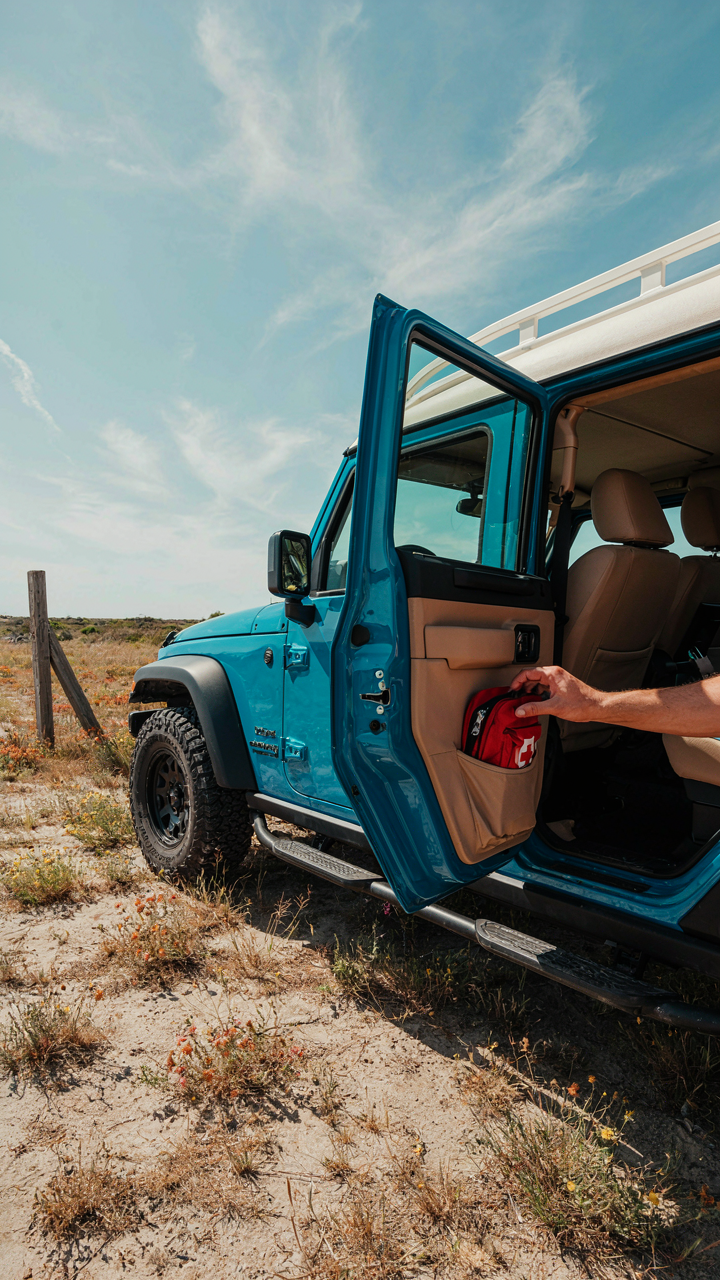
Emergency access points aren’t nice to have; they determine outcomes when systems fail. In vehicle design, this principle is called “critical path redundancy”—backup routes when primary systems fail. Your first aid kit, fire extinguisher, and recovery tools need to be reachable without opening the main vehicle body or disturbing surrounding gear. This means they live outside your primary storage system, in dedicated locations you’ve memorized.
Never bury emergency items under load. Never require two hands to reach them. Never make them dependent on the vehicle starting or doors unlocking. A fire extinguisher mounted to the exterior of your cab is accessible during a fuel-line rupture. A trauma kit in a door pocket is reachable if you’re trapped behind a jammed tailgate. Recovery boards stored on external mount points don’t vanish under shifting cargo in a rollover. Test your emergency access points monthly by actually retrieving items in low light. If you hesitate or fumble, the location fails.
DIY Vs. Off The Shelf: Crafting Your SUV Storage Advantage
Building Custom Fabrication Into Your Vehicle
You want custom storage because you believe it proves you’re serious about overlanding, not because it actually solves your problem better. The real mechanism is precision fit: custom fabrication eliminates the gap between your vehicle’s actual dimensions and generic product dimensions. Every SUV has dead space. Custom work captures it.

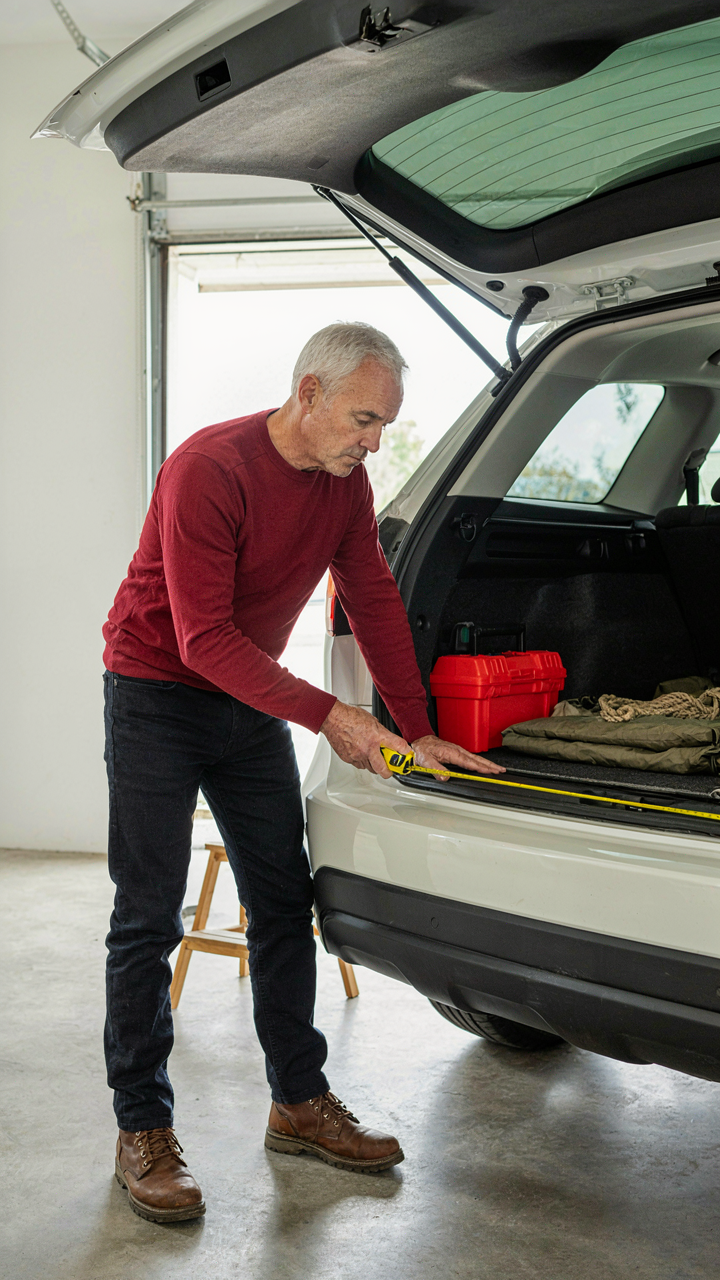
Fabrication starts with measurement, not imagination. You need exact dimensions of the cargo area, wheelbase, roof line, and load-bearing points. Aluminum extrusion, welded steel frames, or composite panels then occupy those specific zones. The advantage isn’t aesthetics. It’s that you lose zero cubic inches to incompatibility. A custom drawer slides on rails bolted exactly where the frame can handle load. A bespoke roof rack sits flush because someone measured twice and cut once.
Finding Commercial Products That Actually Work
Not all off-the-shelf storage is garbage. The mistake most people make is treating commercial products as either complete solutions or complete failures, when the real play is selective integration. You buy a product for what it does well, then modify or supplement it where it falls short.
The filtering question is simple: does this product solve one specific problem better than fabricating it yourself? A quality roof basket has engineering you won’t replicate easily. A modular drawer system has refinements in slides, seals, and ergonomics that custom work takes months to match. Buy those. Ignore products that claim to solve everything. Stack what works, fill gaps with custom fabrication, and you avoid both the sunk time of full custom builds and the compromises of generic systems.
Beyond The Trunk: Unconventional Overland Vehicle Storage Spots
Under Seat Voids And Hidden Compartments
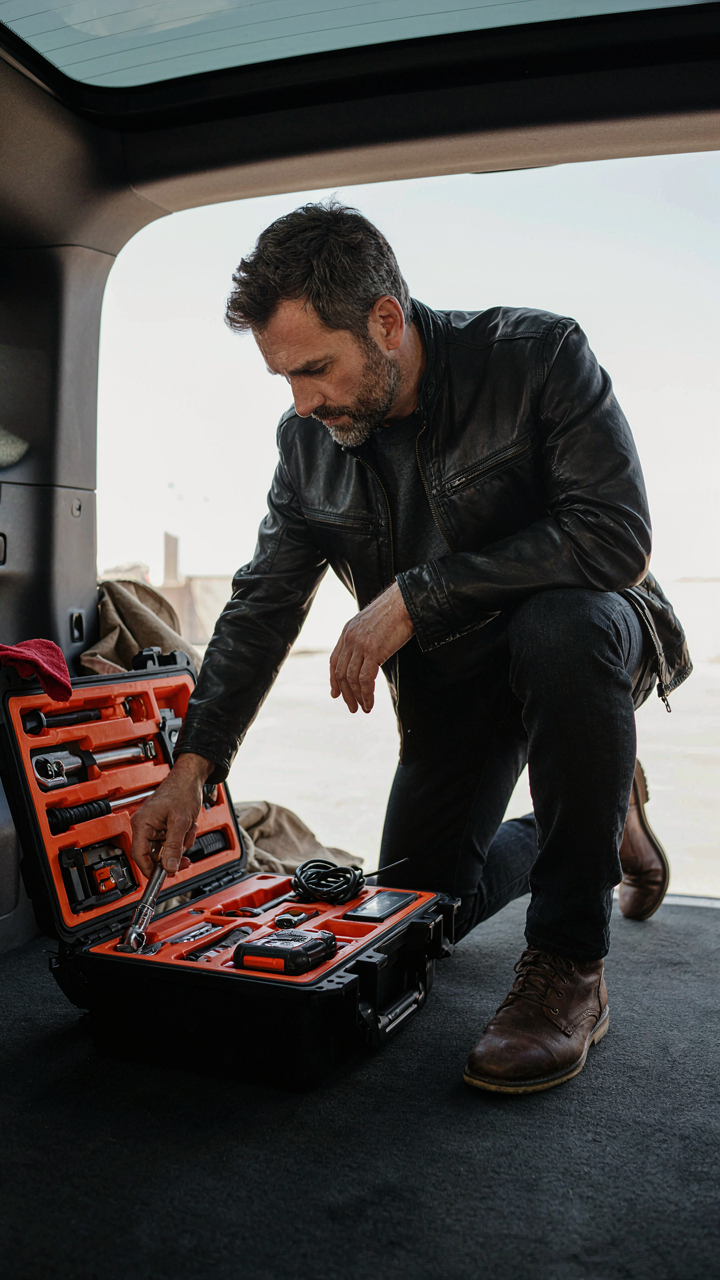
You want to look organized without admitting you own a lot of stuff. The real mechanism is dead space: every vehicle has cavities the designer never intended as storage, and they’re wasted until you exploit them. Under-seat voids exist in most trucks and SUVs because seat bases need clearance for recline tracks and suspension geometry. These spaces hold tools, recovery gear, or documents flat without adding visible clutter.

Measure the exact depth and width of your under-seat cavity before buying anything. Hard-sided cases designed for this fit better than soft bags, which compress unevenly and shift during driving. Mount a retention strap across the case so it doesn’t slide forward during hard braking. Check periodically that nothing interferes with seat adjustment mechanisms. This storage only works if access remains fast; if you have to remove items to reach others, the system fails.
Roof Rack Thermodynamics And Weight Distribution
Physics applies to overland vehicles the same way it applies everywhere else: drag is the enemy, and mass at height destabilizes everything. A loaded roof rack increases aerodynamic drag by 15 to 25 percent and raises your vehicle’s center of gravity, which changes handling in crosswinds and during loaded turns. The cost compounds at highway speeds where fuel consumption rises proportionally to drag coefficient.
Weight placed on the roof affects braking distance and suspension response more than the same weight carried low and centered. If you must use roof storage, keep it to items under 75 pounds total and position weight toward the front of the rack to maintain balance with rear-mounted fuel or water tanks. Hard boxes reduce wind noise and drag better than soft bags because they maintain aerodynamic shape instead of billowing. Pack dense items at the box bottom and secure everything with redundant tie points. Calculate the load’s moment arm from your vehicle’s center of gravity and verify your suspension geometry handles the shift before a long trip.
Mini Camper And Car Camper: The Art Of The Mobile Base

Integrated Sleeping Solutions Dual Purpose Design
You want to believe a small vehicle can sleep two people comfortably without feeling like you’re storing bodies. That’s the real friction. The mechanism is borrowed from industrial design’s concept of stacking: every object must perform more than one function, or it doesn’t earn its footprint. A bed platform that opens to reveal gear storage below isn’t luxury. It’s arithmetic.

The platform itself becomes structural. Build it from 18mm birch plywood with a center beam that ties into the vehicle frame at two points. This eliminates flex and metal noise. Cushioning matters less than density consistency. A 4-inch closed-cell foam mattress wrapped in moisture-resistant fabric works because it compresses predictably and dries fast. Storage compartments underneath use sliding drawer mechanics with ball-bearing slides rated for repeated cycles. The platform height dictates usable space below. Set it at 16 inches minimum to clear undercarriage components and allow airflow.
Kitchen Unit Consolidation Efficiency In A Small Footprint
Most overland storage advice treats the kitchen as a separate zone. Wrong. Think of it like a ship’s galley, where every tool serves dual or triple duty and positioning prevents wasted motion. Consolidation means your stove, prep surface, and storage sit within arm’s reach without rearrangement.
- Single-burner stove with integrated windscreen: Folds flat, mounts to a swing-out bracket, and the windscreen slides into a gap between storage boxes when stored.
- Cutting board that doubles as a container lid: Custom-fit plywood cut to seal your largest storage box, creating a work surface that doesn’t add volume.
- Collapsible sink basin with magnetic clips: Hangs inside a cabinet door or on a metal rail system, eliminating dedicated shelf space.
- Modular utensil organizer in a drawer-mounted frame: Slides into a pull-out under your prep surface, accessible without opening multiple compartments.
- Water jug mount with integrated tap: Bolts to an external frame rail, freeing interior cabinet space while keeping hydration always accessible.
The real efficiency gain comes from eliminating the transition zone. Your stove platform extends from your storage console. Water, fuel, and cookware live in the same 18-inch radius. Movement time drops by 60 percent. Measure before building and mount your first item, then build the next piece around it instead of designing everything on paper first.
Off Road Truck Storage: Heavy Duty Solutions For Demanding Journeys

Bed Organization Systems That Actually Hold
You want a system that makes you look prepared without the expense of custom fabrication. The real issue isn’t storage capacity—it’s load shifting under acceleration and braking, which destroys gear and degrades handling. Borrowing from logistics, think of your truck bed as a distribution center: weight placement matters more than container choice. Heavy items go low and forward. Lighter gear stacks behind. Secure everything to the bed rails with positive mechanical attachment, not just friction. Weatherproofing means sealed containers, not tarps that flap and trap moisture.

The common mistake is buying modular systems before understanding your actual weight distribution needs. Tool boxes, drawers, and cases work only after you’ve mapped what you carry and how often you access it. Real accessibility means the gear you touch daily sits at waist height or higher. Gear you grab monthly goes underneath. Use rubberized tie-down points along bed rails rather than relying on rope or straps that loosen over washboard roads. Your bed organization fails when you prioritize aesthetics over function.
Getting To Gear When Minutes Matter
Recovery and tools are deployment problems, not just storage problems. Military supply chains use the concept of “reach distance”—how far a soldier must move to access critical equipment under stress. Your truck bed mirrors this: winch equipment, traction aids, and cutting tools must be reachable without unloading your entire load. Rapid access means external mounting for items you’ll use in emergency situations. Winches belong on the frame. Traction boards store in horizontal racks on the side of the bed. Air compressors mount to the bumper or frame rails, not buried under coolers.
The second layer is reliability under actual use. Tools stored in fabric bags absorb moisture and corrode. Metal boxes with internal foam inserts protect equipment and organize it by function. Group recovery gear together: shackles, straps, chains in one locked box. Cutting and extraction tools in another. Mechanical fluids in a third. This system forces you to physically separate incompatible items, preventing accidental damage and making inventory checks automatic. Before leaving, you verify each box closes properly and locks. That verification is your protocol.
Your Biggest Obstacle Isn’t Vehicle Space, But Your Inability To Shed Perceived Necessities
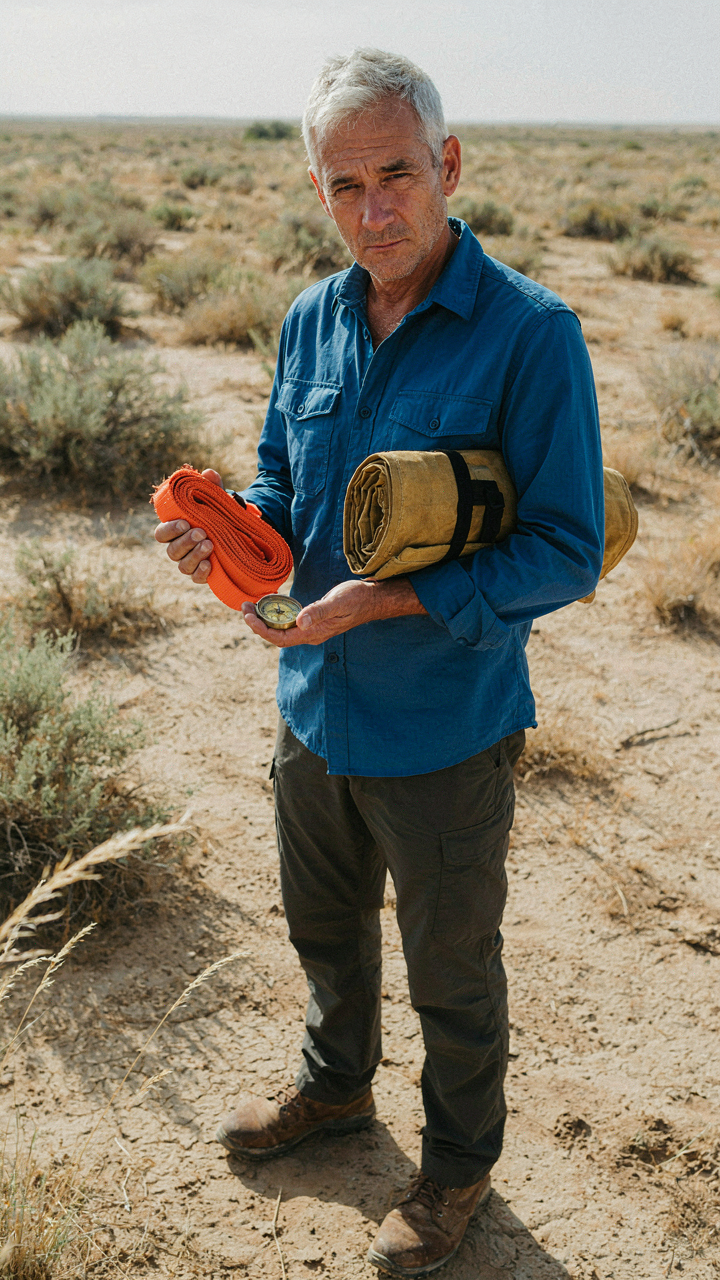
You don’t have an overland vehicle storage problem. You have a commitment problem. Every item you keep tells a story about who you think you should be, not who you actually are. The tidy rig belongs to someone willing to get honest about what they’ll never use. Pull three things out of your vehicle today that you haven’t touched in six months. You’ll realize the space you gain matters less than the mental weight you drop. Storage solves nothing when you’re storing lies.