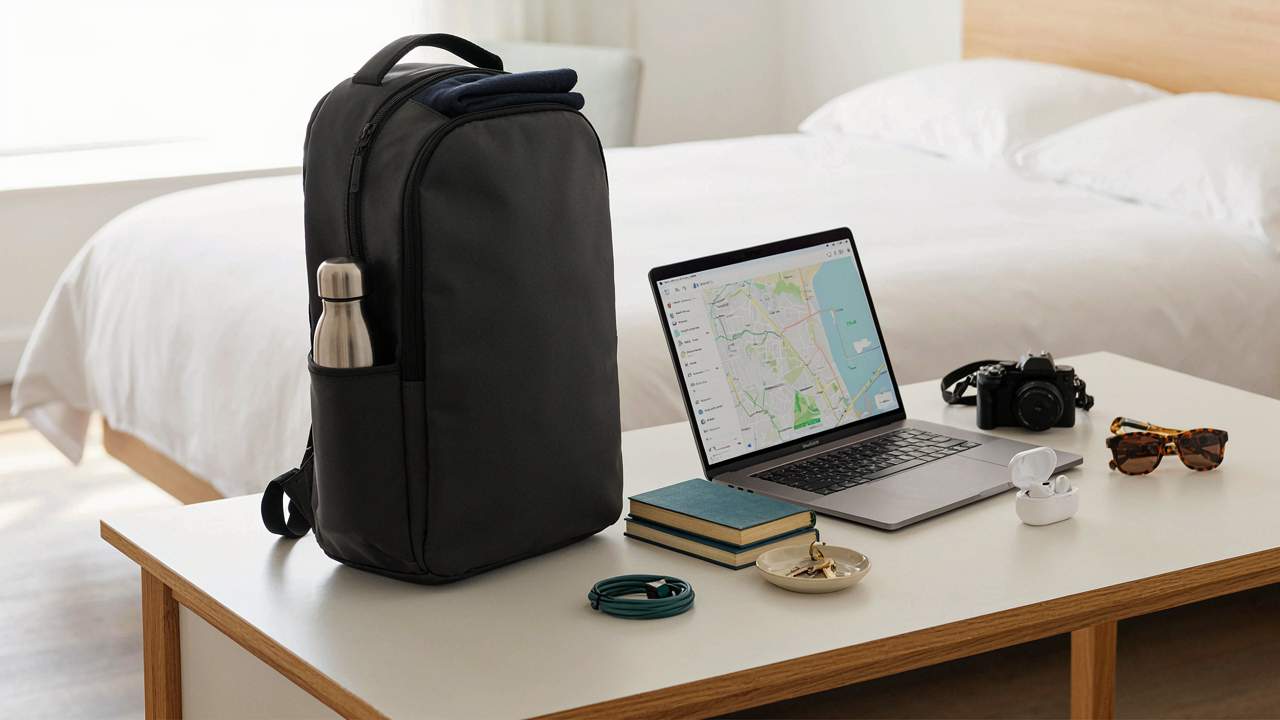
The Minimalist’s Command Protocol: International Travel Packing

Strip Away What You Don’t Actually Use
You want to pack light because you think it makes you look experienced. Here’s the real mechanism: every item you bring is a decision tax you pay every time you move. In logistics terms, this is payload optimization. You carry dead weight, and it compounds across every transition, every security line, every hotel change. Most packing advice tells you to “bring versatile items.” That’s incomplete. The real move is identifying which tech items actively compete for the same function, then eliminating the redundant one entirely.
Your phone does what your tablet does. Your laptop does what your phone does. Your smartwatch does what your phone does. Pick the tier that serves your actual work or need, then stop. The items you leave behind aren’t sacrifices. They’re weight you never had to carry. Start by listing every tech device you own, then write down exactly what each one does that the others cannot. If you can’t name a unique function in under ten words, it doesn’t travel with you.
One Primary Device, Layered Functionality
A single laptop with full processing power replaces a phone’s note-taking app, a tablet’s media consumption, and a camera’s backup role. This is not about compromise. This is about stacking functions onto one device so you eliminate the mental overhead of managing three. Most travelers bring redundant cameras alongside phones with superior sensors. This is security theater masquerading as preparedness.
Your phone becomes your backup device, not your primary. Your charging cable portfolio shrinks to one standard (USB-C dominates international travel now because most new devices use it). One multi-port adapter handles your phone, laptop, and any secondary device you chose to include. The protocol: identify the one device that performs your primary task. Make it do the work. Everything else is supplementary and gets cut or combined into existing gear. This is how you move faster than people carrying three devices pretending they serve different purposes.
Power Play: The Unspoken Truth About International Travel Packing Checklist

Universal Adapter Strategy Beyond The Cheap Plastic
You want the adapter because you’re afraid of looking unprepared or being stranded without power. The real mechanism here is voltage regulation, borrowed from electrical engineering. A cheap adapter is just a connector. It doesn’t transform voltage. Plugging a 110V device into a 220V outlet through a passive adapter burns out the device instantly. Most travelers never distinguish between adapters and converters, so they pack the wrong tool and get lucky or lose expensive gear.
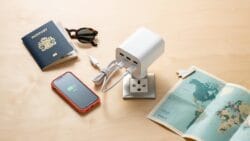
Buy a dual voltage device or a proper converter if your gear requires it, not a universal adapter that costs eight dollars. Check your device’s power brick first. Most modern chargers print input voltage ranges: 100-240V means you need only a plug adapter, not a converter. Converters are heavy, expensive, and solve a problem you might not have. Verify this before packing anything.
Battery Bank Psychology Fear Vs Actual Need
You pack an oversized battery bank because the possibility of dead batteries triggers more fear than the weight triggers annoyance. This is loss aversion in logistics. You picture yourself stranded, so you overcompensate. The math says otherwise. A modern phone charges fully in two hours on a standard charger. Most international trips have hotel rooms or cafes with outlets. A small 10,000 mAh bank covers one emergency charge. That solves the real scenario without the dead weight.
The protocol: charge everything the night before departure, charge it again at your hotel, and keep the bank for actual emergencies only. Track your actual battery drain for one trip before buying anything. Most people discover they never dip below fifty percent on their device. Carry what you’ll actually use, not what fear tells you to carry.
Connectivity Conundrum: International Travel Packing

Local SIM Vs ESim Vs Global Roaming: The True Cost
You want to avoid looking lost at the airport while texting your hotel. Here’s what actually matters: this is an economics problem, not a technology one. The mechanism is arbitrage. Telecom companies price roaming at markup rates because they know you’ll pay premium for convenience at the moment you need it most. Local SIMs and eSIMs destroy that pricing power by letting you buy connectivity at local rates before you land.

Local SIMs require a physical swap and a working phone. eSIMs let you activate a plan from your home country before departure, storing multiple profiles on one chip. Global roaming through your home carrier costs 5 to 10 times what locals pay for the same data. Pick eSIM for ease unless your phone lacks that hardware (older models, some budget devices). Activate it 24 hours before landing so you’re live the moment you touch down.
Portable Hotspot: Security Theater Or Necessity?
Hotspots solve one real problem: device battery drain from constant data pulling. They create two new ones: another device to charge and another vector for data exposure. You don’t need one if you can tether your phone to a laptop or tablet via USB or Bluetooth. The only scenario where a dedicated hotspot makes sense is when you travel with multiple people sharing costs or need seamless handoff between devices without phone battery degradation.
If you pack one, use a model with 4G capability minimum. The device itself becomes a security liability on untrusted networks, so treat it like any internet-facing tool: change the default password, disable WPS, and use a strong passphrase. Budget models often lack security updates. Charge it via the same power adapter ecosystem you already have to reduce cable bloat. Most international travelers overpack connectivity hardware and underuse it.
Digital Fortress: Packing List For International Travel Security

Why You Actually Need A VPN Abroad
You want to feel safe. That’s the real driver here, and it’s valid, but most travel advice about VPNs treats them like security blankets instead of actual tools. Borrowed from network architecture, a VPN functions as a proxy layer between your device and the internet. It doesn’t make you invisible, but it does prevent local networks from logging your traffic. Hotels, airports, and cafes in foreign countries run looser security than home networks. Your banking credentials, passwords, and payment information move across these pipes unencrypted without a VPN.

The common advice is half right. Everyone says use a VPN to watch Netflix from abroad, which works but misses the real mechanism. A VPN masks your IP address and encrypts your connection, making it harder for hotel networks to intercept what you’re doing. More important: it prevents local ISPs in countries with weaker privacy laws from selling your browsing data or flagging your activity. Install the VPN before you leave home, test the connection, and connect to it before opening your laptop on any public wifi. Treat it as a non-negotiable step, not an option.
Backing Up Data So Loss Becomes Impossible
Disaster recovery isn’t a concept most travelers apply to their devices, yet it’s exactly what you need. The mechanism is simple: distributed redundancy. Your data sits in multiple locations so one failure doesn’t delete everything. A single hard drive fails. A phone gets stolen. A cloud service goes down. Three separate backups mean you survive any one of those events.
Pack your data across three channels before departure: cloud storage with encryption enabled, a dedicated external drive in your carry-on, and a second external drive stored separately from your primary devices. Enable continuous sync on your laptop so files update automatically. When you land and lose your phone in a taxi, the photos, documents, and credentials already exist elsewhere. This isn’t paranoia. This is the only way to guarantee you don’t lose irreplaceable data to travel chaos.
The Analog Advantage: When Tech Fails On Your International Trip Packing List

Paper Maps And Cash Still Work When Phones Die
You want to believe your phone is enough because admitting it isn’t feels like regression. But here’s the mechanism: redundancy isn’t paranoia, it’s applied physics. In systems theory, a backup component that operates on a different principle than your primary system increases total reliability exponentially, not linearly. A paper map doesn’t need batteries, cell coverage, or a server in California. Cash doesn’t require a merchant terminal or internet connection.

Carry one physical map of your destination, printed or purchased locally on arrival. Mark your hotel, key transit hubs, and embassy location in pen. Physical cash—kept separate from your wallet—functions as both transaction method and insurance. Most international disruptions (airport closures, network outages, card fraud freezes) leave cash untouched. This isn’t nostalgia. This is structural redundancy.
Satellite Messengers For When Infrastructure Vanishes
The common advice is wrong: don’t rely on your phone’s emergency features in remote areas. Most cellular infrastructure concentrates on major routes and cities. Satellite messengers operate independently of ground networks entirely. A device like a Garmin InReach or Apple Emergency SOS via satellite sends location data and messages through orbital networks, not cell towers. This matters when you trek beyond populated zones or experience natural disasters that disable local infrastructure.
The protocol is simple: rent or buy a satellite messenger before departure, activate the subscription, and test it at home. Program emergency contacts into the device. Carry it with your passport and primary phone. You won’t need it 99% of the time. When you do, you stop hoping for luck and start executing a predetermined backup channel that actually functions.
The Traveler’s Toolkit: Travel Packing List International Edition

Noise Canceling Headphones: An Investment In Sanity
You want people to think you’re the type who travels well. That’s the real reason this matters. Here’s the mechanism: noise-canceling headphones don’t just block sound, they control your nervous system. A 14-hour flight exposes you to constant low-frequency engine rumble. Your body treats this as ambient threat. Cortisol rises. Sleep fractures. Noise cancellation removes the stressor entirely, not by adding sound but by using inverse frequency waves to neutralize the source. Pack over-ear models, not earbuds, because they seal the ear canal completely and deliver consistent pressure at altitude.

Battery life matters more than brand name. You need minimum eight hours of active cancellation per charge. Most international flights exceed this. Carry your headphones in a hard case, not a soft pouch. Pressure changes in cargo holds and overhead bins will crack cheap headphone hinges. Test your model in advance on at least one domestic flight. Airport noise, cabin noise, and hotel noise are different frequencies. Your headphones must handle all three.
Compact Lighting Solutions For Unexpected Scenarios
The advice to pack a flashlight is lazy. It assumes you’ll remember to use it and that ambient light will be your only problem. The real issue is control. You need light on demand, portable, and not dependent on hotel infrastructure. A rechargeable LED keychain light solves this but only if you position it tactically. Bathrooms in unfamiliar hotels often have switches in the wrong location or dim bulbs. A compact light prevents you from stumbling in darkness and also lets you inspect a room before committing to sleep.
Carry a light with adjustable brightness, not fixed output. High brightness drains batteries faster and blinds your eyes if you activate it in darkness. Bring a USB-C rechargeable model that charges from the same cable as your phone. Store it in your toiletries bag so you access it the moment you enter a new space. This single tool eliminates the disorientation that kills your first night’s sleep and extends your usable evening hours when you arrive before dusk.
The Network Effect: Travel Packing Checklist

People Matter More Than Gear
You’re hoping that the right gadgets will solve the real problem: you don’t know what you’re actually going to need. They won’t. Economics calls this information asymmetry, and your packing list suffers from severe asymmetry about your destination. Local people compress years of trial and error into a five-minute conversation. A hotel concierge knows the actual weather, the real transportation delays, the shops that work, and the specific friction points tourists hit. Your gear cannot replace what locals already know.

Packing light fails the moment you arrive because you built your list on generic advice instead of specific intelligence. Text five people who live where you’re going. Ask about the last two weeks of weather, what they actually carry, what tourists always forget, what breaks or fails regularly. One hotel staff member beats twelve YouTube packing videos. You’re not gathering opinions. You’re collecting data that changes your entire packing strategy before you buy your ticket.
Dig Before You Depart
Information gathering from your destination is not optional prep work. It’s the foundation that makes your packing list work or fail. Real reconnaissance means checking current forums, recent travel blogs from the last month, Reddit threads about your specific city, and local news about transportation strikes, weather patterns, or temporary closures. Generic “packing for Europe” advice becomes useless when your city has a transit strike or unusual seasonal flooding.
Document three specific things: current weather for your exact dates, what locals actually wear, and what fails or gets stolen regularly. Check airport security rules for your specific country, not the EU general rules or TSA rules. Visa requirements shift. Electrical standards vary by region and change. One customs restriction on a single item derails your entire trip. Book a fifteen-minute call with someone local if you can find them on Twitter or through a friend. Their answer to “what do you actually pack” matters more than any gear review.
Post Trip Debrief: Optimizing Your International Travel Packing

What Actually Got Used
You want to believe your packing was efficient because admitting waste means admitting poor judgment. The mechanism is simple: perception and reality diverge because you pack for scenarios, not frequency. Most travelers overestimate how often they’ll need backup items, formal wear, or specialized gear.

Track what you touched versus what sat untouched. This requires brutal honesty. Create a simple document: three columns for each item, checking it only when you actually used it during the trip. After returning, items with zero checks get removed from future lists. This transforms packing from guesswork into data.
- Formal clothing: Most international trips don’t require dress shoes or blazers. You wore the same casual outfit multiple times. Admit this.
- Backup toiletries: Hotel samples and local pharmacies eliminate the need for full-size duplicates of everything you brought.
- Multiple tech cables: You used one charging setup consistently. The spare USB cables and adapters stayed in the bag untouched.
- Layering pieces: Climate-controlled hotels and taxis reduce actual outdoor exposure. You wore fewer layers than anticipated.
- Medications and supplements: You took half of what you packed. Overestimating health scenarios is standard travel behavior.
The point isn’t perfection. The point is building a feedback loop so your next international trip packing list reflects what your body and schedule actually demand, not what your anxiety predicted. Track usage now to cut pack weight by 30 percent on your next departure.
Building Your Personal Packing Protocol
Iteration beats theory. Every international trip reveals gaps and redundancies unique to how you move through the world. Most travelers repeat the same packing mistakes because they never capture what they learned. You need a system that compounds knowledge, not resets it.
Create a master list in a shareable document you update after each trip. Note the destination, duration, climate, and activities alongside what worked and what didn’t. Compare patterns across trips. Did you pack too many shirts in warm climates? Did you underestimate rain frequency? Did tech gear sit unused? This becomes your personal packing algorithm, more accurate than any generic list because it’s built on your actual behavior, not consensus opinion.
Commit to one update action before your next departure: remove three items that didn’t make the cut last time, test one new piece of gear, and print your updated list. Do this three trips in a row and your packing becomes tight, intentional, and genuinely optimized rather than bloated with borrowed fears.

The Real Obstacle Isn’t What You Pack, But Your Addiction To Perceived Control

You don’t need a perfect packing list. You need permission to travel with less and trust yourself to adapt. Most people stuff bags because uncertainty feels unbearable. But every extra item you pack is a bet against your own resourcefulness. Pull out your suitcase right now and remove one thing you think you might need. That discomfort you feel? That’s where growth lives. You’ll survive the trip. You always do.