

The Allure Of Vinyl Records In The Modern Age
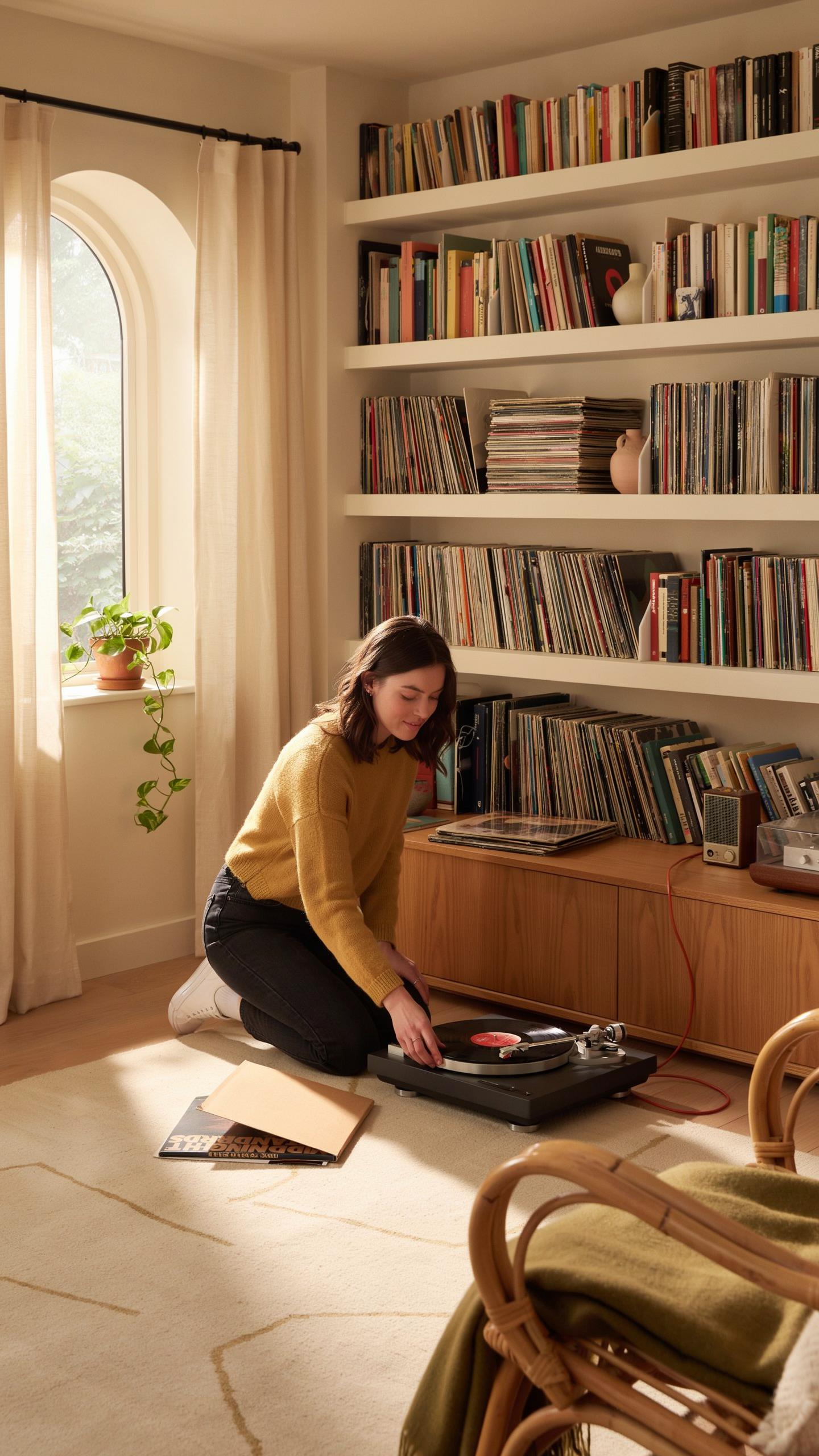
Why Vinyl Continues To Captivate Audiophiles
Vinyl sales have grown consistently since 2006, reversing decades of decline. Audiophiles cite specific technical reasons for preference: vinyl’s analog signal captures audio information differently than digital formats. The medium requires active listening because you cannot shuffle tracks or skip ahead without physical interaction. This deliberate process appeals to people who want engagement with music rather than passive background consumption.
The vinyl format produces measurable acoustic characteristics that appeal to trained ears. Analog playback eliminates the digital sampling limitations inherent in CD and streaming technology. Equipment quality matters significantly, which attracts users willing to invest in turntables and speakers that match their audio standards. Bluetooth turntable speakers designed for vinyl accommodate this audience by combining traditional analog playback with modern wireless connectivity.
The Tangible Experience Of Vinyl
Vinyl records demand physical interaction that digital formats eliminate. You select an album, remove it from its sleeve, place it on a turntable, and lower the needle. This ritual creates a sensory experience involving tactile contact, visual design appreciation, and intentional time investment. Album artwork, liner notes, and the record itself become part of the consumption experience rather than abstract digital files.
Owning vinyl builds a personal collection with permanence. Records occupy physical space and require curation decisions. Users develop relationships with their collections through repeated handling and storage choices. Bluetooth turntable speakers enable this traditional format to function in contemporary living spaces without requiring separate component systems, making vinyl accessibility practical for modern homes.

Understanding The Bluetooth Record Player
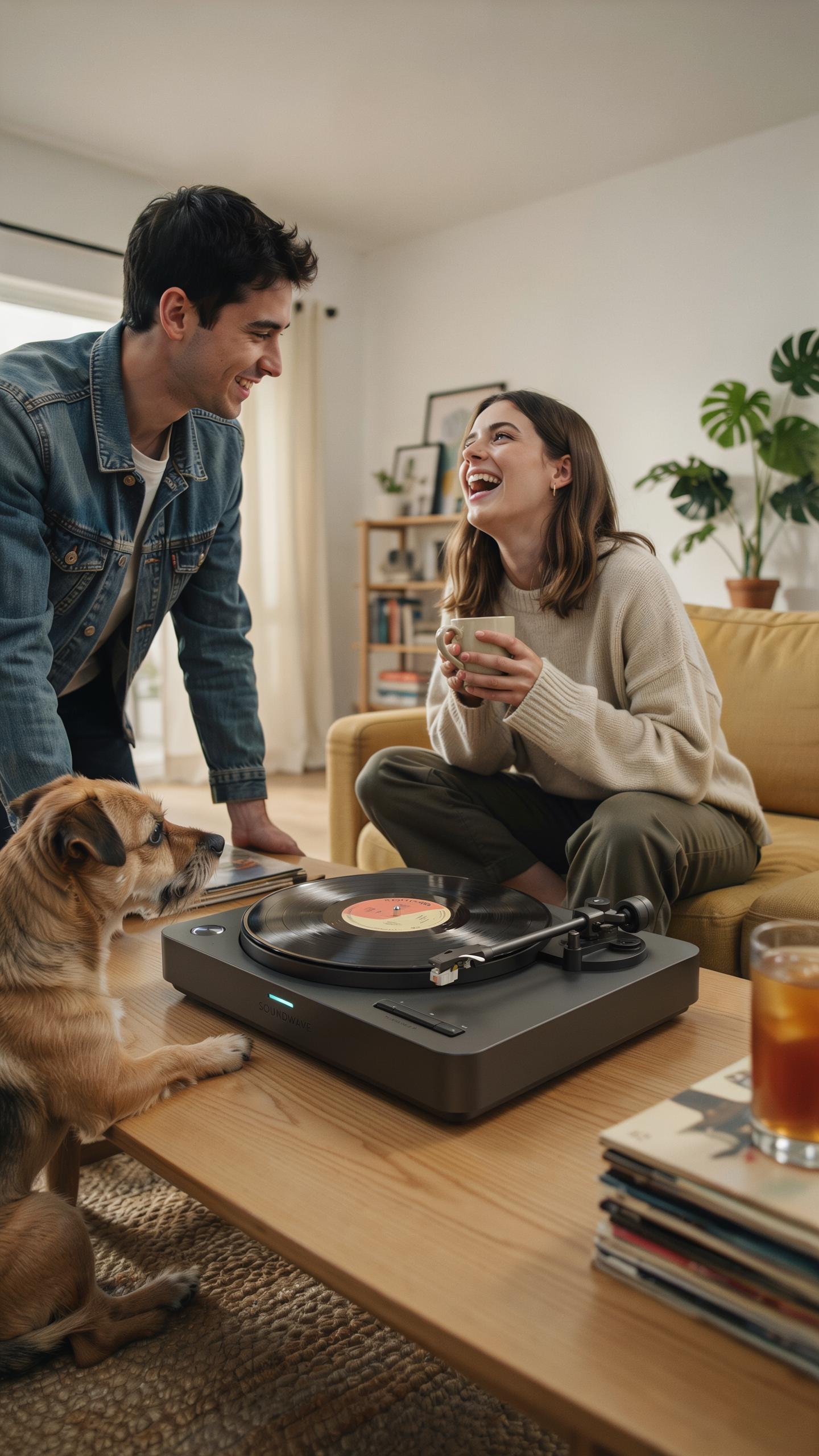
How Bluetooth Integration Works With A Turntable
A Bluetooth turntable contains a wireless transmitter built into the unit or speaker system. The turntable’s cartridge converts the vinyl groove vibrations into electrical signals. These signals travel through the preamp stage, which amplifies them to usable levels. The Bluetooth module then converts the audio signal into a digital format and transmits it wirelessly to compatible receivers.
The receiving device pairs with the turntable through standard Bluetooth protocols. Once paired, the connection remains active within range, typically 30 feet for most consumer models. The turntable acts as the audio source, while speakers or headphones act as receivers. You control playback volume through the receiving device, not the turntable itself in most setups.
Benefits Of A Wireless Setup For Your Record Player
Eliminating speaker cables simplifies room setup and reduces clutter. You position speakers anywhere within Bluetooth range without running wires across floors or walls. This flexibility lets you adjust speaker placement based on room acoustics and furniture layout. Setup takes minutes instead of hours when you skip cable management entirely.

Wireless setups allow multiple compatible devices to connect to one turntable. You can switch between different speakers throughout your home without changing connections. This adaptability works well for playing vinyl in different rooms. Battery powered Bluetooth speakers add portability that wired systems cannot match.
Key Features To Look For In A Turntable
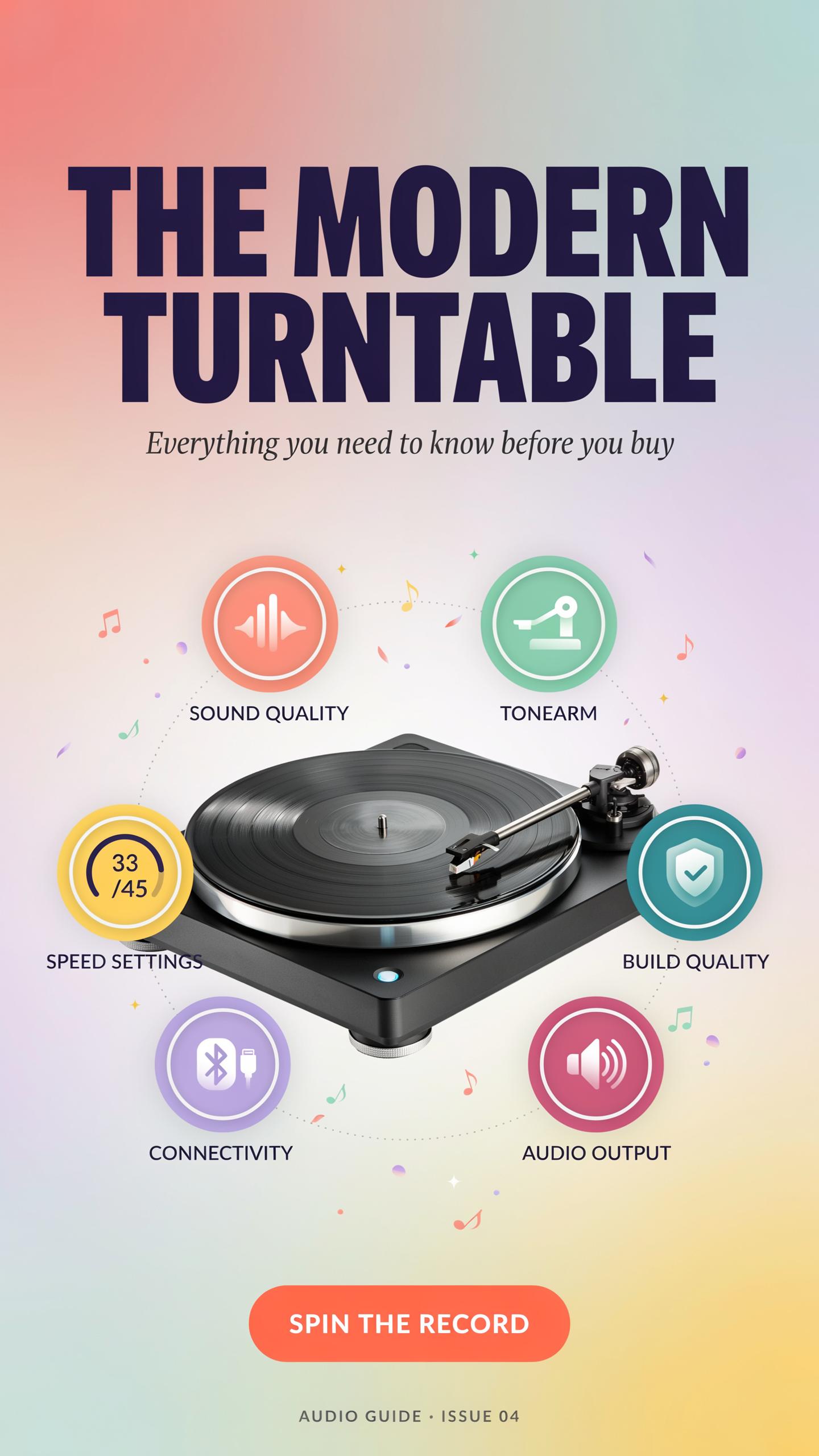
Belt Drive Vs. Direct Drive Turntables
Belt-drive turntables use an elastic belt connecting the motor to the platter. This design isolates motor vibration from the platter, reducing noise transmission into your music. Belt-drive models dominate the home audio market because they deliver cleaner sound at lower price points. Most entry-level and mid-range Bluetooth turntable speakers use belt-drive mechanisms for this reason.
Direct-drive turntables mount the motor directly beneath the platter. This setup offers faster platter acceleration and better torque, making it the standard for DJ turntables and professional environments. Direct-drive models cost more but provide superior speed stability. For Bluetooth turntable speakers focused on home vinyl listening, belt-drive remains the practical choice due to lower cost and adequate performance.
Cartridge And Stylus Considerations For Optimal Sound
The cartridge holds the stylus and translates groove vibrations into electrical signals. Cartridge quality directly impacts sound accuracy and record longevity. Moving magnet cartridges work with most Bluetooth turntable speakers and deliver warm, musical sound. Moving coil cartridges offer higher output but require preamp compatibility, limiting their use in integrated systems.
Stylus shape and material determine how the needle tracks vinyl grooves. Conical styli cost less but wear records faster than elliptical or line contact styli. Elliptical styli follow groove walls more precisely, extracting more detail while reducing wear. Most Bluetooth turntable speakers ship with conical styli, so upgrading to elliptical improves sound quality and protects your record collection from premature damage.
Built In Speakers Convenience Vs Sound Quality
The Advantages Of Integrated Speakers In A Vinyl Player
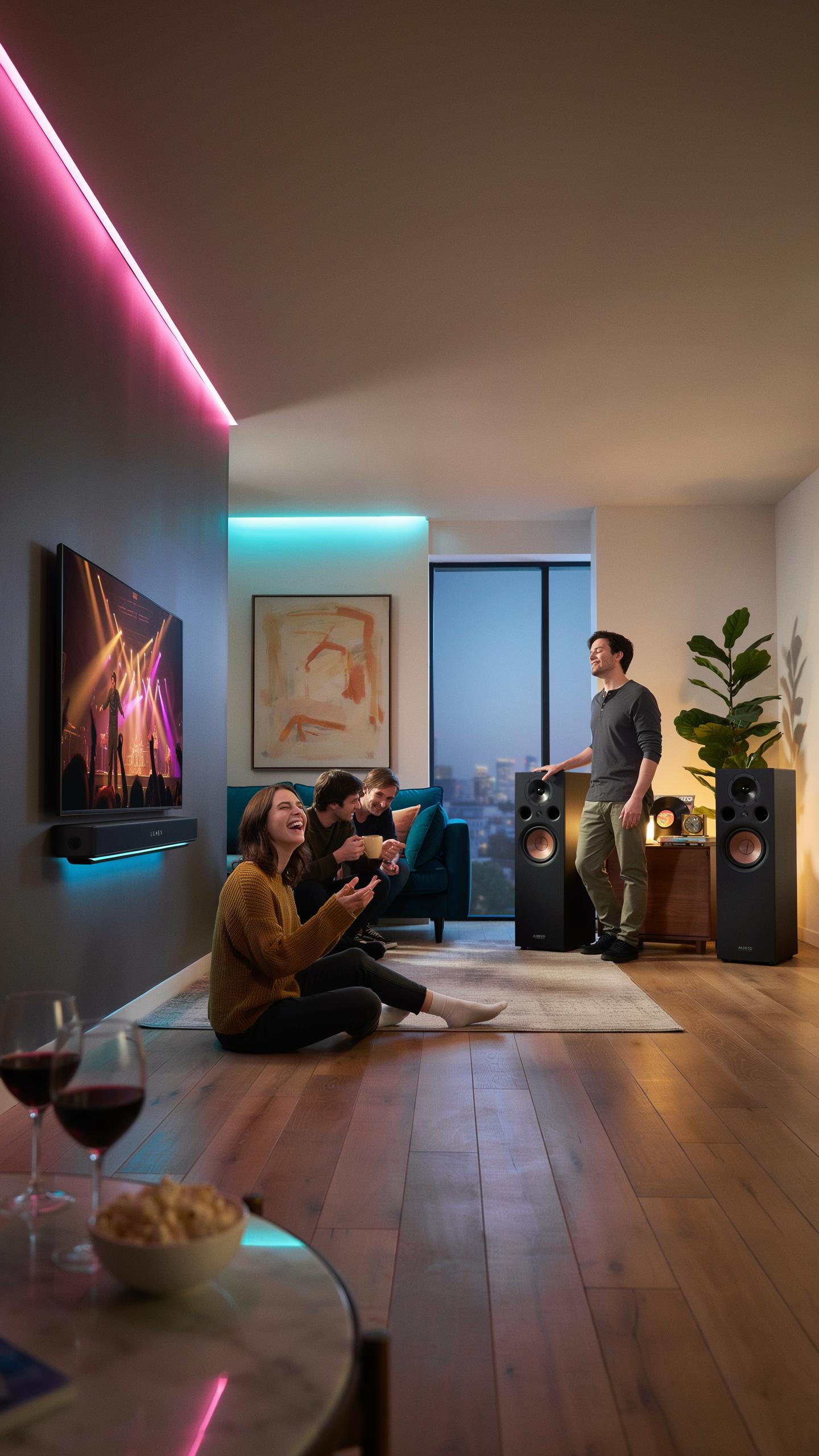
Built in speakers eliminate setup complexity. You unbox the turntable and play records immediately without purchasing external equipment. This matters for renters, dorm rooms, and casual listeners who want function without investment. Integration reduces cable clutter and takes up less physical space on shelves or desks.
Integrated speakers deliver consistent sound tuning from the manufacturer. Engineers design the speaker enclosure to work with the turntable’s preamp and tonearm. This coordination prevents incompatibility issues that plague mismatched component systems. You get predictable performance without troubleshooting speaker placement or amplifier wattage.
When To Consider External Speakers For Your Setup
External speakers become necessary when integrated speakers hit output limits. Built in speakers typically max out at 10-20 watts per channel. Larger rooms absorb this power quickly, creating thin or muffled sound. You need external speakers if your space exceeds 200 square feet or you prioritize volume.

External speakers unlock deeper bass response and clearer midrange reproduction. Dedicated speaker designs use larger drivers and proper crossovers that compact integrated units cannot match. Audiophiles and serious collectors add external speakers to capture nuance in vinyl’s analog signal. This upgrade path lets you start with a complete system and improve gradually without replacing the turntable.
Connecting Your Vinyl Player To Bluetooth Speakers
Step By Step Guide To Pairing Your Devices
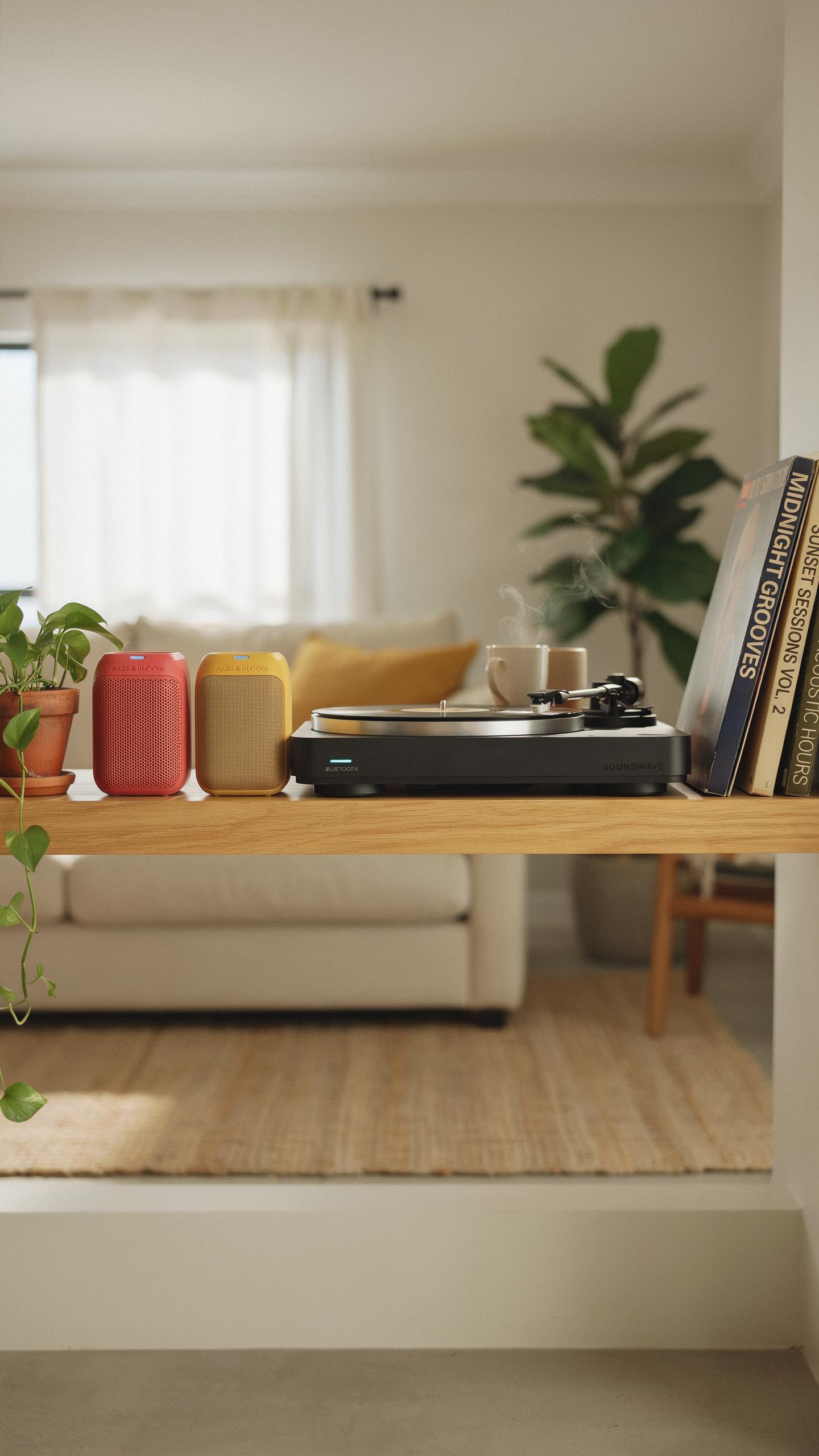
Put your Bluetooth speaker in pairing mode by holding the power button or designated pairing button for three to five seconds. Check your turntable’s manual to confirm it has Bluetooth capability built in. Most turntables with Bluetooth transmit automatically once powered on. Your speaker should scan and detect the turntable within thirty seconds.
Select the turntable from your speaker’s available devices list and confirm the pairing. The speaker will display a confirmation message or LED indicator once connected successfully. Test the connection by playing a record at low volume first. You now have an active Bluetooth link between your devices.
Troubleshooting Common Bluetooth Connectivity Issues
If your speaker cannot detect your turntable, verify both devices have Bluetooth enabled in their settings. Move the devices closer together, within ten feet of each other. Interference from microwave ovens, cordless phones, and WiFi routers can disrupt Bluetooth signals. Restart both devices completely and attempt pairing again from scratch.

When audio cuts out or stutters during playback, check for obstacles between the turntable and speaker. Reduce distance between devices to improve signal strength. Update firmware on your speaker if the manufacturer released recent patches. If problems persist, unpair both devices, power cycle for two minutes, then re establish the connection.
Optimizing Your Listening Experience With Vinyl Records
Placement And Acoustics For Your Record Player
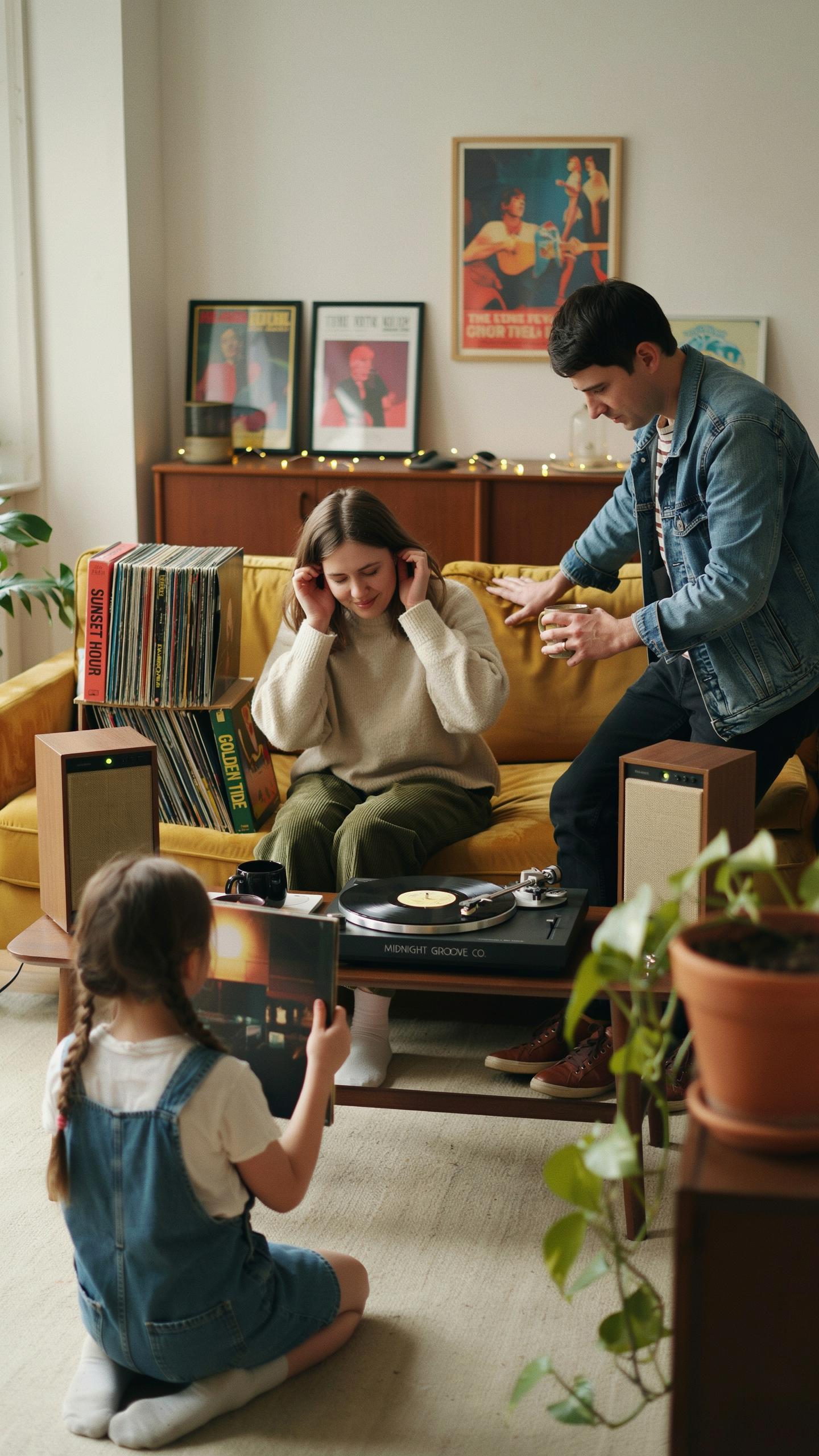
Room placement matters more than most people realize. Position your bluetooth turntable speaker away from walls and corners to avoid bass buildup and reflections. Place it on a stable, level surface to prevent tracking errors and skipping. Isolation from vibrations matters, so avoid placing it near speakers, refrigerators, or high-traffic areas where floor movement occurs.
Acoustics directly impact what you hear. Hard surfaces like tile and concrete cause sound reflections that distort music. Adding soft materials like curtains, rugs, and furniture absorbs excess sound energy. Keep the turntable at least three feet from the nearest wall to allow sound to develop properly before bouncing back to your listening position.
Maintaining Your Vinyl Collection For Longevity
Vinyl records degrade from dust, temperature swings, and improper handling. Store records vertically in their sleeves to prevent warping and pressure damage. Keep your collection in a climate-controlled space between 60 and 70 degrees Fahrenheit with 45 to 50 percent humidity. Handle records only by their edges and labels to avoid transferring oils and dirt to the playing surface.
- Cleaning records regularly: Use a record brush or vacuum system before each play to remove surface dust. This reduces needle wear and improves sound quality significantly over time.
- Using inner sleeves: Replace original paper sleeves with acid-free polyethylene sleeves. Acid degrades vinyl over decades and causes permanent surface damage.
- Storing at proper temperatures: Extreme heat warps vinyl permanently. Cold causes brittleness. Consistent room temperature preserves structural integrity.
- Maintaining turntable stylus: Replace worn needles every 1,000 to 2,000 hours of play. Worn styluses damage grooves irreversibly and degrade audio quality.
- Avoiding direct sunlight: UV exposure fades album artwork and degrades vinyl compounds. Store records in dark, enclosed spaces away from windows.

Quality maintenance extends record life by decades. A damaged record cannot be repaired, so prevention through proper storage and handling saves money and preserves your music investment long term.
Top Bluetooth Turntable Speaker Brands And Models
Reviewing Popular Choices For Every Budget
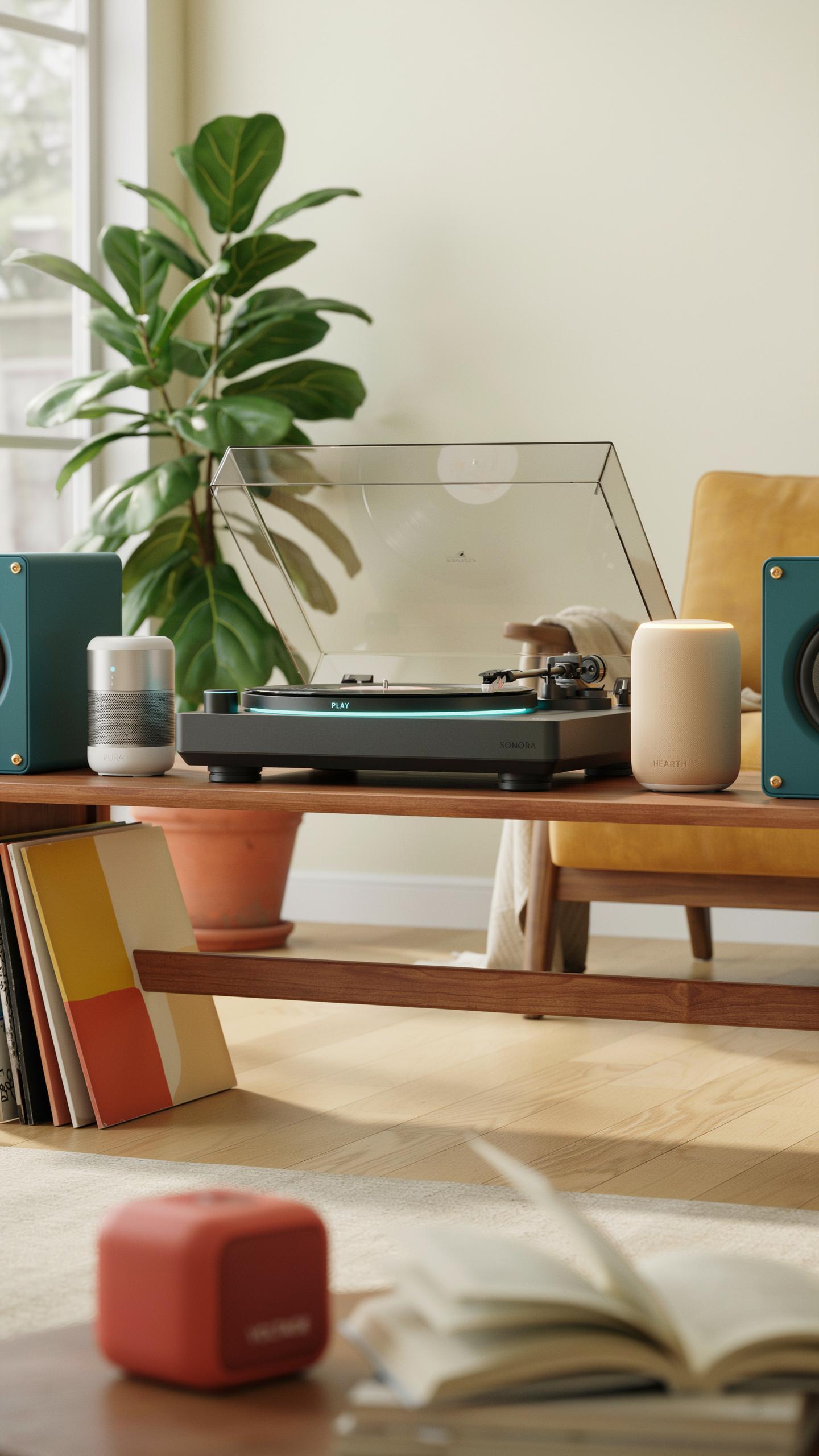
Audio-Technica, Victrola, and Ion dominate the entry-level market below $200. These brands prioritize affordability while delivering functional Bluetooth connectivity and acceptable sound reproduction. Audio-Technica’s AT-LP60BT combines basic turntable mechanics with integrated speakers. Victrola focuses on nostalgic design paired with wireless convenience. Ion models emphasize portability. None excel at audio fidelity, but they solve the core problem of playing vinyl without external equipment.
Mid-range options from $200 to $500 include Fluance and Pro-Ject models. Fluance turntables pair with quality Bluetooth speakers from manufacturers like Edifier or KEF. Pro-Ject offers integrated systems with superior motor stability and tonearm precision. These setups address frequency response limitations of budget systems. Build quality improves significantly here. Moving coil cartridges and better isolation reduce vibration and unwanted noise transfer into speakers.
Factors To Consider When Choosing A Specific Model
Turntable speed stability matters more than most buyers realize. Belt-driven tables maintain consistent 33 1/3 and 45 rpm speeds better than direct-drive cheaper models. Motor vibration transfers directly into your audio signal. Heavier platters absorb speed fluctuations. Measure wow and flutter specs if available, though manufacturers rarely publish these numbers. Cheap motors with weak bearings degrade vinyl and waste speakers.

Speaker impedance and power handling require matching to turntable output. Moving magnet cartridges generate roughly 5 millivolts. Bluetooth compression removes 30 to 40 percent of audio data. Low impedance speakers demand more amplifier power. High impedance designs preserve detail but need careful matching. Check whether your turntable’s preamp can handle the specific speaker’s input requirements. Mismatched systems produce thin sound or distortion at volume.
The Evolution Of The Record Players
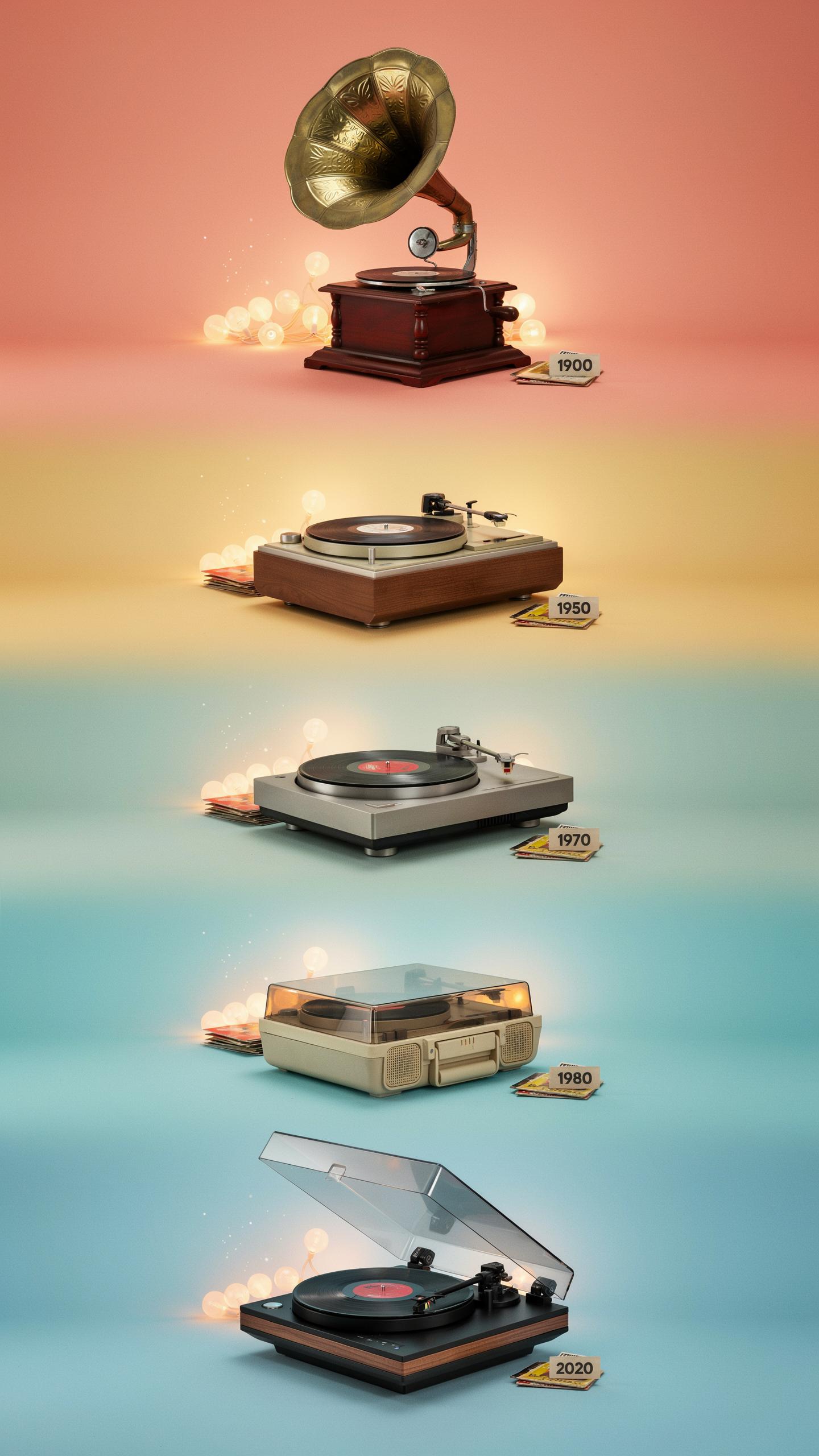
From Gramophones To Modern Vinyl Players
The gramophone emerged in the 1890s as the first device to play back recorded sound mechanically. A stylus vibrated against grooves on a rotating cylinder or disc, transferring vibrations to a horn that amplified sound. This mechanical approach required no electricity. The technology shifted from cylinders to flat discs, establishing the format that vinyl records still use today.
Turntables evolved significantly through the 20th century. Electric motors replaced hand cranks, allowing consistent playback speeds. Tonearms improved to reduce record damage. By the mid-1900s, turntables became standard furniture pieces in homes. Modern Bluetooth turntable speakers combine this established mechanical foundation with wireless connectivity, bringing vintage technology into contemporary spaces without sacrificing functionality or sound quality.
Innovations In Turntable Technology
Direct drive and belt drive motors represent two major innovations in turntable design. Direct drive systems mount the platter directly on the motor shaft, providing stability and quick start times. Belt drive systems use a rubber belt between motor and platter, reducing vibration and motor noise. Both designs maintain consistent rotation speed, critical for accurate sound reproduction across all vinyl recordings regardless of speed variations.

Modern Bluetooth turntable speakers incorporate advancements in needle technology and signal processing. Sapphire and diamond styluses reduced tracking force needed while minimizing groove wear. Built-in preamps and Bluetooth transmitters eliminate the need for separate components. These innovations make vinyl playback accessible and convenient for current users while maintaining the acoustic integrity that draws listeners to vinyl records in the first place.
Setting Up Your Home Audio System For Vinyl
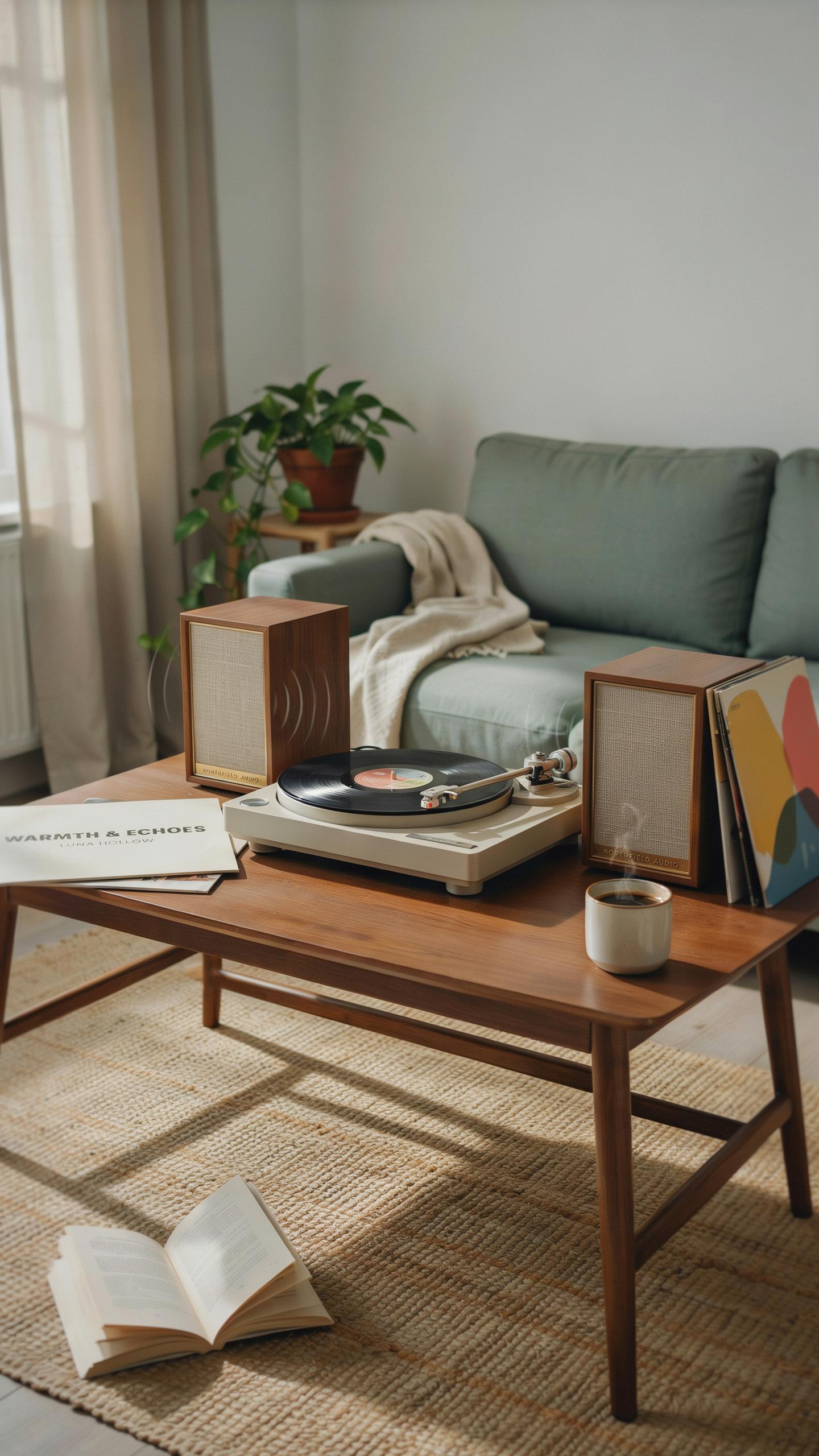
Integrating Your Bluetooth Turntable With Existing Systems
Most Bluetooth turntables output audio at low levels, typically between 100 and 500 millivolts. Your existing amplifier or receiver accepts these signals directly. Connect the turntable’s Bluetooth transmitter to powered speakers or an amplifier’s auxiliary input. This approach preserves your current setup while adding wireless capability without quality loss.
Compatibility depends on your equipment’s Bluetooth version and codec support. Older amplifiers lack Bluetooth receivers entirely, requiring you to purchase a separate Bluetooth adapter or opt for a turntable with built-in Bluetooth transmission. Test connectivity before committing to permanent placement. Cable runs matter less with Bluetooth, but maintain clear line of sight between the turntable and receiver for stable pairing.
Let the familiar crackle of vinyl, enhanced by modern sound, fill your home with melodies that bridge generations. It’s a timeless dance between past and present, right in your living room.
Creating An Immersive Soundstage
Speaker placement directly controls soundstage width and depth. Position speakers at ear level when seated, roughly 8 to 12 feet apart. Distance from walls affects bass response. Keep speakers at least 2 feet from side walls and 3 feet from rear walls to avoid acoustic reflections that collapse the stereo image. This spacing creates proper separation between left and right channels.
Room acoustics determine how vinyl sounds through your system. Hard surfaces like tile and glass reflect sound waves, creating unwanted echoes. Soft materials like curtains, upholstered furniture, and rugs absorb reflections and tighten the soundstage. Treat early reflection points on your walls to reduce phase cancellation. Strategic placement of absorption materials improves clarity without expensive acoustic panels.
The Future Of Vinyl And Bluetooth Audio
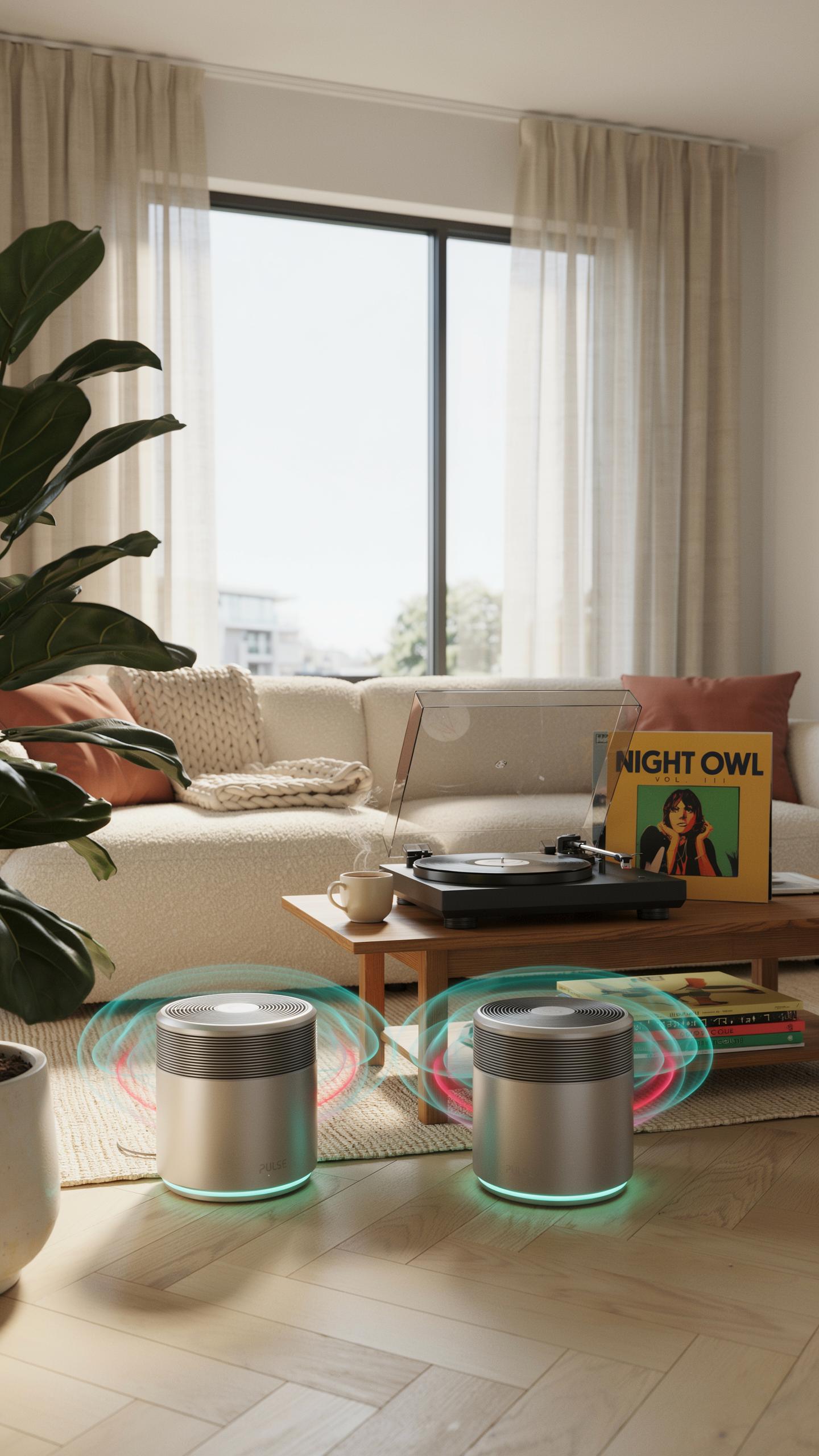
Emerging Trends In The Vinyl Comeback
Vinyl sales have grown year over year since the early 2000s, driven by collector demand and audiophile interest. Physical media ownership appeals to consumers who want tangible products and reject streaming-only models. Younger demographics now purchase vinyl alongside digital consumption, treating records as collectible art objects rather than primary listening sources.
Bluetooth turntable speakers capture this trend by lowering entry barriers. They eliminate the need for separate amplifiers and speakers, streamlining the setup process for casual listeners. This accessibility drives household adoption among people who want vinyl convenience without complex audio systems or technical knowledge.
Anticipated Innovations In Bluetooth Turntable Speaker Technology
Manufacturers will improve Bluetooth codec support to reduce audio compression losses. Current Bluetooth standards handle vinyl playback adequately, but advanced codecs like LDAC and aptX HD offer higher bitrate transmission. Wider adoption of these codecs in turntable speakers will appeal to users who demand audio quality comparable to wired connections.
Battery technology and wireless charging integration will evolve in portable models. Solid state battery designs extend playtime while reducing weight and bulk. Manufacturers will integrate fast charging capabilities and wireless charging pads, making portable vinyl speakers more practical for outdoor and travel use while maintaining consistent performance standards.
Frequently Asked Questions

What exactly is a bluetooth turntable speaker, and why would I want one for my vinyl collection?
A bluetooth turntable speaker combines a record player with integrated wireless speakers, offering a convenient, all-in-one audio solution. It simplifies your setup, eliminating the need for separate components and cables, making it perfect for enjoying your vinyl records with ease and modern connectivity around your home.
How do I connect my existing turntable to a bluetooth turntable speaker system if it doesn’t have built-in Bluetooth?
If your turntable lacks Bluetooth, you can easily connect it to a bluetooth turntable speaker using a phono preamplifier and an RCA to 3.5mm auxiliary cable. The preamplifier boosts the audio signal, and the cable allows you to plug directly into the speaker’s auxiliary input, transforming your setup.
Are there affordable options for a quality bluetooth turntable speaker for vinyl records, or are they typically expensive?
Absolutely! While high-end options exist, you can find excellent budget-friendly bluetooth turntable speaker models that deliver great sound without breaking the bank. Many brands offer reliable, stylish, and accessible choices, allowing everyone to enjoy the warmth of vinyl records at home.