
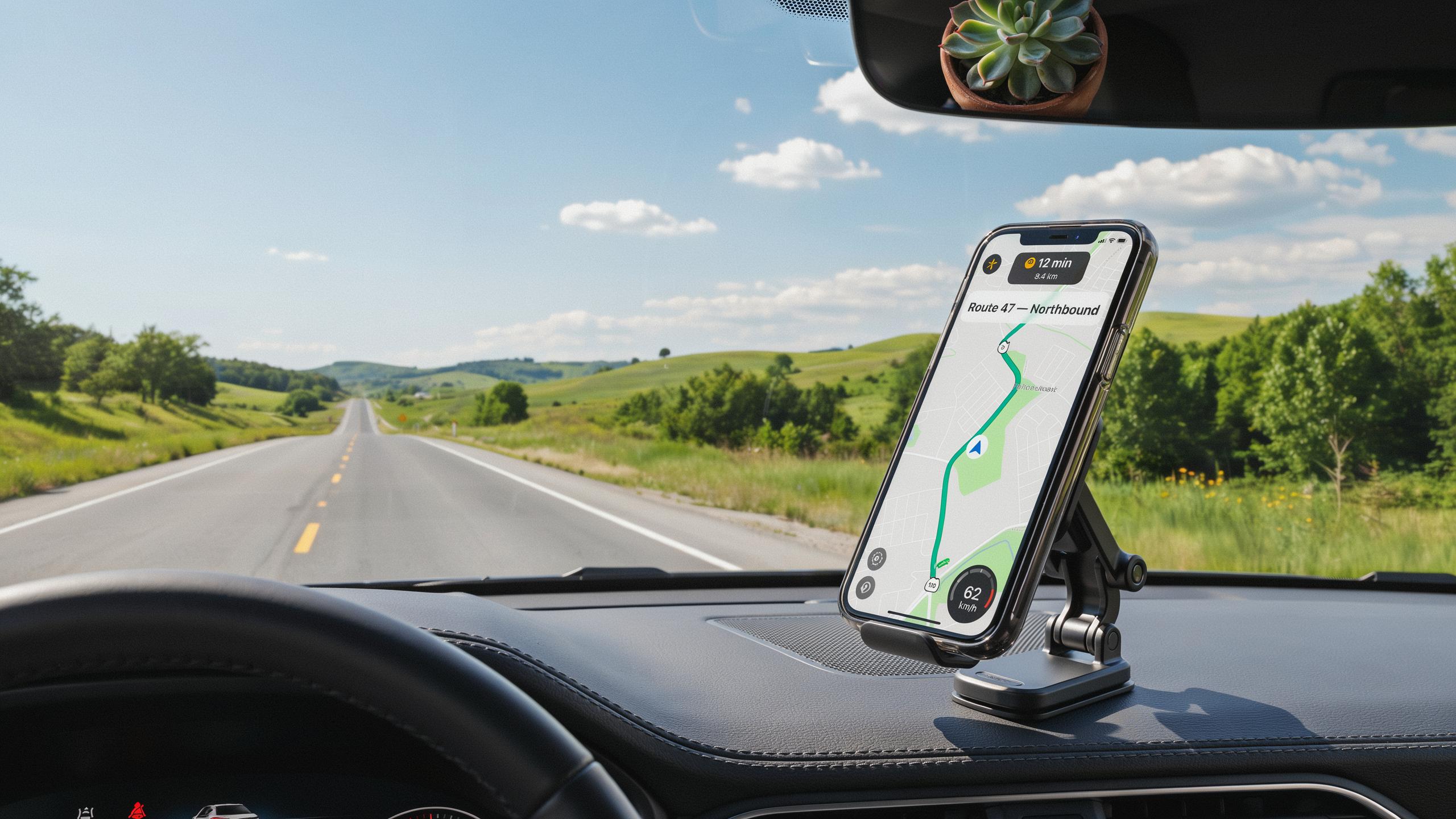
Why A Car Phone Holder Is Essential For Long Commutes
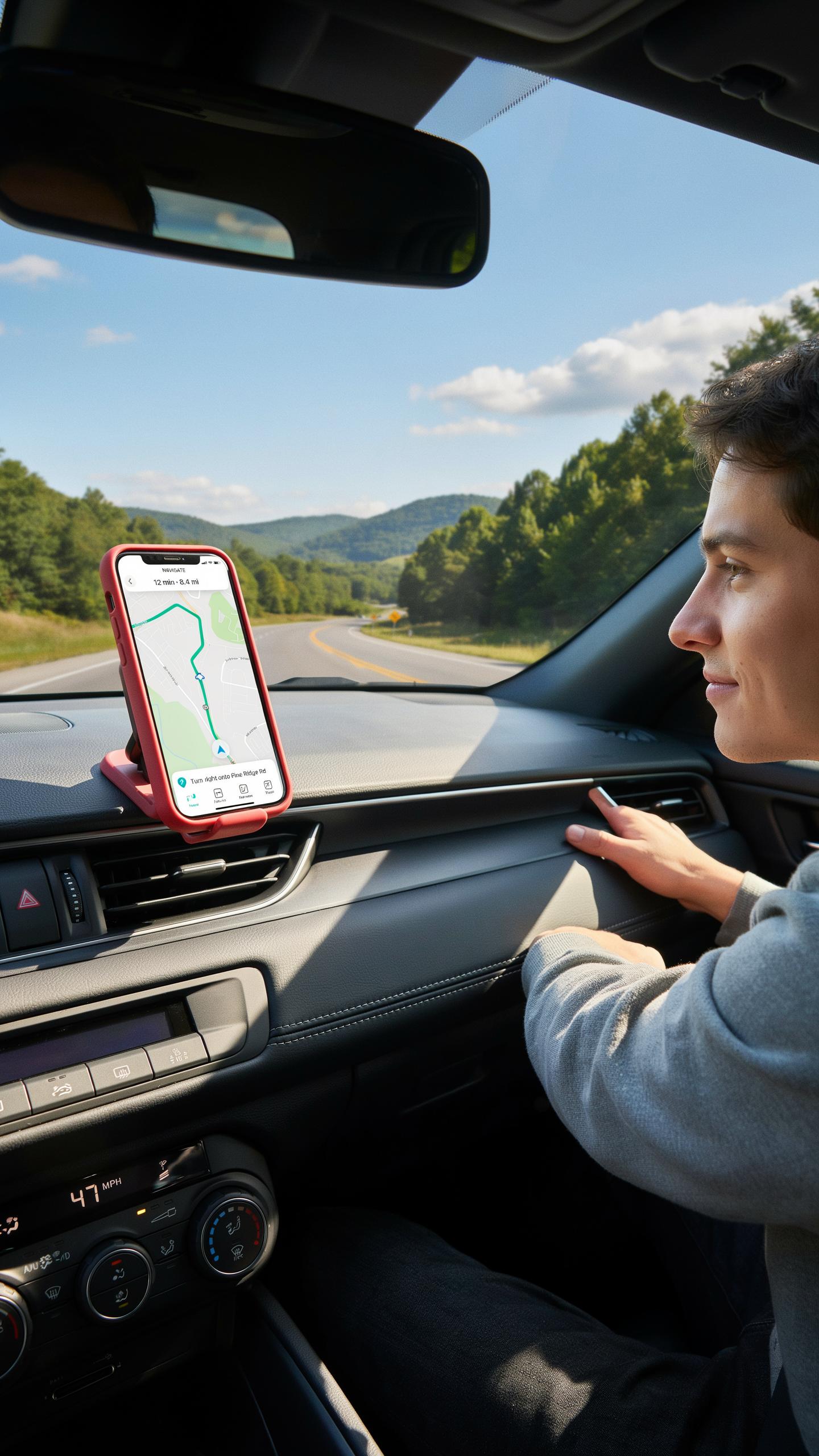
Safety First: Minimizing Distractions
Holding a phone while driving splits your attention between the road and the device. A car phone holder keeps your phone at eye level or within your peripheral vision, eliminating the need to look down at your lap or reach across the cabin. This positioning reduces reaction time loss and keeps both hands available for steering and vehicle control during long drives.
Distracted driving causes thousands of accidents annually. A mounted phone reduces fumbling and searching, which are major sources of driver distraction. When your phone stays secure and visible without manual handling, you maintain better focus on traffic conditions, road hazards, and driving decisions. This matters more on extended commutes where fatigue compounds attention challenges.
Navigation And Entertainment Made Easy
GPS navigation requires frequent glances at turn-by-turn directions during unfamiliar routes. A phone holder positions your navigation app within your direct line of sight, eliminating dangerous downward glances. Voice commands work better when your phone sits in a stable mount, improving microphone quality and reducing the need to touch your device while driving at highway speeds.
Podcast and audiobook apps keep you engaged during monotonous highway stretches. A secure mount lets you control audio playback through voice commands or quick hand gestures without taking your eyes off the road. Long commutes demand consistent entertainment options, and a phone holder enables safe access to these features without compromising vehicle control or safety awareness.

Types Of Car Phone Holders Finding Your Perfect Phone Mount
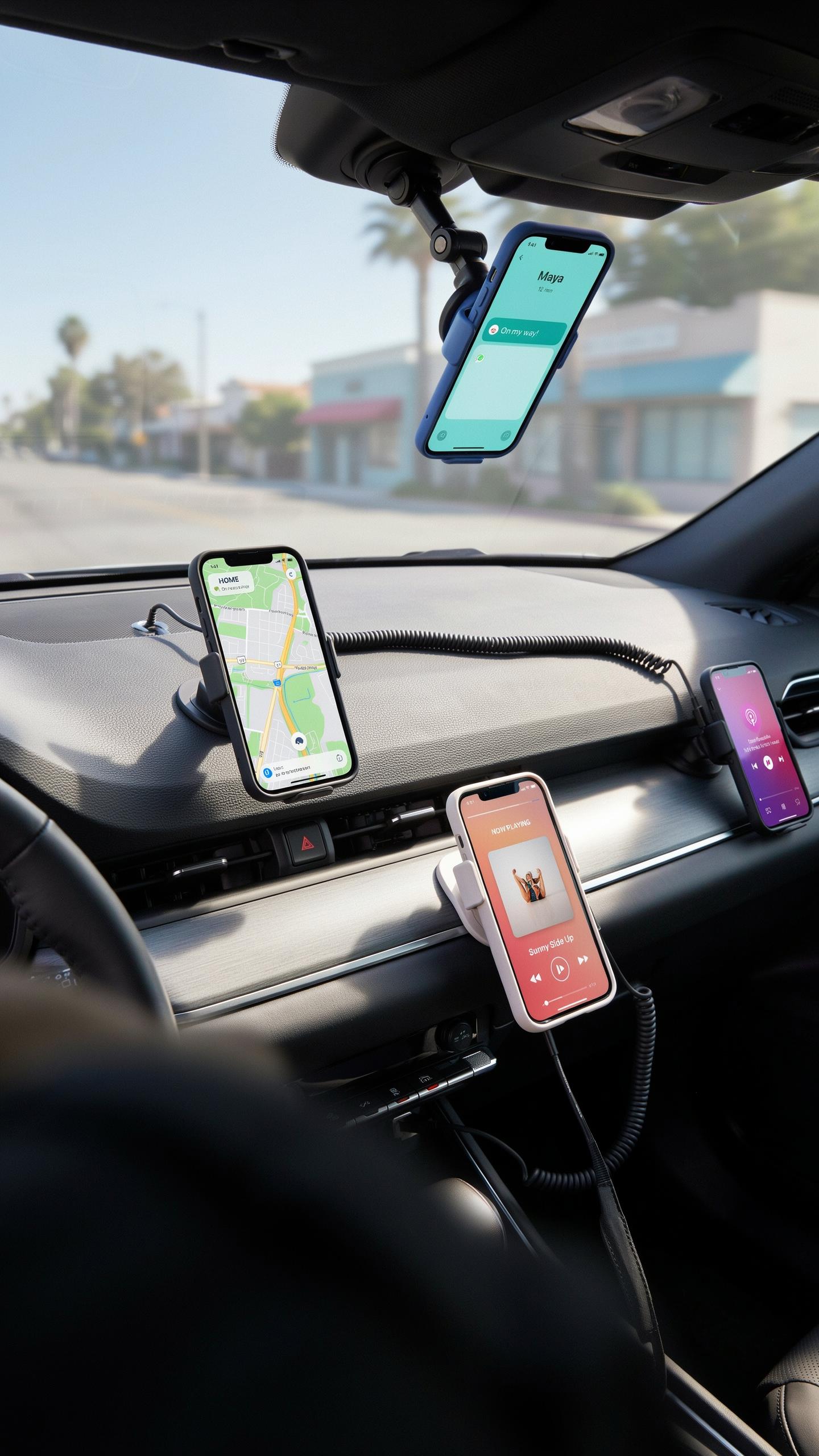
Vent Mounts Vs. Dashboard Mounts
Vent mounts clamp onto your car’s air vents. They require minimal installation time and leave no residue on your dashboard. The trade-off is positioning flexibility. Your phone sits where the vent directs airflow, not necessarily at your ideal viewing angle. Vent mounts work best for drivers who prioritize easy removal and repositioning between vehicles.
Dashboard mounts use adhesive or suction cups to attach directly to your dashboard surface. They offer superior angle control and remain stationary throughout your commute. Dashboard mounts require finding the right placement before committing, as repositioning leaves marks or residue. They deliver stable viewing positions for long drives when mounted correctly on flat dashboard sections.
With a steady companion for your journey’s stories, every mile becomes a cherished memory, safely navigated.
Windshield And CD Slot Car Holder Options
Windshield mounts attach via suction cups to your front glass. They position your phone at eye level, reducing neck strain during extended driving. Installation takes seconds and leaves no permanent marks. However, suction cups degrade over time and perform poorly in extreme heat. Windshield mounts suit drivers who value optimal visibility and frequently change vehicles.

CD slot holders fit into your car’s disc player opening. They require no adhesive or suction cups and work in most vehicle models manufactured before 2015. Installation is straightforward and reversible without damage. Modern cars lack CD players, making this option irrelevant for newer vehicles. CD slot mounts remain viable for drivers with compatible older model cars who want secure, permanent positioning.
Key Features To Look For In A Car Phone Holder For Long Commutes
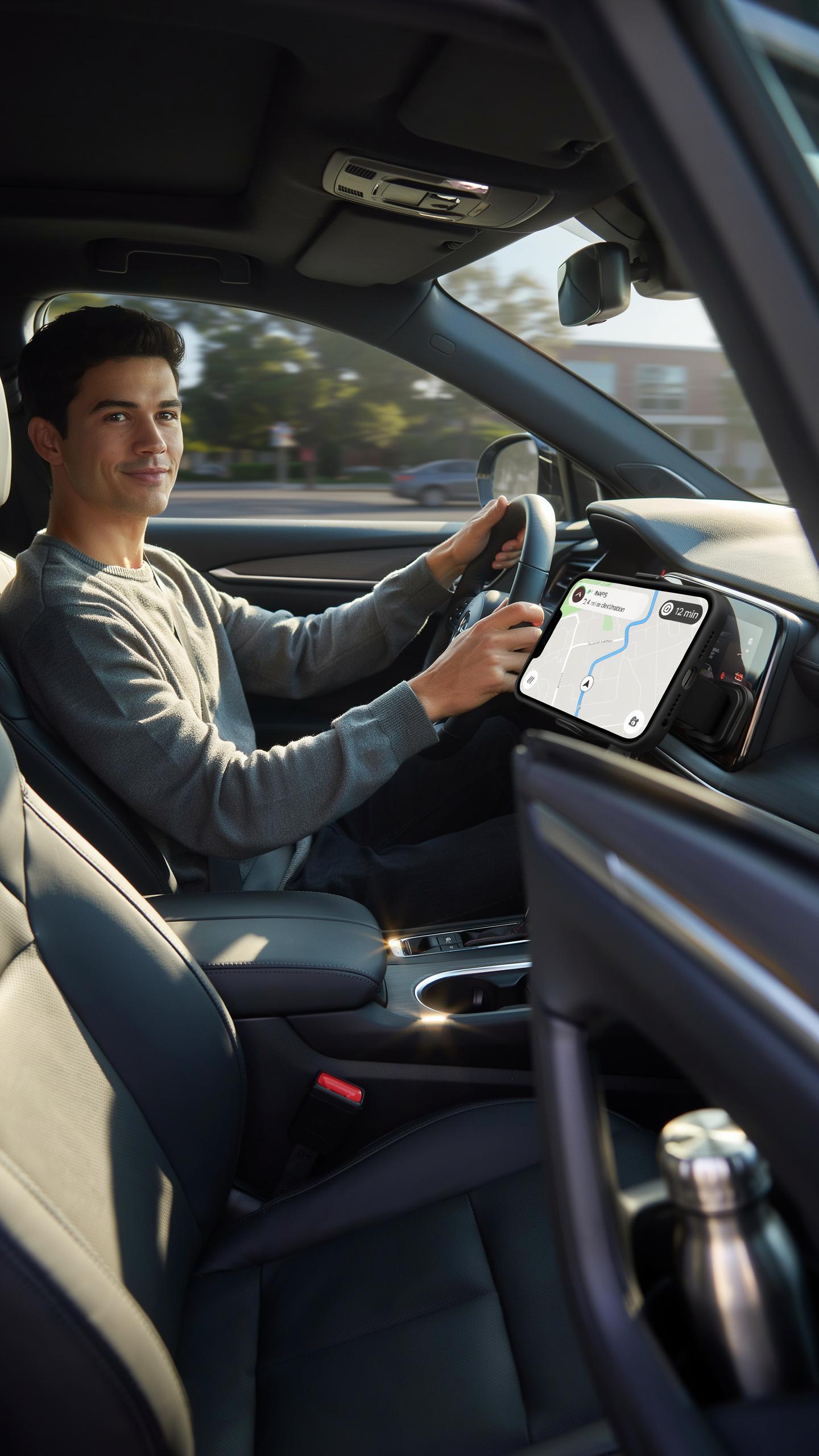
Secure Grip And Stability
Your phone needs to stay put during the entire commute. Road vibrations, sudden stops, and turns create constant movement that can dislodge an insecure mount. A weak grip forces you to readjust your phone repeatedly, creating distraction and safety risks. Strong grip mechanisms prevent your device from shifting position, which means you maintain a consistent viewing angle without fumbling.
Phone holders use different grip types: friction pads, adjustable arms, or magnetic systems. Friction pads grip the phone’s sides directly and work across most device sizes. Adjustable arms apply pressure from multiple points, distributing force evenly to prevent scratching. Test the grip with light tugging before committing to a purchase. A secure hold eliminates the need for mid-drive adjustments and keeps your focus on the road.
Adjustability And Viewing Angles
Fixed viewing angles force you into one position, which creates neck strain and glare problems over long distances. Adjustable holders let you modify the angle based on your seating position, sunlight direction, and road conditions. The ability to tilt or rotate your phone reduces eye fatigue by eliminating reflections on the screen. You control the exact position that works for your vehicle and driving setup.

Mounts with ball joints, swivel bases, or multi-axis arms deliver maximum angle flexibility. A ball joint allows 360-degree rotation and tilting in any direction. Swivel bases rotate side to side while maintaining height. Multi-axis arms combine rotation with adjustable arms for precise positioning. These mechanisms let you find the sweet spot where your phone sits at eye level without requiring head or neck movement during your commute.
Car Phone Holder Installation A Step By Step Guide

Preparing Your Vehicle Dashboard Phone Holder Area
Clean the dashboard surface with a microfiber cloth and mild soap solution. Remove dust, oils, and residue completely. Dry the area thoroughly before installation. These steps ensure adhesive or suction cups bond properly. A clean surface prevents the holder from shifting during long drives or hitting bumps.
Check your dashboard material before choosing an installation method. Plastic dashboards work with most adhesive mounts. Textured surfaces need suction cup holders instead. Identify any curves or angles that affect holder placement. Position the mount at eye level for safe phone viewing without excessive head movement.
Ensuring A Secure And Lasting Mount
Tighten all bolts and fasteners firmly during installation. Use the exact tension specified by the manufacturer. Over tightening damages components. Under tightening causes wobbling and vibration. Test stability by applying downward pressure before driving. Check connections every two weeks during the first month of use.
Allow adhesives to cure for the full recommended time before placing your phone in the holder. Most adhesive mounts need 24 hours minimum. Temperature affects curing speed. Apply the mount in a warm environment when possible. Store your vehicle in shade during the curing period to prevent heat from affecting the bond.
Hands Free Driving Legal And Practical Considerations

Understanding Hands Free Laws
Phone use while driving is regulated at federal, state, and local levels across most developed nations. In the United States, handheld phone use is banned in 24 states plus Washington D.C. and various municipalities. The European Union enforces strict restrictions through individual member states. Laws typically prohibit holding a phone while operating a vehicle, but hands-free systems remain legal in most jurisdictions. Penalties range from fines to license suspension depending on location and violation frequency.
Phone holder placement directly impacts legal compliance. Mounting your device on the dashboard or windshield keeps your hands free and your eyes focused on the road. Some jurisdictions specify that phone screens must not obstruct your view of the road or traffic signals. A proper phone holder ensures your device stays within your peripheral vision without requiring head movement to read navigation or caller information. Check your local regulations before selecting a mount location.
Maximizing Safety With Voice Commands
Voice assistants like Google Assistant, Siri, and Alexa handle calls, texts, and navigation without requiring hand input. Activate voice control through your phone’s settings or by pressing a button on your steering wheel or phone holder. Command your phone to make calls, send messages, or start navigation to your destination. Voice systems reduce cognitive load by eliminating the need to look at your screen for basic functions. Most modern vehicles and aftermarket solutions integrate these systems seamlessly.
Effective voice command use requires setting up contacts and destinations before long drives. Preload frequent contacts into your phone’s voice assistant and save common destinations in your maps application. Speak clearly when issuing commands to minimize errors and repeated attempts. Keep voice command usage simple during heavy traffic or challenging road conditions where your attention matters most. Test your voice system during short trips to build familiarity before depending on it during extended commutes.
Choosing A Car Mount For Different Phone Sizes And Models

Universal Vs. Specific Fit Phone Holder For Car
Universal mounts grip phones through adjustable arms or clamps that expand to fit multiple device widths. These holders accommodate phones ranging from 4 inches to 7 inches across. You swap phones without changing the mount. This flexibility matters for long commutes when you use different devices or share vehicles. The trade-off is stability. Universal mounts hold phones with less precision than purpose-built alternatives.
Specific fit mounts design for exact phone models with pre-cut slots and custom brackets. These holders secure iPhones or Samsung Galaxy phones using their exact dimensions. Stability improves because contact points align with your phone’s frame. The downside appears when you upgrade your device. You purchase a new mount rather than reuse your existing one. For long commutes, specific fit mounts reduce vibration and shifting during rough roads.
Compatibility With Phone Cases And Accessories
Most universal mounts work with phone cases up to 3 millimeters thick. Cases from Spigen, OtterBox, and generic brands fit standard adjustable clamps without issues. Thicker cases like those with kickstands sometimes catch on mounting arms. Test your case thickness before committing to a purchase. Protective gear rarely prevents mounting, but oversized cases create grip problems.

Specific fit mounts often require case removal or compatibility verification before purchase. Manufacturers design these holders around bare phones. Adding a case changes dimensions and prevents proper seating in the bracket. Some specific fit mounts ship with case adapters that restore compatibility. During long commutes, this matters because removing your case repeatedly wastes time and risks drops. Check product specifications to confirm your case works before buying the mount.
The Best Car Phone Holder Brands And Models
Top Rated Options For Reliability And Durability
Established brands like Spigen, Anker, and Belkin dominate the market because they prioritize engineering over marketing. These manufacturers use reinforced materials, precise grip mechanisms, and tested mounting systems. They solve the core problem: keeping your phone secure during long commutes without slipping or vibrating loose on rough roads.
Third-party testing from tech reviewers consistently shows that vent-mounted and dashboard-mounted holders from these brands maintain grip integrity over 12 to 24 months of daily use. They avoid cheap adhesive that fails in heat and use ball joints that survive repeated adjustments. Drivers report minimal phone damage and reliable performance across varying temperatures.
Innovative Features In Modern Phone Mounts
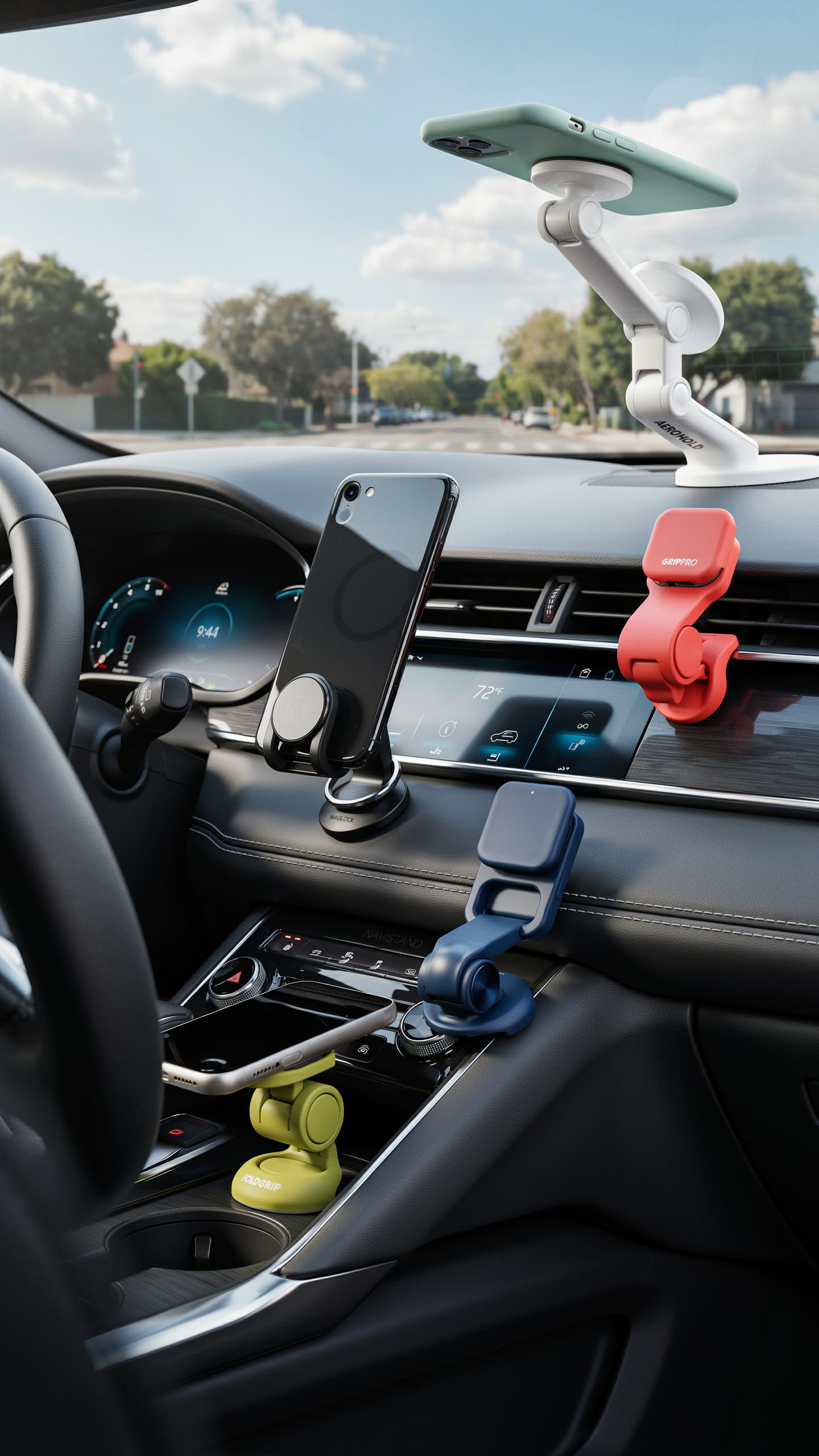
Modern mounts now integrate features that directly address commute challenges. Wireless charging eliminates the need for separate cables. Magnetic systems reduce vibration better than friction grips. 360-degree rotation simplifies viewing angles without removing the phone.
- Wireless Charging Integration: Built-in charging coils deliver 5-10W power while your phone stays mounted, eliminating the need to plug and unplug during daily drives.
- Magnetic Mounting Systems: Strong neodymium magnets grip the phone frame through metal plates, providing better vibration control than friction alone.
- One-Handed Operation: Spring-loaded clamps and gravity-triggered mechanisms secure phones automatically when inserted, saving time during driving.
- Heat Dissipation Design: Ventilated grips and open frames prevent heat buildup during long summer commutes, protecting battery performance.
- Ball Joint Articulation: 360-degree rotating joints let you adjust viewing angles without removing the mount from your dash or vent.

These features reduce driver distraction and handling time. Charging integration proves most useful on commutes over 90 minutes where battery drain becomes a real concern. Heat management matters in hot climates where phones throttle performance.
Troubleshooting Common Car Holder Issues
Dealing With Suction Cup Failures
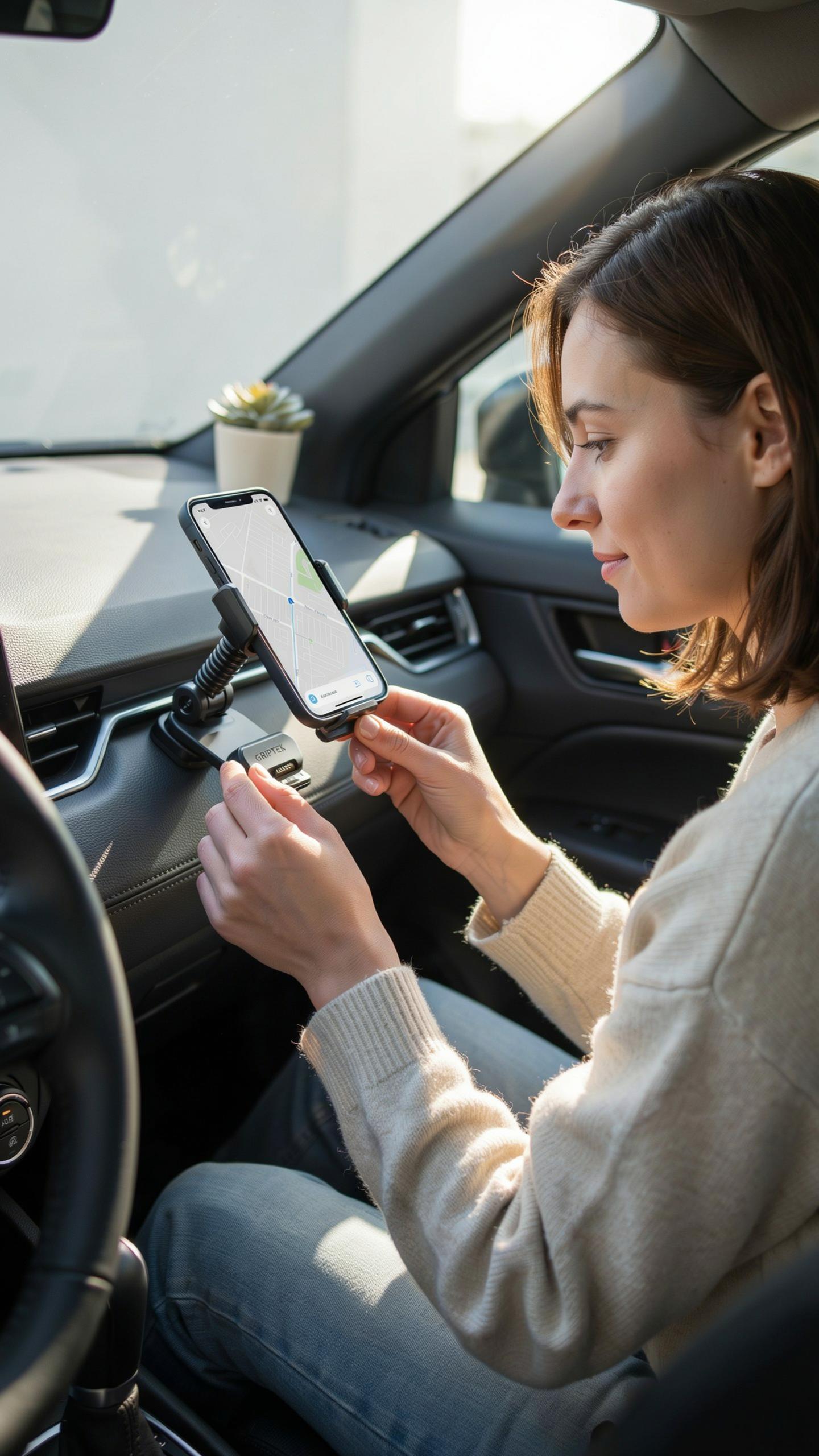
Suction cups lose grip when the seal degrades. Temperature swings cause the rubber to contract and expand, breaking the bond between cup and windshield. Dust, dirt, and residue on either surface kill suction instantly. Clean both the cup and glass with rubbing alcohol and let them dry completely before reattaching. Replace the suction cup every 12 to 18 months as the rubber loses elasticity over time.
If your cup fails mid-drive, the issue is usually poor initial application. Press the cup straight onto glass with firm, even pressure. Avoid angled surfaces that prevent full contact. Windshields have slight curves that can compromise sealing, so find the flattest section near the center. Never apply suction cups to dirty or cold glass. Warm glass accepts suction better than cold glass.
Preventing Vibrations And Movement
Road vibrations transfer directly to your phone holder through the mounting bracket. Tighten all connection points between the mount and your phone. Check bolts and screws every few weeks as vibration loosens them gradually. Worn mounts allow micro movements that compound into visible drift. Replace worn grips or pads that no longer grip your phone firmly. A secure phone requires multiple contact points holding it in place simultaneously.

Add vibration dampening material between the mount and dashboard or windshield. Rubber shims or adhesive foam pads absorb vibrations before they reach your phone. Mount the holder on the lower dashboard rather than the windshield for reduced movement. Windshield mounts catch more road vibration because they sit higher. Keep your phone centered in the holder to distribute weight evenly and prevent tilting during braking or turns.
Maintaining Your Car Phone Holder For Longevity

Cleaning And Care For Your Phone Mount
Dust and debris accumulate on phone mounts during daily use. Wipe the mounting surface with a dry microfiber cloth weekly. For sticky residue from adhesive mounts, use a slightly damp cloth with minimal water. Never spray liquid directly on the mount. Allow it to dry completely before attaching your phone.
Check attachment points monthly for looseness or damage. Tighten any bolts or screws that have shifted. If your mount uses suction cups, clean the contact surface and your dashboard with rubbing alcohol to restore grip strength. Replace worn adhesive pads immediately to prevent your phone from shifting during turns or braking.
When To Replace Your Car Mount
Replace your mount when the grip no longer holds your phone steady during acceleration or braking. Visible cracks in the arm or base indicate structural failure. If the adjustment mechanisms feel loose or broken, the mount cannot maintain proper phone positioning. These issues worsen over time and create safety hazards.
Adhesive mounts typically last two to three years before adhesive strength degrades. Suction cup mounts fail when the rubber deteriorates and loses its seal. Vent clip mounts break when the clamp mechanism becomes too loose to grip. Once repairs become impossible, replacement costs less than fixing permanent damage to your phone from a falling mount.
Frequently Asked Questions

Why do I need a car phone holder for long commutes?
A car phone holder is essential for safety and convenience during long drives. It keeps your navigation visible without glancing down, allows for hands-free calls, and prevents your phone from becoming a dangerous projectile. It’s an invaluable tool for staying focused on the road.
How do I choose the best car phone holder for long commutes that will actually stay put?
For long commutes, prioritize a holder with strong suction cups, robust vent clips, or secure adhesive bases. Ensure it’s compatible with your phone size and charging cables. Reading reviews about stability on bumpy roads can also guide your choice for a reliable car phone holder for long commutes.
Are there affordable car phone holders that are still reliable for frequent use?
Absolutely! Many budget-friendly car phone holders offer excellent stability and functionality. Look for options with simple designs like basic vent mounts or dashboard adhesive holders. While they might lack fancy features, they can still provide a secure and hands-free experience for your daily drives without breaking the bank.