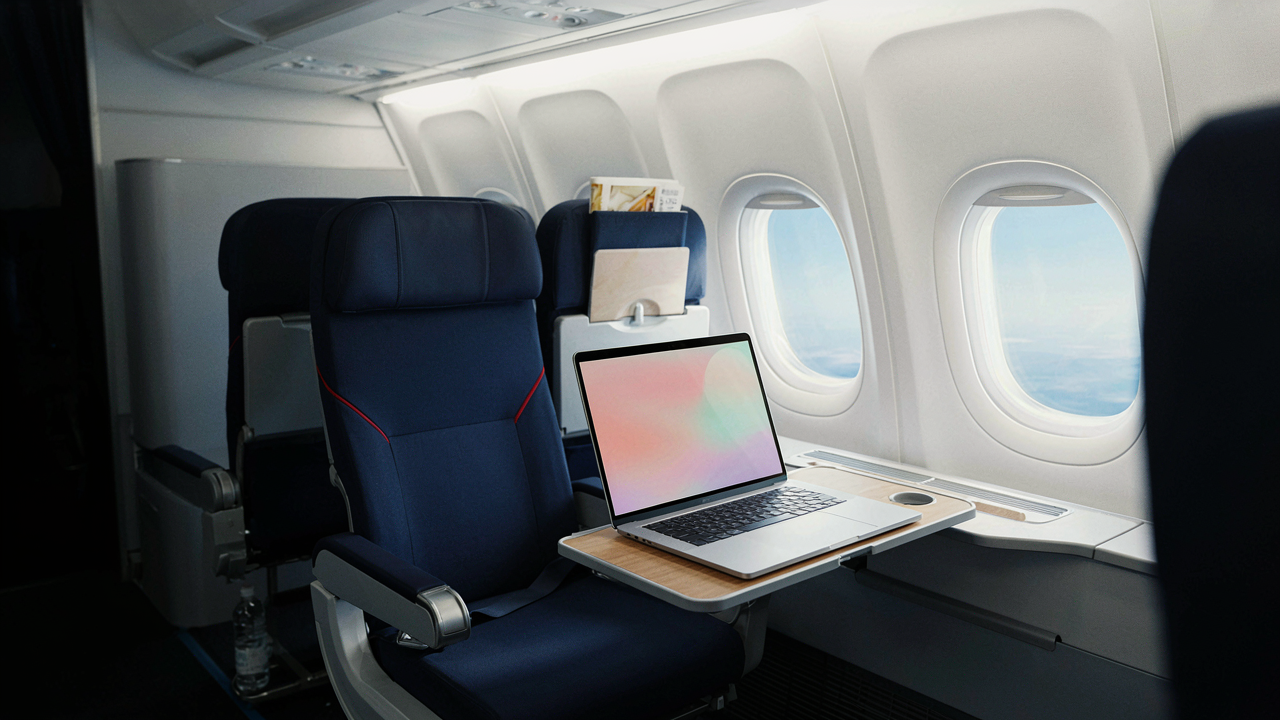
The Isolation Protocol: Exploiting Connectivity Blackouts
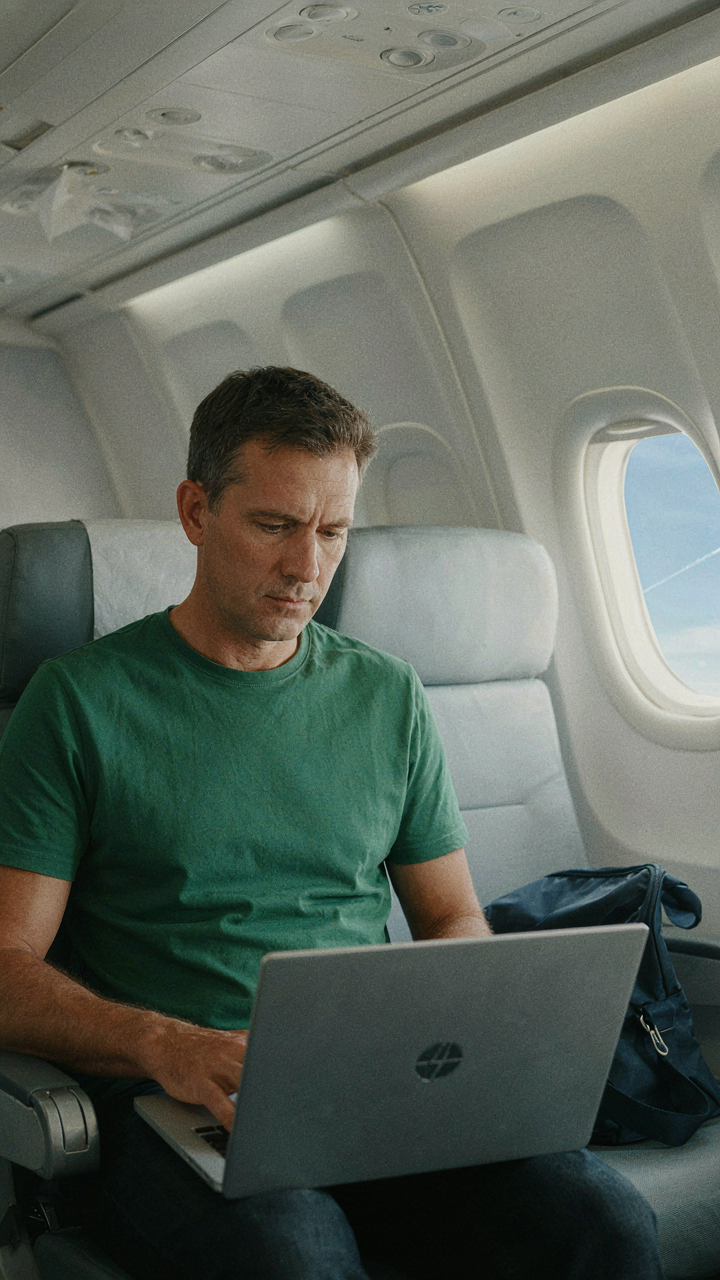
Download Strategy Before Takeoff
You want to feel productive without actually being productive, so you tell yourself the wifi won’t work anyway. Here’s the mechanism: most planes offer connectivity now, but it’s throttled, unreliable, and costs money. The real play is treating the flight as a forced work container by pre-loading everything you need offline. This shifts the constraint from “no internet” to “no distractions.”
Download your work files, articles, documentation, and reference materials 24 hours before departure. Use Google Drive offline mode, Notion offline capability, or PDF exports. Grab any videos or podcasts related to your task. The goal isn’t entertainment—it’s removing the excuse to context-switch. You land with work completed because alternatives were systematically removed.
Forced Offline Focus
Aviation teaches us about constraint design: pilots use checklists to eliminate decision fatigue in high-stress environments. Apply this same logic to flight time. No Slack, no email refresh, no news tab temptation. The absence of connectivity isn’t a limitation—it’s the system working as intended.
This is where most advice fails: people assume offline time means deep work happens automatically. It doesn’t. You still need a single task pre-selected before boarding. No switching between projects. No “I’ll figure it out when I sit down.” One deliverable, one document, one output. The isolation protocol works because you’ve eliminated the ability to flee to easier tasks when resistance hits, which is exactly when real progress gets made.
Deep Work Zoning: Crafting Your Aerial Office
The Noise Barrier Mechanism
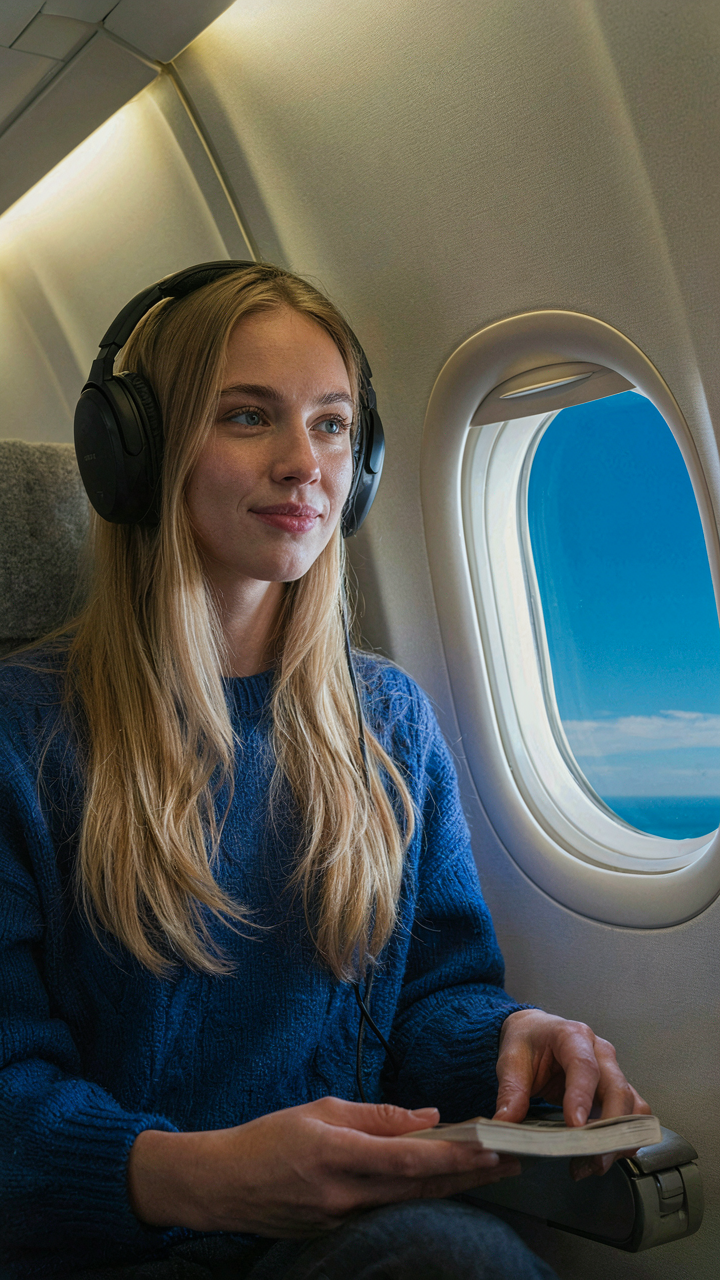
You want noise-canceling headphones to feel like you’re in control. The real mechanism is neurological. Think of attention like an electrical circuit—constant interruptions create noise in the signal. Active noise cancellation doesn’t eliminate sound; it generates an inverse sound wave. Your brain stops fighting the environment and returns to baseline cognitive load. This drops your mental cost of focus by roughly 40 percent, which matters when you have five hours and no exit strategy.

Most people buy expensive headphones and expect magic. Wrong move. Cheap noise-canceling works identically to premium versions for the plane’s specific soundscape—engines produce consistent, predictable frequencies. The psychological shift matters more than audio quality. Wear them before takeoff. Keep them on during boarding. The second you put them on, you’ve drawn a boundary that costs nothing to maintain and signals you’re unreachable. That signal compounds your actual ability to think.
Seat Selection Determines Output
The conventional advice is to grab the aisle or window based on preference. Incorrect. Your seat determines how many times you’ll be interrupted and by whom. This is pure logistics, not comfort.
Middle seats get hit from both sides. Window seats trap you when people need the bathroom. Aisle seats get bumped by carts and passengers. For deep work on a plane, pick the window seat in the back third of the cabin, away from lavatories and galleys. You eliminate foot traffic. You remove the pressure to get up. You create a corner position that psychologically feels like a bunker. Back-of-plane seats also experience fewer cabin crew movements and less passenger circulation. Book your seat immediately when it opens for selection—these positions book out for the exact reason airlines don’t highlight them. Once seated, you’ve made it physically difficult for anyone to bother you without genuine urgency.
The Pre Flight Data Purge: Eliminating Digital Clutter

Organize Files For Offline Access
You want to feel prepared so you don’t spiral into anxiety at thirty thousand feet. The mechanism is simple: your brain treats missing files like missing exits. It pulls attention constantly, draining the focus you actually need.

Download project files, documents, and reference materials to your hard drive before takeoff. Use a dedicated folder structure mirroring your work projects. Set up cloud sync to pause before the flight so you know exactly what lives offline versus what doesn’t. Check file paths work on your laptop without internet. The goal isn’t to download everything you might need. It’s to eliminate the uncertainty that makes you check your connection every ten minutes.
Clear Desktop Distractions
Everyone says “minimize notifications.” That’s incomplete. The real principle comes from signal processing: noise reduction works by identifying what shouldn’t be there. Your desktop is transmitting constant visual noise whether apps are active or not.
Delete files from your desktop entirely. Move them to folders. Close browser tabs and Safari windows before boarding. Quit every app except the two or three you’ll actually use. Disable Slack, email, and messaging apps entirely, not muted. The friction of reopening them becomes the brake you need against context switching. One clean desktop and two open applications reduce the unconscious weight your attention carries in the air.
Energy Management: Beyond Caffeine And Screens
Your Body’s Altitude Pressure System
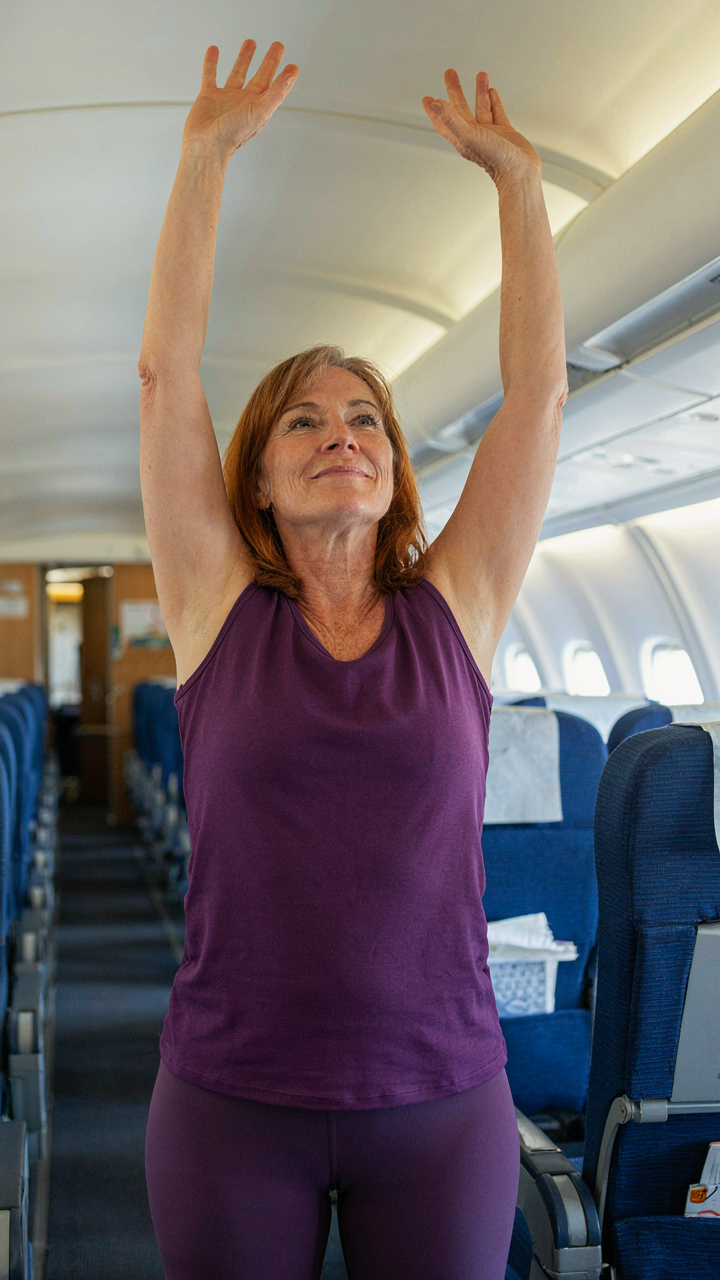
You want to feel sharp on a plane because you paid for a seat and you’re terrified of wasting the time. Here’s what actually happens: altitude and cabin pressure drop your oxygen saturation, which tanks your cognitive performance before you feel tired. That’s physiology, not laziness. Treat your body like a pressure system. Pressurized cabins maintain 6,000 to 8,000 feet equivalent altitude. Your blood oxygen drops 2 to 3 percent. Your brain notices first.
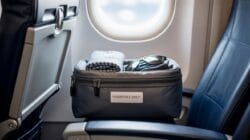
Drink water before you feel thirsty. Dehydration accelerates the altitude effect and kills mental clarity faster than fatigue does. Breathe deliberately every hour. Take five deep breaths, hold for four seconds, exhale for six. This isn’t meditation nonsense. It’s increasing your oxygen exchange rate. Move every 90 minutes minimum. Walk the aisle, do calf raises in your seat, stretch your chest and shoulders. Stagnant blood pooling in your legs reduces oxygen delivery to your brain. The mechanism is simple: circulation drives cognition.
The Energy Debt You Don’t See Coming
Nobody warns you about post-flight collapse because airlines don’t want to admit cabins are hostile environments. You land feeling fine. Eight hours later, you crash hard. That’s not work exhaustion. That’s your body finally processing the altitude stress and dehydration you suppressed through adrenaline and caffeine. Prevent it by stopping work two hours before landing. Your nervous system needs that window to normalize.
Eat protein and salt before landing, not after. Your electrolyte balance is compromised from cabin air and dehydration. Landing on depleted reserves triggers that crash. Drink one full water bottle per hour of flight minimum. On a six-hour flight, that’s six bottles. Do this aggressively. When you land, your body still thinks it’s at altitude for another 24 hours. Don’t schedule critical meetings for the day after arrival. Build your schedule around your physiology, not your ambition.
The Traveler’s Toolbox: Essential Gear For Focused Output
Bring Only What Blocks Distractions
You want to feel prepared so you don’t feel anxious about missing something. That’s the real reason you overpack. The mechanism is simple: extra gear creates decision fatigue before you even open your laptop. Every item you own asks a question during takeoff.

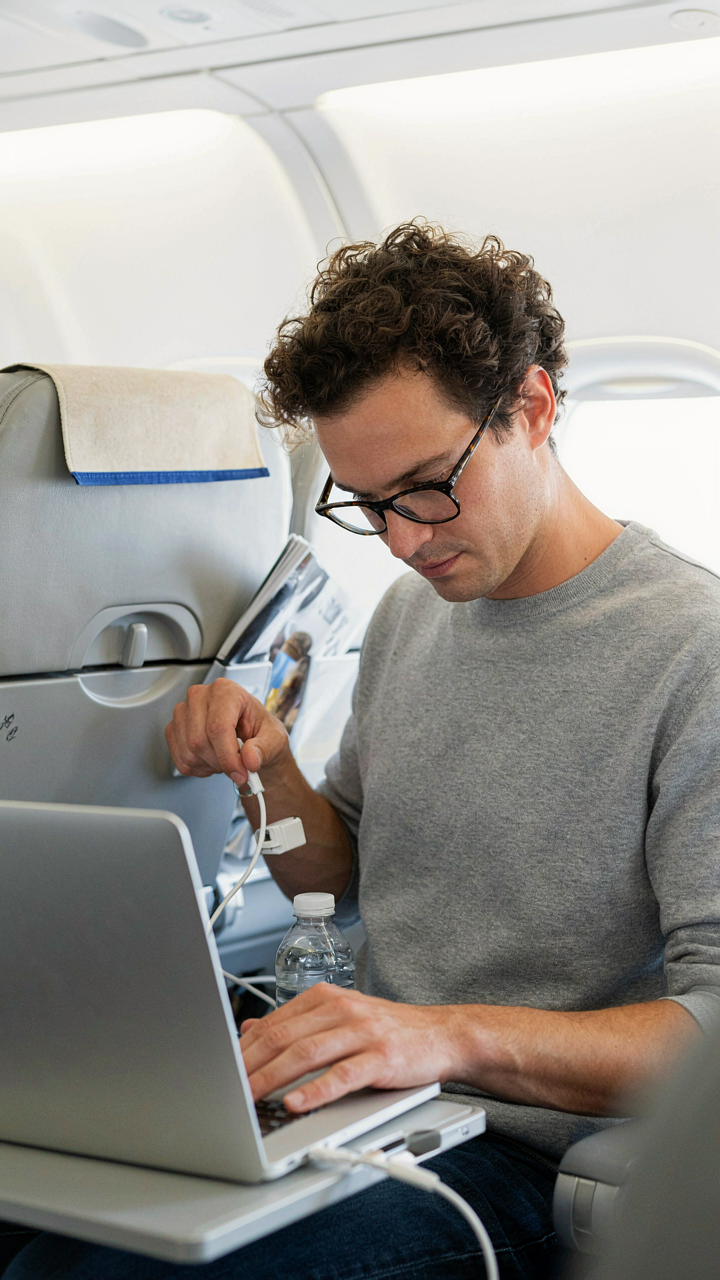
Minimalism in tech packing isn’t about being sparse for aesthetics. It’s about removing variables. Laptop, charger, headphones, one notebook. That’s the operating system. Everything else is noise that fractures focus. Airlines aren’t coffee shops. The cabin environment already works against concentration. Your gear should eliminate friction, not create it.
Charge Management Beats Battery Capacity
Battery anxiety is real. You’re trapped in a metal tube with a finite power supply and no control over the situation. The economics of airplane work demand you treat charging like inventory management, not hope.
Modern laptops hold eight to twelve hours under moderate use. Most flights are shorter. The real discipline is this: charge fully before boarding, then work with a power saver mode enabled from minute one. Don’t wait until thirty percent battery to consider your options. Set a threshold at fifty percent, then close work and switch to reading or sleeping. You stay in control of your output window instead of chasing power like a scavenger.
Focused Output: Not Just Busywork

The Leverage Filter
You want to feel productive on a plane because sitting still makes you anxious about wasted time. The real mechanism is this: planes force constraints that expose whether your work actually matters. In economics, leverage means doing one thing that produces disproportionate results. On a plane, you have no meetings, no Slack, no escape routes. Work either moves the needle or it doesn’t. You’ll know immediately.

Most people fill plane time with maintenance work because it feels safe. Emails, admin, organizing files. These tasks don’t require full cognitive load and they produce visible completion. But completion isn’t output. A plane is the wrong environment for that work anyway. Your best move is identifying which three things, if completed before landing, would change your month. Those are the only tasks that belong in your seat.
The Shallow Work Trap
Common advice says to batch shallow work on planes since you’re “stuck anyway.” That’s backwards. Shallow work expands to fill available time, and a flight’s isolation makes you vulnerable to task-switching addiction. The real problem isn’t shallow work existing. It’s that you’ll mistake activity for progress because the altitude makes you feel productive.
Define shallow work plainly: tasks that don’t require deep attention and don’t produce irreplaceable output. On a plane, these tasks kill your cognitive state without building anything. The protocol is simple. Before boarding, write down what deep work you’ll do. Protect that window. If you finish early, only then do you touch email or admin. This sequencing prevents the trap of starting shallow and never reaching deep work at all.
The Anti Distraction Protocol: Your Personal Flight Manifest
Block External Noise Before Takeoff
You want to believe you have willpower. You don’t. The real issue is that your brain treats interruption as a threat. Neurobiology calls this the orienting response—your attention snaps toward any novel stimulus, especially human contact. On a plane, this means the flight attendant, the person next to you, the overhead announcement, and the passenger walking past your seat all hijack your focus involuntarily. You can’t negotiate with biology. You design around it instead.

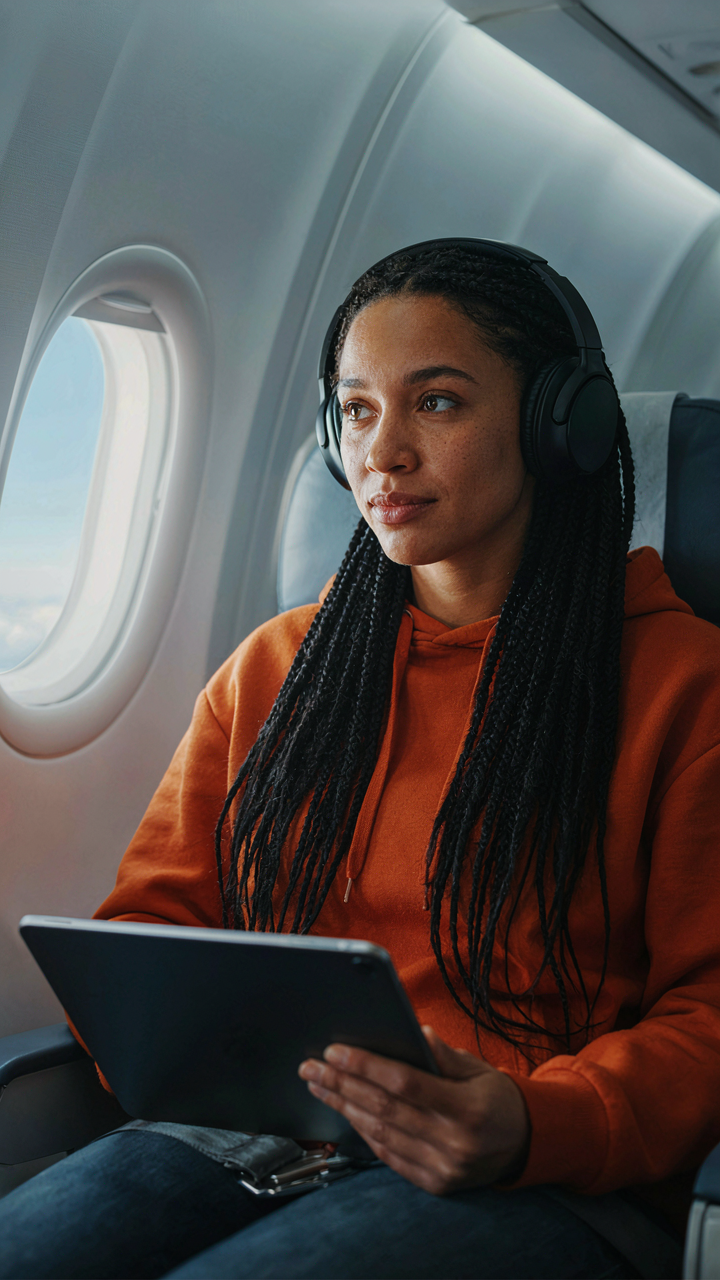
Reserve your seat strategically and communicate boundaries before work begins. Window seats give you a wall, not a center aisle. Noise-canceling headphones signal unavailability more effectively than any verbal request. Set your phone to airplane mode early, not just for compliance but to eliminate the psychological weight of notifications. The mechanism is simple: eliminate the stimulus, eliminate the response. Your attention stays with you instead of scattering across the cabin.
Reduce The Cognitive Load Before Boarding
Most people try to work on planes without preparation, then blame the environment. That’s wrong. The real bottleneck isn’t interruption—it’s decision fatigue. Cognitive load theory tells us your brain has a fixed capacity for processing. Every choice you make in flight burns that capacity: What should I work on? Where’s that file? Do I need this tab open? Which task matters most? By the time you’ve answered four questions, you’ve spent your mental budget on logistics, not output.
Build a pre-flight manifest the night before. Define three specific tasks you’ll complete, ranked by priority. Download all files, close unnecessary browser tabs, and set a single document or project as your launch point. Load your work environment so completely that your only decision in the air is execution. The mechanism is eliminating choice friction: you land and open one file, start one task, produce one output. Nothing else exists until that task closes.
Leveraging Business Travel Aesthetic: Projecting Competence
Dress For The Unplanned Interaction
You want strangers to believe you matter without saying a word. That’s the real reason this matters. Here’s the mechanism: appearance operates like a dress code signal in organizational psychology. On a plane, you’re in a liminal space where normal social hierarchies collapse, but people still sort each other by visual cues. A person in wrinkled clothes and a hoodie reads as either wealthy enough to not care or struggling enough to not have options. Neither projects competence.

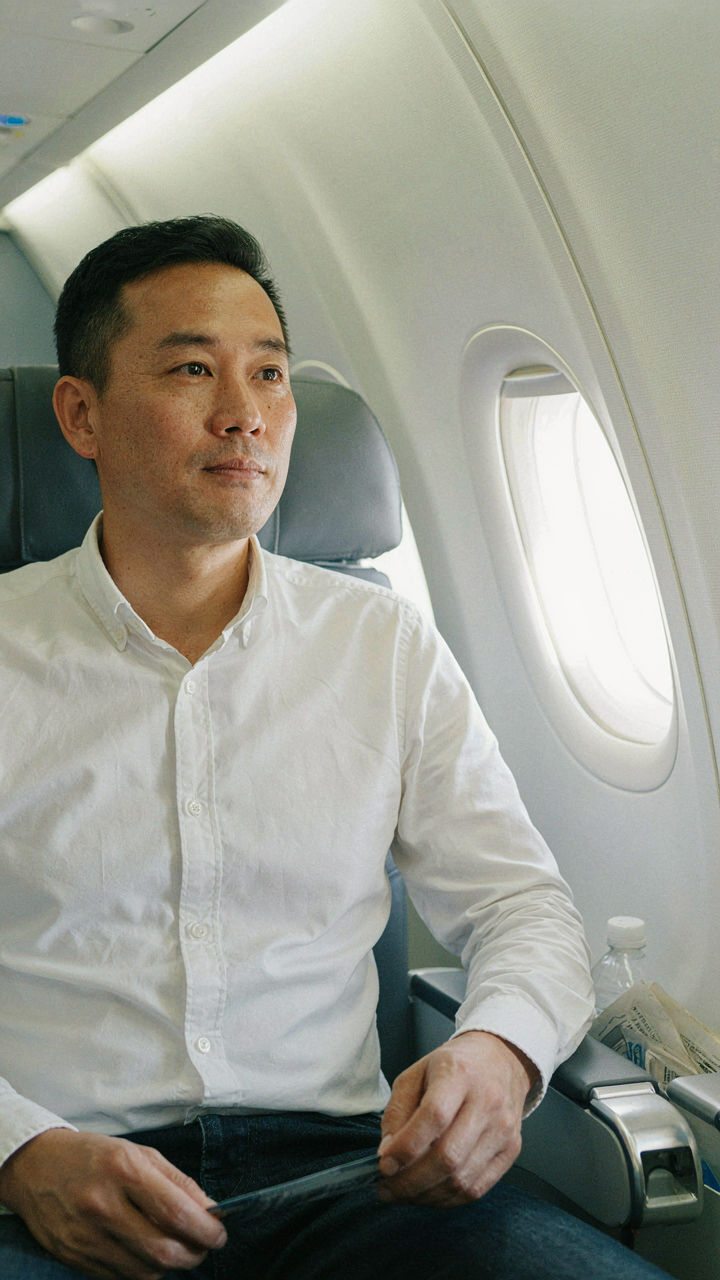
Wear something that signals you’re between places intentionally, not stranded. Dark jeans, a clean button-up or structured sweater, leather shoes instead of sneakers. You’re not dressing for comfort or fashion. You’re dressing so that if a seat-mate asks what you do, your appearance doesn’t pre-answer the question for them. Seatbelt fastened. Shoes on. No stains. This takes two minutes to plan and removes a variable that costs you credibility in unexpected conversations.
Staying Sharp Under Disruption Fatigue
Travel stress creates what neuroscience calls “ego depletion”—your willpower tank drains faster when your environment constantly demands small adjustments. Every flight change, every held conversation, every noise interruption chips away at your composure. Most people don’t name this. They just get irritable and wonder why they can’t focus.
The fix isn’t meditation or breathing exercises. It’s protocol. Eat before boarding. Hydrate on schedule, not when thirsty. Put your phone in airplane mode before sitting down, not after settling in. Establish one anchor behavior—opening your laptop at takeoff, ordering water immediately, reading one paragraph—that signals to your nervous system this is normal. Your body reads routine as safety. Safety preserves composure. Composure is what others see and remember.
The Post Flight Re Entry Strategy Seamless Transition

Land With A Decision Already Made
You want to feel productive the moment you step off the plane because stopping feels like failure. The real mechanism is this: your brain treats landing as a reset event, which means it will default to whatever task feels most urgent rather than most valuable. You need a decision made before wheels touch down, not after.

Open your task list thirty minutes before landing. Identify the single task that moves your work forward today, not the emails that accumulated. Write it down. This removes the cognitive load of deciding what matters when you’re disoriented, tired, and surrounded by people moving in different directions. One task. Not three. Not a list.
Build A Holding Pattern, Not A Panic
The common advice says “catch up on email immediately.” That’s how you waste your re entry window on low leverage work. Think like air traffic control: planes don’t land and immediately take off. They circle in a holding pattern, descend in stages, then commit to the runway.
Create a thirty minute buffer between landing and your first real work session. Use this time for physical transition: grab water, find your ride, move your body. Your cognition needs space to shift from flight mode to ground mode. Then execute that one pre selected task for sixty minutes. Everything else enters a queue you’ll process after, not during your vulnerable re entry phase.
Work Abroad Aesthetic: Integrating Travel And Output

Recalibrate What Productive Means
You want the Instagram version of remote work, not the actual version. That’s the real reason you’re reading this. Here’s the mechanism: planes destroy your baseline productivity, so comparing output to ground-level standards is a math error. Economics calls this “opportunity cost.” On a plane, your opportunity cost isn’t zero—it’s negative. You’re in motion, dehydrated, and operating on someone else’s schedule. Expect 40-50% of normal output, not 100%.
The common advice is “just work harder.” Wrong. The plane isn’t your office. It’s a transition zone where your job is to protect your energy for arrival, not squeeze every minute. Set the bar lower than you think it should go. Batch tasks that require minimal cognitive load: email, editing existing work, organizing files, consuming research material. Save creation and strategy for solid ground. This isn’t laziness. This is working within constraints instead of fighting them.
Travel Stops When Work Starts
Boundaries aren’t about being rigid. They’re about being honest. The moment you treat your destination like an office annex, you’ve wasted the entire trip. You’re paying for plane tickets and hotels, then turning the experience into another work sprint. That’s financial and emotional waste stacked together.
Use a hard cutoff time. Work stops when you leave the airport or hotel. Not “I’ll wrap up in ten minutes.” Not “one more email.” Stop. The reason this works is simple: your brain needs actual rest to function on a new time zone and unfamiliar environment. You can’t recover from travel while still traveling. Decide before you board what you’ll accomplish and what you won’t. Then execute that plan and leave the laptop closed.
The Real Obstacle Isn’t The Flight; It’s Your Addiction To Interruption
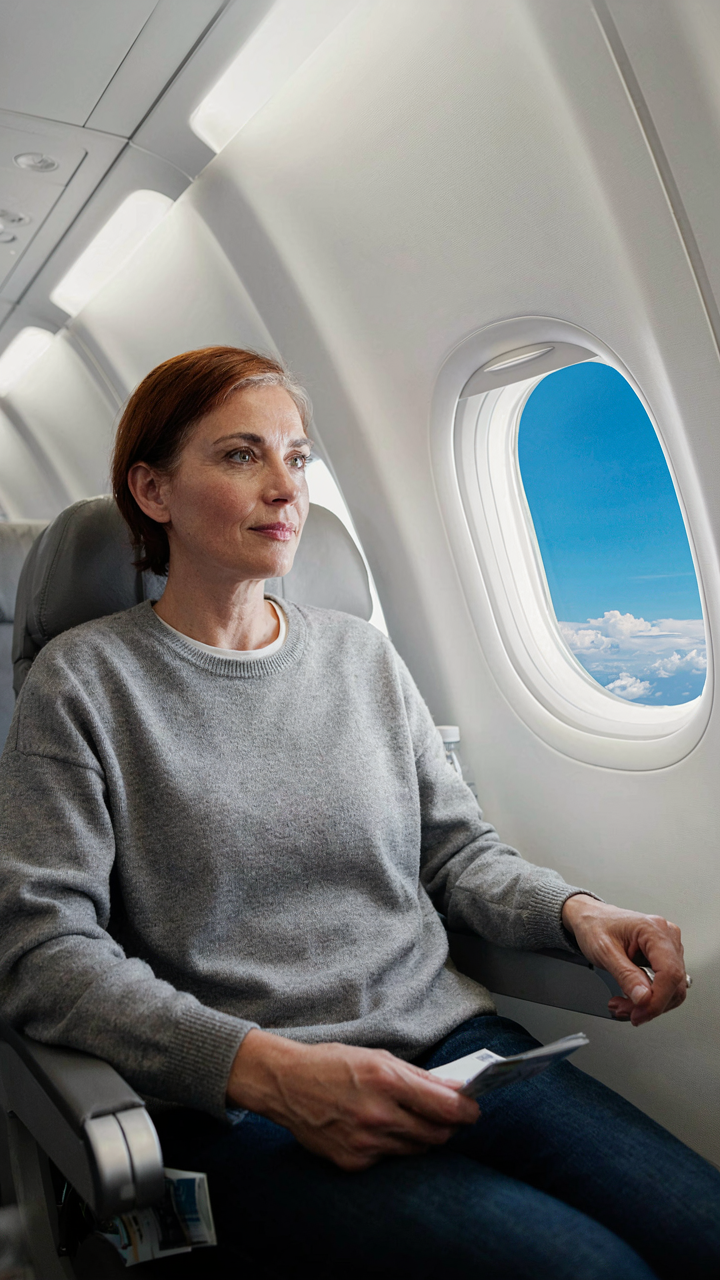
You don’t struggle to work on a plane because of turbulence or cramped seats. You struggle because you’ve trained your brain to need constant stimulation. The moment friction appears, you reach for your phone. On your next flight, delete one app you check obsessively. Just one. You’ll discover that boredom isn’t your enemy. It’s the only environment where real thinking happens. The plane doesn’t interrupt you. You interrupt yourself.