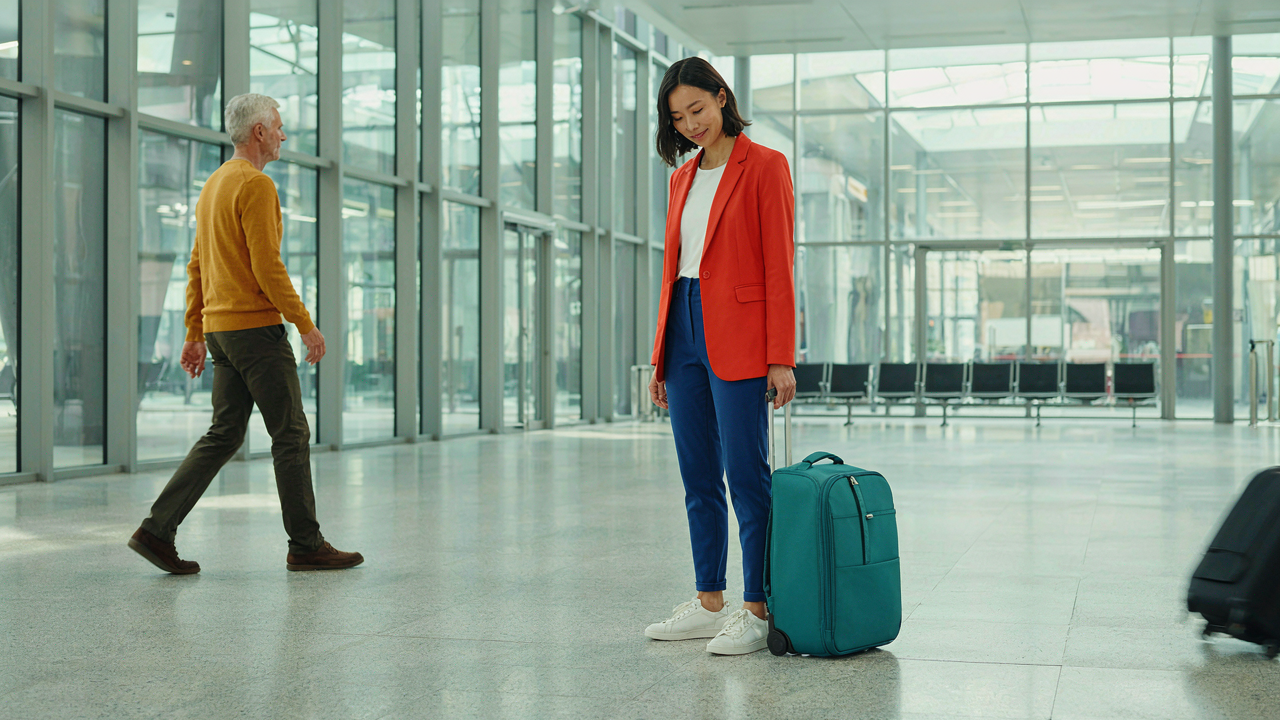
The “Operational Zero” Principle: Stripping Down To Core Functionality

What Actually Stays In The Bag
You want to believe you’re too prepared, not too heavy. That’s the real fear underneath this. The mechanism is simple: every item you pack trades off against mobility, decision fatigue, and packing speed on your next trip. Think like a military loadout planner. In combat operations, soldiers distinguish between mission-critical gear and contingency gear. Your carry-on works the same way. A mission-critical item solves a problem that stops the trip cold if missing. Everything else is noise.
Start by defining what actually breaks your trip. Passport and boarding pass. Phone and charger. Medications if applicable. Toiletries for personal function. One change of clothes. That’s the skeleton. Everything you add beyond this must answer one question: does this trip fail without it? If the honest answer is no, it doesn’t belong in the bag.
The “Just In Case” Audit
The common advice here is garbage. You’ll hear “pack for flexibility” or “prepare for every scenario.” That’s how people end up carrying seven layers, three pairs of shoes, and backup cables for devices they don’t own. The real mechanism comes from probability and constraint. You have limited cubic inches. Every speculative item you pack is cubic inches stolen from actual comfort or necessities.
Audit ruthlessly by asking this: have I actually used this item on trips before, or am I inventing a scenario in my head? The second jacket, the “emergency” medications, the backup phone charger, the “just in case” formal outfit. Strip them. You’re staying five days, not preparing for the apocalypse. Carry what you’ll actually use in the first 36 hours. Everything else reveals itself as unnecessary within two days of any trip.
The Digital Nomad’s Armor: Tech Essentials, Not Excess

Multi Use Tools Over Single Purpose Gadgets
You want people to think you travel light. The real mechanism is that most travelers pack tech they feel obligated to own, not tech that actually gets used. Borrow from military load-bearing logic: each item must serve multiple functions or it becomes dead weight. A single USB-C cable replaces three proprietary chargers. A lightweight laptop with solid battery life replaces a laptop plus a tablet plus a power bank. You’re not cutting corners. You’re cutting noise.

The calculus changes when you stop treating tech as status symbols. A backup power bank isn’t luxury if your phone dies mid-navigation in an unfamiliar city. A compact external SSD matters only if you actually back up work or photos during your trip. Most people pack devices that feel important rather than devices that solve real problems you’ll face in the next seventy-two hours. Strip it down to what you’ll actually touch. Everything else stays home.
Backup Systems That Actually Work
Data loss doesn’t happen to careful people. It happens to people who think backup is something they’ll do later. Three layers protect you: one local (external drive or device storage), one cloud (encrypted, accessible anywhere), one redundant (a second cloud service or another physical copy). This isn’t paranoia. This is accounting for the fact that devices fail, airports have theft, and coffee gets spilled.
Your backup protocol runs on a schedule, not willpower. Set automatic cloud sync on your laptop or phone before you leave. Test your cloud access from a different device before your trip starts. Keep one copy physically separate from your main work setup. If you’re doing this on demand mid-trip because you didn’t plan, you’ve already lost. Establish the routine now, execute it automatically during travel, verify it works before you need it.
The Adaptability Matrix: Clothing For Any Climate, Minimal Volume

Build Your System In Layers, Not Outfits
You want to pack less but handle more situations without looking like you’re improvising. That’s not actually possible with random pieces. The mechanism is layering: three intentional garments that stack for warmth, shed for heat, and combine into different contexts. Military and mountaineering use this same principle because redundancy through stacking beats carrying backup items. One base layer, one mid layer, one outer shell. That’s your complete system.

The math is simple. Three pieces create nine possible combinations. A t-shirt becomes casual alone, formal under a blazer, and a base layer under a sweater. You’re not dressing for ten climates. You’re dressing for temperature and context shifts using the same fabric. This isn’t generic advice about “mixing and matching.” This is eliminating the false choice between variety and volume.
Fabric Type Determines Everything Else
Most packing advice gets this wrong: it treats fabric as decoration instead of function. Wrinkle-resistant materials aren’t luxury. They’re load-bearing. Quick-dry fabric isn’t trendy. It’s necessary. Merino wool, synthetic blends, and structured cotton serve different purposes, but all three must work alone, layered, and reworn between washes without visible degradation.
Skip the premium merino obsession unless you’re in consistent cold. For mixed climates and variable trip length, a synthetic mid layer and a technical outer shell do the work. Nylon or polyester shells compact small, dry fast, and block wind and rain. Base layers in synthetic materials wick moisture reliably. Your outer layer is responsible for adaptation across climates. Everything else supports that one decision.
The “Carry On Packing” Systems: Beyond Rolling Clothes
Compression Cubes Vs. Garment Folders: The Real Trade Off
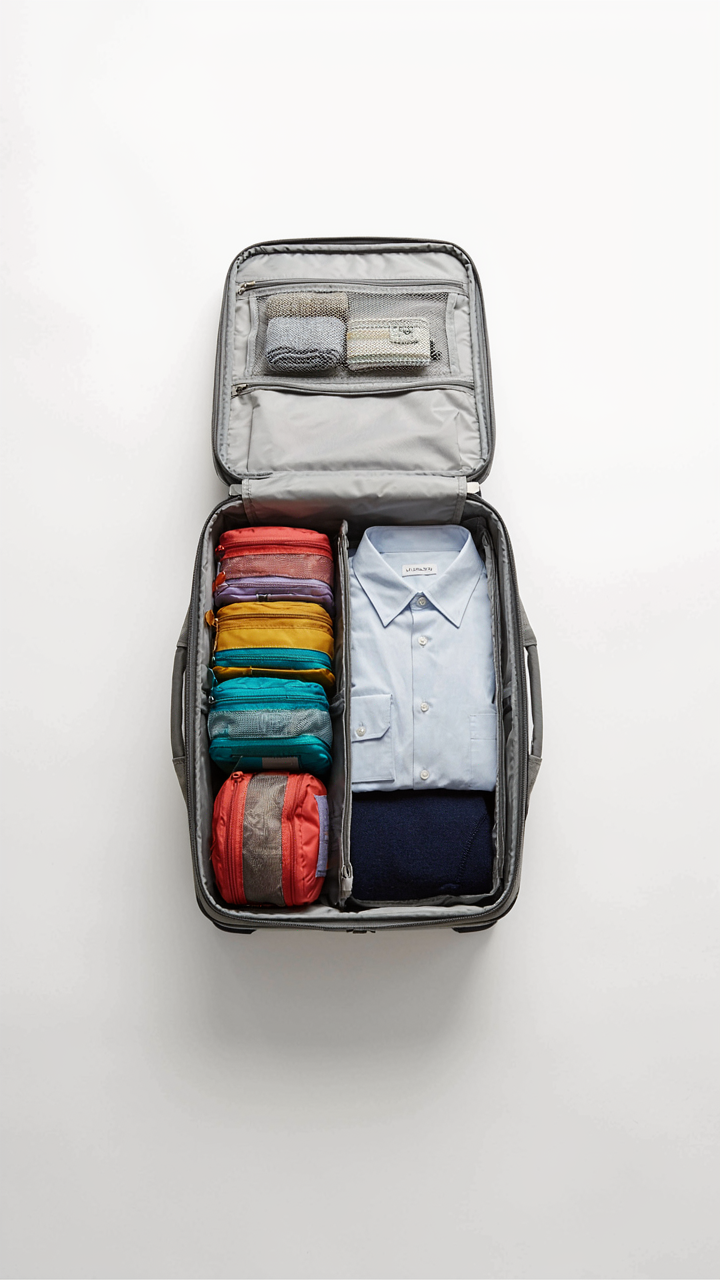
You want to feel smart about your packing method because it signals control. The truth is simpler: compression cubes and garment folders solve different problems, and picking the wrong one wastes access time every single trip. Compression cubes reduce volume through force, crushing air out of fabric. Garment folders preserve fold lines and keep wrinkles minimal by maintaining flat geometry. Neither is universally better. Compression wins when you prioritize cubic inches. Garment folders win when you prioritize reaching specific items without unpacking half your bag.
The mechanism that matters: compression cubes work best for layering basics you’ll cycle through (socks, underwear, shirts). Garment folders work best for pieces you wear as single outfits and need wrinkle-free (blazers, trousers, dresses). A practical carry on setup uses both. Pack your structured items in folders on the bottom of your bag. Stack compression cubes above them. This creates a retrieval hierarchy: you access compressed basics from the top without disturbing folded pieces below. Test this on a two-day trip first.
Pod Packing: Modular Access From Military Logistics
Military logistics solved the modular kit problem decades ago through compartmentalization: each system breaks into self-contained units that deploy independently. Apply that directly to carry on packing. Instead of one monolithic pile of clothes, you organize by trip segment or daily use. A pod is simply a discrete bundle of items needed for one functional purpose: morning routine, workday, sleep cycle, or specific activity.
The difference between this and random packing is velocity. When you arrive at a hotel or airbnb, you pull out your sleep pod, not your entire bag. Your morning pod contains everything needed to shower and dress, positioned at bag entry for immediate grab. Your activity pod stays sealed until needed. This eliminates the 15-minute rummage through fabric searching for deodorant or clean socks. Pack pods into small compartments within your carry on, or use dedicated cubes labeled by time block. The discipline is consistency: every trip uses the same pod structure, so muscle memory replaces decision making at destination.
The Personal Logistics Kit: Health, Hygiene, And Emergency Readiness
Medications And Toiletries Without The Bloat
You want to pack enough to feel secure without admitting you’re terrified of being helpless in an unfamiliar place. The real mechanism is constraint: what you bring reflects what you actually use, not what you think you should use. Most people overpack here because they confuse preparation with insurance.

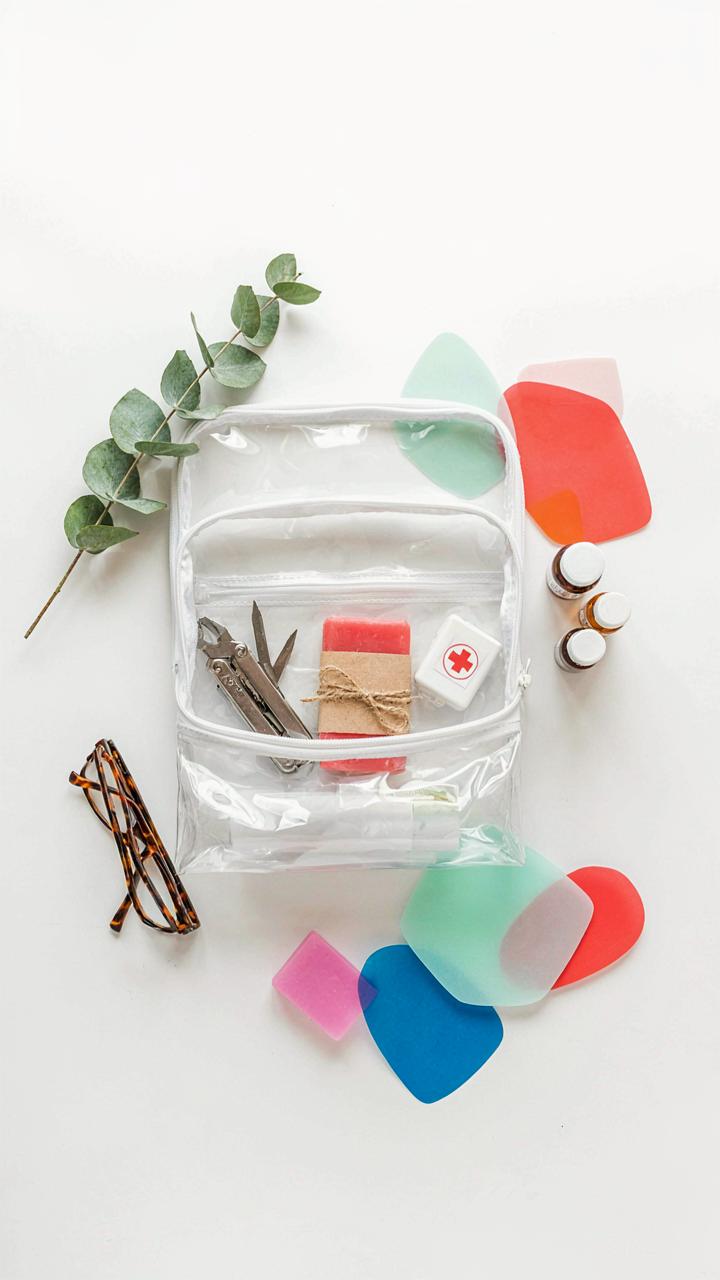
Bring prescription medications in original labeled bottles, not loose in a container. A basic first aid setup means blister treatment, pain relief, and anti-diarrheal tablets. For toiletries, decant into travel containers or buy solid versions: bar soap, solid deodorant, solid shampoo. The rule is ruthless: if you haven’t used it in the last three trips, it doesn’t board the plane.
Essential Tools That Earn Their Weight
A multi-tool solves problems that would otherwise force you to buy something or hunt help you don’t need. Think like a mechanical engineer: redundancy of function in minimal form. A Leatherman Signal or Victorinox Spartan covers cutting, opening, and basic repair without taking up pocket space.
- Multi-tool with knife and screwdriver set: Handles improvised repairs, gear adjustments, and food prep without requiring separate items.
- Compact LED headlamp or keychain light: Navigates dark spaces, reads fine print, signals in emergencies. Hands-free matters.
- Universal power adapter: Eliminates the need for multiple adapters across regions. Covers USB and wall outlets simultaneously.
- Small sewing kit: Thread, needle, and patches repair gear faster than buying replacements or going without.
- Duct tape wrapped around a card: Solves immediate seal, patch, and strap failures. A few feet weighs almost nothing.
Pack these tools where you can access them without unpacking your entire bag. Keep the headlamp clipped to an outer pocket, the adapter in the front compartment, and the multi-tool on a carabiner attached to your pack loop or belt. These three items alone reduce friction from 90% of travel complications.
The “Perimeter Defense” Backpack Selection: Best Travel Backpack Beyond Aesthetics
Load Distribution Beats Brand Recognition
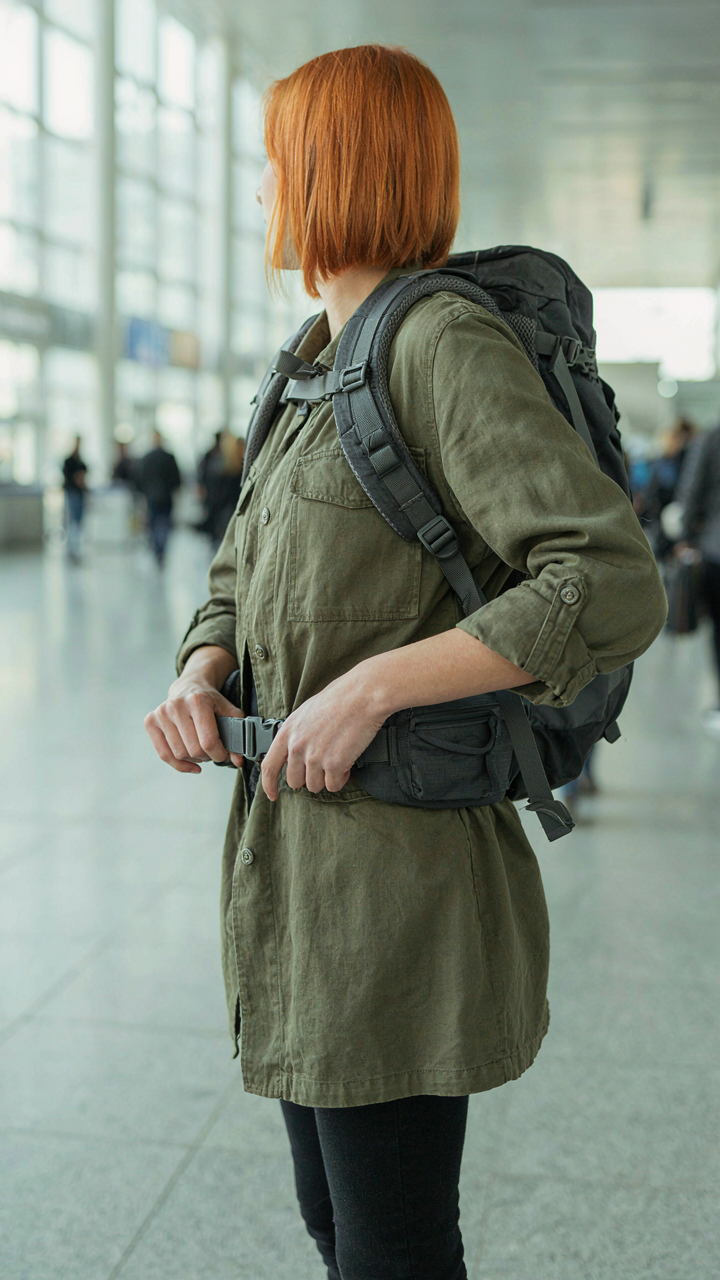
You care about this because choosing wrong means physical pain you’ll blame on travel itself. The real mechanism is biomechanics. Your spine transfers load downward through the pelvis, not your shoulders. A backpack that centers weight on your hips, not your traps, keeps you functional across 12-hour days. Most backpacks fail because designers prioritize looks over load path engineering. The sternum strap, hip belt, and frame geometry aren’t cosmetic choices, they’re load-bearing architecture.

Carry on dimensions create a structural constraint most backpacks ignore. A 22-inch bag forces designers to place weight lower than checked luggage ever could. Your shoulders absorb nothing when the hip belt sits properly and the bag’s frame channels load toward your center of gravity. Test this by wearing a loaded backpack for one hour before buying. If your shoulders ache and your hips feel untouched, the pack is engineered wrong. The best travel backpack setup stops weight from becoming a problem at all.
Security Through Design Redundancy
Most carry on advice treats security as an afterthought, but theft happens because backpacks advertise vulnerability. The mechanism is visibility plus access time. A thief needs both line of sight and seconds of manipulation. Compartmentalization forces them to choose which theft is worth the attention. A single main zipper takes three seconds to open. Multiple zippers, hidden pockets, and an internal organization system multiply the risk and time until most thieves move on.
Anti-theft backpacks use TSA-approved locks, hidden shoulder straps, and slash-resistant fabrics. The fabric matters less than the compartment logic. Separate your passport, cards, and cash across at least three different sections. One pocket for daily access items. One for documents you never touch mid-trip. One for valuables that stay in a hotel safe or hidden layer. The backpack’s job is forcing a thief to know exactly where something is before attempting the grab. Obscurity through design complexity is your primary defense.
The “Cognitive Offload” Method: Why Less Packing Means More Mental Bandwidth

Fewer Decisions Shape Your Actual Experience
You want to feel like you’re traveling light because it sounds sophisticated, but the real mechanism is simpler: decision fatigue compounds faster than most people admit. Every item in your carry on represents a micro-choice loop that repeats across the trip—what to wear today, where that cable is, whether you need to dig for it. Cognitive load from logistics directly competes with your capacity to notice the place you traveled to see. The constraint isn’t space; it’s mental bandwidth.

A purposefully sparse carry on eliminates decision branches before they form. When you pack only what you wear on rotation, getting dressed takes seconds, not minutes of browsing. When every item has one visible location, you never waste mental cycles hunting. This isn’t minimalism for Instagram—it’s resource allocation. The mental energy you save on logistics redirects to observation, conversation, and the experience you’re actually paying for.
Mental Space Creates Real Attention
You’ve been taught that focus is about willpower, but neurobiology doesn’t work that way: your brain allocates attention based on cognitive load. High logistical overhead means fewer resources available for presence. A streamlined carry on setup reduces the background noise of “where is X, do I have Y, should I have brought Z.” That freed capacity compounds across days.
The mechanism is straightforward: pack only items with clear purpose, assign each a fixed location in your bag, and verify the setup works on a short trip before a long one. This creates what military planners call “operational simplicity”—the system runs without constant management. You stop thinking about your luggage and start thinking about where you are. The payoff isn’t convenience; it’s the ability to be somewhere without part of your attention still solving packing problems.
The Airplane Travel Essentials Protocol: Gate To Gate Domination
Layering And Cabin Pressure Management
You care about this because plane cabins feel chaotic and you want to signal control to yourself. The real mechanism is thermal regulation under pressure change. Aircraft cabins maintain 6,000 to 8,000 feet equivalent altitude, which drops oxygen density and constricts blood vessels. Your body interprets this as cold stress even at 72 degrees. Wear a base layer that wicks, a mid layer that traps air, and a jacket you can remove. Pack these three items loose in your backpack. Access them immediately after boarding, not mid-flight.

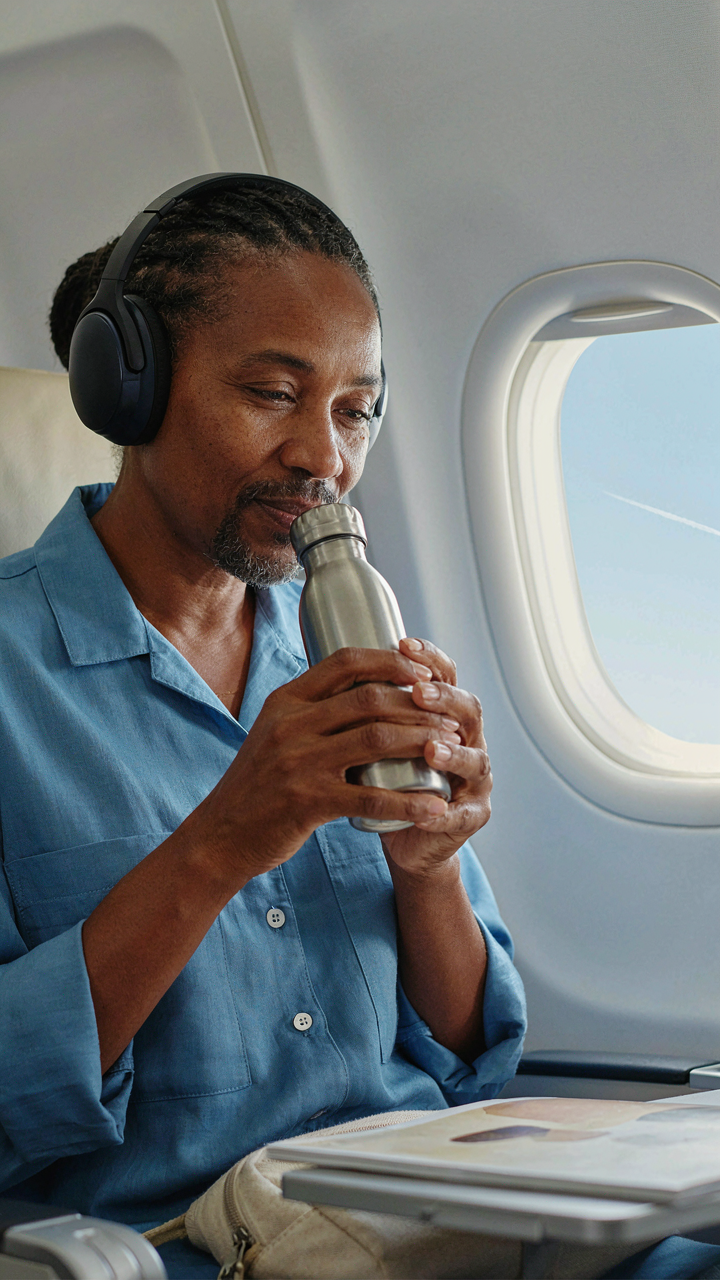
Noise cancellation works only if you actually bring the device. Over-ear headphones with active noise cancellation drop cabin noise 15 to 30 decibels, which matters more than music quality for sleep or focus. Hydration prevents the cabin’s 10 to 20 percent humidity from dehydrating mucous membranes, which triggers sinus issues and fatigue. Bring an empty water bottle and fill it after security. Drink consistently every 30 minutes of flight time. This is not comfort advice. This is preventing performance degradation.
Security Checkpoint Choreography
Most travelers fail checkpoint speed because they organize their bags for airplane seating, not checkpoint throughput. Think like a production line: your job is to clear three stations in sequence. Station one requires your ID and boarding pass in hand before you reach the podium. Station two demands your liquids bag, shoes, belt, and electronics removed and in a bin within 20 seconds. Station three is the scanner and walk-through. Your backpack organization must reflect this sequence, not your packing priority.
Place your TSA-compliant liquids bag (3.4 ounces or less per container, all in a single quart-sized bag) in the top exterior pocket of your backpack. Place your electronics (phone, laptop, tablet) in the next accessible section. Wear slip-on shoes and no belt. Empty your pockets into your backpack’s side compartment before you reach security. When you pull your backpack onto the conveyor, your liquids and electronics come out with one motion. Everything goes into bins in this order: shoes, belt, liquids, electronics, then backpack. This reduces your checkpoint time by 40 seconds minimum.
The “Long Haul Illusion”: Why Short Trip Smart Packing Principles Scale Up, Not Out

Laundry Access Changes The Math
You want to believe that three weeks demands triple the clothes. It doesn’t, and that belief costs you pack weight and mobility for no reason. Laundry access flips the entire equation from a volume problem into a logistics problem.

A five-day trip with no laundry forces you to carry clothes for five days. A twenty-day trip with laundry access means you carry clothes for five to seven days, wash them, and repeat. You’re not scaling the total volume by four times. You’re recycling the same core items. The real cost isn’t fabric weight—it’s finding time and a machine. That’s not a packing problem. That’s a route planning problem.
Most advice tells you to pack more for longer trips. Wrong. Pack the same carry-on weight, then add laundry into your itinerary as a non-negotiable stop. Hotels with in-room washers exist everywhere. Laundromats are cheaper than paying for extra luggage fees or replacing items damaged by overstuffed packing. A single laundry cycle every five to seven days means your baseline kit stays constant whether you travel for two weeks or two months.
Rental Equipment Vs. Carrying It
Economics calls this the “make or buy” decision, and your carry-on setup lives in this framework constantly. You either carry a technical item with you or you rent it where you need it. The calculation is straightforward: weight cost plus hassle cost versus rental cost plus accessibility risk.
Carry specialized gear when you know you’ll use it consistently and the rental market is thin or unreliable. A photographer carries a tripod on a two-week shoot because rental shops in your destination might not have the right mount. A climber carries approach shoes because not every town has outfitters. But a traveler who swims occasionally does not carry a wetsuit for a month-long trip through five countries. Rent it where the water is cold. The weight you save compounds across every other decision in your pack.
The hidden mechanism is this: carrying creates decision friction on everything else you pack, because your bag’s weight limit stays fixed. Every pound you dedicate to a “maybe I’ll need this” item forces you to cut something you’ll definitely use. Rent specialty equipment. Carry daily-use items. This discipline keeps your pack light enough to move fast, which is the actual point of a small bag.
Your Travel Anxiety Isn’t About Your Bag; It’s About Your Inability To Predict And Adapt. Master Your Setup, Master Your Freedom

Most people don’t fear travel. They fear losing control. A locked-down carry on setup strips that fear away because you stop reacting and start deciding. You know what you have. You know where it lives. You know what works. Pick one bag today. Fill it with intention tomorrow. The rest isn’t bravery. It’s just showing up somewhere with what you actually need and nothing else.