The Analog Preservation Imperative
Why Discard Purity For Digital Convenience
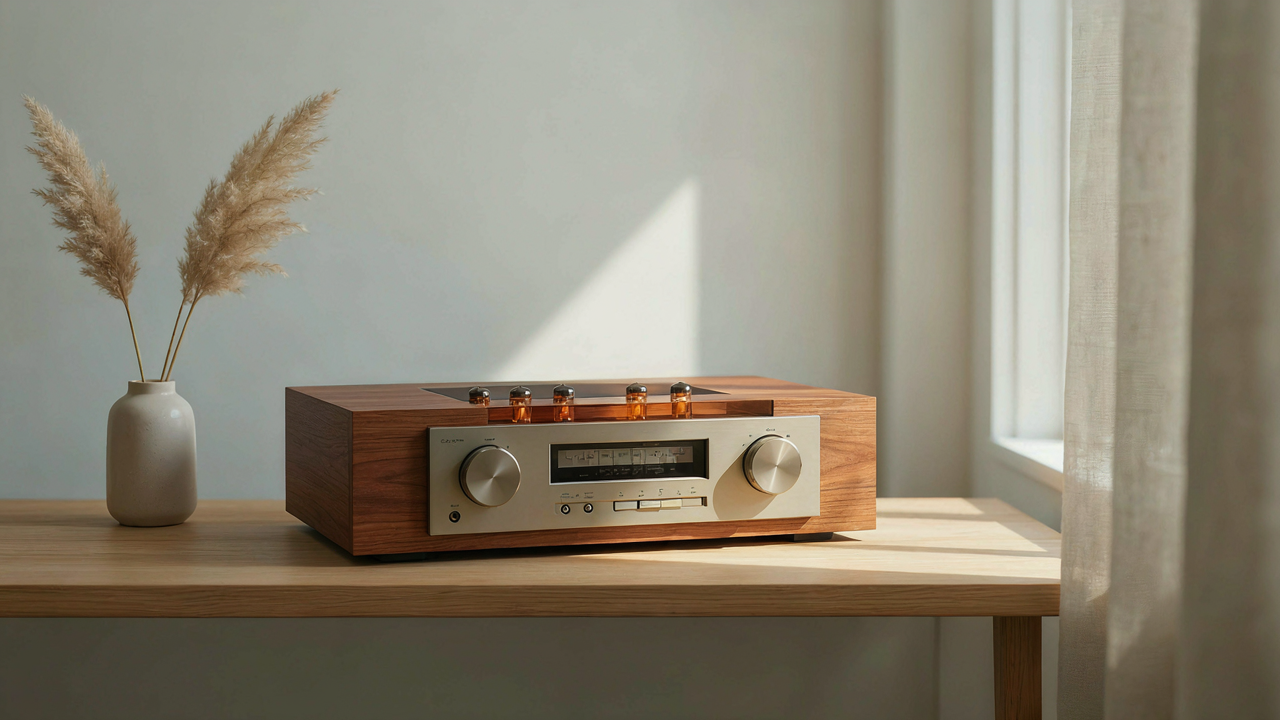
You want to keep the old stereo because throwing it away feels like admitting waste, but that’s not the real reason. The mechanism is simpler: old stereos were built with component-level design, where each stage of amplification and signal path was engineered as a discrete unit. Modern gear stacks everything on chips. An old receiver’s power amp, preamp, and tuner exist as separate circuits. That separation matters because it reduces noise and crosstalk in ways integrated circuits struggle to replicate at lower price points.
The vinyl-era stereos weren’t designed for nostalgia. They were engineered for the physics of analog signals. A tube or solid-state amp from the 1970s or 1980s handles impedance matching and harmonic distortion differently than a modern Class D amplifier. This doesn’t mean old is always better. It means old components solve different problems. Upgrading Bluetooth and aux input doesn’t sacrifice that architecture, it just adds signal routing options to gear that already works.
Identifying Genuine Sonic Advantage Over New Gear
The common advice here is wrong: “old stereos sound warmer because they’re vintage.” That’s consumer mythology. The real advantage comes from component quality and power supply design. Old stereos used larger transformers, higher-capacity capacitors, and heavier chassis to manage heat dissipation. Those materials cost money. Modern budget receivers cut corners on the power supply first because consumers don’t hear the difference until they push volume or add multiple speakers.
Listen for three specific markers before assuming a vintage piece has sonic merit: how the amp responds to sudden bass hits, whether the preamp adds noise when you crank the volume to 75 percent, and if the tuner pulls clean FM stations without static. These reveal power supply stability, component tolerance, and shielding quality. If the stereo passes those tests, it’s worth upgrading instead of replacing. If it fails them, the vintage appeal is just sunk cost fallacy talking. Run the actual diagnostics first.
Decoding The “Upgrade” Lie: More Than Just Bluetooth

Bluetooth: When To Use, When To Avoid
You want Bluetooth because it feels modern and solves the wire problem you shouldn’t have let become a problem in the first place. But here’s the mechanism: Bluetooth is a lossy compression protocol. It strips data from your audio signal to fit through a low-bandwidth radio channel. Your stereo doesn’t magically restore what got deleted. Most Bluetooth codecs (SBC is the default) compress audio aggressively. AptX and LDAC do better, but your old stereo probably doesn’t support them. The trade-off is convenience for fidelity.

Use Bluetooth when you’re streaming from your phone and don’t care about source quality anyway. Avoid it when you’re playing music you own or when your stereo has a solid amplifier worth protecting. The signal degrades further over distance and through obstacles. A 20-foot room with walls between you and the speaker means audible compression artifacts. Test it first. If you already hear the difference between FM radio and a CD on your system, you’ll hate Bluetooth. If your ears stop at “the music is playing,” go wireless.
The Unsung Hero Of Lossless Connection
AUX input is physics in action. Think of it like signal transmission in electrical engineering: a direct wire means zero intermediaries between source and amplifier. No codec. No bandwidth limit. No time-delayed reconversion. What leaves your phone’s headphone jack arrives at your amplifier exactly as encoded. The signal path is shorter, the impedance matching is straightforward, the noise floor stays low. This is why recording studios and serious listeners built entire ecosystems around analog connections before digital wireless existed.
Run a 3.5mm aux cable from your phone to the stereo’s aux input. This works on every old receiver and amplifier made in the last 40 years. You lose one thing: the ability to move around without the cable. You gain everything else. Your volume control lives on your phone now, not on the stereo. Get a decent shielded cable, keep it under 20 feet, and secure both ends so the connectors don’t corrode. Cable quality matters. The aux input is the fastest upgrade path that costs almost nothing and loses nothing in translation.
The Revival Protocol For Old Stereos DIY Projects
Diagnosing What’s Actually Broken
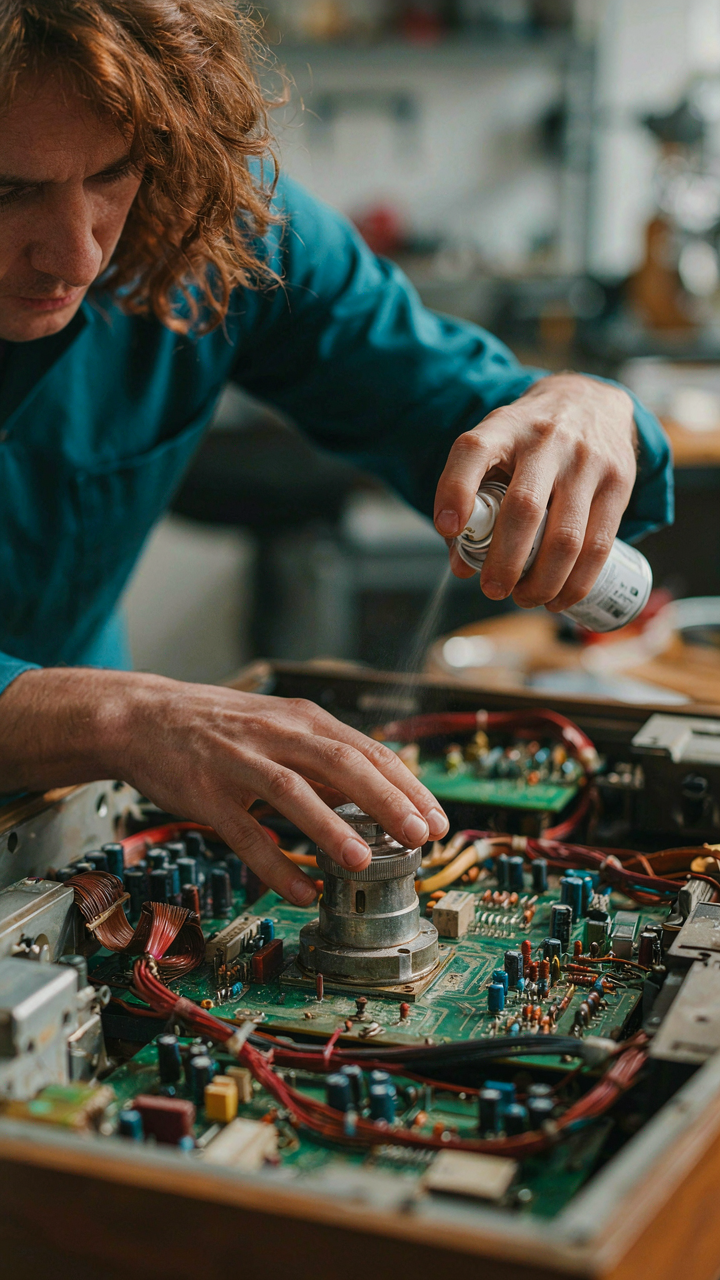
You want to believe the whole system is salvageable because throwing it away feels wasteful. Here’s the mechanism: most old stereos fail at specific points, not uniformly, and you need to find those points before you spend money. Start with the power stage. Plug in the unit, turn the volume knob slowly, and listen for crackling, hum, or silence. If you get nothing, the transformer or power supply failed. If you get hum that disappears when you touch the metal chassis, that’s a grounding issue, not a death sentence. Check the speaker drivers next by placing your hand near the cone while music plays. Dead air means the voice coil burned out or the speaker disconnected internally.

The preamp stage comes third. Connect a phone or auxiliary source directly and play loud content. If the speakers output clean sound, your preamp works. If distortion appears at any volume, capacitors in the signal path degraded. This matters because a failed preamp costs twenty dollars to fix. A failed output transformer costs a hundred. Resistance measurements with a multimeter tell you what’s actually dead versus what’s just disconnected. Don’t assume parts failed. Test what matters first.
Where Your Money Actually Goes
Every component in a stereo system has a different cost-to-performance ratio, and you’ll waste money if you don’t know the hierarchy. In audio equipment economics, the amplifier stage is your bottleneck. This is borrowed from systems theory: the weakest link determines total output. Your old amp likely has capacitors that have drifted from their rated values after decades. Replacing them costs thirty to eighty dollars and restores fifty percent of the power loss most people accept as normal aging. Most people skip this and buy a new amplifier instead. That’s the error.
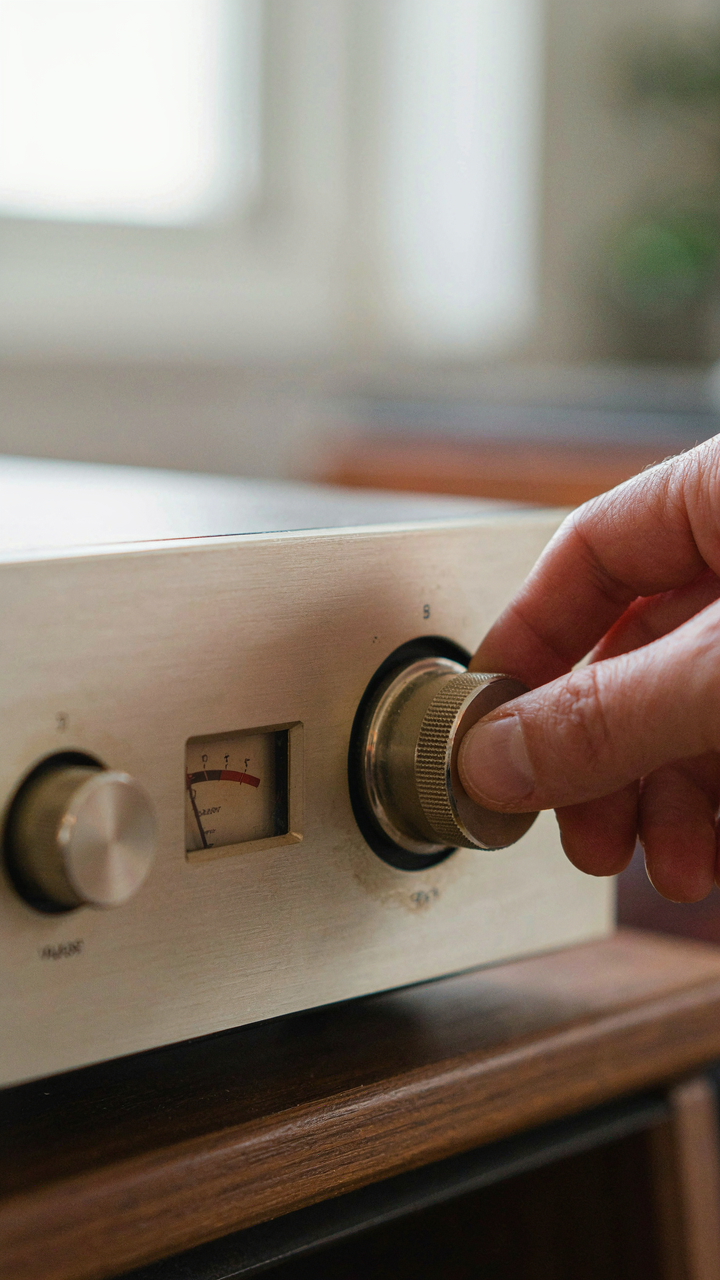
The speaker drivers come second in priority. Original speakers from the 1970s and 1980s often have foam surrounds that crumble and cone damage that kills frequency response. Replacement drivers for vintage cabinets run forty to one hundred twenty dollars per speaker, and they restore the system to usable sound. The chassis, wiring, and connectors come last. A dusty potentiometer fixes with contact cleaner. Corroded RCA jacks clean with vinegar or replace for three dollars. You upgrade the amp stage and speaker drivers first, then handle cosmetics and connectors. The order determines whether you spend fifty dollars or five hundred.
Beyond Cosmetics: Real Stereo Cabinet Makeover

Damping The Box Into Submission
You want your old stereo to look intentional, not salvaged. But the real reason you care about the cabinet is acoustic—the box itself is an instrument, and a poorly controlled one ruins everything you just plugged in. Borrow from acoustic engineering: the cabinet acts as a resonator, the same way a guitar body amplifies string vibration. An untreated wooden enclosure creates standing waves and coloration that mask detail in your new Bluetooth signal.

Most people sand and stain the outside and call it done. That misses the mechanism entirely. The sound quality lives inside the cabinet walls. You need mass and damping material to control vibration, not paint. Apply acoustic foam or mineral wool to the interior surfaces, focusing on parallel walls where resonance modes stack up worst. This kills reflections before they blur your audio. Secure it with contact cement so it stays put through temperature swings. The cabinet becomes acoustically inert instead of active, which means your speakers perform as designed.
Cosmetics That Signal Function
The cosmetic layer works when it reflects what the stereo actually does now, not what it did in 1975. Generic restoration traps you in period authenticity that makes no sense with modern electronics mounted inside. Real aesthetics mean the exterior tells the truth about the interior upgrade.
Replace damaged knobs and faceplates with modern equivalents that match the era’s design language but accept new functionality. Keep the wood or veneer if it’s solid, but refinish honestly: matte or satin finish over glossy signals you’ve updated the internals without erasing history. The Bluetooth antenna and aux input jack placement matter more than hiding them. Position them where they’re accessible without requiring you to move the unit. This is the aesthetic of function: form follows the reality of what gets plugged in and touched most.
The Adaptability Principle: Lessons From Evolutionary Biology
Build Your System Around What You Actually Use
You want to feel like upgrading is scientific and objective. It’s not. Biology calls this niche construction—organisms don’t just adapt to their environment, they reshape it to fit their specific survival needs. Your stereo upgrade works the same way. Stop asking what everyone else adds. Ask what you actually listen to and where you listen to it. A vinyl collector needs a preamp input. A phone streamer needs Bluetooth. These aren’t interchangeable upgrades. You’re building a niche, not checking boxes.

Your old stereo already has strengths you’re overlooking. A vintage amplifier with good power output doesn’t need replacement—it needs the right signal sources fed into it. Identify the one constraint killing your listening experience. Is it the lack of wireless input? No aux jack? Address that single point. Adding every possible input at once creates complexity, maintenance burden, and wasted money. One targeted addition compounds far more than scattered upgrades.
Combine Proven Components, Not Trends
This is where most people fail. You see Bluetooth speakers everywhere, so you assume Bluetooth is the answer. It isn’t always. Genetic recombination in biology doesn’t mean mixing random traits. It means combining proven strengths from different lineages to solve a specific problem. Your stereo already has traits worth keeping: the amp probably has clean power delivery, the speakers probably sound predictable after years of use, the cabinet is built solid. The question is what new trait solves your actual gap without breaking what works.
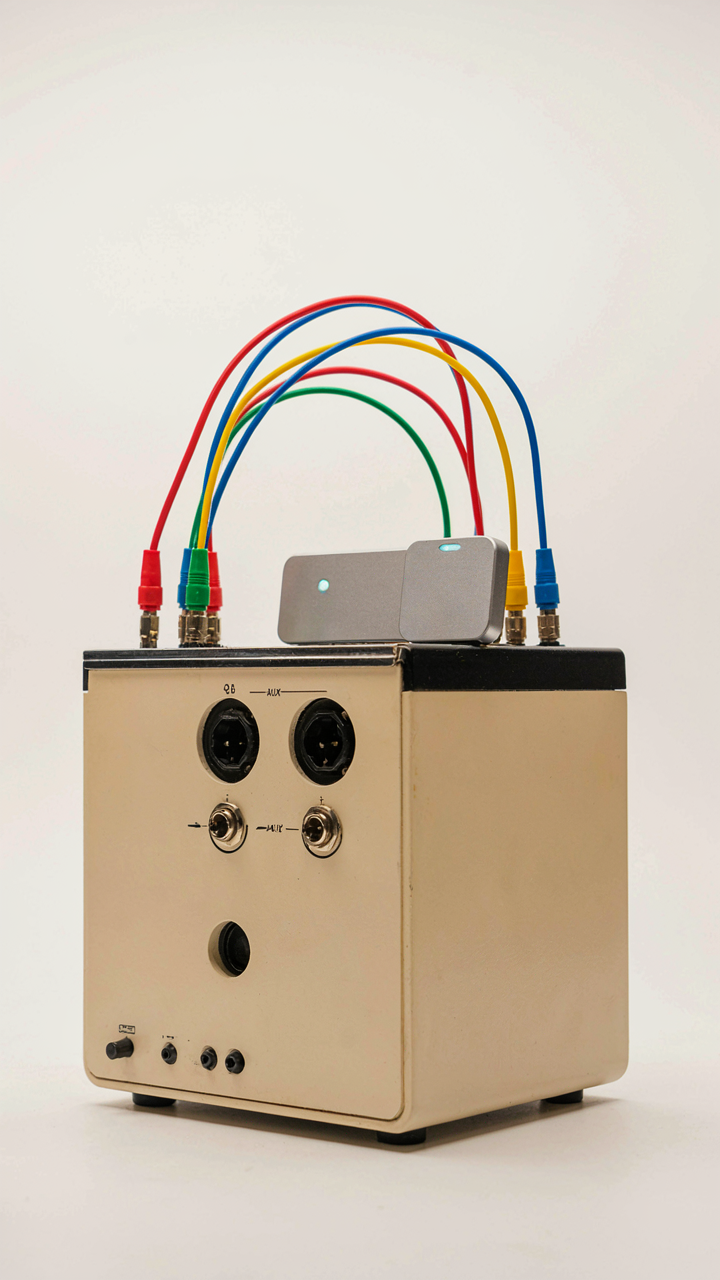
A Bluetooth receiver module with a quality DAC outperforms cheap all-in-one solutions because it lets the existing amp do what it does well. You’re not replacing the system. You’re inserting one component that handles digital-to-analog conversion cleanly, then routes to your proven amplifier. This approach costs less, sounds better, and respects the engineering already in place. Install the receiver into the aux input, wire it to power, and test before finalizing placement.
Recycling Old Car Radio Into An Audio Amplifier: The Unconventional Path
What Actually Works From A Dead Head Unit
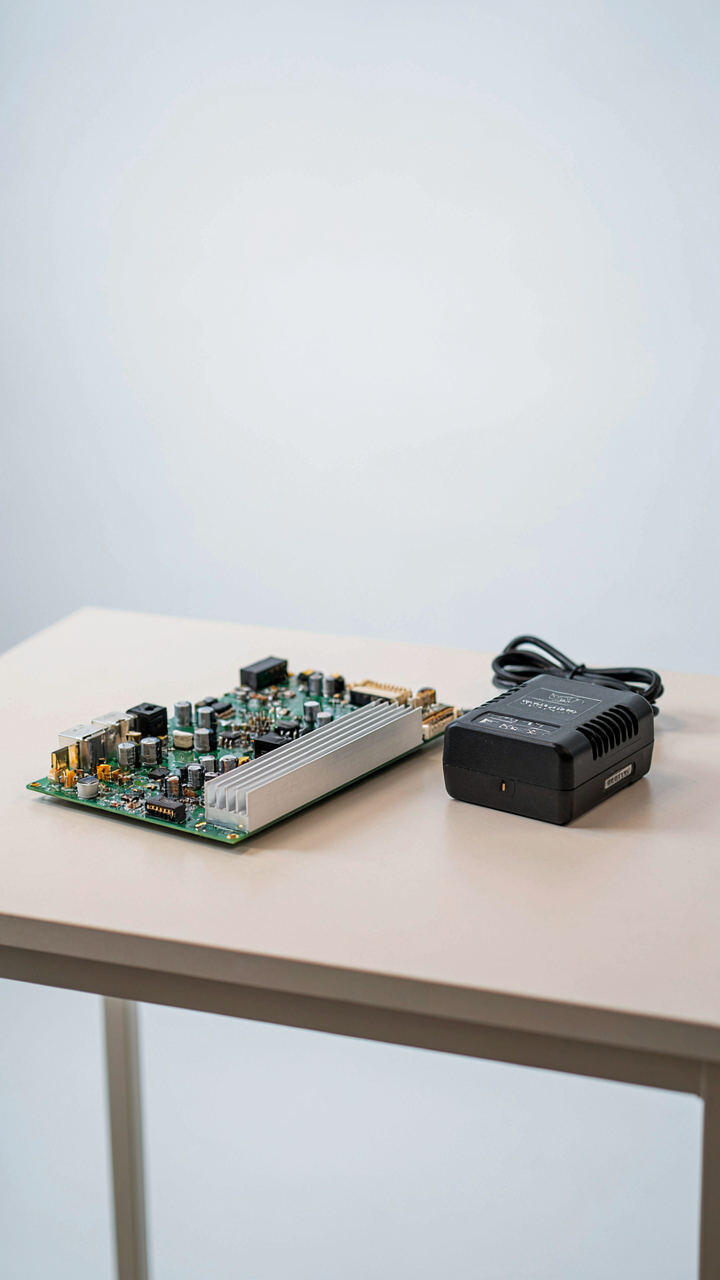
You want to feel resourceful instead of throwing money at new gear. Here’s the truth: most car radios contain nothing worth salvaging except the amplifier section itself. The tuner circuitry is obsolete. The cassette mechanism is dead weight. But the power amp—that’s the mechanism that matters. Car radios were engineered to push clean watts into door speakers from a 12-volt supply, which is precisely what you need for a compact home system.

A car radio’s amplifier section handles impedance matching and current delivery better than most budget standalone amps. Extract only these usable components:
- Power Amplifier IC: The integrated circuit handling audio output, typically rated 10-50 watts depending on the model year and brand.
- Heat Sink and Mounting Bracket: Aluminum heat dissipation hardware that keeps the amp IC from thermal shutdown during sustained use.
- Power Supply Filter Capacitors: Large electrolytic caps that smooth DC voltage and prevent audio noise ripple in the signal path.
- Input Preamp Stage: Low-level signal conditioning circuitry that boosts weak aux or Bluetooth input to line-level before the power amp.
- Protection Relay: Prevents speaker pop and DC bias damage by muting output during startup and shutdown sequences.
The rest of the board is junk in a home audio context. Don’t waste time reverse-engineering the FM tuner or trying to preserve the head unit’s UI. Strip what works, discard the rest, and repurpose the amp for what it was designed to do: deliver stable power to speakers.
Managing Voltage And Current Stability
Power supply physics teaches us about impedance—the resistance to change. In car audio, this means a 12-volt system with wild voltage swings. Your home power wants 9-12 volts stable, not the 14.4-volt spikes a car alternator produces. This is where most DIY attempts fail: they underestimate how much the power source affects amp performance.
You need a step-down converter rated for the amp’s total current draw, plus 30 percent headroom. A 50-watt amp pulling 5 amps requires a converter rated 6-7 amps minimum. Mount the converter before the amp’s power input, add a 1000-microfarad filter capacitor across the converter output, and measure the voltage under load with a multimeter. If it sags below 10 volts when playing music at volume, your converter is undersized and audio distortion will increase. Test the entire chain with a speaker load, not just a multimeter reading.
The Bluetooth Speaker From Old Speakers Fallacy
Active Vs Passive Understanding Inherent Limitations
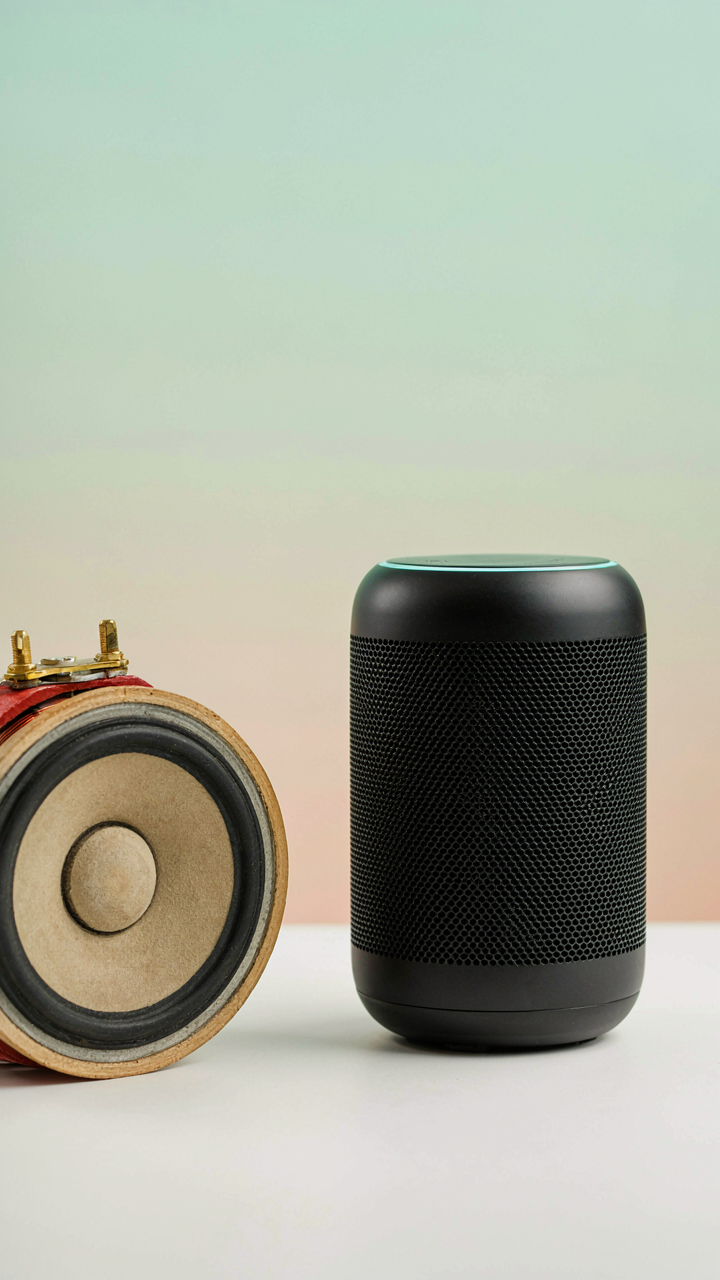
You want to believe your old speakers will sound better than a Bluetooth box because you already own them. That’s sunk cost thinking. The real issue is electrical architecture. In circuit design, active systems contain built-in amplifiers and power supplies, while passive systems require external amplification. Your vintage speakers are almost certainly passive, meaning they’re just drivers in a cabinet waiting for a powered signal. A Bluetooth speaker is active by definition, self-contained and engineered as a complete unit. This difference matters more than nostalgia.

When you bolt a Bluetooth adapter onto passive speakers, you’re adding a compromise layer. The adapter outputs line-level signal to whatever amplifier you pair with it, then that amp drives the passive drivers. Each connection point introduces impedance mismatches and signal degradation. A dedicated Bluetooth speaker skips this chain entirely. The manufacturer engineered the amplifier, drivers, and enclosure together from the ground up. You cannot retrofit that integration onto speakers built when Bluetooth didn’t exist. The passive speaker will never match a purpose-built active solution operating in the same price range.
When Portability Costs Sound Quality
Bluetooth speakers sacrifice acoustic precision to stay compact and wireless. This is the real trade you face, not some marketing fiction. A portable Bluetooth box maxes out at around 85-90 decibels sustained output with noticeable distortion creeping in near the ceiling. Your old stereo speakers, even mediocre ones from the 1980s or 1990s, can deliver cleaner output at higher volumes because the cabinet has actual volume and the drivers have proper bracing. Weight and size in speaker design directly correlate to bass response and dynamic range. Portability requires miniaturization, and miniaturization kills low-end extension.
If sound fidelity ranks above convenience, anchor your upgrade to a stationary setup. Keep the old passive speakers, invest in a quality amplifier with Bluetooth input, and run power to the drivers. This setup stays in one place but reclaims the acoustic advantage your vintage cabinet already provides. If you need wireless and portable, accept the compromise and buy a Bluetooth speaker optimized for your listening environment, then abandon the fantasy of retrofitting old passive drivers. The decision hinges on which constraint matters more: the speakers cannot be both portable and high-fidelity simultaneously.
Mastering The Modern Vintage Audio Ecosystem
Input Switching Without The Mess
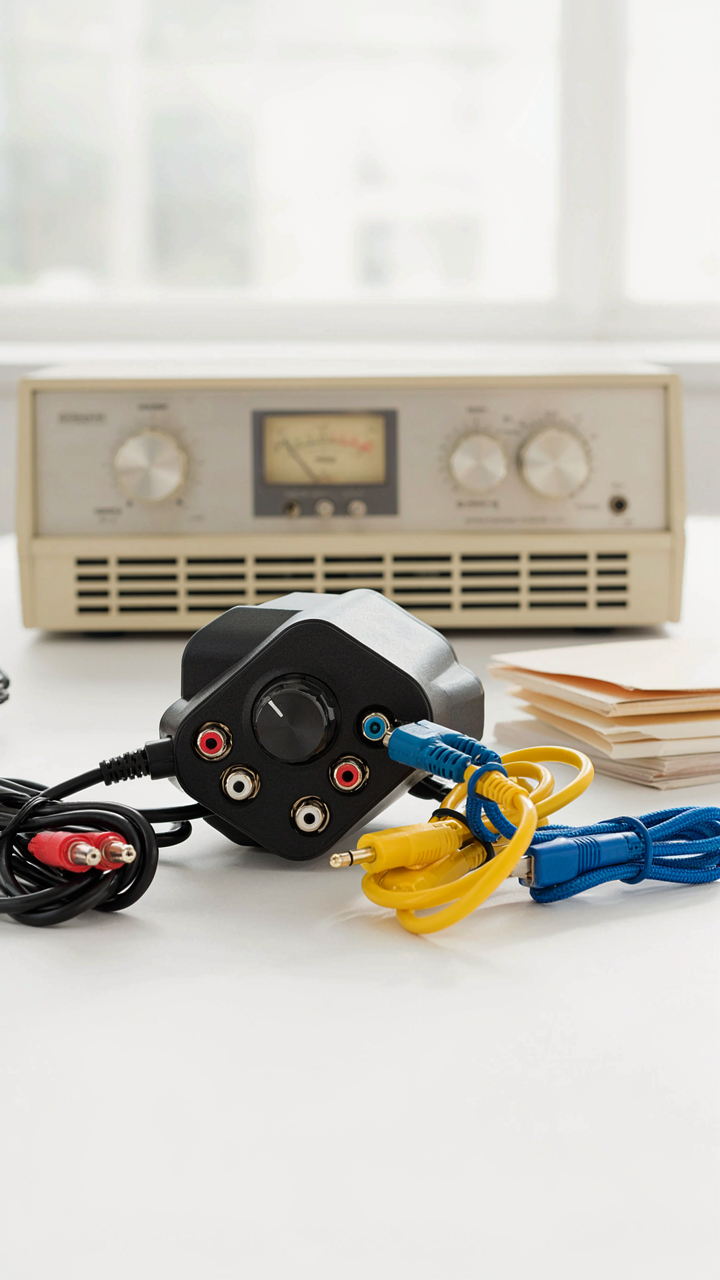
You want to feel like you solved a real problem instead of just buying something new. Here’s the mechanism: old stereos weren’t designed for multiple wireless and wired sources, so the switching architecture either doesn’t exist or uses mechanical relays that fail. Input switching solves this by creating a clean signal path where only one source reaches the amplifier at any moment. This prevents noise, ground loops, and the audio artifacts that make your setup sound broken.

Most people just daisy chain cables and hope. That’s backward. You need a dedicated input selector or receiver that handles switching logic electronically. Whether you use a vintage amplifier with existing selector inputs or add a small preamp with multiple inputs, the rule stays the same: one source in, one amplifier out. Connect your Bluetooth adapter to one input, your aux cable to another, and toggle between them without touching internal wiring. The selector itself becomes the decision point, not the cables.
Matching Components For Actual Sound Quality
Economics teaches us about impedance matching. In audio, impedance is the electrical resistance each component presents. Your old stereo amplifier expects a specific output impedance from its sources, usually 10k ohms or higher from a line-level device. Most Bluetooth adapters and aux cables throw impedance specs in the trash and assume all amplifiers are the same. They’re not. This mismatch creates tonal coloration, reduced clarity, and a feeling that something’s “off” that you can’t name.
The real answer: pair components with overlapping electrical specifications, not based on what sounds trendy or what a YouTube reviewer liked. Check your amplifier’s input impedance in the manual. Buy a Bluetooth receiver with output impedance between 100 and 1000 ohms. Use quality aux cables rated for line-level signals, not instrument cables designed for guitars. The mechanism is simple: matching impedance removes the electrical friction between devices, letting your amplifier do what it was designed to do without fighting the source equipment.
The True Obstacle Isn’t The Technology Of Your Old Stereo, But Your Learned Complacency With Disposable Audio Solutions

You’ve normalized throwing away working equipment. That habit is the real problem, not the age of your stereo. Upgrading forces you to learn how things actually work instead of consuming replacements. Today, pick one component from your system and research what it does. That single act rewires how you see the equipment you own. Most people never will, which means they’ll keep buying garbage they don’t understand while calling it progress.