The Illusion Of More: Why More Pouches Make You Worse

Compartmentalization Collapses Under Its Own Weight
You want to feel in control, so you buy more pouches. That’s the real motive here. But over-categorization breeds the opposite. Borrow a term from information architecture: cognitive load. Each pouch is a decision node. Where does the adapter go? Which pouch holds the cables? Your brain pays a tax every time you access an item. Three pouches means three lookups. Six pouches means six. The system that promises clarity becomes the system that demands constant mental triage.
The mechanism is simple: your working memory has limits. Each container you add doesn’t multiply your storage capacity by a meaningful margin, but it multiplies your decision points linearly. Most travelers buy an extra pouch thinking it solves a problem. It creates one instead. You end up managing the organization system rather than using your gear. The pouch becomes friction, not a solution.
The Tax Of Tracking Too Many Containers
Every container you own demands maintenance. You must remember what lives inside it. You must keep it accessible. You must prevent items from migrating to the wrong pouch. Economists call this inventory management cost. It’s real. The mental overhead of knowing exactly which three pouches contain your electronics, toiletries, and cables drains focus you could spend on actual travel.
When you add a fourth or fifth pouch to your kit, you’re not gaining organization. You’re gaining a tracking problem disguised as solution. Most travelers stop opening half their pouches after week two because the cognitive map is too complicated. This is why minimalist travel packing works: fewer containers mean fewer decisions, faster access, and a system you actually follow. Start with one consolidated pouch. Only add a second when the first genuinely cannot hold what you need.
The “One In, One Out” Protocol For Travel Pouch Organization

Apply The Wardrobe Rule To Your Travel Essentials
You want to pack less because you think it makes you look disciplined. The real mechanism is scarcity. Fashion borrowed this from economics: constraints force better decisions. One garment per category works for wardrobes because it eliminates choice paralysis. Apply the same logic to your pouch. Before you add anything new, remove something of equal or greater size. This isn’t minimalism theater. It’s a forcing function that kills the impulse to overstuff.

Most travelers ignore this because they rationalize each item separately. You pack a backup charger, then a cable, then a wall adapter. Each decision feels justified in isolation. The protocol stops that thinking. You cannot add the backup charger without removing the first charger, the earbuds, or the adapter. Suddenly you choose differently. You pick the one item that actually solves the problem instead of collecting solutions.
Eliminate Redundant Items Before Packing Anything
The common advice here is wrong. People say “don’t pack duplicates.” But they still do, just with justifications attached. They pack two phone chargers because one is USB-C and one is Lightning, or they keep a backup because “what if the first fails.” This is denial dressed as preparedness. The real work is naming what problem each redundant item allegedly solves, then asking if one item solves it better.
Redundancy exists because you haven’t committed to a single solution. Map out your actual use case. If you’re in a region with reliable power, you don’t need a backup charger. If you’re in remote areas for weeks, you might need one specific backup, not a collection of them. After you identify true redundancy, you remove it before packing. This step happens on your desk, not in your pouch. Only items that serve distinct functions make the cut.
The Essential Eight: Your Core Travel Tech Organization
What Actually Needs To Travel With You
You want permission to bring less and feel like you’re not missing anything. Here’s what actually happens: you pack everything, convince yourself you might need it, then carry dead weight for two weeks. The mechanism is cognitive overload masquerading as preparedness. You can’t decide what matters, so you defer the decision by packing it all. Stop. The Essential Eight is your non-negotiable set. Everything else is optional until proven necessary on trip two.
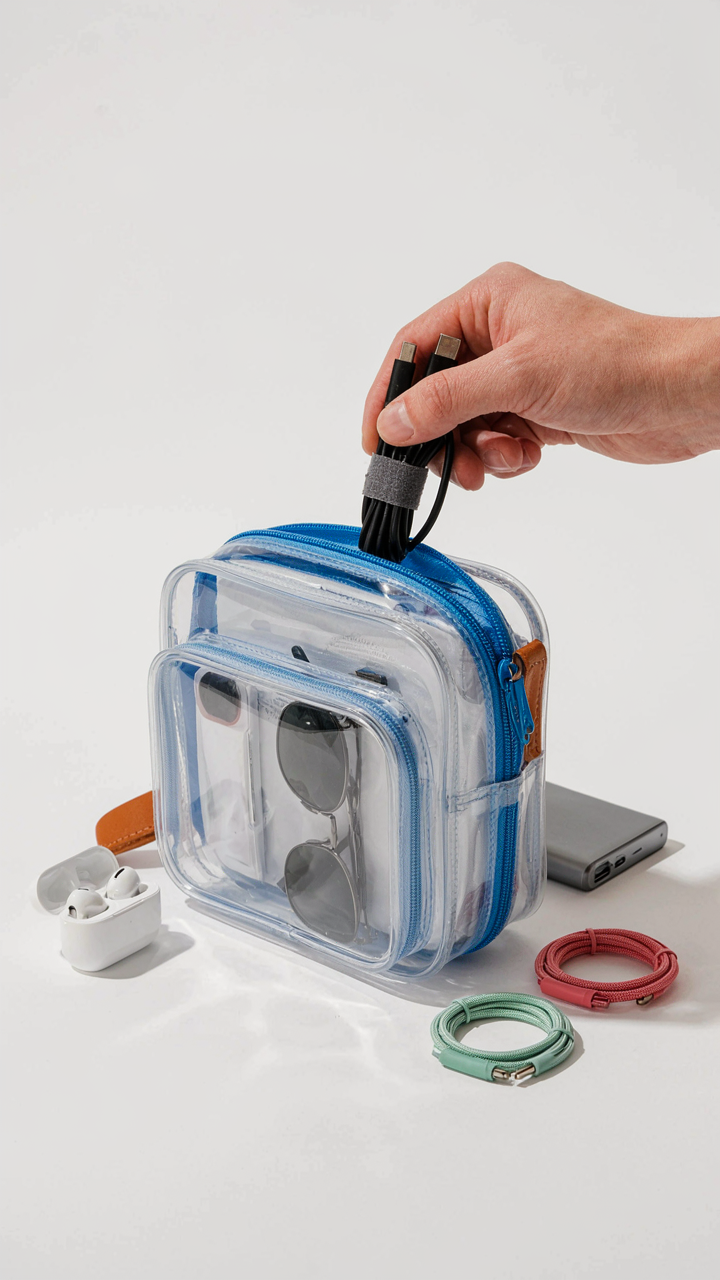
- Smartphone: The hub device. Everything routes through it. Without it, you lose navigation, communication, payment, and authentication. Non-negotiable.
- Charging cable for smartphone: Not a backup. Your primary power line. A dead phone on day three of a trip is a cascading failure of every system.
- Portable power bank: Extends your phone’s operational window by 1-2 days depending on capacity. 10,000mAh handles most travelers without adding bulk.
- Laptop or tablet: Only if your trip has a work component. If you’re purely traveling, this is psychological security theater, not necessity.
- Headphones: Noise isolation during transit and in shared accommodations. Wired or wireless depending on your other gear—pick one type to reduce cable chaos.
- Universal adapter: Handles voltage conversion and outlet shape variation. One compact unit replaces six country-specific adapters and cuts your pouch weight in half.

The Essential Eight fits in a 4×6 inch pouch with room to move. Everything else—backup charging cables, camera equipment, external drives—lives in a secondary compartment or stays home. This separation forces the decision you were avoiding.
Cables And Chargers: The Real Consolidation Rule
Most advice tells you to buy universal everything. That’s incomplete because it ignores the actual constraint: your devices dictate your cable standard, not your desire for minimalism. You own what you own. USB-C devices require USB-C. Lightning devices require Lightning. Micro-USB still exists on older hardware. The real move is ruthless inventory first, then strategic consolidation within those standards.
One USB-C cable handles phone, tablet, and laptop if all three use that standard. One wall charger with multiple USB ports (or USB-C Power Delivery) replaces three separate chargers. If you have mixed devices, you need mixed cables—accept this instead of pretending a single universal solution exists. Coil each cable with a velcro strap and store them vertically in a dedicated cable pouch subdivision. This takes thirty seconds to pack and thirty seconds to find what you need instead of untangling a knot of ambiguity.
Beyond Beauty Organization: The “Survival Kit” Mentality

Minimalist Toiletries Travel Sizes Or Solid Alternatives
You want your pouch to look intentional because chaos signals you’re not in control. The mechanism is simple: most travelers pack toiletries by habit, not by need. You end up with full-size bottles that weigh nothing individually but aggregate into dead weight. Travel sizes exist for a reason, but solid alternatives—bar soap, solid shampoo, deodorant sticks—cut volume by 60 percent while lasting longer than liquid equivalents. The math favors consolidation.

Decant what you can’t replace with solids. A 30ml container of prescription medication takes the same pouch space as a full bottle of generic lotion, but one actually matters. The rule: if you can’t name the specific problem it solves in the next 48 hours, it doesn’t travel with you. Toothpaste, deodorant, and sunscreen are the only liquid toiletries worth their weight. Everything else converts to solid or stays home.
First Aid Essentials Focus On Actual Emergency Needs
Military field medics operate on triage: stabilize what threatens survival, ignore what doesn’t. Your travel pouch works the same way. Most travelers pack first aid like they’re preparing for a wilderness expedition, when 90 percent of travel injuries are minor cuts, blisters, or stomach issues. You need a blister kit, pain relief, and antiseptic. That’s the core.
Add one item most people forget: anti-diarrheal medication. A stomach issue derails a trip faster than a cut hand. Include a small compression bandage for sprains since they’re compact and actually useful. Skip the tweezers, the nail clipper, and the full elastic bandage assortment. Keep a pack of adhesive wound closures instead—they’re lighter and solve more problems. Store everything in a dedicated zippered compartment so you find what you need without excavating the entire pouch.
What To Keep In My Purse: The “Access Hierarchy” Principle

Organize By Urgency, Not Category
You want to feel in control. The real mechanism is this: most people organize pouches by item type—all cards together, all cables together—which forces you to dig when you need something fast. Military communications use a tiered alert system where critical information stays accessible while routine data goes to storage. Your pouch needs the same structure. Items you touch within seconds go front. Items you use once per trip go deep. This distinction changes everything about how you pack.

The common advice to “just label everything” misses the point entirely. You don’t need labels. You need position discipline. Your phone, wallet, and keys have different access patterns than your earbuds or backup charger. Map these patterns first. Then place items accordingly. Speed matters more than organization theory.
Front Line Versus Deep Storage Placement
Your immediate-access zone holds three things only: what you grab in the first five seconds of any trip. Phone, payment method, ID. Everything else is negotiable. The pouch’s exterior pockets and top compartments become your front-line real estate. Interior zippered sections and bottom corners become deep storage. The boundary between these zones should feel physical when you pack it, not theoretical.
Deep storage isn’t punishment. It’s prevention. Backup items stay protected and don’t clutter your quick-access layer. When you reach for something, you never dig past the third item. If you do, it belongs deeper. This creates a self-correcting system: you’ll move things naturally over time based on actual usage, not assumptions.
The “Single Purpose Pouch”: Maximize, Don’t Multiply

One Pouch Per Category Stops Decision Fatigue
You want to feel organized without actually thinking about it. The mechanism is simple: constraint forces clarity. When you assign one pouch to cables only, your hand knows where to go. No mental search. No half-remembered placement. You eliminate the tax your brain pays every time you open a pouch hoping something’s there.

The misconception is that you need flexibility. You don’t. A cables pouch stays cables. A medications pouch stays medications. A charging accessories pouch stays charging accessories. Blending categories breeds the exact chaos you’re trying to avoid. Dedicated pouches work because they remove choice from the moment you need something most—when you’re packing fast or jet-lagged and reaching blind.
Multi Compartment Pouches Create Hidden Clutter
Most people buy multi-compartment pouches thinking more sections mean better organization. This is backward. Each compartment becomes a hiding spot for items you forget exist. You pack a pouch once and never audit what’s inside. Months later you open it and find duplicates, broken items, or stuff you never use.
Single-layer pouches with one opening force an inventory check every time. You see everything. You decide fast. This visibility prevents the slow accumulation that destroys travel efficiency. When you pack a cables pouch, you count the cables. You notice if one’s damaged. You skip the broken one. Multi-compartment designs hide problems until you need them most.
The Psychology Of Clutter: Why We Overpack Small Items

The Anxiety Tax On Your Luggage
You care about this because you want to feel prepared, and unprepared feels like failure. Here’s the mechanism: loss aversion from behavioral economics applies directly to packing. Your brain weights the pain of missing an item five times heavier than the burden of carrying it. So you pack the backup charger, the second set of headphones, the emergency sewing kit, and the spare phone case you’ve never used. The “what if” scenarios feel real because they’re possible, not because they’re probable.

Most people pack to avoid regret, not to solve actual problems. You’ve never needed that backup portable charger on a three-day trip, but the image of a dead phone haunts you more than the weight in your pouch. This isn’t a character flaw. It’s a predictable cognitive bias that every traveler experiences. The solution isn’t willpower or discipline. It’s building a decision protocol before you pack, when your thinking is clear and your anxiety isn’t running the show.
What You Actually Use Versus What You Think You Will
The gap between perceived need and actual utility kills more packing decisions than anything else. You imagine scenarios, not patterns. You’ve carried that multi-tool for six trips and used it zero times, but you keep packing it because you remember the one time you might have needed it. Real utility is measurable: open your pouch daily for a week and log what you touch. What stays in the bottom untouched? Cut it.
Actual utility reveals itself only through friction. When you genuinely need something, you reach for it multiple times. You curse yourself for forgetting it. You remember the specific moment. That’s the signal. Everything else is hypothetical. Your pouch should contain only items that solved real problems on past trips or items you’ve already tested and confirmed you’ll use on this specific trip. Don’t pack for the version of yourself who needs everything. Pack for the version who actually traveled last month.
Purse Organizing: The “Zero Based Budgeting” Method

Start From Nothing, Not From Habit
You want permission to keep things. That’s the real reason you’re reading this. But the mechanism here comes from accounting: zero-based budgeting demands you justify every expense from zero each cycle instead of assuming last year’s spending was correct. Your pouch works the same way. Don’t ask “what should I remove?” Ask “what earns its space today?” The difference flips your entire filtering process.

Most people inherit their pouch contents from old trips, past jobs, or what their friend carries. None of that logic applies now. Start with an empty pouch. List only the items you actually use in your current life, in your current environment, on your current trip duration. If something hasn’t solved a real problem in the last month, it doesn’t get invited back.
Cut The Phantom Items
The advice to “declutter your purse” is useless because it doesn’t name what’s actually taking space: items that served a past version of you. A charger for a phone you sold two years ago. Receipts from transactions you’ll never reference. Gum you hate. A loyalty card for a store you don’t visit. These aren’t oversights. They’re psychological anchors disguised as useful objects.
Kill the default category entirely: items you keep “just in case.” That’s fear dressed as preparedness. Carry the backup charger if you travel weekly and use it. Carry pain relief if you genuinely get headaches. Carry the hair tie if you have long hair you actually pull back. Everything else is ballast. Go through your pouch right now and remove anything that hasn’t solved an actual problem in the last 30 days.
The Digital First Command: Minimizing Physical Small Items
Scan Everything Before You Leave
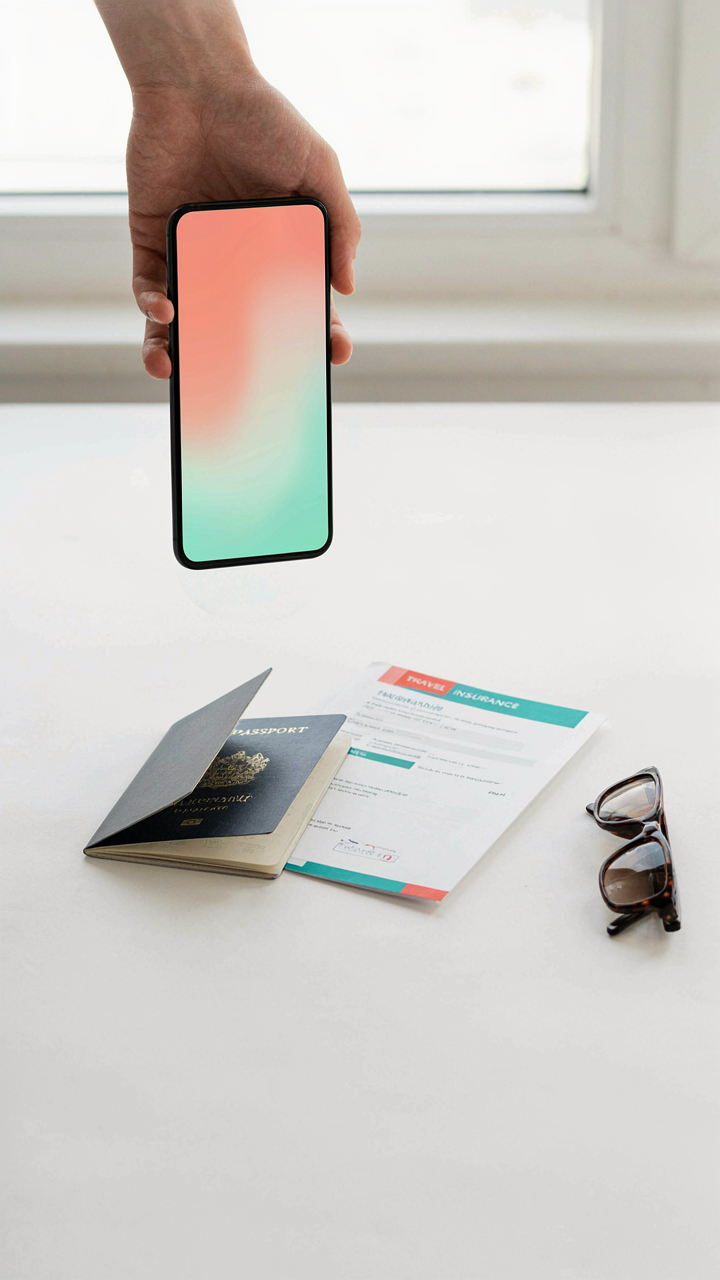
You want to travel light without the anxiety of losing something irreplaceable, so you’re looking for permission to leave things behind. Here’s the mechanism: scanning converts physical objects into data you control. Take photos or PDFs of your passport, travel insurance, hotel confirmations, flight tickets, and loyalty cards before departure. Store them in a cloud service you can access offline. This eliminates the need to carry paper duplicates and reduces pouch volume by 40 percent on average.

Scanning isn’t backup insurance. It’s the primary artifact. Your digital copy works for hotel check-in, airline counter issues, and insurance claims in most jurisdictions. The physical document becomes unnecessary weight once you’ve captured it. Use a dedicated folder structure: one for identification, one for confirmations, one for receipts. Organize by trip date, not document type. This speeds retrieval when airline staff asks to verify your reservation.
Replace Physical Cards With Wallet Apps
The common advice says to keep backup copies of everything. Wrong. Most loyalty programs, transit cards, and payment methods now exist natively in digital wallets. Apple Wallet, Google Pay, and regional equivalents store boarding passes, hotel keys, transit passes, and loyalty barcodes. Your phone becomes your pouch for these items. No plastic cards occupy space. No metal loyalty key tags clutter your bag.
Digital wallets sync across devices and update in real time when airlines change gates or hotels modify check-in times. You access your information faster than someone digging through a physical card stack. The only exception: carry a single backup payment card separate from your phone in case your device fails. That’s one card, not ten. Everything else lives digitally and reduces your travel pouch to actual essentials only.
Mastering The Art Of Pouch Organizer Elimination

The Audit Never Stops
You want to believe one good pouch setup solves the problem forever. It doesn’t. The real mechanism here is decay. Your pouch fills with items you no longer use because removal takes friction and you’ve normalized the clutter. Set a monthly audit schedule and execute it without negotiation. Pull everything out. Touch each item. Ask one question: have I used this in the last 30 days? If no, it leaves immediately. This isn’t about minimalism as philosophy. It’s about reclaiming functional capacity.
The gap between a working pouch and a broken one is usually 3-4 dead items taking up real estate. A charging cable you swapped out two weeks ago. A sample packet of something. A backup stylus you never need. These items parasite your system because they’re small enough to ignore. Ignoring them is the cost. Remove them during the audit. Your next trip starts cleaner, faster, and with actual space to move things when you need to access what matters.
Empty Space Is Your Actual Inventory
Most people treat empty space as failure, a sign the pouch isn’t being used. This inverts how efficiency actually works. In systems thinking, slack capacity is the buffer that prevents cascading failures. Your pouch needs 15-20 percent unused space to function properly. Without it, you can’t access items at the bottom without emptying the whole thing. Without it, you can’t accommodate the unexpected item you acquire mid-trip. Without it, you’re constantly reorganizing just to fit what you already own.
The moment your pouch reaches full capacity, performance collapses. You stop using it because retrieval becomes annoying. You grab a larger bag instead. The system fails not because it’s bad design but because you violated its operating parameters. Keep one compartment or section deliberately empty or near-empty. This isn’t waste. It’s the working margin that makes the entire pouch system viable.
The Real Obstacle Isn’t Disorganization; It’s Your Attachment To Carrying Useless Weight

Most people organize their travel pouch around items they might need instead of items they actually use. You’re not solving a storage problem. You’re solving a decision problem. Empty your pouch today and pack only what you’ve used in the last three trips. You’ll find more space and clarity than any organizational system gives you. The best travel pouch is light enough that you stop thinking about it.