Beyond Blackout: The Sensory Deprivation Hack
How Darkness Triggers Melatonin Production
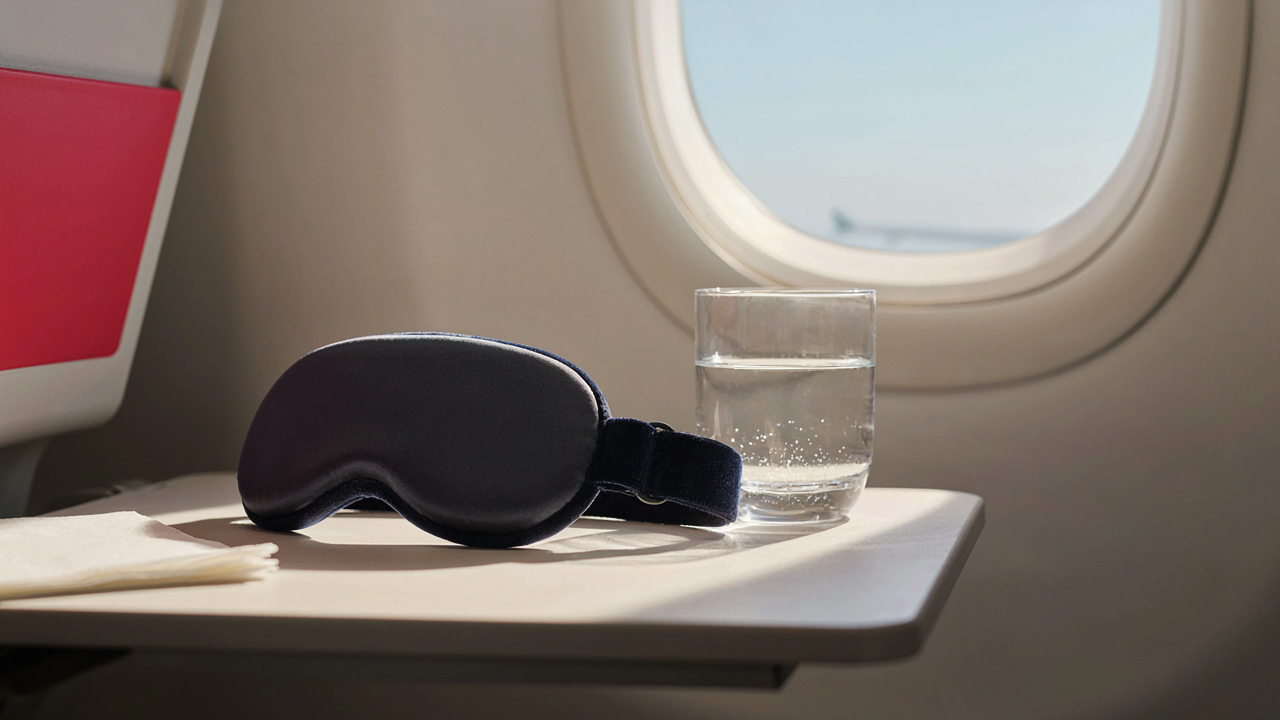
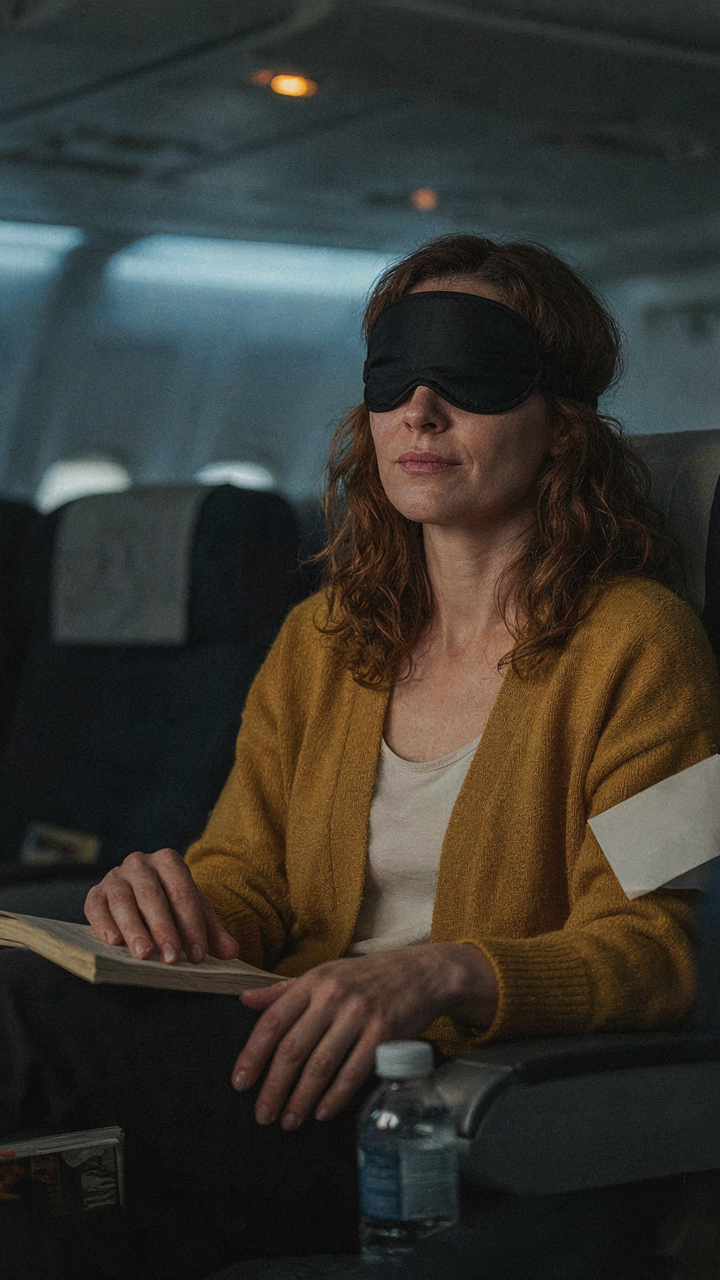
You care about this because sleep on planes determines whether you arrive functional or destroyed. The mechanism is biological, not mystical. Light exposure suppresses melatonin. Your pineal gland reads wavelengths, not intentions. Total darkness accelerates melatonin synthesis within minutes. A sleep mask for flights that genuinely blocks light removes the signal your brain uses to stay alert. Most masks leak. The ones that don’t work.
Melatonin doesn’t just make you tired. It primes your nervous system to downregulate cortisol and drop core temperature. A quality mask removes blue wavelengths that trigger your circadian rhythm to stay on alert. Cabin lighting, even dim overhead LEDs, interrupts this cascade. The mask becomes infrastructure for a biochemical state you cannot force through willpower alone. Fit matters because gaps around edges allow light to reach your eyes, resetting the entire process.
Removing Visual Noise For Deeper Cycles
Most advice tells you darkness helps you sleep. That’s incomplete. Darkness removes a competing input that your brain processes even during sleep. The visual cortex quiets when external stimulus vanishes. A sleep mask for flights doesn’t just block light. It eliminates a sensory channel your brain must process unconsciously, freeing resources for deeper sleep stages.
REM and slow wave sleep require your brain to disengage from external monitoring. Light leakage forces continued vigilance at a subconscious level. Your sleep remains shallow and fragmented. A mask with zero gaps and soft material that doesn’t create pressure points removes this drain entirely. When you wear a mask that blocks light without creating tension on your sinuses or temples, your brain drops into repair mode instead of maintenance mode. Test fit during ground sessions. Wear it for an hour before flight to identify pressure points.
The Pressure Paradox: Why Less Is More
Where Pressure Kills Sleep Architecture
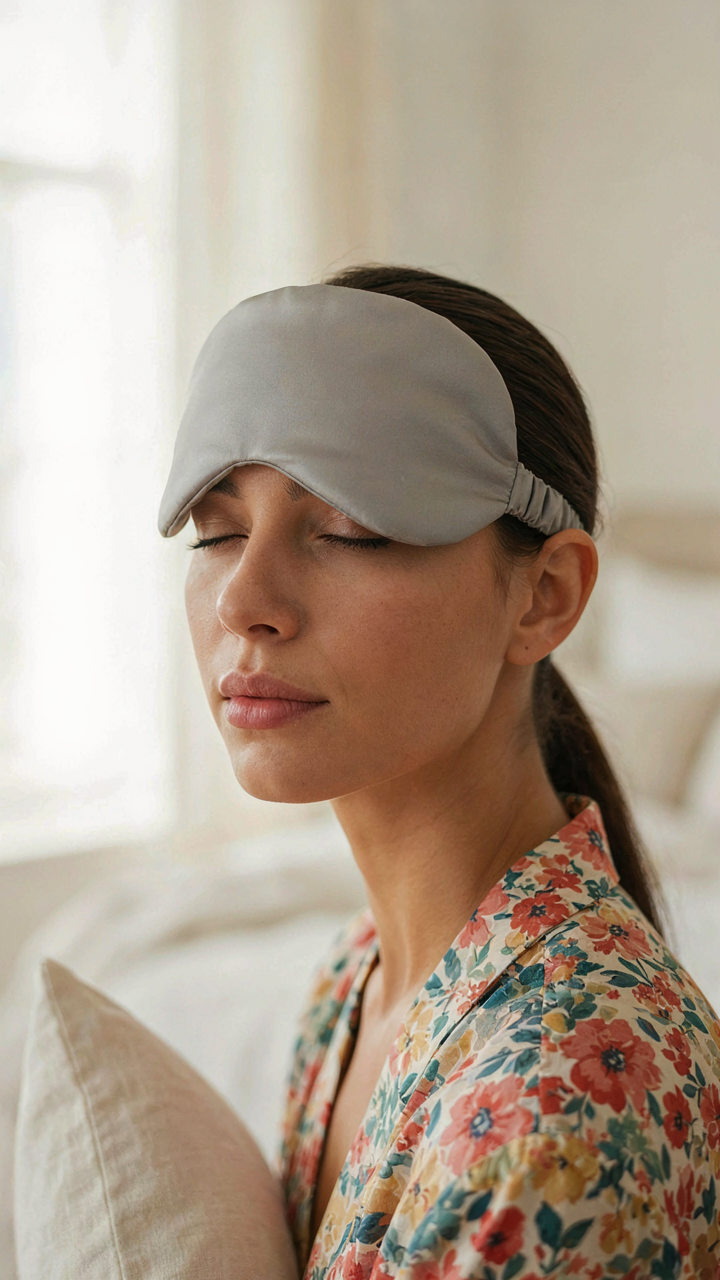
You want to believe a tight mask keeps light out better. It doesn’t work that way. Pressure on your face disrupts REM cycles through a neurobiological mechanism called the trigeminovascular response. When a mask compresses the orbital area, you activate facial nerve endings that signal threat to your brainstem. Your body responds by fragmenting deep sleep stages, not deepening them.
The common advice says snug equals secure. That’s incomplete. A mask that applies force around your eyes triggers low-grade facial proprioception feedback that your nervous system interprets as contact stress. This activates the same pathway that keeps you alert during turbulence or cabin pressure changes. You need to eliminate that signal entirely to preserve REM continuity across a six to ten hour flight.
Orbital Comfort Without Contact Load
Zero-pressure design means the mask blocks light through geometry and material placement, not by clamping your face. The eye cup sits close enough to create a light seal without touching skin. Foam padding, when used at all, distributes weight across a wider surface area to drop pressure per square inch below the threshold that triggers wakefulness.
This approach relies on structural support rather than tension. The mask sits on your forehead and cheekbones through shape alone, not elastic bands pulling backward. Your facial muscles stay relaxed because nothing signals them to brace against compression. The result is continuous REM sleep instead of the fragmented cycles that leave you wrecked on arrival. When you remove the mask after eight hours, your face shows no marks and your sleep architecture stayed intact.
The Silent Power Of Peripheral Vision Block

Why Your Brain Won’t Shut Down With Light Leaks
You want to sleep on a flight because you’re terrified of wasting time, and a sleep mask seems like the obvious fix. But most people don’t understand what’s actually happening in their visual field. Neuroscience calls this the “attentional blink” phenomenon: your brain automatically processes motion and light changes in your peripheral vision before conscious thought engages. A mask that lets light seep in from the sides keeps this mechanism active, forcing your nervous system to stay partially alert even when you’re trying to rest.
The mechanism is simple. Your eyes don’t need to be focused on something for your brain to register it. Peripheral light detection triggers the reticular activating system, the neural gatekeeper that decides whether you’re safe to sleep or need to stay vigilant. Complete peripheral blockage removes this constant low-level signal. A sleep mask for flights works only when it eliminates side leakage entirely, not just the direct light in front of your eyes. The frame of the mask matters more than the padding.
How Fast You Fall Asleep Depends On One Variable
Sleep latency research from sleep labs shows one consistent finding: the time between lying down and actual sleep depends almost entirely on how quickly your brain stops processing external stimuli. Most advice about sleep masks focuses on comfort or aesthetics. That’s wrong. The real lever is the absence of any light signature your eyes can detect, even if you’re not consciously aware of it.
When a mask leaves gaps near the nose, inner eye corners, or around the cheekbones, your retinas still register ambient light during microsaccades, those tiny eye movements your brain performs constantly. This prevents the sustained darkness required to trigger melatonin production on schedule. A proper seal against your face, especially at the inner eye corners where most leakage occurs, shortens sleep onset from 20-30 minutes to under ten on flights. Test your mask by facing a bright window in a dark room and checking for any light penetration before boarding.
The Sleep Mask As A Bio Hacking Device For Long Flights

Leveraging Your Circadian Rhythm, Not Fighting It
You want to land functional instead of wrecked, and a sleep mask is the lever that makes it possible. Circadian biology isn’t metaphor—it’s neurology. Your suprachiasmatic nucleus, the brain’s master clock, responds directly to light signals. A sleep mask doesn’t just block photons; it removes the primary input that keeps your circadian system locked to your departure timezone. Darkness signals your pineal gland to produce melatonin. Light tells it to stop. A mask forces the biology to work with you instead of against the airplane’s schedule.
The mechanism is straightforward: wear the mask during the flight’s daytime hours and remove it during the destination’s evening hours. This trains your circadian system toward the new timezone before you land. Comfort matters here because pressure on your face triggers alertness through the trigeminal nerve—the reason cheap masks with tight straps sabotage the entire strategy. A mask that fits without clamping is not a luxury detail. It’s the difference between your biology cooperating and your body fighting you for eight hours.
Resetting Your Clock Before You Arrive
Most travelers treat the mask as a sleep aid, which is incomplete thinking. Light exposure timing is what actually shifts your clock. Chronobiology—the field that studies biological time—calls this phase-shifting. A sleep mask phase-shifts your system by controlling when light reaches your eyes. You don’t just sleep better; you arrive partially adjusted. If you land at 8 AM and your body still thinks it’s midnight at home, the mask during the flight’s day hours prevents that mismatch from locking in.
Wear the mask starting when the flight departs if the destination is ahead of you. Remove it four to six hours before landing to allow light exposure to anchor your system to the new local time. This isn’t magical—it’s biology responding to environmental cues. Your melatonin production shifts within one to two days when light signals are consistent. The mask accelerates that shift by eliminating the conflicting signal the cabin lights send. Execute this protocol precisely or the mask becomes just comfort with no strategic edge.
The Deep Sleep Protocol For Flight Essentials
Wind Down Before Boarding
You want this section because you’re afraid a bad flight sleep will wreck your arrival state. The mechanism is simple: your nervous system doesn’t switch modes on command. It needs a controlled descent into parasympathetic dominance starting hours before you board. Most people skip this entirely, then wonder why the mask alone doesn’t work. Your body needs the signal that sleep is coming. Without it, even darkness won’t override the airport’s chaos and your own internal alert state.

Start your wind-down four to six hours before departure. This means stopping caffeine, dimming lights, and dropping stimulation. Your core temperature needs to fall naturally. A cool shower ninety minutes before boarding accelerates this. Avoid emails and news during this window. The goal isn’t relaxation talk—it’s metabolic preparation. Your melatonin production depends on this environmental shift, not willpower.
Controlling Temperature, Sound, And Light Integration
The physics of thermal regulation governs sleep onset more than most people realize. In flight, you’ll face three competing signals: cabin pressure changes, artificial lighting, and strangers’ noise. A sleep mask blocks one variable—light—but leaves two live. Temperature control comes first. Cabin temps hover around 68 to 72 degrees Fahrenheit, which is below optimal for sleep onset. You need active cooling at your core.
- Layered clothing system: Wear merino wool base layer under your flight outfit. Strip or add layers based on cabin temp. Merino regulates without bulk and breathes better than cotton or synthetics.
- Neck pillow placement: Position it to support your neck but allow airflow. Poor placement traps heat and triggers micro-awakenings. Test it on short flights before long hauls.
- Earplugs before sound masking: Insert foam earplugs first, then add white noise or brown noise via earbuds. Most cabin noise sits in mid-range frequencies that block light masks cannot address.
- Sleep mask design with ventilation: Choose masks with structured frames that allow air circulation around your eyes. Sealed masks trap heat and moisture, breaking sleep continuity after two hours.
- Cabin air vent positioning: Adjust your personal air vent to blow across your face at low speed. This prevents heat buildup under the mask and stabilizes your microclimate.
Combine these elements in order: temperature layer first, then sound isolation, then light blocking. Most travelers reverse this and fail. A sealed mask in a warm cabin will break your sleep at hour three. Airflow preservation isn’t optional—it’s the difference between four interrupted hours and six solid ones. Adjust your vent to gentle and continuous, never on blast.
Debunking The “Any Mask Will Do” Fallacy
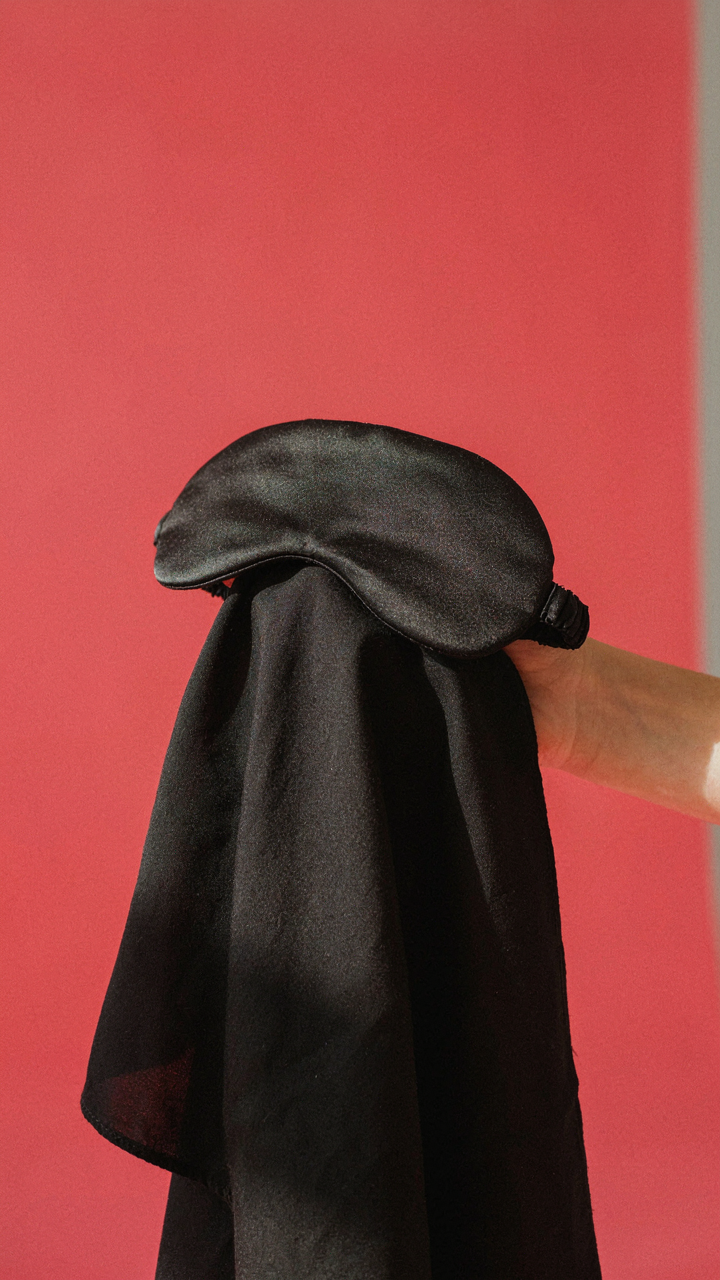
Breathability Beats Light Blocking Alone
You want to believe a mask works because it’s dark inside, because that feels like proof. It’s not. Material science separates masks that function from masks that fail: breathability determines whether you actually sleep or just lie still in darkness. A mask blocks light through opacity, but it traps heat and carbon dioxide through poor fabric choice. Your face needs air exchange. Cotton and microfiber blends allow moisture to wick away and oxygen to reach your skin. Cheap polyester creates a suffocating pocket that wakes you mid-flight because your body senses the CO2 buildup before your conscious mind does.
The standard advice is backward: people assume thick materials equal better light blocking. Dense fabrics do block light, but they also block airflow. You need a material dense enough to stop light penetration but loose enough in weave structure to let moisture escape. This is why silk and high-thread-count cotton work. They have natural fiber structures that scatter light while maintaining permeability. Synthetic blends engineered specifically for sleep masks perform similarly. Check the material spec before price or brand name. A breathable mask you’ll keep on beats an impermeable one you’ll rip off at cruising altitude.
Nose Bridge And Strap Tension Control Sleep Depth
The nose bridge is where most masks fail mechanically, creating pressure points that trigger micro-arousals. Your trigeminal nerve runs across the bridge and sides of your nose. Sustained pressure here activates a reflex that pulls you out of deep sleep even if you don’t consciously notice. Strap adjustment doesn’t fix a badly designed bridge. The bridge needs to distribute weight across a wider surface area rather than concentrating it on bone. A proper bridge cups the nose rather than pressing down on it.
Strap tension exists on a narrow operating window: tight enough to prevent light leaks at the edges, loose enough that you don’t feel it. Most people over-tighten the strap because they think tighter equals more light blocking. This is wrong. Light leaks happen around the eye sockets and at the sides of the nose, not from loose straps. Adjust the bridge first until it sits flush without pressure, then tighten the strap only until edge contact feels neutral. The mask should feel absent, not present. If you can feel it after thirty seconds, the tension is too high or the bridge design is wrong.
Integrating The Sleep Mask With Your Travel Pillow System

Why Your Neck Pillow Matters More Than The Mask Alone
You want to look composed on arrival, not like you slept at a bad angle. The real mechanism here is biomechanical: a U-shaped pillow creates a stable platform that prevents your head from rolling into uncomfortable positions, which directly reduces pressure points where the mask contacts your face. Without this foundation, even the best no-pressure mask becomes a liability because your head’s weight shifts during sleep, pushing the mask into your cheekbone or temple.

The synergy works because the pillow handles vertical load while the mask handles light. Your cervical spine needs support to stay neutral. When it doesn’t, your head compensates by tilting or rotating, which forces the mask to bear tension it wasn’t designed for. A quality U-pillow keeps your head centered in the mask’s sweet spot, where the elastic band sits behind your ears and the padding barely touches your skin. This is the only way the mask functions as intended during a long flight.
Alignment Protocol For Head And Mask Positioning
Nobody teaches this part because it sounds too simple, but head-neck alignment is physics applied to comfort. Position your pillow first, then fit the mask. Adjust the pillow so your head sits level, ears stacked directly above your shoulders. This is your baseline. Now place the mask and tighten the elastic until it’s snug but not restrictive around the back of your head. Your forehead padding should have a hair’s width of space between it and your skin.
Calibrate this setup while seated upright before you recline. Lean your head against the pillow, eyes closed, and notice where the mask’s contact points land. If you feel pressure on your temples, loosen the elastic and slide the mask slightly forward. If light leaks at the sides, the pillow isn’t supporting your head level enough. Lock this position in muscle memory. On the plane, replicate it exactly the moment you recline. Your first ten minutes of sleep determines the next five hours.
The Evolutionary Advantage: Mimicking Cave Conditions
Your Ancestors Slept In Darkness
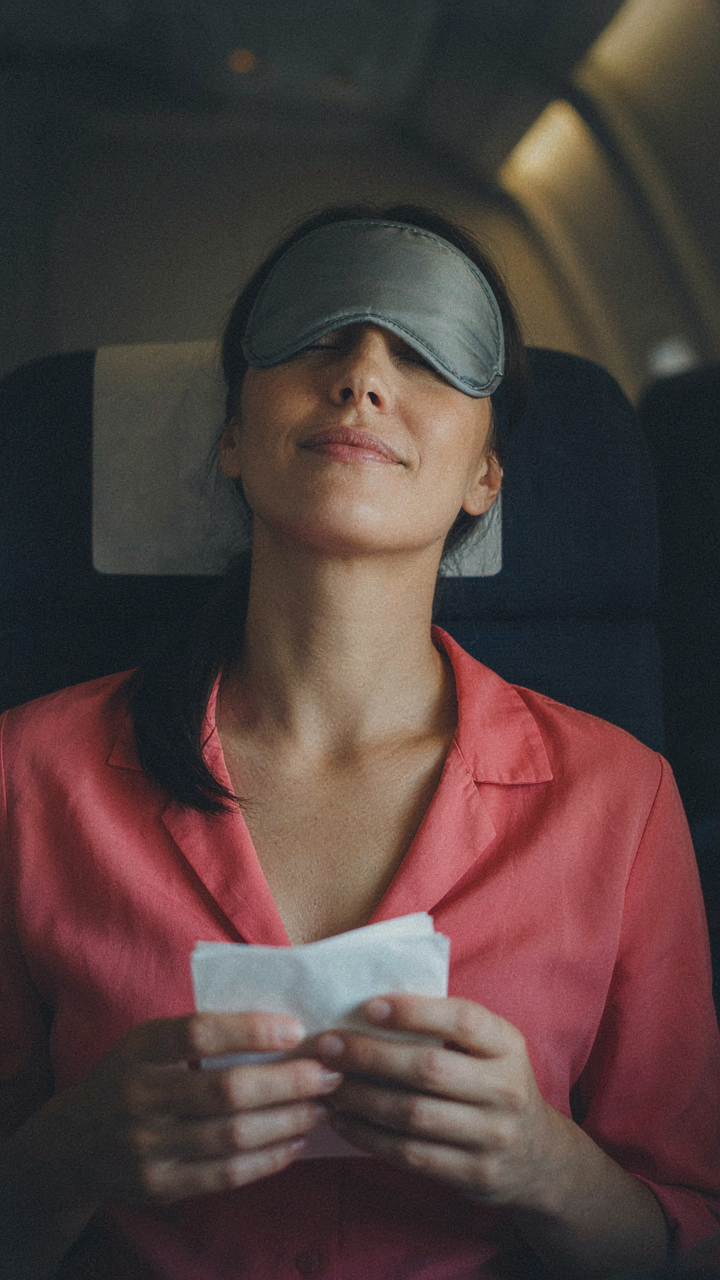
You want to believe your biology is special. It isn’t. Evolutionary biology treats sleep environment as a control variable: humans evolved sleeping in near-total darkness, in enclosed spaces, surrounded by natural barriers to light. A sleep mask for flights replicates that input signal. Your nervous system doesn’t care about the cabin pressure or the altitude. It responds to photons. Remove them, and your circadian system recognizes the condition it’s wired for.

Ancestral sleep happened in caves, dense forests, and structures with minimal light penetration. Moonlight was the exception, not the rule. Electric light has existed for roughly 150 years. Your genes don’t know that time span. They know 200,000 years of darkness at sleep time. The hypothalamus, your master circadian clock, operates on this ancient calibration. A quality sleep mask eliminates the variable your body evolved to expect eliminated.
Pure Darkness Triggers Deeper Sleep Architecture
The mechanism is biochemical, not philosophical. Total darkness triggers melatonin production and sustains it through your sleep cycle. Partial light suppresses melatonin even when your eyes are closed. Commercial aircraft cabin lighting and window leaks create enough spectral noise to disrupt this signal. A sleep mask that blocks light without exerting pressure on your face preserves the neurological conditions your body needs for deep sleep phases.
The cabin environment actively works against your sleep architecture. Overhead lights, personal reading lights from nearby seats, and emergency exit signage all emit wavelengths that penetrate thin eyelids. A proper sleep mask eliminates this input completely, allowing melatonin levels to rise and stay elevated. When light is gone, your brain shifts from monitoring the environment to consolidating memory and restoring cellular function. This is the switch you need to flip on flights.
The Cost Of Compromise: Why Cheap Masks Fail

Interrupted Sleep Drains More Than You Think
You want to believe a five-dollar mask works because admitting it doesn’t means you’ve wasted money and time. Here’s the mechanism: cheap masks shift position during sleep. Your eyelids open. Light penetrates. Your brain registers the change even if you don’t wake fully. This micro-arousal fragments sleep architecture, tanking REM and deep sleep quality without you knowing it happened. You land feeling destroyed, then blame the flight.

Sleep science calls this fragmentation, and it’s cumulative. One interrupted night recovers. Three nights of position-shifting masks compounds the damage. You don’t feel incrementally worse—you feel categorically worse. The mask didn’t keep you asleep. It created the illusion of darkness while your nervous system stayed half-alert. A cheap mask doesn’t fail to block light. It fails to stay put while blocking it.
Real Recovery Compounds Your Output
Economics has a concept called diminishing returns. A sleep mask for flights inverts that math: better sleep drives disproportionate gains in cognition, mood, and decision-making. You’re not paying for comfort. You’re buying back hours of mental capacity that a fragmented night erases.
Most people treat sleep gear as a consumable. It’s not. A quality mask costs forty to eighty dollars. Wear it ten times per year. That’s four to eight dollars per flight. A single flight where you recover instead of arrive depleted pays for itself through clearer thinking and better decisions. The return isn’t metaphorical. A mask that stays secure, blocks light completely, and applies zero pressure to your face lets you sleep deeply enough to reset your nervous system. That’s the mechanism: secure fit plus total light blocking equals uninterrupted sleep cycles, which rebuilds cognitive performance.
Your Real Obstacle Isn’t The Light; It’s Your Passive Acceptance Of Suboptimal Conditions

You’ve normalized sleeping like garbage on planes. A sleep mask that doesn’t strangle your face or dig into your eyes seems like a luxury, but it’s actually baseline human comfort. Stop treating flight sleep as punishment you endure. Buy a quality mask today, test it on your couch tonight, and reclaim eight hours you’ve been surrendering to mediocrity. Your next flight changes when you decide you deserve to sleep like a human, not a hostage.