
The Core Deception: Why Your “Essential” Power Setup Is Overkill

Everyone Buys Too Much Battery
You want to feel secure. That’s why you’re eyeing a 400-amp-hour lithium battery when you need 80. The mechanism is simple: battery manufacturers and influencers profit from your fear, so they normalize oversizing as prudent planning. It’s not. Oversizing is just debt you carry on your vehicle that costs fuel, weight, and money.
Most people spec their system backwards. They pick a big battery first, then justify loads around it instead of measuring actual consumption and building up. This reversal creates bloat at every level. A 12-volt fridge pulls roughly 30 to 50 amps per day depending on ambient temperature and usage patterns. A phone charger draws 5 to 15 amps total over a full charge cycle. Your laptop maybe 10 to 20 amps. These are the real numbers. Write them down.
The Math Nobody Does
Energy auditing comes from operations management, where you track inputs against outputs to find waste. Apply the same logic to your power setup: calculate watt-hours consumed per 24 hours, not the theoretical maximum your inverter could handle. A fridge rated at 100 watts running 8 hours daily consumes 800 watt-hours, not 2400.
Most people skip this work because the answer is smaller than the gear catalog they’ve already bookmarked. They rationalize the gap with phantom scenarios: “What if the fridge runs 12 hours?” or “What if we charge devices simultaneously?” Those edge cases happen rarely, and the cost of preventing them with oversized batteries is higher than the cost of running the engine for a few minutes to top up. Measure your actual daily draw for one week on the road, divide by your system voltage to get amp-hours, then add 20 percent for battery efficiency and reserve. That number is your real requirement. Everything else is fantasy.
The Kinetic Efficiency Protocol: Powering What Truly Matters

The Fridge Versus Everything Else
You want to know how to run everything without worrying about power, but that’s denial dressed as planning. The real mechanism here comes from electrical engineering: load priority. Your fridge is a constant draw. Your phone charger, laptop, and LED strips are intermittent. Mixing these two categories into one power budget creates cascading failures because you’re treating variable loads as if they were fixed. They aren’t.

Your fridge pulls between 40 and 60 amps per hour during compressor cycles, cycling on and off based on ambient temperature and door openings. This isn’t negotiable. Everything else you want to run is secondary by design. Build your battery and charging capacity around the fridge’s worst-case demand first, then allocate what remains to devices. This order prevents the scenario where your battery drops below the minimum voltage needed to restart the compressor, leaving you with thawed food and no recovery path.
- Fridge as the load anchor: Size your battery bank to handle 24 to 36 hours of fridge runtime at minimum, accounting for seasonal temperature swings that increase compressor duty cycle.
- Device charging as the remainder: Phones, tablets, and laptops consume 5 to 15 amps total during active use. Run these only after the fridge’s baseline is secured.
- Inverter sizing tied to fridge startup: Fridges draw 3 to 5 times their running current on startup. Your inverter must handle this spike or it shuts down under load.
- Solar input prioritizes fridge recharge: Direct solar watts to battery charging first, then allocate excess to device charging or auxiliary loads like water pumps or compressors.
- Deep cycling risk with mixed loads: Running your fridge and multiple devices simultaneously forces deep discharge cycles that degrade lithium batteries 40 to 60 percent faster than shallow cycling protocols.
The hierarchy isn’t a suggestion. It’s the only way to avoid choosing between a working fridge and charged devices mid-trip. Fridge survives. Everything else negotiates for scraps.
Where The Watts Actually Disappear
Most overland power setups bleed 15 to 25 percent of their energy into parasitic draws nobody mentions because naming the problem means admitting the setup is fundamentally flawed. Refrigerators in poor condition lose efficiency at 0.5 percent per year of compressor degradation. Battery management systems draw 50 to 200 milliamps continuously just monitoring voltage. Inverters lose 5 to 10 percent converting DC to AC, then converters lose another 10 to 15 percent stepping that back down to 12V for auxiliary circuits.
Stop the bleeding before you add more capacity. Most inefficient appliances aren’t broken; they’re undersized. A 100-watt electric kettle running on an undersized inverter pulls 30 to 40 percent more current than spec because voltage sag forces the heating element to work harder. Replace it with a 30-liter gravity water heater mounted on the roof and you eliminate the load entirely. Check your fridge’s compressor. If it’s more than eight years old, it’s operating at 70 to 80 percent of its original efficiency. A new unit costs 800 to 1200 dollars and saves you 20 to 30 percent of your daily draw over five years. Upgrade the fridge before you upgrade the batteries.
Battery Banks: Quantity Vs. Intelligence (Off Road Vehicle Battery Setup)

AGM Vs. Lithium: The Tradeoff You’re Really Making
You want lithium because everyone online says it’s lighter and lasts longer, but you’re actually afraid of being stranded. Here’s the mechanism: both chemistries store energy the same way, but they age differently under stress. AGM batteries degrade predictably through cycle count and temperature. Lithium degrades through depth of discharge cycles, but recovers charge faster and holds voltage flatter under load. AGM is forgiving of abuse. Lithium punishes incomplete charging and extreme cold. Your choice depends on whether your vehicle’s charging system can sustain what lithium demands.

AGM costs 40-60 percent less upfront and handles neglect. A 100Ah AGM bank weighs roughly 60 pounds and cycles 300-500 times before capacity drops below 80 percent. Lithium at the same capacity weighs 30 pounds and cycles 2000-3000 times, but requires a battery management system and active monitoring. The real cost isn’t the battery. It’s the infrastructure around it. If your alternator charges slowly or your fridge draws inconsistently, lithium’s intelligence becomes a liability you’ll debug at 2 AM in the desert.
Placement And Protection: Where Your Battery Lives
Your battery sits in the harshest environment on the vehicle, yet placement decisions treat it like cargo. Engine bays hit 150-170 degrees on hot days. Truck beds freeze at night and cook at noon. Lithium fails permanently below 32 degrees if you try to charge it. AGM sulfates when left discharged in cold. Both chemistries corrode terminals from vibration and salt spray faster than anywhere else on the vehicle. Placement isn’t aesthetic. It’s a survival protocol.
Mount batteries in a steel or aluminum box with active ventilation if they’re lithium. This costs 200-400 dollars and prevents thermal runaway. Secure the box to the frame with vibration-isolating mounts, not direct bolts. Run all terminals through a sealed pass-through with marine-grade connectors rated for outdoor use. Inspect connections monthly. Corrosion starts invisibly and kills output before you see it. Your battery placement decision determines whether you’re monitoring a stable system or gambling with dead weight.
Solar Charging: The Myth Of Endless Free Energy

Rigid Versus Flexible Versus Portable Panels
You want solar because it feels like you’re escaping the grid. The real mechanism is simpler: you’re trading upfront cost and roof real estate for runtime without engine hours.

Rigid panels use glass and aluminum frames. They deliver 18-22% efficiency and last 25 years with minimal degradation. Weight runs 2.5-3.5 pounds per 100 watts. They’re bolted down, which means no repositioning mid-day. Flexible panels use thin-film backing. They hit 15-17% efficiency, weigh half what rigid panels do, and flex to 30 degrees. Durability suffers. UV exposure and temperature cycling degrade them faster, typically 10-15 years. Portable panels come in folding kits with built-in kickstands. They let you angle toward the sun. Efficiency sits between rigid and flexible. You sacrifice speed of deployment for flexibility. Pick based on your vehicle’s roof load capacity and how often you’ll reposition. Most overlanders choose rigid as the default because repositioning is friction you won’t do consistently.
MPPT Controllers Extract What PWM Leaves Behind
This is where most advice breaks down. People treat controllers as interchangeable. They’re not. The field of power electronics has a concept called impedance matching. An MPPT controller matches the voltage and current your panels produce to what your battery needs.
PWM controllers simply chop the panel voltage down to battery voltage. If your panels generate 80 volts and your battery needs 48 volts, PWM burns the difference as heat. MPPT converts that voltage difference into additional current, recovering 15-30% more energy depending on panel-to-battery voltage spread. MPPT costs 2-3 times more upfront but harvests real wattage PWM destroys. On a 400-watt system running fridges and auxiliary loads, that gap matters. Your controller sits between panels and battery. It sees real-time voltage and current from the array. MPPT algorithms adjust internal switching frequency dozens of times per second to track the maximum power point. Run the math: MPPT pays for itself in 2-3 years on any system powering continuous loads. Size your controller for 1.25 times your panel’s rated output to handle cold-weather current surges without throttling.
Vehicle Alternator Integration: The Often Ignored Powerhouse
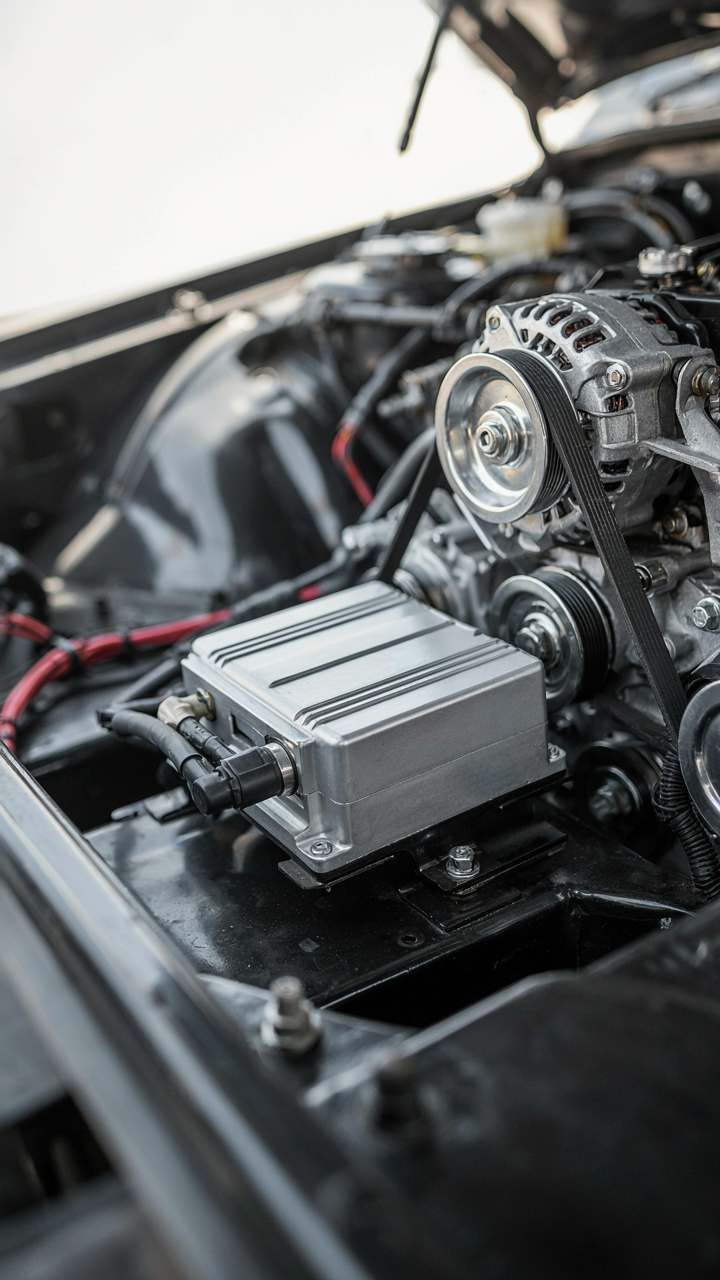
DC DC Chargers: Efficient Battery To Battery Charging
You want to believe your alternator charges your auxiliary battery automatically. It doesn’t, not effectively. The mechanism is simple: your alternator outputs voltage, not current management. A DC-DC charger sits between alternator and battery, regulating input voltage and matching the charge profile your auxiliary battery actually needs. Without it, you’re either undercharging or feeding uncontrolled current that degrades battery lifespan faster than you realize.

A quality DC-DC charger isolates your auxiliary system from engine voltage spikes, handles high-amperage draws without stalling your engine, and adapts its output to battery state. Most overlanders skip this and run a basic battery isolator, which is a voltage-sensing relay, not a charger. The isolator just connects or disconnects the batteries. The DC-DC charger actively regulates the charge curve, which means faster recharge times and longer battery life over a multi-year expedition.
Engine Run Time: Charging Strategy Tied To Travel
Your charging output depends entirely on engine RPM and alternator amperage rating. Common automotive alternators produce 80 to 150 amps. At idle, you get 40 to 60 amps. During highway driving at 2000 RPM, you get 100 to 130 amps. The equation is load-dependent, but the real leverage is understanding that highway miles charge your auxiliary battery. Stop and go travel charges it slowly.
If your fridge draws 40 amps continuously and you’re not moving, your battery depletes. If you’re driving highway miles regularly, your alternator recharges what the fridge consumed. The strategy isn’t to maximize charge time. It’s to match your travel pattern to your power draw. Short daily drives with high parasitic loads mean you’ll always run a deficit. Design your route or your power consumption to align, not against each other.
The Fridge Fallacy: Taming Your Hungriest Device

Pre Cooling And Insulation Strategy
You want your fridge to run less because you think that saves power. The real mechanism is this: a compressor cycles based on internal temperature delta, not total energy consumed. Start with a cold box before you plug anything in.

Pre-cooling your fridge to 35°F before departure cuts compressor runtime by 40 to 60 percent over the first 24 hours. Use ice or your home freezer the night before departure. Insulation quality matters more than battery capacity here. Wrap the fridge exterior with reflective foam or a custom-fitted cover. Direct sun exposure forces the compressor to work against external heat gain, which drains your battery faster than any internal load alone.
Door Protocol And Thermal Discipline
Every door opening floods warm air into the box and forces a compressor restart cycle. You already know not to leave the door open. What you miss is the compressor doesn’t stop immediately after you close it.
Organize your fridge layout before departure so you know exactly where everything sits. Grab what you need in one motion. Keep drinks in a separate cooler for frequent access instead of raiding the fridge multiple times daily. Pre-stage tomorrow’s meals on a shelf so you open once per meal instead of hunting. The compressor restarts after each temperature rise, and those restart cycles consume more power than steady-state runtime. Minimize door openings to fewer than six per day, and your battery will thank you with an extra 8 to 12 hours of runtime.
Device Charging Strategy: Beyond USB Ports

The Logistics Chain Of Power
You want to feel in control. The truth is simpler: most people charge devices randomly and wonder why their system fails under load. Military logistics borrowed a principle called the supply chain—the sequence of resource movement determines mission success or failure. Overland power setup works the same way. The order you charge devices matters more than the total wattage available. Charging everything at once creates voltage sag, which damages batteries and reduces total system lifespan. Strategic sequencing prevents this collapse.

Think of your auxiliary battery as a depot with limited throughput. You don’t load every truck at once. You stage shipments by priority and demand: critical systems first, then secondary loads, then luxury items. On the road, this means charging your fridge’s battery bank before phones, phones before laptops, laptops before portable speakers. The mechanism is current draw. High-demand devices drain voltage faster than your alternator can replenish it. Staggered charging keeps voltage stable and prevents the brownout that kills electronics and weakens future charge cycles.
Charge Order As Resource Allocation
The common advice is to charge everything at once with multiple USB ports. That’s how you end up with a fried alternator by month three. Optimal charging order tracks two variables: battery criticality and recharge speed. Critical systems that keep you alive or moving get power first. Fast-charging devices go second because they draw high current briefly. Slow-charge items fill remaining capacity without stressing the system.
Start with your auxiliary battery bank itself if it’s below 80 percent state of charge. Next, the fridge battery. Then navigation devices and communication tools. Then personal devices like phones and cameras. Finally, entertainment or convenience items. This isn’t preference, it’s physics. Each device has a charge curve—the speed drops as it approaches full capacity. By charging in sequence, you avoid peak-demand overlap and maintain stable voltage throughout the charging window. Implement this as a daily protocol: check each device’s charge level at 7 AM, charge in order through 9 AM, then drive.
Monitoring & Management: The Redarc Redvision Trap
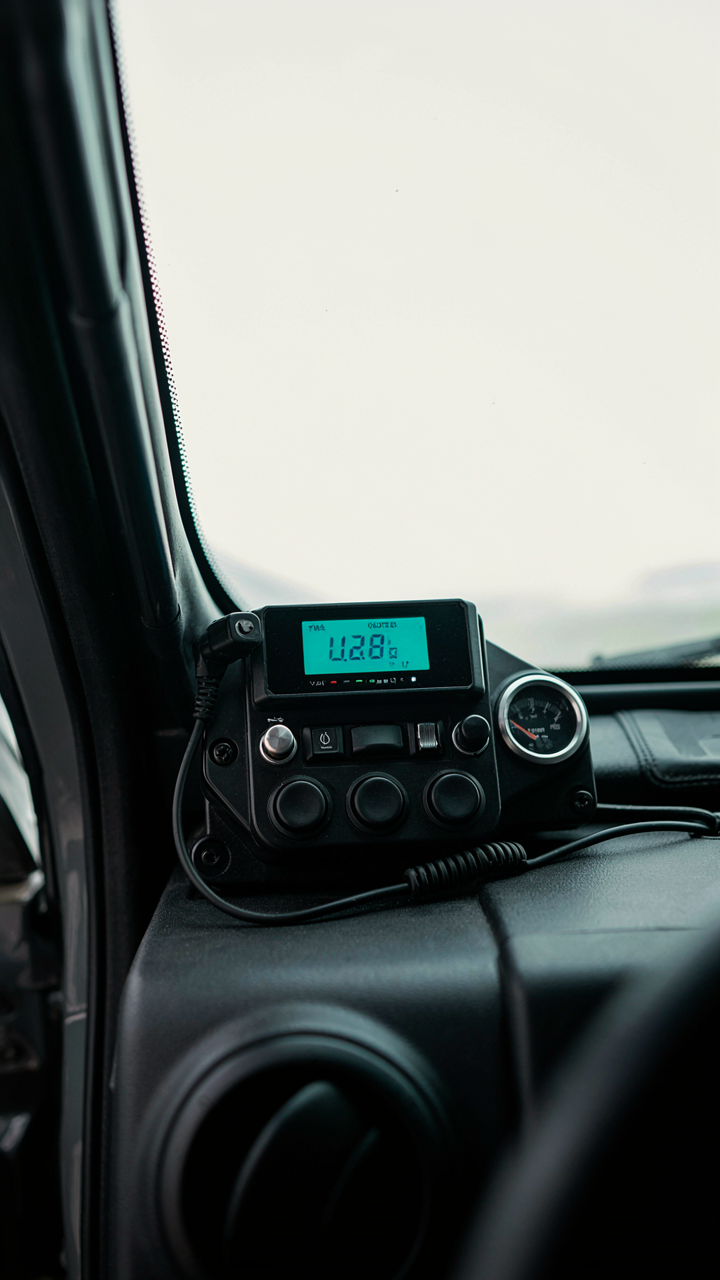
What Numbers Actually Tell You
You want a screen that makes you feel in control. That’s the trap. Most overland builders stare at voltage and amp readings like they’re meaningful data, when they’re actually just snapshots. Trends reveal the mechanism: a fridge drawing 45 amps at startup then dropping to 12 amps tells you something. A battery holding 13.2V then sagging to 12.1V under load tells you something else. The numbers alone don’t.

A real monitoring system tracks voltage sag during load events, temperature effects on charge acceptance, and reserve depletion rate over days, not minutes. The Redarc Redvision and similar displays excel at showing instantaneous state. They fail at revealing patterns. You need to know if your system loses 5% capacity per day or 15% per day under your actual usage. That gap determines whether you can sustain a two-week trip or need to run the engine every three days. Glance at the screen for safety checks. Watch trends over time for truth.
Simplicity Kills More Systems Than Complexity
The common advice is wrong: more monitoring data doesn’t cause paralysis. Bad architecture does. A single analog voltmeter mounted at eye level beats a Redvision screen feeding you sixteen data points you’ll never interpret. You need one number you check: battery voltage under load, measured at the battery terminals themselves, not at the monitor three feet away through questionable wiring.
Complexity enters when people add Bluetooth apps, wireless sensors, multiple displays, and redundant monitoring points. Each adds failure modes. A hardwired display with physical buttons and a single 4-20mA input signal from a shunt survives vibration, temperature swings, and connector corrosion. Your monitoring system should require zero decisions once built. Check voltage. If it’s low, run the engine or reduce load. That’s the protocol. Everything else is friction.
The Real Power Play: Freedom Through Limitation

What Actually Breaks And What Stays Running
You want redundancy so you feel secure. That’s backward. The real mechanism comes from systems engineering: the concept of “graceful degradation”—design every component so failure isolates itself and leaves core functions intact. Your fridge runs on a dedicated circuit. Your phone charger shares nothing with it. When one fails, the other operates. Most people wire everything in parallel and wonder why a single failure tanks the whole system.

Start by naming what must never stop: refrigeration. Everything else is secondary. Run your fridge on a lithium battery with its own charge controller, separate from auxiliary loads like lights and USB ports. Use automotive-grade DC wiring rated 25 percent above actual current draw—copper doesn’t degrade, undersizing does. A dedicated 150-amp breaker protects that circuit alone. Auxiliary loads share a second system entirely. This separation costs almost nothing upfront and saves everything when failure inevitably arrives.
Simplicity As Operational Armor
The advice to “minimize complexity” misses the real reason. You don’t reduce components to feel virtuous. You reduce them because every connection, every relay, every fuse is a failure point you’ll troubleshoot at mile marker 847 on a Tuesday in 110-degree heat with no cell service. A 200-watt solar panel, a 200-amp lithium battery, a 60-amp MPPT controller, a 3000-watt pure sine inverter, and hardwired DC loads. That’s the whole stack. No smart monitors nobody understands. No Bluetooth modules that freeze at altitude. No software updates in the field.
Simplicity means you can diagnose problems with a multimeter and basic understanding of voltage and amperage. A customer who owns a 40-component system with three battery management modules, two inverters, and wireless monitoring will replace the entire rig before fixing it. A customer who owns five components will troubleshoot the dead cell in a battery, rebalance the system, and drive on. When something fails, fix or replace that one thing and move. Don’t engineer around problems you prevent by owning less.
The Real Constraint Isn’t Power, It’s The Scarcity Mindset Making You Believe You Need Endless Resources

Most people design their overland power setup based on fear, not reality. They triple their battery capacity, add redundant panels, and stack gear they’ll never use. The constraint isn’t wattage. It’s the inability to say no. Right now, calculate your actual daily power draw without padding it. Write down only what you use. This number becomes your anchor. Your overland power setup fails not because the math doesn’t work, but because you’re refusing to live within it.