The Cognitive Load Tax: Why Less Is More For Digital Nomad

Every Decision You Pack Is A Decision You’ll Make Again
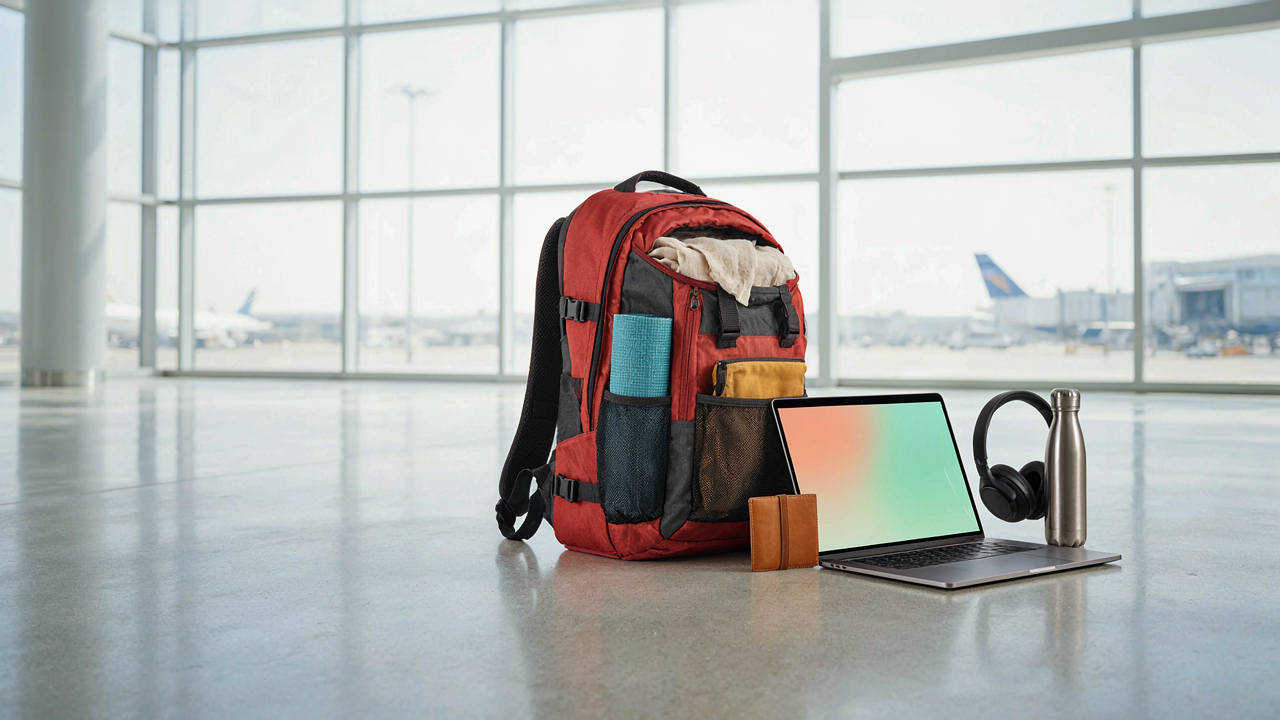
You want to believe more options means more freedom. That’s the real trap. Every item in your bag is a micro-decision you’ll repeat hundreds of times on the road: wear this or that, use this tool or that one, organize this way or reorganize. Cognitive load is the economics term for the mental cost of processing choices. You’re paying that tax every single day, and most nomads pack like they’re preparing for every scenario except the one actually happening.
The mechanism is simple. Each item adds decision friction. You can’t optimize what you don’t have to think about. Remove the excess, and your brain stops burning cycles on low-value choices. That freed capacity goes toward actual work, actual exploration, actual reasons you left your fixed location. The nomads who move fluidly don’t have more discipline. They have fewer things to decide about.
Constraint Forces Clarity On What Actually Matters
Common advice says pack light and you’ll be fine. That’s incomplete. Packing light without a system just moves the problem to the road, where you’ll either buy duplicates or cycle through the same three items obsessively. The real move is choosing gear by asking one question: do I use this on at least 50 percent of days, or does it solve a specific recurring problem? If neither, it doesn’t travel with you.
Nomads who change locations every two weeks face a different math than those staying a month. The packing constraint doesn’t just reduce weight. It forces you to actually know what you need instead of guessing. Once you know that, you commit to fewer, better items. Buying one quality laptop stand instead of three mediocre ones means you stop thinking about your setup and start thinking about your work. That’s the trade.
The 5 Layer Wardrobe Protocol: Digital Nomad Wardrobe Mastery

Start With Constraint, Not Choice
You want permission to pack less without looking like you don’t care. That’s the real reason this section matters. The mechanism is simple: constraint forces intentionality. Most nomads pack what they own instead of what works. They treat packing as inventory reduction, not system design.

A minimalist wardrobe isn’t about owning fewer clothes. It’s about owning clothes that solve problems across contexts. You pick pieces that layer, transition between climates, and work for both work calls and dinners out. The math is brutal: five base pieces multiplied by color compatibility beats fifteen pieces that don’t combine. You eliminate decision fatigue while cutting luggage weight in half.
Durability Outlasts Fashion Cycles
Natural fibers feel premium but fail fast on the road. Synthetic blends designed for performance actually last through constant washing and packing compression. Merino wool works because it regulates temperature and resists odor, but cotton fails at both. Nylon and polyester aren’t luxurious, but they survive what travel does to fabric.
Seam construction matters more than thread count. Flat-felled seams hold under stress. Gussets at stress points prevent ripping. Check the stitching at armholes and crotch before buying anything. Buy pieces that cost more upfront but last eighteen months instead of pieces that cost less but fail in three. The math shifts when you factor in replacement frequency and shipping costs to new countries.
Beyond The Gadget Myth: Essential Tech For Remote Work

Function Over The Spec Sheet
You want people to think you travel light and work smart. The real reason you obsess over specs is fear that cheaper gear will fail mid-deadline. Here’s the mechanism: features scale with price, but reliability plateaus fast. A laptop processor gains 15% speed every generation. A keyboard’s ability to produce typed words hasn’t fundamentally changed in decades. You’re paying for marketing, not survival.

Strip your tech stack to what actually breaks under load. Your internet connection breaks. Your power supply breaks. Your screen breaks. Your keyboard eventually fails. Everything else is noise. A mid-range laptop does email, documents, video calls, and light editing without strain. A premium one does the same thing but costs twice as much and arrives in your hotel room with the same outcome: work gets done or it doesn’t, and 90% of that depends on your internet, not your CPU.
The Backup Layer That Actually Matters
Redundancy isn’t about having two of everything. Military strategy calls this “force multiplication”—same resources, different deployment. Applied to nomad tech: one device handles primary load, secondary devices handle single points of failure. Your laptop dies, your work doesn’t stop. Your charger fails at the airport, you keep moving.
The three critical backups: a power bank rated for laptop charging (not phone-grade), a secondary device for internet access (phone counts), and portable wifi (a mobile hotspot or local SIM flexibility). Skip the second laptop unless your work literally requires rendering or heavy computation. Skip the dual monitors unless you’ve worked without them and confirmed the loss. You need backups for failure modes that halt your income, not convenience gaps.
The Scarcity Principle In Packing: Digital Nomad Packing List 2027
What Actually Weighs You Down
You want permission to bring more because you fear missing out, not because you need it. Economics calls this scarcity bias, and it’s the mechanism that bloats every nomad’s bag. When items feel rare or hard to replace, you pack them. When they’re abundant, you leave them. The real leverage isn’t choosing better items. It’s flipping which items you perceive as scarce.

Most nomads get this backwards. They pack abundance (five shirts, backup cables, extra shoes) and treat actual scarcity (laptop, passport, medications) like common inventory. The math breaks in favor of the nomad who understands that replaceable items are infinite wherever you land, and irreplaceable items are the only strategic scarcity worth protecting. Your bag weight solves itself once you stop treating convenience as scarcity.
The Gram Economy Of Movement
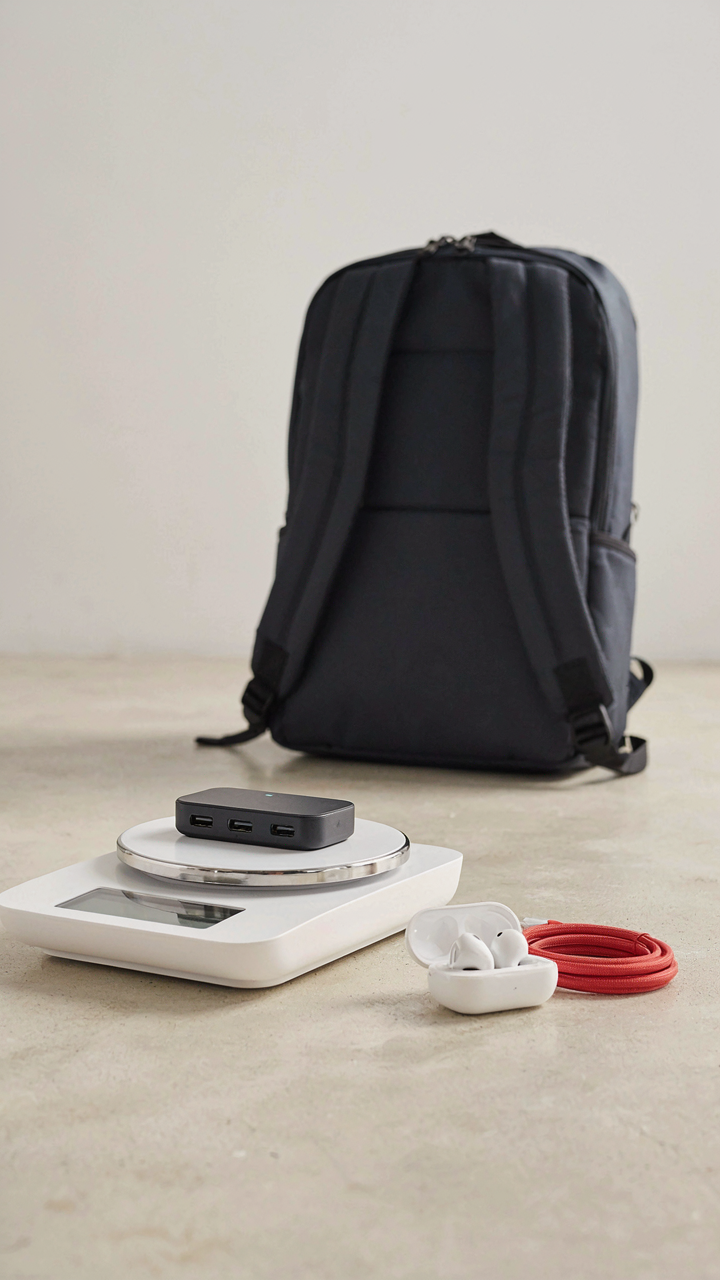
Every gram costs you something: fatigue, agility, flight fees, hotel room space, posture damage over months. You don’t calculate this. The common advice says “pack light,” which is lazy instruction that skips the actual decision framework. You need to price each item in real friction, not just ounces. A five-pound item that saves you eight hours monthly has different economics than a five-pound item you use twice.
Map your actual labor to weight. If a piece of gear generates revenue, earns you better work conditions, or prevents a replacement purchase, it pays rent in your bag. If it’s insurance against a scenario you’ve never hit in three continents, it doesn’t. Track what you actually grab for two weeks. The items that stay in your bag after daily use are the only ones earning their weight. Strip everything else.
The Antifragile Kit: Thriving With Less, Digital Nomad Essentials

Your Gear Adapts Or You Pay Twice
You want a packing list that makes you look sorted. Here’s what actually matters: borrow from biology. Your kit should gain capability when conditions change, not break. In biological systems, hormesis describes how organisms strengthen through controlled stress. Apply this to your pack: every item should perform better under disruption, not worse. A multi-tool doesn’t just fix things. It proves you can solve problems without calling support. That’s the mechanism. You’re buying redundancy disguised as simplicity.

Most packing advice treats gear as static. You pack it, it sits in your bag, end of story. Wrong. Your items must earn their weight by serving multiple functions across different contexts. A USB-C cable works for charging, data transfer, and emergency repairs. A merino wool shirt handles both cold climates and tropical heat through temperature regulation. The goal isn’t minimalism for its own sake. It’s maximum resilience per ounce. Your pack survives chaos because each piece adapts to it.
Items That Gain From Uncertainty
Every object in your pack should become more valuable when plans fall apart.
- Power Bank With Multiple Ports: Powers phone, laptop, and other devices. Bridges gaps between unreliable outlets across different countries and work environments.
- Compact Repair Kit: Needle, thread, super glue, and duct tape wrapped tight. Fixes clothing, gear, and electronics faster than replacing them.
- Universal Adapter With Built-In Outlets: Single piece replaces five adapters. Works across 150+ countries without hunting for local versions.
- Microfiber Towel: Dries faster than cotton, prevents mold in humid climates, doubles as yoga mat or neck pillow when needed.
- Noise-Canceling Earbuds: Protects focus in cafes, airports, and shared spaces. Battery lasts 6-8 hours per charge for long work sessions.
These items don’t just handle their intended purpose. They absorb friction from travel disruption, time zone chaos, and infrastructure gaps. A power bank isn’t luxury until your laptop dies before a deadline. Then it becomes survival. The antifragile pack treats every uncertainty as fuel, not threat. When your flight delays, your kit gets stronger because you’ve already solved the problems delay creates. Pack with this logic and you stop managing emergencies. You absorb them.
Psychology Of Portability: Overcoming Material Attachment

The Fear Disguised As Planning
You’re worried that leaving something behind means you’re unprepared. That’s the real sticking point. Behavioral economics calls this loss aversion—you feel the pain of losing something twice as hard as the pleasure of gaining it. Apply this to your pack: most nomads overload not because they need the items, but because not having them feels like failure. The mechanism is backward. You’re packing for a hypothetical future that rarely arrives, sacrificing present mobility for phantom security.

The “what if” scenarios never materialize at the rate your brain predicts. You won’t need that backup charger 90 percent of the trips you take it. You won’t face that one specific weather emergency. You won’t suddenly regret ditching the formal shirt. Start logging what you actually use during week one of travel versus what you packed “just in case.” The data kills the anxiety faster than any pep talk. After two trips, the pattern becomes undeniable: your real needs are half the size of your feared needs.
Discomfort Is Information, Not Damage
Everyone says embrace minimalism like it’s a spiritual practice. It’s not. Discomfort during travel is a diagnostic tool. When you wear the same shirt three times a week instead of seven different ones, you learn which fabrics actually work for your body in different climates. When you survive on three pairs of shoes instead of eight, you discover what foot support matters and what doesn’t. Temporary friction reveals permanent preferences.
The nomad who travels light accumulates knowledge faster than the one who travels heavy. You’ll feel awkward, inconvenienced, sometimes frustrated. That’s the cost of the data collection process. After one month of strategic underloading, you reach equilibrium: a pack that’s genuinely yours, not borrowed from a packing list article. Your next purchase becomes intentional instead of reactive. This is when traveling stops feeling like a logistics problem and starts feeling like a choice.
The Unpacking Fallacy: Why Your List Is The Problem, How To Pack For Digital Nomad Life

The List Itself Is Your Enemy
You want a packing list because it feels like control. You think a checklist removes risk and uncertainty. It doesn’t. The mechanism is simple: a list optimizes for completeness, not for what you’ll actually use. You end up overpacking because lists reward you for adding items, not for removing them. The real problem isn’t what to pack. It’s that you’re treating packing like a problem that has a solution instead of a constraint that demands trade-offs.

Most packing advice treats items as independent decisions. Add a power bank. Add a second pair of shoes. Add a backup charger. But packing isn’t arithmetic. It’s zero-sum. Every item you carry costs weight, space, and decision-making energy. The nomad who follows a standard packing list ends up with a 40-liter bag when they need 20 liters. They’ve optimized for peace of mind, not for mobility. Mobility is the actual product of remote work on the road.
Function Over Inventory
Economics calls this opportunity cost: the value of what you give up when you choose something else. Pack a four-ounce item, and you’ve spent four ounces. That ounces could have been reserved for something you’ll discover you need in Bangkok. Your job is not to list every item. Your job is to identify the core functions your work and life require, then choose the lightest vehicle for each function.
This means one pair of shoes that works for work and casual settings. Not shoes for the office, shoes for the gym, shoes for casual wear. One charger that handles multiple devices if possible. One notebook instead of three different notebooks for different purposes. The constraint forces you to think functionally. What must this item do? Can something else do it? If you remove this, what breaks? Build your packing strategy around these answers, not around a list someone else created.
The Single Bag Manifesto: Nomad Packing

The Ultimate One Bag Challenge
You want this because you think it signals freedom. The real mechanism is constraint forcing decision clarity. One bag doesn’t make you minimalist—it makes you honest about what you actually need versus what you’re afraid to live without. Most nomads pack for the trip they imagine, not the trip they’re taking. One bag eliminates that gap.

The one-bag philosophy borrows from scarcity economics: limited supply forces prioritization. Apply this to your belongings and you stop treating packing as “what should I take” and start treating it as “what creates friction if missing.” Your 40L bag becomes the hard ceiling. Everything competes for that space. This is when you discover that four shirts work the same as eight. That discovery changes how you pack forever.
Strategic Item Elimination Process
The common advice is wrong. You don’t eliminate by asking “will I use this?” You eliminate by asking “what breaks my workflow if it’s gone?” That’s different. A broken workflow costs you money and time. A unused item costs you nothing but dead weight. The distinction matters.
Map this to triage protocols used in emergency medicine: sort by severity of impact, not by likelihood of use. Start with your work essentials. Power adapters, laptop, charging cables—keep those. Then move to items that solve specific problems you’ve faced before, not problems you might theoretically face. Your packing list should reflect your actual friction points from the last three trips, not hypothetical scenarios. After you identify real friction, cut everything else.
Your Greatest Obstacle Isn’t The Item You Forgot; It’s The Attachment To What You Already Own

Most nomads pack their old life instead of building a new one. You don’t need a backup for everything. You don’t need three pairs of shoes that feel the same. Strip your packing list down until it stings a little. Today, pull out one thing you haven’t touched in a week and leave it behind. The digital nomad packing list isn’t about bringing less stuff. It’s about becoming someone who doesn’t need it.