The Carry On Size Conspiracy: Why Every Airline Lies Differently

What Airlines Actually Measure
You want to know the real rule so you don’t look stupid at the gate. Here it is: airlines don’t measure what they say they measure. They publish dimensions, but overhead bins don’t follow geometry. The stated carry-on limit is 22 x 14 x 9 inches across most major carriers. That number means nothing inside a bin that tapers, shifts, and fills unevenly. Airlines know this. They measure compliance by whether your bag physically fits in the metal frame at the gate, not by calculator math.
The mechanism is simple economics. Publishing exact dimensional limits invites lawyer questions and customer pushback. Publishing a vague guideline with a physical test keeps discretion in their hands. A TSA agent with a sizer frame can reject your bag or wave it through based on how full the bin already is, the time of day, and whether they want conflict. The real rule is not a number. It’s whether the gate agent’s shift was good and whether your bag looks durable enough to survive getting jammed in.
Fees Hide In The Fine Print Nobody Reads
The narrative says most airlines let you bring one free carry-on. That’s not wrong, but it’s not the whole mechanism either. Most airlines charge for a second carry-on or any bag that exceeds their stated size, even if it physically fits. The fee ranges from twenty to fifty dollars depending on the carrier. Budget airlines like Spirit and Frontier charge for the first carry-on unless you pay for their premium fare. This is where airlines make money that doesn’t show up in ticket price.
The real action is measurement inconsistency across airline websites. Southwest allows two free carry-ons and measures generously. United and American measure the same bag differently on different routes. A bag that passes on a domestic flight might trigger a fee on international. No airline publishes why. They don’t have to. The fee structure exists because the measurement system is deliberately soft. That softness lets them apply fees when revenue dips and waive them when planes are full. Check the specific airline’s policy, measure your bag, take a photo with timestamps, and arrive early enough that agents have no reason to enforce the rule against you.
The American Airlines Carry On Dimensions Deception
Unmasking The Actual Limits
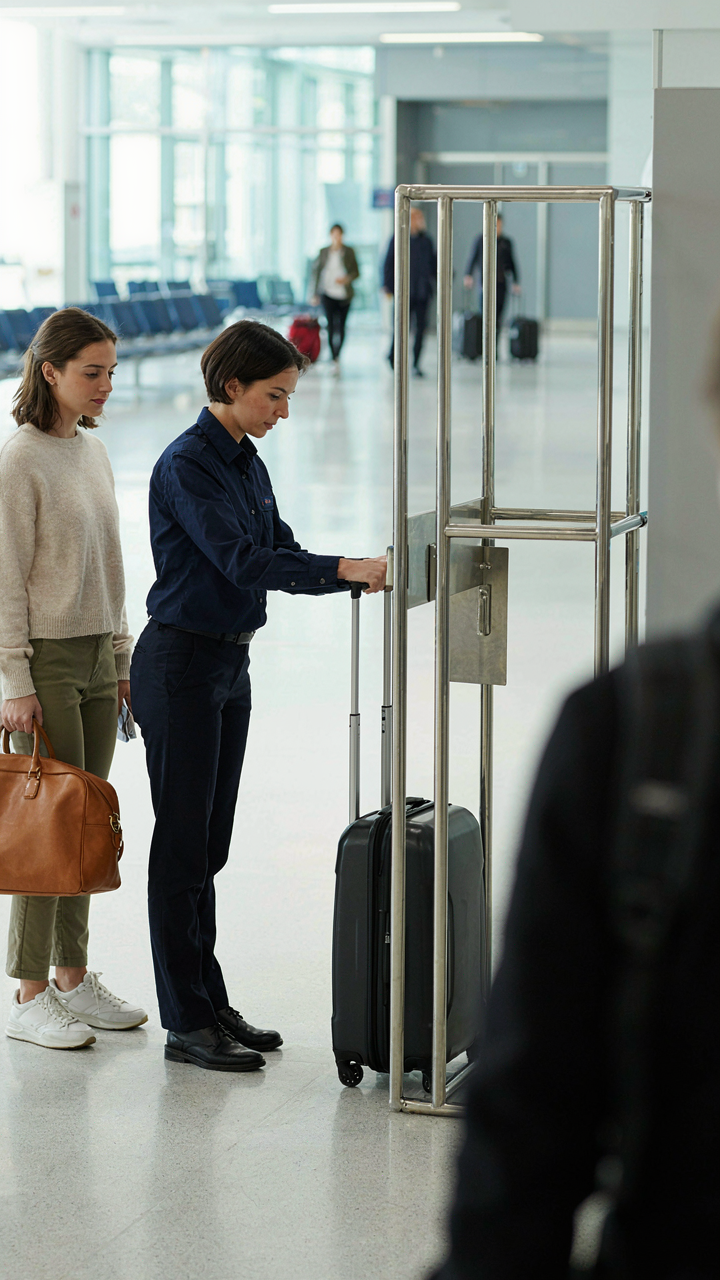
You want to avoid the shame of gate-checking your bag in front of strangers. Here’s what matters: American Airlines states carry on bags must not exceed 22 inches long by 14 inches wide by 9 inches deep. The airline enforces this inconsistently because gate agents use physical sizers that vary in tolerance. Your bag can measure exactly 22x14x9 and still get flagged depending on which agent checks it and how they position your luggage in the frame.

The mechanism is bureaucratic discretion disguised as policy. American publishes dimensions, but doesn’t train staff to measure uniformly or state enforcement thresholds explicitly. Most travelers assume the rule works like a hard limit. It doesn’t. The airline reserves gate-check authority as revenue leverage, not safety procedure. Soft-sided bags compress slightly during sizing, while rigid ones don’t, creating a hidden advantage for specific luggage designs that few people recognize when shopping.
Personal Item Freedom, Properly Defined
The common advice says your personal item is “free” as long as it fits under the seat. Wrong. Economics teaches the concept of a scarce resource, and American Airlines treats the personal item slot as exactly that—scarce but technically unlimited until enforcement happens. A personal item has no published dimensions on American’s official policy, which creates the actual loophole most people miss entirely.
What you can fit under the seat before your flight boards is what counts. Backpacks, small rollers, and messenger bags all qualify. Once the cabin door closes, that space vanishes. The strategic move is packing your personal item first, not your carry on, because it bypasses the sizer entirely. Load it with your most fragile or valuable items. The gate agent never measures it.
The Luggage Sizes Algorithm: Optimizing For Speed, Not Space

The 20 Percent Rule That Actually Works
You want permission to pack less because you’re afraid of looking unprepared. Here’s the mechanism: economics calls this the Pareto Principle, and it applies directly to carry-on packing. Eighty percent of your actual needs come from twenty percent of what you own. Most people reverse this. They pack the eighty percent of items they might use and waste space on low-probability scenarios.

The constraint of carry-on size forces this math to work in your favor. You cannot physically fit everything, so you stop pretending you need it. Pick your core items first: two bottoms, two tops, one layering piece, one shoe. These anchor your trip. Everything else must justify itself against what’s already packed, not against your anxiety.
Pack To Replace, Not To Keep
The one-in-one-out rule exposes bad packing logic before you leave. It means: for every item you add to your carry-on, you remove something equal in size or weight. This stops the decision-making from drifting. You can’t just keep stacking because you suddenly remembered a fourth shirt might be useful.
This rule works because it forces trade-offs instead of additions. Most packing advice says “bring layers” or “pack versatile items,” which is vague and leads to bloat. The one-in-one-out mechanism is mathematical. You hit a wall fast. When you do, you see what you actually value, and you keep only that. Pack your essentials first, then use the rule to evaluate everything else until your bag is full and locked.
The Carry On Dimensions Matrix: A Game Theory Approach
What Gate Agents Actually Enforce
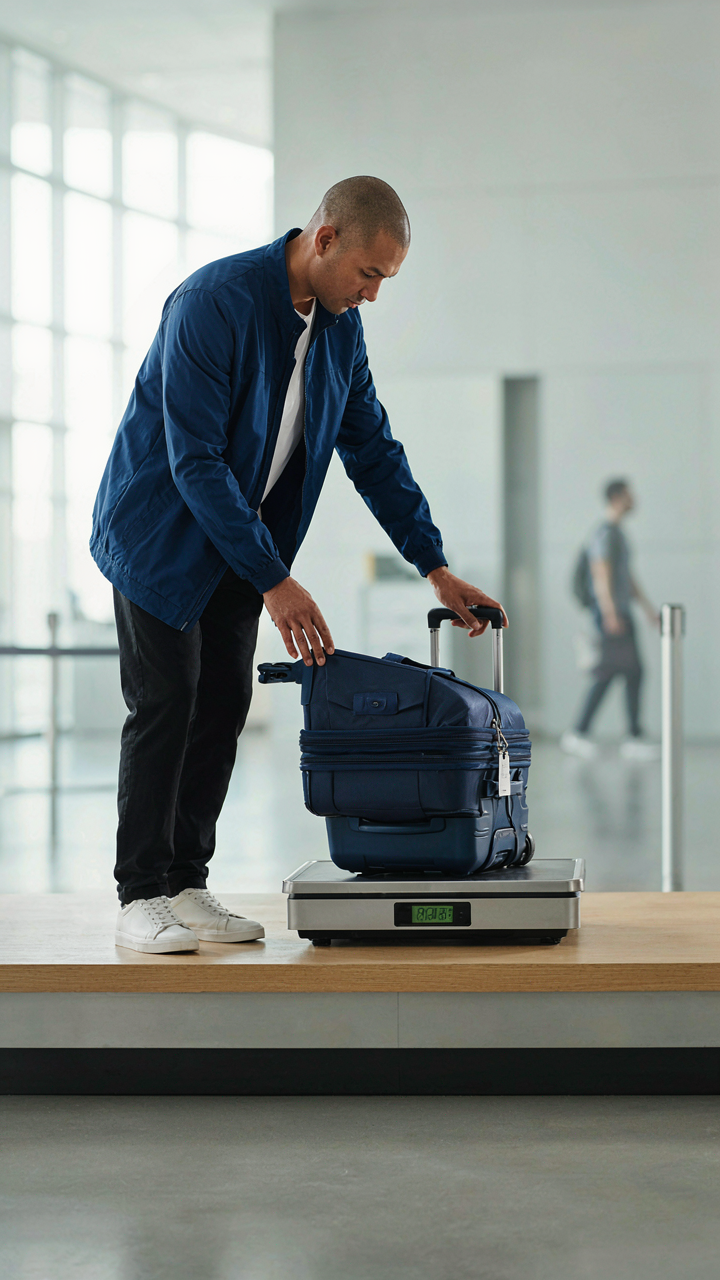
You want to avoid the humiliation of being pulled aside at the gate, so you’re looking for the real rule instead of the marketing version airlines print. Gate agents don’t enforce dimensions consistently because they’re trained to use discretion based on load factor and cabin density, not just a tape measure. An aircraft with 60% capacity triggers different enforcement than one at 95%. The agent’s actual heuristic is simple: if the bin is full, they gate-check bags. If it’s not, a bag that’s technically 1-2 inches over passes.
The written carry on limit exists as a legal boundary, not an operational one. Most airlines cite 22 by 14 by 9 inches, but this measurement assumes the bag is rigid and packed flat. Soft-sided luggage compresses, so a bag listed at 22 by 15 by 10 often fits because the material yields. Gate agents know this. They’re looking for visual bulk and whether your bag physically threatens to block the aisle or seat access, not whether it’s a half-inch past spec. The mechanism is triage: full bins create friction, so they stop you. Empty or half-full bins mean your bag gets loaded regardless of exact dimensions.
The Math Of Getting Caught Versus Getting Away
Risk-reward on an oversized carry on breaks down to one variable: how full is that aircraft. Bring an oversized bag on a regional 50-seat aircraft on a Tuesday morning and you’ll get gate-checked every time. Bring the same bag on a Friday evening 737 from a major hub and it likely boards without question. The expected cost of gate-checking isn’t just the inconvenience. It’s the delay to your connection, the possibility your bag gets routed to baggage claim instead of the cabin, and the mental friction of not knowing if you’ll see it at your destination.
The smarter play is understanding the load factor before you arrive at the airport. Flight tracking apps and airline websites show real-time load percentages on many routes. A 78% full flight means bins are constrained. An 82% full flight means you’re betting on gate agents being lenient in chaos, which is actually when they enforce hardest. If your carry on is genuinely oversized, build in a 15-minute buffer at check-in to accept gate-checking without stressing your connection window. If it fits within standard dimensions, pack it structured enough that it doesn’t look bloated, and you remove the visual signal that triggers secondary screening.
Smart Packing: The Art Of The Essential
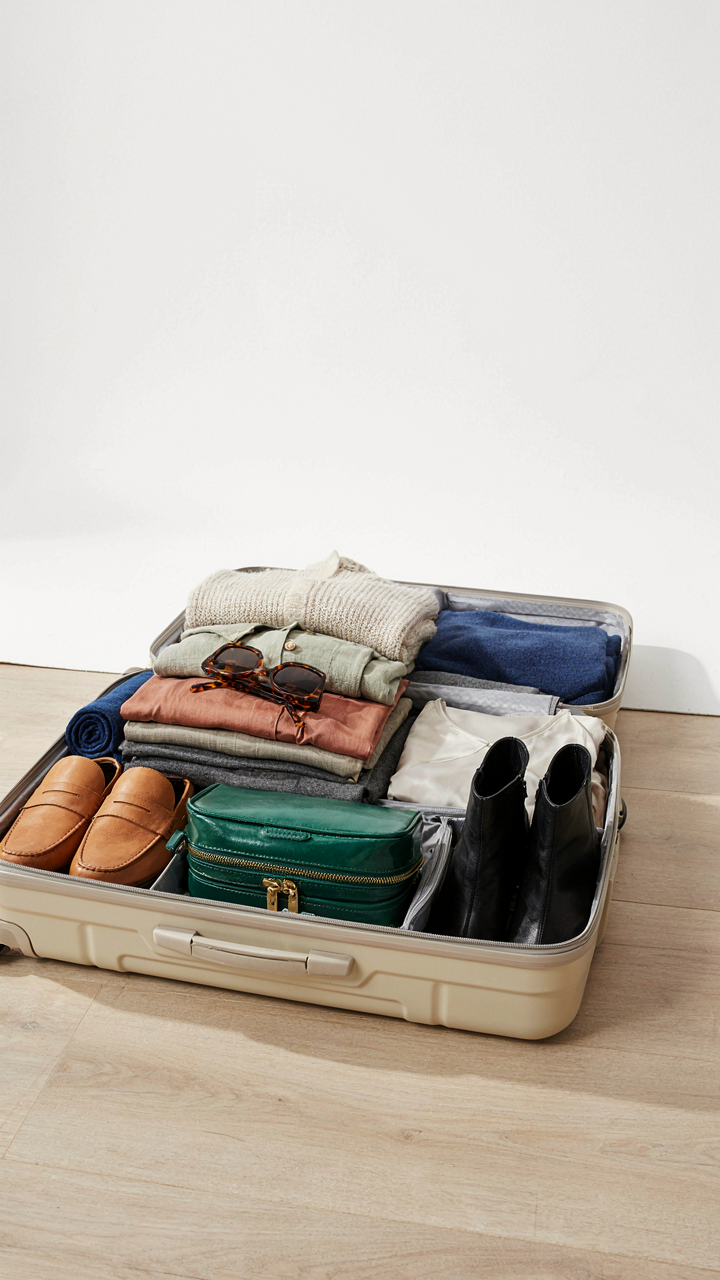
Build A Capsule That Works
You want to look competent without thinking about it, and you’re terrified of overpacking because you’ve done it before. The mechanism is constraint-driven design: fewer pieces force intentional combinations. This is how fashion designers work. They don’t start with a full closet; they start with a constraint and build outward. Apply the same logic to carry-on packing.

A capsule wardrobe for travel means every top pairs with every bottom. Every item shares a color palette. You eliminate decision fatigue and maximize outfit combinations with minimal volume. The TSA doesn’t care how coordinated you look, but your luggage does. A five-piece capsule generates ten outfits. A ten-piece capsule generates thirty. The math compounds fast.
- Neutral base colors: Choose three anchor colors (black, white, navy, gray, or beige) that dominate your packing list. Every other item builds from these.
- Layering pieces: Pack one cardigan or blazer and one lightweight sweater. These double as warmth and style multipliers without bulk.
- Versatile bottoms: Two pairs of pants in neutral tones replace six pairs. One works for casual, one for professional settings.
- Tops that transition: Six to eight tops in your palette. Avoid patterns that lock you into one aesthetic; prioritize solids.
- One statement piece: A scarf, jacket, or accessory adds visual variety without taking space. It reframes your entire palette in seconds.
The carry-on constraint forces this discipline. You cannot bring “just in case” items. Every piece must earn its weight and dimension. This is the actual skill: ruthless selection, not clever folding hacks.
Strip Redundancy From Documents
Most travel packing advice treats documents like they matter, then tells you to “organize them.” This is lazy. The real move is eliminating them entirely. Digitize everything before you leave: passport copies, hotel confirmations, insurance documents, boarding passes. Your phone stores more than your luggage can carry.
A single folder in your phone’s cloud storage replaces a three-inch paper stack. Airlines now prefer digital boarding passes. Hotels confirm reservations via email. Insurance providers email policy documents. The paper version serves no function except backup. If your phone dies, one backup printout of your passport and hotel confirmation fits in a jacket pocket. Physical redundancy is dead weight. Digital redundancy is free.
Beyond The Airline Carry On Size Chart: The Human Element
Confidence Defeats The Gate Agent
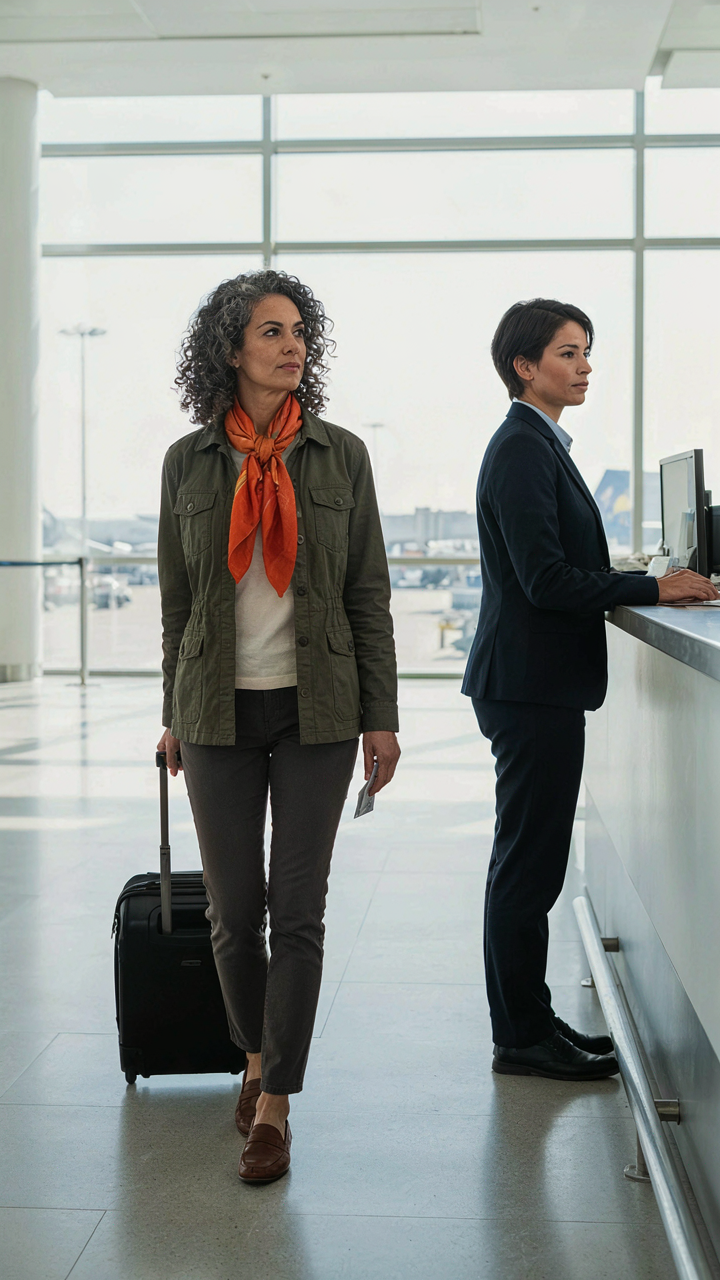
You want to know this section because you’re afraid a gate agent will humiliate you at the podium. Here’s the mechanism: gate agents enforce rules inconsistently. The TSA publishes official carry on dimensions, but enforcement depends on the agent’s mood, workload, and whether you signal doubt. A bag within spec but packed with obvious care gets waved through. A compliant bag opened by nervous hands gets flagged. The difference isn’t the bag. It’s signal detection.

Seasoned travelers understand this asymmetry. They pack bags that meet specifications, then walk to the gate moving like someone who already knows the answer. No double checking your bag size at the counter. No asking another passenger if your roller fits. The agent reads your body language before reading your luggage tag. Confidence is a compression algorithm that makes scrutiny skip you.
The Uniform Effect On Boarding Outcomes
Psychology calls this “authority bias”—the tendency to trust and obey those who appear to know what they’re doing. Apply this to carry ons: bags that look intentionally packed beat bags that look overstuffed. Presentation determines whether an agent measures your bag or assumes it’s fine. A wrinkled, bulging roller with a dangling sweater reads as amateur. A flat, organized roller reads as compliant before it’s even opened.
Gate agents process dozens of bags per flight. They use visual heuristics to sort compliant from non compliant luggage in seconds. A bag organized with visible structure, aligned handles, and no external compression tells the agent you understand the rules and respect the process. Pack your carry on like someone staging it for inspection, not like you’re hoping nobody looks. The agent then stops looking.
The Actual Carry On Size Test: What Really Fits
Regional Jets Have Different Rules Than You Think
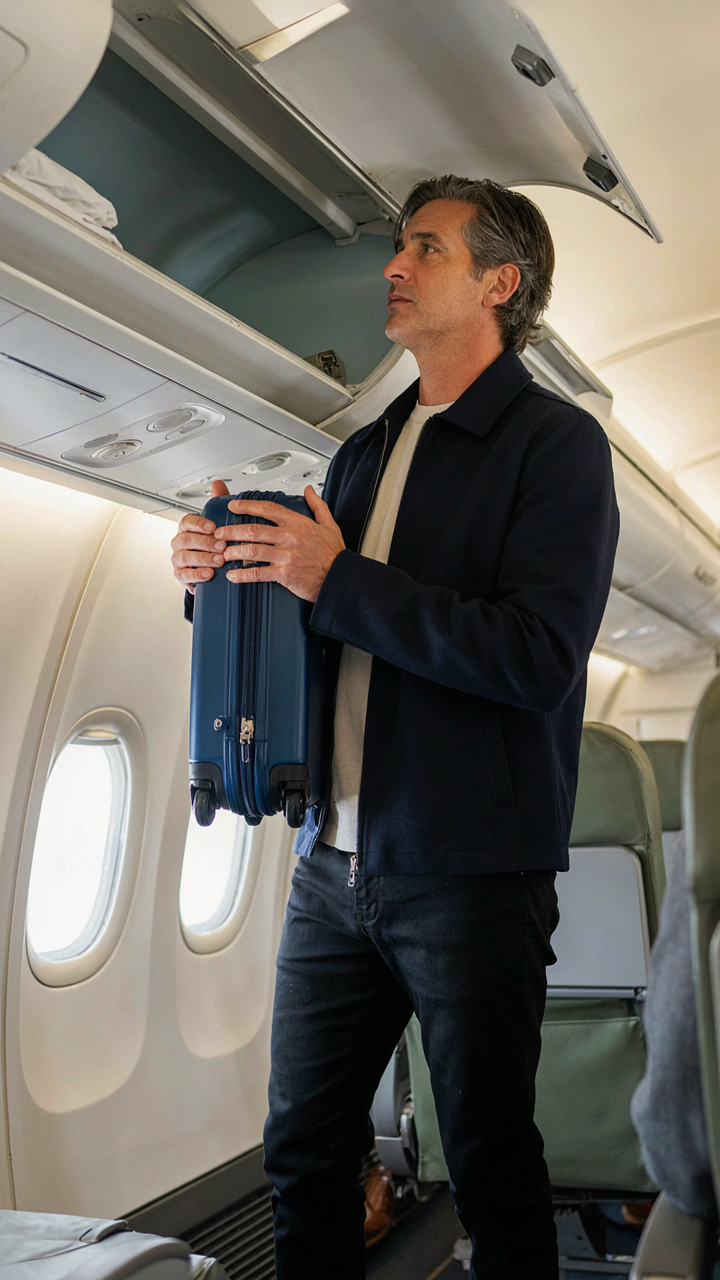
You want to avoid the gate check because it feels like failure. Here’s what airlines won’t say plainly: regional jets have stricter overhead bin dimensions than mainline aircraft, and the sizer cage at your gate measures maximum dimensions, not practical ones. A CRJ-700 or E-175 has bins that won’t accept what a 737 or A320 swallows. Most travelers don’t know which aircraft operates their flight.

The mechanism is physics applied to aircraft design. These regional carriers prioritize fuel efficiency and turnaround speed, which means smaller fuselages and tighter overhead space. Your 22-inch carry on fits the FAA’s 22x14x9 standard but jams into a regional jet’s bin. Check your flight’s aircraft type before packing, not at the gate. This single step eliminates the overhead-full scenario most people blame on bad luck.
The Sizer Cage Doesn’t Measure What Matters
Everyone thinks passing the sizer means you’re safe. Wrong. The sizer measures whether your bag fits through the frame opening, not whether it actually slides into the bin without forcing. Agents push bags through with force. Your bag technically “passes” but gets compressed, damaging both the bag and the bin lining. The real test is whether your bag enters and stows without pressure.
Bring your packed bag to the airport 15 minutes earlier and place it in an empty bin yourself before boarding. Feel the resistance. If you need to force it or angle it awkwardly, the crew will check it during boarding when bins fill up. This tactile confirmation beats any sizer cage. You’ll know instantly whether your packing strategy actually works for the aircraft you’re flying.
The Zero Friction Travel Protocol

Measure Your Bag Before The Airport
You’re afraid of the gate agent turning you away. That’s the real reason you’re reading this. The mechanism is simple: airlines enforce carry on size rules inconsistently, but only at the gate where you have zero leverage. Pre flight checks eliminate that variable by removing the guess work before you board.

Most travelers measure their bag once, assume it’s safe, then pack it differently on trip two. Bag dimensions change when you load it. Take your actual packed carry on to the airport during a trial trip if possible, or at minimum, measure it against the sizer at your airline’s ticket counter before your real flight. Mark the dimensions on your phone. You need proof of compliance in your own hands, not faith in a manufacturer’s claim.
The Checked Bag Isn’t A Failure
Common advice frames checked bags as surrender. It’s not. Think in terms of portfolio theory from finance, where you reduce total risk by distributing resources across multiple positions. Your checked bag is your redundancy position against size enforcement.
Pack your carry on within strict limits. Pack a checked bag with everything you could need if your carry on gets pulled. This costs nothing extra on most fares and costs money only if you’d skip it entirely. The real cost is the mental weight of rigid packing. Drop that weight. Fly with a checked bag on trips where uncertainty matters, and pack your carry on freely within the rules. The mechanism is permission: you stop breaking small rules when you build in a legitimate backup plan.
The Real Limit Isn’t Your Bag; It’s Your Attachment To Unnecessary Baggage
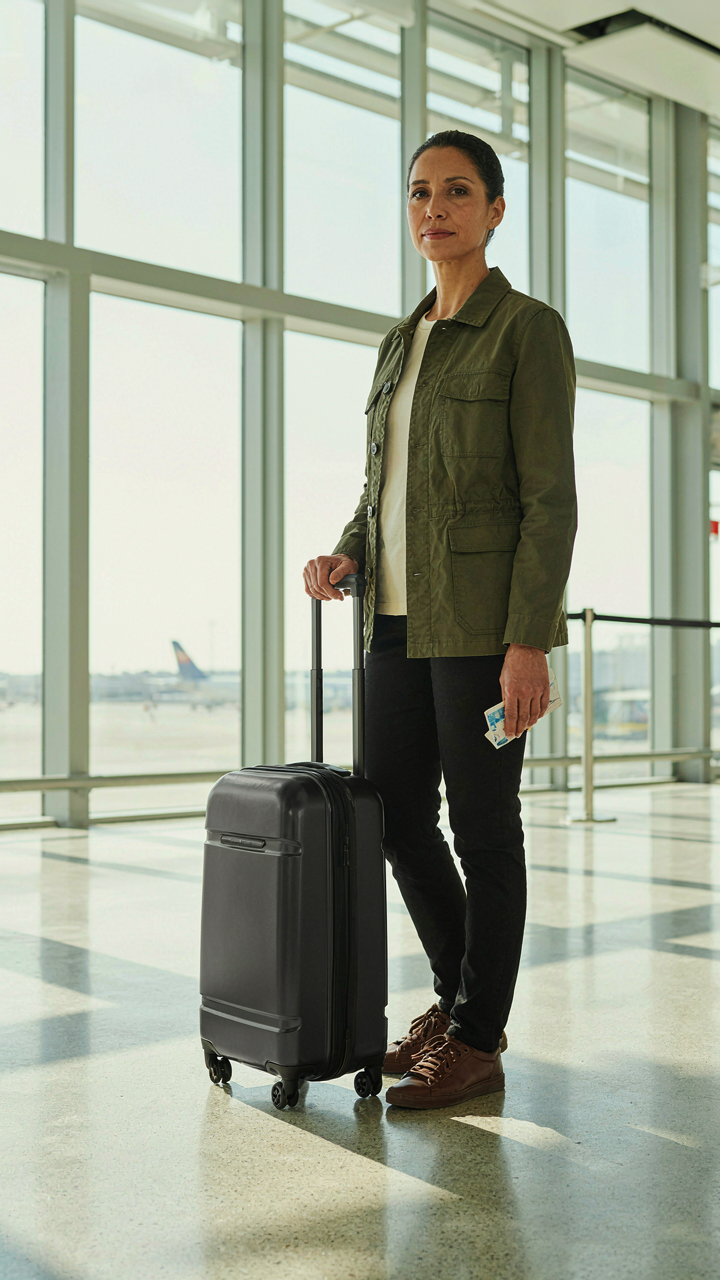
Airlines enforce carry on size rules because people won’t police themselves. The restriction isn’t the problem. Your inability to decide what actually matters is. Before your next trip, pull everything you planned to bring and remove one third. Not because the airline forces you. Because you’ll realize you don’t need it. Travel light becomes travel smart the moment you stop fighting the constraint and start using it to think clearer. Pack less, move faster, live better.