The Minimalist’s Manifesto For Kids Camping

What Actually Matters In The Tent
You want to look like you have it figured out, but the real fear is that your kids will be miserable and blame you. Here’s the mechanism: kids don’t need comfort. They need predictability and the absence of pain. A sleeping bag rated for the temperature, a pad that insulates them from ground cold, a light they can control, and food they’ll actually eat. Everything else is you solving your own anxiety, not their problem. The gear industry sells you expanded needs because scarcity drives price.
Strip your packing list to five categories: sleep systems, light, hydration, food, and first aid. A child in a 20-degree bag on an insulating pad will sleep fine in 40-degree weather. A child without a pad will wake at 3 a.m. cold and angry regardless of bag quality. You’re not choosing between luxury and survival. You’re choosing between systems that work and systems that fail when temperature or fatigue sets in.
Gear That Earns Its Weight
This is where most advice breaks down. You’ll read “bring a multi-tool” without understanding the actual load-to-utility ratio. Economics teaches opportunity cost: every item you carry prevents you from carrying something else. A headlamp with a red-light mode handles lighting and nighttime vision without separate flashlights. A metal cooking pot doubles as a water vessel and washing basin. A tarp serves as rain protection, ground cover, or shade depending on setup.
The test is simple: can this item accomplish two distinct functions your family actually needs on this trip? If not, it stays home. A camping pillow is not a multi-use item. A sleeping pad is. A specialized camping fork is not a multi-use item. Your regular fork is. Kids notice weight faster than adults. One unnecessary item multiplied across a family load becomes the difference between a hike your kids complete and one they resent.
Toddler Camping: The Prepared Parent Protocol
Run Your Gear Before You Leave
You want the trip to feel spontaneous and fun. What you’re actually afraid of is looking incompetent in front of your kids when the tent won’t stake or the stove won’t light. So stop pretending experience counts. Test every piece of equipment at home under real conditions.
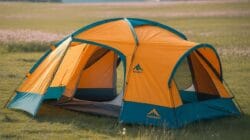
Set up the tent in your backyard. Cook a full meal on your camping stove. Use the sleeping bags indoors overnight. Practice filtering water. Assemble the pack the way you’ll pack it. This isn’t overthinking. This is the difference between executing a plan and improvising under stress while managing toddlers.
Define Boundaries That Feel Like Freedom
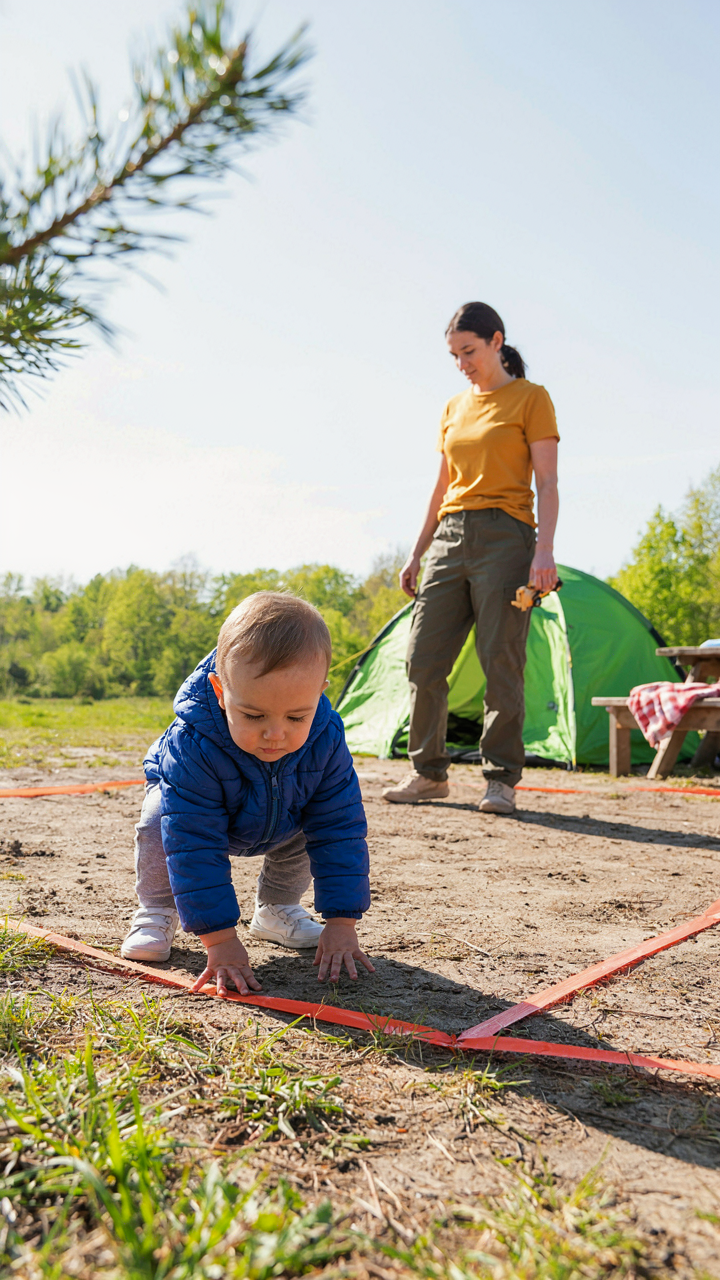
Toddlers need containment disguised as exploration. The mechanism here comes from environmental design, not behavior management. You create a perimeter that’s genuinely safe, then let them roam inside it without constant surveillance or redirection. This shifts your cognitive load from policing to observing.
Identify a specific zone at your campsite. Mark it with bright tape or position it between recognizable landmarks like a large tree and your tent. Brief your toddler on the boundary once. Let them explore within it. The clarity removes the need for you to micromanage moment to moment. They know where they can go. You know where to look. Everyone operates with less friction.
Beyond The Screen: Real Engagement For Family Camping
Scavenger Hunts Map Nature As Playground
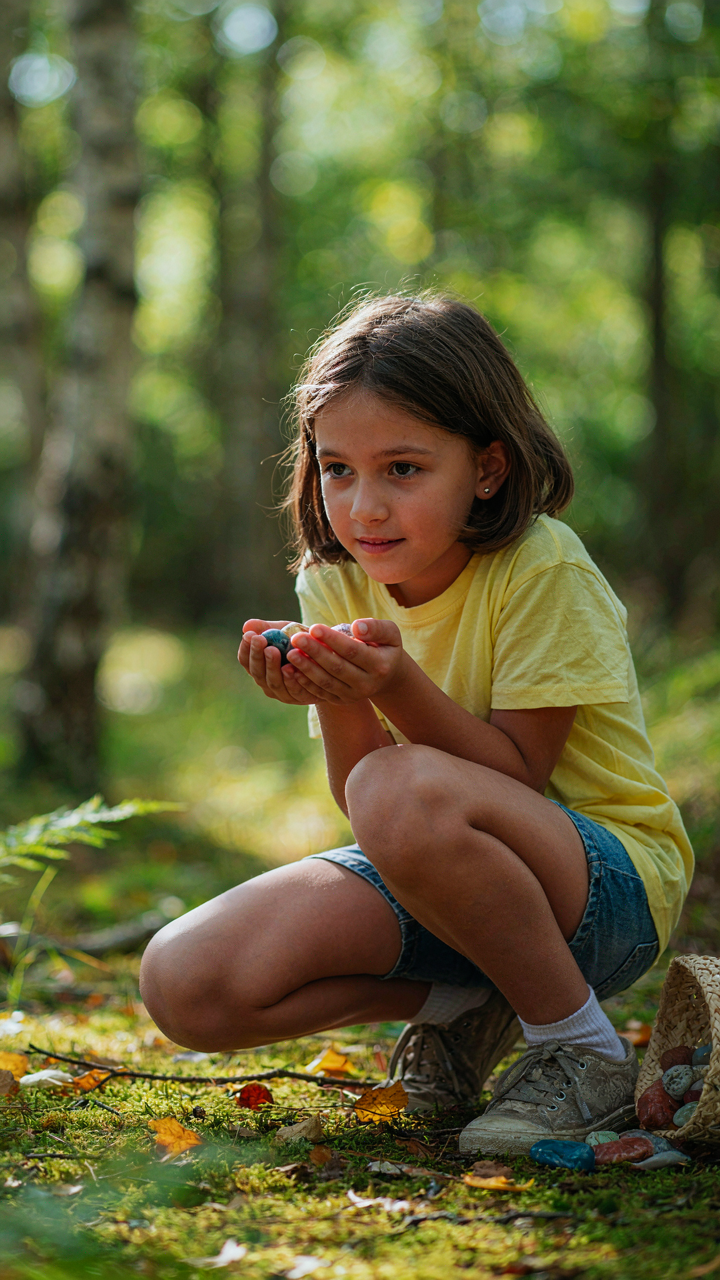
You want proof your kids aren’t bored, that you’re doing parenting right, that screens don’t run your family. Here’s the mechanism: a scavenger hunt creates bounded exploration. Kids need constraints, not infinite freedom. A list of twenty specific targets transforms a random forest into a puzzle to solve. They move with purpose instead of resistance.
- Leaf rubbings by tree type: Teach bark texture identification while collecting samples. Kids learn species differences without memorization feeling forced.
- Rock color collection: Assign five different colors to find. Teaches observation and creates natural sorting activity with zero equipment.
- Evidence of animal presence: Scat, tracks, feathers, webs. Shifts attention to actual wildlife behavior instead of abstract “nature.”
- Natural sound recording: Use phone to capture three distinct noises. Builds auditory awareness and creates shareable proof of the trip.
- Shadow mapping: Trace shadows at different times of day with chalk or stick. Demonstrates time and light without explanation.
The list stays physical and visual, not conceptual. Kids cross items off, feel progress, and return to camp with artifacts instead of complaints. You’ve structured their attention without controlling it.
Fire, Shelter, Knots Build Real Competence
The common advice says primitive skills teach resilience and self-reliance. That’s incomplete. Primitive skills work because they produce visible, immediate results. A knot holds or fails. Fire catches or doesn’t. Shelter keeps rain out or lets it in. Kids see cause and effect without interpretation. This is why they engage harder than with most activities.
Fire teaching starts with structure, not storytelling. Show the fire triangle: fuel, oxygen, heat. Let them gather tinder, kindling, logs in order of size. They build it themselves while you verify safety. A seven-year-old who starts their first fire from friction or spark remembers that moment for decades because they created something functional. Shelter building works the same way: define the goal, provide materials, let them problem-solve placement and lashing. Knot instruction requires repetition, not explanation. Teach one knot per trip. Use it immediately for a real task: securing the tent, hanging gear, rigging a clothesline. Repetition plus immediate application creates muscle memory and meaning.
The “No Panic” System For Tent Camping With Kids
Pack Like You’re Deploying, Not Vacationing
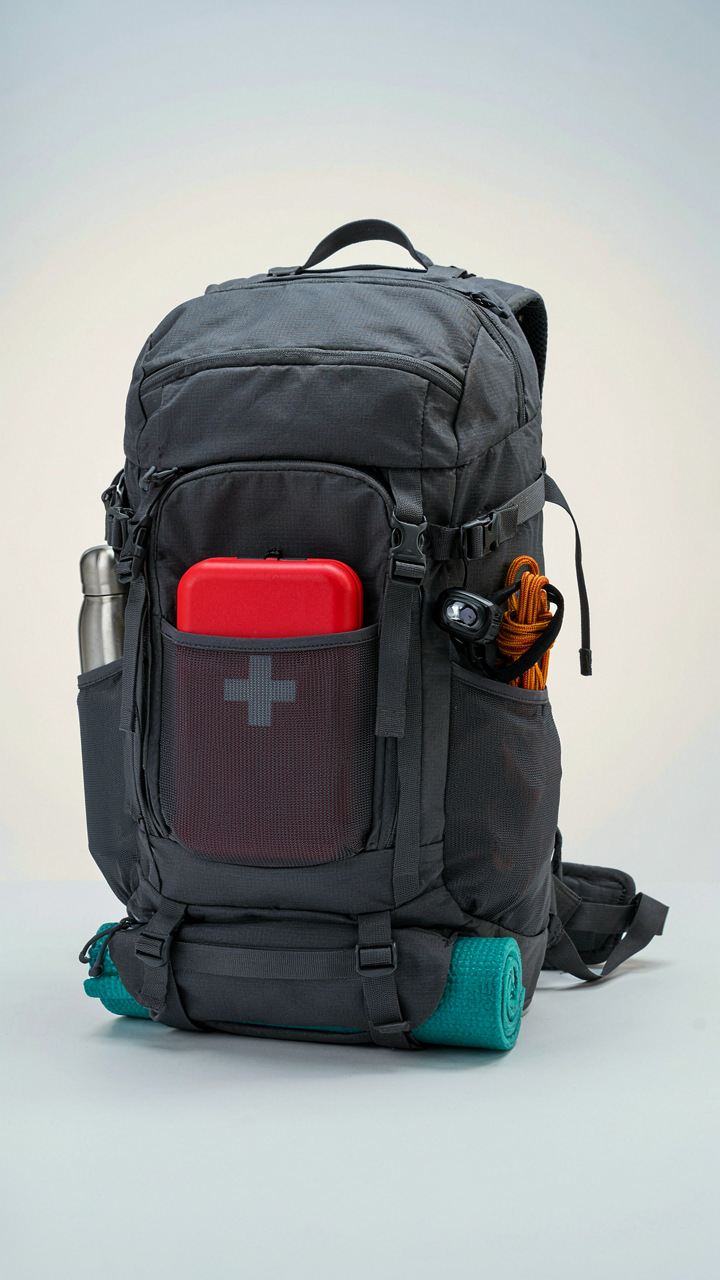
You want to feel like you have control. Military strategy calls this “supply chain redundancy” – the mechanism that separates soldiers who adapt from soldiers who panic. Apply it here: your go-bag isn’t about having fun backup options. It’s about isolating failure points before they cascade. Each critical item needs a primary copy, a backup, and a reason you chose both.
Start with the non-negotiables: first aid supplies, medications, fire-starting tools, and repair materials. Don’t pack “just in case” items. Pack items that address the specific failure modes of your location and season. A headlamp isn’t nice to have. It’s infrastructure. A basic repair kit for tent poles, zippers, and seams stops a minor problem from becoming a night on the ground. Store these separately from daily-use gear so they stay accessible when you need them most.
When Weather Turns And Kids Fracture
Weather meltdowns and emotional breakdowns aren’t separate problems. Both degrade morale through the same mechanism: loss of structure. The common advice to “stay positive” misses the point entirely. You need protocols, not vibes.
For weather, know the specific threat window of your location before you arrive. Check historical data for that terrain and season. Have a shelter-in-place plan for rain that keeps kids occupied inside the tent without screens. Have a heat contingency: when do you leave? For emotional fractures, identify your child’s specific triggers before the trip. Boredom, hunger, overstimulation, or physical discomfort each require different interventions. Create a simple escalation ladder: snack, activity, movement, rest. When a child melts, you’re executing the protocol, not improvising.
Engineering Resilience: Kids Camping Lessons
When Comfort Stops Working
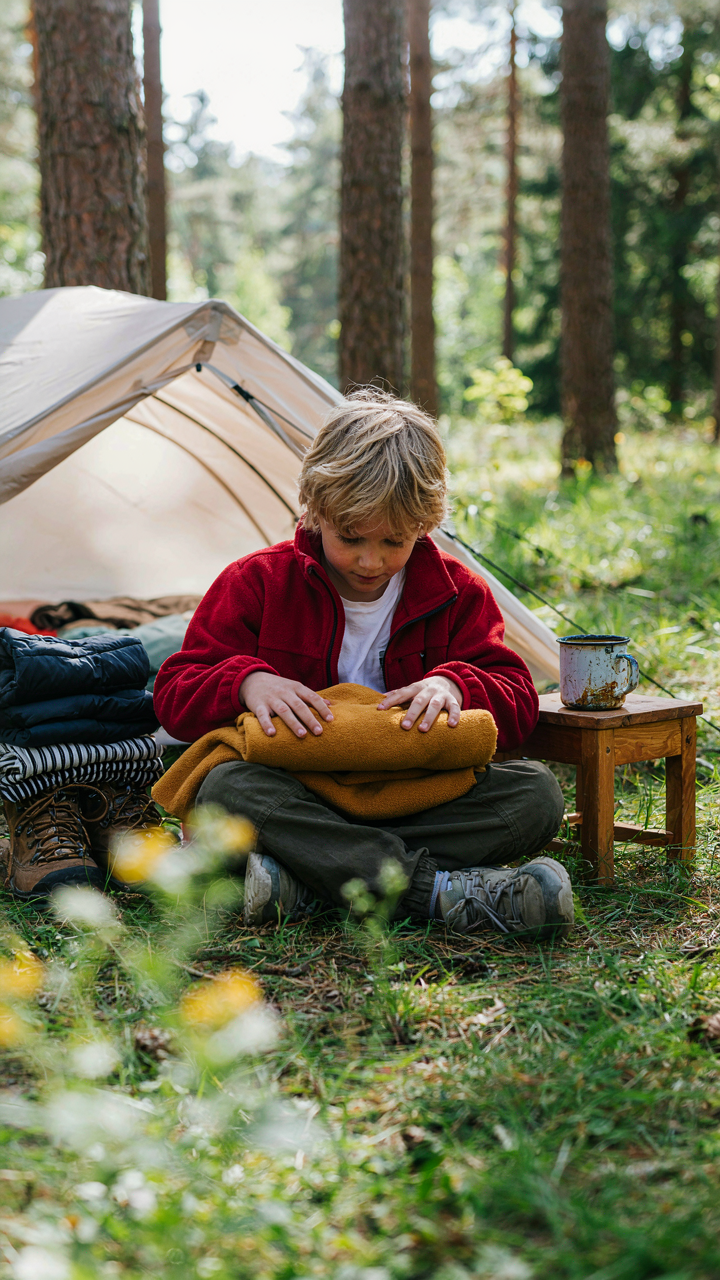
You want your kids tough and independent without looking like you’re neglecting them. Here’s the mechanism: discomfort triggers adaptation. The brain doesn’t build resilience in controlled environments. It builds resilience when a child faces a real problem—cold hands, hunger, boredom, minor fear—and solves it without immediate rescue. Camping creates these moments naturally. A sleeping bag that’s not warm enough teaches temperature regulation. A trail that’s harder than expected teaches pacing and persistence.
The common advice says “let them struggle.” That’s incomplete. You’re not abandoning them. You’re engineering the gap between their current capability and the task difficulty. Too easy and nothing happens. Too hard and they shut down. The sweet spot is when they experience friction, then work through it with minimal guidance. A child who figures out how to layer clothing because they were cold has learned something their brain will remember. One who was warned preemptively learns compliance instead.
Simple Machines And The Physics Of Solving Real Problems
Physics calls leverage and mechanical advantage the core principles of how simple machines work. In camping with kids, this translates directly: give them a real constraint and a basic tool, then watch problem-solving emerge. A pulley system for hanging a bear bag isn’t a gadget for convenience. It’s a teaching tool. A kid wrestling with rope, friction, and force learns why the system works before they learn the theory.
Children solve problems faster when the problem is tangible. A rope that won’t stay tied teaches knot mechanics. A tent pole that won’t stand straight teaches angles and tension. A fire that won’t catch teaches fuel, oxygen, and heat sequencing. These aren’t metaphors for life lessons. They’re direct physics problems with immediate feedback. When your child applies a solution and it fails, they adjust. When it works, they understand cause and effect in their body, not in their head. This is where real learning lives. The next time they face a similar constraint, they don’t panic. They remember the mechanism and apply it.
Family Camping Hacks That Actually Work
Prep Food Like You’re Running A Supply Line
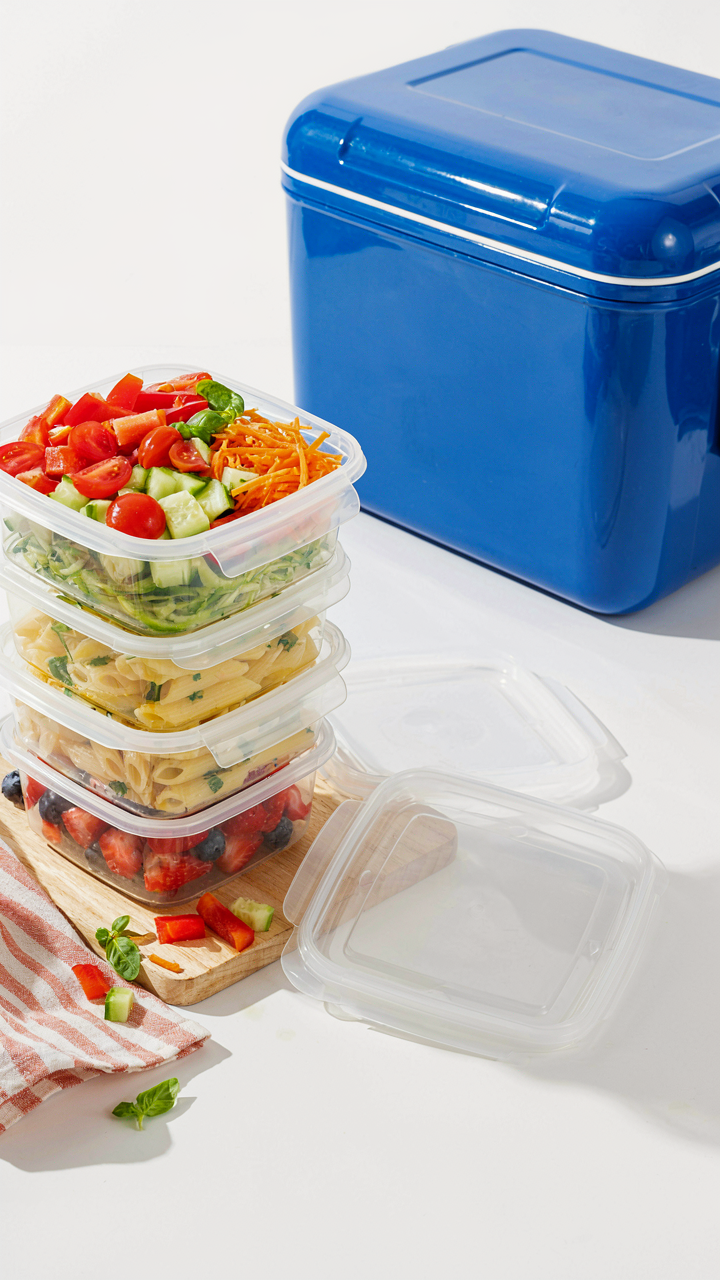
You want your kids fed without spending the trip as a short-order cook. That’s the real motive here, and it’s valid. Think in terms of logistics: military supply chains succeed because they minimize decision points at the point of use. Pre-portion everything before you leave. Cook pasta, chop vegetables, assemble sandwiches, pack them in labeled containers. You’re collapsing five cooking decisions into one prep session at home where you have counter space and electricity.
Bring shelf-stable carbs and protein that require zero cooking: peanut butter, hard cheese, canned beans, oats, granola. Pack fresh fruit that tolerates transport like apples and oranges. Freeze water bottles the night before to act as coolers and drinking water as they thaw. One pot meals win over elaborate menus because they reduce cleanup and argument time. Your job is feeding bodies, not running a restaurant.
Sleep Systems That Don’t Require Genius Level Packing
The common advice on kids’ sleep is wrong. Everyone says bring a sleeping bag. What you actually need is temperature regulation without bulk. A thin sleeping pad and a quilt system beat a traditional bag every time because quilts unzip and layer in ways bags don’t. Kids overheat at night or get tangled in bags they’ll kick off. Quilts stay put under their bodies and adjust to the season.
Use a two-layer approach: a thin emergency blanket under the sleeping pad for ground moisture, then the quilt on top. Bring one adult sleeping bag for emergencies only, not as backup gear. Teach kids to stay in their sleeping area by making the boundary clear with stakes or a rope line. They stay warmer when they’re contained and not wandering into the cold night looking for you. Set the sleep system up in daylight so everyone knows where they’re sleeping before dark hits.
Cultivating The Family Camping Aesthetic (Authentically)
The Memory Trap
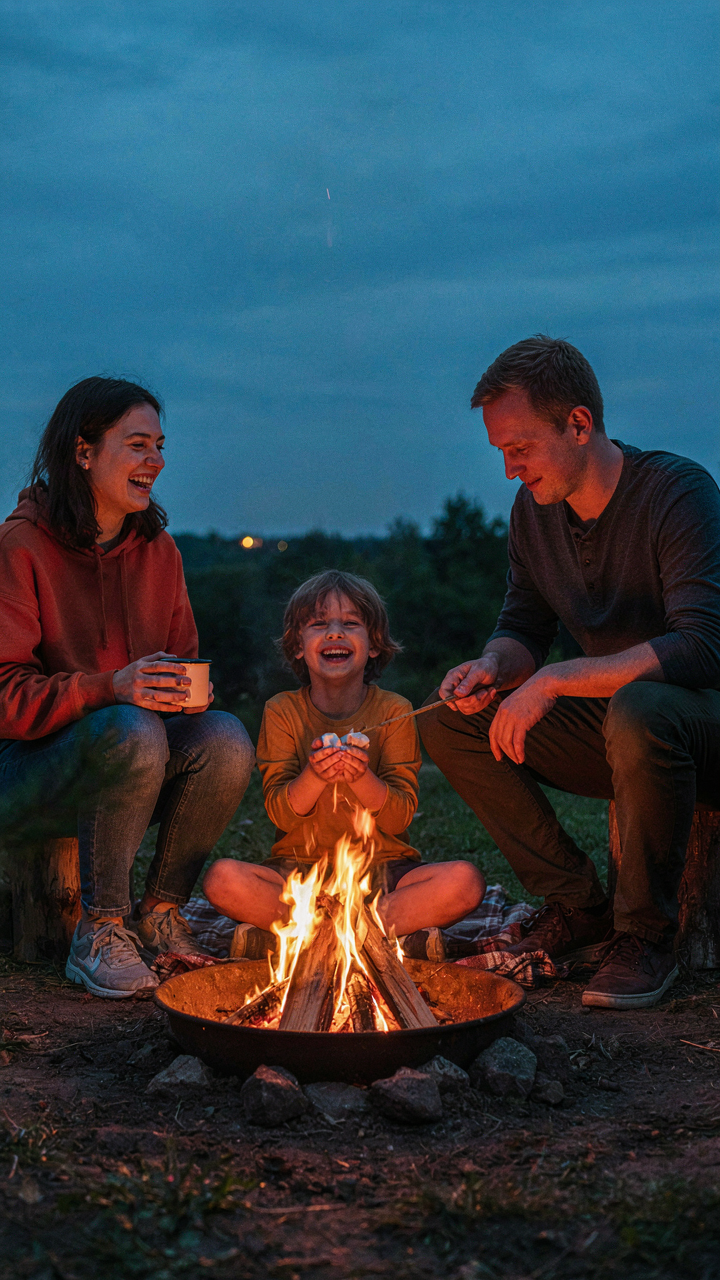
You want proof your family is close. That’s what this section really is. Here’s the mechanism: humans remember moments, not objects. A photo of your kid holding a marshmallow on a stick registers as “family time” in your brain, but the marshmallow itself disappears. The gap between what you own and what you remember creates a need to document the gap. Phones and cameras don’t fix this. They just make you aware of it.
The real move is building a camp aesthetic that makes documentation feel natural, not forced. This means setting up spaces where memories form without you chasing them. A simple fire ring, a designated cooking area, a sleeping setup that doesn’t require constant adjustment—these create the conditions for spontaneous moments. When kids aren’t fighting logistics, they’re present. When they’re present, you remember it without trying.
Stories Around The Fire
Storytelling isn’t entertainment. It’s memory architecture. Every story told at a campfire gets encoded differently than one told at home because the environment changes how your brain processes narrative. The darkness, the fire, the isolation from distraction—these activate attention in a way your living room can’t replicate. Stories told here stick.
Start with three formats and rotate them:
- Personal Failure Stories: You describe a time you messed up camping or made a bad decision. Kids retain these better than advice because they’re embedded in narrative, not instruction.
- Collective History: Tell stories about previous camping trips, emphasizing what your specific family did differently than other families. This builds tribal identity.
- “What If” Scenarios: Ask kids to solve a hypothetical camping problem together. This teaches decision-making and creates shared ownership of the trip.
- Generational Stories: Share stories your parents told you about camping, fishing, or being outdoors. This connects kids to lineage, not just entertainment.
- Post-Trip Narrative: On the last night, ask each person to describe one moment that surprised them. You’re solidifying the memory before it becomes generic.
The protocol is simple: start the fire, wait for natural conversation lulls, then launch a story. Don’t announce storytelling time like it’s scheduled programming. Let it emerge. Kids detect forced authenticity instantly and shut down. When a story lands, someone will ask a follow-up question. That’s your signal the mechanism is working. The memory gets reinforced three times: once during the story, once when someone asks about it, once when someone retells it later at home.
Why “Happy” Isn’t A Gadget, It’s A Mindset
Let Them Choose What Happens Next
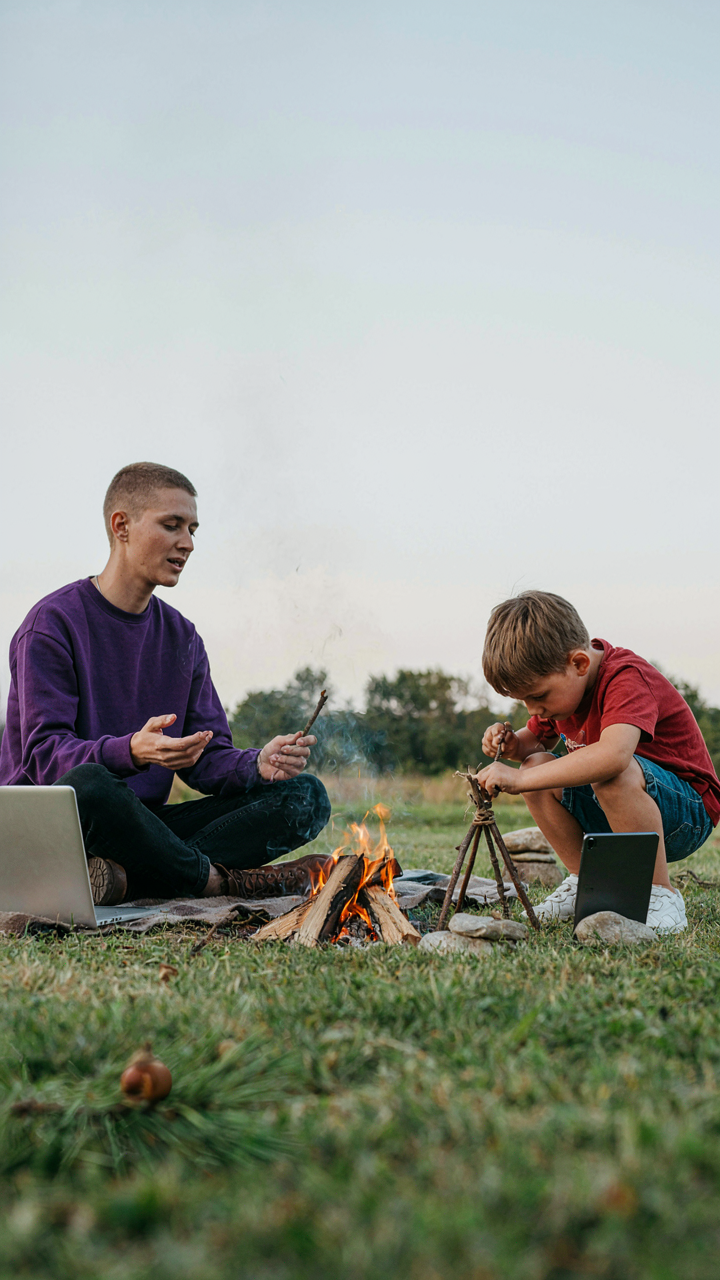
You want gadgets to solve the problem because you’re tired of managing behavior. Here’s the mechanism: autonomy is how the human brain stops fighting back. Borrowed from psychology, we call this self-determination theory. Kids don’t rebel against constraints they set themselves. When a child chooses between the hiking route or the fishing spot, they shift from passenger to decision-maker. The resistance vanishes because they own the outcome.
The common advice says “keep kids busy.” That’s incomplete. Busy is passive. Choice is active. Before the trip, present real options tied to camp activities. Not “what do you want to do” vague nonsense, but specific, bounded decisions. “We hike to the ridge or we stay near camp and build a shelter. You pick.” A child who picks stops arguing about the choice. They execute it instead.
Show Up Without Your Phone
You believe presence matters but still scroll. Stop. Your phone creates a presence void that no gadget fills. Kids perceive divided attention faster than any adult measure. When you’re genuinely there, you don’t need entertainment tools as a buffer. Your attention becomes the resource they compete for, not the campfire stove or the latest camping tech.
Presence operates on a simple protocol: device off, not silent, not face-down. Off means powered down or left at camp. When you sit by the fire without a screen, conversation happens because boredom works. Kids get bored, then engaged, then connected. This sequence doesn’t happen if a device fills the gap. The mechanism is friction. Friction builds connection.
The Real Obstacle Isn’t The Gadget Gap; It’s Your Inability To Trust Boredom As A Catalyst
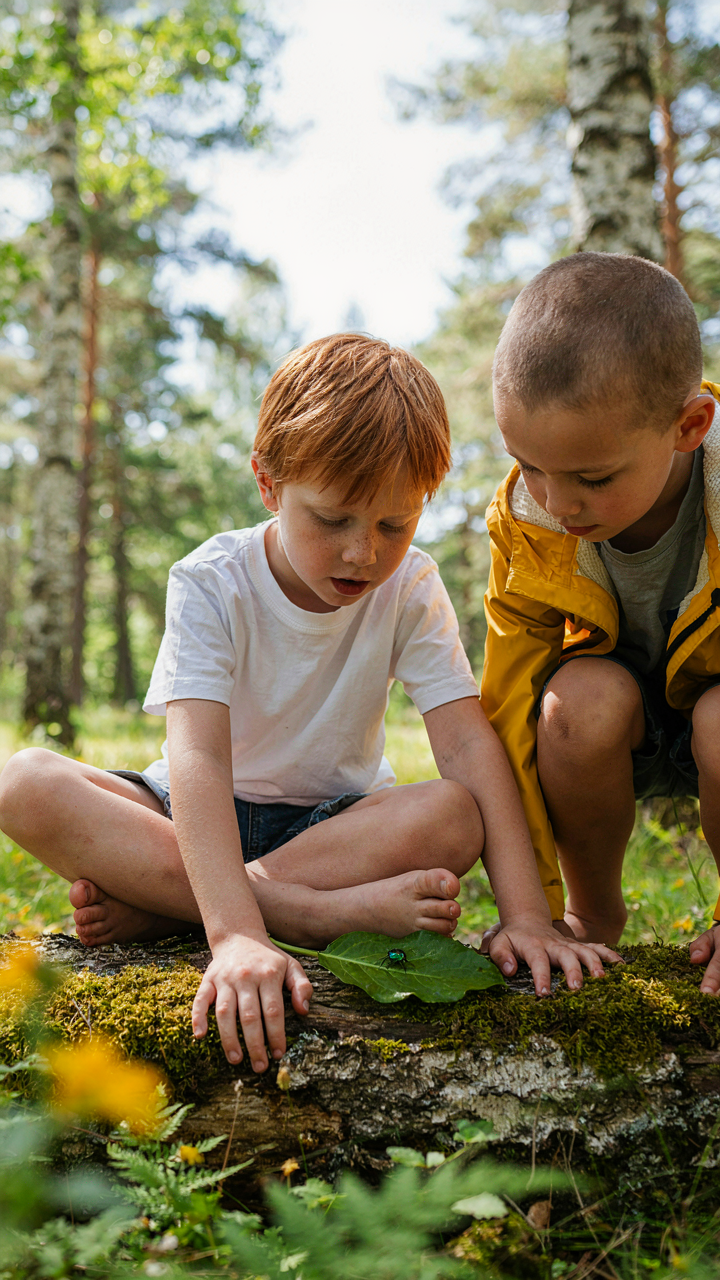
You bought the gadgets because you fear silence. You fear your kid saying “I’m bored” because you think it means you failed. It doesn’t. Boredom builds the neural pathways that turn kids into problem solvers, not content consumers. Today, leave one gadget at home. Just one. Watch what your kid actually creates when the screen dies and the forest gets loud. That discomfort you feel watching them struggle for five minutes? That’s not failure. That’s growth happening in real time.