The Pre Flight Reconnaissance: Why Your “Window Day Bed” Fails

Seat Architecture And Your Actual Constraints
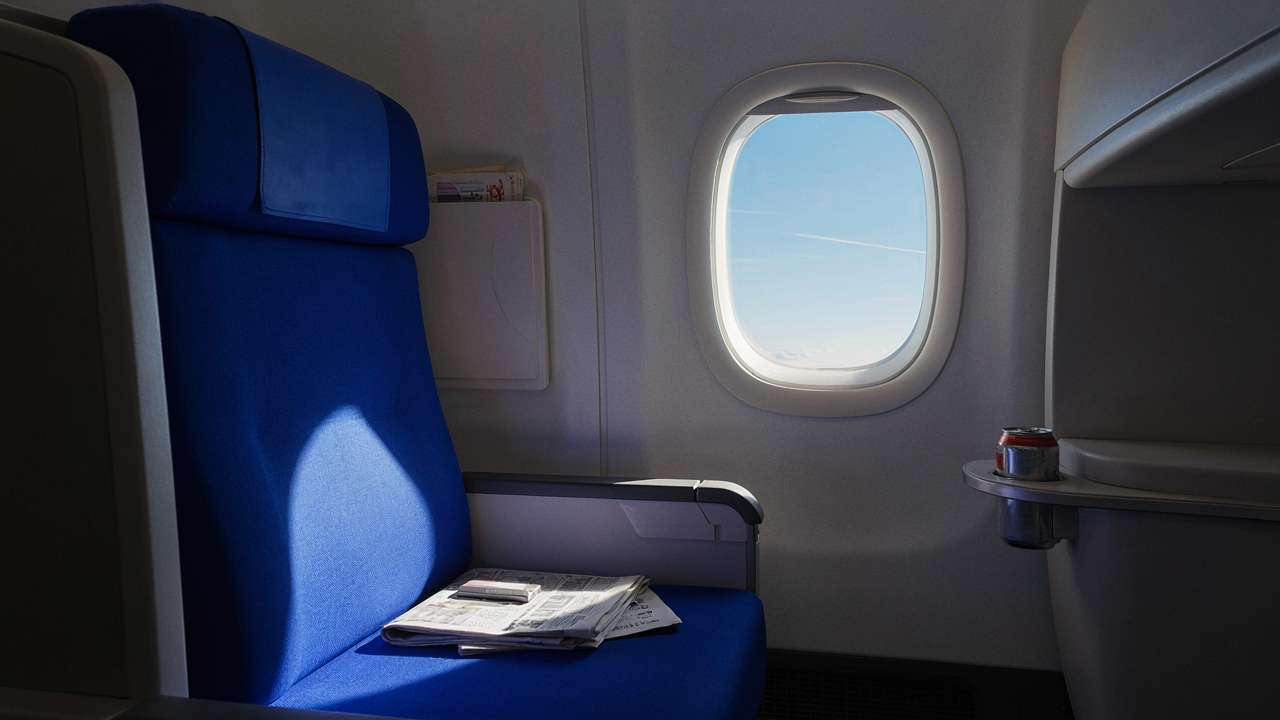
You think a window seat is a bed because you saw someone recline in a photo. That’s not how this works. Modern aircraft seats, particularly in economy, measure 17 to 18 inches wide and recline between 6 and 8 inches. That’s not a bed dimension. It’s a chair that tips slightly backward. The armrest is fixed, the footrest doesn’t exist, and the seat bottom slopes downward toward your knees, forcing your legs into a bent position that kills circulation within minutes.
The window itself creates a second problem nobody mentions: it’s a cold conductor. Aircraft skin temperature at cruising altitude drops significantly, and that cold radiates directly onto your head and shoulder. Airlines know this. They design cabin insulation around it. But you’re sleeping against the hull, absorbing heat loss that keeps your body in a light sleep state. Most people blame the noise or the seat itself. They’re wrong. You need to thermally isolate yourself from the window before anything else works.
Environmental Pressure And The Variables You Miss
Cabin altitude and humidity operate like a two factor authentication system that breaks sleep. The pressurized cabin maintains roughly 8,000 feet of simulated altitude, which lowers your blood oxygen and thickens the air you breathe. Your body detects this shift immediately. Simultaneously, cabin humidity sits at 10 to 20 percent, which is desert air. Your mucous membranes dry out, your throat tightens, and your nervous system registers a minor stress signal. Together, these variables keep you in stage one sleep, the lightest phase where any sound wakes you.
The window seat amplifies both factors. You’re closer to the uninsulated fuselage, so pressure changes feel more pronounced. You’re also near the window, where cabin air circulation is weakest. Most airlines push conditioned air along the aisles and overhead, leaving the window zone stagnant. This creates a microenvironment with slightly lower humidity and more noticeable pressure variance than the center of the cabin. Before you fix positioning, posture, or timing, you must account for pressure, temperature, and humidity as separate mechanisms that independently disrupt sleep.
The Fortress Protocol: Building Your Personal Sleep Perimeter

Luggage As Structural Barrier
You want people to leave you alone without looking unfriendly. That’s the real reason this matters. Military strategy calls this “territoriality”—establishing a perimeter that signals occupancy without verbal confrontation. Your luggage becomes that perimeter. Position your carry-on against the window wall, angled to create a buffer zone between your seat and the aisle. This accomplishes two things: it physically blocks knee strikes from passing traffic, and it creates a visual signal that your seat cluster is occupied and managed.
Placement matters more than size. A small roller bag tucked perpendicular to your leg creates enough friction that movement becomes deliberate rather than reflexive. Avoid stacking luggage on the armrest or seat—it signals you’re not settled in and invites seat neighbors to treat the space as shared. The goal is to make your zone feel claimed without looking hostile or taking up actual seat real estate. This is why people with oversized personal items sleep better on planes. They’ve accidentally built the right perimeter.
Overhead Bin Timing And Access
Most advice says secure your bag immediately upon boarding. That’s incomplete. What matters is securing your bag before you sleep, which is different. If you board early, retrieve your bag from overhead and place it under the window seat or against your legs once you’re ready to sleep. The psychological benefit comes from controlling access, not from stowing it the moment you sit down. An accessible bag near you prevents the vulnerable moment where you wake mid-flight to retrieve something, disoriented and exposed.
Time your overhead bin storage for the final thirty minutes before sleep. Stow your bag after you’ve settled into position, eaten, used the lavatory, and confirmed you won’t need anything. This prevents the repeated reaching, standing, and repositioning that fragments sleep cycles. The real mechanism is consistency of position. Once you stop moving and your bag is secured in a known location, your nervous system recognizes the sleep phase has started. Your brain stops categorizing the environment as transitional.
Beyond Pillows: The Ergonomic Deception Of Standard Comforts
How Travel Gear Becomes Structural Support
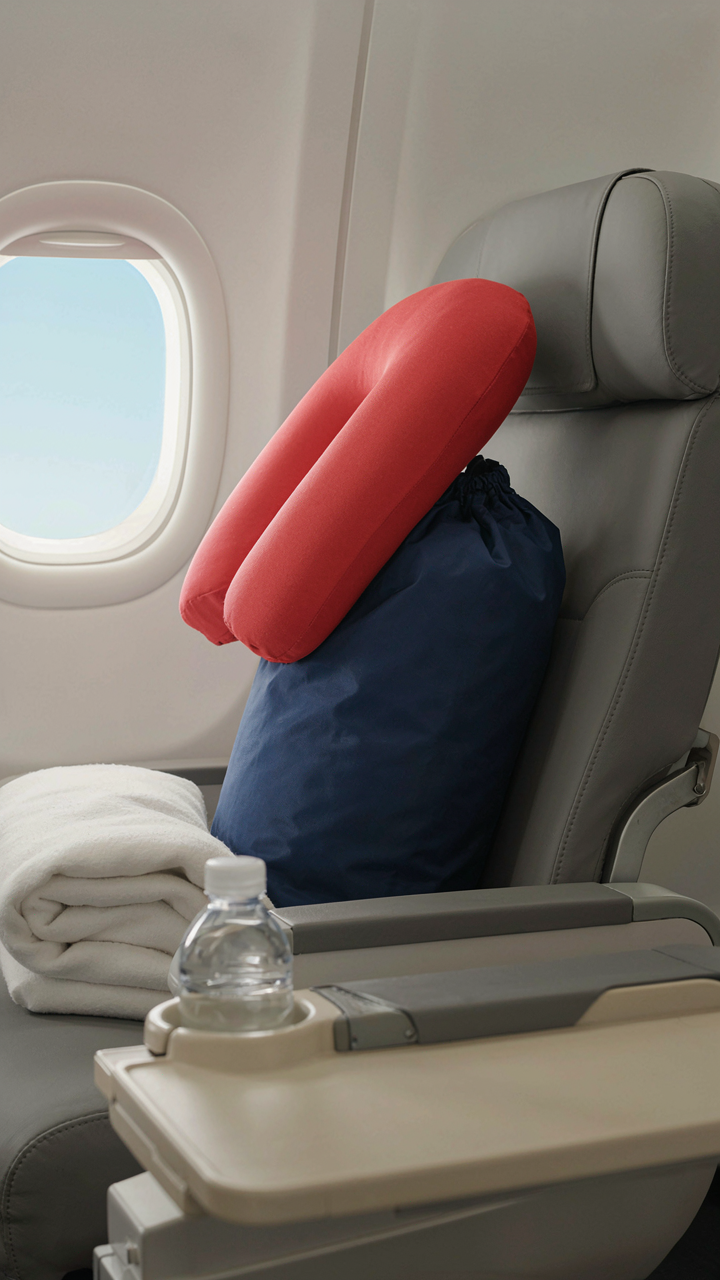
You want the magic pillow that fixes everything because admitting your seat geometry is broken feels like accepting defeat. The mechanism is simple: airplane seats are designed for upright sitting, not sleeping. A pillow alone cannot change the angle of your spine against an angled backrest. Instead, treat your carry-on luggage, compression bags, and even rolled clothing as shims and wedges. They reposition the seat’s useless geometry into something your body can actually rest against for hours.

The seat back reclines maybe six degrees on most commercial aircraft. Your cervical spine needs approximately fifteen to twenty degrees of support to relax into sleep. Stack a compression bag against the seat back, angle your pillow into it, and you’ve created a wedge system that mimics proper ergonomic positioning. This isn’t comfort theater. This is structural engineering applied to your body’s actual mechanical needs.
Countering Motion Through Strategic Bracing
Think like a structural engineer examining load distribution, not a tourist thinking about what feels cozy. Your body moves in the window seat because there’s nothing to resist lateral motion when turbulence hits or the plane banks. The goal isn’t padding yourself in softness. The goal is eliminating wasted energy spent stabilizing yourself during micro-movements throughout the flight.
Use your pillow against the window, not behind your head. Press your shoulder blade firmly into the seat back, then brace your hip against the armrest by turning your torso slightly inward. Your arm goes down between your body and the seat, creating tension that locks your position. This active bracing sounds uncomfortable for five minutes until your nervous system realizes it requires zero muscular effort to maintain. You’re not tensing. You’re locked in place like cargo in a shipping container. That’s when actual sleep becomes possible.
Light And Sound Suppression: The Sensory Warfare Of Air Travel
Eye Mask And Headphone Deployment
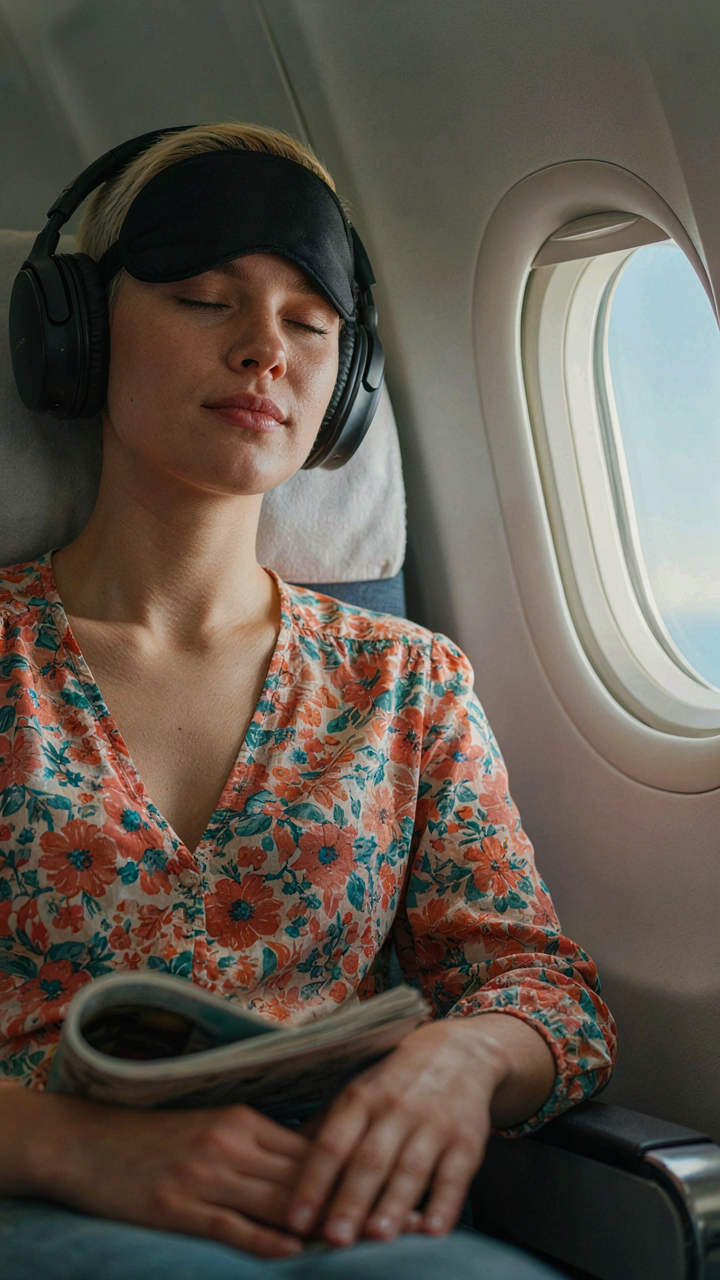
You want the eye mask because darkness signals your brain to produce melatonin, and you know this already. What you don’t know is that most eye masks fail because they let light leak through the nose bridge, turning your setup into theater. The real mechanism is total light exclusion. Contoured masks with memory foam seal against your face completely. They don’t rest on your eyes like cheap versions do. The pressure distribution matters more than the material thickness.
Headphones serve dual duty: they mask ambient noise and create a psychological boundary that signals to cabin crew you’re unavailable. Over-ear designs work better than earbuds on planes because they create an air seal around your ear canal, not just sound coverage. Active noise cancellation drains battery fast on long flights, so passive isolation through fit and seal does more work than the electronics. Bring both earplugs and headphones. The earplugs go in first for raw isolation, then headphones over them for the sound you choose to hear.
Acoustic Design Through Strategic Placement
Aircraft cabins use noise engineering borrowed from building acoustics, where absorption and deflection are the only two mechanisms that exist. Your body placement matters as much as your equipment. Sit toward the window side of the seat, then angle your shoulders into the fuselage wall. This uses the cabin structure itself as a sound barrier instead of fighting it. The wall absorbs engine noise better than open cabin air does.
Layer your acoustic setup methodically. Start with earplugs inserted correctly, which means twisted and held in your ear for thirty seconds while they expand. Add a white noise app or ambient sound track playing at low volume through headphones. The goal is not silence but masking, which your brain prefers to actual quiet. Set your phone to airplane mode first, then start the audio, so notifications don’t trigger. This stacking approach gives you three independent noise reduction systems that work together instead of relying on one technology to handle everything.
The Microclimate Control System: Regulating Your Personal Bubble
Layering For Temperature And Airflow
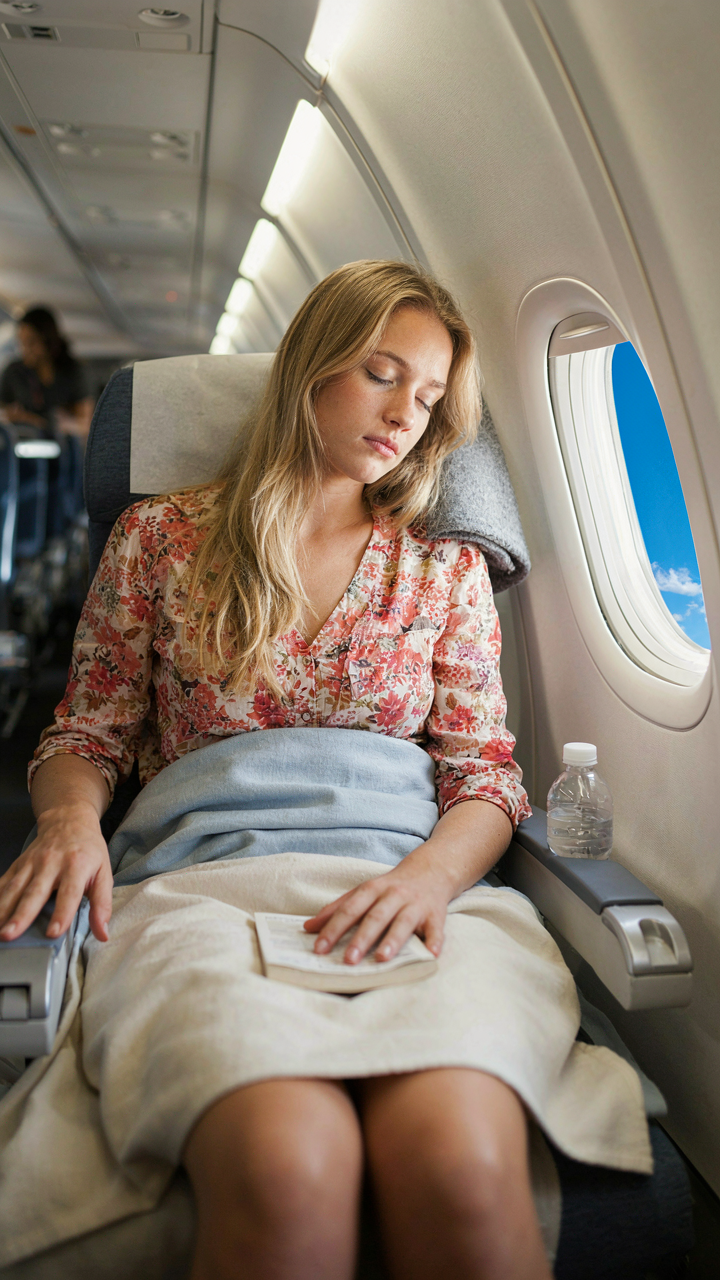
You want to believe one blanket solves this. It doesn’t. Thermal regulation works like a furnace with a broken thermostat—your body generates heat, the cabin generates cold, and the air currents between them fight both. Layering isn’t fashion advice; it’s applied thermodynamics. Each layer traps dead air space. Dead air doesn’t conduct heat away from your skin the way fabric pressed flat does.

Start with a moisture-wicking base layer against your skin, then add an insulating mid-layer you can remove without standing up. The window seat gets hit with cold radiating from the fuselage and from the cabin air vent above. Your legs need separate coverage from your torso because the cabin crew walks past constantly, disrupting your microclimate. A second blanket over your legs, distinct from your upper body layer, lets you adjust without unwrapping yourself completely. The real mechanism: you’re not trapping heat—you’re blocking convection currents from stealing it.
Humidity Management For Mucosal Health
The cabin air is drier than the Sahara, and common advice tells you to drink water. That’s incomplete. Oral hydration helps your bloodstream, not the mucous membranes in your nose and throat that face the air directly. Cabin pressure drops to 6,000 to 8,000 feet equivalent altitude; humidity drops to 10 to 20 percent. Your respiratory tract loses moisture faster than your body can replace it through drinking alone.
Carry a saline nasal spray and use it before sleep and after waking. This directly replaces what the cabin air extracted. A damp cloth held near your face for five minutes before sleeping raises the immediate humidity around your nose and mouth—a micro-environment within your microclimate. Breathe through your nose, not your mouth, to let your nasal passages filter and humidify the air before it reaches your throat. Sleep with your head angled slightly away from the air vent. Position your pillow so the vent stream passes beside your face, not directly across it. Saline spray plus strategic positioning stops the tissue damage that makes you vulnerable to infection after flying.
Hydration And Nutrition: Fueling Your Sleep Mission
The Timing Game For Fluids
You want to sleep through a flight without waking up to pee. That’s the real reason you’re reading this. The mechanism is simple: your kidneys don’t stop working at 30,000 feet. Drink too much water before sleep and your bladder becomes a biological alarm clock. Drink too little and dehydration fragments whatever sleep you do get, leaving you groggy on arrival.
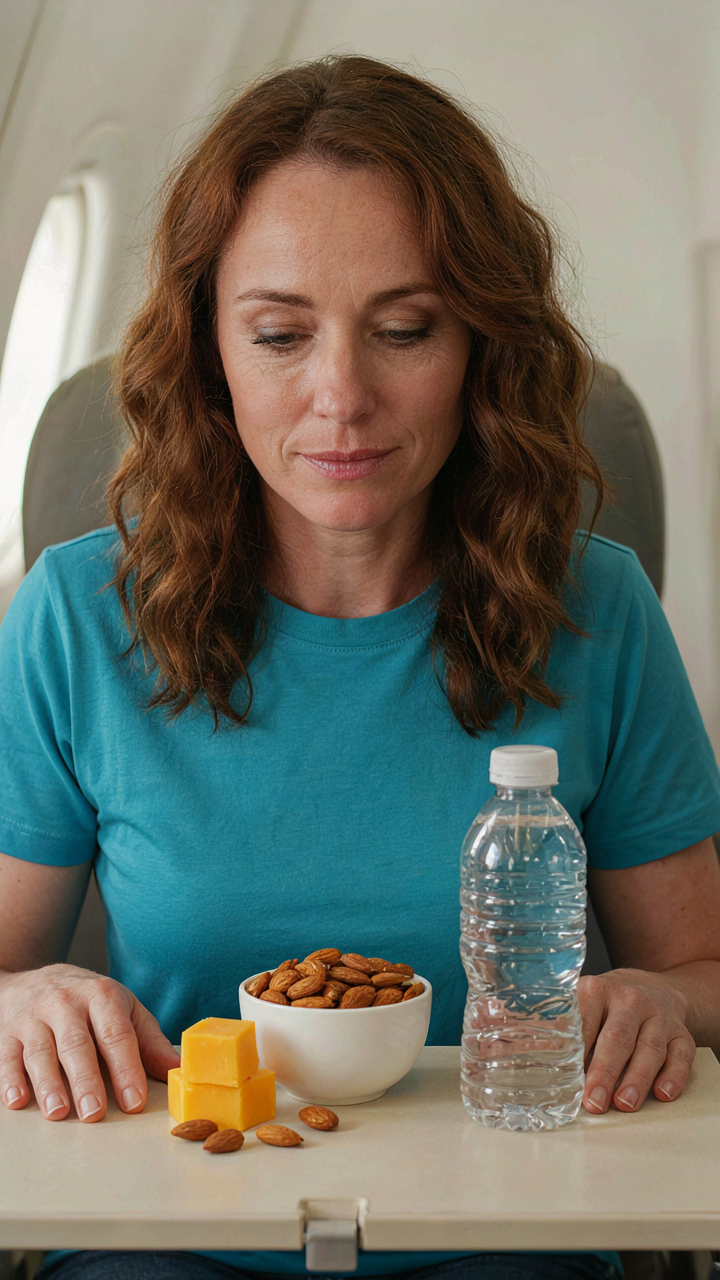
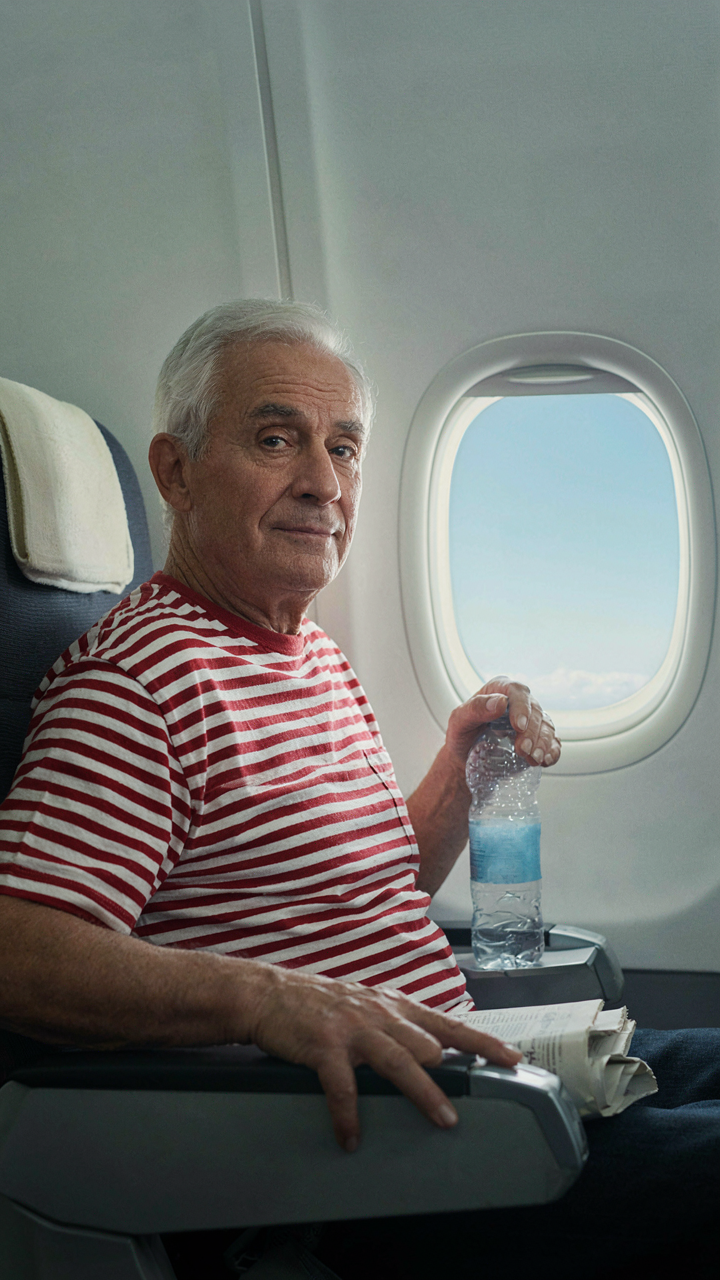
The tactic is front-loading hydration before you recline, then cutting it off. Drink 16 to 20 ounces of water in the hour before you plan to sleep. This allows your body to absorb and process most of it before you’re horizontal. Once you’re in position, limit intake to small sips only if your mouth goes dry. Cabin air is arid, but thirst is often psychological rather than genuine need.
Protein And Fat Over Carbs
Common advice says avoid heavy food before sleep. That’s incomplete. The real problem is refined carbs and sugar causing blood sugar spikes, then crashes that jolt you awake mid-flight. Protein and fat stabilize your glucose and keep you sedated longer without the rebound effect.
Eat a small snack 60 to 90 minutes before you sleep. Choose nuts, cheese, or a protein bar with minimal added sugar. Skip granola, candy, pastries, and anything with more than five grams of sugar per serving. Your goal is satiety without insulin volatility. A handful of almonds and two ounces of cheddar works. Your body stays calm and your blood sugar stays flat through the flight.
The Exit Strategy: Waking Up Sharper, Not Dazed
Timing Your Wake Cycle For Mental Clarity
You want to land feeling like you slept instead of like you were hit with a hammer. The real mechanism here is sleep architecture—the cyclical pattern your brain runs through whether you’re on a plane or in your bed. Most people ignore this and set alarms at random times, wasting the entire sleep attempt.

Your sleep cycles last roughly 90 minutes each. Waking during deep sleep leaves you groggy and disoriented. Set alarms to land at the end of a cycle—90, 180, or 270 minutes after you fall asleep—not in the middle of one. This single adjustment is the difference between waking functional and waking hostile.
Physical Recovery Protocols
The common advice here is wrong: you don’t just stand up and walk around. That’s performance theater masking the real problem—your body spent hours compressed in a seat, blood pooled in your legs, your neck at an unnatural angle. You need a deliberate sequence.
- Neck and shoulder mobility: Perform 10 slow circles in each direction before standing. Tension locked into the trapezius and neck doesn’t release on its own during flight.
- Seated spinal extension: Before standing, lean back gently in your seat and arch your spine for 15 seconds. Reverses the forward slouch from sleep compression.
- Calf and hip activation: Stand, place hands on the seat, and perform 20 calf raises. Blood pooling in your lower legs contributes to that foggy, slow feeling after waking.
- Cold water exposure: Wash your face and neck with cold water immediately after waking. Triggers your parasympathetic nervous system to shift from sleep mode to alert mode faster than caffeine.
- Hydration timing: Drink 500ml of water within 15 minutes of waking. Dehydration compounds the grogginess from cabin air and sleep deprivation.
Execute this sequence in order before you attempt conversation or decision-making. Your cognitive function improves measurably when you move through these steps systematically instead of stumbling into the aisle half-asleep.
Maximizing Your Built In Day Bed Window Seat For Productivity
The Work Window Before Fatigue Hits
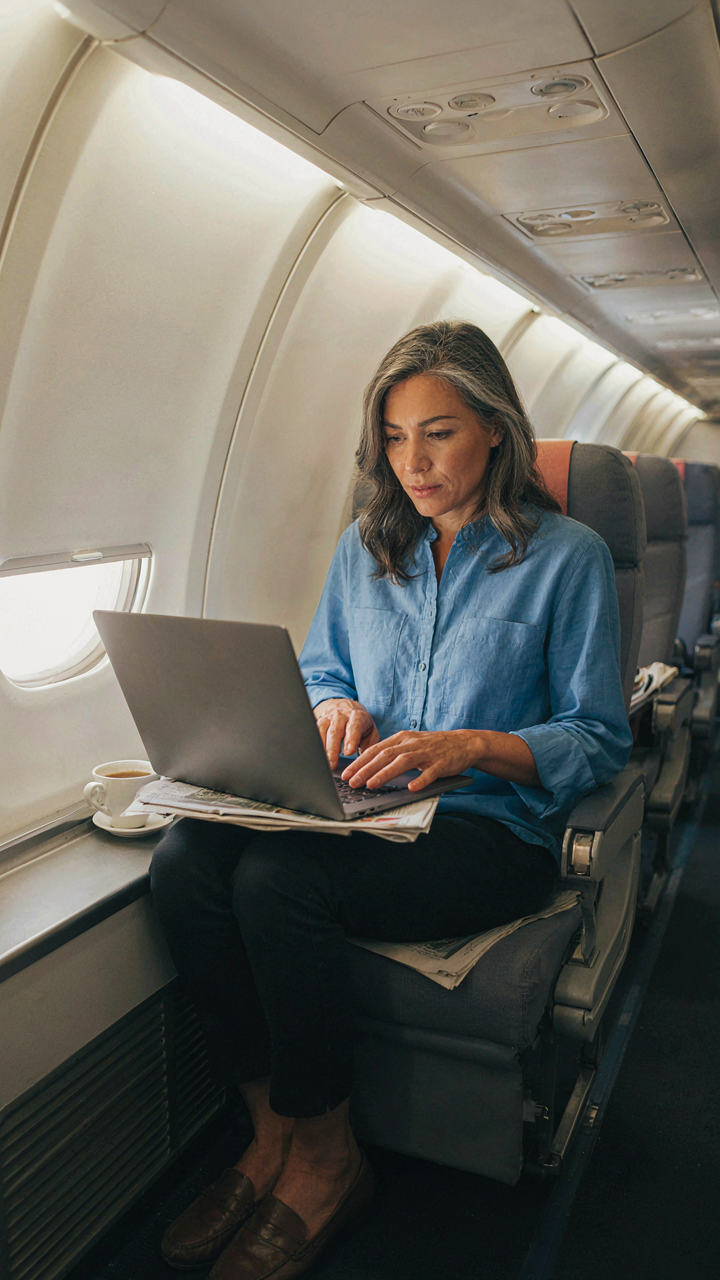
You want to believe the window seat transforms you into some productive machine mid-flight. The reality is simpler: you’re after permission to do focused work without guilt, and a plane seat gives you that by removing all other options. The mechanism is environmental constraint. You can’t scroll endlessly, you can’t stand up and pace, you can’t pretend you need to be somewhere else. A window seat with the shade drawn creates what architects call a “defined working threshold”—a boundary your brain recognizes as distinct from normal space.

Most people waste this by trying to maintain their ground-level work patterns. Emails, Slack, shallow tasks. That’s not work for a plane. Use the window seat’s isolation for single-threaded output: writing, coding, thinking through a problem with no interruption layer between you and the task. Close the shade. Kill wireless if you can. Work for 60-90 minutes before your body demands position change. The seat becomes a temporary office because your environment enforces depth. Build your pre-flight work block into your travel schedule, not as an afterthought.
Mental Staging Before Takeoff
You don’t prepare mentally for work the way you prepare for sleep on a plane, and that gap costs you hours of wasted time staring at the seat back. The mechanism here is psychological priming. Your brain needs a clear signal that a state change is coming. Not motivation. Signal.
Thirty minutes before boarding, write down the one output you’ll produce. Not a goal. A concrete deliverable: “Finish section 3 of the report,” not “work on writing.” When you sit, read that line once. Set a timer. Start before your body settles into sleep mode. The window seat isn’t productive because of the view or the angle. It’s productive because you entered it with a predetermined task and a time boundary. Your nervous system respects containers. Give it one.
The True Obstacle Isn’t The Seat; It’s Your Passive Expectation Of Comfort Instead Of Active Command

You don’t have a window seat problem. You have a preparation problem. The passengers who sleep on planes aren’t lucky. They designed their setup before boarding. They brought the right pillow. They controlled the variables. Stop waiting for the airline to gift you comfort and start engineering it yourself. Your next flight changes the moment you stop being a passenger and start being a strategist. The difference between sleeping and suffering at 35,000 feet is the person who showed up ready.