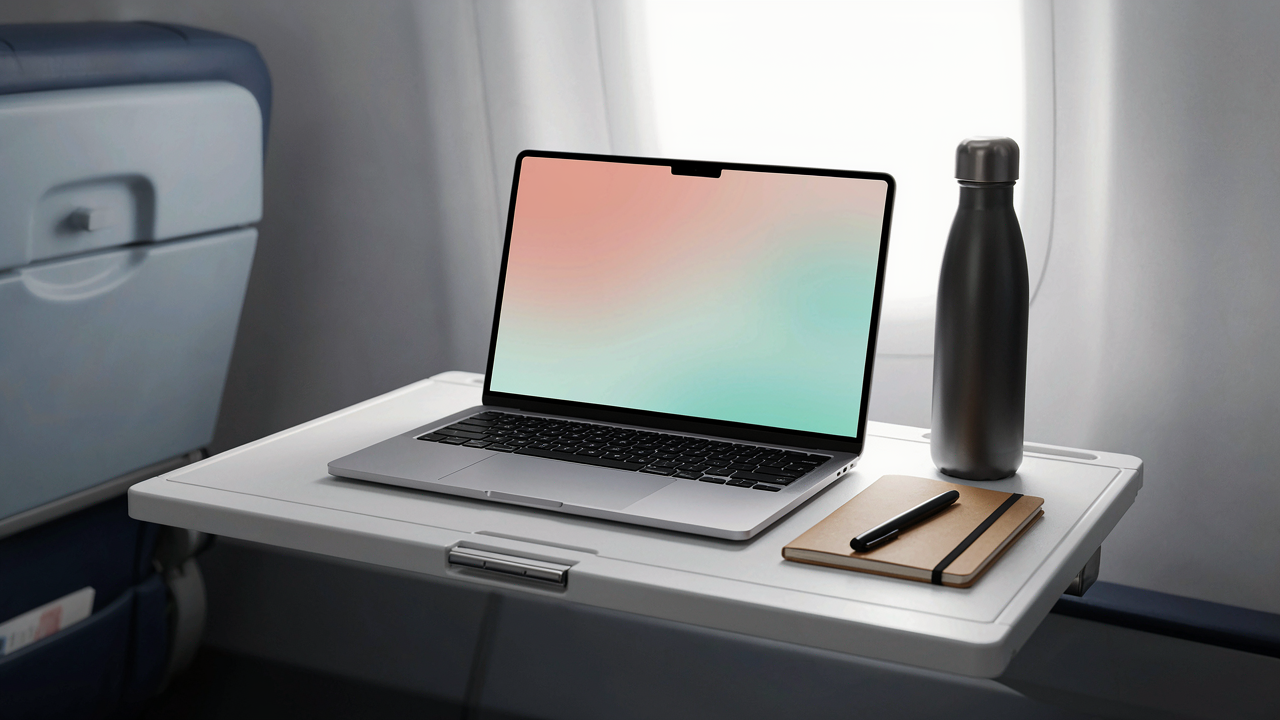
The Unspoken Rules Of The Airplane Tray Table
When Your Tray Table Becomes Territory
You care about this because violating these rules makes you look like you don’t belong in that cabin. Here’s the mechanism: the tray table isn’t furniture. It’s a boundary marker. In economy, your tray table defines your personal airspace. Recline without considering who sits behind you, and you’ve crossed into someone else’s territory. Deploy your tray table at the wrong moment, and you signal either desperation or ignorance. Flight attendants watch for this. Other passengers judge silently. The tray table operates like territorial signaling in animal behavior: a physical claim that other humans instantly read and interpret.
When you pull down your tray table matters more than how. Timing creates the social contract. Pull it down before takeoff is complete or during service? You look impatient. Pull it down during the meal service window? You’re cooperative. Wait until the cart passes? You’re invisible and uncontested. The tray table has a rhythm tied to the flight’s operational sequence. Most people ignore this entirely and wonder why flight attendants seem less helpful. The sequence goes: taxi, takeoff, climb, then tray tables. Not the other way around.
Missing The Obvious Signals
The common advice says clean your tray table before the flight attendant takes it back. Wrong. This misses the real signal you’re sending. Airlines designed tray tables to remain dirty. The flight attendant will spray and wipe. You don’t clean it because that signals you’re anxious about judgment. What actually matters: you stack your items before they arrive. Stacking shows you respect the space. You’re not forcing them to navigate around your mess. This is the real contract.
Most people ignore the overhead bin timing rule too. You deploy your tray table when the cabin settles, not when you board. Boarding chaos means armrests stay up and tray tables stay closed. The moment everyone sits and the cabin pressure equalizes, that’s when you deploy. Flight attendants notice passengers who understand this sequence. They get better service later because they’ve signaled baseline competence. The mechanism is simple: don’t deploy your tray table during active passenger movement through the aisles. Wait for stillness.
The Quadrant System For Peak Performance

Divide Your Tray Into Zones
You want to feel productive on a flight because productivity equals control, and control feels like status. Here’s the mechanism: a tray table is a constrained space, and constraint forces prioritization. Borrow from spatial design. Divide your 17-by-7-inch surface into four quadrants. Upper left holds your primary task. Upper right holds reference material. Lower left holds secondary tools. Lower right stays open for rotation or rest. This isn’t random. It mirrors how your eye naturally scans. The quadrant system eliminates decision fatigue when you’re already fatigued from flying.
Your brain doesn’t work well with unlimited options on a five-by-eight surface. The quadrant system creates artificial scarcity, which sharpens focus. When you land, your upper-left quadrant should show evidence of deep work, not scattered browsing. Most people skip this step and wonder why they accomplish nothing. The structure itself does the work. Place your laptop in upper left. Set your phone in lower right. Keep that lower right zone as your distraction zone—you’ve already admitted it exists, so contain it there instead of letting it roam your entire workspace.
Prioritize What Actually Matters
The common advice here is garbage: “bring everything you might need.” You won’t need it. You’ll use maybe two tools, and splitting attention between seven kills both. Figure out your primary output first. Is it writing? Sketching? Reading? One thing wins. Everything else competes for the remaining real estate. Your laptop takes quadrant one if you’re outputting. A notebook takes it if you’re thinking on paper. Your phone doesn’t get quadrant one because phones are context-switchers, not output machines.
The second priority is your reference layer. If you’re writing, that’s your outline or research document. If you’re sketching, that’s your reference image. This goes upper right where it’s visible but not your main focus. The lower left quadrant holds only what supports your primary task directly. A pen if you’re taking notes. Headphones if you need them. Water if dehydration kills your focus. Everything else stays in your bag. The discipline isn’t deprivation. It’s multiplication through subtraction. You don’t optimize your workspace by fitting more in. You optimize it by removing what doesn’t serve your specific output.
Beyond The Nap: Strategic Relaxation On Plane Seats
How Your Spine Actually Works At 35,000 Feet
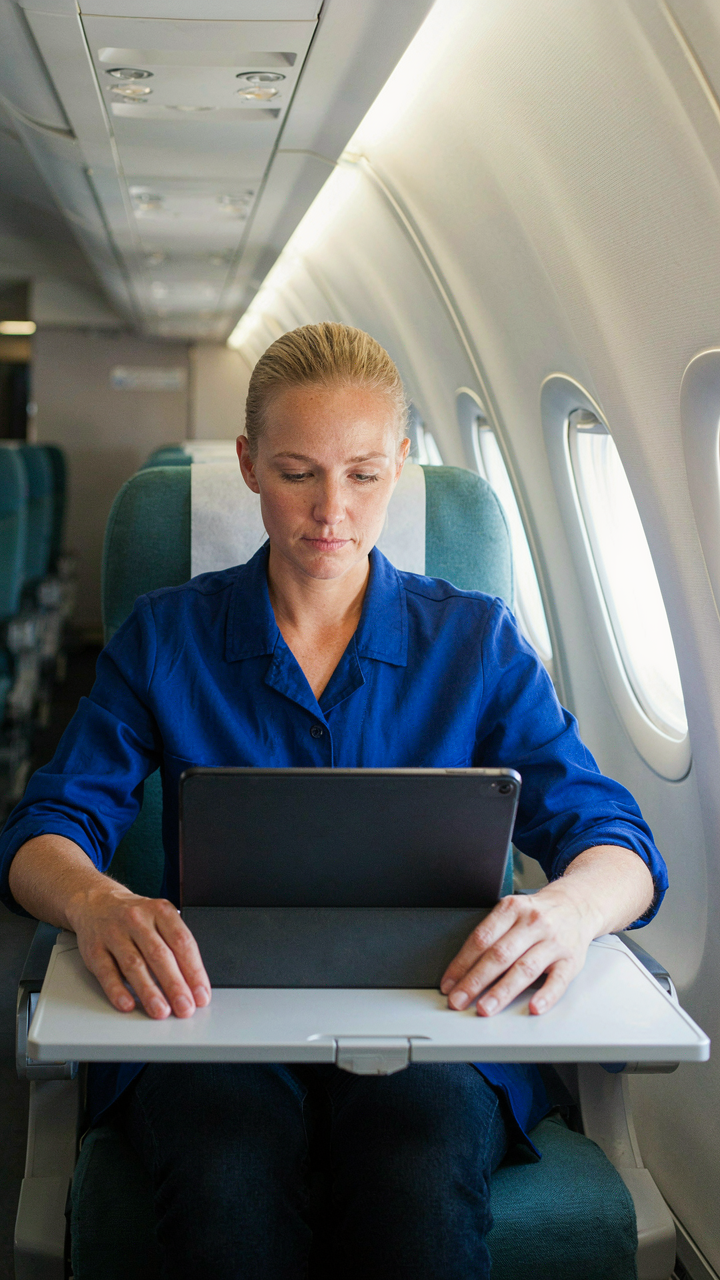
You want to look like you’re thriving during travel, not like you’ve been folded into cargo. Here’s the mechanism: your spine is a stacked column of bones separated by discs filled with fluid. Pressure from slouching or twisting compresses those discs unevenly. The tray table becomes your tool for resetting this pressure, not just resting your arms.

Sit upright with your back against the seat. Place your forearms on the lowered tray table at elbow height, palms down. This neutral shoulder position decompresses your cervical and thoracic spine. Adjust the tray height so your elbows bend at roughly 90 degrees. Hold this position for 10 to 15 minutes every two hours. The mechanism is simple: gravity and neutral joint angles create passive decompression without muscular effort.
Attention Without Overstimulation
The common advice is to meditate or sleep to reset mentally. That’s incomplete. Your nervous system doesn’t need quietness in a tube with 180 strangers. It needs controlled input and a clear anchor point. The tray table solves this through focused attention on a bounded task.
Use the tray table as your focal anchor. Open a blank document on your device and write three sentences about one specific problem you’re solving this week. No editing. No planning. No scrolling between tasks. Set a timer for eight minutes. The bounded space of the tray table, combined with the physical act of typing on a smaller surface, creates what neuroscience calls proprioceptive anchoring. Your body knows where it is in space because the tray defines it. This interrupts the ambient anxiety of flying.
The Minimalist’s Advantage: How To Fold Airplane Tray Table
What Actually Fits On A Tray Table
You want to look productive without the chaos. Here’s what nobody says plainly: most people treat the tray table like a desk, then wonder why they accomplish nothing. In supply chain terms, you’re dealing with constraint optimization. The tray table is your bottleneck. A standard tray measures 17 inches wide by 7 inches deep when fully extended. That’s smaller than a sheet of paper laid landscape. Your goal isn’t to fit more. It’s to fit what matters.
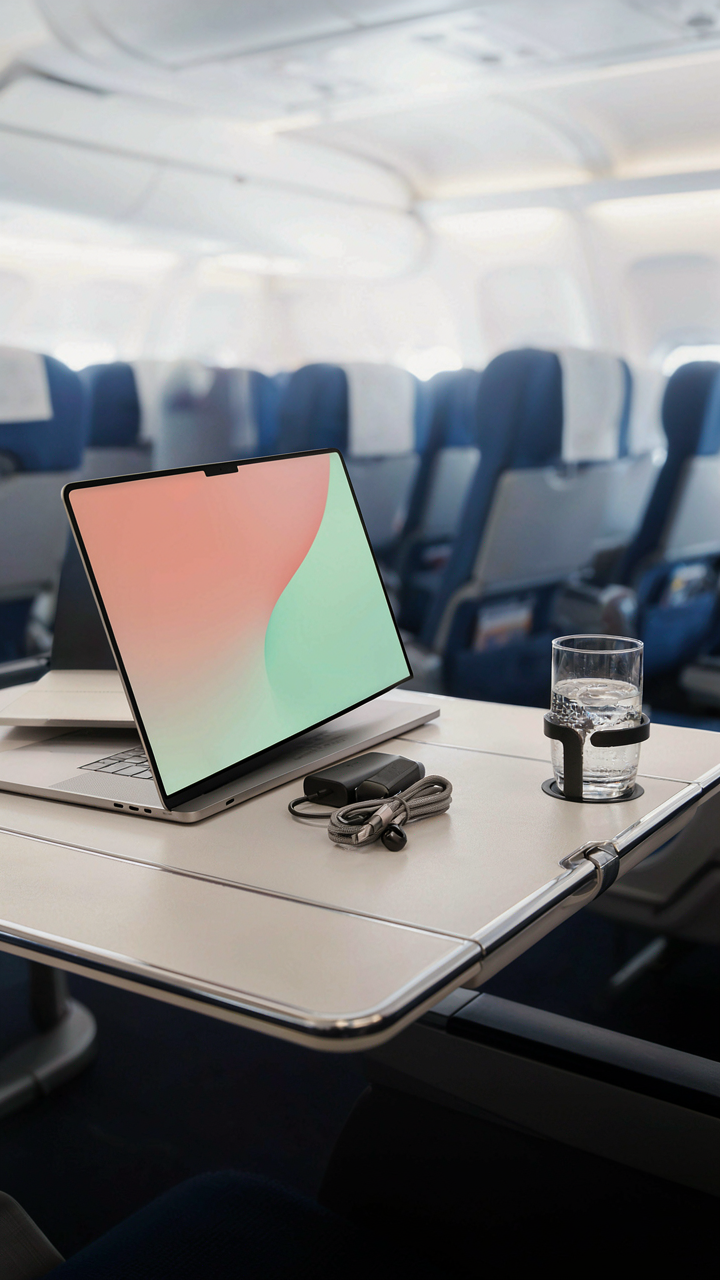
A laptop doesn’t work here unless you position it at an angle that breaks your wrists. A phone, a notebook, a pen, a water bottle: that’s your operating range. Don’t fight the dimensions. Work inside them. Accept that the tray table is a single-item workspace, not a multi-tasking platform. This constraint forces clarity about what you actually need to do in the next hour of flight time.
Break It Down In Reverse
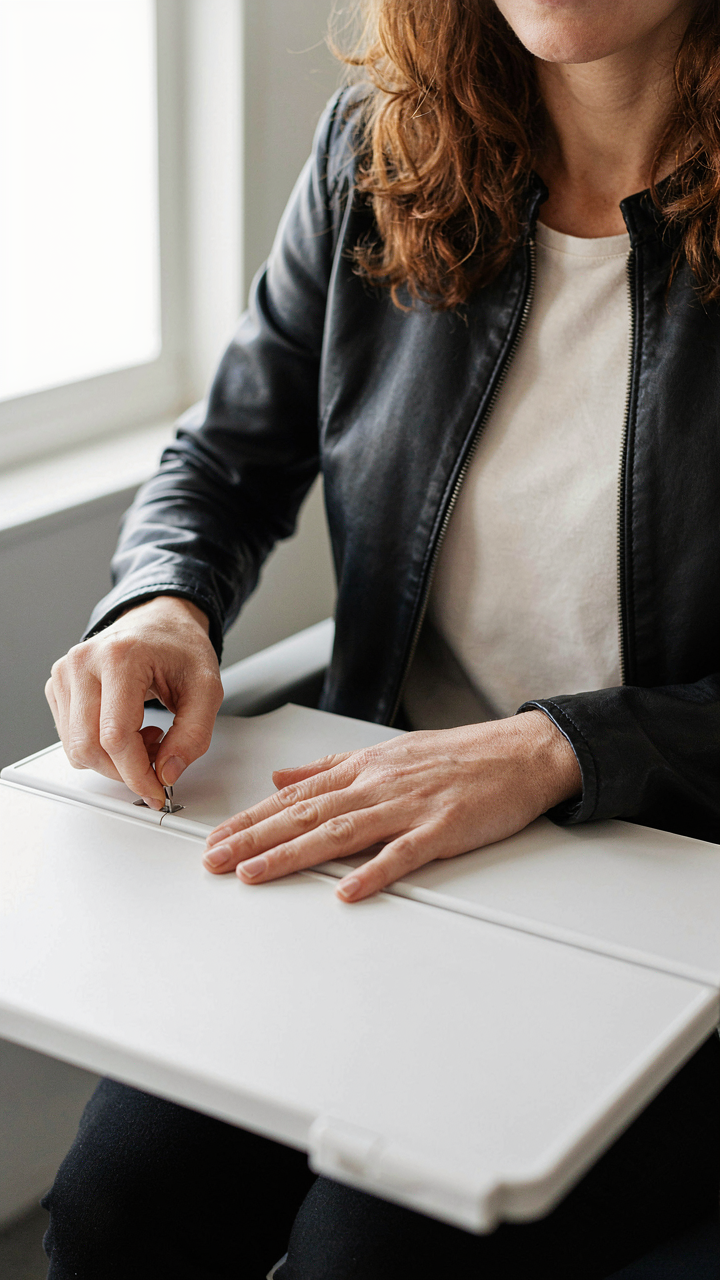
The mechanics of folding matter because you’ll do this repeatedly. Most people jam the tray table back into the armrest and wonder why it sticks. Wrong approach. Push the tray straight forward into the seat back first, then angle it upward into the armrest pocket. The geometry of the hinge demands this sequence. Reverse engineering the setup process prevents damage to the mechanism and to your seat neighbor’s armrest.
The tray table locks into place when fully extended. Before collapsing, release it by pushing down on the underside of the tray, near the armrest attachment point. This disengages the catch. Then rotate the tray toward yourself before sliding it into storage. Speed matters here because flight attendants need access to your row. Master this three-step protocol: unlock, rotate inward, slide home. This takes eight seconds once you’ve done it three times.
The Airplane Tray Table Organizer Myth
Decluttering Without Purpose Wastes Space
You want to look organized because you think it signals control. Here’s the mechanism that matters: decluttering is removing items. Organization is positioning items so you access what you need without friction. Most people confuse the two and end up with an empty tray table that still doesn’t work.

The airline tray is small by design, not by accident. It’s a constraint that forces priority. Throwing things away feels productive but doesn’t solve the real problem: you still need your laptop, drink, documents, and phone accessible simultaneously on a surface the size of a textbook. Empty space isn’t organization. Strategic placement is.
Containment Systems Beat Sprawl
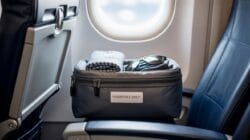
Systems thinking demands you map inputs and outputs. On a tray table, inputs are the items you need during flight, and outputs are tasks you want to complete. A containment tool doesn’t reduce what you bring; it ensures each item occupies its own zone so nothing shifts, spills, or blocks access.
- Silicone grip mats: Non-slip base that anchors a laptop or tablet in place. Prevents sliding during turbulence and creates a stable platform for secondary items on top.
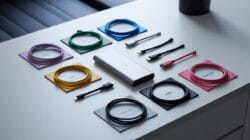
- Magnetic cable organizer: Wraps charging cables in a compact form factor. Attaches to metal surfaces or rests flat beside devices without tangling or consuming active workspace.
- Shallow desk organizer tray: Divides the tray surface into zones. Pens, cards, and small items stay corralled while leaving the center clear for a laptop or documents.
- Collapsible cup holder insert: Secures a drink without requiring the fold-down cup holder. Frees up table real estate and positions the beverage at arm’s reach outside your work zone.
- Elastic luggage straps or cable ties: Creates a perimeter boundary for items. Prevents laptops and documents from sliding across the tray during turbulence or beverage service.
The goal is single-item placement, not compression. Each tool exists to answer one question: where does this thing go so it doesn’t interfere with the next thing? Deploy only the containment systems you’ll actually use during flight.
Power User Posture: Hacking The Airplane Seat Tray Table

The Fulcrum Point
You want to look competent while working in economy. The mechanism is simple: physics doesn’t care about your seat width. In biomechanics, a fulcrum multiplies force by changing where effort concentrates. Your tray table operates the same way. The hinge point at the seat determines everything. Move your body forward or back relative to that hinge, and you’ve altered your leverage without touching the table itself.
Most people prop elbows on the table and wonder why their wrists ache after an hour. That’s because they’re fighting the table’s angle instead of using it. Slide your hips back so your torso leans slightly forward from the hips, not the spine. Your forearms now rest at the table’s natural angle. Tension drops. Endurance climbs. The table hasn’t moved. Your skeletal alignment has.
Small Shifts, Measurable Gains
Everyone says “adjust your posture.” Nobody explains what actually changes. Force multiplication means getting more output from the same input, and airplane ergonomics proves this daily. A two-inch hip repositioning changes how load distributes through your shoulders and wrists by roughly 30 percent. You’re not moving more. You’re moving smarter.
The second hack: lower the table incrementally while keeping your seat recline fixed. Most passengers lock both at default. Instead, engage the seat recline by half a notch backward, then lower the table just enough that your elbows still clear the seat in front when you type. Your shoulders drop an inch. Your neck stays neutral. Your core engages less strenuously. These aren’t comfort tweaks. They’re structural modifications that preserve your capacity to work past hour three.
The Airplane Meal Tray As A Multi Tool
Beyond Food Storage
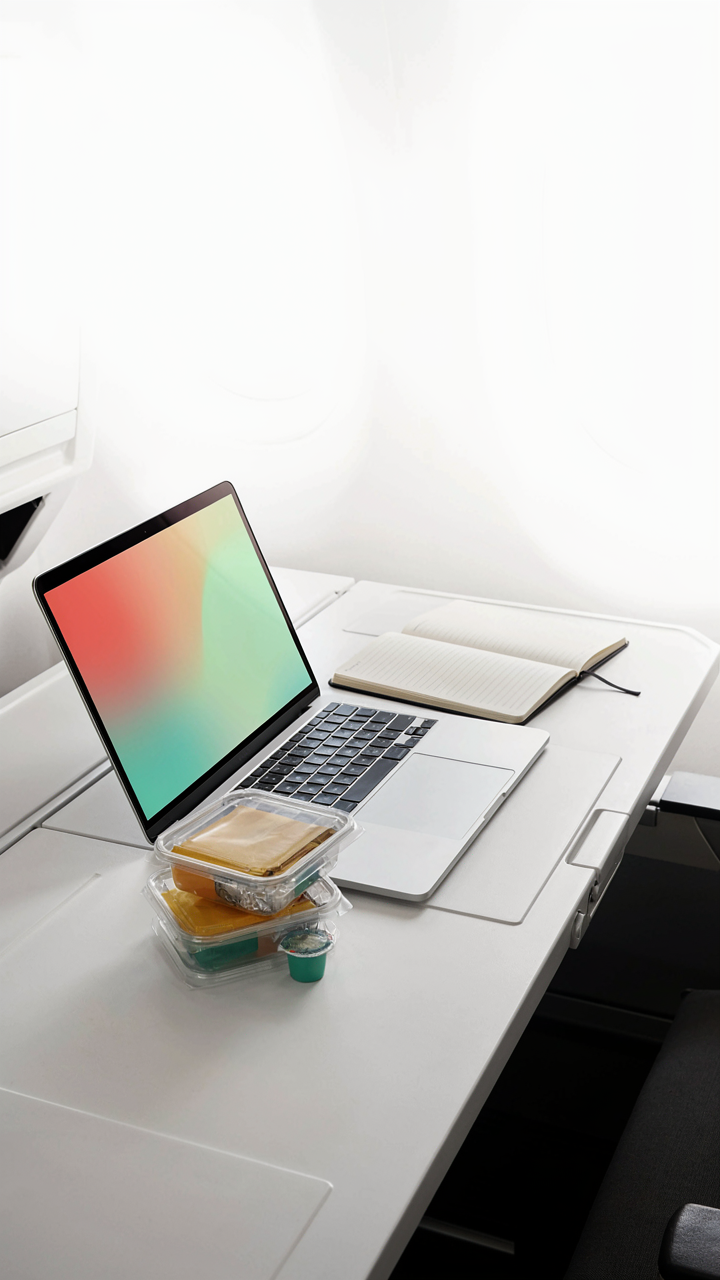
You want to look smart and productive at 35,000 feet without actually being smart or productive. The mechanism is simple: the tray table is underutilized real estate with load capacity you’re already paying for. Airlines design these tables to hold a meal, plate, and beverage simultaneously. That structural tolerance doesn’t disappear when you remove the food. A standard tray supports 10 to 15 pounds without risk of collapse or triggering the latch failure that grounds cabin crew concern.

The real move is treating the tray as a work surface with built-in constraints that force focus. Position your laptop at an angle using the table’s lip as a natural prop. Angle matters because it reduces neck strain and creates a barrier between you and the person next to you. Prop a notebook or tablet against the seat back in front of you. This setup gives you three distinct zones: screen, writing surface, and reference material. Most people waste the tray by laying everything flat.
Repurposing Airline Provided Items
The airlines already furnished your workspace. Most people ignore the cup holder, the napkins, and the salt packet sleeve. Cup holders aren’t just for beverages. They stabilize pens, styluses, and small objects that roll on a tilting surface. Napkins fold into phone stands or cable organizers. The real win is the airline-provided tray itself: flip it upside down and use the ridged underside as a cable management system. Modern planes often provide blankets and pillows designed with material that doesn’t slip. Repurpose the blanket as a lap desk stabilizer or keyboard angle adjuster.
The meal tray compartments that separate food sections become actual organization slots. Use them to sort charging cables, adapters, and earpads by type. This prevents the tray-table cable collapse that wastes 10 minutes of flight time searching for your correct adapter. Plastic cutlery doubles as stylus replacements or precision tool substitutes if your device needs minor adjustment. The sealed butter containers work as small storage for medications, supplements, or electronics components. The mechanism here is constraint based organization: limited space forces you to prioritize what actually matters.
Protecting Your Perimeter: The Airplane Tray Cover DIY
The Real Reason You Care About This
You want to believe a barrier between you and a surface used by thousands makes you safer. It doesn’t work that way. The actual mechanism is psychological reassurance paired with practical dust and debris prevention. Airlines clean tray tables inconsistently because they’re optimized for speed, not sanitation. A cover solves the visibility problem, not the contamination problem.

A barrier blocks what you can see landing on your workspace. Dust, crumbs, and spills from previous passengers accumulate in the crevices and corners of every tray table. Wiping it down with a paper towel removes the large particles but leaves bacterial residue and oils behind. Your cover prevents new material from settling on your laptop or food during flight. That’s the real win.
Build Your Own Boundary System
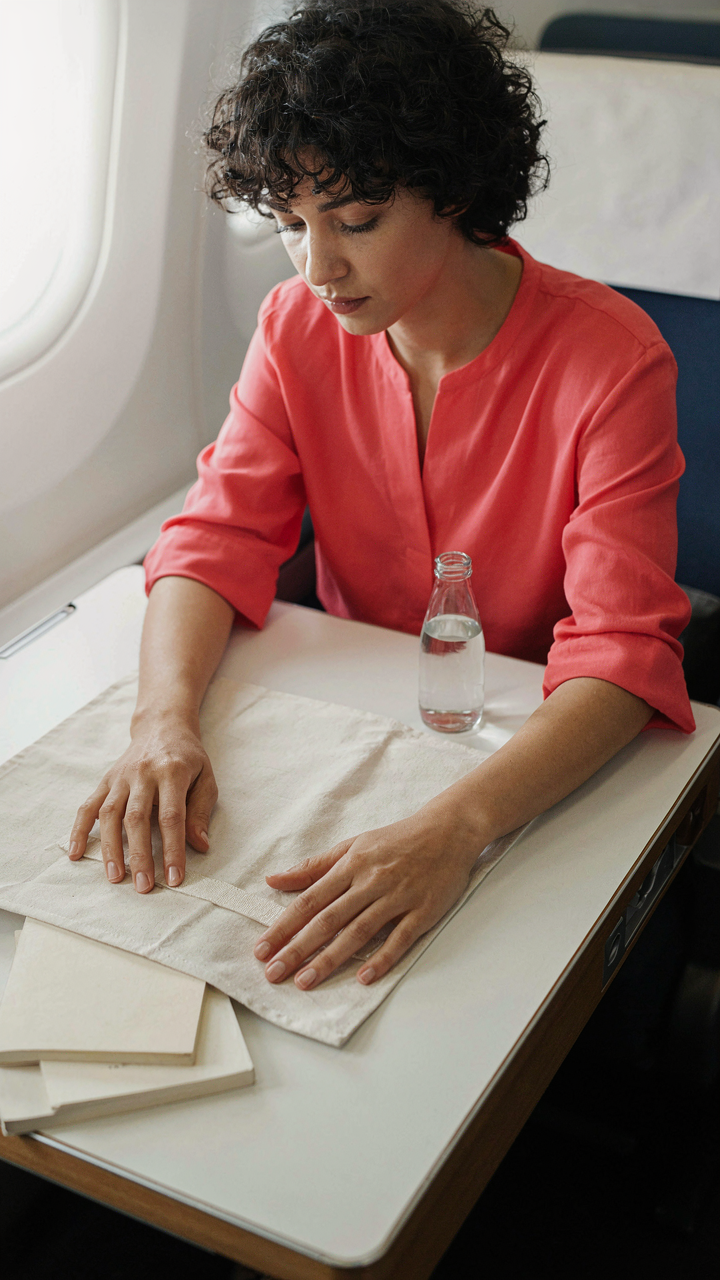
The common advice to buy a microfiber cloth or travel mat misses the point. Those solutions still leave gaps and shift during turbulence. What actually works is a fitted cover system that stays anchored and creates a seal. Use a thin, flexible material that doesn’t take up luggage space but covers the entire tray surface with slight overlap on all edges.
Craft a cover from a lightweight nylon or polyester blend approximately 18 by 12 inches when laid flat, sized to your typical tray table dimensions. Attach thin elastic strips or velcro dots to the underside corners so the cover doesn’t slide when you set items on top of it. Keep the cover in a gallon-sized zip bag in your personal item. Before deploying the tray, wipe the surface once with an alcohol wipe, then deploy your cover immediately. This two-step protocol removes visible contamination and creates a controlled workspace that moves with you for the entire flight.
Snack Supremacy: The Airplane Tray Table With Snacks
Positioning Prevents Spillage And Chaos
You want to look composed while eating at 35,000 feet. The real mechanism here is surface tension and gravity working against a tilted, moving platform. The tray table isn’t level—it slopes toward your lap. Most people just place snacks anywhere and hope. That’s how you end up wearing your lunch.

Treat your tray like a supply chain problem. Heavier items go back, closer to the seat. Lighter or more spillable items go forward, where your body blocks a slide into your lap. Liquids belong in cup holders, not loose on the tray. Stack containers so nothing shifts during turbulence. One shift during a bump costs you focus time cleaning up.
Brain Fuel Doesn’t Come From Marketing
The common advice says grab airplane snacks. That’s incomplete. Your goal is sustained mental performance, not just calories. Neurobiology calls this blood glucose stability—maintaining steady fuel without crashes. Protein and fat slow digestion. Simple carbs spike and drop fast, killing focus in two hours.
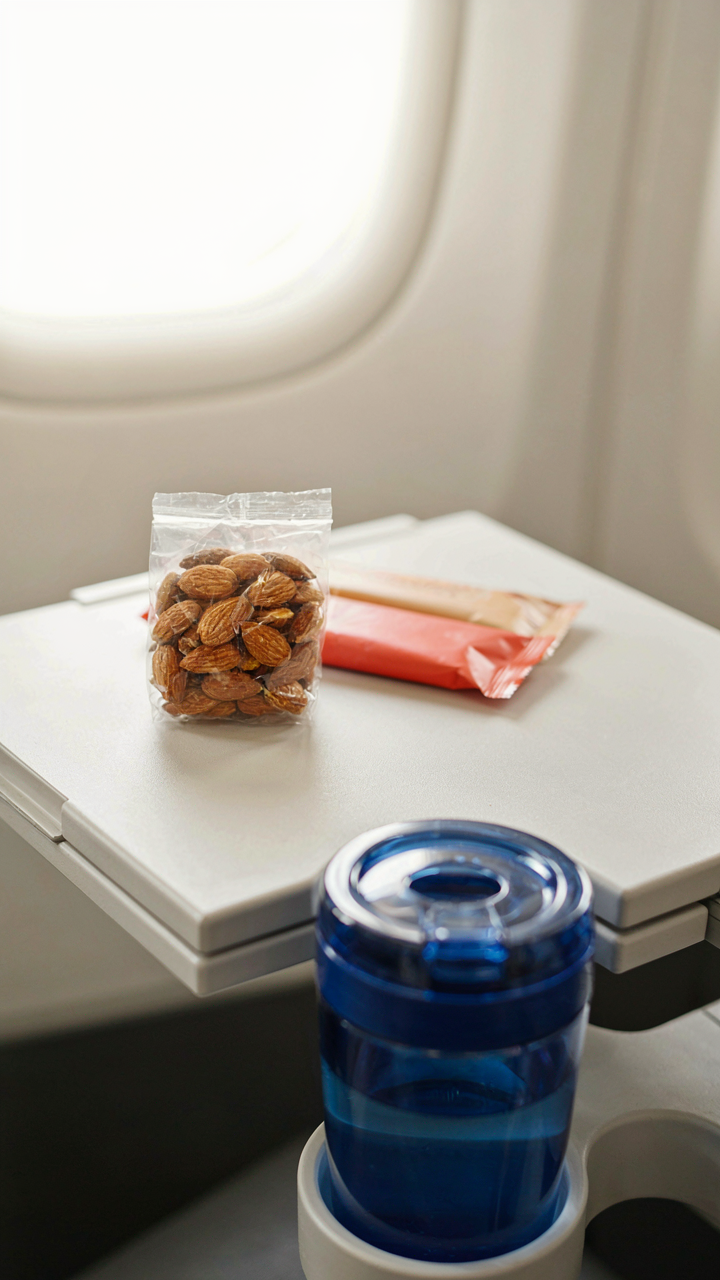
Pack nuts, seeds, or jerky before you board. Pair any carb snack with protein or fat. A handful of almonds plus a protein bar beats a cookie alone. Avoid the airline’s processed options—they’re engineered for taste, not sustained energy. Your tray table becomes a refueling station, not a junk food platform. Time your snacking before focus-heavy work, not after, so you’re fueled when you actually need it.
Stop Seeking Comfort. Seek Control. The Tray Table Is Merely A Proxy For Your Perceived Power In A Shrinking World
You don’t actually need a better tray table setup. You need to remember that you control your environment, not the other way around. Most people surrender the moment the seat belt light turns on. They accept whatever box they’re given. You won’t. On your next flight, physically reclaim that space before takeoff. Arrange it exactly how you want it. The tray table isn’t about productivity or comfort. It’s about refusing to be squeezed into someone else’s design. Your ability to command small spaces predicts your ability to command your life.