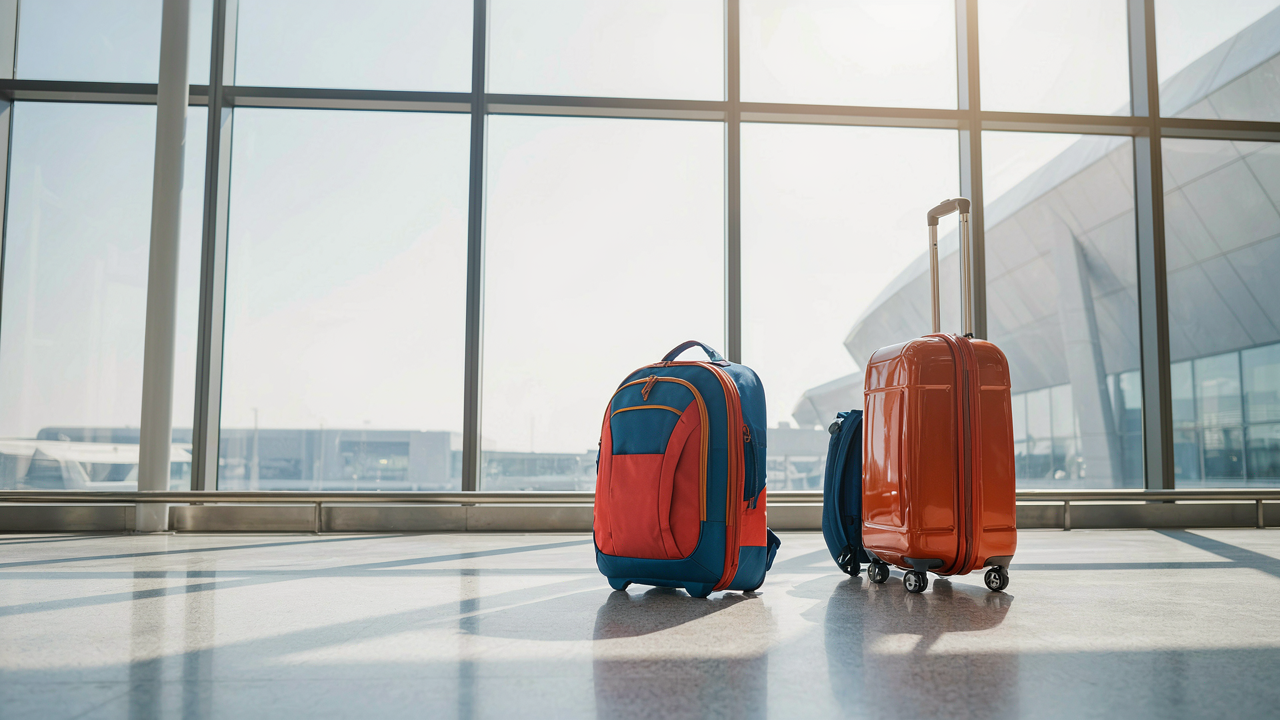
The Portability Fallacy: Why Your “Comfort” Is A Trap

Wheels Don’t Solve The Real Problem
You want the suitcase because rolling feels easier, and you’re avoiding the admission that you’ve optimized your life for flat surfaces. That comfort is the trap. In physics, friction describes resistance to motion. A suitcase on wheels trades one friction point—your shoulders—for three others: terrain inconsistency, handle durability, and the weight you can’t distribute. Airports have perfect floors. Real travel doesn’t.
A wheeled suitcase moves smoothly on polished tile and concrete. The moment you leave the terminal, friction multiplies. Cobblestones, gravel, stairs, escalators, buses with overhead bins, trains with narrow aisles—wheels lock up or jam. You end up carrying it anyway, negating the entire design premise. The handle also fails. Repetitive pressure on those telescoping tubes creates micro-fractures. Most travelers experience handle collapse within two years of regular use.
Distributed Load Beats Convenience
Backpacks distribute weight across your spine and core, which is how humans moved weight for millennia before luggage existed. A suitcase concentrates load on your wrist and shoulder, creating localized strain. The real mechanism: backpacks force you to pack less because the discomfort of weight becomes immediate and honest. You feel every pound. With a suitcase, you feel nothing until your shoulder deteriorates.
Navigate stairs, narrow doorways, crowded trains, or uneven terrain with a backpack and you move through space as a single unit. No handle jamming. No wheels catching. You shift your weight and pivot. In unpredictable environments, this agility compounds. A backpack moves where you move. A suitcase requires you to move where the suitcase can roll. The choice isn’t about comfort. It’s about who controls the variable.
Optimizing For Unforeseen Variables: The Anti Fragile Traveler

What Actually Breaks Your Travel Flow
You care about this because you’ve already imagined the disaster, and you want permission to avoid it. The real mechanism isn’t what breaks, it’s what you can’t fix once it breaks. A suitcase wheel fails at gate 47 in a terminal where vendors sell phone chargers but not replacement wheels. A backpack strap tears and you zip it closed instead, losing nothing. The difference isn’t the failure itself, it’s your optionality after failure occurs.

Travel breaks along two axes: access and adaptation. A suitcase locks you into rolling on predetermined paths. If wheels fail, stairs appear, or ground shifts to gravel, you’ve lost your container’s primary function. A backpack degrades gracefully. You can carry it, drag it, stuff it under a seat, or compress it when space tightens. This isn’t about toughness. It’s about how many ways the system still works after something goes wrong.
The Resilient System Versus The Brittle One
Borrow a term from engineering: fragile systems fail catastrophically when one component breaks. Resilient systems absorb shocks and continue functioning. A suitcase is engineered fragility disguised as convenience. Its wheels, handle, and frame form a dependency chain. Break the handle and you’re carrying dead weight. Collapse the frame and clothes pack unevenly. The system works until it doesn’t.
A backpack distributes stress across its structure instead of concentrating it. Tear a pocket and you still carry everything. Lose a buckle and you use rope. The design tolerates abuse because it was built without hidden weak points. Resilience means you solve problems with what you have, not by finding a repair shop in an unfamiliar city. When traveling on carry-on budgets, this distinction determines whether you adapt or derail.
The Scarcity Mindset: Overpacking And The Myth Of Need

What You Actually Fear Losing
You’re reading this because you’re terrified of being unprepared. That fear drives the packing. Economics calls this loss aversion: the pain of missing something outweighs the pleasure of having it, so you pack redundancy as insurance. A backpack forces scarcity. A suitcase enables it. The container shapes behavior before you even leave home.

Most packing advice tells you to lay everything out and remove half. That’s incomplete. The real mechanism is constraint. When your carry-on space is genuinely limited—a backpack’s dimensional math is rigid—your brain stops negotiating with itself. You pack what solves problems, not what might. A suitcase expands your mental permission to hedge.
The Hard Stop Of Physical Limits
Carry-on backpacks have fixed volume. Suitcases have wheels that signal “I can fit more.” Neither is moral or immoral, but one removes choice from the equation. When you can’t fit it, you can’t bring it. That’s not deprivation. That’s clarity. Most travelers don’t actually need what they’re debating over. They need permission to leave it.
The backpack enforces a protocol. You pick the bag, you measure capacity, you pack to that number. No negotiation with yourself at the gate. A suitcase lets you compress, roll, and squeeze until the zipper barely closes, then you’re suddenly over weight or volume limits at check-in. The backpack decides before you start. That’s the entire difference between overpacking and traveling light.
The “Opportunity Cost” Of Poor Travel Gear: Beyond The Ticket Price

Time Wasted Compounds Faster Than You Think
You care about this section because you’re afraid you’ll waste hours on a trip that’s already expensive and finite. That fear is rational. Economics calls this “opportunity cost”—what you sacrifice by choosing one thing over another. With travel gear, you’re not just choosing between objects. You’re choosing between friction and flow. A suitcase locks you into gate-check queues, security theater delays, and narrow airport corridors where wheels jam. A backpack eliminates these chokepoints entirely, but only if it’s actually designed for carry-on dimensions and weight distribution. Most travelers grab whatever they own and learn the hard way that mismatched gear costs them hours they can never recover.
The math is brutal. A 90-minute delay at security or baggage claim happens once per trip. Multiply that across 10 trips per year, and you’ve lost 15 hours to a bad gear choice. That’s a full workday. That’s a missed experience, a meal not eaten, a conversation not had. The suitcase will roll smoothly on flat airport floors, but the moment you leave pavement—cobblestones, stairs, gravel, uneven sidewalks—it becomes deadweight. A backpack distributes load across your body’s strongest muscles. You’re not pulling against gravity; you’re wearing the weight. This is why hiking communities abandoned rolling bags decades ago. The mechanism is simple: choose the tool that minimizes friction, not the one that looks professional at a terminal.
More Experiences Demand Hands Free Movement
The backpack solves a problem that suitcase marketing never acknowledges: you need your hands to live. Not to pose with luggage at a hotel lobby. To navigate a crowded train platform. To hold a coffee while reading a map. To steady yourself on cobblestones. To photograph something without setting your bag down in a crowd. Vacation isn’t about sliding your suitcase across a hotel floor. It’s about moving through unfamiliar terrain and collecting moments. A suitcase forces you to protect it. A backpack frees you to experience.
The experience unlock happens because your cognitive load drops. You stop thinking about where your bag is, whether it’s being watched, or how you’ll get it up those stairs in the Marais. This mental bandwidth shifts to the actual environment. You notice architecture. You taste food differently. You talk to people longer. A well-designed hiking or travel backpack weighs 2 to 3 pounds empty and distributes weight so efficiently that you forget you’re carrying anything. Suitcase users stop moving in the evening because rolling luggage exhausts you differently than a backpack. The mechanism is metabolic: backpacks preserve energy for experiences, not for managing objects.
The Suitcase Backpack Hybrid: A False Compromise?

The Illusion Of Versatility
You want one bag that handles everything because buying two feels wasteful and indecisive. Here’s the mechanism: hybrids solve the wrong problem. They’re designed by engineers trying to split the difference between two opposing constraints instead of committing to one. A suitcase optimizes for rolling efficiency and structure. A backpack optimizes for weight distribution on your body and one-handed carry. When you fuse them, you sacrifice the core advantage of each.

Hybrid bags typically weigh more than either category alone because they need wheels, a frame, and backpack straps. They roll awkwardly in tight spaces because backpack proportions make wheels sit wrong. The shoulder straps feel tacked on rather than load-bearing, which means you can’t actually wear it comfortably for a long walk. You end up pulling it when it’s convenient and backpacking it only when forced, maximizing the worst traits of both.
When Both Means Neither Effectively
The real cost emerges during operational reality, not in the marketing copy. Economics calls this “the theory of comparative advantage” – when you specialize, you win. A bag that tries everything does nothing with precision. On a cramped plane aisle, a pure backpack stows faster. In an airport terminal, a pure suitcase moves with less effort. A hybrid does both slower than the actual tool designed for the job.
The decision matrix most travelers use is broken: they ask “what if I need this feature?” instead of “which scenario will I actually face?” Hybrids get chosen by people buying insurance against imaginary situations while accepting permanent mediocrity in the situations they’ll actually encounter. If you’re doing a carry on trip, choose based on your primary transport method – airport terminals mean suitcase, mixed urban movement means backpack. Anything else is hedging your bets and losing.
The Leverage To Weight Ratio: A Physics Model For Optimal Carry

Where Your Effort Actually Goes
You want to feel like you’ve made the right choice, so you’re looking for permission to pick one over the other. Here’s what actually matters: physics rewards leverage, not lightness. A backpack distributes load across your body’s strongest structures—shoulders, hips, spine. A suitcase concentrates that same load into your arm and wrist, forcing small muscles to do large work. The leverage-to-weight ratio measures burden against benefit. Backpacks win this calculation because they transfer force to skeletal structures built for it.

A suitcase’s wheels create an illusion of ease that collapses the moment you hit stairs, gravel, or a crowded terminal. Your arm does the work wheels can’t. Backpacks demand no transition—the load stays distributed whether you’re moving or stationary. This is why porters and soldiers use packs, not rolled luggage. The physics doesn’t negotiate.
Gear Becomes A Tool When It Stops Being Dead Weight
Most advice treats packing like a storage problem. Wrong. Packing is a utility problem. Your container should shape what you access, how often, and whether you can function without setting it down. A backpack’s design—multiple compartments, side access, hip belts—encourages you to organize by frequency and function. You reach for daily items without unpacking. A suitcase forces you to fully open it every time you need anything, turning access into a two-handed operation.
This distinction compounds over a week of travel. A backpack user grabs a phone charger from a side pocket while walking. A suitcase user stops, kneels or bends, opens the lid, digs, closes it, stands. That’s not minor friction—that’s dozens of micro-interruptions that drain your ability to move through the day with intention. Organize your backpack by access frequency: outermost pockets for boarding pass and headphones, side compartments for toiletries, base for bulk items. Suitcases force you to accept inefficiency as the cost of rolling.
Choosing The Right Suitcase: A Strategic Retreat
When The Suitcase Wins
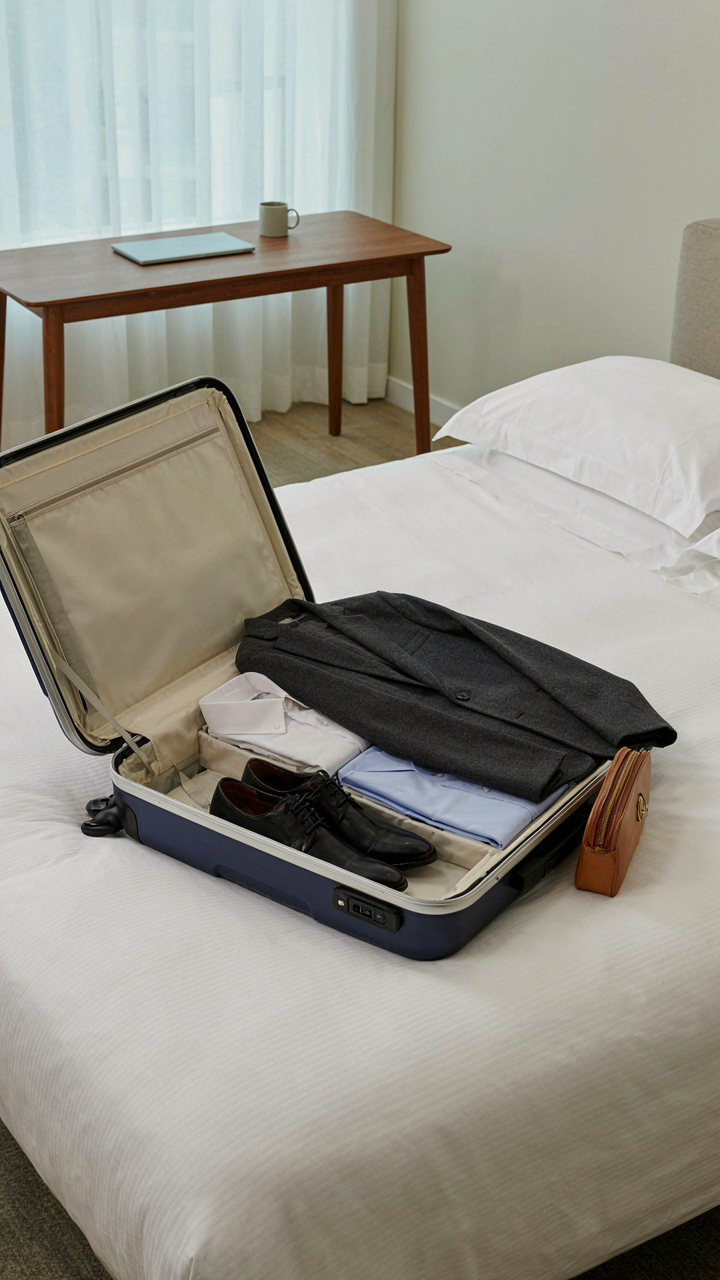
You want to believe a backpack solves everything because admitting a suitcase is sometimes smarter feels like failure. Here’s the mechanism: a suitcase converts vertical space into horizontal organization. Your clothes don’t compress into a ball. They lay flat, separated, accessible without unpacking everything else. This matters when you care about wrinkle management or need specific items without disrupting the rest.

Business travel exposes this instantly. You roll a suitcase into a hotel, open it, grab a blazer without crushing tomorrow’s outfit. A backpack forces choices: compress everything or accept a permanently wrinkled mess. The suitcase’s flat architecture wins on efficiency, not sentiment. Wheeled luggage emerged in the 1970s for exactly this reason—humans recognized that rolling beats carrying when you’re stationary most of the time.
When To Embrace The Wheeled Drag
The common advice treats wheels as universally better. They’re not. Wheels work when you control your environment. They fail the moment pavement disappears.
- Multi-floor hotels with elevators: Roll your suitcase directly to your room. No shoulder strain. Backpacks force you to carry weight regardless of distance.
- Structured airport terminals: Hard flooring and flat corridors make wheels efficient. Suitcases move faster than backpacks in designed pathways.
- Organized business districts: Rolling luggage fits the rhythm of taxis, hotels, and conference centers. The infrastructure supports wheels.
- Predictable city walking: Concrete sidewalks and tourist routes handle wheels well. You’re not navigating stairs or cobblestones every block.
- Extended stays in one location: Wheels only work if you’re not moving the bag repeatedly. One hotel for five days? Suitcase dominates.
Suitcases demand stability. Once you commit to wheels, you’ve assumed a specific travel pattern: paved routes, minimal elevation change, bag stays packed until you reach your destination. When your trip matches that pattern, a suitcase converts what would be physical labor into a simple roll. When it doesn’t, you’ve paid for a feature you can’t use.
The Decision Matrix For Standard Backpack Luggage For Trips

Start With The Trip, Not The Gear
You’re hoping there’s a universal answer so you don’t have to think. There isn’t one. The gear choice lives downstream of three variables: how long you’re gone, what terrain you navigate, and what you actually do there. A backpack solves different problems than a suitcase, and pretending they’re interchangeable wastes money and creates friction on the road. Strip the emotional attachment to either option and look at what the trip demands from your body and logistics.

Duration shapes everything. A three-day city trip has different constraints than a two-week mixed terrain expedition. Terrain determines whether wheels become a liability or an asset. Objective tells you how much you’ll walk with your luggage versus rolling it. These three inputs eliminate 80 percent of the debate. You’re not choosing based on preference. You’re matching form to function.
Backpack First, Suitcase Only When It Fits
The consensus says “it depends,” which is lazy thinking. Backpacks should be your default. A suitcase is the exception you earn, not the baseline you start with. Backpacks distribute weight across your body’s structural system, eliminate the single point of failure (broken wheel), and work on any surface. Suitcases win only when you meet specific conditions: smooth floors, short walks between transport, and no stairs. Most trips don’t meet all three.
The mechanism is biomechanical load distribution versus load concentration. Your body handles distributed weight better than weight pulling from a single point at arm’s height. Suitcases concentrate stress on your wrist, shoulder, and lower back. Before you choose a suitcase, verify you’ll actually encounter the smooth-surface conditions that justify its existence. If you’re climbing station stairs, crossing cobblestones, or navigating unpaved terrain more than twice, the suitcase becomes a liability you’re hauling for convenience that never arrives.
The Psychological Advantage Of Light Travel Gear

When Your Gear Stops Making Decisions For You
You want to feel like you have options. That’s the real reason this matters. Cognitive load is the mechanism at play here, borrowed from neuroscience. Your brain has a finite amount of decision-making capacity per day. A suitcase with wheels and a rigid frame makes decisions for you before you leave: you’re committed to the airport, the taxi, the fixed route. A backpack distributes that load across your body and your choices.

The backpack user accumulates agency. You can take stairs instead of elevators. You can cut through a plaza instead of following sidewalks. You can change plans at 2 PM without calculating whether your luggage can follow. This isn’t freedom as a feeling. It’s freedom as a reduction in the number of paths your brain has to evaluate before moving.
Speed Becomes Your Tactical Weapon
Most travel advice tells you adaptability is nice to have. It’s not. Adaptability is how you exploit gaps that rigid travelers miss. A backpack traveler can pivot to a better hotel, shift to an earlier flight, take an unexpected transit route, or abandon a plan that isn’t working in real time. The suitcase locks you into commitments the moment you pick it up.
The person with a backpack moves through uncertainty without friction. You see an opportunity. You take it. No negotiation with your gear about whether it can handle the stairs, the cobblestones, or the unplanned detour. Build your carry on strategy around this single mechanic: pack only what fits on your back, make that your standing rule for every trip.
Your True Obstacle Isn’t The Gear; It’s Your Inflexible Mindset

You’ll choose the wrong bag because you’re married to a travel style that doesn’t exist yet. The backpack versus suitcase debate only matters if you’ve already decided how you move through the world. Most people haven’t. They copy what Instagram told them to do. Pick one bag today. Use it on three trips. Then you’ll actually know what friction points matter instead of guessing. Stop researching and start moving, because your gear preferences emerge from real experience, not perfect predictions.