The Cushion Conundrum: Why Most Advice Fails Your Airline Seats
Treating Symptoms Instead Of The Root Problem
You’re buying a cushion because you don’t want to admit airlines designed these seats to cycle passengers fast, not keep them comfortable. The real problem isn’t that your tailbone hurts. It’s that airline seats compress under body weight within minutes, leaving you sitting on compressed foam that no longer absorbs pressure. Most cushion advice skips this entirely and sells you an inch of extra padding as a fix.
Adding cushion thickness doesn’t reverse compression. It delays it. The foam in a typical airline seat measures 2-3 inches and densifies from repeated use. You land on a surface that’s already lost 30-40% of its original shock absorption. A 1-2 inch aftermarket cushion buys you maybe 45 more minutes before you hit the same dead foam beneath it. You need a material that resists compression across a 7-10 hour flight, not one that feels soft on takeoff.
Ignoring How Bodies Actually Load Pressure
Pressure distribution is a physics term that separates cushions that work from cushions that fail. An airline seat concentrates pressure into two small zones: your ischial tuberosities and your thighs. Most generic cushions distribute pressure evenly across their entire surface. That’s the mismatch nobody names.
A cushion engineered for airplane seats must handle peak pressure zones differently than flat surfaces. High-density materials under pressure points, lower density around edges. This is why memory foam outperforms standard polyurethane on long flights. The gel or viscoelastic material deforms to match your specific contact points, then slowly recovers. Standard cushions compress uniformly and stay compressed. Your protocol: test any cushion by sitting on it for 15 minutes, not 2, then check if the surface has already flattened under your weight.
The Spine Alignment Protocol: Beyond Basic Seat Cushions
Lumbar Support As The Foundation
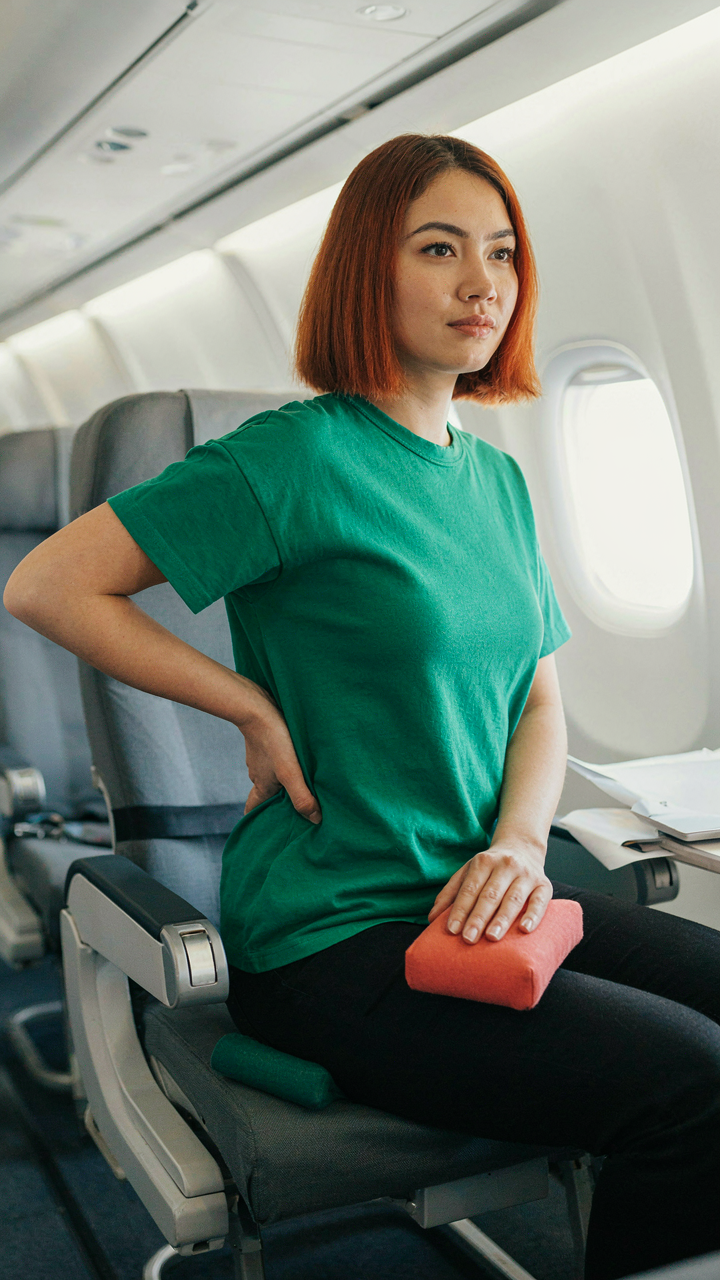
You want to believe a better cushion alone solves this problem because admitting the real issue means confronting eight hours of poor posture you’ve been normalizing. The mechanism is biomechanical: your lumbar spine has a natural curve called lordosis, and aircraft seats flatten it. Most airline cushions ignore this entirely. They add padding where it feels soft, not where your spine needs support. Real lumbar support pushes inward at the lower back, maintaining that curve against the seat back’s recline angle.
The difference between a generic airplane pillow and a lumbar-specific cushion is the depth and placement of that support ridge. You need firmness positioned exactly where your lower spine transitions to your pelvis, roughly four to six inches above the seat base. Soft padding around that zone actually worsens alignment because it collapses under your weight. Test any cushion by inserting your hand between your lower back and the seat when you’re seated normally. You should feel resistance, not sink.
Pelvic Tilt And Flight Duration
Pelvic tilt directly determines whether your spine stacks or compresses over a six-hour flight. When your pelvis rolls backward, your lumbar spine follows into flexion, straining the discs. Airplane seats encourage this because the seat bottom slopes slightly downward toward the front. You compensate by leaning forward or hunching, which compounds the problem. A proper cushion tilts your pelvis forward by raising the back portion of the seat bottom, not the lumbar region.
This is why thickness alone misleads you. A two-inch generic memory foam cushion does nothing for pelvic angle. You need a wedge-shaped design where the rear elevation is higher than the front, creating a slight forward tilt. On long flights, this single mechanical change reduces disc pressure and prevents the lower back pain that hits in hour five. Verify the wedge by sitting on the cushion with your legs extended and checking if your knees drop slightly lower than your hips.
Pressure Mapping: A Newtonian Approach To Airplane Seats
Force Distribution Over Your Sitting Surface
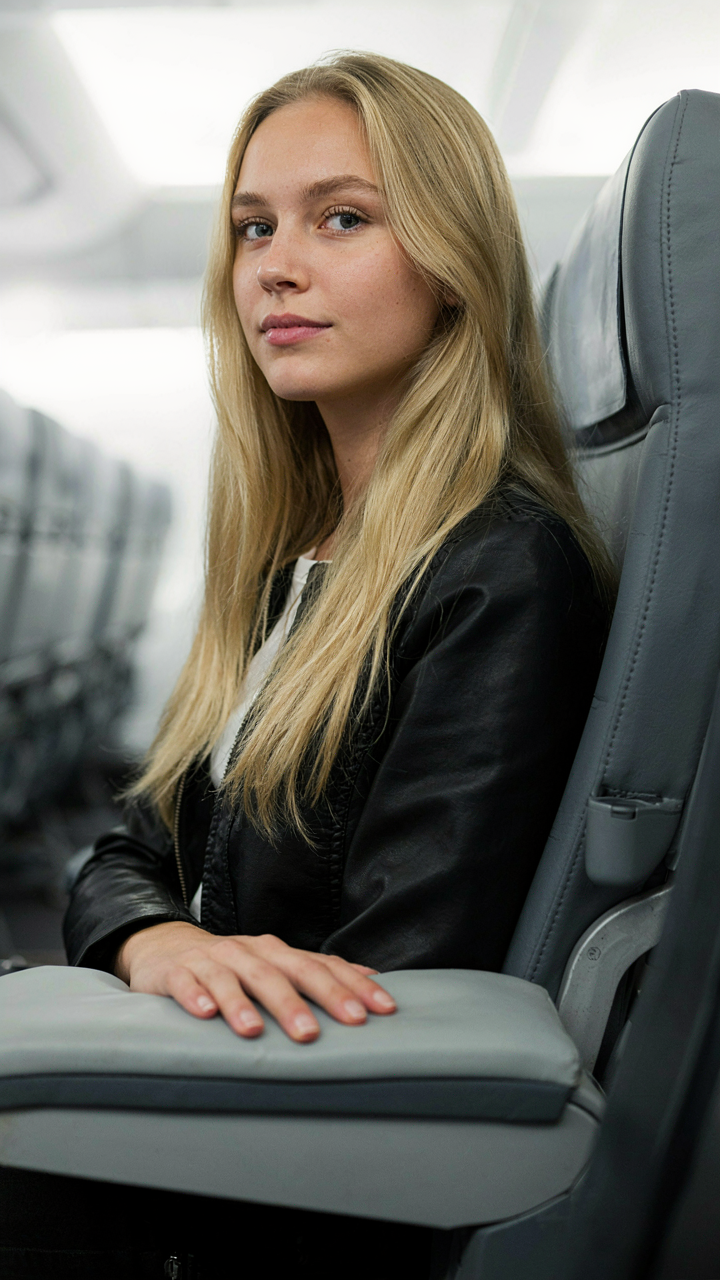
You want to believe a thicker cushion solves the problem. It doesn’t. Physics says pressure equals force divided by area. A thin cushion concentrating your weight onto seat frame edges creates localized pressure spikes. A thick cushion spreads that same force across a wider surface, lowering pounds per square inch at any given point. Most airplane seat cushions fail because manufacturers prioritize cost over surface area geometry. They compress to nothing within hours, collapsing the pressure benefit you paid for.

The mechanism is straightforward: cushion density and thickness interact with your body weight to determine whether pressure distributes evenly or concentrates at contact points. A four-inch high-density foam cushion outperforms a six-inch low-density one on a six-hour flight. Your sitting bones and thigh support points demand consistent contact pressure below the pain threshold. Once cushion material bottoms out, you’re sitting on plywood again, and no amount of padding helps.
Localized Support Beats Universal Softness
The military strategy of attrition versus surgical strike maps directly onto cushion design. Attrition says “add more cushioning everywhere.” Surgical strike says “identify the two pressure points that hurt and reinforce only those.” Airlines use attrition because it’s cheaper. You should reject that logic.
Your ischial tuberosities, sitting bones, generate the highest pressure loads. Your thighs experience secondary pressure from the seat edge digging upward. A competent cushion firms up under your sitting bones and softens at the thigh edge. This layered density approach is what separates functional from useless. Most travel cushions ignore thigh edge pressure entirely, then buyers complain about circulation problems and leg numbness after four hours. The protocol is simple: test any cushion by pressing your palms directly on the sitting bone area and thigh edge area separately. If both areas feel identical, the cushion was engineered by someone who’s never sat down for a full workday.
The Inflatable Advantage: Precision For Travel Essentials
How Air Pressure Matches Your Body
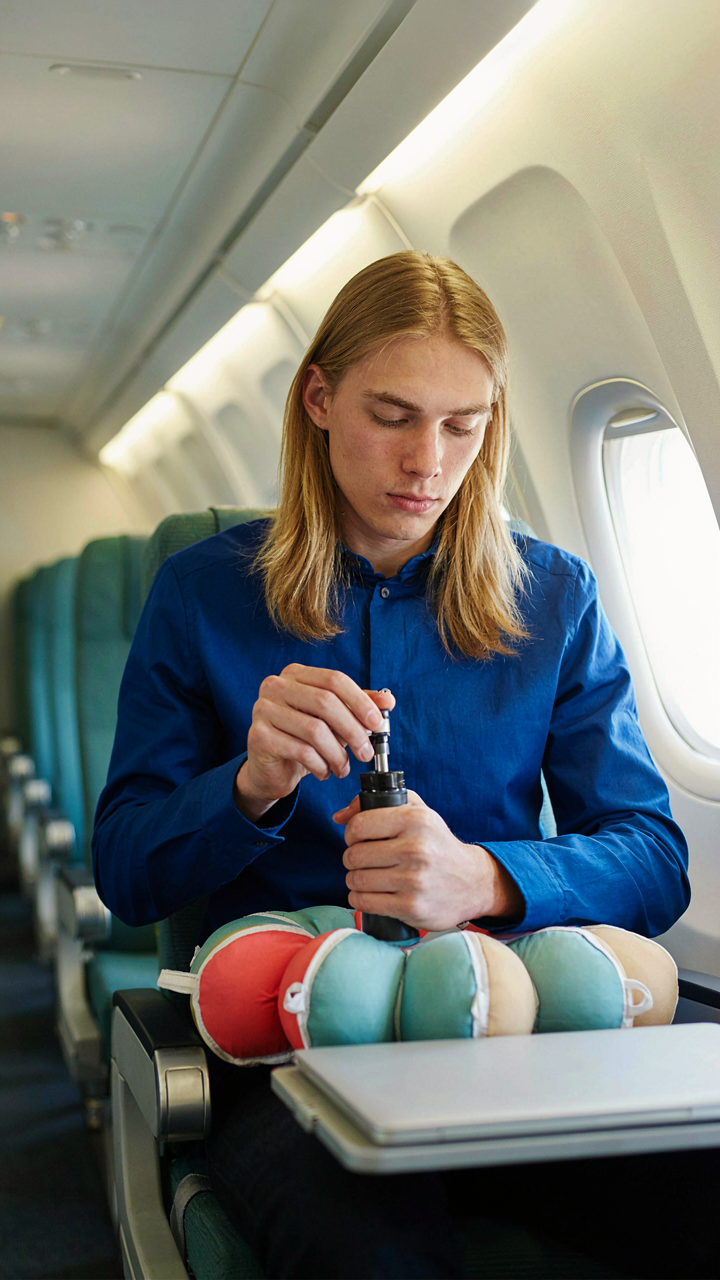
You want a solution that works for everyone so you don’t have to think about your own setup—but that’s exactly why inflatable cushions win. Borrowing from ergonomics, the principle of “load distribution” means spreading weight across a surface rather than concentrating it on pressure points. A static foam cushion does the opposite: it compresses uniformly under your specific weight and shape, then stays locked in that position. An air-filled cushion lets you adjust pressure independently, which means a 140-pound person and a 220-pound person can use the same product and each dial in their actual load requirements.
The mechanism is simple. You add or remove air until the cushion resists your weight without bottoming out. Most inflatable travel cushions ship partially inflated because manufacturers assume an average build. This is the mistake everyone makes: they accept that baseline instead of spending ninety seconds customizing it. Start by sitting and checking if you feel the seat frame through the cushion. If yes, add air. If the cushion feels mushy and your legs go numb after two hours, release air. The goal is a firm surface that doesn’t transmit seat structure into your bones.
Adjustable Zones Beat One Firmness Level
The consensus advice says foam is durable and inflatable is fragile. Wrong. Modern air-cell designs outlast foam on long routes because they don’t compress permanently. A static foam seat cushion degrades fastest under repeated pressure cycles—exactly what a twelve-hour flight delivers. An inflatable with separate air chambers lets you pressurize the lower back region independently from the thigh support zone, which means you’re not forcing one firmness choice across your entire sitting surface.
This matters because your lumbar spine and your thighs have different support needs. Your lower back needs resistance to prevent slouching; your thighs need less pressure to avoid cutting off circulation. Inflatable cushions with dual chambers let you run higher pressure in the back support and lower pressure under the legs. No foam cushion offers this control. You pump the back chamber to 60 percent firmness and the thigh chamber to 40 percent, then you stop adjusting mid-flight because the pressure stays stable. That’s the mechanism: segmented air pressure eliminates the compromise baked into every one-piece foam design.
Memory Foam Myths: What Your Travel Pillow Hides
The Heat Trap Problem
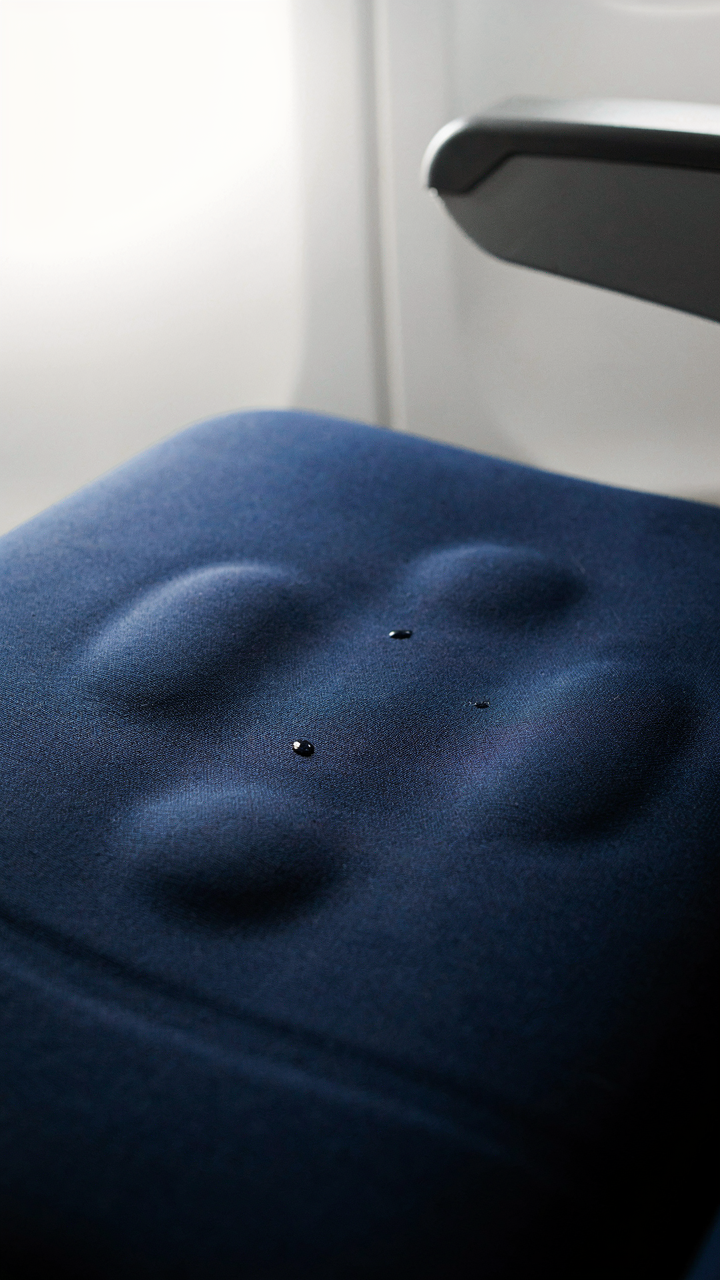
You want to believe memory foam is magic because admitting it has a real downside means you picked wrong. Here’s the mechanism: memory foam absorbs and traps body heat. Thermodynamics says objects transfer energy to reach equilibrium with their environment. A cushion that retains heat instead of dissipating it becomes a thermal battery against your body during a six-hour flight.

Most travel pillows use viscoelastic foam that softens at body temperature, which is the point. But this same property means the material never cools down. Your compressed cushion section stays warm and damp from sweat and humidity. Eight hours in that microclimate breeds discomfort and skin irritation nobody mentions because the marketing doesn’t.
Density Lies About Real Support
The industry tells you higher density means better support. That’s incomplete. Density measures weight per volume, not how well a material resists compression under sustained load. A dense foam can compress quickly under your body weight on a long flight, while a less dense foam with the right cell structure maintains its shape.
Airlines and seat manufacturers use medium-density foam because it’s cost-effective and feels firm initially. After four hours of pressure, it bottoms out. The cushion compresses into itself, and you’re sitting on the hard seat base. What matters for long flights is compression set: how fast the material loses its original thickness under continuous pressure. Check that specification, not density alone.
The Minimalist’s Toolkit: Essential Comfort, Not Clutter
Function Over Status Signaling
You want a cushion that makes you look like you have it figured out. Here’s what actually matters: density and contact surface area. A seat cushion works by redistributing pressure across bone contact points, not by looking premium. Most people buy cushions with too much padding, which actually compresses under body weight and creates worse pressure distribution than the original seat. The mechanism is simple. High-density foam maintains shape under pressure. Low-density foam bottoms out, leaving you back where you started but lighter in the wallet.
The right cushion solves one problem: keeping your sit bones from bearing all the load during a six-plus hour flight. Thickness between two and four inches handles this without adding bulk to your carry-on. Beyond that, you’re paying for brand marketing and visual bulk that does nothing. Test any cushion by pressing your thumb into it. If your thumb sinks more than half an inch before hitting resistance, the foam won’t perform on a real flight. Density matters more than size.
Gear That Earns Its Weight
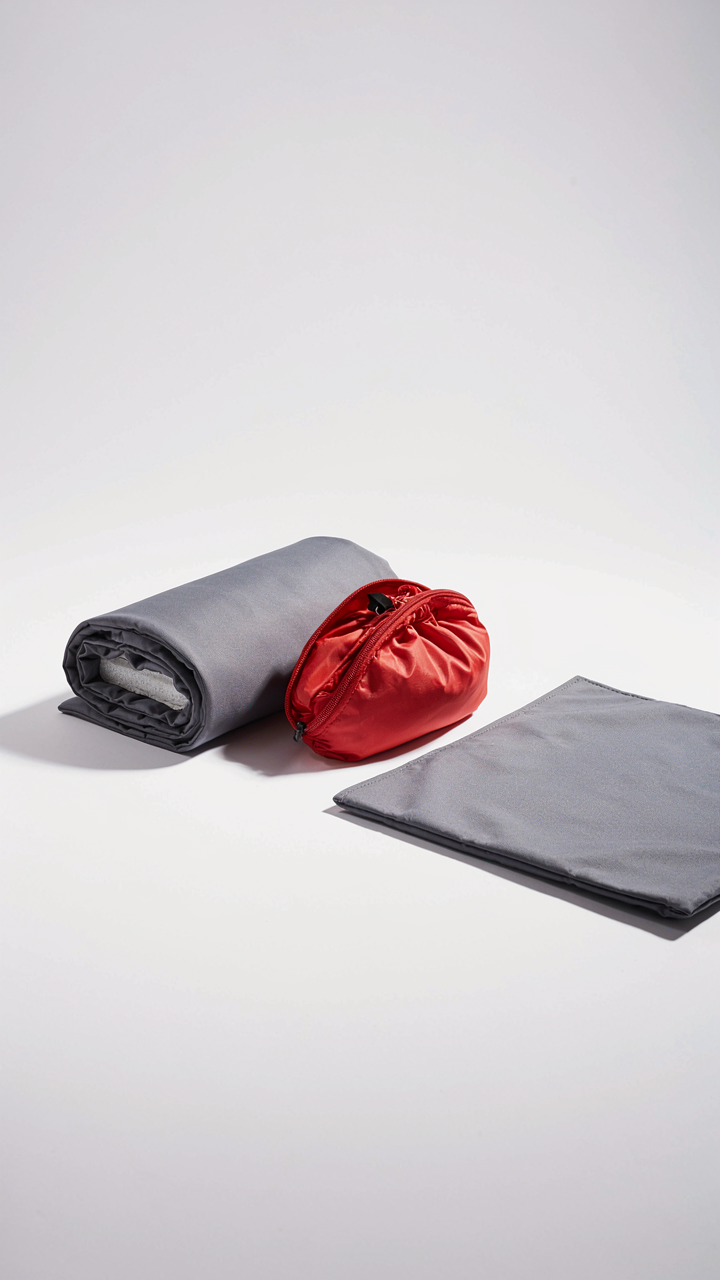
A single-purpose travel cushion is dead weight on non-flight trips. The practical move is choosing items that solve multiple problems across different travel contexts. A lumbar support cushion compresses smaller than a full seat cushion, fits in a daypack, and works on car rides, office chairs, and flights. Memory foam designs adjust to your spine regardless of seat shape, making them portable problem-solvers instead of specialized equipment.
Compression bags reduce your cushion’s packed volume by thirty to fifty percent without damaging the foam. Rolling rather than folding preserves structural integrity. Pair this with a cushion that detaches its cover so you can wash it mid-trip. This single protocol keeps you from carrying backup cushions or dealing with odor on longer journeys. One cushion, one cover, one compression approach handles six flights or twelve driving days with zero redundancy.
Pre Flight Prep: Optimizing Your Seating Environment
The Posture Problem Nobody Names
You’re worried you’ll arrive stiff and broken because you’ve internalized the myth that airplane seats are inherently hostile to your body. They’re not. The mechanism is simpler: your body atrophies in any fixed position after four hours. Airplane seat cushions don’t cause pain—immobility does. The lumbar curve in most economy cushions sits too far back, forcing your pelvis into posterior tilt. Your hip flexors shorten. Your lower back flattens against the seat back. Thirty minutes of deliberate posture work before and during flight prevents this cascade entirely.

Lean forward and grip your toes for sixty seconds before boarding. This resets hip flexor length and reminds your nervous system what anterior pelvic tilt feels like. Once seated, place a small object (water bottle, book) under your lower back to restore the natural curve the cushion removed. Every ninety minutes, stand in the aisle and perform a backward bend, holding for ten seconds. This counters the forward slouch the cushion geometry enforces. The cushion isn’t your enemy—your static position is.
Using What Airlines Already Give You
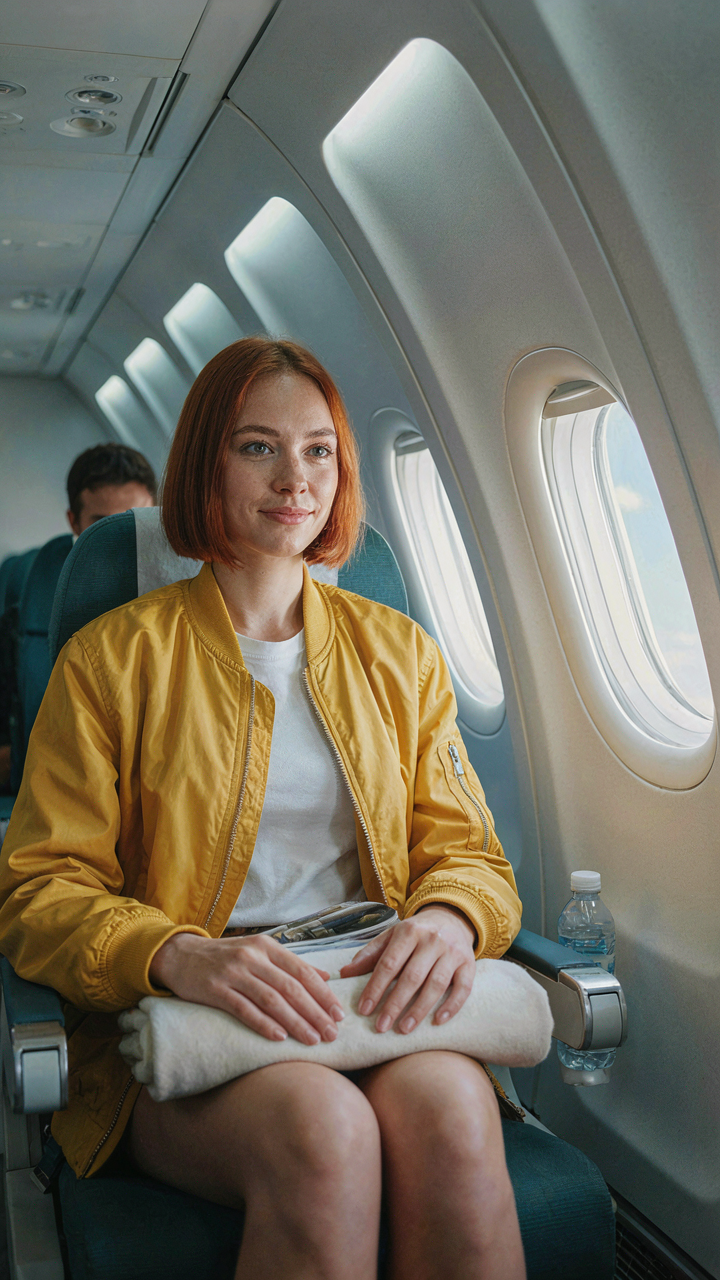
Most advice tells you to buy a special pillow. The real move is recognizing that airlines include tools airlines already provide that cost nothing. Blankets double as lumbar support when rolled and wedged behind your lower back where the cushion curves away from your spine. The seat recline mechanism adjusts cushion angle—recline incrementally until your hips sit slightly higher than your knees, which tilts your pelvis forward and engages your core stabilizers. Airlines provide this geometry for free.
Request a second pillow during service and position it horizontally across the seat cushion itself, not just behind your head. This elevates your thighs slightly, reducing pressure on the back of your thighs where cheap foam compresses fastest on long flights. Armrest positioning matters too. Lower the armrest fully to create a flat surface where your hip and seat cushion meet continuously, preventing the edge collapse that cuts off circulation. Test this setup on the ground before takeoff.
The Posture Reset: Reclaiming Your Comfort On Long Trips
Small Shifts That Compound Over Hours
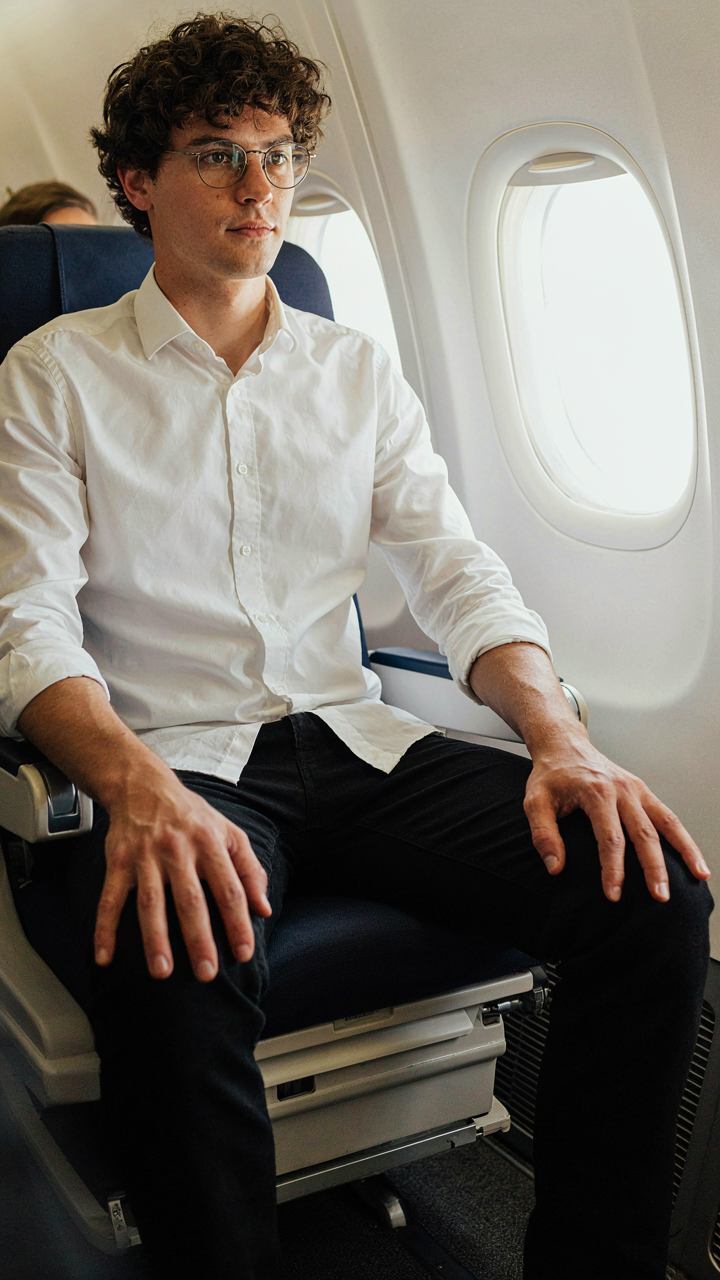
You’re reading this because you’ve convinced yourself that suffering through eight hours is normal, that toughness matters more than mechanics. It doesn’t. The real mechanism here is borrowed from ergonomics: load distribution. Airplane seat cushions distribute pressure unevenly because they’re engineered for turnover speed, not spinal alignment. Micro-adjustments shift pressure points before tissue damage accumulates into pain.
- Seat height adjustment: Raise or lower the cushion using the side lever to align your thighs parallel to the floor, reducing lower back strain and femoral nerve compression.
- Hip positioning: Slide your hips toward the seat back, then forward one inch at a time until your lower back contacts the lumbar support without strain.
- Lumbar support depth: If your seat has a manual lumbar adjustment, increase support gradually until you feel your spine settle, not tighten.
- Shoulder blade alignment: Adjust the seat recline slightly so your shoulder blades rest flat against the backrest, preventing forward head posture creep.
- Cushion rotation: Every 40 minutes, shift your weight by lifting one side of your body and settling it back down to redistribute pressure zones on the foam.

None of these require equipment. They require attention. Most people ignore seat adjustments entirely and wonder why they hurt. The mechanism is simple: pressure concentration creates localized numbness and pain. Breaking that concentration before it starts prevents the cascade. Make these shifts every 30 to 45 minutes rather than waiting until pain forces you to move.
Breaking The Stiffness Loop Before It Locks In
Conventional advice says to just get up and walk. That’s incomplete. The real problem is that airplane seat cushion foam hardens under sustained pressure, and your muscles adapt to that hardness by tightening. Once tightened, standing up only resets the timer. You need active tension release, not just positional change. This works because muscle tension and cushion pressure create a feedback loop that compound each other.
The protocol is direct: every 50 minutes in the seat, perform three specific moves before leaving your row. First, press both feet flat into the floor and tighten your leg muscles for five seconds, then release completely. This forces blood back into tissues compressed by the cushion. Second, pull your shoulder blades together and hold for three seconds, release, then repeat four times. This counteracts the forward slouch that airplane cushions encourage. Third, tilt your pelvis forward and backward five times while seated, a movement that resets spinal disc pressure. Then stand and walk. The difference is that you’re not resetting from zero each time. You’re breaking the adhesion before it calcifies into stiffness that lasts days after landing.
The Real Obstacle Isn’t The Seat; It’s Your Passive Acceptance Of Discomfort
You’ve normalized suffering on planes. You board expecting pain and leave disappointed you didn’t get more. The cushion matters, but your mindset matters more. Stop treating discomfort like a tax on travel. Buy the right cushion today. Test it on a short flight. Your body will thank you, but more importantly, you’ll stop accepting what you never had to tolerate in the first place. Comfort is a choice, not a luxury.