The Illusion Of More: Why Overpacking Cripples Minimalist Travel

Packing Fear Masquerading As Preparation
You’re overpacking because you’re terrified of looking unprepared in front of people who won’t remember your trip. The mechanism is simple: your brain treats a full suitcase as insurance against social failure and logistical chaos. Every extra item feels like a safety net. But this is backward math. More items don’t reduce risk. They increase the surface area for problems.
Think of overpacking through systems theory, where friction scales with complexity. Each item you add multiplies your decisions, your vulnerability to loss, and your cognitive load. A two-week trip with a 50-pound suitcase means you’re carrying dead weight across airports, up hostel stairs, and through train stations. That friction compounds daily. By day four, you’ve made a hundred micro-decisions about what to wear. By day ten, you’re exhausted from managing stuff instead of experiencing the trip.
Decision Fatigue Disguised As Choice
Overpacking doesn’t give you options. It gives you paralysis with a better suitcase. Every morning you stand in front of seven similar outfits and burn mental energy choosing between them. This isn’t abundance. This is the opposite. You’re spending decision-making capital on low-stakes clothing picks when you should be directing that energy toward navigating unfamiliar streets or having real conversations.
The research on decision fatigue is clear: every choice depletes your cognitive reserves, even trivial ones. After fourteen days of unnecessary clothing decisions, you arrive home mentally drained instead of energized. Strip your wardrobe to five core pieces that layer and repeat. Wear the same outfit twice. Nobody tracks this but you. The payoff is immediate: mental clarity for the decisions that actually matter, plus the physical freedom to move without dragging a anchor behind you.
The Scarcity Principle: How True Minimalist Packing Rewards

When Constraints Force Better Decisions
You want to pack light because it makes you feel smart and unburdened. That’s the real reason. But what actually happens is this: scarcity economics applies directly to your luggage. When you remove options, you stop defaulting to comfort and start optimizing for use. Economics calls this the substitution effect. You substitute abundant choice with ruthless prioritization. A traveler with one pair of pants wears it three times a week instead of rotating through five mediocre options. That traveler learns what actually works. Most packing advice skips this part.

Constraint forces intention. You can’t pack “just in case” when space doesn’t exist. Every item must justify its weight and volume against everything else competing for space. This isn’t about suffering or proving toughness. It’s about forcing your brain to calculate real value instead of storing future possibilities. After two weeks of this, you know exactly what you need for travel. You’ve eliminated the guessing. That knowledge compounds every trip forward.
The Friction Point That Builds Presence
Scarcity pulls you into the present moment because friction increases. When you have three shirts instead of ten, you notice what you’re actually wearing. You notice how fabrics perform in humidity. You notice which colors work with your skin in different light. You pay attention because you have no backup plan. This isn’t motivation or mindfulness hype. It’s neurological. Your brain allocates attention to scarce resources.
Most travel guides treat packing as logistics to get right. They miss that minimalism creates immediate feedback loops. You wear the same shoes for fourteen days straight and learn exactly how they age, what they pair with, where they fail. You discover this through use, not speculation. That feedback becomes the foundation for your next trip’s decisions. Pack six items instead of twelve, and you’ve increased your awareness of every single item by at least fifty percent.
The Anti Packing List For Minimalist Travel Packing

What You Actually Don’t Need
You’re reading this because you’re terrified of looking unprepared. Here’s the mechanism: you confuse abundance with security. The real move is understanding that most items in your closet solve problems that don’t exist on a two week trip. You’re not climbing Everest. You’re not performing surgery. You’re moving through cities and staying in rooms with walls and roofs.
- Multiple pairs of shoes: One primary shoe and one backup (flip flops or slip ons). Your feet won’t change size. Different environments don’t require different sole patterns for two weeks.
- Backup toiletries: Hotels and pharmacies exist everywhere. Shampoo, deodorant, and sunscreen are commodities. Buy them there or buy them once you arrive. Weight saved is freedom gained.
- Formal clothing you might wear: That blazer won’t come out. Neither will the dress pants. If you haven’t worn it in six months at home, you won’t wear it abroad. Accept this.
- Backup phone charger: One cable. USB-C or Lightning. One. Outlets exist in every room. You’re not trekking the Sahara without electricity.
- Sentimental items or keepsakes: Paper, photos, objects with emotional weight. They occupy physical and mental space for zero functional return. Leave them.
- Rain gear beyond a packable layer: Full raincoats, umbrellas, galoshes. Most trips don’t require them. When rain does hit, wet clothes dry. You survive.

The physics principle at work here is load distribution: every item above the threshold of actual need reduces your mobility and increases cognitive overhead. You spend mental energy tracking what you brought instead of experiencing where you are. Strip aggressively.
The Weight You Can’t See
Denial is the real baggage. You pack items not because you’ll use them, but because you might need them. The difference matters. “Might” is anxiety dressed as planning. You’ve trained yourself to believe that carrying options equals being prepared. It doesn’t.
The mechanism is sunk cost thinking applied backward: you bring three pairs of pants because you already own them, so the marginal weight feels free. It isn’t. Every item you don’t pack is a decision you make once. Every item you do pack is a decision you remake every morning of your trip. Pack eleven shirts and you’ll spend two weeks deciding which shirt to wear. Pack four and the choice disappears. The mental clarity from constraints outweighs the false security of options.
The Second Order Thinking Protocol For Minimalist Trip Packing

Every Item Carries Hidden Weight
You want to pack light so you look like you have your life together. But here’s what actually matters: every object you pack creates a decision tax throughout your trip. Borrowing from systems thinking, each item functions as a node with multiple connections—not just its primary use, but the ripple effects it creates. A single extra shirt doesn’t weigh much. The problem is the mental friction it generates: should you wear it today, does it need washing, is it taking up space you need for something else?

The real mechanism works like this. When you pack something, you’re not just adding weight to your luggage. You’re adding a choice you have to make every single day of your trip. That choice drains cognitive resources. You’re also committing to laundering logistics, packing and unpacking time, and the constant low-level anxiety of managing more than you need. Most packing advice ignores this. People tell you to “pack versatile pieces” or “choose a color palette.” That’s correct but incomplete. The deeper layer is understanding that each item generates a chain reaction of micro-decisions that compound over fourteen days.
The Future Self Problem Is Real Friction
Pack for the person you are on day one, not the person you fear you might become. Most travelers overpack because they’re protecting against imaginary scenarios—a sudden weather shift, an unexpected formal dinner, a spontaneous hike. This is fear disguised as preparedness. The friction it creates is immediate and measurable. You carry the weight every moment you’re moving between locations. You waste time deciding what to wear. You mentally track what’s clean and what’s dirty. The math is brutal: an extra pound in your bag for fourteen days means moving an extra 42 pounds across airports, up stairs, through cobblestone streets.
Future self impact cuts the other direction too. Overpacking on day one sets a psychological precedent. You arrive at your destination with excess, which makes you less adaptable when you actually discover what you need. You also arrive tired from managing luggage, which degrades your decision making for the entire first day. The protocol is simple: pack the minimum viable set for days one through three. Once you’re there and acclimated, you know what you actually need. If you’re missing something critical, you buy it locally or adjust your plans. This isn’t improvisation. It’s respecting the data that only time and place can provide.
The Unpack Mindset: A Systems Approach To Minimalist Packing
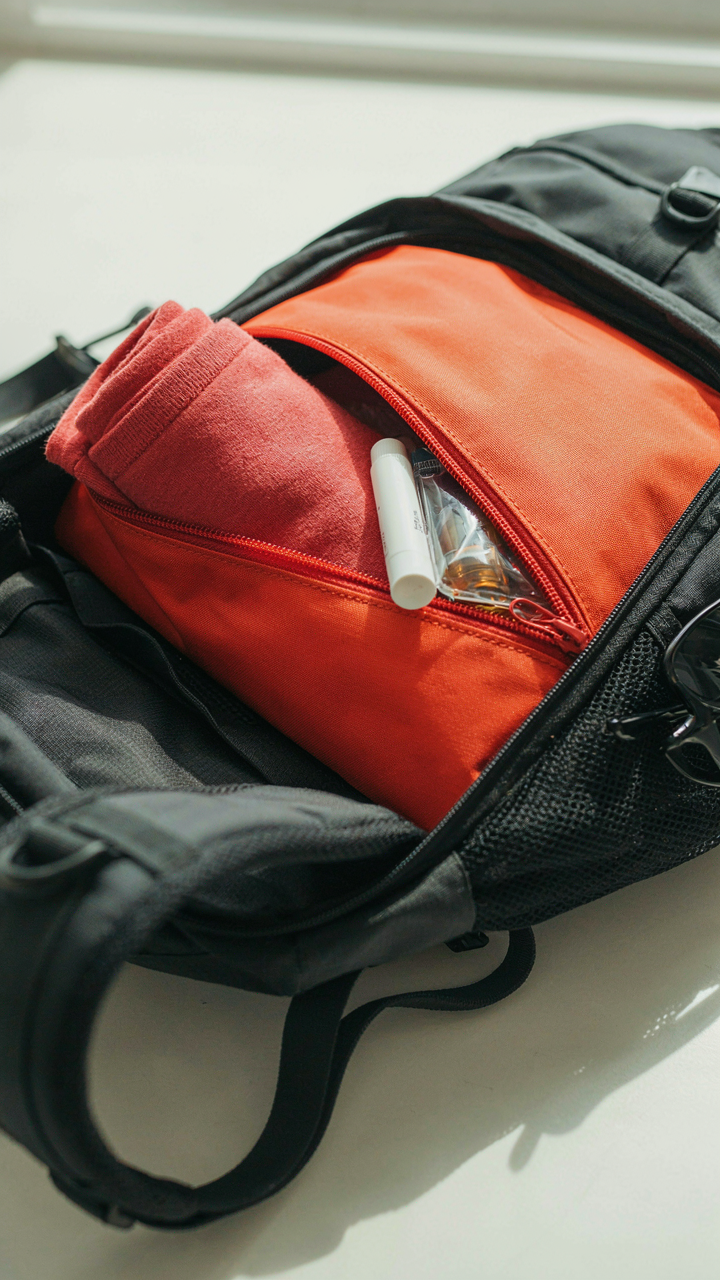
Flow Beats Weight Every Time
You want to feel smart about your packing choices. That’s why you’re reading this instead of just throwing stuff in a bag. But smart packing isn’t about owning less. It’s about moving faster.

Logistics thinks in terms of throughput: how much value moves through a system per unit of time. Apply that to your luggage. Every item should reduce friction between you and what you’re actually doing on the trip. A piece that takes three minutes to locate, or requires setup, or depends on something else you packed, reduces your throughput. Your real constraint isn’t cubic inches. It’s decision fatigue and access speed. Arrange your bag so the thing you need at 6 AM doesn’t live under everything else. That’s the entire game.
The common advice says “pack light and versatile.” That’s incomplete. You need items that work in sequence without creating bottlenecks. If your toiletries require you to unpack half your bag to access them, you’ve failed the system. If your shoes need a separate compartment that duplicates space, you’ve failed. Build for retrieval speed, not minimalism as a status marker.
Redundancy That Actually Costs Less
Most people think redundancy means buying backup items. Wrong. Redundancy in efficient systems means choosing items that solve multiple problems so you need fewer total pieces.
One pair of shoes that handles casual walking, light rain, and restaurant dinners beats two pairs that each handle one thing better. One lightweight button-up that works as a top, a light layer, and a dress shirt beats three specialized pieces. The redundancy isn’t in quantity. It’s in function density. You’re reducing total items by making each item do more work. Two pairs of socks designed for three different climates beats six pairs designed for one each. The trade-off is specificity, not cost. You accept a 10 percent compromise on any single use case and eliminate 50 percent of your items. That math doesn’t lie. Pack items with overlapping purposes, not backup coverage.
Beyond Essentials: The Strategic Single Purpose Item

When Rules Break
You want permission to pack something unnecessary because you’re afraid two weeks without it will expose you as unprepared. Here’s the mechanism: multi-use packing works until context shifts faster than your gear adapts. The rule isn’t absolute. It breaks when a single item solves a problem no combination of multi-use gear can solve without friction. That friction costs time, comfort, or both. Identify the friction first. The item comes second.

A two-week trip has enough variables that one specialized tool often saves more weight than the redundant functions you’d build into everything else. Think like systems engineering: reducing single points of failure sometimes requires a dedicated component. The mistake most minimalists make is treating “fewer items” as the goal instead of treating “fewer problems” as the goal. One item that does one thing perfectly often outweighs three items that do three things adequately.
Maximum Leverage From One Unique Item
The item you choose must create asymmetric value. A quick-dry microfiber towel in humid climates eliminates the need for a heavier backup or waiting for cotton to dry. A compression bag with a valve doesn’t reduce items but it reduces volume by thirty to forty percent, which changes what fits. A small portable charger in cities with unreliable outlets keeps your phone from becoming dead weight. The item earns its place by solving a specific environmental constraint, not by being clever.
Test the item against this protocol before packing it: Does it solve a problem your multi-use gear creates friction around? Can you use it on every day of the trip or only in specific contexts? If context-specific, does the problem it solves occur often enough to justify the weight? If the answer to all three is yes, pack it. If any answer is no, leave it behind.
The Velocity Of Minimalist Packing: Time As Currency

Packing Speed Unlocks Real Movement
You want this because you think efficiency is about looking smart. It’s not. The real mechanism is this: every minute spent deciding what to pack is a minute you’re not moving. Economics calls this opportunity cost. In minimalist packing, your constraint is mental friction during the packing phase itself. Reduce it, and you compress the dead time between deciding to travel and actually traveling.

Most people pack in layers of doubt. They add items, remove them, add them back. They debate the same three shirts for twenty minutes. Minimalist packing kills this loop by establishing non-negotiable rules before you pack. You decide your color palette, your garment count, your utility items once. Then you execute the same protocol every trip. The packing process moves from ninety minutes of deliberation to fifteen minutes of loading.
Freed Hours Become Actual Experience
The time you reclaim doesn’t translate to “relaxation” or “better vibes.” It translates to arrival buffer. You pack faster, you leave earlier, you arrive with daylight still available for exploration instead of hotel check-in logistics. You scout neighborhoods on day one instead of day two. You eat where locals eat instead of where your guidebook points. Depth comes from early arrival, not from more days on the calendar.
Minimalist packing creates a compounding return on arrival time. Two extra hours on day one compounds into familiarity and confidence that shapes your entire trip. You move through the destination with intention instead of reaction. The mechanism: fewer items to manage means fewer decisions about logistics, which means more cognitive space for navigation, conversation, and observation. When you reduce packing complexity, you increase presence.
Curating Your Travel Capsule: The Wardrobe Algorithm
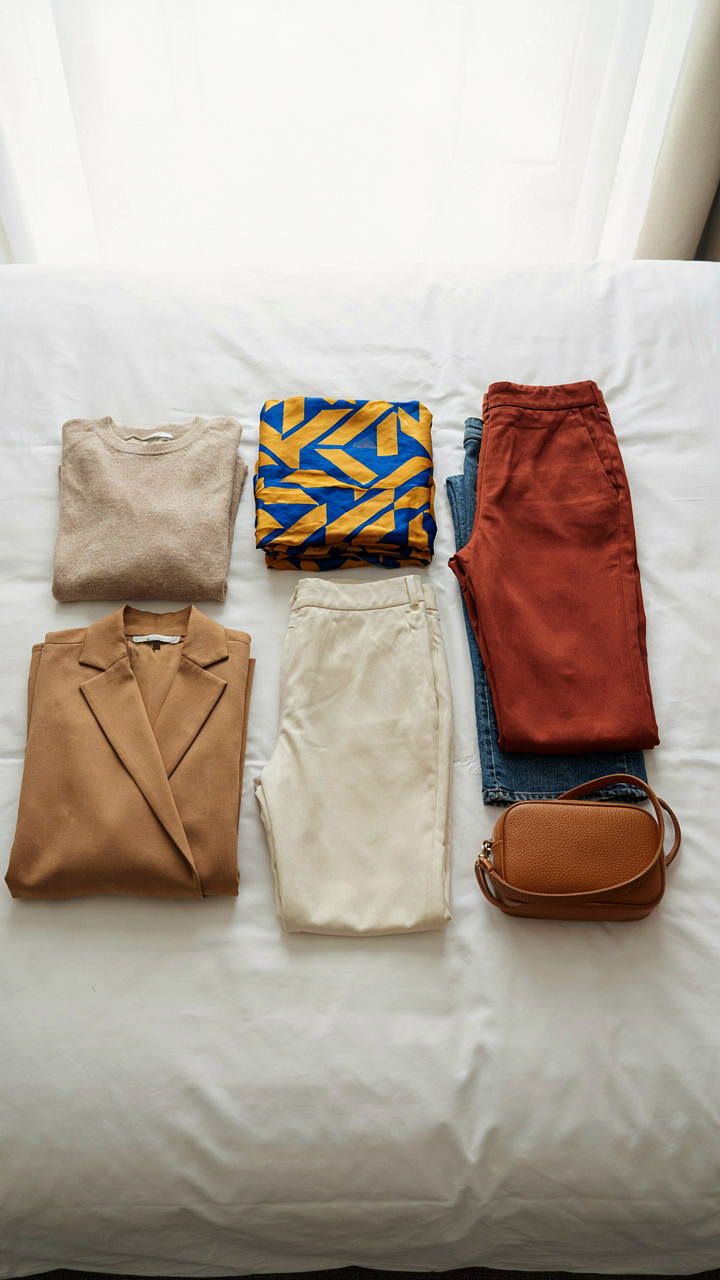
The Interchangeability Matrix
You want to feel like you packed enough without admitting you’re afraid of laundry and running out of options. The real mechanism is borrowed from systems design: constraint-driven optimization. Every piece must function as a node connecting to multiple other pieces. This isn’t about matching outfits. It’s about mathematical overlap where each item justifies its weight by working with at least three others.
- Neutral Base Layer: One long-sleeve shirt in cream, gray, or white that pairs under everything and works alone in mild weather. Acts as foundation for color combinations.
- Two Bottoms Rule: Select one in dark neutral (navy or black) and one in lighter neutral (khaki or tan). Both must work with every top you pack.
- One Statement Layer: A patterned or textured piece that bridges your neutrals. Can be worn over basics or standalone depending on climate and social context.
- Outerwear as System: Choose one jacket that handles your trip’s worst-case weather. It replaces the need for multiple lighter options by layering underneath.
- Shoes as Infrastructure: Two shoes maximum. One handles walking and casual use. One handles dressier situations or different terrain. Both must work with all bottoms and top combinations.

The filter is simple: before packing any item, name three other items it connects to without forcing it. If you can’t find three legitimate pairings, it doesn’t go. This eliminates dead weight masquerading as backup options. Two weeks demands ruthless efficiency, not insurance policies.
The Material Hierarchy
Common advice says “pick natural fabrics.” Wrong framing. Natural doesn’t mean durable or practical for travel. The real leverage is selecting materials engineered for function over origin. Merino wool dries faster than cotton, resists odor across multiple wears, and handles temperature swings. Synthetic blends move moisture faster than pure natural fibers and survive repeated washing without degradation.
Pay attention to fabric weight and weave density. A 160-gram merino base layer works year-round in most climates. A 200-gram weight becomes too heavy for warm destinations and takes longer to dry. Nylon and polyester blends rated for travel (not fashion) last through daily use and compress smaller than natural alternatives. Test durability by checking seam construction and checking if the brand publishes wash cycle limits. Buy items that survive 50+ washes without pilling or fading. Pack accordingly: one pair of pants treated well lasts the full trip.
Digital Minimalism: Your Invisible Packing List For Travel

Apps That Actually Work Offline
You want to feel prepared without carrying dead weight in your phone. The real mechanism here is simple: connectivity fails, so your device becomes useless without offline capacity built in. Maps, translation, boarding passes, and currency converters need to function when your signal doesn’t. Download these before you leave, not at the airport when panic sets in.

Google Maps lets you cache entire regions for offline navigation. Translate apps like Google Translate download language packs so you read menus and signs without data. Boarding passes live in your phone’s wallet app after download. XE Currency Converter and similar tools store exchange rates locally. The goal isn’t downloading everything. It’s downloading only what solves actual problems you’ll face in the next two weeks.
The Notification Kill Switch
Most travel advice tells you to “stay present” and “disconnect.” That’s soft. The real issue is that notifications fracture your attention into pieces your brain can’t reassemble, which means you miss what you actually traveled to see. Think of attention like an air traffic control system: each notification is a plane requesting landing clearance. Too many simultaneous requests and the whole system fails.
Before departure, disable all notifications except phone calls and texts from saved contacts. Turn off every app badge, every vibration alert, every banner. Email, social feeds, news, work Slack. They all vanish from your phone’s surface. You check them on your schedule, not theirs. This creates a hard boundary between experience and information consumption that two weeks isn’t long enough to break back into old patterns.
Your Real Obstacle Isn’t What To Pack, But Your Addiction To Perceived Security
You don’t overpack because you need more stuff. You overpack because uncertainty feels dangerous, and objects feel like control. Every extra item whispers: what if? Your brain treats a backup outfit like insurance against chaos. It isn’t. Strip down to fourteen days of actual wear tomorrow. Not next week. Notice the anxiety that rises. That feeling is the real work. You’ll pack lighter when you stop believing that more things equal more safety.