The Myth Of Universal Comfort: Why Your Earbuds Fail
The Engineering Problem Nobody Names
You want to believe one pair works for everyone because buying multiple pairs feels like failure. Here’s what actually happens: most sleep earbuds prioritize visual minimalism over the anatomical reality of human ears. The fit mechanism determines everything else. Borrowing from mechanical engineering, every earbud needs what engineers call a “contact point strategy”—where the device interfaces with its surface. Sleep earbuds typically have one or two contact points. Your ear has dozens of unique geometries.
Manufacturers design for the statistical average ear, which doesn’t exist in your head. They optimize for insertion depth and nozzle angle, then call it done. The result: pressure hotspots that feel fine for twenty minutes, then become intolerable. The earbud shifts because the design can’t account for how your ear canal changes shape when you lie down, turn your head, or relax into sleep.
Anatomy Before The Marketing Photo
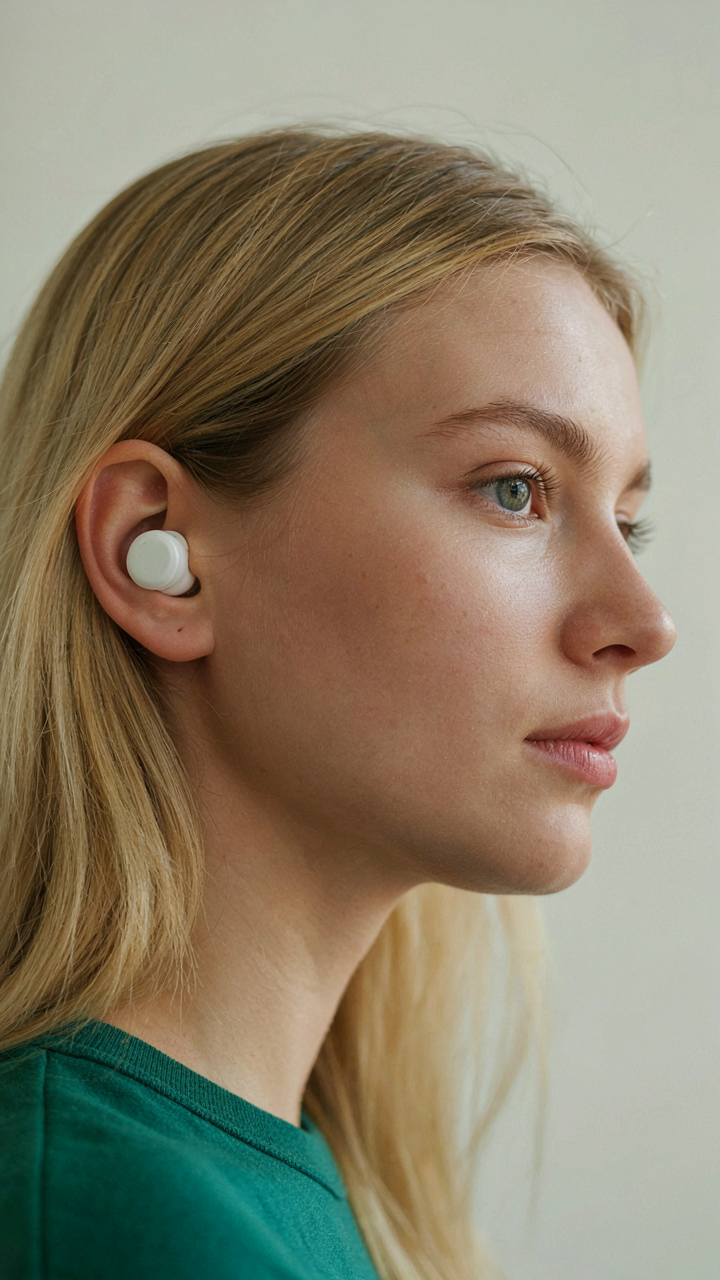
Sleep earbuds fail because comfort design happens after the aesthetic is locked. Your ear anatomy is asymmetrical—your left and right ears don’t match, and neither matches anyone else’s. The concha depth, canal angle, and tragus prominence vary enough that a single earbud shape cannot stabilize equally in both ears without active adjustment or multiple fit options.
The mechanism is simple: surface area of contact divided by pressure applied equals comfort duration. Most travel sleep earbuds minimize contact area to feel “lightweight,” which concentrates pressure into a smaller zone. This works until you shift positions. Earbuds that stay put all night use wider flanges, deeper nozzles, or winged stabilizers that distribute pressure across the ear’s natural curves rather than fighting against them. Your ear doesn’t care about design awards. It responds to biomechanical load distribution.
The Traveler’s Triad: Noise Cancelling, Fit, And Battery Life

Active Noise Cancelling That Actually Works
You want ANC because you think it makes you look tech-savvy. The real reason you need it: airplane cabins are loud at frequencies your brain can’t filter voluntarily, and earplugs alone don’t cut it. ANC uses inverse sound waves to cancel specific frequencies in real time. On a flight, this matters because engine noise sits in the 200-500 Hz range where passive isolation fails. Buy ANC specifically tuned to travel noise, not just any ANC. Cheap implementations drain battery fast and create pressure in the ear canal that breaks sleep.
The mechanism works only on constant, predictable noise. Engine hum gets crushed. Announcements and crying babies don’t. Many travel earbud makers hide this limitation behind marketing language. What matters for sleep is that ANC reduces the cognitive load your brain uses to filter sound. Your nervous system can relax. That’s where the sleep actually happens. Test ANC on a flight before committing to a brand. Demo units at airports exist for this reason.
Battery Life Built For Uninterrupted Nights
Eight hours of battery isn’t enough for a transatlantic flight plus a hotel night. You need minimum 12 hours of continuous playback per charge. This is physics: smaller drivers and acoustic chambers require more power to generate output loud enough to mask cabin noise and maintain comfort. Most sleep earbuds advertise 8-10 hours and drop 15-20 percent during the first year of use. That margin vanishes on long trips.
Real battery endurance comes from efficient codec selection, not bigger batteries alone. Earbuds using AAC or SBC codec drain slower than aptX on Bluetooth 5.0 chipsets, though sound quality trades down slightly. For travel sleep, this trade is correct. Verify actual battery life through independent testing, not manufacturer claims. Charge your earbuds before boarding and carry a case with additional charges. This removes the variable of finding functional outlets at 3 AM in a foreign airport terminal.
Side Sleeper’s Secret: Ergonomics Over Everything

The Flat Profile Wins The Pressure Battle
You want earbuds that don’t betray you at 3 AM because you’re tired of waking up to pain. The mechanism is biomechanics: your ear canal reshapes under sustained lateral pressure, and standard earbud designs ignore this entirely. They’re built for upright posture, not for a head pressing into a pillow for eight hours straight.
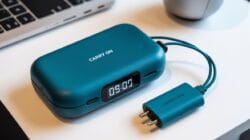
Flat or ultra-low-profile housings distribute force across a wider contact area instead of concentrating it on a single point. Think of it like foundation footprints in architecture—spreading weight prevents pressure concentration and tissue damage. Models with compact, disc-like shells (not bulbous ones) perform better because they conform to the ear’s natural position when you’re horizontal. This isn’t ergonomic theater. This is the difference between waking up pain-free and waking up with your ear bruised.
Breathability Stops The Sweat Trap
Skin physiology demands airflow, and most earbud materials suffocate your ear canal with trapped heat and moisture. Hydrogel or medical-grade silicone solutions exist specifically because they allow vapor transmission while maintaining a seal. The earbuds themselves become microscopic sweat collectors if the material can’t breathe, and sweat means bacteria growth, irritation, and eventual earbud rejection.
Look for materials that list vapor permeability or hypoallergenic properties in technical specs, not marketing copy. Medical-grade silicone typically outperforms standard thermoplastic elastomer (TPE) because it was designed for skin contact situations like catheters and implants. Some travel earbud makers now use hydrogel coatings borrowed directly from contact lens technology. Your ear needs to transpire, not marinate. Choose earbuds with materials proven to reduce moisture accumulation over extended wear periods.
The Sleep Rituals Protocol: Beyond Just Earbuds
The Pre Sleep Transition
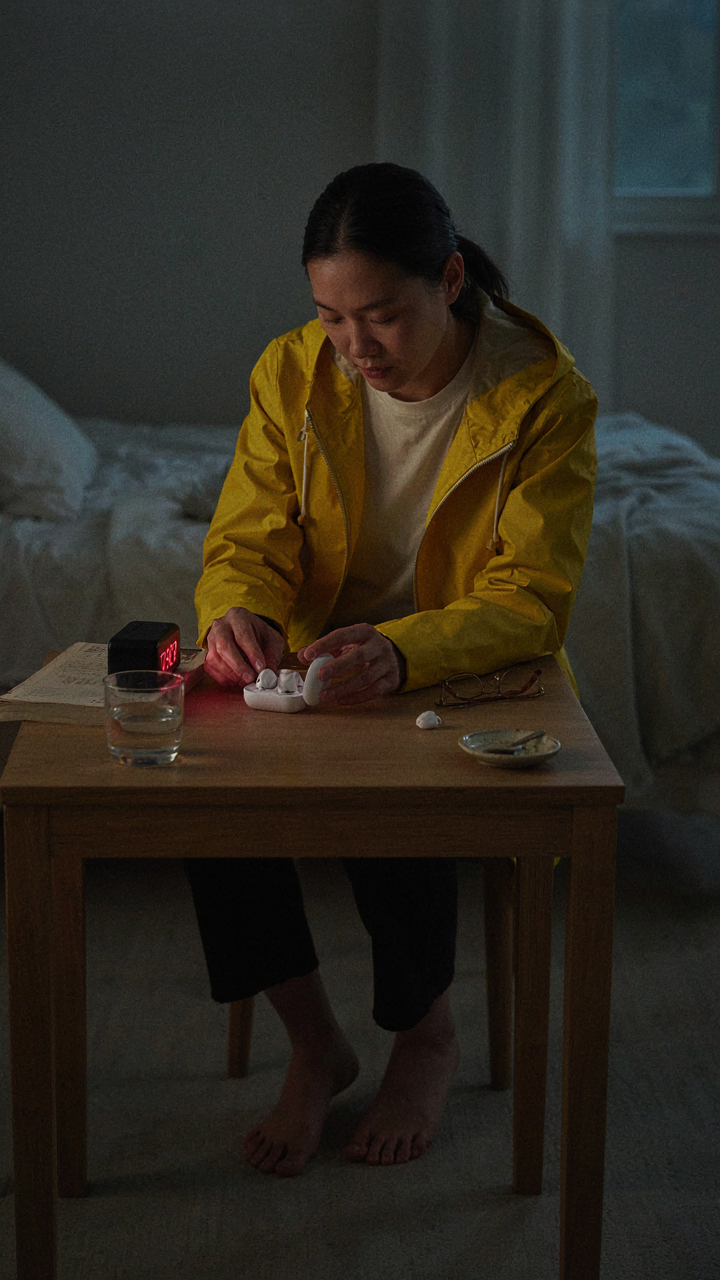
You want earbuds to work because you’re terrified of wasting money on another failed sleep hack. The real mechanism is this: your nervous system doesn’t switch states instantly. It needs a signal sequence. Earbuds alone can’t provide that. You need a deliberate wind-down that tells your body sleep is coming. This is why people who buy earbuds without changing anything else see zero improvement. The earbud is the last piece, not the first.

Start your routine 30 to 60 minutes before bed. Use the same sequence every night: dim your phone, stop work, change clothes, then insert earbuds. Consistency matters more than duration. Your body learns the pattern and begins releasing melatonin earlier when it recognizes the cues. The earbud sits in a nervous system that’s already primed for sleep, not one fighting against work stress and screen stimulation. This is why timing your routine matters more than earbud quality.
Environmental Control Shapes Sleep Architecture
Chronobiology, the field studying biological time cycles, uses the concept of “phase markers” to describe signals that reset your internal clock. Temperature functions as a phase marker for sleep. Your earbuds cannot fix a room that’s too warm or too bright. This is where most travel sleep fails: people optimize sound while ignoring the environment around the sound.
Drop room temperature to 60 to 67 degrees Fahrenheit before sleeping. Open blackout curtains or use a sleep mask. Manage light first, temperature second, then add earbuds as the final layer. Earbuds work best in a controlled environment because they only address one variable: acoustic disruption. Hotels rarely nail both temperature and darkness on arrival. You must adjust both before expecting earbuds to perform their job. Test temperature and light changes for two nights before deciding an earbud model failed.
Acoustic Engineering: Sound Masking, Not Just Blocking
White Noise And Ambient Soundscapes
You want to believe a physical barrier blocks noise. It doesn’t, not really. The mechanism you’re actually after is cognitive load redirection. Your brain stops processing the plane engine or hotel hallway because it’s locked onto a predictable audio pattern instead. This is why white noise works and why silence fails on travel.

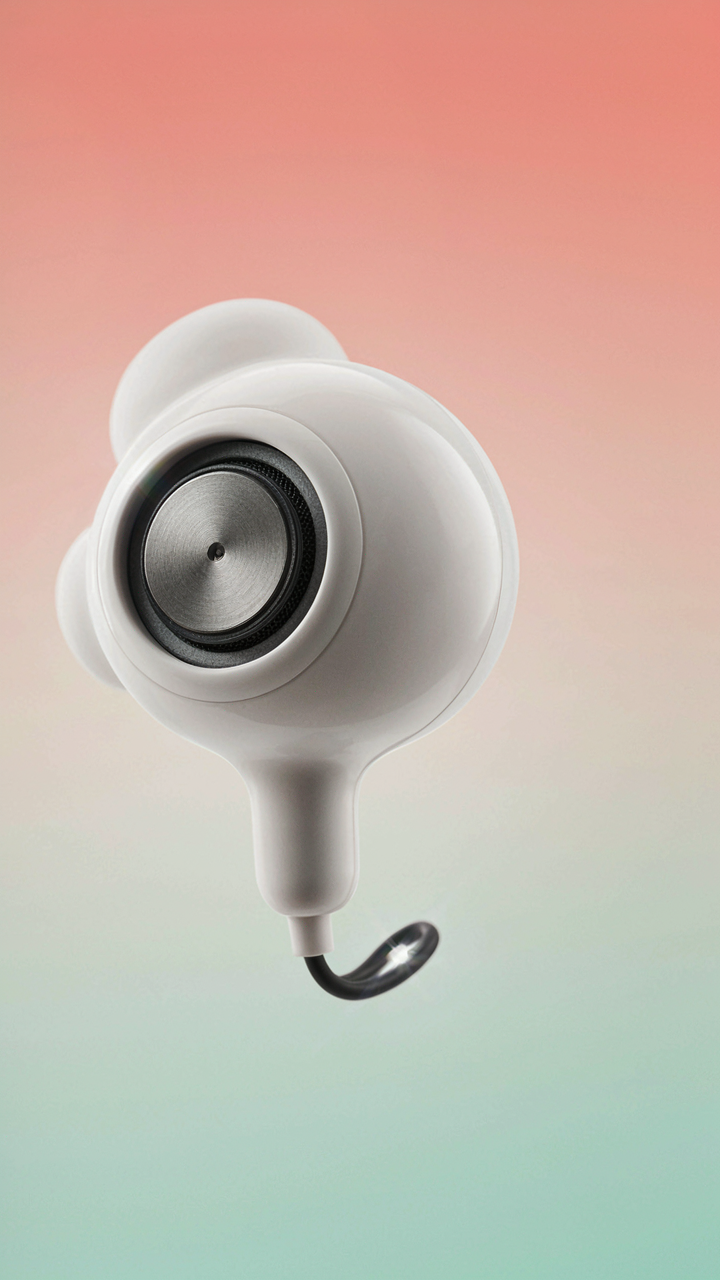
Sleep earbuds engineered for masking use pink noise or brown noise more often than true white noise. Pink noise drops in intensity at higher frequencies, matching how natural environments sound. Brown noise goes lower still. The earbud’s driver size and acoustic chamber determine frequency response accuracy. A 10mm driver typically handles this range better than smaller alternatives because it moves more air with less distortion at the lower frequencies masking actually requires.
Frequency Targeting For Sleep Architecture
Neuroscience maps sleep into stages, each with distinct brainwave patterns. Delta waves dominate deep sleep. Theta waves surface during REM and light sleep. Sleep earbuds don’t trigger these states directly, but specific frequency ranges reduce the cognitive disruption that prevents them from starting.
Frequencies between 40 and 100 Hz suppress startle responses without forcing unconsciousness. Lower frequencies around 30 Hz can actually interfere with sleep onset by mimicking threat sounds. Most marketed sleep earbuds use either broad-spectrum noise or lock into the 50 to 80 Hz range. The earbud’s tuning matters more than marketing claims about “sleep optimization.” Check the technical specs, not the copy. Your actual sleep depth depends on consistent frequency delivery across eight hours. Drivers with wider frequency response hold accuracy better than budget models that drift as they warm up during the night.
Beyond The Gimmick: True Noise Cancelling Earplugs For Deep Sleep
Passive Versus Active Attenuation
You want noise cancelling because it sounds advanced, but the real reason you need it is fear that you’ll miss your flight or wake up disoriented in a hostile hotel room. The physics distinction is simple: passive attenuation works like armor, active attenuation works like a countermeasure. Passive relies on seal and density to block sound waves before they reach your ear canal. Active generates inverse sound waves to cancel noise through phase cancellation. Most travel sleep earbuds claim both but deliver neither fully. The cost difference matters because true active cancellation requires a processor, battery drain, and calibration that passive systems skip entirely.
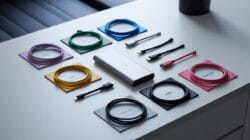
Passive attenuation alone can reduce ambient noise by 15 to 30 decibels if the seal is correct. Active can push that further, but only on low-frequency noise like engine rumble and HVAC systems. High-frequency noise like talking and alarms pass through both methods. This is why earplugs marketed as noise cancelling fail during actual travel. The seal fails within two hours, or the active system drains the battery before you fall asleep. Pick one method and master it rather than chase a hybrid that does neither properly.
Seal Integrity And Material Density
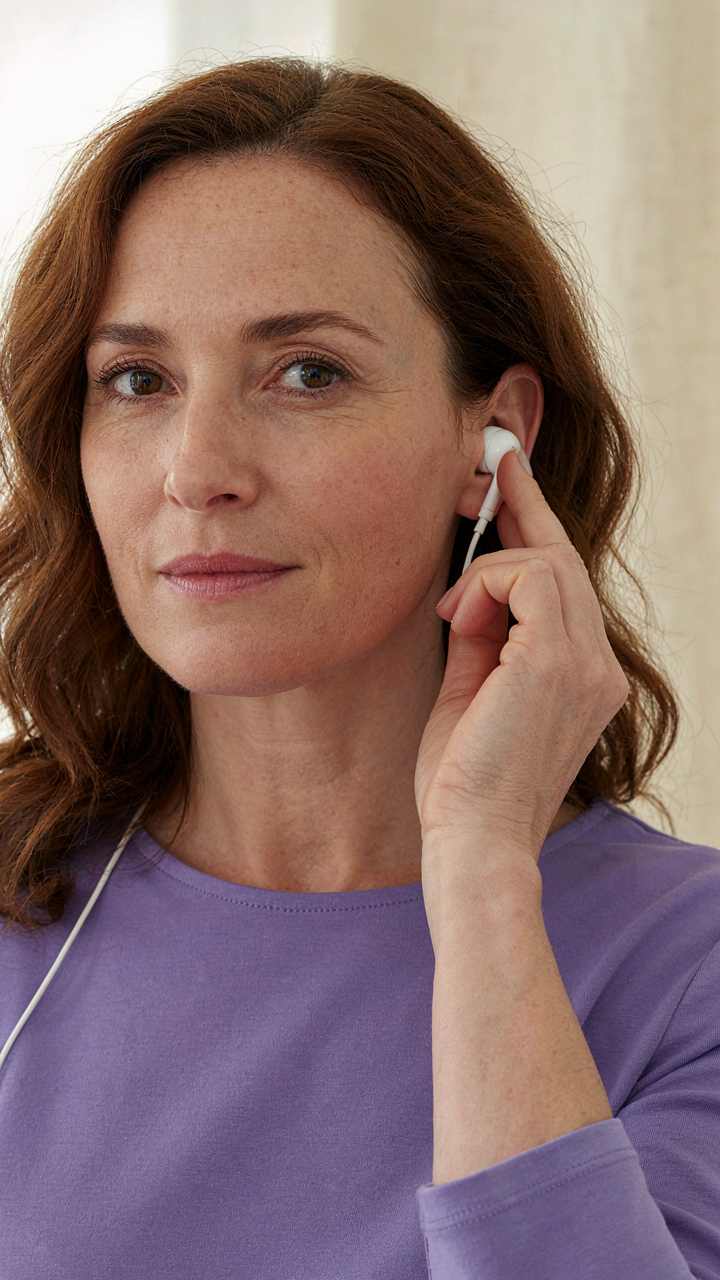
The seal is everything, and most people destroy it within the first night by inserting earbuds wrong or choosing the wrong size. Material density determines how much noise the earbud itself stops before any electronics engage. Silicone foam expands in the ear canal and creates an acoustic barrier, but it compresses over time and loses effectiveness. Memory foam lasts longer because it rebounds faster after each insertion. Rigid plastic with a soft tip hybrid is standard but creates gaps if your ear canal anatomy doesn’t match the mold.
Test seal integrity by blocking the earbud tip while wearing it and breathing in sharply through your nose. Your ear should create suction and hold pressure for at least five seconds. If you feel air leaking around the sides, the size is wrong or material density is insufficient. For travel, density matters more than active processing because you cannot troubleshoot a failed seal at 35,000 feet. Buy earbuds with multiple tip sizes and commit fifteen minutes to finding the size that creates passive resistance before you ever turn them on.
The Bio Rhythmic Design: Syncing Tech With Your Biology
When Your Clock Fights Your Bed
You want to feel human again after flying, not like you’ve lost three days to a void. That’s the real problem here. Chronobiology, the study of biological timing systems, reveals that your circadian rhythm is a master clock that governs sleep onset, hormone release, and core body temperature. Sleep earbuds for travel work best when they align with this rhythm instead of fighting it.

Your body doesn’t care about the local time zone. It cares about light exposure, temperature cues, and consistent sleep timing. Most travelers treat earbuds as a one-size-fits-all noise tool, missing the fact that the audio frequencies and timing matter as much as the physical fit. Here’s what actually syncs your biology:
- Low frequency sound between 40-60 Hz: Entrains brainwave patterns toward theta waves, which dominate light sleep and are easier to achieve than forcing REM sleep outright.
- Consistent sleep onset timing: Starting audio at the same time each night, even across time zones, keeps your circadian system anchored while your environment shifts.
- Avoiding blue light from earbud displays: Many travel earbuds have LED indicators that suppress melatonin production when you’re trying to sleep, undoing the audio work entirely.
- Temperature stability through passive fit: Earbuds that stay secure without active cooling prevent micro-arousals from pressure changes as you shift positions during sleep cycles.
- Sound fade timing aligned with sleep stages: Audio that gradually reduces after 90 minutes mimics your body’s natural transition deeper into sleep rather than jolting you into awareness.
The mechanism is this: your circadian system responds to external zeitgebers, or time-givers. Sound and consistent sleep timing act as secondary zeitgebers when light exposure remains chaotic during travel. Earbuds become a portable anchor point that substitutes for the environmental regularity your rhythm normally depends on.
The Window That Closes Every Night
Most travel advice tells you to “adjust gradually” or “get sunlight exposure.” This is incomplete and costs you sleep nights. The real tactic uses a narrower window: there’s a 30-minute sweet spot each night where your melatonin sensitivity peaks, and that’s when audio intervention hits hardest. This window exists whether you’re conscious of it or not.
Deploy audio-based sleep onset 20 to 30 minutes before your target sleep time, not as you’re lying down. This primes your nervous system during the period when your body is most receptive to descending into sleep. Your melatonin production is ramping up, your core temperature is dropping, and your brain is already downshifting. Audio during this window accelerates the process instead of introducing a new stimulus your brain must process. The earbuds stay put because you’re not tossing around yet, and your brain locks into the rhythm rather than fighting a foreign sound in an already-anxious state.
Durability & Discretion: Built For The Road Warrior
Materials That Survive Repeated Packing
You want earbuds that won’t embarrass you if they fail in a meeting, which means you’re really asking for predictable failure modes. Apply mechanical engineering’s concept of stress concentration to earbud design: failure happens where material changes abruptly. Quality travel earbuds use consistent material thickness in the stem and charging case, eliminating weak points where plastic thins before snapping.

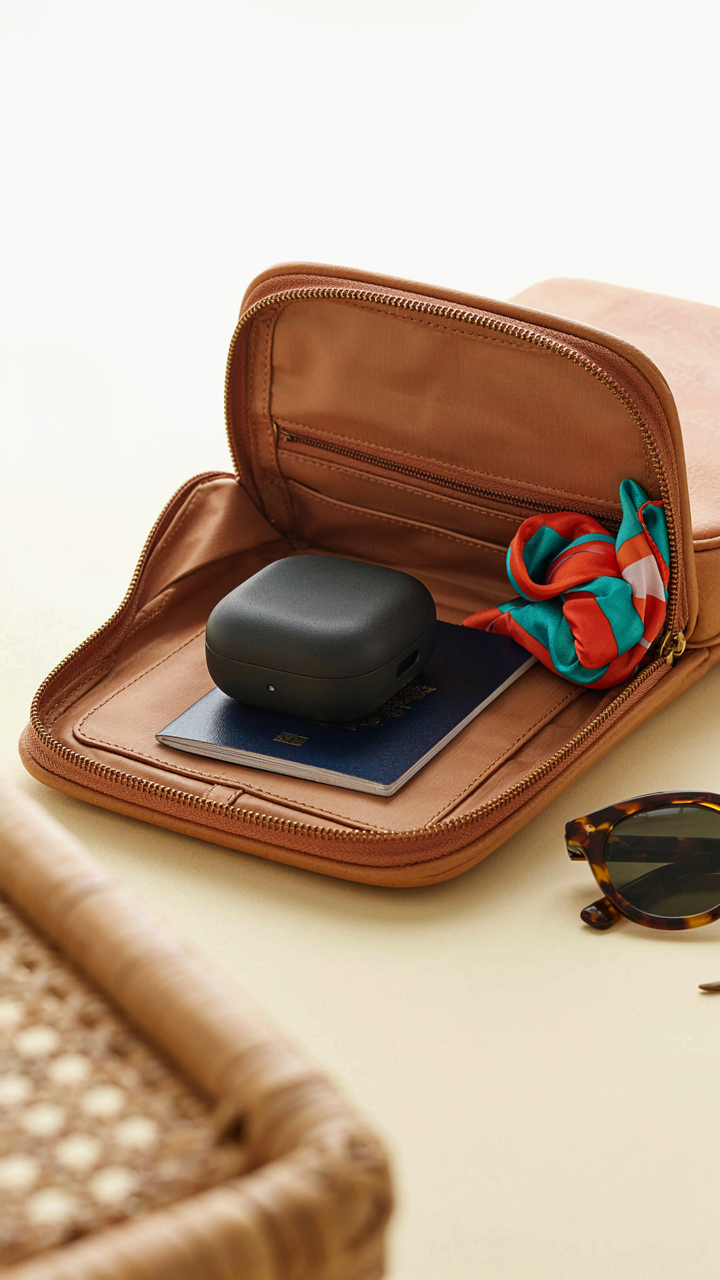
The charging case takes the real damage during travel. Polycarbonate with rubberized corners absorbs impact better than pure plastic, but the seal matters more. A tight-fitting lid prevents moisture infiltration from airport humidity and keeps components from rattling loose during transport. Check that the charging contacts sit recessed inside the case, not flush. Protruding contacts bend or corrode within weeks of regular travel.
Inconspicuous Design For Professional Settings
Sleep earbuds for travel face a real problem that nobody addresses directly: they look medical or athletic, which reads as unprofessional in boardrooms and client calls. The mechanism here is form language. Design signals status through restraint, not decoration. Matte finishes and neutral colors beat glossy plastic and vibrant accents because they disappear into your appearance instead of announcing themselves.
Earbud size matters more than most acknowledge. Larger drivers require bulkier stems, which creates visibility. Smaller earbuds sit lower in the ear and sit flush against your head. The charging case should fit in a shirt pocket or small bag without creating a visible bulge. Inconspicuous design isn’t about being invisible; it’s about not triggering the question “what is that person wearing in their ears” during conversation.
The Real Obstacle Isn’t The Noise; It’s Your Untrained Nervous System

Your nervous system doesn’t trust unfamiliar sensations. Sleep earbuds feel weird. Your brain interprets weird as danger. You stay wired. The earbud itself matters less than your ability to acclimate. Spend three nights wearing them during the day, just sitting. Let your nervous system file them under “safe.” Then take them on your trip. The best sleep earbud is the one your body actually accepts.