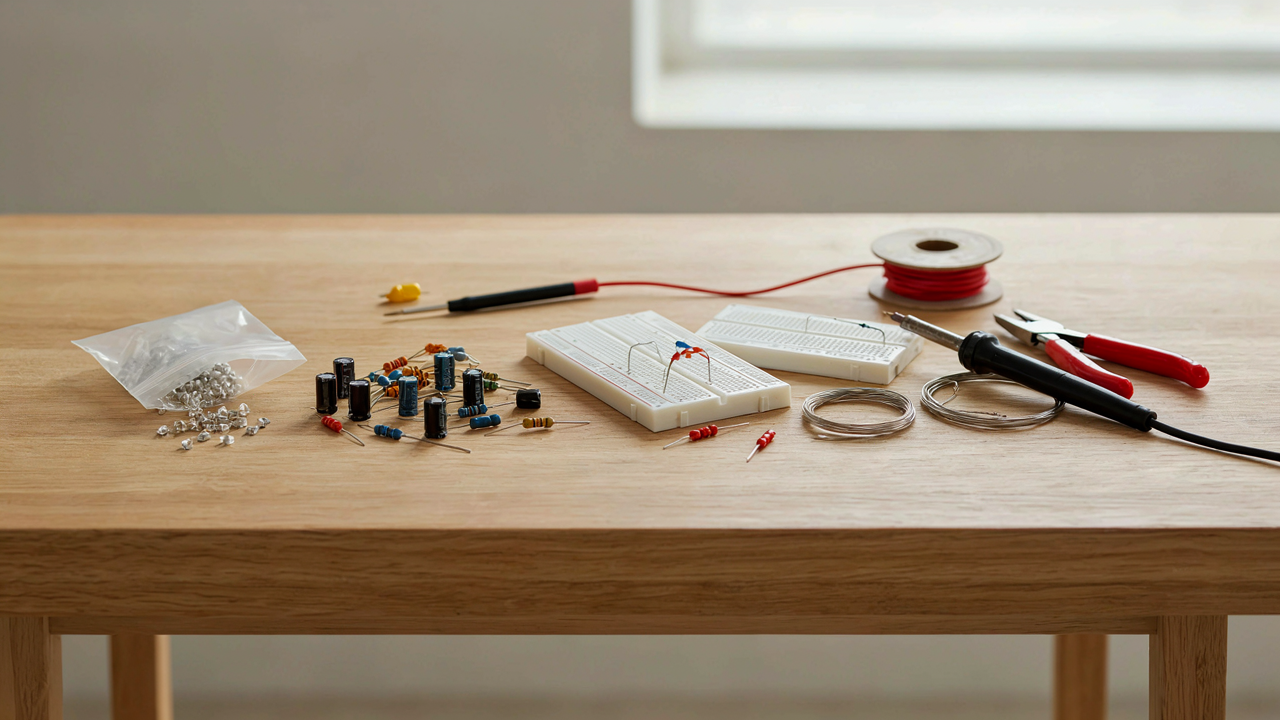
The Builder’s Block Protocol: Why Kits Kill Creativity

Following Instructions Is Not Inventing
You want to believe a kit makes your kid a builder. What you’re really buying is peace of mind that something structured happens. Here’s the mechanism: a kit provides a predetermined outcome before the child even touches the materials. Each step removes a decision. Each instruction eliminates the gap where invention lives.
When a child follows steps, they execute. They don’t problem-solve. The kit designer already solved every problem and encoded the solution into the manual. A real builder encounters resistance—a piece that doesn’t fit, a structure that collapses, a connection that won’t hold. That friction is where learning happens. A kit erases friction by design.
What Kits Strip Away Before They Arrive
Industrial designers use constraint removal to simplify systems. Kits do the opposite: they add constraints so aggressively that the builder disappears. The child becomes a follower. Materials get pre-cut, pre-counted, pre-sorted. This sounds efficient. It’s actually suffocation.
When materials come unfinished and unmeasured, a kid must estimate, test, fail, and adjust. They learn material properties through touch and trial. When everything arrives ready-made, they skip that entire layer. The cognitive load drops, which feels like success until you realize they’ve learned nothing about how materials behave under stress, how joints fail, or why proportions matter. Give a kid raw materials and a problem to solve. Watch them build something you couldn’t have specified.
Beyond Screens: Hardware That Demands Real Interaction
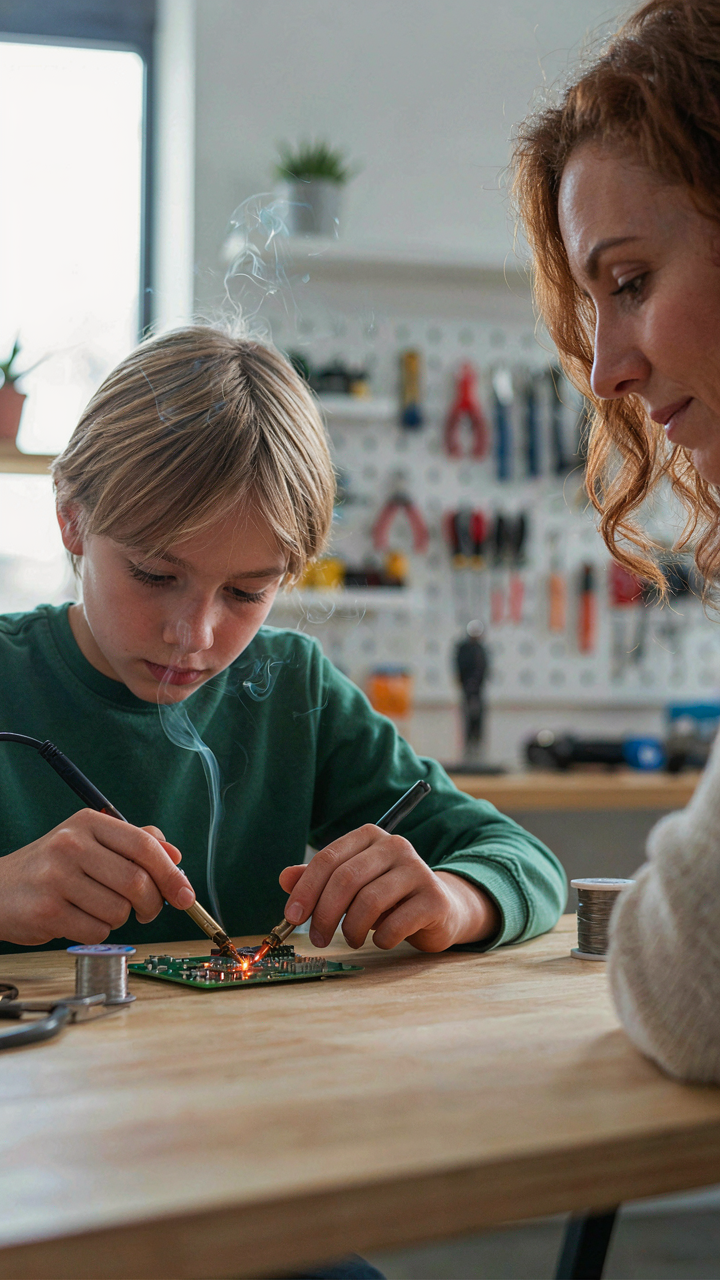
When Buttons Actually Push Back
You want your kid to “build” because you’re terrified screen time has already rotted their ability to focus on physical objects. Here’s the mechanism: tactile feedback rewires attention. When a button requires actual force, when a dial has resistance, when a component snaps into place with physical confirmation, the brain registers completion differently than tapping glass. This isn’t psychology. It’s neurology. The fingertips send data the screen never can.

Cheap toys use rubber buttons with almost no resistance. Quality building hardware uses mechanical switches, magnetic connections, and weighted components. Lego bricks snap with deliberate friction. Soldering irons require hand steadiness and burn risk awareness. Circuit boards have actual heft. The difference isn’t subtle. A kid feels when something works because their hand tells them it worked, not a screen animation.
Making Mistakes You Can Hold
The common advice says “let them explore.” That’s incomplete. Physical manipulation creates permanent error records the kid can examine. When a solder joint fails, it’s visible and fixable. When a 3D print warps, they see exactly where. When a robotics arm doesn’t grip, they adjust the gripper tension themselves. Screens hide failure inside code. Hardware shows it in real time, which accelerates learning.
Building hardware teaches debugging as a tactile skill, not an abstract one. Your kid learns cause and effect because they’re holding both the problem and the solution. Encourage them to build something twice, badly the first time. They’ll see their own mistake, adjust their process, and own the result completely. The second version will be measurably better because they fixed it with their hands, not deleted a line of code.
The Open Source Advantage: Real Tech Gifts For Kids

Platforms For Limitless Experimentation, Not Closed Systems
You want your kid to seem smart and capable, which means you’re actually afraid they’ll end up dependent on apps instead of building anything real. The mechanism is simple: closed systems (Apple’s walled garden, most consumer tech toys) train kids to consume, not modify. Open platforms train the opposite behavior because the kid hits a wall, then learns that walls can be moved.

Open source doesn’t mean free or hippie. It means the code, schematics, and design files are visible and editable. A kid working within this constraint learns the actual structure of what they’re building instead of treating it as black box magic. They stop asking “why doesn’t this work” and start asking “what’s the code doing.” That shift is the entire point.
Arduino, Raspberry Pi: Entry Points To Actual Engineering
The entry barrier to engineering used to be expensive lab equipment and gatekeepers. Arduino (2005) and Raspberry Pi (2012) inverted that cost structure while keeping the intellectual rigor intact. Both run on open source hardware and software, which means a kid can break something and understand exactly what broke instead of calling customer service.
Arduino teaches electronics and programming simultaneously because you’re writing code that controls physical circuits. Raspberry Pi teaches systems thinking because it’s a full computer that runs Linux. Neither is a toy that makes sounds when you press buttons. Both require a kid to think in actual technical terms: voltage, loops, variables, debugging. Start with Arduino if the kid is younger or completely new to this. Start with Raspberry Pi if they’ve already built simple circuits and want to understand operating systems.
Deconstructing The “Cute Tech Gift For Kids” Myth
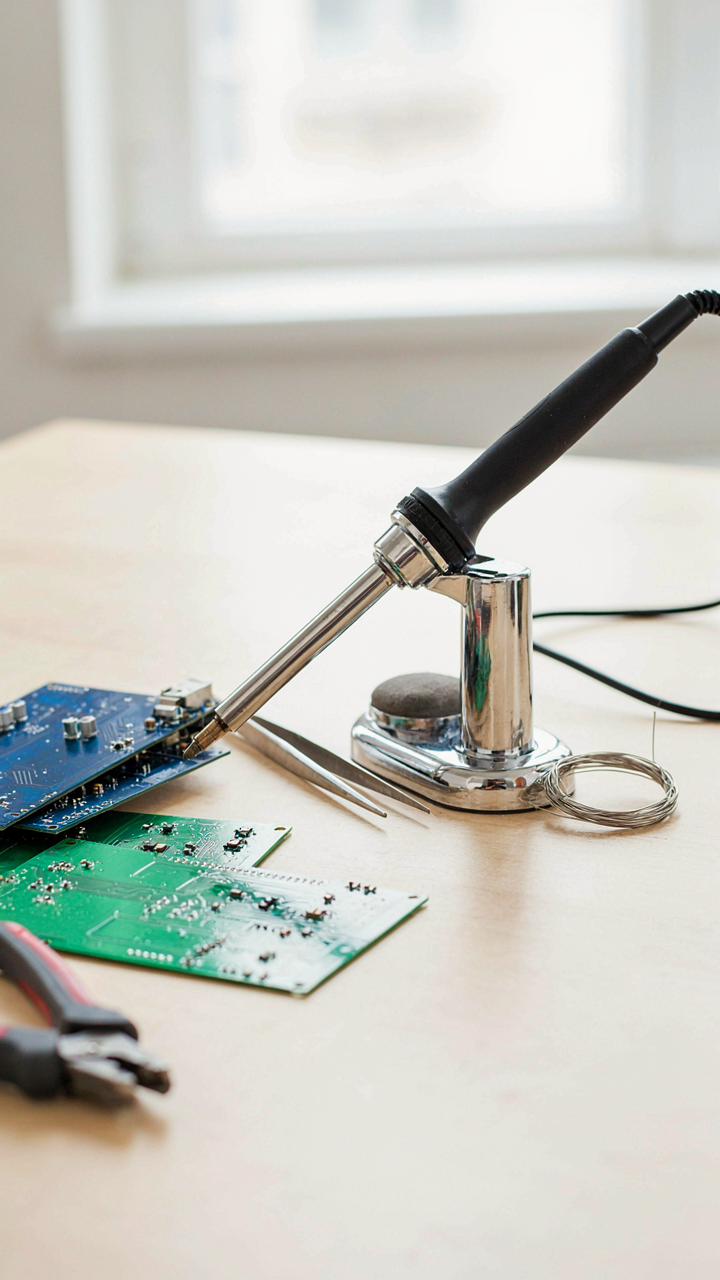
When Design Serves Function, Not Instagram
You want to buy something that looks good when your kid unboxes it on video, because that moment reflects on your judgment. Here’s the mechanism: most “cute” tech gifts prioritize visual packaging over what the device actually does. Manufacturers know parents judge on first impression. The sleek finish, the friendly color, the minimalist box—these sell the gift before the kid builds anything. Function takes a backseat to the unboxing experience, and six weeks later the device sits unused because it can’t handle real building tasks.

Good design in building tools follows industrial design logic, not consumer aesthetics. Industrial design strips away decoration and keeps only what serves the task. A soldering iron doesn’t need to be pretty—it needs a comfortable grip, stable heat delivery, and durability. A robotics kit doesn’t benefit from rounded edges and pastel colors—it benefits from modular components that actually connect reliably and parts that survive drops. The tools your kid will actually use are built for friction, not cameras.
Tools Built For Resistance, Not Compliance
Generic advice tells you to choose what “engages” your child. That’s backwards. Engagement follows competence, not the other way around. A tool that’s too easy doesn’t teach anything. It gets abandoned. A tool with genuine friction—that requires problem-solving, adjustment, and failure—keeps kids working. The friction is the mechanism that builds skill. A cheap soldering iron with inconsistent temperature teaches nothing. An entry-level iron with real temperature control teaches thermodynamics through repeated failure and correction.
Superficial appeal actively works against learning. Bright colors, cheerful sounds, and streamlined interfaces lower the cognitive load artificially. Kids notice immediately when a tool doesn’t match its function. A “beginner-friendly” electronics kit that hides the actual circuits behind simplified plastic interfaces teaches the kid to mistrust the tool, not understand the system. Choose tools that show their mechanics. Choose kits where components are visible and traceable. Choose devices where failure states are obvious, not masked by software.
The Systems Thinking Method: Tech Gifts For Kids That Build Minds

When Input Changes Output
You want your kid to look smart. That’s the real reason you care about this section. The mechanism that makes this work is feedback loops, borrowed directly from cybernetics, the study of control systems. Every building tech gift either amplifies or dampens the child’s input based on output. A robot that responds to commands teaches cause and effect. A circuit kit that lights up when wired correctly shows instant feedback. The child adjusts, tries again, learns faster because the system responds.

Feedback loops are the reason some tech gifts teach and others entertain. A game console gives feedback, but it’s designed by engineers to be forgiving and addictive, not to build precision. A soldering iron or breadboard gives brutal, immediate feedback. Wrong connection, no result. Right connection, the LED fires. This distinction matters because children internalize the speed and clarity of the feedback they receive. A system that shows results in seconds trains different neural pathways than one that shows results in minutes or hides results behind complexity.
Simple Rules Generate Everything Else
This isn’t design philosophy, this is how complexity actually emerges in nature and in systems. A handful of rules creates unpredictable outcomes. LEGO bricks follow one rule: studs fit into tubes. From that single constraint, kids build skyscrapers, machines, and structures that surprise them. Modular synthesis synths follow one rule: patch cables route audio signals. Kids combine four basic modules and make sounds they’ve never heard. The rule stays simple. The possibilities explode.
Most parents assume complex gifts teach more. They don’t. A kit with 200 pre-programmed functions teaches dependency. A kit with three basic functions kids can combine teaches problem-solving. Emergence is what you’re actually buying when you buy a building tech gift. The child explores combinations, finds unexpected results, and builds mental models of how systems work. That model sticks because they discovered it, not because someone explained it.
Why ‘Electronic Gifts For Kids’ Should Be About Raw Components
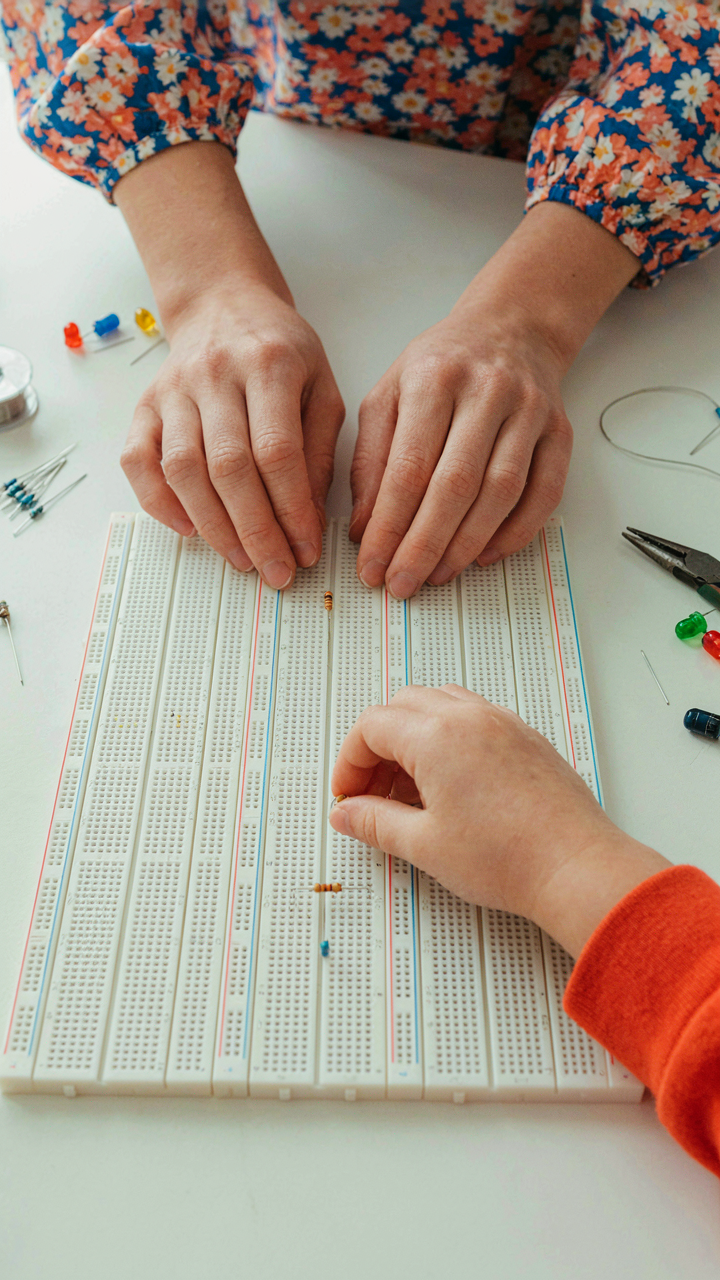
The Three Components That Actually Matter
You want your kid to “learn electronics” without admitting you’re trying to prove they’re smarter than average. Here’s the mechanism: most electronic gifts skip the foundation entirely. They hand kids finished circuits wrapped in plastic. That builds nothing. Real learning starts with understanding how individual components behave, then stacking that knowledge into systems that work. This isn’t optional pedagogy. It’s the difference between a kid who pushes buttons and a kid who builds buttons.

Electronics borrows from physics the concept of resistance as a gate. A resistor controls how much current flows through a circuit, exactly like a valve controls water pressure. Capacitors store electrical charge temporarily. Inductors resist changes in current flow. These three are the core alphabet. Everything else you build combines these in different ratios. Skip them and you’re teaching cargo cult electronics: memorize the steps, get the outcome, understand nothing.
- Resistors: Limit current flow and protect components from burnout. Measured in ohms. Color bands on the body indicate resistance value. Used in almost every circuit a beginner will build.
- Capacitors: Store and release electrical charge. Measured in farads. Act as filters, smoothers, and timing devices. Different types (ceramic, electrolytic) serve different purposes.
- Inductors: Create magnetic fields that resist current changes. Measured in henries. Less common in beginner builds but essential for understanding signal integrity and filtering.
- Diodes: Allow current to flow one direction only. Protect circuits from reversed polarity. Essential for rectification, which converts AC to DC power.
- Transistors: Act as electronic switches or amplifiers. Controlled by small currents to manage larger currents. The building block of all modern computation and signal processing.
A kid who can read a resistor color code and calculate voltage drop has moved from observer to participant. They’re no longer following instructions. They’re predicting outcomes. That’s when electronics stops being a gift and becomes a skill.
Schematics Translate Into Solder And Wire
The common advice here is backward: start with breadboards. That’s half right. Breadboards let you test without soldering. But kids learn faster when they see a schematic on paper, understand what each component does, then hand-wire it. The translation from two-dimensional diagram to three-dimensional working circuit is where the actual understanding locks in.
Build simple projects in this sequence: an LED with a current-limiting resistor, then a circuit with two LEDs and a button switch, then a timer using a capacitor and resistor. Each step adds one new mechanism. Solder connections permanently so the kid owns the circuit physically. They can hold it, break it, debug it. That ownership creates retention you don’t get from a breadboard that gets torn apart and rebuilt.
Beyond The Fad: Real Tech Accessories For Kids That Endure
Creation Over Consumption
You want proof your kid isn’t wasting screen time. That’s the real fear driving this section. The mechanism is simple: tools that require output instead of input rewire attention. A soldering iron forces decisions. A screen demands nothing but passive reception. The difference isn’t philosophical. It’s neurological. Consumption trains the brain to wait for stimulation. Creation trains it to generate stimulation. One builds dependency. The other builds agency.

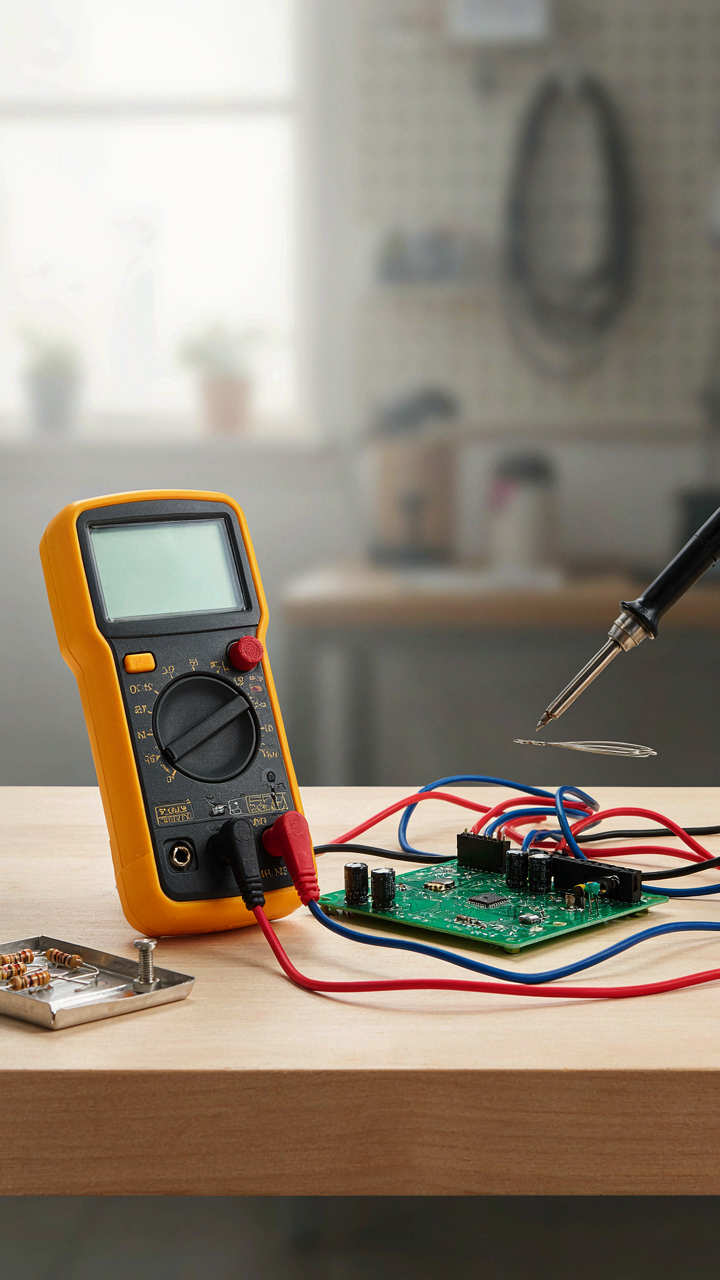
Fads die because they’re designed to be replaced. Real accessories compound. A quality multimeter works the same way it did forty years ago. A kid who learns to use one learns to diagnose problems across domains: electronics, robotics, simple machines. The tool becomes permanent infrastructure in their thinking. Generic tech gifts dissolve after three months. Purposeful ones outlast the original hardware they were paired with.
Materials That Survive The Actual Work
Durability in tech gifts isn’t about marketing language. It’s about material selection. Cheap soldering irons have tips that corrode and become unusable within weeks. Industrial-grade ones hold their shape through hundreds of sessions. This isn’t brand loyalty. It’s physics. A tool that fails teaches kids that building is frustrating. A tool that endures teaches them that precision pays. The difference between a kid who quits and one who deepens their practice lives in metal composition and thermal regulation.
Adaptability matters because skills outlast platforms. A breadboard works with any microcontroller. A quality wire stripper works with any gauge. Generic accessories lock kids into one ecosystem or one project type. Flexible tools migrate across projects, hobbies, and age ranges. When your ten-year-old outgrows their first build, the accessories should move forward with them, not become landfill. Select tools that serve multiple purposes and work across different voltage levels, component sizes, and project scales.
The “Tech Themed Gift Ideas For Boys” That Actually Teach
Problems Without Blueprints
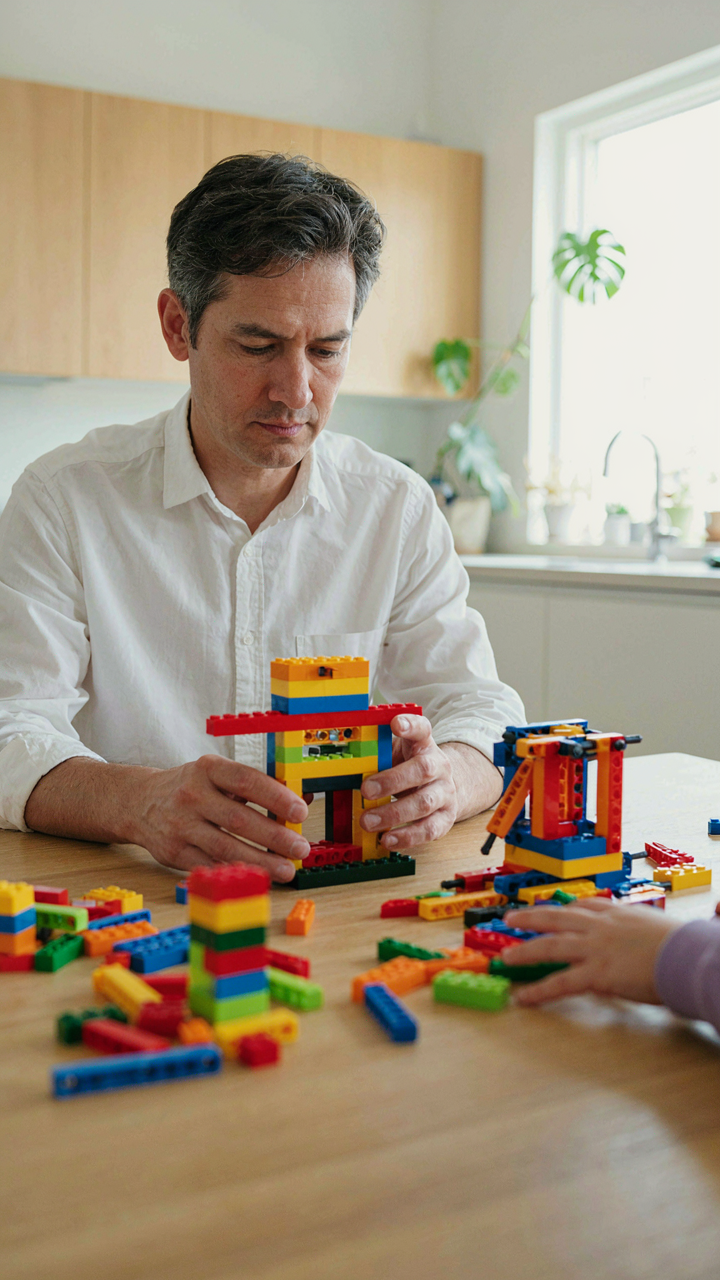
You want your kid to look smart. That’s the real reason you’re reading this. The mechanism is simpler than you think: kids who solve problems they didn’t know how to solve build confidence faster than kids who follow instructions. Open-ended building kits force that. LEGO Technic sets, basic robotics platforms like VEX IQ, and circuit board kits without step-by-step guides create friction. That friction is the point. The child encounters a goal, realizes they don’t know the path, and has to generate solutions.

The common advice is “let them figure it out.” That’s incomplete. You need to structure the unknown. Give them a constraint, not a manual. Example: “Build a structure that holds 5 pounds without falling.” They now own the problem space. They’ll test weight distribution, adjust materials, iterate materials without being told to. This is how builders actually think in the real world.
Iteration As Proof Of Progress
Failure frameworks come from engineering, and tech gifts mirror this exact protocol: prototype, test, fail, modify, repeat. Most parents see a broken build and assume the gift failed. The opposite is true. A kit where nothing breaks teaches nothing. Kids need materials that tolerate failure without catastrophic loss. That’s why LEGO remains mechanically superior to rigid plastic kits. Connections snap apart, rebuild without damage.
The mechanism is visual evidence of thinking. Each failed attempt becomes a physical record of hypothesis testing. Robotics kits that compile code and crash create the same feedback loop. The child watches the robot malfunction, reads the error, changes variables, runs again. They’re not waiting for instruction. They’re generating data about cause and effect. Track these iterations visually. Take photos of each stage. The stack of failures becomes proof that learning actually happened.
The Unseen Value: Why Scarcity Trumps Abundance In Tech Gifts
The Kid Who Builds With Less
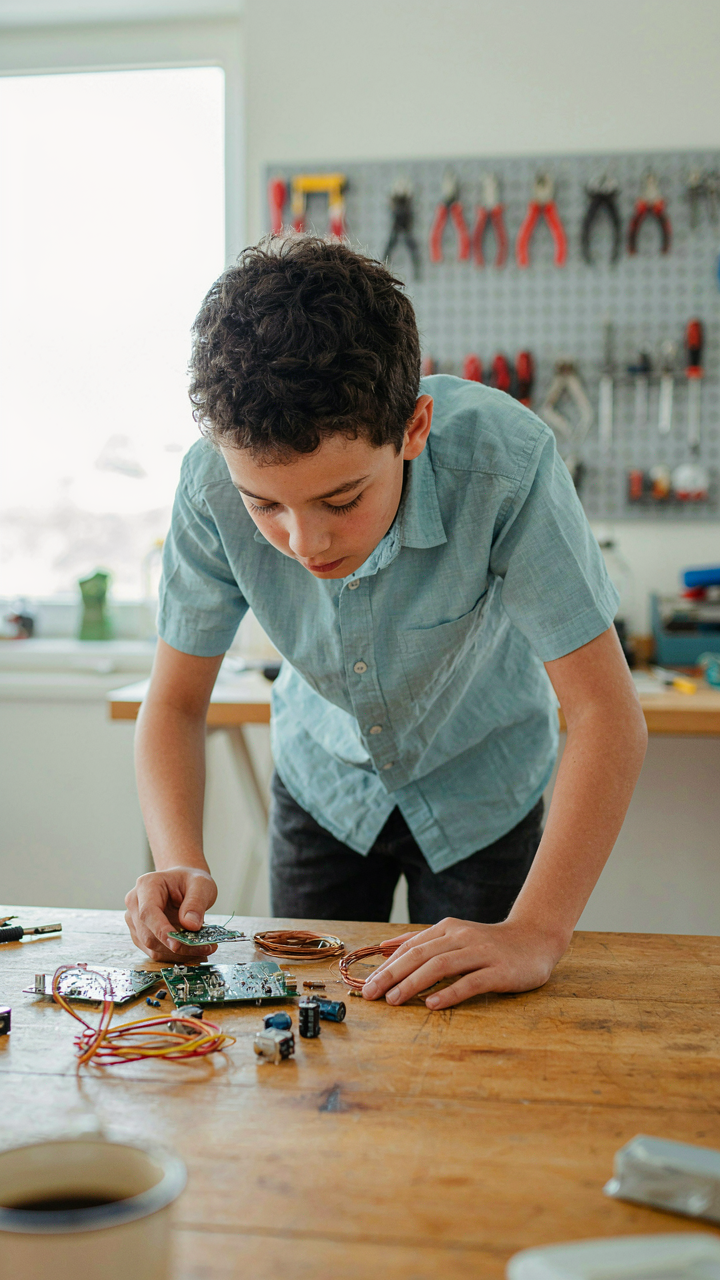
You want permission to spend less money and still feel like you’re giving something worthwhile. Here’s the mechanism: kids with access to everything solve nothing. Constraint forces the brain to treat a problem as real. A kid with fifty pre-made components picks the easiest path. A kid with five components and open-ended tools has to think.

Resourcefulness isn’t a virtue you teach. It’s a survival response to boundary conditions. When a child faces a genuine limit, they stop consuming and start building. The gap between what they have and what they want to make becomes the actual education. This is why a soldering iron and a bag of salvaged electronics produces more growth than a boxed robotics kit where every piece fits exactly where the manual says it goes.
Constraint As The Engine
Economics calls this the scarcity principle, but the real leverage lives in design thinking: when you remove options, you force prioritization. A kid building with a fixed budget of components doesn’t waste time on decoration. They engineer for necessity. They fail faster. They iterate without permission from an instruction sheet.
The common advice says to buy open-ended building sets, and that’s half right. But the sets that win are the ones that deliberately omit the bridge between ambition and capability. A kit with a soldering station but no pre-printed circuit boards. A coding environment with zero templates. A materials kit with raw components instead of assemblies. The friction becomes the teacher. The child solves the actual problem of making something work, not following a path someone else cut. This is where builders become builders instead of followers who happened to own tools.
The Real Obstacle Isn’t The Gift; It’s Your Fear Of Letting Them Fail, Adapt, And Invent
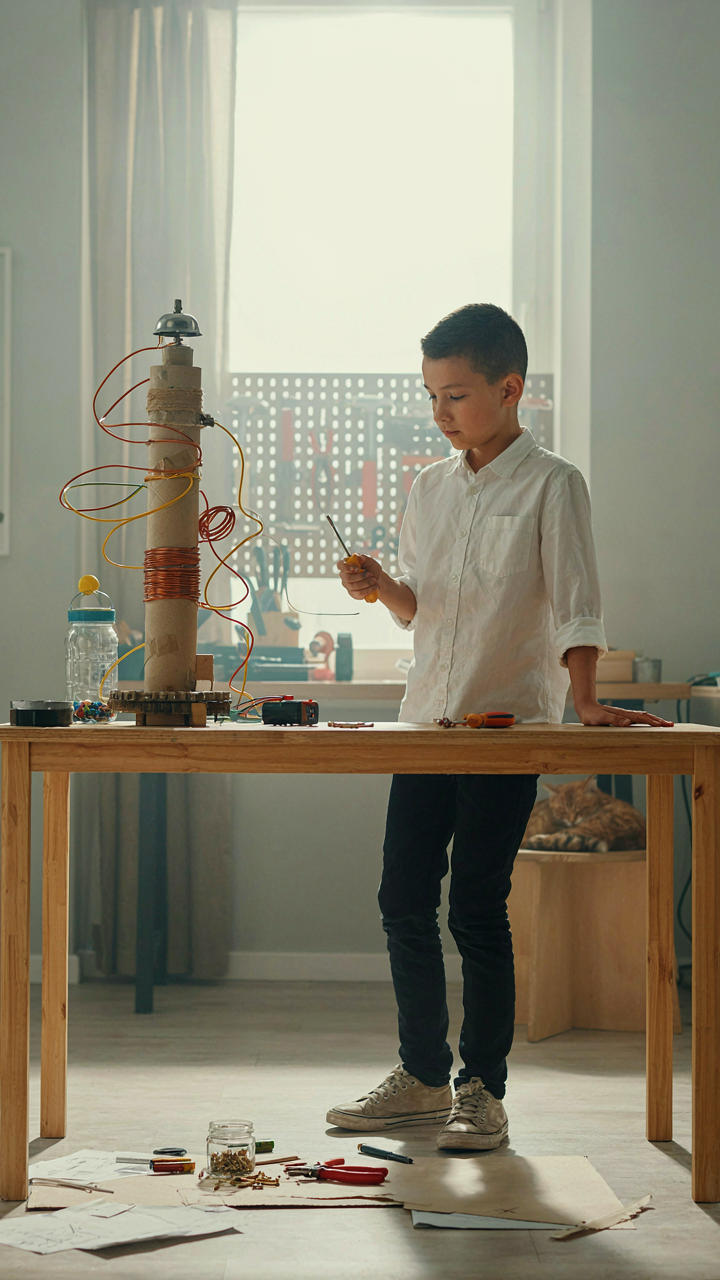
You’ll buy your kid a soldering iron or a coding kit, then hover. You’ll want to fix their mistakes, redirect their projects, keep everything clean. Stop. The gift only works if you get out of the way. Pick one building kit today. Hand it to them. Then disappear for two hours. Let them break it. Let them figure it out. Let them build something you never would have imagined. Your job isn’t to guide the building. Your job is to protect the time they spend doing it without you.