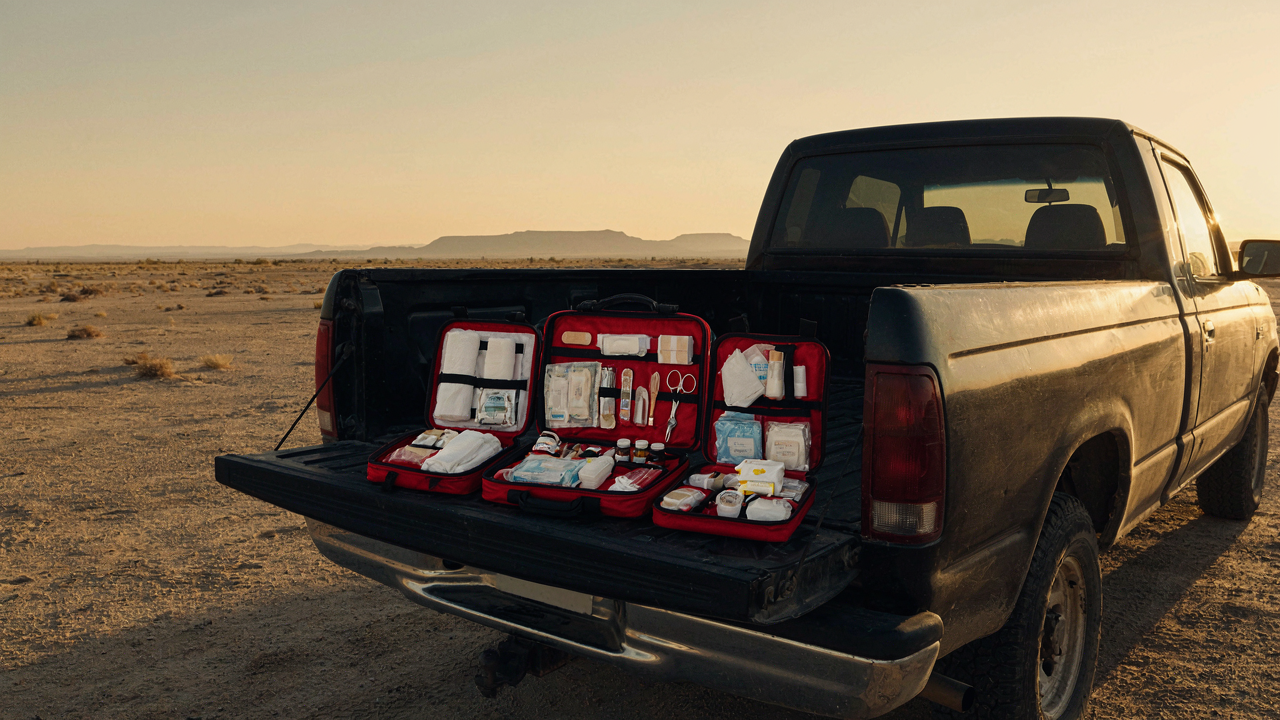
The Illusion Of Preparedness: Why Your Current Aid Kit Fails
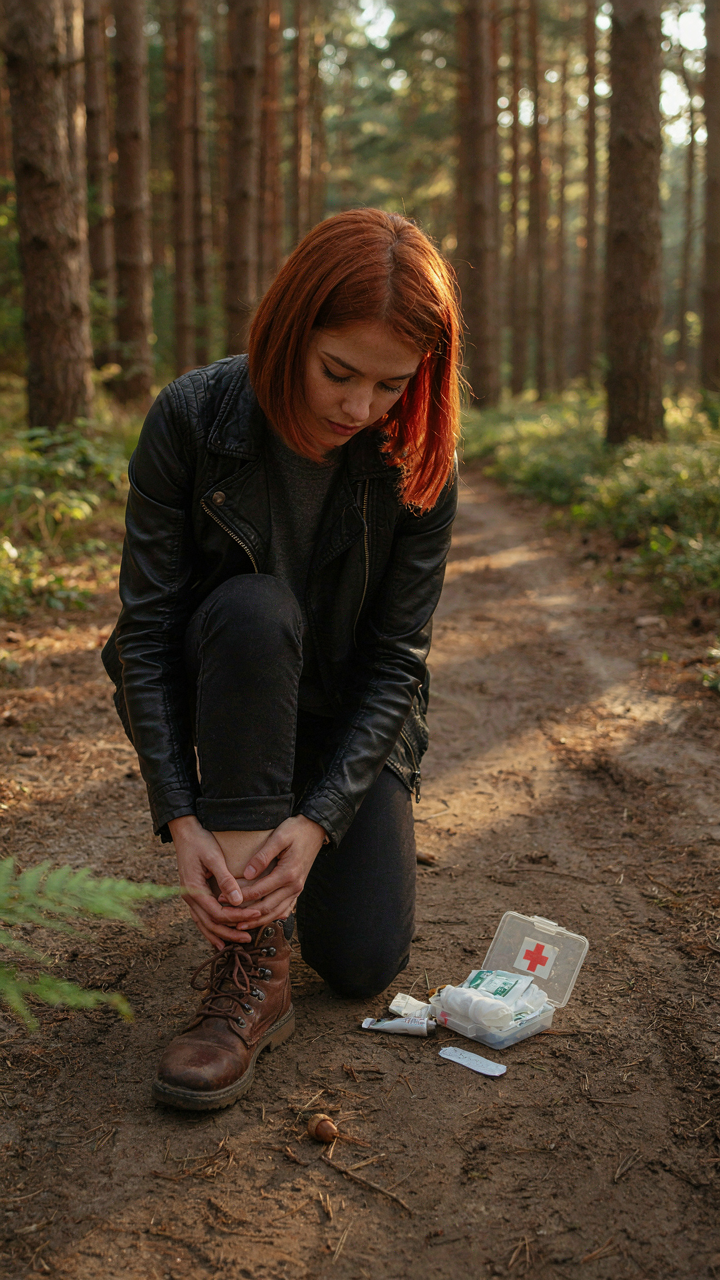
Commercial Kits Designed For Parking Lots
You want the comfort of knowing you’re ready. The mechanism is simpler: commercial first aid kits are engineered for liability, not efficacy. They’re built to handle the injuries that occur in populated areas where help arrives in minutes. A scraped knee. Minor bleeding. Mild burns. The items inside reflect a 20-minute response window, not a 20-hour one. That’s the gap nobody admits.
Remote overland travel operates in a different physics entirely. Distance becomes your constraint, not injury type. A twisted ankle near a trailhead requires ice and elevation. The same ankle three days into the backcountry requires stabilization that lasts, pain management that works without professional follow-up, and detection of compartment syndrome before it causes permanent damage. Your store-bought kit includes bandages for cuts it was never designed to address serious trauma or the complications that emerge when professional care isn’t coming.
The Mechanism Commercial Kits Ignore
Most overland injuries don’t kill you on impact. They kill you through cascade. Dehydration worsens shock. Infection compounds swelling. Improper wound treatment leads to sepsis. Commercial kits treat the initial injury. They don’t address the second and third order effects that happen when you’re still 40 miles from a road. The critical gap is medication depth, stabilization redundancy, and diagnostics for complications that develop over hours or days.
You need items that handle deterioration, not just the acute event. Pain medication that lasts. Antibiotics for infection prevention, not just topical ointment. Tourniquets in quantities that cover multiple limbs and allow rotation. Fluid replacement that addresses electrolyte loss, not just volume. Your kit must support triage decisions you’ll make without imaging, lab work, or a second opinion from a doctor. Build for the injury that develops, not the injury that bleeds.
Beyond Band Aids: The Overlander’s Real Medical Kit Imperatives
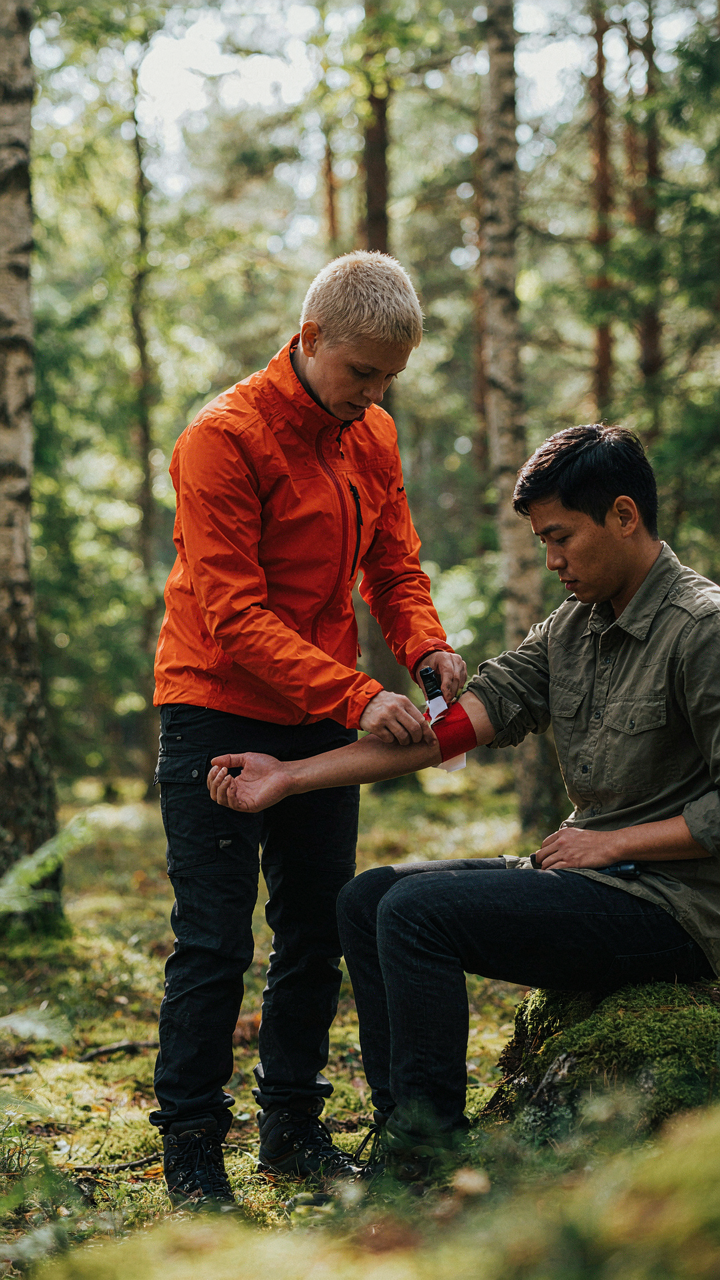
Hemorrhage Control Before Everything Else
You want a kit that makes you feel prepared. The actual mechanism that kills people in remote terrain is uncontrolled bleeding in the first five to fifteen minutes. Most kits skip this entirely and stock items that matter only after you’ve already solved the hemorrhage problem.
Tactical combat casualty care principles apply directly to overland medicine. In military strategy, you identify the critical bottleneck first. That bottleneck here is rapid arterial or venous bleeding. Your kit needs multiple tourniquets, hemostatic gauze, and pressure dressings positioned where you can reach them without searching. A tourniquet goes above the wound, not below it, and you apply it before bandaging. Commercial tourniquets like the CAT or SOFT-T are designed to stay in place during transport.
Managing Time When Help Is Days Away
Prolonged field care flips standard first aid thinking. Standard first aid assumes evacuation in minutes. Overland reality demands you sustain someone for twelve to seventy-two hours before rescue arrives, which changes what you carry and how you use it.
Infection prevention matters exponentially more under delayed evacuation. You need broad-spectrum antibiotics, antiseptic solutions that don’t evaporate in heat, and sterile dressing changes every twelve to twenty-four hours. Wound management becomes serial management, not one-time treatment. Pain control shifts from comfort to function: you need enough analgesia to keep someone mobile or calm during a long wait, not just ease discomfort. Dehydration accelerates shock and infection, so electrolyte replacement becomes a core survival tool, not a luxury.
The “Triage & Treat” Protocol: A System For Remote Emergencies
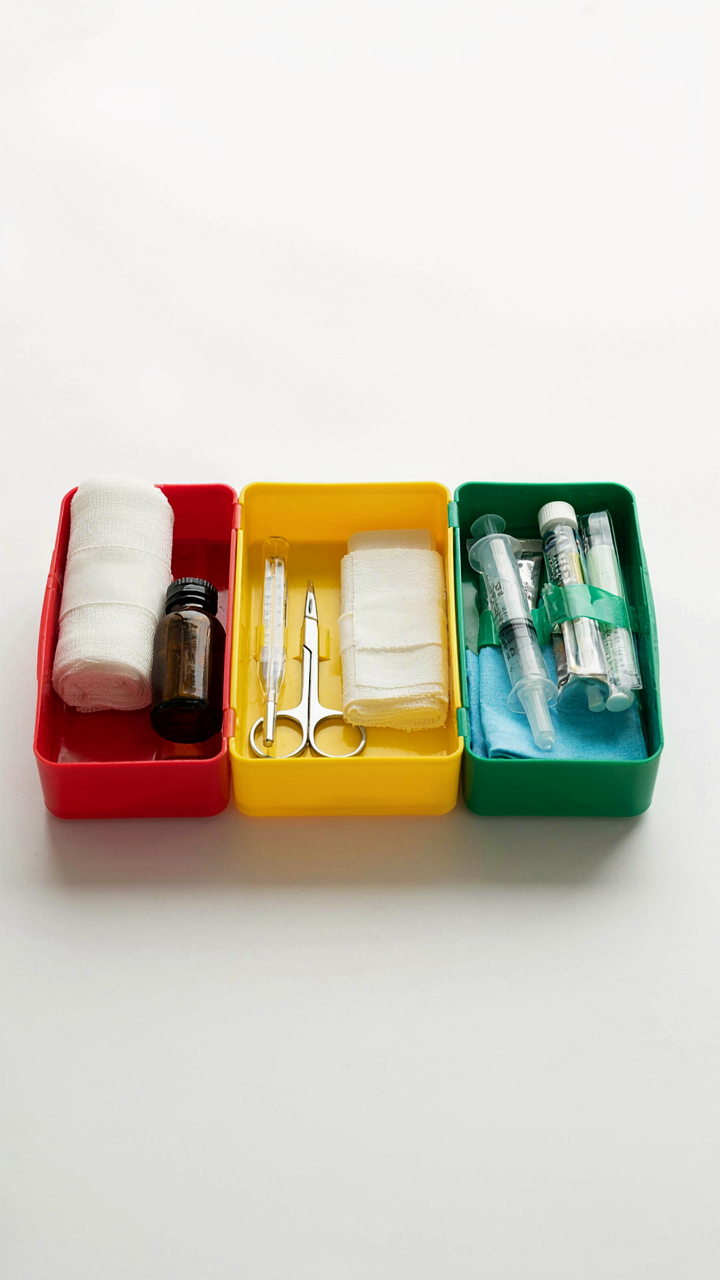
When Seconds Determine Survival
You want to believe you’ll stay calm and think clearly when someone gets hurt miles from help. That’s not how your brain works under stress. Military triage uses a color-coded system to strip emotion from decision-making, and the mechanism is simple: categorize injuries by urgency, not by what feels most dramatic. Red gets treated first. Yellow waits. Green walks. Your overland first aid kit needs organization that mirrors this hierarchy, not a jumbled bag you’ll panic-search through when adrenaline spikes.

The protocol works because it removes the guesswork. You assess airway, breathing, circulation in that order for every casualty. A conscious person with severe leg bleeding gets your attention before an unconscious person with stable vitals. This isn’t intuitive. Most people reverse it. Your kit should physically separate immediate-intervention supplies from wound management supplies so you don’t waste seconds finding tourniquets or airway adjuncts when seconds matter. Organization is triage by another name.
Airway, Breathing, Circulation
Every intervention in a remote setting follows this sequence because it’s the only one that keeps people alive long enough for evacuation. A person dies from airway obstruction in minutes, breathing compromise in minutes, blood loss in minutes. Everything else can wait. Your kit should have your airway tools immediately accessible: nasopharyngeal airway, barrier device, and tape to secure them. These go in a separate pocket or container, not buried under bandages. No exceptions.
Once airway and breathing are established, circulation becomes priority. Hemorrhage control happens here. Direct pressure stops most bleeding. A tourniquet stops the rest. You apply it above the wound, tighten it until bleeding stops, then note the time on the tourniquet itself with a marker. Carry two tourniquets per person in your group. They’re light, they work, and they’re the difference between losing a limb and keeping it. After you stabilize these three systems, you address pain, infection risk, and comfort in that order.
DIY First Aid Kit: Curating Your Overland Gear, Not Buying It

The Marketing Trap Nobody Names
You want to buy a kit because it feels like you’ve solved the problem. You haven’t. Most commercial overland first aid kits are designed for liability and shelf space, not for what actually happens on remote trails. The mechanism is simple: manufacturers stock items that move volume and protect them legally, not items matched to your specific failure modes.
Start by listing what can actually kill you or disable you on your route. Infection from a cut. Severe bleeding. Dehydration. Broken bone. Allergic reaction. Heat or cold injury. Build backward from those scenarios, not forward from what’s pretty to display. Your kit lives in your vehicle to serve one function: extend your survival window until you reach help.
Adjusting For What Your Route Demands
Desert travel and alpine travel have almost nothing in common medically, yet most kits treat them identically. Use constraint-based design from industrial engineering: your kit’s contents should shift based on actual hazards present. A remote desert route requires different priorities than a forested mountain pass.
For high-altitude routes, add more pain management and items for altitude sickness symptoms. For water-crossings, prioritize infection prevention and hypothermia management. For extreme heat, focus on electrolyte replacement and wound care that won’t degrade. For multi-day remote trips where evacuation is slow, pack for treatment duration, not just first response. Before packing anything, answer this question: what do I do if I can’t get out for seventy-two hours?
The “Murphy’s Law” Contingency: Anticipating The Worst
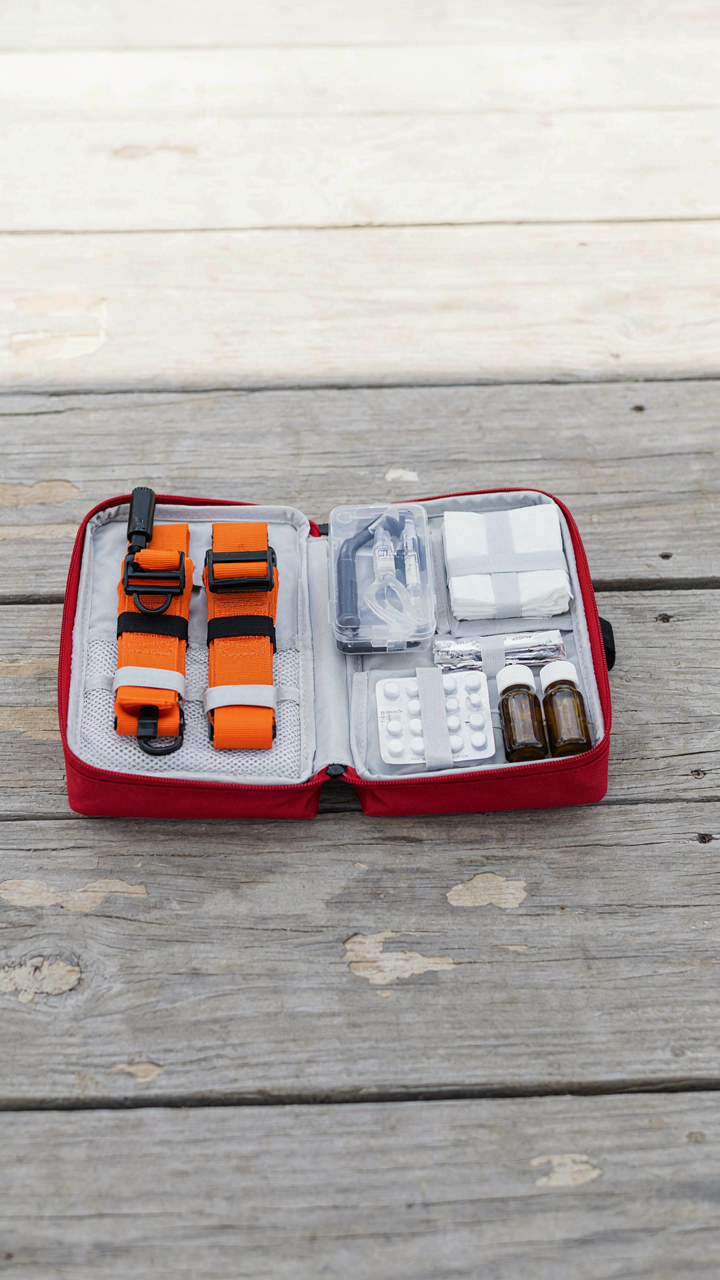
One Is None, Two Is One
You’re reading this section because you’re afraid you’ll die alone in the backcountry and nobody will find you. That fear is rational. Now stop using it as an excuse to pack redundantly without thinking. The military calls this “single point of failure analysis”—identify what kills you if it breaks, then carry it twice. Your tourniquet doesn’t fall into this category. Your ability to stop severe bleeding does. One tourniquet fails or gets lost. Two tourniquets mean you’re still operational.
Most first aid kits treat redundancy as insurance theater. You throw in extra bandages and call it coverage. Real redundancy targets the irreplaceable. Your pain management, your airway tools, your hemorrhage control—these demand backups. Not because you’re paranoid, but because failure cascades. A lost needle decompressor becomes a fatal pneumothorax. A single pain medication that runs out mid-trail becomes immobilizing shock. Carry critical items in separate locations. One in your main pack. One on your body. One in your vehicle. This isn’t overcaution. It’s recognizing which failures you cannot recover from.
Weather And Wildlife Don’t Read Your Itinerary
Environmental threats demand specificity, not generic preparedness. Desert travel requires different protections than alpine or tropical environments. Common advice says “bring shelter.” That’s useless. You need to know your specific threat landscape first. Cold exposure kills faster than most realize—hypothermia can set in at 50 degrees Fahrenheit in wet conditions. Heat exhaustion compounds dehydration risk in arid regions. Altitude sickness strikes unpredictably. Each environment demands different medication and gear selections.
Wildlife encounters vary by region and season. Snake bites require antivenom availability, which depends on your location and how quickly you can reach medical care. Tick removal in endemic Lyme disease areas demands tweezers or removal tools, not your fingers. Insect-borne illness risk changes monthly in tropical zones. Research your specific trail’s environmental threats before you pack. Call local ranger stations. Check medical facility locations within your travel radius. Know if snakes are active, what ticks you’ll encounter, what weather patterns peak during your trip dates. Your first aid kit should reflect the actual dangers you’ll face, not theoretical ones.
The Anti Inflammation Arsenal: Sustaining Health On The Trail
Preventing Common Overland Ailments
You want this section because you’re afraid of getting hurt far from help. Here’s the actual mechanism: inflammation is your body’s response to tissue damage, infection, or repetitive stress. On the trail, you can’t eliminate these triggers, but you can interrupt the cascade before it becomes debilitating. NSAIDs like ibuprofen work by blocking prostaglandin synthesis. That’s the real lever. Your kit needs both immediate and sustained anti-inflammatory capacity because a swollen knee on day three compounds into a real problem by day five.

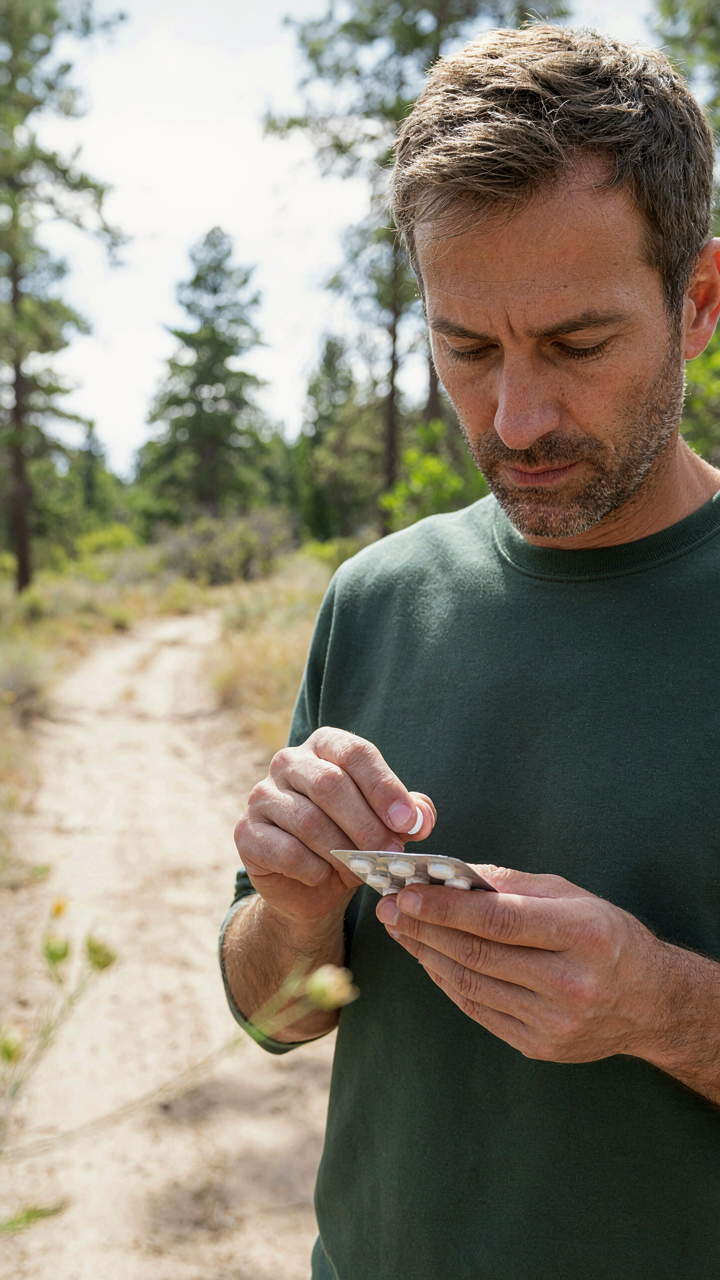
The distinction most people miss is dosing schedule versus reactive dosing. Taking ibuprofen only when pain arrives is already too late. The inflammation has momentum. Preventive dosing on high-exertion days, before pain signals, keeps inflammation suppressed. Carry ibuprofen tablets in blister packs, not loose in a bag where they crumble or go missing. Include acetaminophen as a secondary option for users who can’t tolerate NSAIDs. Both medications preserve joint function and reduce cascade injury on multiday trips.
Managing Ongoing Medical Needs
Chronic condition management in remote terrain follows supply chain logic: redundancy at every critical point. If you take a medication daily, you need three times the standard dose in your kit because resupply isn’t guaranteed. One original bottle stays at base camp. One bottle travels with you. One backup travels separately in a different pack. If you have diabetes, asthma, or hypertension, your first aid kit is actually a medication management system that happens to contain other supplies.
Work with your doctor before the trip, not during it. Get written prescriptions for emergency supply refills. Carry copies of your medication list and dosing instructions. Store temperature-sensitive medications in an insulated pouch with ice packs if the forecast shows heat above storage limits. The mechanism here is simple: your chronic condition doesn’t pause because you’re remote. Your kit must accommodate it as the priority, not an afterthought.
Beyond The Kit: Integrating Communication And Navigation
When Cell Service Fails You
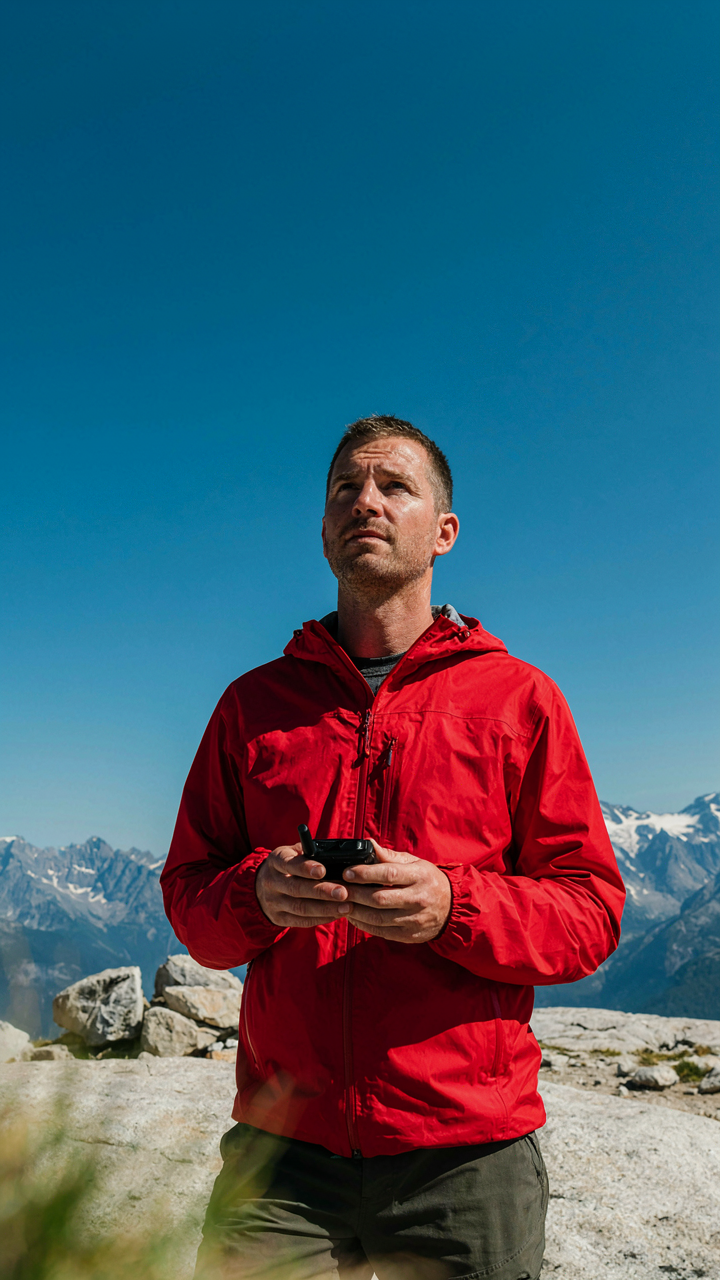
You want to believe your phone will work out there. It won’t, and you know this already. The real mechanism at play here borrows from signal theory in telecommunications: coverage requires line of sight to a tower, and terrain blocks signal before distance does. Your first aid kit solves trauma. Communication devices solve abandonment. They operate in separate domains but solve the same problem: staying alive when help is distant.
A satellite communicator or personal locator beacon transmits your location directly to rescue coordination centers, independent of cellular networks. These devices work anywhere on Earth with clear sky view. A PLB fires once and cannot be reset in the field. A two-way satellite messenger lets you send status updates, receive replies, and cancel rescue if the situation resolves. Both cost money upfront. The trade-off is non-negotiable: you either own the ability to transmit when towers cannot, or you own the consequences of silence.
Navigation Backup Prevents The Crisis
Getting lost wastes survival resources faster than any injury. A compass and detailed topographic map navigate without batteries, satellite signals, or digital failure points. This is not romantic prepping. It is redundancy design. The common advice says print your route. The real answer is different: carry the entire region’s map, not just your planned route, because you will deviate.
Learn map and compass navigation before the trail. In the field, you read terrain, orient the map to surrounding ridges and valleys, and triangulate position. GPS devices fail from dead batteries, water damage, or signal loss in canyons. Paper maps fail only if you burn them. Store the map in a waterproof case. Check your position every two hours. Record your actual position on the map as you move. This creates a physical trail of where you have been, which matters when you need to backtrack or communicate your location to rescue.
The Cognitive Load Reduction Strategy: Training Your Response
Run Drills Before You Need Them
You want to feel prepared without admitting you’re afraid you’ll freeze when it matters. The mechanism is simple: your brain under stress reverts to trained patterns, not knowledge. A first aid kit means nothing if you panic and forget where the tourniquet is or how to apply it.

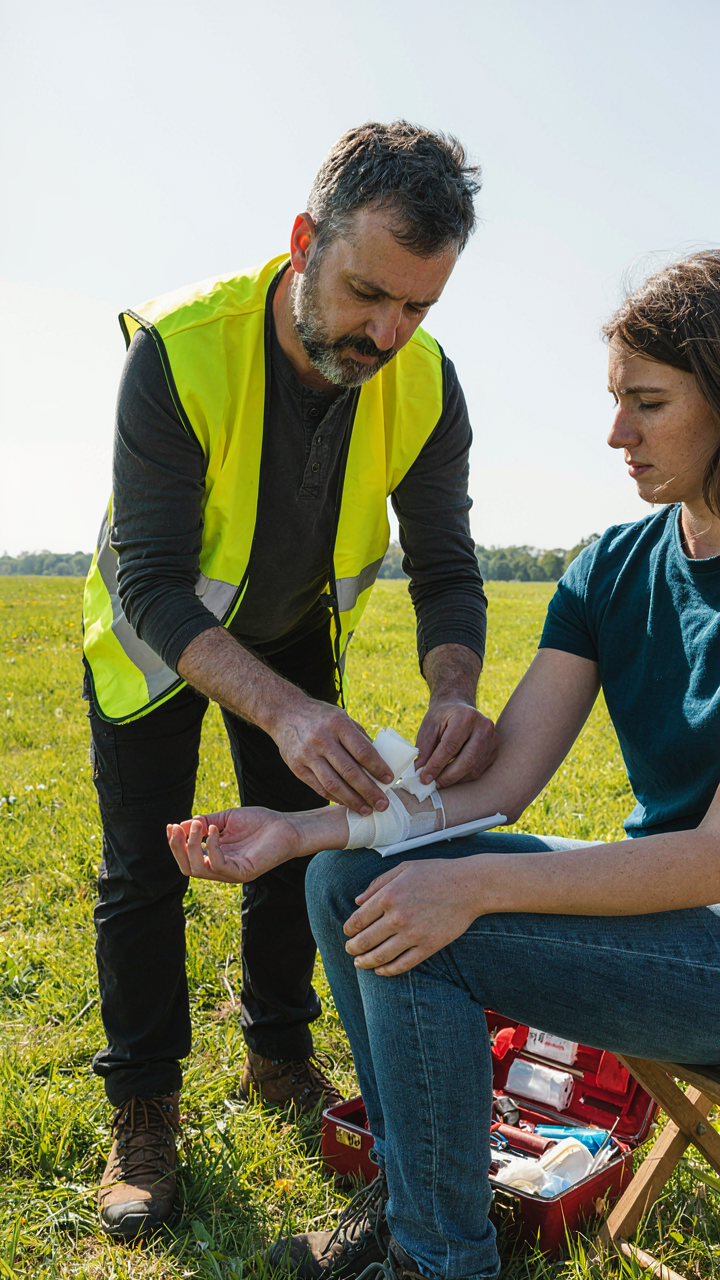
Scenario drills work because they move decision-making from conscious processing into motor memory. Practice a specific sequence—control bleeding, check airway, immobilize—until your hands know the steps before your mind catches up. Run through these scenarios quarterly, ideally with a partner playing the casualty. The goal is automaticity, not perfection. When adrenaline spikes, your kit becomes an extension of muscle memory, not a box of mystery supplies.
Decision Trees Beat Intuition
Cybernetics teaches feedback loops and rapid response correction. Apply that framework to your first aid protocol: each decision narrows the next one, creating a linear path instead of endless branching options that paralyze you under pressure.
Build a mental model before the emergency. If someone is unresponsive, you follow Protocol A. If they’re bleeding, Protocol B. If they’re alert but injured, Protocol C. Write these out now and rehearse them. The common advice—”just stay calm”—is useless. Real calmness comes from knowing exactly what your next three actions are. When you remove the decision burden, you execute faster and with fewer errors. Your kit organization should match this mental model exactly: tourniquet first, bandages second, splints third.
Overland First Aid Kit: The Unconventional Camping Checklist Items
Items You Already Own That Work Better Than You Think
You want to feel prepared without carrying dead weight. The real mechanism is constraint thinking: most people pack redundant medical gear when ordinary objects already solve the problem. Borrowing from systems design, we call this “functional overlap”—one component serving multiple purposes. Your overland kit shrinks when you recognize what you already have.
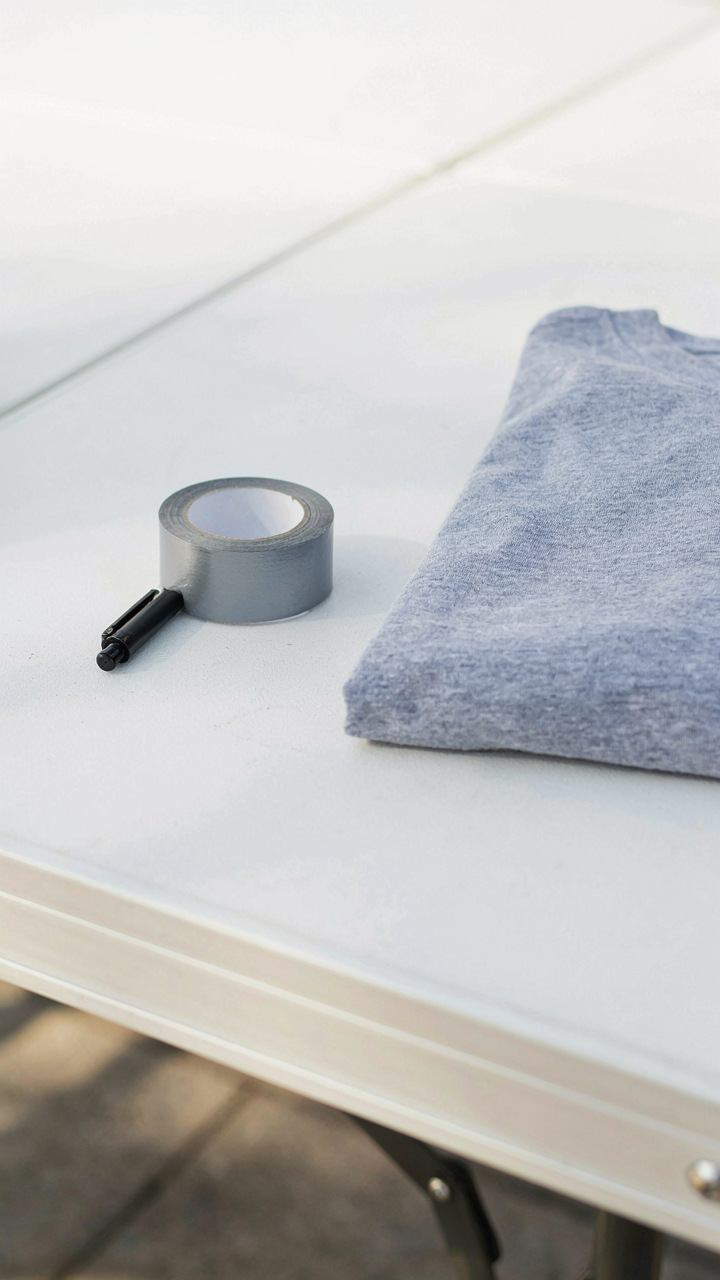
- Duct tape wrapped around a pencil: Provides rigid support for finger splinting, blister prevention, and wound closure reinforcement without bulk. Wrap several feet around a pencil or card stock to save space.
- Cotton underwear or spare shirt: Cuts into strips for makeshift bandages, tourniquets, or burn dressings. Natural fiber absorbs fluids better than modern synthetics in a pinch.
- Ziplock bags: Serve as waterproof storage, ice packs when filled with water and frozen, pressure dressings for wounds, or barriers against contamination during splinting.
- Paracord or boot laces: Function as tourniquets, sling anchors, or soft tissue compression for sprains. Test knot strength before trip, as degraded cordage fails under pressure.
- Ibuprofen from your personal supply: Pack extra tablets in a small container as anti-inflammatory backup for injuries. Dosing for pain and swelling works in remote settings without prescription barriers.
The error most people make is treating first aid kits as sealed medical boxes. Your kit is alive—it pulls from your gear system. Before buying commercial kits, audit what you’re already carrying. You’ll ditch half the redundant items and gain confidence in what remains.
Your Medications Belong In Your Kit, Not In Your Medical Pouch
Most overland guides skip this entirely because discussing personal medications feels outside their scope. It’s actually the single largest treatment failure point. You own prescriptions for blood pressure, diabetes, anxiety, or asthma. A remote trail doesn’t suspend those conditions. Missing one dose or running out creates emergencies no first aid kit resolves.
Carry a full supply plus one week extra, stored separately from your main medications. Keep originals in a waterproof container with the prescription label visible. Document the generic name, dosage, and frequency on paper in case you lose the bottle. Your body’s chemistry doesn’t reset in the backcountry. The protocol is simple: inventory your prescriptions now, pack extra, and tell one person what you’re taking before you leave.
The “Post Incident Review” Loop: Learning From Every Trip

Debriefing: What Actually Happened Out There
You want to believe your kit is good so you can stop thinking about it. The mechanism that kills improvement is confirmation bias: you notice what you used and forget what nearly broke you because you managed around it. Borrow from military after action reviews. The gap between “what went wrong” and “what could have gone worse” is where your kit failures hide. Write three things immediately after returning: one item you reached for, one item you didn’t need, one situation where you improvised instead of pulling from the kit.
The debrief isn’t therapy or storytelling. It’s forensic. You’re looking for friction points: Did you find the tourniquet fast enough? Did the blister treatment actually stop the problem or just mask it? Could you access the chest seal in the dark? Most people skip this step entirely and run identical kits on identical trips for years, never adapting. Your kit compounds mistakes if you don’t interrogate them.
Kit Refinement: The Feedback Loop That Actually Works
Refinement isn’t swapping items randomly when a gear company releases marketing material. It’s responding to documented friction. After three trips, you’ll have concrete data on what you actually carry versus what you theoretically need. Pull items that survived five trips unused. Test replacements on day hikes before committing them to remote routes. One change per season prevents you from creating new problems while solving old ones.
The mechanism here is signal versus noise. Your first kit contains guesses. Each trip converts guesses into data. The kit that works after twelve months looks different from month one because you removed what’s unnecessary and stress tested what matters. Document the change date and reasoning for each swap. This log becomes your insurance against reverting to old decisions when memory fades. Your kit should be leaner and sharper each season, not fatter.
Your Kit Is Not A Checklist; It’s A Living Testament To Self-reliance. Stop Outsourcing Your Safety

Most people buy an overland first aid kit and forget it exists. That’s not preparedness, that’s theater. Real self-reliance means you know what’s in your kit, why it’s there, and how to use it before you’re bleeding in the dirt. Build your own. Test it. Modify it. Own it. Stop waiting for permission to take care of yourself. Your survival is nobody else’s responsibility but yours.