The Pre Flight Deception: Why Most Prep Is Useless
What Everyone Gets Wrong About Preparation
You want to feel in control before something that terrifies you. That’s why pre-flight advice exists. But most of it doesn’t matter. People pack compression socks, download meditation apps, and adjust their sleep schedule five days early. None of this addresses the actual problem: your body doesn’t know how to handle prolonged cabin pressure, dehydration, and immobility. The mechanism is physiological, not psychological.
The standard playbook is incomplete because it treats a long haul flight like a problem to outsmart rather than a physical stressor to manage. Meditation doesn’t fix fluid redistribution. A neck pillow doesn’t prevent deep vein thrombosis. Sleep adjustment a week before doesn’t override your circadian rhythm’s response to crossing eight time zones. Pre-flight rituals feel productive, but they’re mostly theater. You need to stop optimizing peripheral details and start addressing what actually happens to your body in the air.
The High Leverage Pre Flight Actions
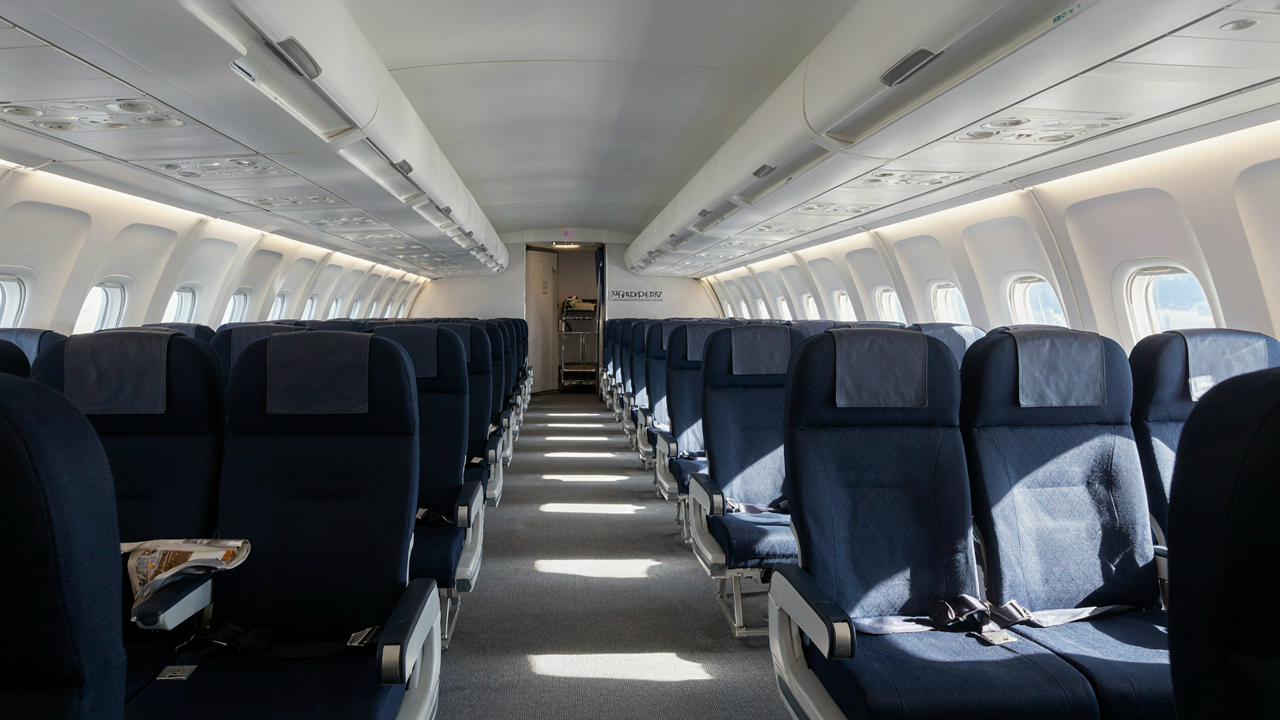
Your seat assignment is the one pre-flight decision that shapes everything else. You don’t need a perfect seat. You need a seat that lets you move. Exit row seats offer more legroom for blood circulation. Bulkhead seats prevent someone reclining into your chest. Aisle seats let you stand every ninety minutes without climbing over people. Middle seats are objectively worse for this reason, so avoid them. Window seats trap you if you need to walk. The seat choice determines whether you can execute in-flight movement protocols. Book this before you book anything else.
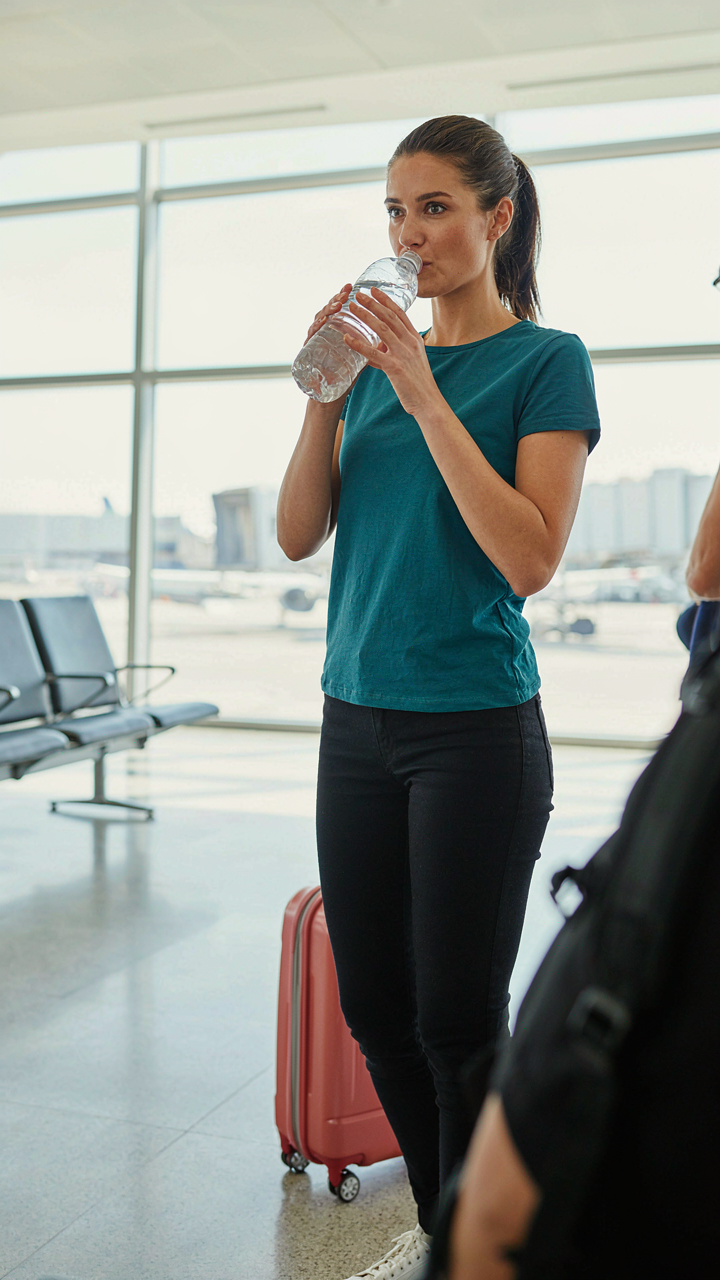
Hydration starts before you step into the airport. Dehydration on a flight isn’t about drinking water in the cabin. It’s about arriving already hydrated so your baseline is higher when cabin humidity drops to eight percent. Drink two liters of water in the twelve hours before your flight. This is the only pre-flight action that meaningfully affects cabin performance. Everything else is negotiable.
The “Time Dilation” Protocol: Manipulating Your Internal Clock For Long Flights

Your Body Runs On A Schedule You Don’t Control
You want to arrive functional, not destroyed. That’s the real reason you care about this. Here’s the mechanism: your circadian rhythm is biology’s term for the internal clock that governs sleep, hormone release, and alertness. On long flights, this clock becomes your primary enemy because it refuses to acknowledge the plane’s destination timezone. You don’t fight jet lag. You engineer your arrival state before you leave the ground.

Your circadian rhythm syncs to external time cues called zeitgebers. The two heaviest hitters are light exposure and meal timing. A twelve-hour flight crosses multiple zeitgebers simultaneously, creating a lag between your body’s internal time and external reality. Most advice says “just sleep on the plane.” That’s incomplete. You need to manipulate which zeitgebers you expose yourself to and when, starting days before departure.
Light Exposure Wins The Timezone War
Light is the dominant circadian synchronizer. Melatonin production responds to it within minutes. If you’re flying east across eight time zones, you arrive in morning light your body thinks is midnight. Standard advice recommends “get sunlight when you land.” That’s reactive and weak. The real play starts three days before departure.
If flying east, get bright light exposure in the afternoon and evening of your pre-flight days, then avoid light in the early morning before your flight. If flying west, reverse it: seek morning light, avoid evening light. On the plane, wear blue-light-blocking glasses during the cabin’s daytime to suppress melatonin, then sleep during their night. Meal timing amplifies this. Eating a protein-heavy breakfast signals your body to be alert; eating carbs signals rest. Align meal timing with your destination’s schedule, not your origin’s. This compounds the light exposure effect and accelerates circadian adjustment by 24 to 48 hours.
Minimalist Carry On: The Long Haul Flight Essentials Illusion
What You Actually Need Versus What You Think You Need
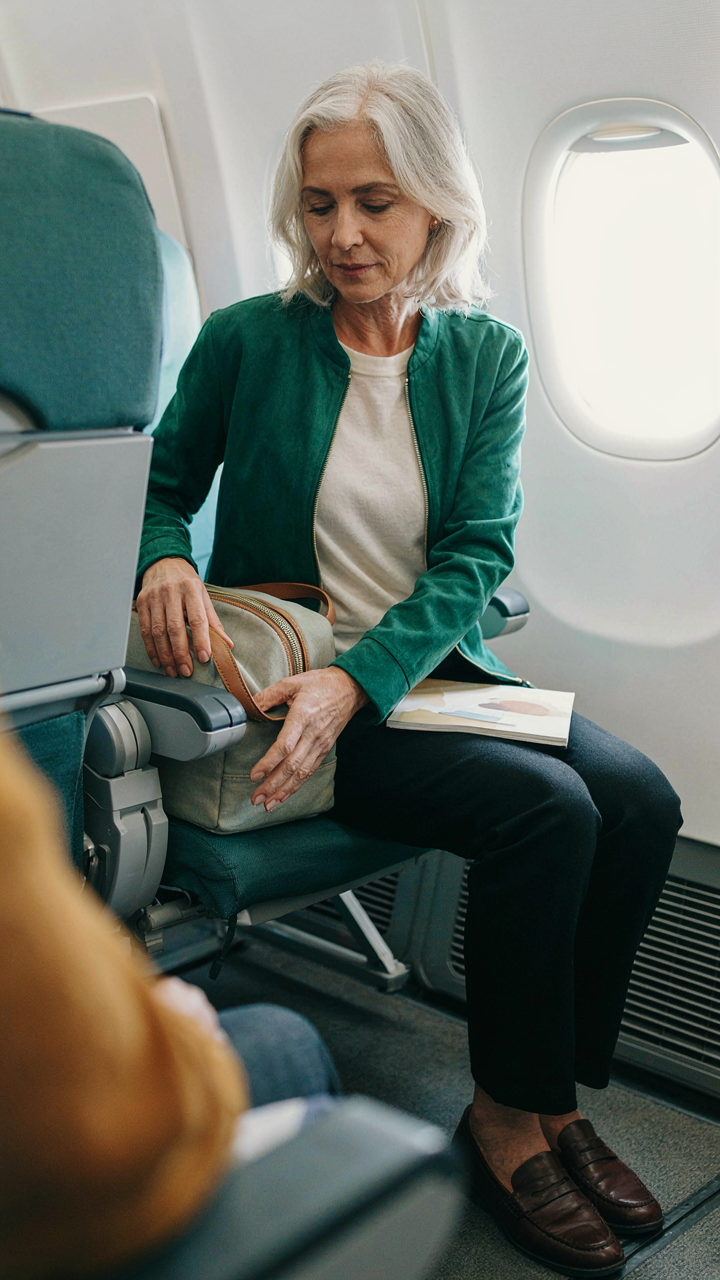
You’re afraid of being unprepared. That fear drives you to pack seventeen things you’ll never touch. The mechanism is simple: your brain mistakes abundance for security. You confuse options with outcomes. On a long haul flight, more items don’t equal more comfort. They equal more weight, more fumbling in tight spaces, and more decisions when you’re already exhausted. The airline seat doesn’t expand because you brought backup everything.

Most packing advice tells you to “be prepared for anything.” That’s not preparation. That’s anxiety dressed up as planning. Preparation means identifying the actual stressors on long haul flights—dehydration, pressure changes, immobility, poor air quality, sleep disruption—and solving only those. Everything else is noise. Your carry-on should fit under the seat in front of you. If it doesn’t, you’ve already failed before takeoff.
The Ruthless Long Flight Kit
Strip your carry-on down to what solves a specific problem during flight. Comfort isn’t luxury here. It’s a productivity tool.
- Compression socks or flight socks: Prevent blood pooling in your calves during 12 plus hour flights. Wear them the moment you board, not after symptoms appear.
- Neck pillow with memory foam: Stabilizes your head so your neck doesn’t bend at angles that destroy sleep quality. Blow up pillows collapse under their own weight.
- Noise canceling headphones or earplugs: Engine noise prevents deep sleep. Earplugs are lighter. Headphones let you control what you hear and when.
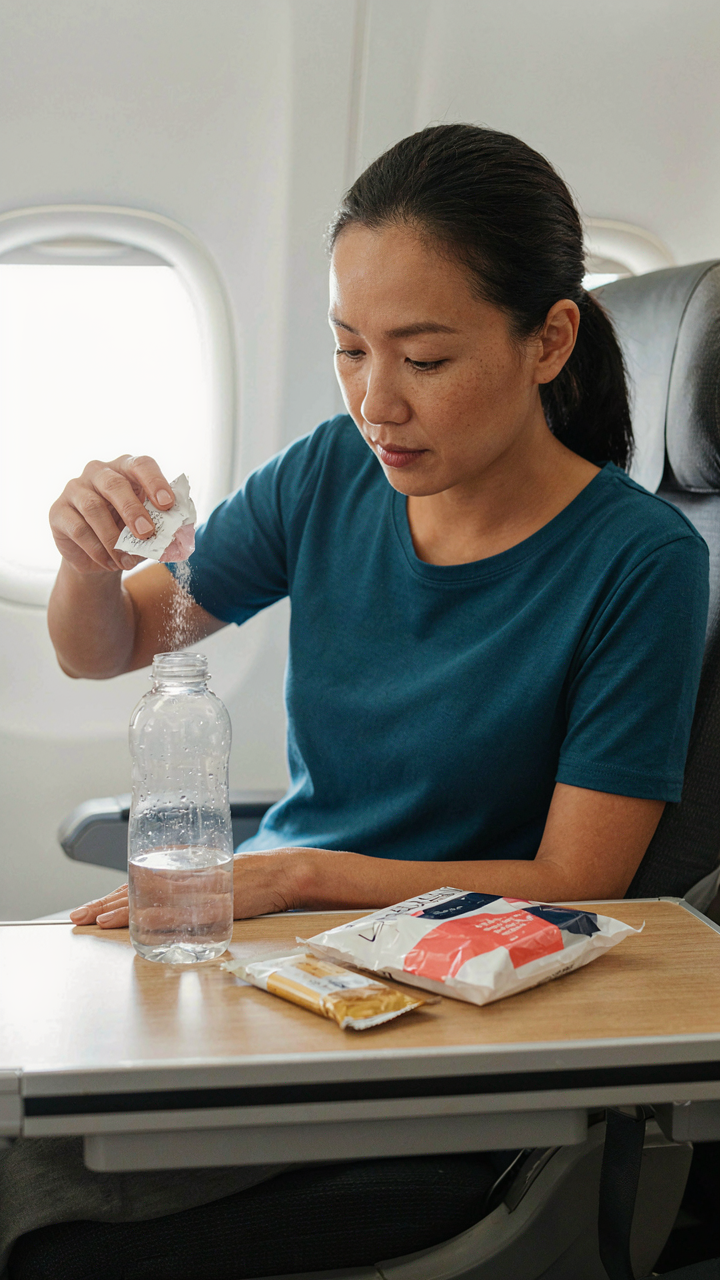
- Electrolyte powder packets: Cabin air dehydrates you faster than you notice. Water alone doesn’t replace electrolytes. Mix two packets into your water bottle during the flight.
- Eye mask and melatonin: Cabin lighting ruins circadian rhythm. Melatonin 0.5mg to 3mg taken four hours before landing resets your sleep schedule without hangover effects.
- Lip balm and travel moisturizer: Humidity at 10 to 20 percent in the cabin causes micro cracks in skin that become infected. Apply after every bathroom trip.
Everything else—extra shoes, multiple outfits, toiletries larger than travel size—lives in checked luggage. Your carry-on solves the environment problem. The plane cabin is hostile to human physiology. You’re engineering survival in those eight to sixteen hours, not proving you thought of everything. Pack only what you’ll actually deploy.
Hydration As A Weapon: Beyond Basic Water Intake For Surviving Long Flights
Why The Generic “Drink Water” Advice Fails You
You want to feel prepared and in control on a long flight, so you’ve heard the baseline rule: drink water. Here’s the problem nobody states plainly: water alone doesn’t solve dehydration on aircraft. The mechanism is pressure and cabin humidity. Commercial cabins maintain 10 to 15 percent relative humidity, compared to 30 to 65 percent on the ground. Your body loses moisture constantly through skin and respiration in that environment. Plain water replaces volume but not electrolytes your cells actually need to retain it. You drink, you pee, you’re back to square one in two hours.
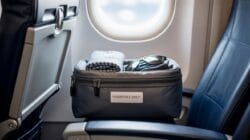
The airline industry knows this. That’s why flight crews drink isotonic beverages during their duty periods, not water. Your mistake is treating long haul flights like normal dehydration scenarios. They aren’t. The altitude, cabin pressure, and sustained duration create a specific physiological demand that generic hydration advice ignores entirely. You need a protocol, not a guideline.
The Strategic Fluid And Electrolyte Formula
Treat this like osmotic pressure management, a concept from cellular biology. Your cells retain water when electrolyte concentration inside and outside stays balanced. Sodium, potassium, and magnesium are the drivers. Start your flight with a preloaded electrolyte drink two hours before boarding. Use products with a sodium-to-carbohydrate ratio of roughly 500 milligrams of sodium per 6 ounces of fluid. This primes your system before cabin pressure drops.
During flight, rotate fluids strategically. Drink 200 to 250 milliliters of water every hour for the first six hours. Every other hour, replace one water serving with an electrolyte beverage or coconut water, which contains potassium naturally. Avoid alcohol entirely on flights over eight hours—it accelerates dehydration by suppressing vasopressin, the hormone that controls water retention. After hour six, drop to 150 milliliters of water per hour. Your fluid needs decrease as your body acclimates, but electrolyte intake stays consistent. Pack your own electrolyte powder in measured packets; airline beverages are under-salted by design to reduce bathroom traffic demand.
The Hunger Games Strategy: Fueling Your Body On Long Haul Flights

What Airlines Won’t Tell You About Meal Timing
You care about this because you’re terrified of landing depleted, looking like you survived a hostage situation. Here’s the mechanism: airlines schedule meals around their operational convenience, not your circadian rhythm or energy needs. That’s the opposite of what your body requires. The airline meal arrives when the cabin crew clocks their service window, not when your digestive system can actually process fuel efficiently. Most flyers accept whatever timing the crew dictates and wonder why they feel wrecked.

The real play is decoupling your eating from the airline schedule entirely. Eat before boarding if your flight departs in the afternoon or evening. Skip the first meal service if it lands during what would be your sleep window at your destination. Your goal is to arrive aligned with the local eating pattern of where you’re landing, not to consume calories on some predetermined cart rotation. This requires deciding your nutrition strategy before you board, not reacting to what gets wheeled past your seat.
Building Energy Without The Crash
Think of your bloodstream like an altitude problem in aviation: rapid changes cause system failure. Blood sugar spikes from refined carbs and airline desserts feel good for forty minutes, then you crash harder than you were before. The common advice to “eat what they serve” is incomplete. What airlines serve is engineered for shelf stability and cost, not for sustained energy across twelve-plus hours.
Your protocol: bring protein and fat sources that don’t require refrigeration. Nuts, cheese packets, or jerky stabilize your blood glucose and keep you functional. Eat these in small amounts every three to four hours rather than relying on one massive meal service. Avoid the bread roll, skip the sweet items, and eat the protein component of whatever meal arrives. The mechanism is simple: sustained energy comes from steady fuel intake, not feast-or-famine eating patterns that match the airline’s service schedule.
Movement Redefined: The Antidote To Cabin Confinement
Why Stretching Alone Won’t Save You
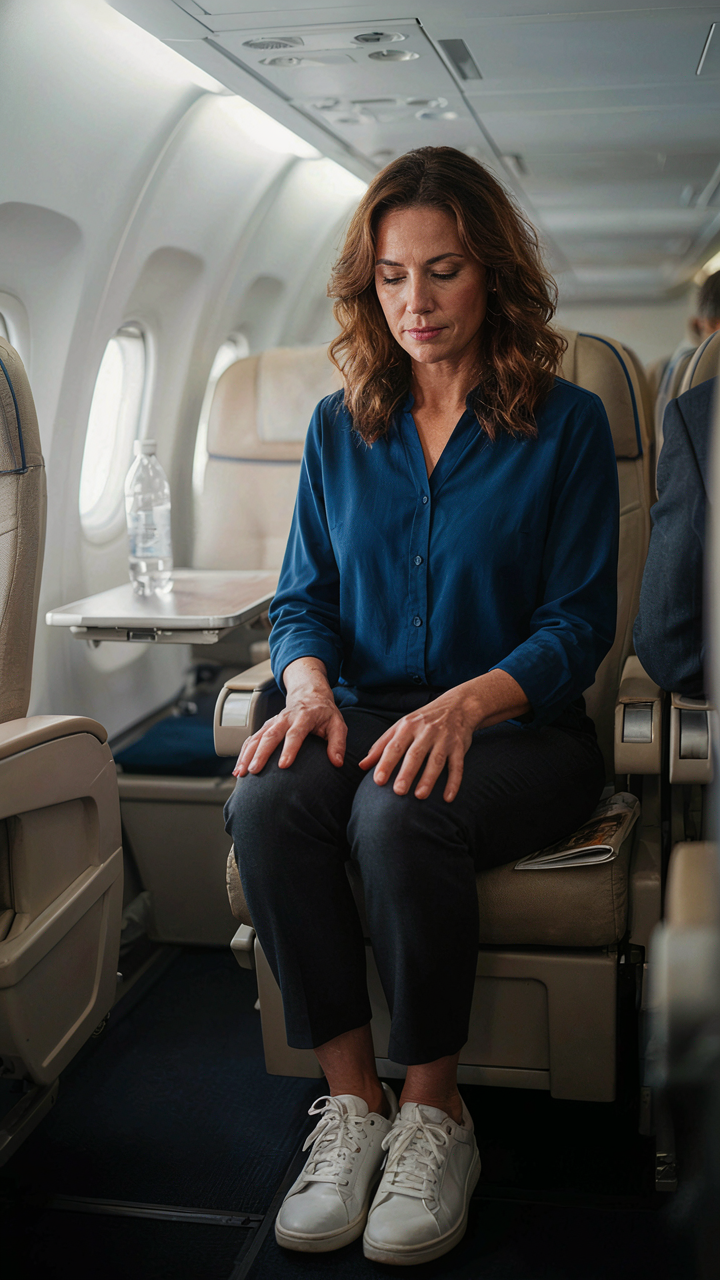
You want to believe a few overhead reaches will keep your legs from swelling and your blood from pooling. That’s denial talking. Static stretching does nothing to solve the real problem: your circulatory system shuts down during immobility. Stretching is a feel-good ritual, not a mechanism. The issue isn’t flexibility—it’s stagnation. Your veins need active muscle contractions to push blood back up against gravity. Sitting still and reaching accomplishes neither.
Most airlines and travel sites recommend stretching like it’s a solution. It’s not. Stretching addresses muscle tightness, not blood flow. You can touch your toes in seat 34B and still develop deep vein thrombosis if your calf muscles never fire. The confusion exists because stretching feels productive. It isn’t. You need muscular work, not range of motion drills.
Micro Contractions Beat Distance Walking
Borrow from exercise physiology here: the soleus pushes blood more efficiently than any other muscle in your legs because it sits deep in the calf. Activate the soleus repeatedly throughout the flight, and you bypass the need to walk the aisles every hour. Seated calf raises—pushing your heel down while keeping your toes on the ground—contract the muscle without moving you an inch. Do sets of fifty every ninety minutes. This is the lever nobody mentions because it sounds too simple.
Walking the cabin helps, but it’s not the core mechanism. The real work happens in your seat. Seated marching, glute squeezes, quad tightens, and calf raises all fire large muscle groups and force blood circulation without exhausting you or annoying the person next to you. Combine these micro protocols: thirty seconds of each every two hours, plus one walk to the bathroom per five-hour block. This stacks prevention, not just checks a box.
The Sleep Scarcity Principle: Mastering Rest On Long Flights
Stop Chasing The Eight Hour Dream
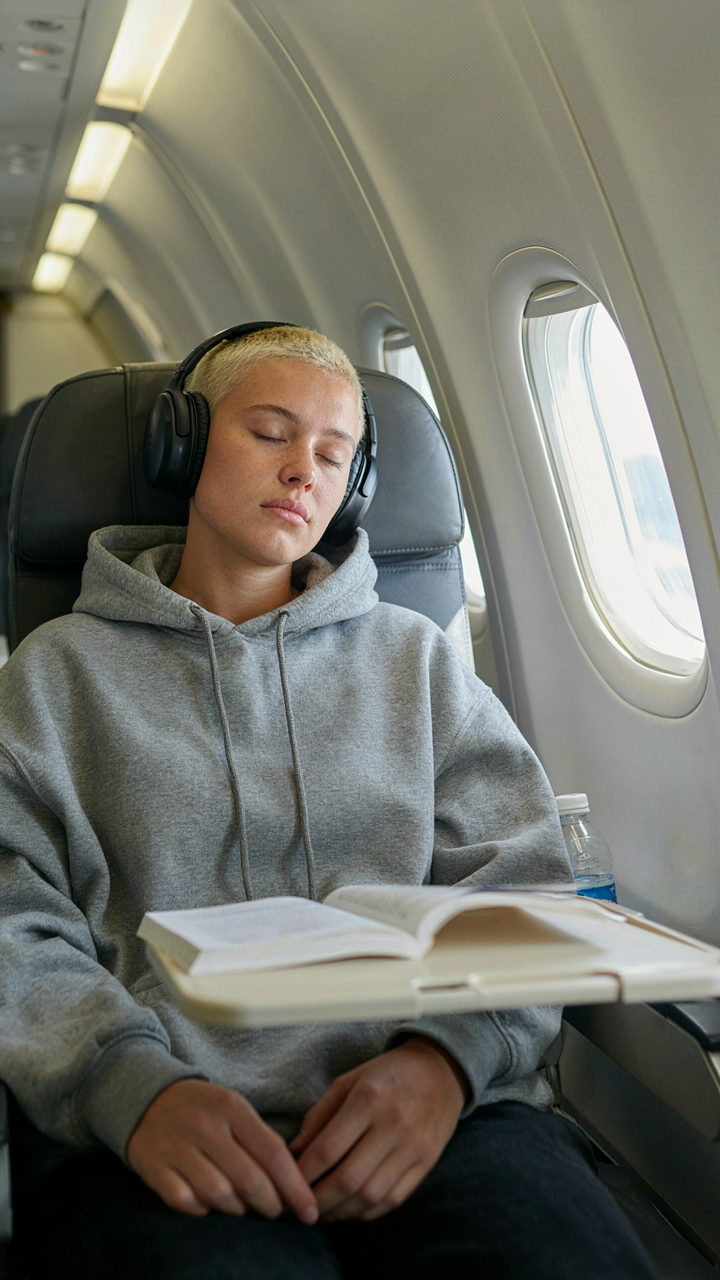
You want to land refreshed and look like you didn’t just spend fourteen hours in a tin can, so you tell yourself you’ll sleep like normal. That’s the trap. Your body doesn’t work that way at altitude, in a chair, with recycled air, and a stranger’s elbow two inches from your ribs. The mechanism is simple: aircraft cabins operate at 6,000 to 8,000 feet of simulated altitude, which reduces oxygen availability by roughly 25 percent and disrupts your sleep architecture before you even recline the seat. Expect fragmented rest, not deep sleep.

Most advice tells you to “just sleep more,” which is incomplete guidance dressed up as wisdom. What actually matters is accepting that your brain won’t produce the same sleep quality on the ground. The real skill is training yourself to extract recovery value from whatever fragmented sleep you get. This shifts your goal from eight continuous hours to strategic micro-recoveries that keep your cognitive function stable and reduce jet lag damage. Your nervous system doesn’t need one perfect sleep cycle to recover, it needs multiple micro-patterns of rest.
Power Naps And The Adenosine Reset
Neuroscience identifies adenosine as the chemical pressure that builds when you’re awake and clears when you sleep, creating the “sleep debt” cycle. On long flights, treat adenosine management like a fuel gauge, not a bank account. Three to four intentional naps of 20 to 30 minutes each spaced across the flight work better than chasing one long block of sleep. A 20-minute nap clears enough adenosine to reset your cognitive baseline without entering deep sleep, which leaves you groggy and disoriented when the cabin crew wakes you for customs forms.
The mechanism is timing. Set a phone alarm for 25 minutes, use noise-canceling headphones or earplugs, and recline only to a 45-degree angle if possible. You’re not trying to sleep deeply, you’re harvesting the adenosine clearance that happens in Stage 1 and Stage 2 sleep. Layer this with a single 5-milligram melatonin tablet 30 minutes before your first nap window to signal circadian alignment to your brain. Take your naps during the flight’s night window, not randomly, and you’ll land functional instead of haunted.
Digital Disarmament: Reclaiming Focus From In Flight Distractions (Long Haul Flight)
The True Cost Of Always Being Plugged In
You want to know how to “optimize” your flight experience because you’re afraid of boredom, which actually means you’re afraid of sitting alone with your thoughts. Here’s the mechanism: every time you switch apps or scroll, your brain releases dopamine. That hit is designed by engineers paid millions to be addictive. On a 12-hour flight, you’re not fighting boredom. You’re fighting a neurochemical feedback loop. The cabin’s monotony amplifies this urge to stimulate. Most people land exhausted not from travel, but from the cognitive tax of constant context-switching.

The screen time during long haul flights doesn’t pass time efficiently. It fragments attention so severely that your brain never enters the restorative state needed for actual rest. You watch movies, scroll feeds, text sporadically, and never complete any single activity with satisfaction. You arrive at your destination mentally depleted instead of mentally recovered. The cost is hidden because the damage feels normal. It’s accumulated cognitive debt, paid in full the moment you land.
Strategic Offline Periods For Real Recovery
The concept of “constraint” comes from systems thinking in engineering. Systems perform better with defined limits, not infinite options. Apply this to your flight: designate offline windows, not as punishment, but as operational parameters. A 6-hour flight should have at least one 90-minute offline block in the middle. A 14-hour flight needs two. This isn’t deprivation. It’s the only time your nervous system actually downregulates during air travel.
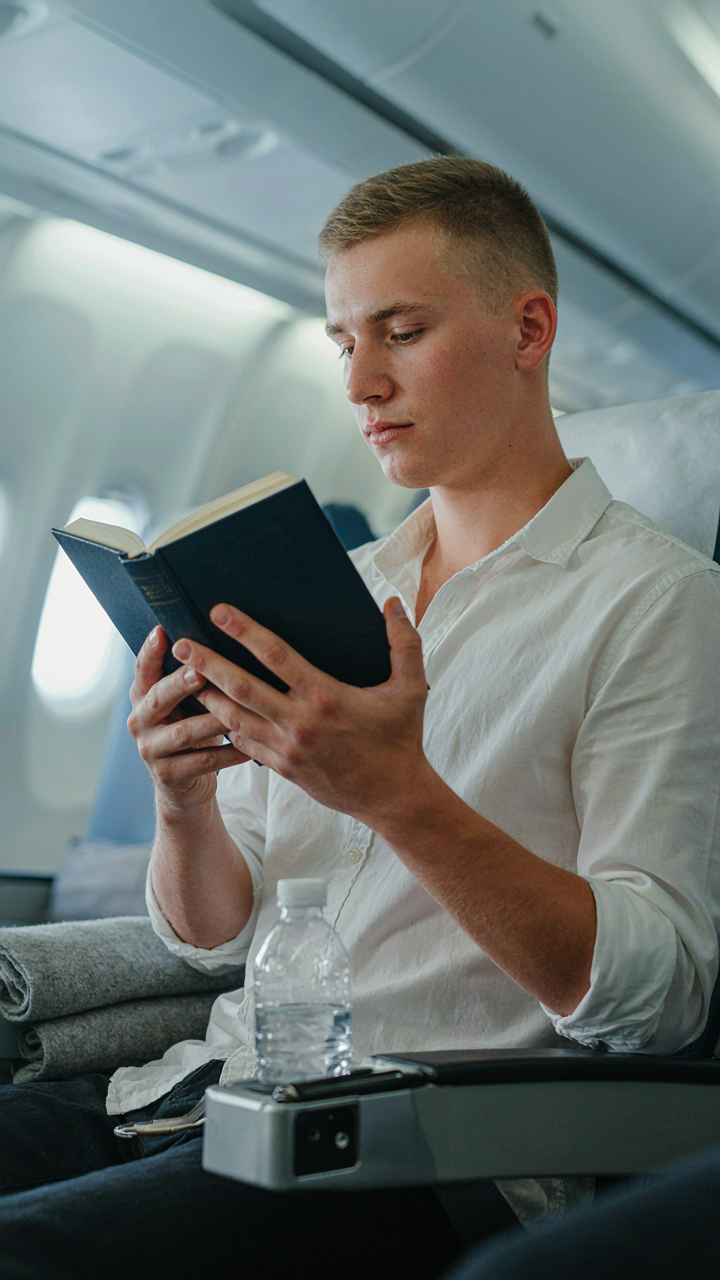
Start offline 30 minutes after takeoff when cabin pressure stabilizes. Bring a physical book, notebook, or nothing. Sit in silence. Most first-timers assume they’ll go insane. They don’t. By hour two of offline time, something shifts. Your mind stops demanding external input and starts processing. You’ll sleep deeper, arrive less jet-lagged, and retain actual memories of the flight instead of a blur of notifications. The single highest-leverage move: commit to the offline block before boarding, not during the flight when willpower is lowest.
Post Flight Re Entry: The Critical 24 Hour Recovery Window

What You’re Actually Afraid Of
You want to land and pretend nothing happened to your body. You’ll minimize it, push through, and wonder why you feel broken for three days. The mechanism is circadian desynchronization combined with acute sleep debt. Your body landed. Your internal clock didn’t. Forcing normalcy before resetting it guarantees a full week of dysfunction instead of 24 hours of controlled recovery.

Light exposure is the operating lever here, borrowed from chronobiology. Your circadian system doesn’t care about the clock on the wall. It cares about photon timing. Arriving at night and immediately exposing yourself to artificial indoor light, then sleeping, is the opposite of what fixes jet lag. You’ve locked in the wrong time zone.
Strategic Light Exposure Before Sleep
Most advice says sleep immediately after landing. This is incomplete and often wrong. Your first move depends on arrival time, not fatigue. Arriving in the morning after an eastbound flight means you need darkness, not a hotel room. Arriving at night means you need carefully timed light, then sleep. Get this backwards and you’ve just purchased another three days of misalignment.
Here’s the protocol: if you land in the morning at your destination, seek bright outdoor light for 20 to 30 minutes within two hours of landing. If you arrive at night, avoid all bright light until at least morning. Eat a protein meal when local time says breakfast. Then sleep in complete darkness. This collapses the 7 to 10 day adjustment window into 24 to 36 hours because you’ve given your circadian system the only input it actually trusts: direct sunlight timing.
The Real Obstacle Isn’t The Flight Itself, But Your Inability To Master The Art Of Strategic Inaction
Most people fail long haul flights because they fight the boredom instead of embracing it. You don’t need more tips. You need permission to do nothing for twelve hours. Download one movie. Bring noise canceling headphones. Then stop optimizing and start resting. Your body needs the reset more than your mind needs the stimulation. The travelers who arrive functional aren’t the ones who packed seventeen activities. They’re the ones who surrendered to the void and let their nervous system recover before landing.