The Minimalist Momentum: Why Less Gear Guarantees Better Sleep
Weight Loss Equals Setup Speed
You want to believe that more gear makes you safer and more comfortable. It doesn’t. In physics, load directly affects force output. Carry less, move faster, expend less energy before rest. Heavy packs force rushed setup decisions. You arrive tired. You sleep worse. The mechanism is simple: physical fatigue before bed overrides whatever comfort your extra blanket promised.
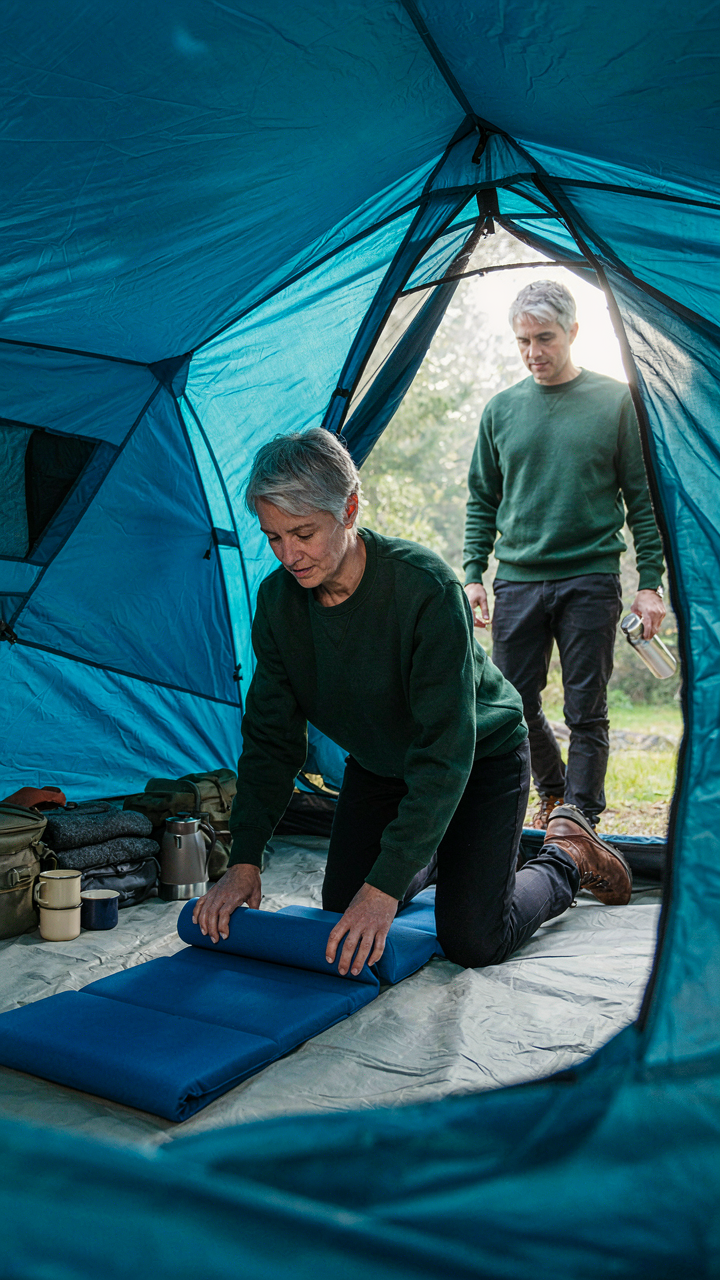
A thirty-pound pack versus a fifty-pound pack isn’t a ten percent difference in sleep quality. It’s the difference between arriving with energy to arrange your sleep space properly and arriving depleted, making compromises. You skip the ground tarp. You position your pad wrong. You stay tense. Lighter gear means you arrive with cognitive resources left to optimize your actual sleep environment instead of just collapsing.
The Choice Collapse Effect
The common advice says “pack what you might need.” Wrong. Every item you bring creates a micro-decision at setup: use it or don’t, position it here or there, adjust it later. These decisions drain the same mental resources sleep requires. Neuroscience calls this decision fatigue. In camping terms, it’s the tax on your ability to actually rest.
Three blanket options mean you spend ten minutes choosing instead of five minutes settling into one. One pillow means no negotiation. One sleeping bag means no adjustment ritual. Fewer choices force faster commitment to your setup, which signals your nervous system that rest is happening now, not pending optimization. Start setup with a hard list of five essentials only, then stop adding items.
Beyond The Sleeping Pad: The Ground As Your Ally, Not Enemy
Where You Pitch Matters More Than What You Pitch On
You think a good pad solves ground problems. It doesn’t. You’re paying for comfort theater while ignoring site selection, which is the actual lever that controls how much heat the earth steals from your body. This is basic thermodynamics: heat flows from warm objects to cold ones, and the ground is a massive heat sink. The pad only slows this process—it doesn’t stop it. Where you place that pad determines whether you’re fighting a moderate slope or wrestling a frozen valley floor all night.
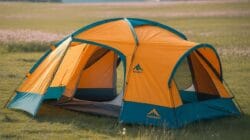
Flat ground with natural wind protection beats premium insulation on bad terrain. Look for sites slightly elevated from low points where cold air pools. Trees, rock outcrops, or terrain features that block wind are non-negotiable. Wind accelerates heat loss by stripping your insulating layer. A site sheltered from wind but on damp ground beats an exposed hilltop. Scout for signs of water drainage—dead grass, darker soil, or obvious runoff paths. These spots hold moisture and conduct cold efficiently into your sleeping system.
Layering The Earth: Insulation Strategy From Ground Up
Ground temperature regulation operates on the same principle as clothing layering: you need barriers between you and the heat sink. Soil conducts cold differently based on moisture and composition. Damp soil conducts heat three times faster than dry soil. Your sleeping pad addresses the top of this problem, but the real mechanism lives beneath it. The ground beneath your tent site either accelerates or slows the rate at which your body loses heat to the earth below. Most campers ignore this entirely and wonder why they freeze on a “good pad.”
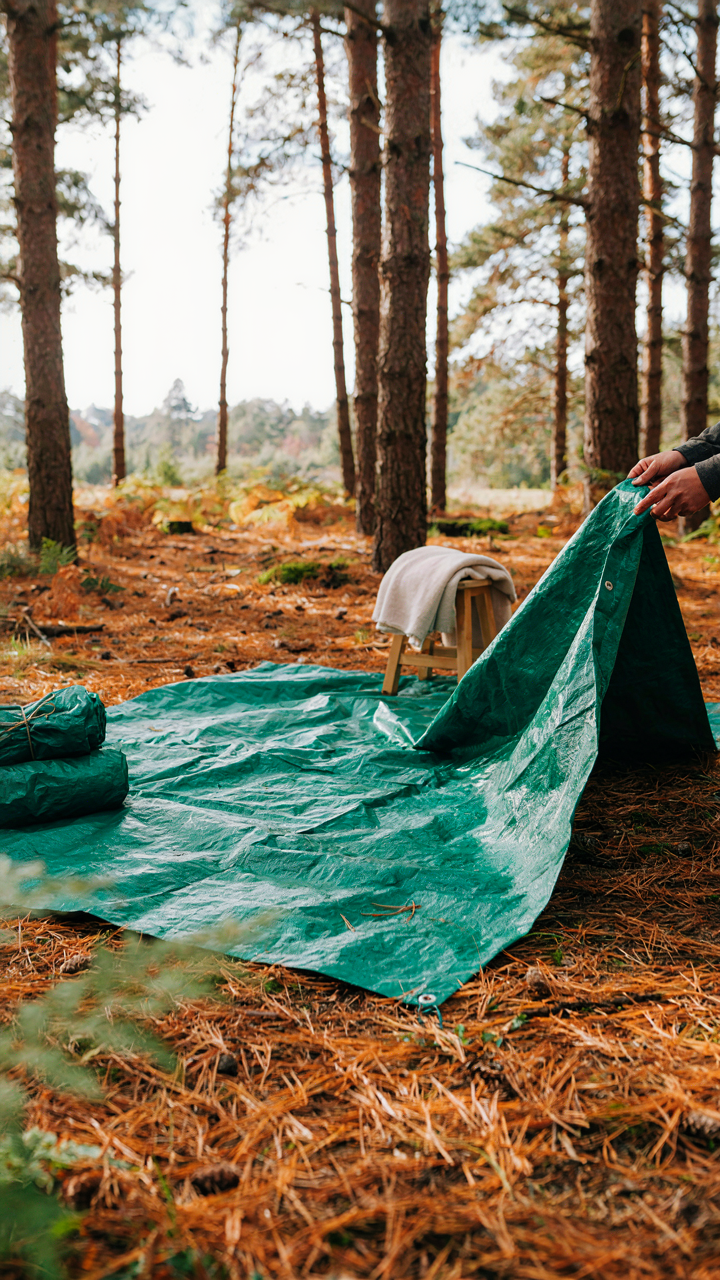
Build your insulation stack methodically. Tent placement first: pitch on the driest ground available, never in valleys or near water sources. Add a ground tarp under your tent to create an air gap and moisture barrier. Use pine needles, leaves, or dry grass between tarp and tent as additional insulation—these materials trap air. Increase pad thickness if ground temperature readings below 40 degrees Fahrenheit are expected. The protocol is simple: assess site moisture, add barriers, then add your pad on top of this foundation, not instead of it.
The Thermoregulation Protocol: Master Your Internal Climate
Clothing As Your Temperature Dial
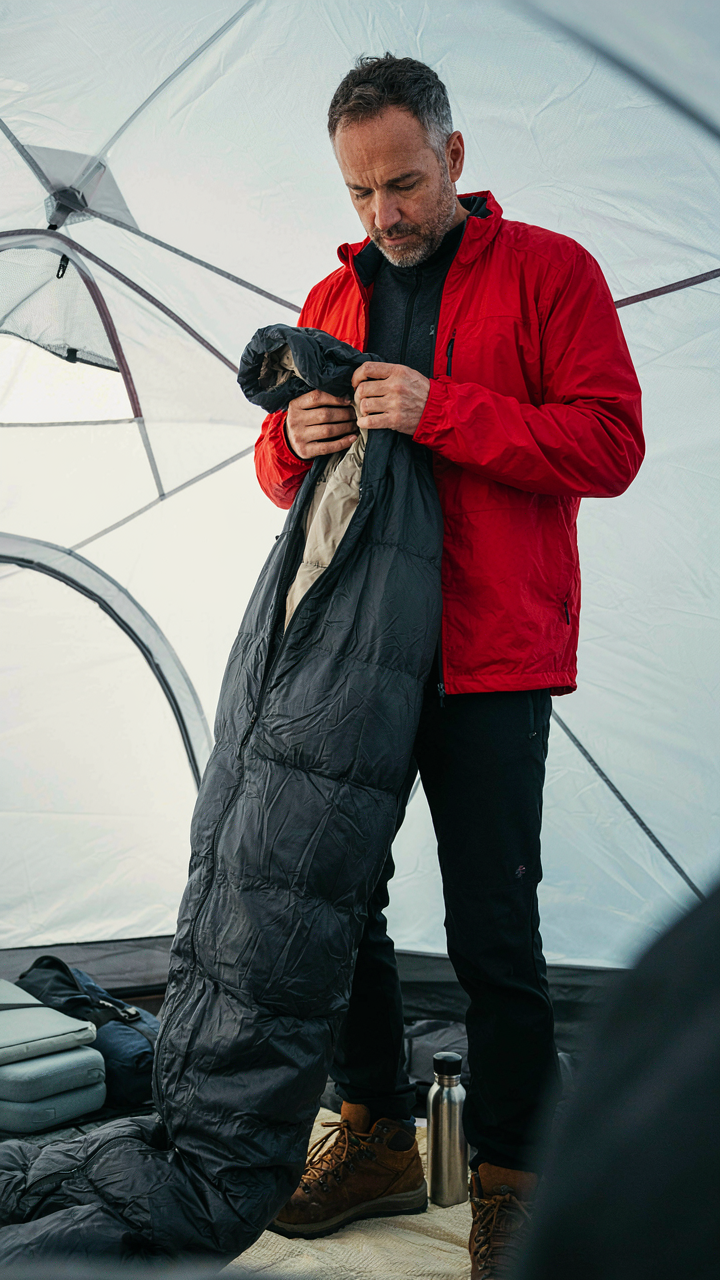
You want to sleep through the night without waking up either sweating or shivering, and you think a better sleeping bag solves it. It doesn’t. The mechanism is simple: your body generates heat, your clothing traps it, and your sleeping bag contains it. Without active management, you overshoot or undershoot. Treat your layers like a dimmer switch, not an on-off button. Start with a base layer that wicks moisture, add an insulating mid-layer you can remove, and keep a windproof outer shell accessible. The goal isn’t warmth. It’s stable core temperature.
Most people dress for camp, then climb into the bag fully clothed and wonder why they wake up drenched. Your body temperature drops when you lie down. Wearing too much traps excess heat before it dissipates. Wear less than you think you need, then add the mid-layer inside the bag if you get cold. Vent your bag’s opening if you start overheating. This takes thirty seconds and saves two hours of tossing. The protocol: enter the bag in base layer only, monitor your core temperature for ten minutes, then adjust. Never adjust after you’re already uncomfortable.
The Sleeping Bag Gap Problem
Heat escapes sleeping bags through compression and air leakage, not just lack of insulation. The compressed zones under your body stop insulating because you crush the loft, so ground insulation matters more than people admit. But the real leak is the opening. Your neck, face, and shoulders radiate heat directly into cold air if the bag’s collar doesn’t seal. This is thermodynamics, not preference: warm air moves toward cold air. Block the path and you stop the loss.
Most sleeping bags come with a drawstring hood. People pull it tight around their face and suffocate themselves, then abandon it. The real method: pull the drawstring until it seals your neck opening only, leaving your face exposed to breathable air. Your face isn’t your heat escape route if your neck is sealed. Place the draft collar or fold the bag’s insulation over your shoulders inside, creating a barrier between your upper body and the bag’s opening. Test it by holding your hand near the opening. If you feel cold air moving in, tighten or reposition. This single move cuts nighttime heat loss by thirty percent.
The Primal Tent Camping Doctrine: Shelter As Shield, Not Home
How Military Positioning Beats Comfort
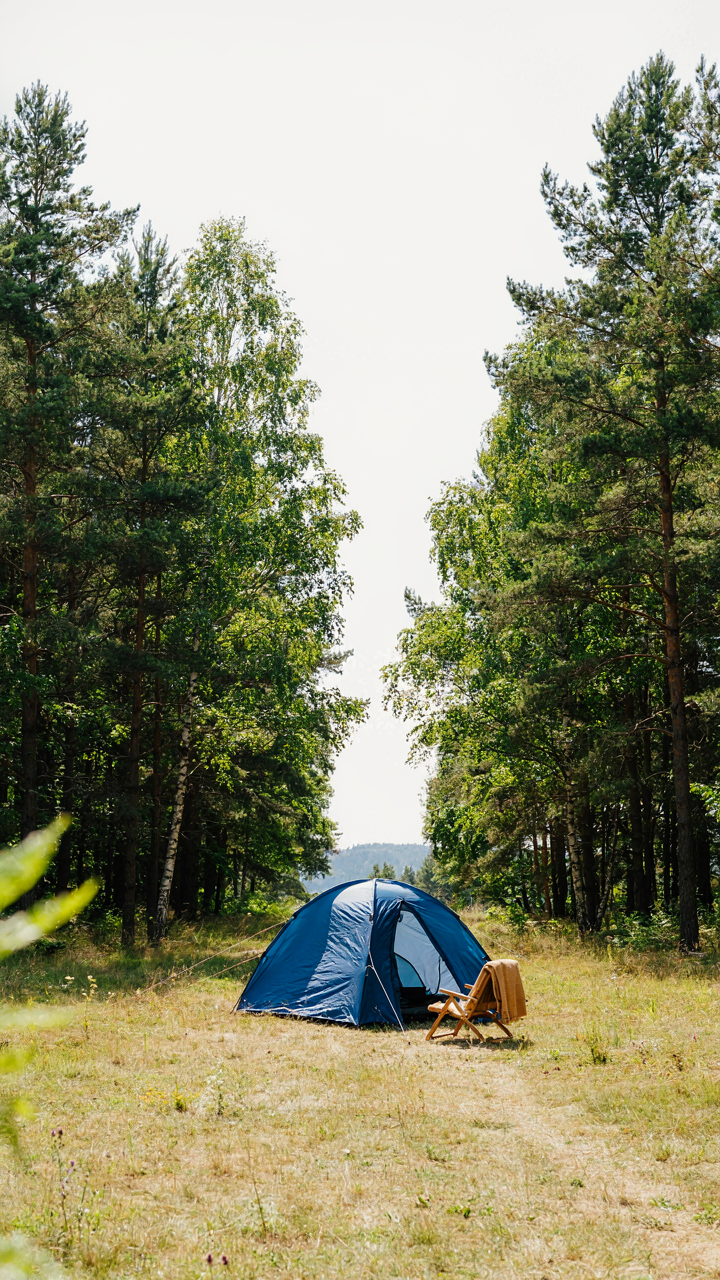
You want to sleep better camping because you’re afraid your body will punish you for leaving your climate-controlled bedroom. Military strategy teaches positioning: in bivouac doctrine, placement beats equipment. Apply this to your tent site. Don’t camp in the valley. Don’t camp where water pools. Wind channels through valleys and moisture collects there. High ground with slight slope sheds water and air moves. The army chose ridges and rises for centuries because sleep deprivation kills performance. Your tent location matters more than your sleeping bag.
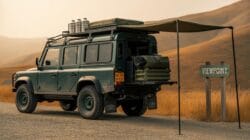
Position your tent to catch the prevailing wind direction, even if it means a less picturesque spot. Wind prevents moisture from settling on your tent walls and your face while you sleep. Stillness in a tent means condensation on fabric and that moisture becomes cold on your skin at 3 AM. Deploy your shelter as a barrier against the ground and air movement, not as a home base.
Airflow Design Stops The Moisture Trap
Common advice says crack a window or open a vent. That’s incomplete. The real mechanism is differential air pressure. Cold air outside, your body heat inside, and nowhere for vapor to escape creates condensation. Position your tent entrance facing away from where wind comes in. Open the opposite end vent. This forces air to flow through the tent rather than pool. No pooling means no condensation layer that transfers cold to your skin.
Stake your tent with enough tension that fabric sits flat against poles. Sagging fabric pools moisture. Check that no part of your sleeping bag touches the tent wall. Your insulation compresses when it touches cold fabric, and that touching point becomes a cold spot that wakes you. Place a thin mat or tarp one inch under your tent floor to break the thermal bridge to the ground.
Diet & Hydration For Camping Life: Fueling Deep Rest
When To Eat And Drink Before Sleep
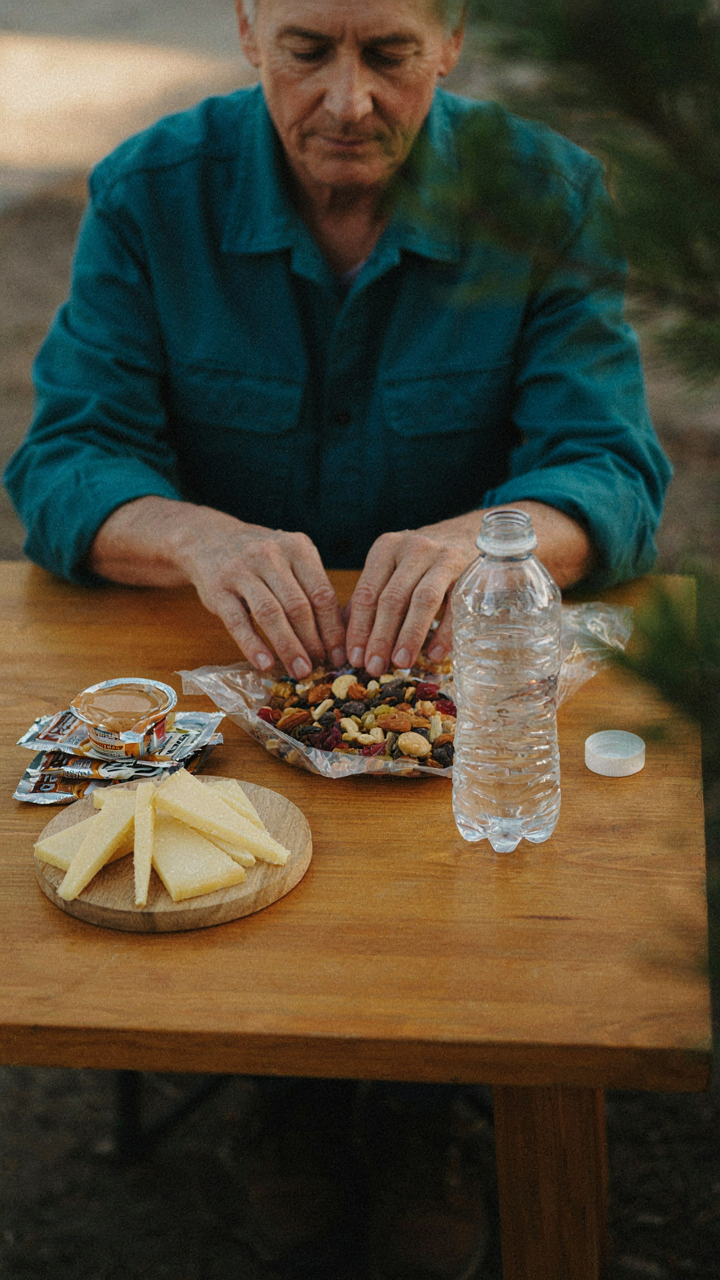
You want to sleep through the night without waking to pee or stomach discomfort, but you’re afraid of being hungry in the cold. Here’s the mechanism: your bladder has a volume limit that doesn’t care about your intentions. Drink most of your water before 6 PM, then taper sharply. A final sip two hours before bed prevents the midnight bathroom crawl that tanks your sleep cycle and core temperature recovery.
Meal timing follows the same logic. Eat your largest meal at least three hours before sleep. Your digestive system diverts blood flow and energy away from thermoregulation, the exact function you need active when outside temperature drops at night. A small, protein-forward snack one hour before bed settles your stomach without triggering digestion that competes with your body’s warming response. This is basic resource allocation, not mystique.
Cold Weather Requires Strategic Macros
The common advice says eat carbs for energy. That’s incomplete. In a cold environment, you need sustained fuel that doesn’t spike insulin and crash your core temperature. Fat and protein generate more residual heat through thermic effect than carbohydrates, a principle borrowed from metabolic physiology called specific dynamic action. Your body burns fuel to digest fat and protein, and that process generates warmth that radiates inward.
Eat fat-forward foods within two hours of bed: nuts, cheese, nut butter, fatty fish if you pack it. Skip simple carbs, sugar, and alcohol the evening before camping. Alcohol dilates blood vessels and floods your skin with heat, dropping core temperature faster than you can recover. A high-protein meal during the day builds muscle tone that generates passive heat through shivering thermogenesis at night. Dense calories prevent the metabolic crash that wakes you cold at 3 AM.
The Sensory Deprivation Method: Hacking Your Primitive Brain
Block Out Light And Sound First
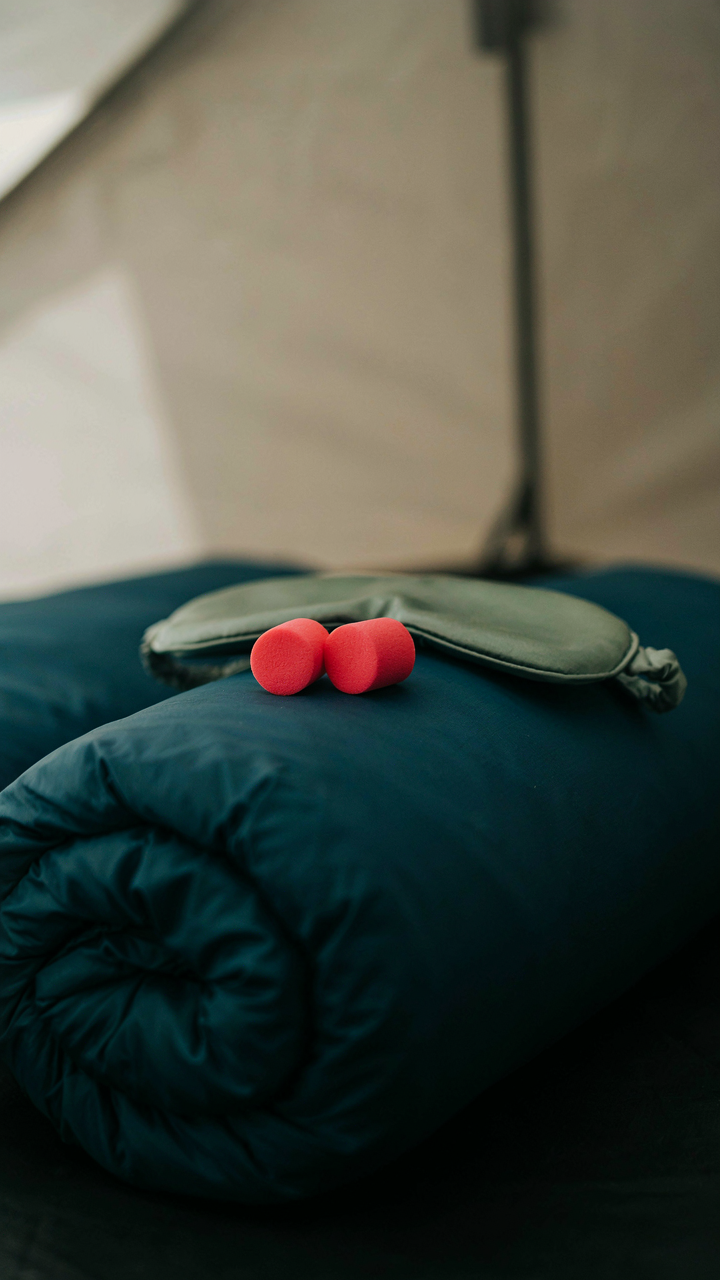
You want to sleep better because you’re uncomfortable admitting that your brain still operates on caveman firmware. Here’s the mechanism: your nervous system treats novel stimuli as threats. A tent doesn’t block light or sound the way your bedroom does. Earplugs and an eye mask aren’t luxury items—they’re sensory inputs that tell your ancient brain the environment is safe enough to drop into deep sleep.
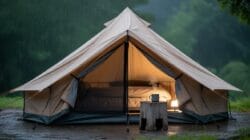
Most people skip these because they feel unnecessary outdoors. Wrong. Your reticular activating system evolved to detect predators. Ambient light from stars, moon, or a neighbor’s headlamp keeps your brain in low-level alert. An eye mask silences that input. Foam earplugs do the same for rustling leaves and distant animal sounds. The combination signals safety to your parasympathetic nervous system, which is what actually triggers sleep onset. Pack them like water.
Let Natural Rhythms Work, Don’t Fight Them
The advice to ignore outdoor noise and “embrace nature” is incomplete. You don’t need silence—you need predictability. Your brain habituates to consistent ambient sound. Crickets chirping at a steady volume actually signal safety because they stop if a predator approaches. Wind noise, rainfall, and steady wildlife sounds become background after ten minutes. Your body recognizes the pattern and relaxes.
What destroys sleep is intermittent noise: a distant vehicle, someone talking, gear shifting. These break pattern recognition. Don’t fight natural soundscapes. Instead, position your tent away from high-traffic areas and active campsites. Let wind and insect noise become your sleep anchor. If a sound is truly disruptive, earplugs handle it. Your job is choosing the right acoustic environment, not battling whatever sounds exist. The mechanism is habituation, not silence.
The Pre Sleep Ritual: From Campfire To Deep Sleep
Kill The Light Source Two Hours Before Bed
You want to believe a good tent and a warm bag are enough, so you skip the hard part: behavioral discipline. The real mechanism is circadian biology. Your brain runs on light cues, not intention. When you sit by the campfire or use your phone, you flood your system with blue wavelengths that suppress melatonin production. That suppression doesn’t reverse instantly when you climb into your sleeping bag.
- Campfire timing: Move away from direct firelight at least 90 minutes before sleep. Sit upwind, face away, or use it earlier in the evening and transition to dim headlamp or no light.
- Phone and lantern protocol: Stop all screen use and bright artificial light two hours before target sleep time. If you need light for camp tasks, use red headlamp mode or cover it with red film.
- Natural light advantage: Camp during seasons with earlier sunsets when possible. Shorter daylight hours naturally push your sleep window earlier and align better with melatonin release.
- Transition lighting: Use a small book light or dim candle for 15 minutes after leaving the fire. This gives your eyes and brain a graduated descent into darkness instead of a hard switch.
- Backup darkness: Bring an eye mask. If ambient light from neighboring campers or moonrise interferes, mask up for the final 30 minutes before sleep to lock in melatonin production.
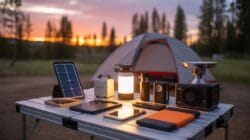
The mistake is thinking darkness happens in your tent. It starts at the campfire. Two hours of behavioral separation between light and sleep is not negotiable if you want the biochemistry to work.
Stillness Over Stretching
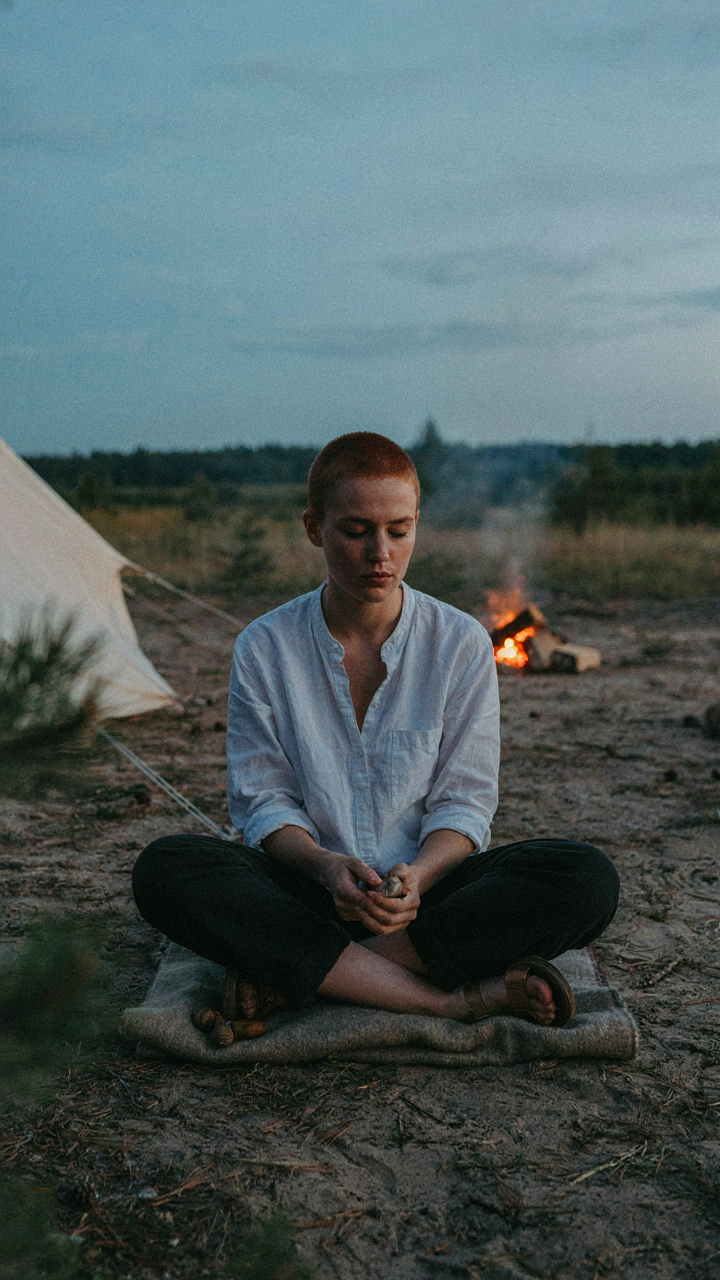
Meditation and stretching both relax muscles, but they work through different pathways. Stretching triggers the parasympathetic nervous system through proprioceptive feedback. Meditation does it through attention control. Most camping guides recommend stretching because it feels productive. That’s the wrong reason to pick it.
Meditation is the faster reset. Sit still for five to ten minutes. Breathe deliberately: inhale for four counts, hold for four, exhale for six. The exhale-heavy breathing activates your vagus nerve, the brake pedal on stress hormones. Stretching requires movement and coordination, which keeps your sympathetic nervous system partially engaged. After a day of hiking or setting up camp, your body expects that. Stillness signals the transition. Light stretching after meditation works, but start with motionlessness first. Sit outside your tent facing away from any light source and control your breathing until your heart rate visibly drops before you move.
Morning Reclamation: Waking Refreshed In The Wild
Light Exposure Syncs Your Internal Clock
You want to wake up feeling human instead of like you’ve been hit by a truck. The real mechanism is circadian biology, not willpower. Your body runs on a light-dependent oscillator that resets daily based on when photons hit your retinas. This isn’t metaphorical. Camping strips away artificial light pollution, so your circadian rhythm either aligns perfectly with sunrise or crashes hard if you’ve buried yourself in your tent. The gain is immediate: wake when light arrives, and your cortisol spikes naturally instead of fighting grogginess for an hour.
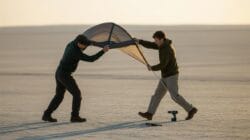
Position your tent’s opening to face east if possible. You don’t need the sun blasting you awake at 5 a.m. on day one, but consistent light entry trains your body to transition from sleep at the moment of first light rather than fighting wakefulness in darkness. Even a translucent tent fabric lets enough light through to trigger the signal. Your pupils don’t need direct sun exposure, just illumination above 500 lux. This single variable explains why some people wake crisp and others wake foggy at the same campsite.
Move And Drink Before Thinking
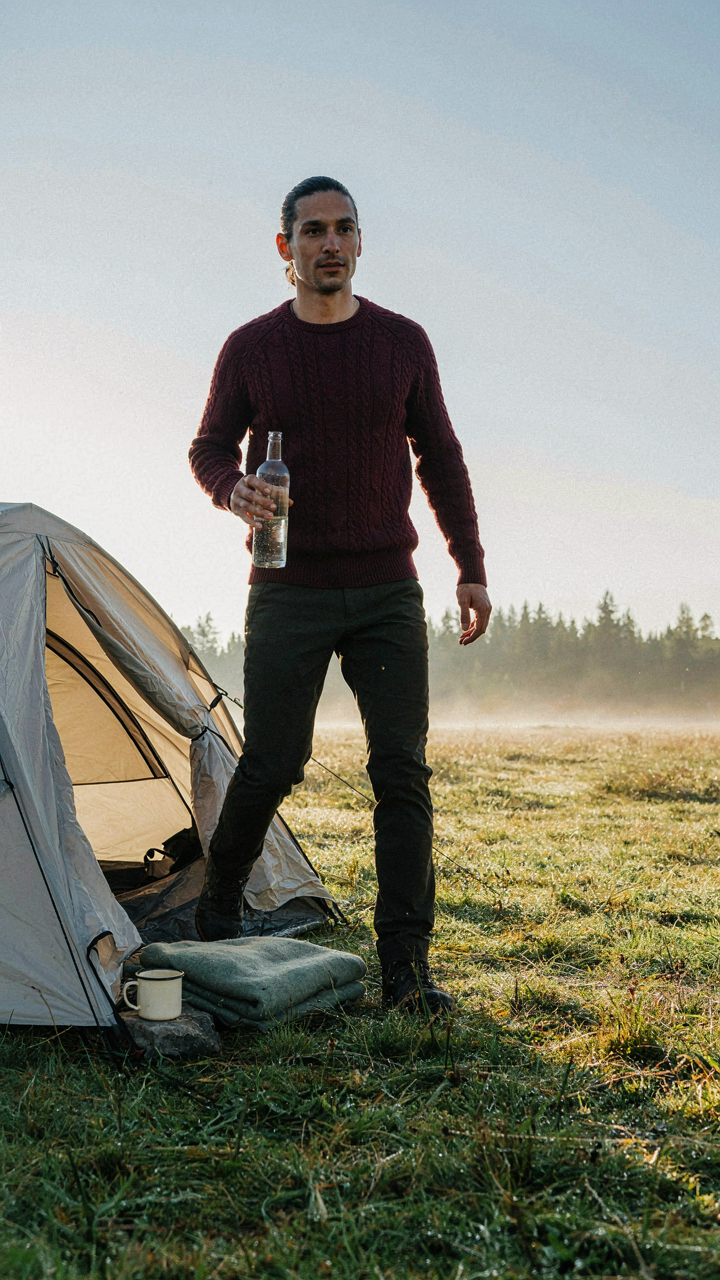
Hydration and movement aren’t motivational hacks. They’re a neurochemical reset that counteracts the stagnation of eight hours horizontal. Your parasympathetic nervous system dominates sleep. Moving immediately after waking triggers your sympathetic system to engage, flooding your body with norepinephrine and dopamine. Dehydration from overnight respiration and perspiration has already dropped your core temperature and blood volume. Drinking water restores volume and increases alertness faster than coffee alone can.
Step outside the tent and move for five minutes before consuming anything. Walk, do light stretching, or perform deliberate movement. Drink half a liter of water within fifteen minutes of waking. This combination accelerates the transition from sleep physiology to waking physiology. You’ll notice the difference in mental clarity and physical responsiveness by day two. Repeat this sequence every morning at camp.
The Real Obstacle Isn’t The Cold Ground; It’s Your Addiction To Convenience. Break It, Or Suffer Mediocre Existence
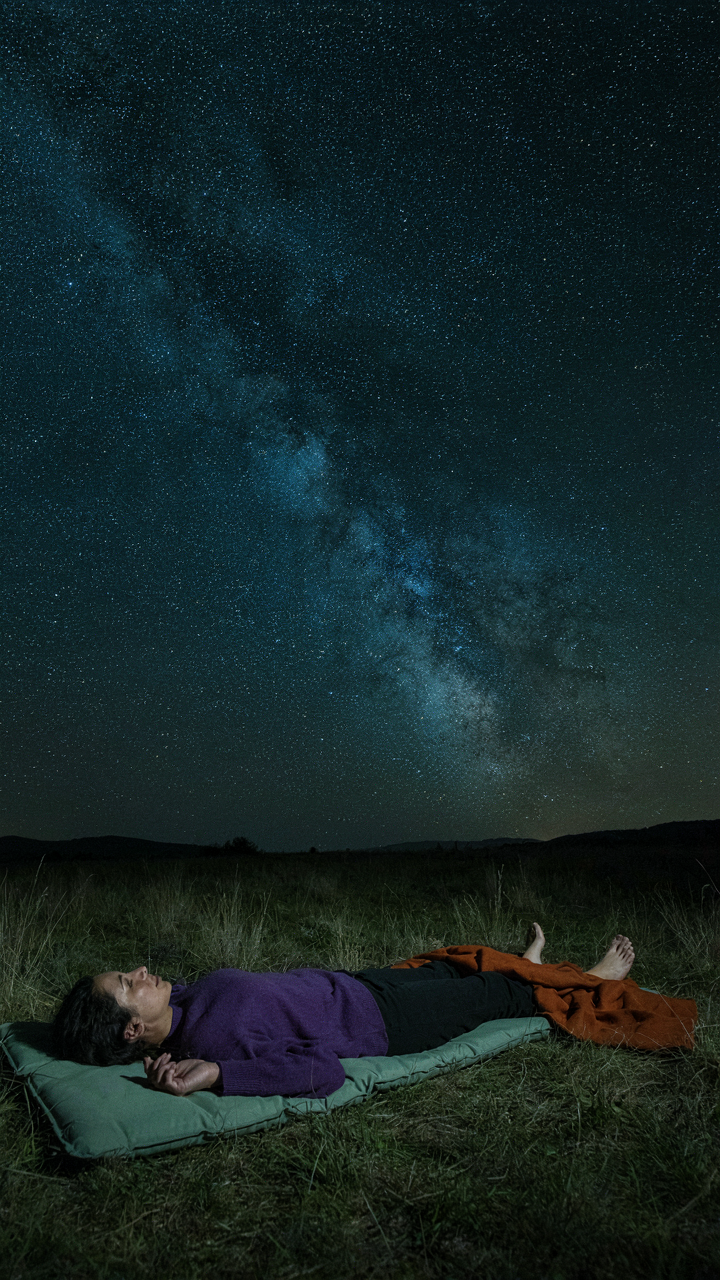
You don’t have a camping sleep problem. You have a comfort addiction. Your body doesn’t need a five-star hotel to rest. It needs you to stop expecting one. Tonight, grab a sleeping pad and a decent blanket. Sleep outside. That’s it. You’ll discover something brutal: discomfort is just data your soft mind invented. The people who sleep best while camping aren’t the ones with the fanciest gear. They’re the ones who stopped negotiating with their own weakness.