The Pre Flight Deception: Why Early Sleep Is A Myth
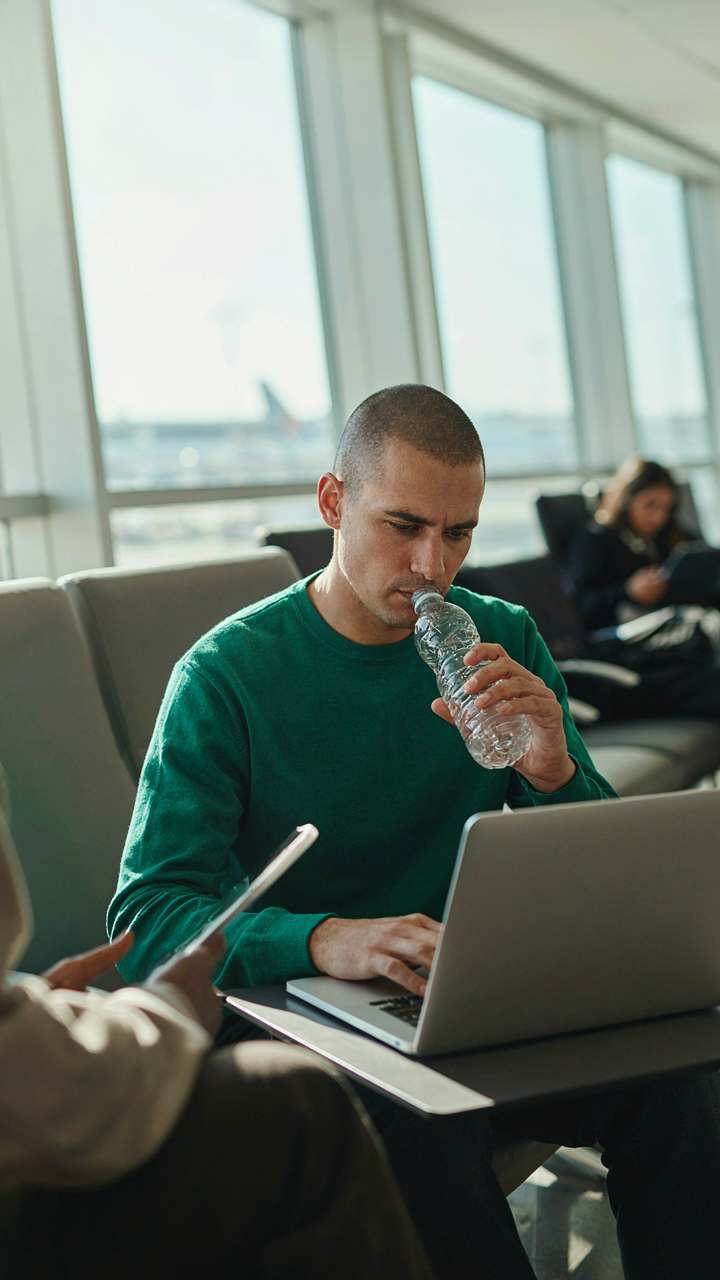
Your Circadian Rhythm Doesn’t Care About Your Intentions
You want to believe that sleeping early before a red eye will give you an edge. It won’t. Your circadian rhythm is a biological oscillator, and like all oscillators in physics, you cannot simply shift it backward by willpower or an early bedtime. Your body runs on a roughly 24-hour cycle controlled by light exposure and core temperature, not by your schedule. Forcing sleep 12 hours before departure only creates sleep debt and frustration.
The mechanism is straightforward: melatonin production is triggered by darkness, not by desire. If you go to bed at 6 PM when your body expects wake time, you’ll either lie awake or sleep poorly. You’ll wake up groggy, confused, and in worse condition than if you’d maintained a normal sleep rhythm and accepted partial sleep loss on the flight itself.
The Real Game: Strategic Wakefulness Before Wheels Up
Forget the tired advice about “banking sleep.” That concept treats sleep like a savings account. It’s not. Sleep pressure builds on a schedule your body recognizes, and you cannot accumulate a surplus. What actually works is leveraging your circadian peak before the flight, then managing alertness strategically in the hours leading up to departure.
Most people recommend sleeping more. That’s incomplete guidance. What you need is to stay awake long enough before departure to build genuine sleep pressure, then use that pressure to force deep sleep on the aircraft. If you depart at midnight, stay fully awake and active from 6 AM onward. This creates a 18-hour wake window that generates real sleep drive. Combine this with controlled light exposure and specific timing of caffeine, and your body will prioritize sleep on the flight despite the environment.
Beyond Comfort: Your Red Eye Outfit Travel Strategy

Layering For Thermal Regulation
You want to look put-together when you land, which means you’re avoiding the sweatpants trap that makes you feel like you’ve already lost the day. The mechanism here is simple: airplane cabins don’t maintain stable temperature. They oscillate between overcooled and stale-warm depending on how many people board, how the HVAC cycles, and what altitude you’re cruising at. You need clothes that respond to this without requiring you to stand up and dig through an overhead bin.
Start with a moisture-wicking base layer. Cotton traps sweat against your skin and dries slowly. Synthetic or merino wool moves moisture away and dries fast enough that temperature swings don’t leave you clammy. Add a mid-layer you can remove or tie around your waist without looking disheveled. A cardigan or unstructured blazer works better than a hoodie because you control the bulk. Your goal is to land in actual clothes, not a wrinkled thermal disaster.
Compression Gear Benefits
Everyone talks about compression socks preventing clots, which is real but misses the actual mechanism that matters for red eyes. Compression works through hydrostatic pressure: it prevents fluid from pooling in your legs and feet during immobility. That pooling makes you wake up swollen, stiff, and moving slowly. Your arrival velocity tanks. Compression gear shortens the physical recovery window between landing and performing.
Graduated compression in the 15-20 mmHg range is enough for a flight under eight hours. You don’t need medical-grade compression for this. Wear them during the flight and for the first two hours after landing. This single protocol cuts the time your body spends in “I just got off a plane” mode by roughly half.
The 3 Phase Hydration Protocol For Red Eye Flight Essentials

Load Your System Before Takeoff
You want to arrive sharp and skip the fog that makes you useless for the first half of your day. The mechanism is simple: dehydration accelerates fatigue by thickening blood and forcing your heart to work harder to deliver oxygen to your brain. Start drinking water 4 hours before departure, not the night before. Your body absorbs and distributes fluid gradually. Drink 16-20 ounces over those 4 hours, spacing it out to avoid bloating mid-flight.
Stop drinking 90 minutes before takeoff. This prevents the bathroom run at 35,000 feet and gives your system time to stabilize before cabin pressure drops. Avoid caffeine and alcohol during this window because both accelerate fluid loss. Your goal is to board already hydrated, not to hydrate on the plane.
Balance Electrolytes In The Cabin
Electrolyte balance matters more than water volume because your cells need sodium and potassium to retain fluid, not just H2O sitting in your stomach. Cabin air at 35,000 feet has humidity around 10 percent, which is lower than the Sahara. Your body loses electrolytes through respiration and minimal sweating in the recirculated air. Drink 8 ounces of water every 90 minutes during flight, but alternate: water, then a drink with electrolytes, then water again.
Pack electrolyte powder packets that dissolve in the water cups you request from the flight attendant. Liquid electrolyte drinks are heavy and restricted by TSA. Sodium and potassium are the two electrolytes your muscles and nervous system actually need, so check the packet label and skip anything over 300mg of sodium per serving to avoid thirst. Sip consistently across the flight rather than gulping. This keeps your fluid absorption steady and prevents your kidneys from dumping excess water as waste.
Noise Cancellation: More Than Just Headphones
Starving Your Nervous System
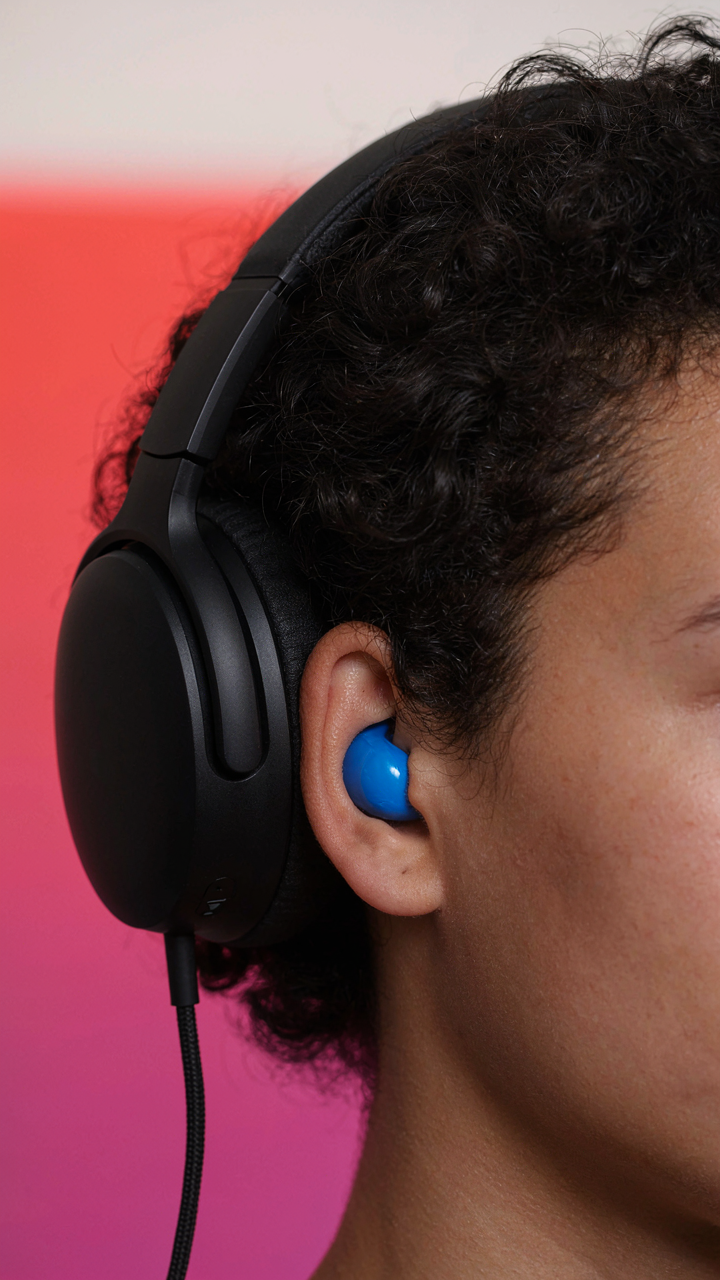
You want noise cancellation because you’re terrified of wasting eight hours in a metal tube where you can’t sleep. The mechanism is simple: your nervous system treats sound as a threat signal. Neurology calls this the orienting response—your brain allocates resources to any novel auditory input, keeping you alert. Active noise cancellation doesn’t eliminate sound. It produces inverse sound waves that cancel specific frequencies, primarily low hum from engines and air systems. This removes the continuous threat signal your brain processes, allowing actual rest instead of shallow vigilance.
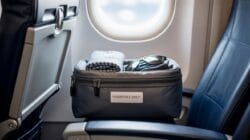
Standard advice says noise cancelling headphones solve this problem. They don’t. Headphones create their own pressure sensation and can trigger ear discomfort on descent. Layering works. Use foam earplugs first—they block high frequencies and fit inside the ear canal without external pressure. Add noise cancelling headphones over them. This combination addresses both the neurological trigger and the acoustic reality of a cabin. You’re not blocking all sound. You’re removing the specific frequencies that keep your fight-or-flight system engaged during flight.
Controlling The Acoustic Environment
Your seat location determines what frequencies bombard you most. Rows over the wings experience sustained engine rumble. Rear rows near lavatories and galleys get unpredictable noise spikes. Front cabin locations catch more air pressure changes and galley activity. Seating choice is environmental control before you ever put on headphones. Request seats in the middle fuselage, away from engines and service areas. Airlines don’t advertise this because it doesn’t increase revenue. The acoustic advantage is measurable—less low-frequency energy means your cortisol doesn’t spike as much during flight.
Timing your flight sleep matters more than most people realize. Your body produces melatonin based on light exposure, not desire. On a red eye, cabin lights stay on until descent. Close your window shade immediately. The darkness tells your pineal gland to start hormone production before takeoff. Combine this with earplugs and headphones playing brown noise or white noise at moderate volume. Brown noise masks unpredictable cabin sounds better than silence. Your brain stops hunting for threat signals and settles into the acoustic pattern you’ve created. You control the input, not the cabin.
The “Arrival Ready” Mindset: Biohacking Your Red Eyes

Shift Your Circadian Rhythm Before You Leave
You want to arrive functional because showing up tired kills credibility. Here’s what actually works: chronobiology treats your body clock like a system with inputs and outputs. Light exposure is the primary input. Three to four days before departure, you’re not fighting your rhythm—you’re pre-loading it toward your destination’s schedule. Start shifting sleep and light exposure incrementally, not dramatically, toward the time zone you’re entering.

The mistake people make is waiting until the flight to adjust. By then, your melatonin production is locked in. Instead, begin light exposure changes 72 hours prior. If flying east (earlier arrival), get bright light exposure in the morning and reduce it at night. If flying west, do the inverse. This isn’t theoretical—your suprachiasmatic nucleus responds to this stimulus predictably, and you’re essentially priming your system before takeoff so the flight becomes maintenance, not correction.
Reframe The Fatigue As Data, Not Failure
Most advice tells you to “push through” or “stay positive” about jet lag. That’s incomplete and misses the mechanism. Psychology research on cognitive reframing shows that how you label a physical state directly impacts your performance. The fatigue on arrival isn’t weakness—it’s information about what your body needs. If you reframe grogginess as “dehydration signal” or “light deprivation signal,” you stop fighting a feeling and start executing a protocol instead.
Shift your internal narrative from “I’m tired, I need to rest” to “I’m depleted in specific ways, I need to address them systematically.” This moves you from passive acceptance to active problem-solving. Bright light for 20-30 minutes immediately after landing isn’t motivation—it’s treatment. Cold water on your face, movement, and caffeine timed strategically aren’t willpower—they’re mechanisms. Your arrival performance depends on treating jet lag as a solvable technical problem, not a temporary mood.
Nutrition For Night Flights: Fueling For Function, Not Sleep
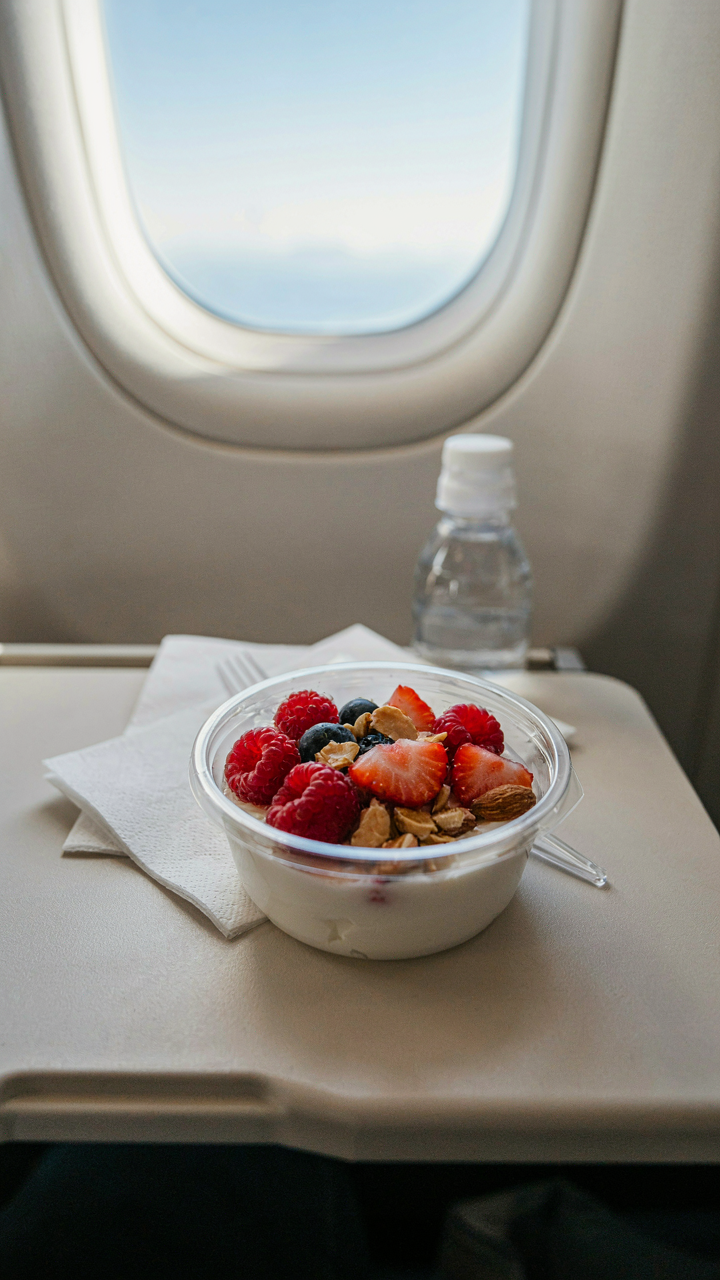
Blood Sugar Stability Beats Empty Stomach
You want to arrive sharp and ready to work, not foggy and dependent on coffee. That’s the real driver here. Your blood sugar controls your circadian rhythm more than most people admit. Stable glucose means stable alertness. The mechanism is simple: spike your blood sugar on a red eye and your pancreas floods insulin, which triggers serotonin and melatonin production. You crash hard.
Low-glycemic foods keep glucose steady without triggering the hormone cascade that makes you drowsy. Pair protein with complex carbs. Almonds with an apple. Greek yogurt with berries. Whole grain crackers with cheese. Skip the bread basket and the candy. Your brain needs fuel that releases slowly over hours, not a glucose spike followed by a metabolic crash that mimics sleep pressure.
Skip The Comfort Trap
The airline meal, the pasta, the cookie they hand out at 2 AM—all designed to make you compliant and drowsy. That’s intentional. Refined carbs plus tryptophan equals the biochemistry of sleep onset. This is basic neuroscience, not opinion.
Avoid refined carbohydrates, heavy proteins alone, and anything with added sugar during flight. Skip the warm milk, the pasta, the dessert. Eat protein with vegetables if you eat at all. Hydrate with water instead. The goal is to arrive functional, not to enjoy the meal service. Timing matters too: eat heavier protein and fat in your last pre-flight meal on the ground, then keep flight consumption minimal and protein-forward only if hunger actually hits mid-flight.
Red Eye Travel Outfit: The “Prepared Professional” Aesthetic
Fabrics That Don’t Betray You At Takeoff
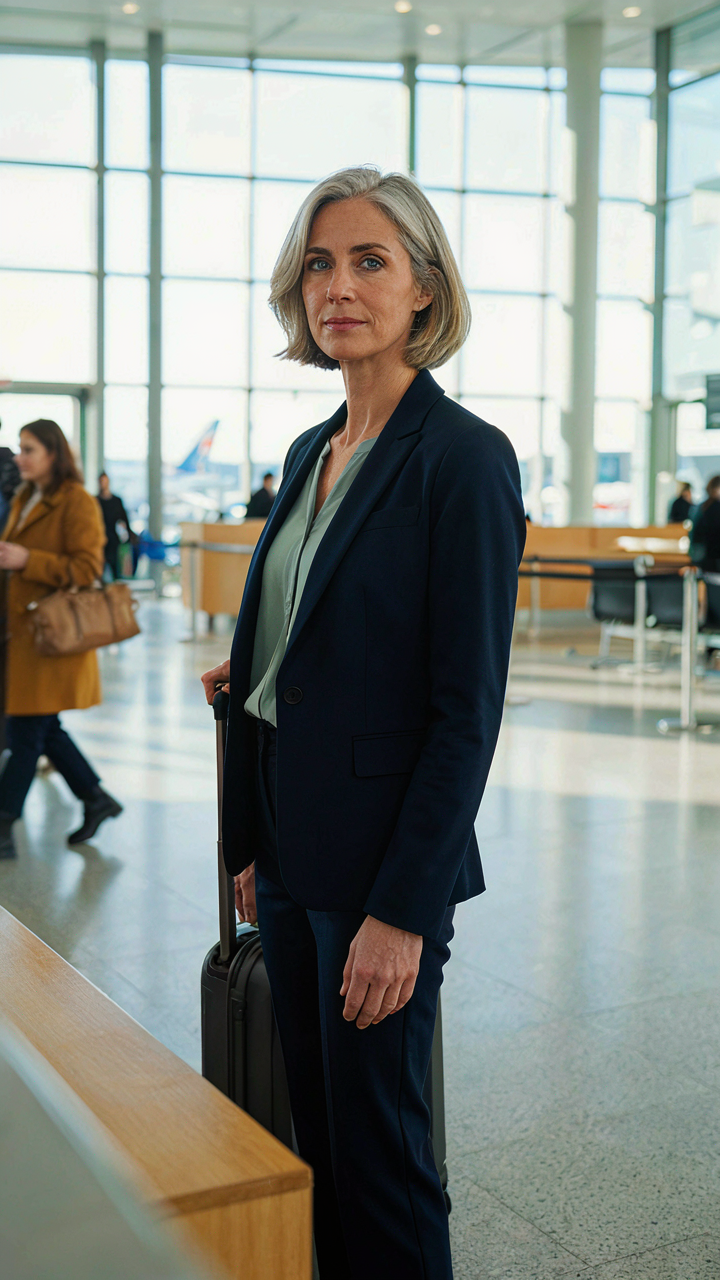
You want to look like you didn’t just survive a night flight, which means you’re really worried people will judge your competence based on wrinkles. Here’s the mechanism: fabric memory determines whether you arrive pressed or creased. Polyester blends, nylon, and merino wool all have molecular structures that resist fold-setting during compression in a seat. Cotton and linen crease permanently because their fibers lock into whatever shape you’re in for eight hours.
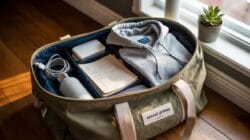
Pack a blazer in a nylon or wool blend instead of cotton. These materials maintain their structure through packing, sitting, and the temperature swings of airport terminals. Merino wool’s natural resilience works double duty: it regulates temperature without layering bulk, and it doesn’t wrinkle like conventional wool. Your pants should have at least thirty percent synthetic fiber if you need them wrinkle-free on arrival. The difference between showing up looking deliberate versus looking like you slept in your clothes comes down to fiber composition, not ironing.
Accessories That Work Double Duty
Most people pack a scarf or a jacket for warmth and assume that’s the end of it. That’s incomplete thinking. Your accessories are operational tools, not decorations. A structured crossbody bag or travel blazer becomes your mobile office setup, your pillow, your blanket, and your professional visual anchor all at once. This is borrowed from systems design: maximize output per input. Every item you carry should solve at least two separate problems.
A merino wool scarf packs to nothing, regulates temperature from cabin chill to terminal heat, and drapes over your shoulders to look intentional rather than exhausted. A neutral linen shirt works as a layer, a desk chair back cushion, and something you can tie at the waist if your pants wrinkle despite everything. Your bag becomes your pillow when wrapped with the scarf. Carry pieces that nest functionally, not items that sit unused. This approach cuts your packing weight in half and ensures you look assembled instead of improvised when you land.
Post Flight Recovery: The First 60 Minute Domination

Light Exposure Resets Your Clock Faster Than Sleep
You want to look sharp at that first meeting, not like you’ve been hollowed out. Here’s what nobody says plainly: your circadian rhythm is a biological oscillator, and light is its master control. Bright light doesn’t just feel energizing—it physically suppresses melatonin and shifts your internal clock. Get direct sunlight within 30 minutes of landing. This isn’t optional if you want to function.

The timing matters more than the duration. A 15-minute walk in natural daylight beats an hour in a coffee shop with windows. If you land before noon, prioritize outdoor light immediately. If you land in evening, delay this step until the next morning. This single input resets your sleep-wake cycle faster than any caffeine hack or nap strategy you’ve tried.
Movement Breaks The Physical Stagnation Trap
Sitting motionless for hours creates a recovery liability that stretching alone won’t fix. From a biomechanics standpoint, your muscles experience sustained isometric load—constant tension without contraction or lengthening. This builds stiffness and delays alertness. Walk for ten minutes minimum within the first hour. Include dynamic movements: arm circles, leg swings, torso rotations. Static stretching now slows you down; save it for later.
Target your hip flexors, lower back, and calves first—these took the compression hit. Do 20 bodyweight squats, 10 inchworms, and 30 seconds of marching in place. The goal is systemic activation, not exhaustion. You’re signaling to your nervous system that you’re mobile and ready, not that you need recovery. Finish this protocol and move directly into your work or meeting without a cool-down period.
The Myth Of Catching Up Sleep After Red Eye Flights
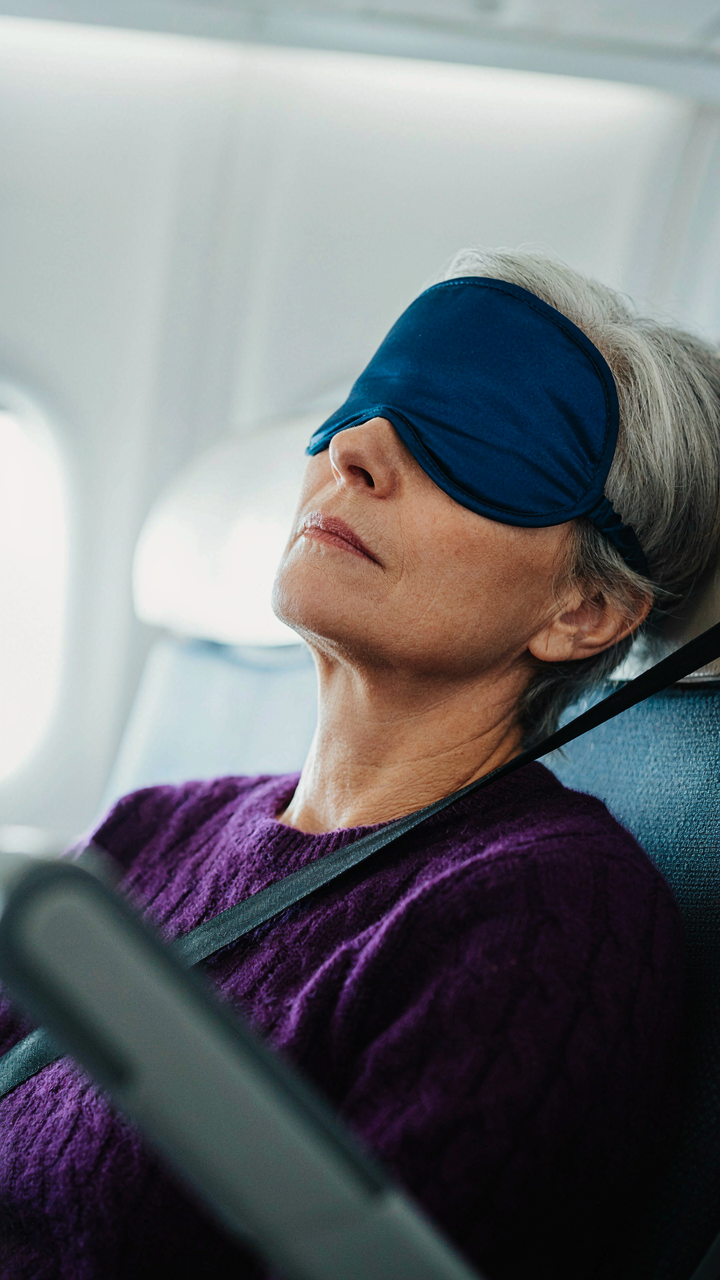
Sleep Debt Versus Strategic Napping
You want to believe you can just sleep it off when you land. That’s denial masquerading as a plan. Borrowing from sleep biology, your body operates on a circadian rhythm, not a bank account. You cannot withdraw sleep credits. Sleep debt accumulates as a neurochemical deficit, not a simple hours-owed situation. A red eye doesn’t just steal eight hours. It desynchronizes your entire endocrine system for days.

The real mechanism is this: napping after arrival damages your reset more than it helps. A 20-minute nap might feel necessary, but it deepens your circadian confusion. Your body secretes melatonin on a schedule tied to your home timezone. A post-landing nap extends that confusion into the afternoon, making nighttime sleep harder tomorrow. Strategic napping requires timing it before departure or waiting until night in your destination timezone.
The 24 Hour Reset Rule
Most advice tells you to “give it time” or “you’ll adjust eventually.” This is vague and costs you productivity. Your body’s circadian adjustment follows a measurable pace: roughly one day of adaptation per one hour of timezone difference. A five-hour flight east means five days of active misalignment unless you intervene. Light exposure, not sleep itself, recalibrates your internal clock. Sunlight in the morning at your destination accelerates phase advance.
The protocol is mechanical: expose yourself to bright light in the first two hours after landing, then avoid it in the evening. Do not nap. Do not try to “catch up.” Eat on the destination timezone immediately, even if you’re not hungry. Exercise outdoors if possible. Your sleep quality will be poor for one full night, sometimes two. Accept this. By day three, your circadian rhythm stabilizes if you follow the light rule without exception.
Red Eye Flight Tips: Gear That Actually Works
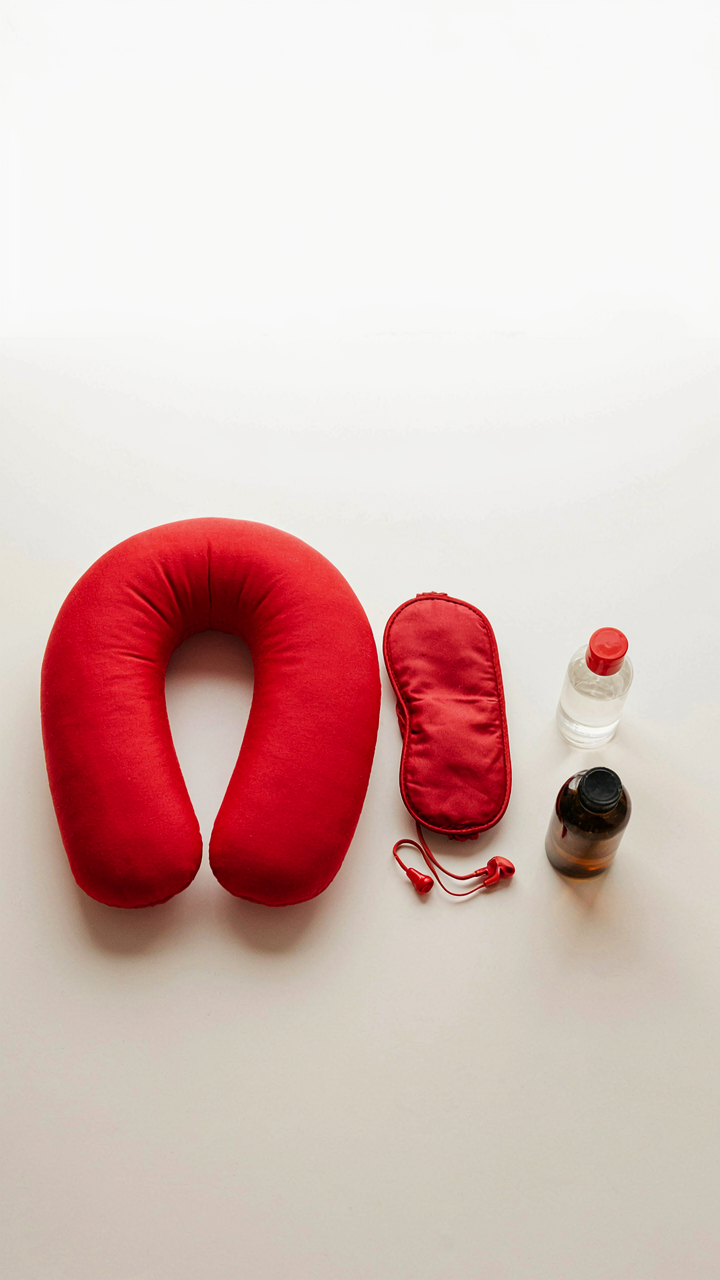
What You Actually Need To Bring
You want to look sharp when you land, but you’re terrified you’ll show up looking destroyed. That fear is justified. The mechanism is simple: your body temperature drops on planes, your skin dries out from cabin pressure, and you can’t control either. Comfort gear isn’t luxury—it’s damage control. You’re not packing to feel good. You’re packing to arrive functional.
- Neck pillow with memory foam: Prevents your head from dropping into awkward angles that lock your neck. Cheaper versions collapse and become useless within hours. Memory foam holds its shape for the full flight.
- Compression socks: Combat the venous pooling that happens when you sit motionless for hours. They reduce swelling in your feet and ankles, which directly impacts how you move when you land.
- Sleep mask and earplugs: Cabin lights stay on. Other passengers make noise. These block both. Darkness triggers melatonin production, sleep mask quality matters less than consistency of use.
- Moisturizer and lip balm: Cabin air is drier than the Sahara. Your skin will crack and look worse than tired. Apply these before sleep, not after waking, to lock in hydration overnight.
- Change of clothes in your carry on: The clothes you flew in will smell like recycled air and sweat. One clean shirt and fresh underwear take up minimal space and reset your appearance completely.
Pack light but pack strategy. A compression bag cuts volume in half. Your carry on should hold these five items and nothing else that doesn’t serve arrival readiness.
Screens, Sound, And The Sleep Trade Off
Most red eye advice tells you to work the whole flight. That’s wrong. Your body can’t synthesize information under sleep deprivation—you’re just creating busywork that prevents actual rest. The economics of your time demands you choose: sleep or productivity, not both. You can’t optimize for both on a red eye and arrive ready to go.
Bring noise cancelling headphones if you want to listen to podcasts or audiobooks in the first two hours, not the last four. The second half of the flight, your only job is sleep. Put the phone away. Melatonin supplements work better than screens because screens emit blue light that tells your brain to stay alert. Your circadian rhythm doesn’t care about your schedule—it cares about light signals. Block the light, take the supplement, sleep happens.
The Real Obstacle Isn’t The Flight; It’s Your Inability To Manage Expectations And Discomfort Proactively

Most people fail red eyes because they treat them like regular flights with different timing. You don’t arrive tired because of the flight. You arrive tired because you refused to accept discomfort as the price of entry. Stop fighting your body and start managing it. Tonight, pick your next red eye and actually commit to the sleep protocol instead of winging it. Your productivity on arrival depends entirely on whether you decided that in advance or decided it the moment you landed wrecked.