The Proactive Perimeter Protocol: Beyond Sprays

Where You Camp Matters More Than What You Bring
You want to believe sprays and repellents are your main defense because buying a product feels like taking action. The truth is simpler and harder: bugs congregate in specific places, and choosing your campsite eliminates 70 percent of your problem before you unpack anything. Most campers ignore this entirely. They pick flat ground near water and wonder why mosquitoes swarm at dusk.
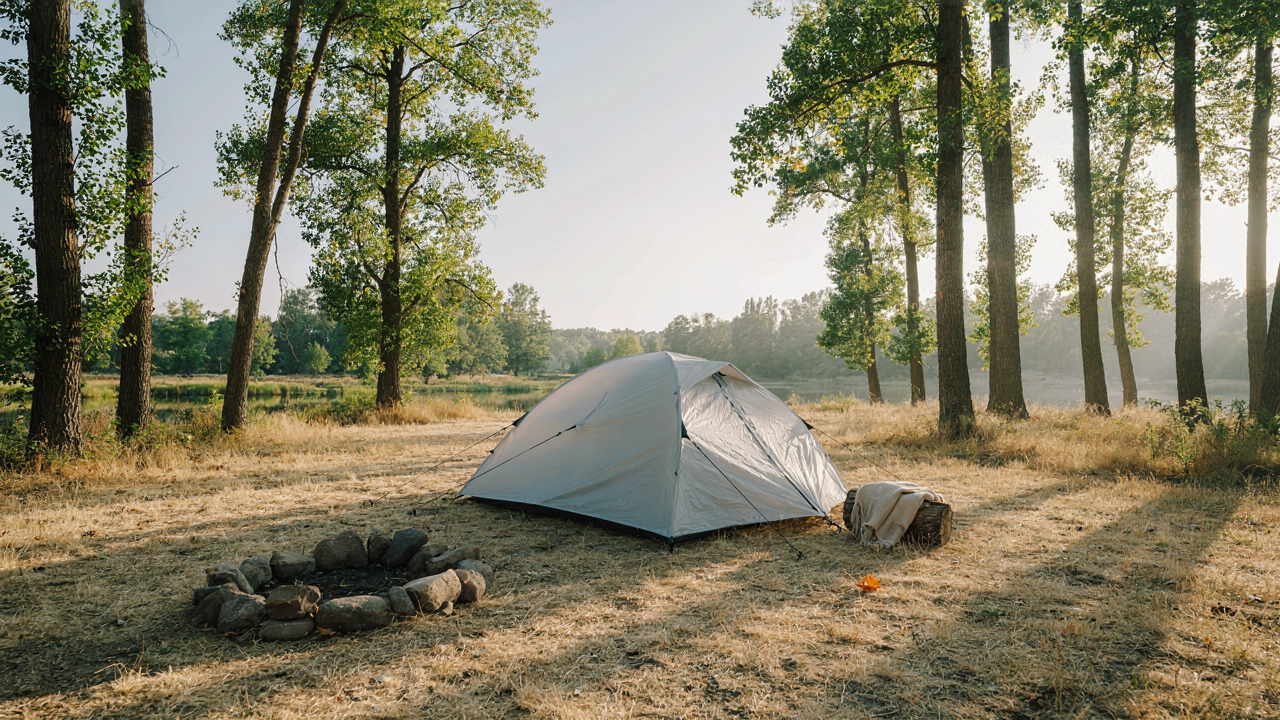
Mosquitoes, blackflies, and midges breed in standing water and emerge within a quarter mile of their source. Position your tent at least 100 yards from lakes, ponds, or stagnant pools. Elevation matters too. Bugs stay closer to ground level where humidity concentrates. Higher ground dries faster and creates natural air movement that disrupts their flight patterns. This is basic site selection, but it cuts your exposure in half before darkness falls.
Decode Wind, Water, And Vegetation Patterns
Ecology teaches us about habitat niches, and bugs occupy theirs predictably. Your campsite exists within an insect ecosystem, and you’re either upstream or downstream of it. Wind direction determines whether mosquitoes find you or drift elsewhere. Set up on higher ground facing into the prevailing wind. Bugs struggle to fly against sustained breeze above 3 miles per hour.
Dense vegetation traps moisture and creates ideal breeding zones for insects. Camp in open areas with sparse undergrowth. Avoid pitching near clusters of brush, fallen logs, or marshy terrain where shade pooling creates microclimates bugs prefer. Check the area downwind from your site too. If dense woods or wetland sits there, wind carries them your direction at dusk. Scout your exact location in daylight before settling in.
The Scent Suppression System: Why You Attract Them

Human Kairomones: What Bugs Detect
You want to believe bugs are attracted to your campsite by chance, not because you’re doing something wrong. They’re not. Bugs operate on the biological principle of kairomones—chemical signals that benefit the receiver, not the sender. You’re broadcasting your location to every insect within range every second you’re alive.
Mosquitoes, flies, and midges detect CO2, lactic acid, and ammonia in your breath and sweat. They don’t need to see you. A mosquito can track a CO2 plume from 50 meters away. Your skin releases octenol and other volatile compounds that act as homing beacons. These aren’t random odors. They’re precision navigation systems that insects evolved specifically to exploit human hosts.
Odor Management Strategies, Not Masking
The standard advice is wrong: covering your smell with bug spray fragrance or citronella doesn’t work because you can’t mask what you can’t see. You need to reduce emissions, not layer another scent over them. Masking is theater. Suppression is mechanism.
Start by controlling what your body releases. Shower before camp if water is available, removing the bacteria colonies on your skin that ferment sweat into attractive compounds. Wear light, breathable clothing that minimizes sweat accumulation. Change out of damp layers immediately. Keep your campfire downwind from your sleeping area so smoke disperses away from you, creating a scent gradient insects won’t cross. The mechanism is simple: fewer emissions means fewer detection triggers, and fewer detection triggers means fewer landings.
Thermal Signature Concealment: The Stealth Camping Method
How Bugs Track Your Body Heat
You want to disappear in the woods without actually disappearing. Most camping advice treats bug attraction as random bad luck. It’s not. Bugs use thermal biology to locate you, the same way heat-seeking missiles lock onto aircraft engines. Mosquitoes and other insects detect infrared radiation and CO2 plumes from your body. You’re broadcasting your location constantly. The mechanism is simple: reduce thermal output, reduce detection range.

Wearing light-colored, loose clothing lowers your skin temperature relative to dark fabrics that absorb and retain heat. Long sleeves and pants create a barrier that disrupts the thermal gradient bugs perceive. Staying still matters more than most people admit. Movement generates friction and spikes localized heat. When you’re stationary, your thermal signature shrinks. Set up camp upwind of where you’ll spend most time so your CO2 exhale drifts away from your sleeping area.
Timing And Layering Against Detection
The common advice says wear bug spray and call it solved. That’s incomplete. Spray works only on bugs that already found you. Thermal discipline prevents the encounter entirely. Bugs hunt aggressively during temperature swings at dawn and dusk when your body heat contrasts most sharply against cooling air. Camp during midday when thermal differences flatten, or after dark when cooler air temperatures reduce contrast detectability.
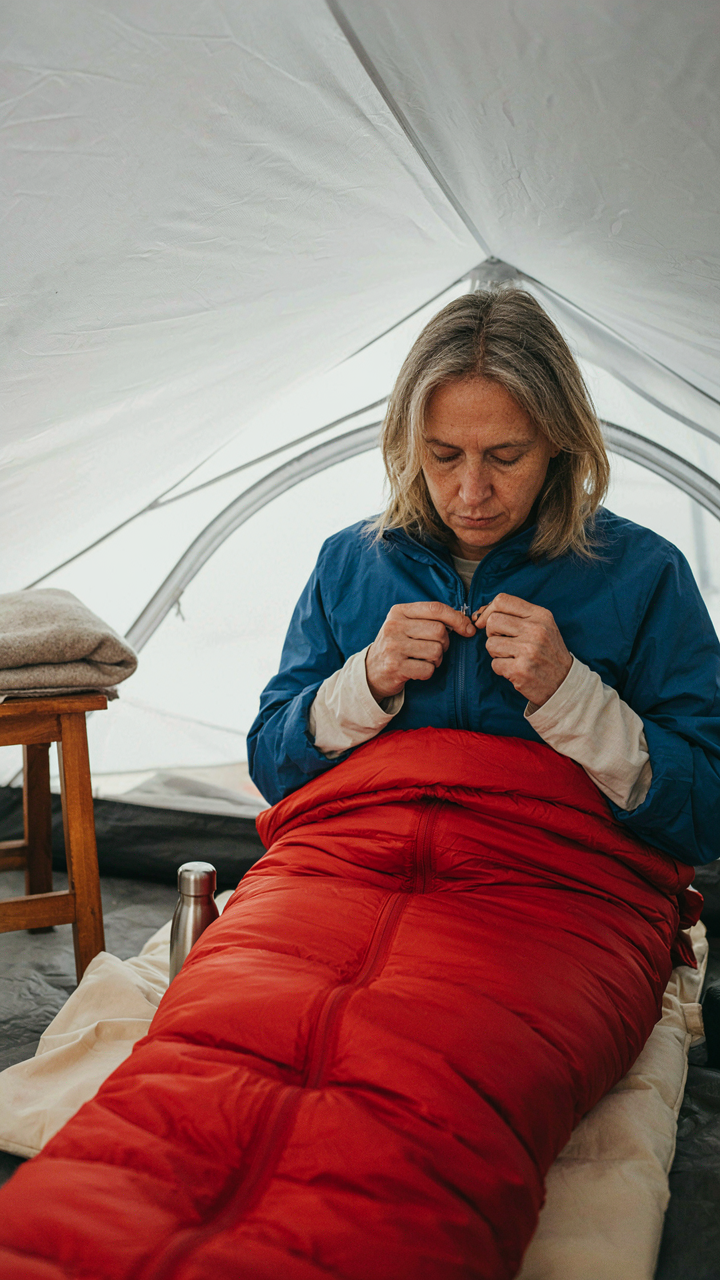
Layering with moisture-wicking synthetic fabrics keeps sweat from amplifying your thermal signature through evaporative cooling patterns. Cotton absorbs sweat and creates localized hot spots. Synthetics distribute moisture evenly and cool faster. Before sleep, change into dry clothes immediately. Damp fabric near your body generates a thermal beacon. Seal your sleep system completely: fully zippered tent, sleeping bag drawn tight, no exposed skin. Your thermal profile becomes background noise instead of a target.
Light Discipline: The Inverse Attractor Principle

Wavelengths That Attract And Repel
You want to sit by a fire without getting torn apart by insects. That’s the real problem here, not some romantic camping fantasy. Most insects navigate by light wavelength, and this is pure physics: shorter wavelengths scatter more easily through air and water, while longer wavelengths penetrate further and hold insect attention longer. Bugs aren’t drawn to light itself—they’re drawn to specific frequencies their eyes actually register.

Most camping advice tells you to use any light and deal with the swarms. That’s incomplete. Insects see ultraviolet and blue light ranges most clearly. Yellow and amber wavelengths register as nearly invisible to most flying insects. A standard incandescent bulb or campfire emits longer wavelengths naturally, which is why old-school fires attracted fewer mosquitoes than modern LED headlamps do. The mechanism is wavelength discrimination, not light avoidance—switch your spectrum, not your brightness.
Minimal Illumination Tactics
The common move is “bring a flashlight.” Wrong framing. You’re not trying to illuminate the campsite equally everywhere. You’re trying to create dark zones where insects have no visual reference point to navigate toward you. Compartmentalized lighting—one small amber lamp near your tent entrance, nothing overhead, nothing ambient—forces insects to either land blindly or move on to brighter targets elsewhere.
Red or deep amber headlamps paired with one stationary camp light create a two-tier system that keeps your working area visible while minimizing the visual footprint insects detect. Keep all lights pointed down or toward specific tasks, never skyward. Turn off lights the moment you stop needing them. The protocol is simple: one amber source per zone, all others off, repositioned every 30 minutes if you move.
The Entropic Barrier: How To Keep Bugs Out Of Tent
Tent Integrity And Zipper Protocols
You want this section because you’re tired of waking up itching, and you think a bug-proof tent is a luxury rather than a maintenance problem. It’s not. The real mechanism is entropy from physics: systems degrade toward disorder unless you actively work against it. Your tent’s seal degrades the moment you set it up. Bugs don’t need large holes. Mosquitoes fit through gaps smaller than a millimeter. Most people buy a tent and never inspect the actual barrier. They assume it works because it looks fine.
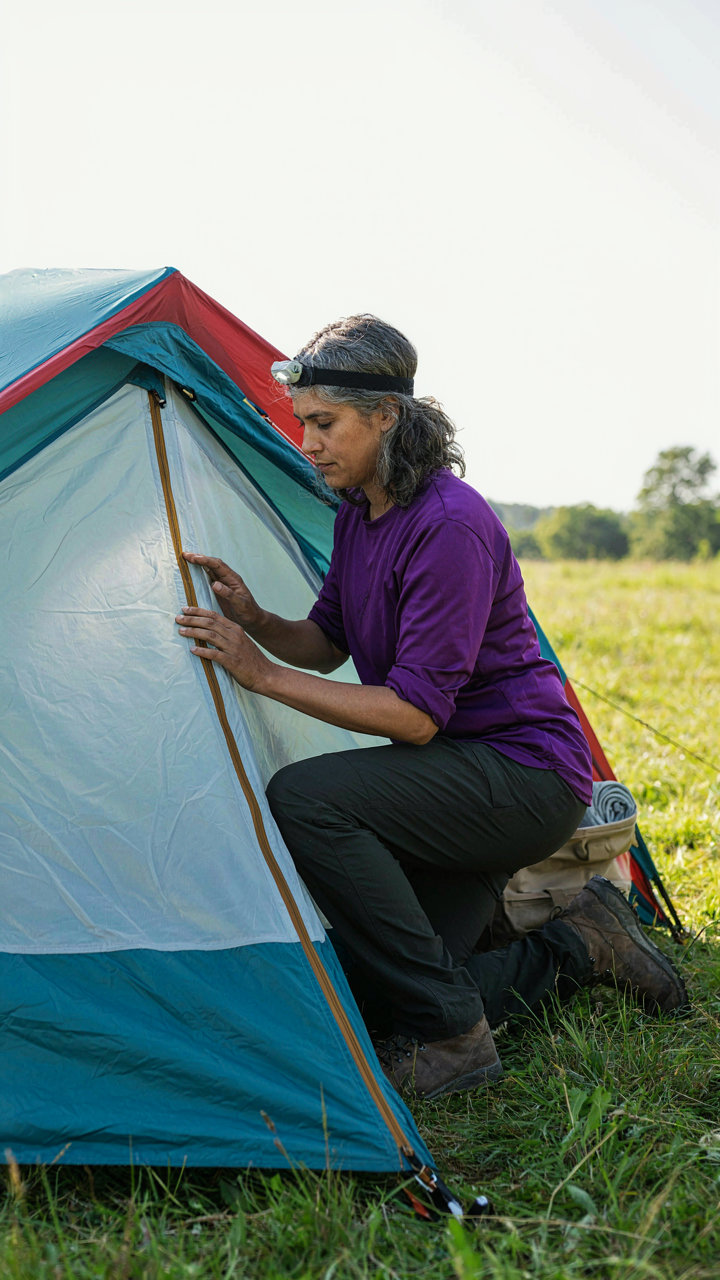
Check your tent’s mesh for holes before every trip. Bring a headlamp and scan the floor, walls, and ceiling seams. Small punctures compound over a season. The zipper is your weakest point because it’s a mechanical system that wears with use. Zippers jam, skip teeth, and create gaps at the slider. Lubricate tent zippers with silicone spray or graphite powder before the trip, not after damage occurs. Close your tent fully, every time, without exception. A partially zipped tent door is an open invitation.
Entry Exit Behavioral Patterns
The mistake most campers make is thinking bugs enter randomly. They don’t. Bugs congregate at entrances because that’s where light, heat, and carbon dioxide create a threshold they recognize. Military doctrine calls this a “chokepoint.” Your tent door is yours. The behavioral pattern that matters is yours, not the bugs’. You create entry opportunities through rushed movements and poor timing.
Establish a protocol: scout the tent entrance before opening. Use a headlamp to check for insects clustering around the zipper. Open and close the door in one fluid motion. Don’t stand in the doorway talking or organizing gear. Never enter your tent during peak bug hours, which vary by location but typically cluster around dusk and dawn when temperature shifts occur. If you must enter during these windows, use a temporary bug net or screen room as a buffer zone between the outside and your sleeping area.
Ecological Disruption: Repellents As A Last Resort

Why Chemical Compounds Actually Work Against Bugs
You want repellents to feel like a silver bullet because admitting that prevention beats treatment is harder work. The real mechanism comes from biology: bugs locate you through carbon dioxide plumes, body heat, and skin odor compounds. Chemical repellents don’t kill insects. They mask or interfere with those sensory signals, creating a perceptual barrier rather than a lethal one. DEET disrupts the insect’s ability to find you by blocking their olfactory receptors.

Most repellent advice stops at “use it” without naming the threshold that matters. Concentration determines efficacy, not the brand. DEET products range from 5% to 98%, and the relationship is logarithmic, not linear. A 20% concentration provides meaningful protection for several hours. Jumping to 98% buys minimal additional benefit but increases skin irritation. Picaridin at 20% matches DEET’s performance without the residue concerns, making it the pragmatic choice for camping trips longer than a weekend.
Timing And Placement Override Everything Else
Application technique decides whether your repellent works or becomes wasted product on your backpack. Bugs find exposed skin first, so coat your neck, wrists, ankles, and behind ears before the insects arrive. Apply repellent to your hands, then rub on exposed areas. Never spray directly onto your face. Spray into your palms first, then apply to facial skin. Reapply after swimming or every four to six hours depending on the product’s stated duration.
The order of application matters more than people admit. Sunscreen goes on first, then repellent. If you reverse this, the sunscreen creates a barrier that reduces repellent contact with your skin. Clothing matters equally. Spray repellent on the outside of your tent, your shirt sleeves, and your pants legs. Bugs land there first and taste the repellent before attempting to reach skin. This external perimeter stops most encounters before they start.
The Vector Control Playbook: How To Protect From Bugs While Camping
Know Your Opponent’s Operating System
You want this section because the thought of waking up covered in bites terrifies you more than you’ll admit. Understand this: insects aren’t random. They operate on biological need. Use the framework from vector control, the field that stops disease transmission by interrupting insect life cycles. Every bug camping near you exists because your campsite provides one or more of three things: food, shelter, or breeding grounds. Remove those, and the bug population dies, not relocates. Most campers focus only on repelling bugs already present. That’s tactical noise. Strategic campers eliminate the conditions that invite bugs in the first place.

Mosquitoes, flies, and gnats navigate by carbon dioxide detection and moisture gradients. Ticks don’t fly; they wait on vegetation for body heat and odor signatures. Ants establish trails using pheromones. Each species has a sensory profile and a need hierarchy. You can’t repel what you don’t understand. Identify which bugs actually threaten you at your specific location and season. Research what draws them. Then deny it. This separates people who get bit from people who don’t.
Break The Breeding Cycle With Water
You’ve heard to keep water away from camp. That’s incomplete. Water itself doesn’t breed bugs; standing water does. The difference matters because it tells you what action actually works. Mosquitoes lay eggs on water surfaces and complete their entire larval phase in water. Flies breed in stagnant organic matter and moisture. Eliminate standing water sources entirely, but moving water doesn’t harbor breeding populations. This is the mechanism people miss: they remove all water instead of removing stagnation.
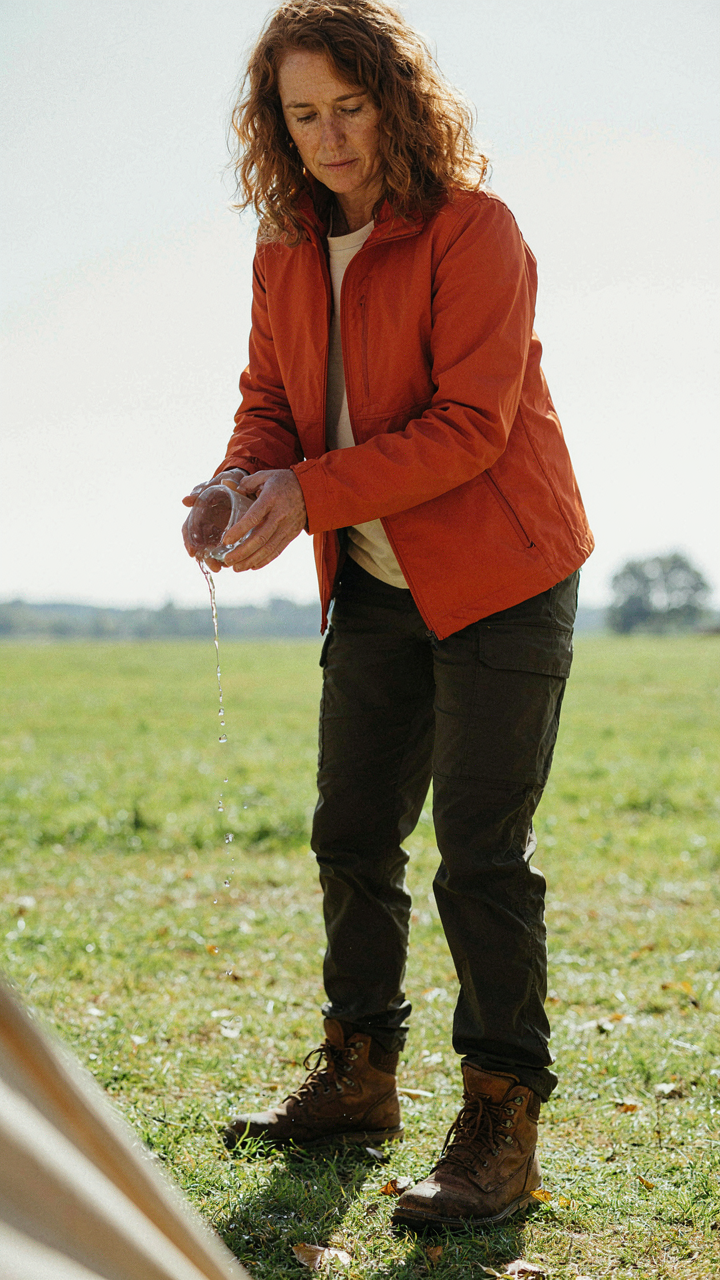
Check your campsite for low spots where rain pools. Move your tent and gear away from natural drainage paths. Never pour dishwater into a centralized spot; disperse it widely so water drains fast. Empty any containers that catch rain or morning dew daily. If you’re camping near a river or stream with standing pools nearby, those pools are incubators. Position your camp at least 50 meters from still water if possible. The standing water rule is absolute: no breeding, no population explosion.
The Information Advantage: Beyond Obvious Camping Bug Hacks

Read The Insects Before They Read Your Campsite
You want to feel smart about this. Like you cracked a code nobody else noticed. Here’s what actually matters: insects follow predictable patterns tied to temperature, humidity, and photoperiod. Most campers show up without knowing what’s active that week in that region. You’re playing blind. Local entomological data exists. The USDA monitors regional insect activity by season. Check what’s emerging before you pack. Mosquitoes peak at dawn and dusk. Midges swarm at specific humidity thresholds. Biting flies hunt during warm afternoons. Know the schedule of your enemy and you’ve already won half the battle.
Weather forecasts tell you temperature and rain. They don’t tell you insect pressure. Regional universities and agricultural extensions publish seasonal emergence charts for common camping pests. Ticks activate when soil temperature hits 40 degrees Fahrenheit for consecutive days. Wasps become aggressive in late summer when food sources dry up. Gnats explode after heavy rain when humidity spikes. You need specificity, not generalization. Your state’s cooperative extension office has this data free. Call them or check their website. Know what emerges when, and choose your dates and times accordingly. This is not prediction. This is pattern recognition based on biological fact.
Site Selection As Information Warfare
Treat site selection like surveillance, not luck. You’re gathering intel on bug density before you arrive. Elevation changes insect populations dramatically. Higher elevations have fewer mosquitoes and biting flies because temperature drops and humidity patterns shift. Water proximity matters, but not how you think. Mosquitoes need standing water to breed, yes. But they also hunt in moisture corridors. Sites 50 yards from a stream have half the mosquito pressure of sites 20 yards away. Wind exposure matters most. Insects have limited flight power. Exposed ridge camps see 60-80 percent fewer flies than sheltered valley sites. Vegetation type signals what hunts there. Dense brush and deadfall harbor ticks, chiggers, and no-see-ums. Open forest with sparse ground cover has lower pest density. Search satellite images before you go. Look for topography, vegetation density, and water sources. Your campsite choice determines your bug load more than any spray or net ever will.
The Minimalist’s Defense: Less Is More With Camping Mosquito Prevention Tips

Pack Light, Cut Attractants
You want to believe gear alone solves this problem so you don’t have to change your behavior. It doesn’t. The mechanism is simple: bugs navigate by smell and CO2. Every item you bring either masks your presence or amplifies it. Most campers pack scented soaps, lotions, and food that turns them into a beacon. The real defense is subtraction.
- Unscented hygiene products: Skip cologne, scented deodorant, and body wash. Bugs detect fragrance compounds from fifty feet away. Plain soap and unscented sunscreen eliminate a major attractant layer.
- Minimal food storage: Store all food in sealed containers away from camp. Open snacks and fruit residue trigger insect swarms faster than any other camp mistake.
- Dark, plain clothing: Wear neutral colors and avoid perfumed laundry detergent. Mosquitoes see bright colors and detect floral scents. Dark fabrics make you harder to locate visually.
- No standing water nearby: Scout your campsite for puddles, wet gear, or tarps that collect water. Mosquitoes breed in stagnant water. One puddle creates hundreds of new insects within days.
- Eliminate trash immediately: Pack out all food scraps and garbage same day. Decomposing waste attracts flies and other insects that can lead mosquitoes to your camp.
What you remove from your campsite matters more than what you add to your skin. Every item either increases or decreases your detectability. A minimalist camp is a low-signal camp.
Dual Purpose Gear That Actually Works
Forget dedicated bug sprays as your only tool. Economics teaches substitution: one resource serving two needs beats two resources serving one need each. Your camping tarp, fire placement, and clothing choices already fight insects if you configure them strategically. Most guides ignore this because it requires planning instead of just buying a product.

Position your tarp to create air flow that disrupts mosquito flight patterns. Bugs can’t fly in wind above 10 mph. Your fire should sit upwind of your tent. Smoke disperses insects naturally. Wear long sleeves and pants made from tight weaves that block bites while regulating temperature. Permethrin-treated clothing works as both protection and deterrent without needing topical application. These aren’t workarounds. They’re the actual primary defense system if you implement them correctly from setup.
Post Camp Debrief: Learning From Mosquito Camping Hacks

What Actually Worked Against The Bugs
You want to feel competent on your next trip, not blindsided again. The mechanism here is simple: your memory is selective, so you’ll remember the dramatic moments and forget the boring stuff that prevented problems. DEET repellent worked because you applied it before bugs landed, not after. Permethrin on gear worked because it created a chemical barrier bugs avoided entirely. Smoke from the fire worked in a specific wind direction, not everywhere around camp. Write down what you did when bugs didn’t show up. That’s the real data.
The trap most people fall into is conflating correlation with causation. You had fewer mosquitoes on night two, so you assume the citronella candle from that evening deserves credit. But temperature dropped eight degrees. Humidity shifted. The wind changed. Separate what you actually controlled from what changed on its own. Note the exact conditions: time of day, weather readings, which repellent you used, how much, where you applied it, and what the bug pressure actually was. Vague impressions become useless the moment you’re packing for trip number two.
Adjusting Your Protocol For Next Time
Iteration in biology means organisms adapt to their environment through repeated exposure and feedback. Your bug defense strategy works the same way. If DEET worked but felt greasy, test picaridin next trip at the same concentration and reapplication interval. If permethrin on your tent kept bugs out but took too long to apply, figure out a faster application system before the next camping season starts. If your fire smoke strategy failed on humid nights, stop relying on it and add a backup repellent instead. Don’t assume conditions will repeat. Plan for worse.
The protocol goes like this: document what failed during this trip, identify the single biggest vulnerability in your setup, pick one variable to test on the next trip, and measure the result clearly. Did bugs land on your skin less often? Did you need fewer applications? Did you sleep uninterrupted? Don’t test five things at once or you’ll never know what actually changed the outcome. One variable per trip. One clear success metric. One recorded result that informs trip three.
The Real Obstacle Isn’t The Bugs, It’s Your Adherence To Ineffective, Reactive Tactics

You don’t have a bug problem. You have a planning problem. Most campers wait until mosquitoes swarm before they act, then spray themselves with whatever’s convenient. This backwards approach costs you comfort and peace of mind. The shift is simple: stop reacting and start preventing. Eliminate bug habitat before you arrive. Choose your campsite like you choose your business partners. Scout for standing water, brush, and shade where insects breed. Do this one thing today and your entire camping experience changes. A camp without bugs isn’t lucky. It’s intentional.