The Wow Factor Fallacy: Why Flashy Often Means Flawed

When Big LED Counts Hide Bad Design
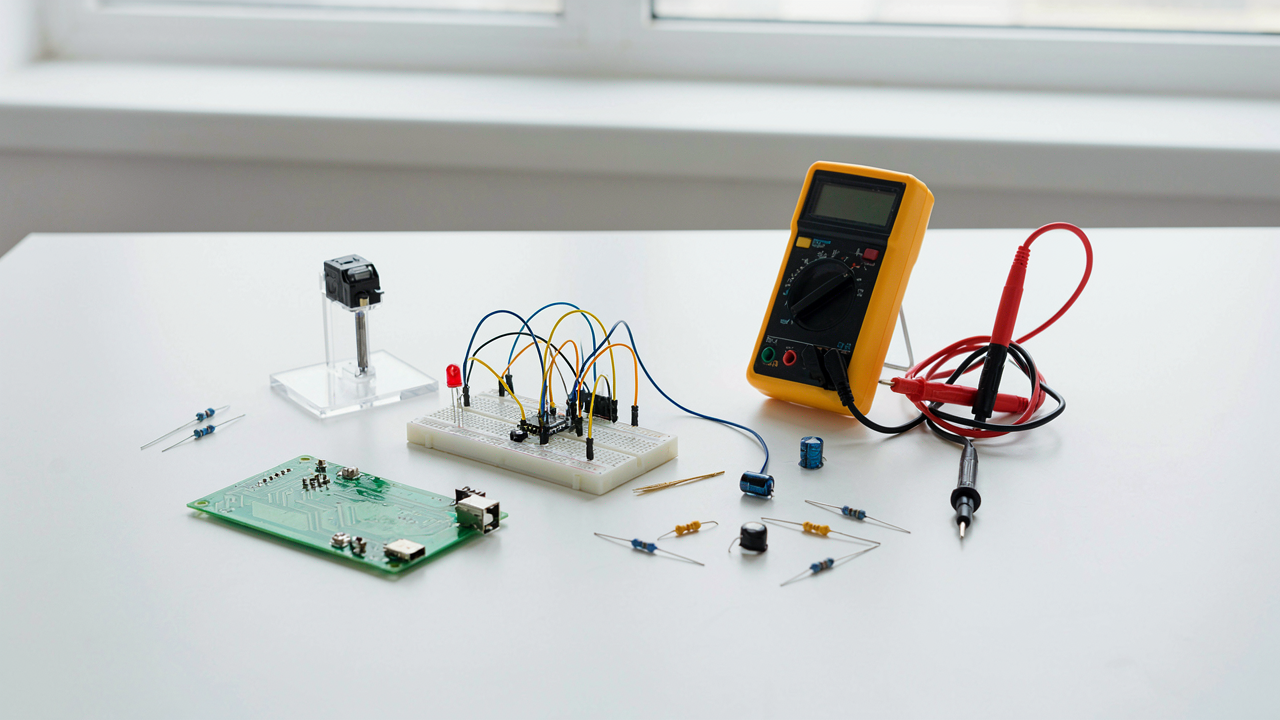
You want judges to gasp. That’s the real reason you’re reading this. And that instinct costs you points because judges who matter spot the gap between noise and engineering immediately. Complexity in circuit design works like leverage in physics: it amplifies both your skill and your mistakes. A project with eight LEDs, three microcontrollers, and wireless connectivity gives you eight times more places to fail silently. Each added layer of complexity introduces voltage drops, timing conflicts, and parasitic capacitance that beginners misdiagnose as “the parts are broken.”
The projects that crash at the fair are almost always the ones where the builder added features to look impressive rather than to solve a specific problem. A light-triggered relay with a single LED teaches you how transistor switching works. A “smart home” setup with networked sensors teaches you how to hide sloppy debugging behind feature creep. One of these gets torn apart during questioning. The other one doesn’t survive the first power cycle.
Constraints Reveal What You Actually Know
Boring beats broken every single time. A photodiode circuit that detects light levels accurately within a known range proves you understand sensor biasing, noise filtering, and calibration. A seven-segment display that counts correctly shows mastery of logic gates and current limiting. Neither project impresses on first glance. Both prove you can engineer something that works as designed, which is the only language judges fluent in electronics actually speak.
Start here: build one core function that does exactly what you claim, with documented measurements. Use a multimeter to verify voltage at three points in your circuit. Write down why each component has the value it has, not just what it does. This single discipline separates projects that scored 85 from projects that scored 65. The difference isn’t creativity. It’s that one builder knew their circuit down to the millivolt, and the other one hoped.
The Deception Protocol: Engineering Perception, Not Just Circuits
What Judges Actually See First
You want your project to win because you’re afraid a technically sound circuit nobody understands will lose to something flashy that works half as well. That fear is rational. Judges operate under cognitive load. They spend ninety seconds on your display before moving to the next one. In that window, they process visual hierarchy before they process specifications. A well-lit LED array with clean wiring beats a buried breadboard with superior logic every time. The mechanism is simple: novelty and clarity trigger pattern recognition faster than technical merit does. Your job is to make the mechanism visible before explaining it.

Presentation design borrows from industrial product design, where form communicates function at a glance. Think of signal-to-noise ratio as your organizing principle. Every element on your display should answer one question a judge is actually asking: What does this do, and why should I care? Strip away clutter. Mount components on a backing that makes the circuit path obvious. Use color contrast to direct attention to the working parts. A 555 timer circuit driving LEDs in sequence looks primitive until you frame it as a visual demonstration of frequency control. The frame changes everything. That’s not deception. That’s engineering your audience’s attention span.
How Presentation Amplifies Cheap Concepts
The mistake most people make is thinking presentation is decoration. It isn’t. Presentation is information architecture. When you arrange components on a project board, you’re either hiding the circuit logic or exposing it. Most science fair projects hide it by accident, burying the core mechanism under a mass of wires and components that mean nothing to someone who isn’t already an engineer. Reorganize that same circuit so the input, processing stage, and output are spatially distinct, and you’ve just made it teachable. A judge doesn’t need to trace every connection. They need to understand the path of information flow.
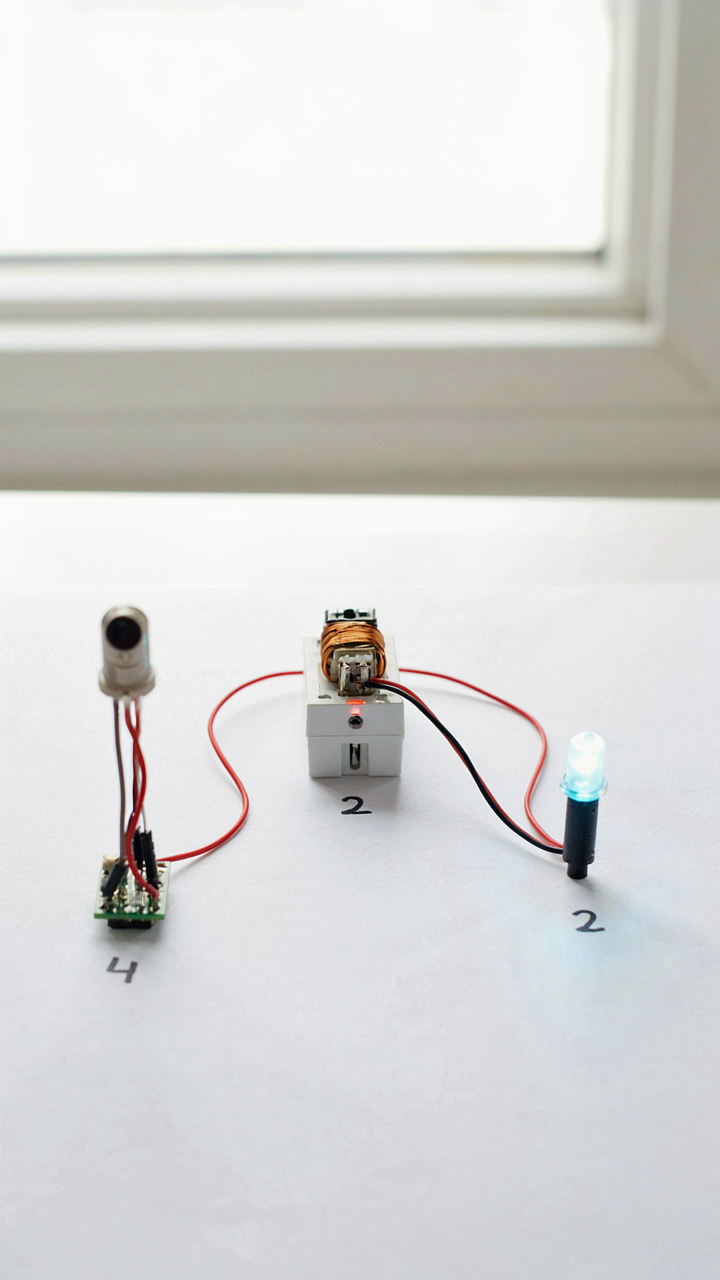
The technical depth stays the same. The comprehension jumps dramatically. Use clear labeling, logical spacing, and physical separation of stages. A simple light-sensitive relay circuit becomes impressive when you physically group the light sensor, the relay, and the output device into distinct zones with labels connecting them. Add a typed explanation of what each zone does, and you’ve created a teaching tool, not just a circuit. The project scores higher not because it’s more complex, but because the judge walks away understanding it. That’s the actual mechanism working in your favor.
Beyond Blinking LEDs: The Physics Projects Of Magnetic Levitation

How Electromagnetism Becomes Theater
You want this project because it looks like you understand physics when you don’t yet. That’s the real motive. Here’s what actually matters: electromagnetism is a force field, borrowed straight from physics terminology. A force field requires energy input to maintain distance against gravity. Most science fair builds fail because they treat levitation as a static display instead of a dynamic balancing act. The object doesn’t float because of magic—it floats because a sensor detects downward drift, signals a coil to pulse harder, and the feedback loop catches the fall before it happens.

The mechanism is electromagnetic repulsion or attraction working in real time. A Hall effect sensor sits beneath the levitating object and measures the magnetic field strength. As the object drops, field strength increases, triggering the control circuit to amplify coil current. As it rises, field decreases, and current reduces. This constant correction happens dozens of times per second, creating the illusion of stability. The circuit never stops working—it’s always correcting, always measuring, always pushing or pulling to keep equilibrium.
The Feedback Loop That Actually Holds Weight
Everyone online says “use a PID controller” like that means something useful. It doesn’t, unless you understand what you’re actually tuning. PID stands for proportional, integral, derivative—three separate correction mechanisms stacked into one algorithm. Proportional gain responds to how far off-target you are right now. Integral gain corrects for accumulated error over time. Derivative gain predicts where the object is heading and adjusts before it gets there.
Start with proportional gain alone at a low setting, around 0.5 to 1.0. Increase it gradually until the object hovers but oscillates slightly. Then add integral gain in small increments to smooth out those oscillations. Finally, add derivative gain to dampen overshoot. Most failures happen because people crank all three at once. The object either crashes instantly or oscillates wildly before stabilizing. Test each parameter independently using a steady hand to adjust a potentiometer while the object is in flight.
The Black Box Principle: Obfuscation As A Feature, Not A Flaw

What You’re Really After Here
You want judges to see magic, not the guts that make it work. That’s not shallow—it’s how perception actually operates in competition. The mechanism is borrowed from industrial design: signal-to-noise ratio. In science fair electronics, you control what enters the judge’s cognitive load. Every visible wire, every exposed component, every dangling connector is noise competing for attention against your actual output. The best projects don’t hide incompetence. They hide the scaffolding. A polished enclosure with a single glowing display reads as finished. A rat’s nest of breadboards reads as incomplete, regardless of sophistication underneath.

Think about commercial products you respect. A smartphone is a black box. You don’t see the processor traces or power distribution. You see a screen. That visual hierarchy exists because engineers understood that humans process finished-looking things as more credible. Your science fair project operates under the same rule. Enclosure design isn’t cosmetic. It’s a direct input to how judges evaluate your work before they even read your abstract.
Casing Design That Stops Questions Before They Start
Most students skip the enclosure entirely or use a bare project box with drill holes. Wrong approach. A well-fitted case with minimal exposed fasteners shifts how viewers interpret complexity. The signal here comes from product industrial design: restraint in visual expression creates perceived sophistication. Use black or matte finishes. Avoid transparent cases unless you have a specific reason for the display. Mounting internal components on custom PCBs or brackets instead of loose wiring compresses visual chaos into organized systems.
Your casing should communicate function through form. If it’s a light sensor array, the sensor ports face forward and nothing else protrudes. If it’s an audio circuit, the speaker grille is the focal point and all wiring hides internally. Eliminate cable clutter through internal routing. Label outputs clearly but sparingly. A project that looks like someone designed it beats a project that looks like someone built it. You accomplish this through tool selection: use a laser cutter or CNC if available, otherwise commission a clean acrylic or aluminum case from a fabrication service. The twenty to fifty dollar investment in proper casing directly converts to perception.
Kinetic Sculptures & Robotics Project Ideas: Movement Is Magic

Why Motion Wins Before Function
You want judges to remember your project. That’s the real reason you’re reading this. Motion does that work for you regardless of whether your circuit is elegant or held together with spit. The mechanism is simple: human attention locks onto moving objects. A static LED display dies on the table. A motor turning gears, a linkage pushing an arm, a wheel spinning—these hold attention long enough for judges to actually examine your work.

Motion also hides complexity. Judges see action and assume engineering depth happened. This isn’t deception. It’s how perception works. A flickering light looks like a mistake. A synchronized sequence of movements looks intentional. Build projects where the motor and linkage do the storytelling, not just the circuitry. The electronics become credible because viewers watch the outcome, not the solder joints.
Simple Motors, Linkages, Surprising Actions
Most student robotics projects copy each other: arm moves left, arm moves right, everyone claps. Wrong approach. Borrow from mechanical engineering’s principle of constraint. In that field, constraint means limiting freedom in specific ways to force interesting behavior. Apply that here: use a single motor to power multiple, unexpected actions through clever linkage design.
A DC motor connected to a cam creates rotation. That rotation pushes a follower, which translates into linear motion. Stack two cams on the same shaft at different angles and you generate two independent movements from one motor. A solar-powered circuit driving a single motor that powers a walking mechanism (like a BEAM robot uses) looks simple. Judges see the walker moving and assume sophisticated control happened. The truth: mechanical linkages did all the work. Your circuit just supplies the power. Build the linkage first. Make it move the way you want through trial and error with cardboard and hot glue. Only then add the motor and power circuit. This inverts the typical student approach and produces dramatically better results.
The Unconventional Input: Hacking Common Sensors For Unseen Outputs

When A Sensor Stops Measuring What You Built It For
You want your project to stand out because a working basic circuit doesn’t cut it anymore—judges see ten of those. The real move is understanding that a sensor measures the relationship between two states, not just one fixed thing. A light sensor doesn’t measure light. It measures the change in resistance when photons hit its surface. Once you accept that mechanism, you can force it to detect anything that blocks, reflects, or emits light. Shadow detection becomes visible the moment you invert your baseline: instead of measuring brightness increasing, you measure darkness increasing. That’s not a small shift. That’s a complete recalibration of what the component does.

A photoresistor buried inside a toilet tank detects water level through opacity. A motion sensor pointed at a pendulum measures oscillation frequency, not presence. An infrared receiver can clock the speed of a spinning wheel by reading the interruption pattern of a reflective tape. You’re not hacking the sensor itself. You’re hacking the application layer—the thing between the sensor and what actually changes in your circuit. The judges notice because nobody else bothers to reframe the problem first.
Crosstalk: When Components Interfere By Design
Radio engineering calls it crosstalk—one signal bleeds into another’s channel and creates unexpected output. You can weaponize that in a science fair project without touching any code. An unshielded LED wire running next to an audio input can modulate sound with light frequencies. A 555 timer oscillating at audible frequencies can trigger a piezo buzzer to chirp when that buzzer wasn’t wired as a sound source—it was wired as a sensor. Motors create electromagnetic noise that capacitors downstream can’t filter fast enough, and that noise becomes readable data if you put an op-amp in the path.
The mechanism is simple: components aren’t perfectly isolated. Every wire is an antenna. Every power rail carries transients. Every signal couples to adjacent traces through capacitance. A two-layer circuit board with tight traces running parallel will show this effect instantly. Build a circuit where a relay switches power to a motor, then watch what happens to an unrelated LED brightness. It flickers. That flicker is your sensor now. It’s not a bug. It’s your evidence that you understand the layer beneath the schematic. Integrate that flicker into your project output, measure it with an Arduino pin, and you’ve turned interference into information.
Psychological Warfare: Leveraging Cognitive Biases In Your Science Exhibition Projects

The Last Thing They Remember Wins
You care about this because judges don’t score your project fairly. They score the moment that sticks in their head after they leave your booth. The peak-end rule from psychology states that people judge experiences based on their peak moment and how they end, not the average quality throughout. Your LED circuit or Arduino build doesn’t live or die on consistent performance. It lives or dies on the one moment a judge can’t forget and the final impression they walk away with.

Build your demo so the most visually or conceptually striking moment happens halfway through or later. If you’re showing a water-level sensor system, let the buzzer activate during the judge’s visit, not before they arrive. The ending matters more than everything else combined. End with a prediction, a surprising result, or a clear takeaway the judge can repeat to other judges. Don’t fade out. Stop while they’re leaning in.
The Opening And Closing Architecture
Most science fair advice tells you to smile and explain your project clearly. That’s incomplete. You need a structural reason for judges to care before you explain anything technical. Architecture uses a threshold to create psychological separation between outside and inside space. Your exhibition needs the same threshold. The opening creates contrast between the expected and actual, forcing attention.
Start with a problem statement your judge has felt before, not a technical definition. A malfunctioning LED circuit shows nothing. A LED circuit that detects darkness so a light turns on automatically when someone enters a room shows utility. Close by having the judge interact with the project, not observe it. Let them trigger the sensor. Let them see the result. The last action they take is the last memory they keep.
The Art Of The Reveal: Staged Discovery For Maximum Impact

Build Tension Before Showing The Work
You want judges to remember your project. That means you’re betting on their attention span and hoping they’ll connect dots you lay out. Here’s the mechanism from theater design: a reveal works because it reorders what the observer knows, creating a moment where confusion resolves into understanding. Start by stating the problem your project solves, not the solution. Make them sit in the gap.

Walk judges through the question first. Why does this problem matter? What breaks without it? Only after they feel the friction do you show the circuit, the code, the mechanism. Humans retain information better when they’ve already invested curiosity. You’re not showing off a thing. You’re delivering an answer to a question they now want solved.
The Mechanism On Display, Not Hidden Behind Glass
Common advice says “make it look clean.” Wrong. Make it work and make the working visible. The circuit board matters less than seeing electricity move through it. Use clear acrylic enclosures or open-frame designs. Let the LEDs, relays, and connections exist in plain sight.
- Transparent Housing: Clear acrylic or polycarbonate shells let judges trace signal flow from power source through components to output without disassembly.
- LED Indicators At Decision Points: Place status lights where current branches, where logic gates fire, where sensors activate. Each light marks a moment of change.
- Exposed Solder Joints And Traces: Professional-looking boards with clean routing and visible connections signal competence. Hide nothing that works correctly.
- Real-Time Data Display: LCD screens or seven-segment displays showing live sensor readings, calculations, or state changes prove the system operates, not just exists.
- Sequential Activation Stages: Program your project to walk through its function in phases. Start with input, show processing, end with output. Judges follow the narrative.
Stage your demonstrations. Have judges trigger the first sensor themselves. Show them the data it captures. Then reveal how your circuit interprets it. End with the physical result: a motor spinning, a light pattern activating, a sound output firing. The reveal sequence matters more than any single component.
Cost Effective Astonishment: Maximizing “Wow” With Minimal Budget

Scavenged Parts, Disproportionate Impact
You’re worried the judges will mistake budget for competence. They won’t, but only if you know which components create visual effect without cost. Electronics borrows from signal processing: amplification is the mechanism that turns weak input into commanding output. A junkbox LED array amplifies your project’s presence before anyone reads the writeup.
- LEDs and RGB modules: Pull from old electronics. A string of addressable RGB LEDs costs under $10 and creates motion judges remember. Mount them visibly on your circuit.
- Salvaged motors: Found in old toys, printers, fans. A spinning component proves your circuit does work, not just sit. Mechanical motion reads as competence.
- Old transformer and relay banks: Scrap yards and electronics recyclers stock these. Large components on your breadboard look engineered, not hobbyist, even if they serve decoration.
- Speaker cones and piezo discs: Audio output adds a second sensory channel. Judges process information faster through multiple inputs. A beeping or musical project outlasts a silent one in memory.
- Capacitor banks: Large electrolytic capacitors visually dominate a breadboard. They’re cheap used and signal serious power management, whether functional or aesthetic.

The mechanism is perceptual dominance through component density. Judges scan projects in under two minutes. A board packed with salvaged parts reads as sophisticated. The actual circuit elegance matters second. Start collection now: every electronics student’s neighborhood has discarded devices full of usable parts.
Material Reuse Changes The Narrative
Reusing materials doesn’t stretch your budget, it restructures how judges interpret your work. You’re no longer a student who bought a kit; you’re an engineer who engineered solutions from constraint. That’s the real shift.
Acrylic sheets from old signage become enclosures. Aluminum brackets salvaged from furniture frame your project professionally. A wooden base from a broken shelf becomes your display platform. None of these cost money if you ask locally. The effect: your project looks fielded, not prototyped. Judges unconsciously associate finished aesthetics with finished thinking. Borrowed materials also communicate resourcefulness, which matters more at science fair than raw budget. Your narrative becomes “I solved this with what existed,” not “I ordered this online.”
The Narrative Advantage: Selling The Story, Not Just The Circuit

The Problem That Matters More Than The Build
You’re worried the judges won’t care about your circuit. Here’s what actually happens: they’ve seen hundreds of blinking LEDs and Arduino temperature sensors. The mechanism judges use comes from rhetoric, not engineering. They’re evaluating whether you identified a real friction point and designed a proportional solution to it. Your project lives or dies on problem clarity, not component count.
Start by naming the specific failure you’re solving. Not “I wanted to learn about circuits.” Instead: “My greenhouse loses heat at night because nobody checks the temperature after dark, so crops die before anyone notices.” That’s a problem with stakes. The circuit becomes the answer to a question the judge already understands. The elegance of your solution matters only when the problem justifies the effort you put in.
The Reason You Built It Matters
Judges detect when you’re performing versus when you actually care. Your personal connection to the project’s purpose is the difference between a memorized demonstration and testimony. Build the project because you encountered the problem, not because it seemed impressive. A moisture sensor for your family’s garden outperforms a generic “plant watering system” because you own the outcome.
Explain what changed after you built it. Did your sensor prevent dead plants? Did your device catch a problem earlier than the old method? Did someone actually use what you made? Concrete results matter more than theoretical applications. The project becomes credible when you describe what it prevented, detected, or improved in real conditions.
Your Real Obstacle Isn’t A Lack Of Ideas, But The Fear Of Showcasing Simplicity In A World Obsessed With Superficial Dazzle

The judges don’t remember projects that looked busy. They remember projects that worked. Stop chasing complexity as camouflage for mediocrity. Pick one circuit. Master it. Build it clean. Document why it matters. Today, grab a breadboard and one component you don’t fully understand yet. Learn it inside out. That’s your project. The world rewards depth disguised as simplicity, not chaos dressed up as innovation.