The Unseen Enemy: Moisture Management For Cold Weather Camping

Condensation: The Real Warmth Killer
You’re worried about staying warm because you think cold air is the problem. It isn’t. Water vapor inside your tent freezes on the fabric, then melts onto your sleeping bag, destroying insulation efficiency. This is thermodynamics at work: the dew point. When warm air from your body meets cold tent walls, moisture condenses. A wet sleeping bag loses 90% of its insulating capacity. Most campers ignore this until their bag feels clammy at 2 AM.
The condensation cycle starts the moment you enter a cold tent with body heat. Your breath alone adds significant moisture to the air. Sweat from exertion, wet clothes, and even damp gear release water vapor. Inside an unventilated tent, this vapor has nowhere to go. It collects on the coldest surface available—usually the tent’s inner walls and ceiling. By morning, you’re surrounded by frost. By the next night, you’re sleeping in a damp cocoon that generates cold instead of trapping warmth.
Ventilation: The Unglamorous Necessity
Everyone knows tents need “airflow.” That’s vague advice that gets people killed. Ventilation functions as a moisture extraction system, not a comfort feature. Open your tent’s vents and doors partially, even in extreme cold. The small heat loss from air exchange prevents the catastrophic insulation failure that wet conditions cause. Physics beats sentiment here: losing 5% of warmth to ventilation beats losing 90% to condensation saturation.
Tent design matters more than most assume. Modern three-season tents include vestibules and vent panels specifically to manage moisture. Use them. Crack a door open opposite your head—warm, moist air exits while fresh cold air enters and exits through the opposite vent. Don’t seal your tent hermetically hoping to trap heat. You trap moisture instead, and moisture is your enemy. Ventilation protocol: open vents fully if humidity builds, partially during extreme cold, and monitor your sleeping bag for dampness nightly.
The Ground Truth: Conduction Hacks For Winter Camping

Insulate From Beneath, Not Just Above
You care about this section because you’ve already bought an expensive sleeping bag and you’re scared it won’t be enough. Here’s the mechanism: physics treats conduction as heat transfer through direct contact. Your body loses more warmth to the ground beneath you than to the air above you because the earth is a better conductor than still air. Most campers obsess over sleeping bag rating and ignore the pad underneath.
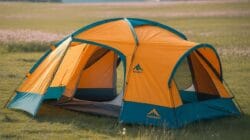
The ground pulls heat from your body at a constant rate once contact happens. A sleeping bag alone stops maybe sixty percent of ground loss. The pad becomes your primary defense, not your secondary one. Sleeping on pine needles, packed snow, or thin fabric creates a direct thermal path from your core to the earth. Without proper insulation below, your bag’s R-value becomes almost irrelevant.
Ground Pads: R Value Over Thickness
Thickness tells you nothing about insulation performance. R-value measures resistance to heat flow per inch of material, and that’s the only number that matters for ground pads. Foam pads with an R-value of 3 to 5 stop conduction better than air mattresses twice as thick because air is a terrible insulator when it moves or compresses under body weight. Buy for R-value first, dimensions second.
Closed-cell foam pads maintain consistent R-value even when wet or compressed. Inflatable pads with synthetic insulation can achieve higher R-values in the same thickness, but they fail if punctured or if seams leak. Stack two pads if temperatures drop below freezing—one closed-cell pad under one inflatable pad creates redundancy and pushes total R-value to eight or higher. Place the foam pad directly on the ground, then the inflatable on top, then your sleeping bag.
The Body Furnace: Optimizing Personal Thermogenesis

Fuel And Hydration As Metabolic Currency
You want to believe cold nights happen to you. They don’t. Thermogenesis is pure biology: your body generates heat through fuel oxidation, and you either feed that process or you freeze. Most tent campers undereat before sleep and dehydrate during the night, then wonder why their bag fails. Both are mistakes with direct mechanisms.

Carbohydrates burn fastest and generate the most usable heat per calorie. Fat sustains longer but takes time to mobilize. Eat a mix two to three hours before sleep: complex carbs with protein and fat. This timing lets digestion complete before you’re horizontal, preventing stomach discomfort while maintaining steady metabolic output. Drink 500ml of water an hour before bed. Your body needs fluid to process fuel efficiently. Dehydration throttles thermogenesis down hard. This isn’t preference. It’s chemistry.
Pre Sleep Rituals For Internal Warmth
Pre-sleep movement is not optional. Muscle contractions generate heat on demand, and ten minutes of deliberate activity before entering your bag creates a thermal baseline you can’t achieve passively. Do jumping jacks, burpees, or sustained walking around camp. Not to tire yourself out. To light your furnace before confinement.
Layer strategically after movement stops. Wear a base layer and mid-layer inside the bag. Remove the outer shell and pack it away. Damp fabric kills insulation dead. Wear a hat and keep your head covered. Forty percent of heat loss at rest happens through the head and neck region because blood vessels sit close to skin there. Eat a small carb-forward snack fifteen minutes before sleep. Your body continues burning through the night. Don’t expect residual heat alone to carry you to morning.
The Thermal Envelope Protocol: Strategic Layering For Staying Warm While Camping
Start With Sweat Management, Not Insulation
You want to feel tough by staying warm without extra gear, but that ego costs you heat. Borrow from physics: the dew point is where air can no longer hold moisture. Your skin creates moisture. Cotton holds it. Synthetic base layers move it away from your body to the next layer, where it can evaporate without stealing your core temperature.

Merino wool and polyester derivatives work because they shed moisture faster than it accumulates. This isn’t about being dry in an absolute sense. It’s about preventing the wet layer against your skin that kills you in cold tents. Wear base layers snug against skin with zero cotton. The fit matters more than the thickness.
Trap Dead Air, Block The Wind
Everyone says “layer for warmth,” which is incomplete advice. The real mechanism is trapping dead air pockets while stopping convection. Your middle layer holds still air. Your outer layer prevents wind from stripping that air away and replacing it with cold.
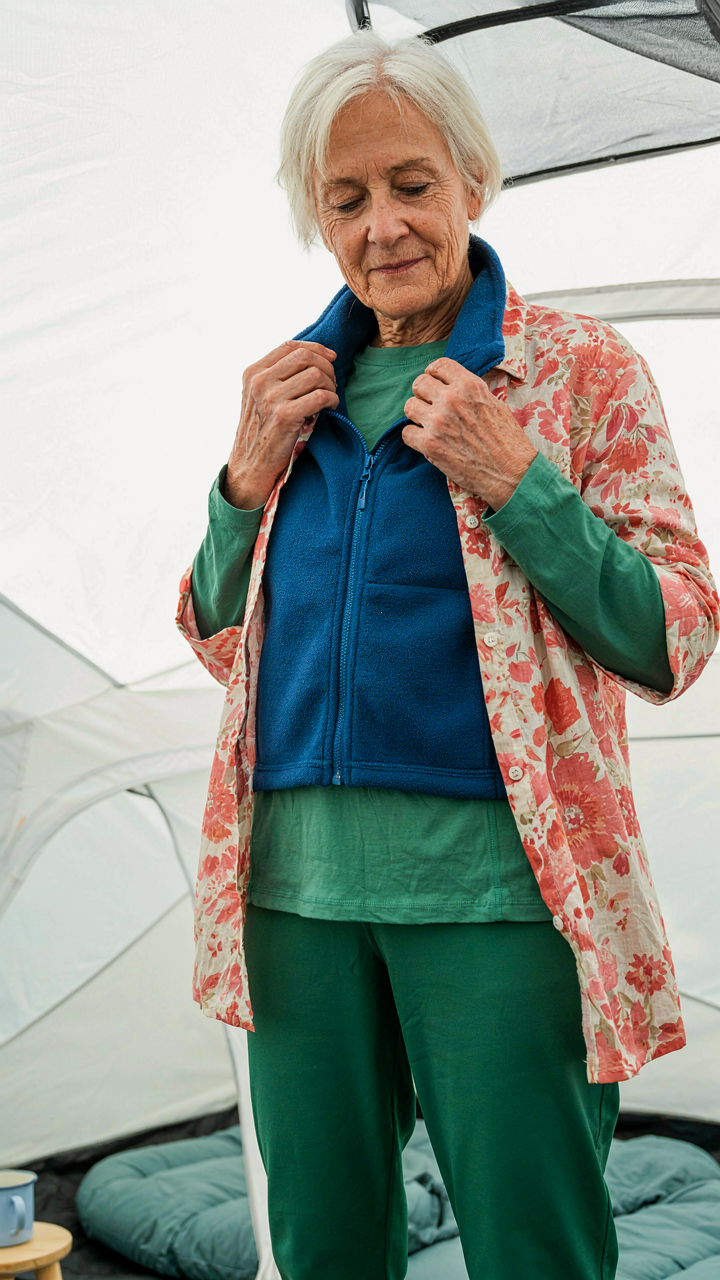
Fleece works because its structure creates many small air pockets. A hard shell works because nylon or polyester blocks wind penetration. Neither works alone in cold conditions. The shell traps the fleece’s dead air. In your tent, use a fleece mid-layer under a windproof outer shell, even when stationary. Convection still happens inside tents from air movement near open vents or condensation zones.
Microclimates And Radiation: The Physics Of Your Sleep System

Loft And Fill Power Create Your Insulation Layer
You want to believe a sleeping bag’s rating tells you everything. It doesn’t, and that gap between belief and reality is where you freeze. The physics here is thermodynamics: insulation works by trapping dead air space, and the bag’s loft and fill power determine how much trapped air you actually get. Loft is the thickness of the compressed material. Fill power measures how much volume one ounce of fill material occupies when fully expanded.
Higher fill power means fewer ounces of material needed to trap the same volume of air. Down typically achieves 600 to 900+ fill power. Synthetic achieves 1.5 to 3 inches of loft with lower fill power. A 20-degree bag with 700-fill down might use 18 ounces of material. The same 20-degree rating in synthetic might require 32 ounces. Both create dead air. One is lighter. Neither works if you compress the loft by lying on it without an insulated layer beneath you. The ground kills more sleepers than the air temperature.
Skin Exposure Is Where Heat Actually Leaves
The common advice here is stupidly incomplete: cover your skin. Yes. But the mechanism matters because it explains why you can wear a thermal base layer and still lose heat faster than the sleeping bag rating suggests. Radiation accounts for significant heat loss from any exposed surface. Your face, hands, and any gap between your base layer and the bag’s interior become direct radiators. The sleeping bag contains the radiating warmth only if those surfaces stay covered.
The real move is to treat any uncovered skin as a hole in your insulation envelope, not a minor detail. Balaclava or neck gaiter over your mouth and nose retraps exhaled warmth instead of letting it escape into the bag. Socks inside the bag are non-negotiable. Hand mitts clipped to the bag’s interior keep your palms from touching the cold nylon and then the cold sleeping bag, which triggers massive heat transfer on contact. Layer your base system so there’s zero skin showing between your chin and your toes when you zip the bag.
The Hot Rock Method: Primitive Heating For Cold Nights
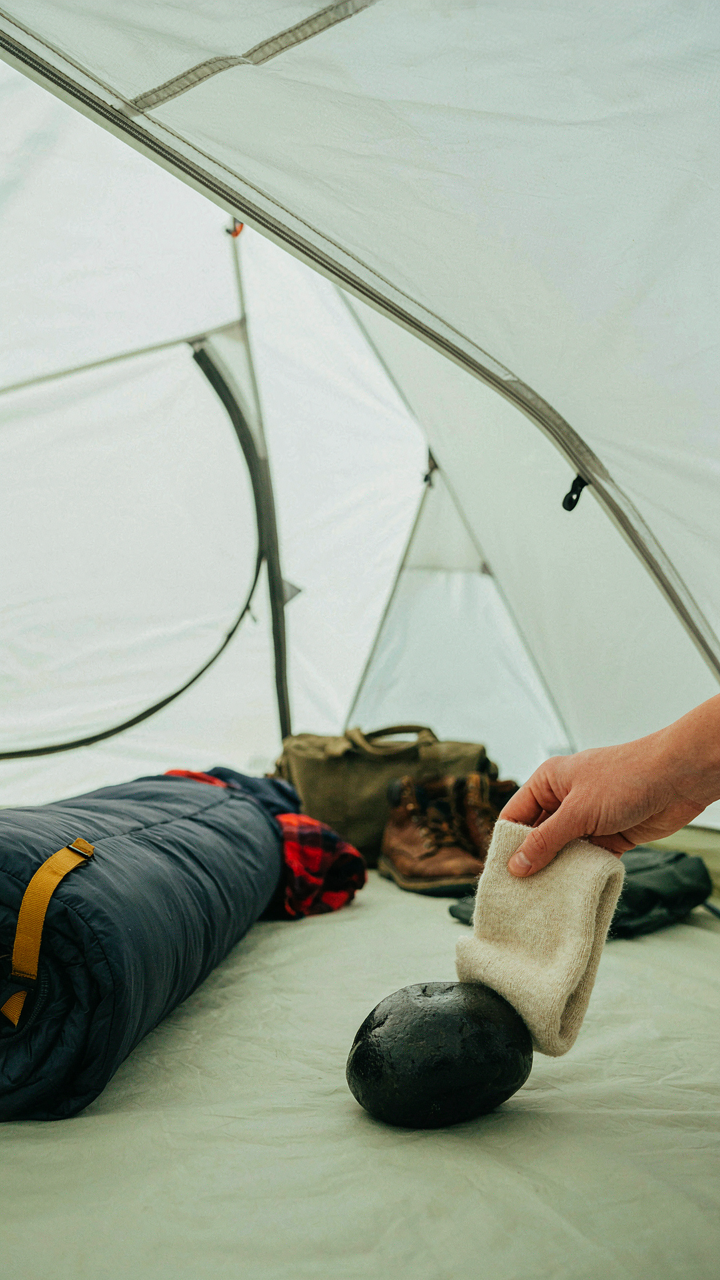
Which Rocks Actually Hold Heat
You want this to work without thinking too hard about it. Here’s what actually matters: rock density determines heat capacity. Denser rocks absorb and retain more thermal energy than porous ones. Granite and basalt work. River rocks work. Avoid porous volcanic rock, sandstone, or anything that crumbles when you scratch it. Wet rocks can explode when heated because trapped water turns to steam inside the stone.
Find rocks near water sources in your area, since they’ve been naturally selected for density. Test by dropping one from waist height onto hard ground. If it doesn’t chip or crack, it’ll handle direct flame. Size matters too. Fist-sized to grapefruit-sized rocks heat fast enough to matter without taking hours to warm. Bring multiple rocks, not one massive one.
Placement That Keeps Heat Flowing Into Your Sleeping Bag
Thermodynamics dictates that heat transfers from high concentration to low concentration. Your sleeping bag is the low-concentration zone. The rock must sit between you and the ground, not beside you on top of the bag. Ground contact kills warmth faster than anything else because earth acts as a heat sink with infinite capacity.
Wrap the heated rock in a thin fabric layer or place it in a sock. Direct stone contact burns skin and wastes radiant heat. Position it at your feet, not your core, because feet lose heat fastest and recovery takes longest. A rock that’s still warm when you wake up means it retained enough energy to matter through the whole night. Replace it if it cools before you sleep.
The Air Gap Strategy: Convection Control For How To Keep Tent Warm In Winter
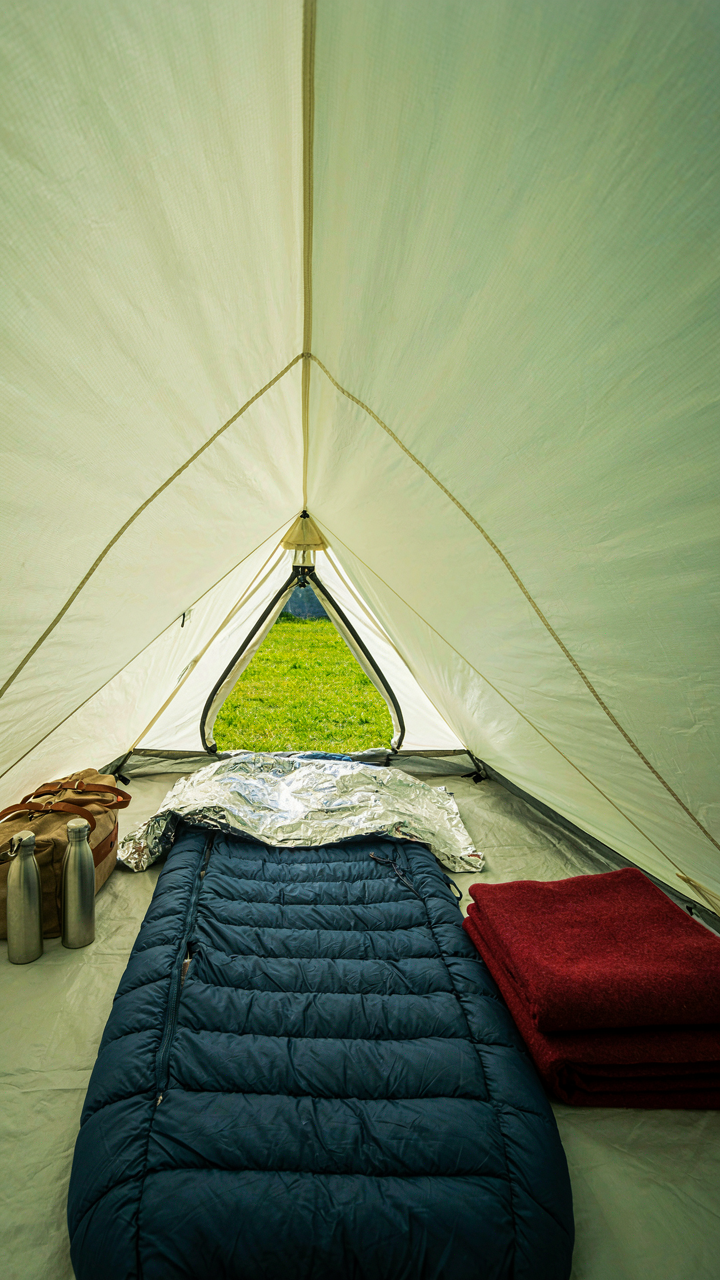
How Airflow Moves Heat Out Of Your Tent
You want to believe staying warm is about insulation alone. It isn’t. Convection—the physics term for moving air removing heat from surfaces—is the mechanism that kills you fastest in a tent. Still air traps warmth. Moving air steals it. Your body radiates heat. That heat warms the air around you. If that air circulates, the warmth leaves with it. Most people think tent ventilation is about preventing condensation. That’s secondary. Airflow control is about stopping convection theft.
Warm air rises and hits your tent ceiling, cools, then sinks back down across your body as cold air. This cycle repeats constantly if nothing stops it. Wind outside accelerates this process by creating pressure differences that pull air through gaps and seams. Seal entry points with your sleeping bag or body placement. Position yourself away from vents. Block openings with gear when temperature drops below freezing. Stagnant air inside your tent is your best insulator. The moment air moves, warmth leaves.
Dead Air Layers Work Like A Thermos Wall
A thermos works because it traps air between two walls. That trapped air conducts heat slowly. Your tent should work the same way. Most tents achieve one air layer—the thin shell itself. That’s insufficient in deep cold. You need multiple barriers with dead air pockets between them.
- Ground barrier: A tarp or foam pad beneath your sleeping bag stops convection from pulling warmth downward into cold earth. Air pockets in closed-cell foam are intentional dead space.
- Sleeping bag insulation: Loft—the fluffiness of down or synthetic fill—is dead air trapped in fiber. Higher loft means more trapped air, not magic.
- Reflective layers: Emergency blankets or aluminized tarps inside your tent bounce radiant heat back instead of letting it escape through fabric.
- Body-to-ground separation: A sleeping pad elevates you away from the coldest zone. Ground conducts heat faster than air. Distance matters measurably.
- Tent interior shell: Hanging an inner tarp inches from your tent walls creates an air gap. This layer stops convection from moving cold tent material against your bag.
The thermos principle scales down. Two barriers separated by still air outperform one thick barrier. Your sleeping system should layer this way: ground pad, sleeping bag, and minimal air circulation around your body. Place a second sleeping bag or emergency blanket as an outer shell if temperature demands it. Seal gaps between components. Touching surfaces conduct heat across them. Separated surfaces with air pockets between them don’t.
Emergency Readiness: Beyond Basic Winter Camping Hacks
When Warmth Stops Working
You’re reading this section because you want to feel in control when things actually go wrong—not just prepared, in control. Here’s what matters: hypothermia is progressive, and your body signals its stages before shutdown occurs. Early hypothermia triggers shivering and confusion. Your core temperature drops below 95°F. Mild cases feel like fatigue. Severe cases kill decision-making, which kills survival.
Recognize the cascade: uncontrollable shivering, slurred speech, loss of coordination, then paradoxical undressing where the victim removes layers despite freezing. This happens because the brain’s thermoregulation misfires. The moment someone stops shivering is the moment their body has surrendered heat production—this is critical. Get them into a sleeping bag with passive external warmth, not active rewarming, which can trigger afterdrop and kill them. Skin-to-skin contact works. Remove wet clothing immediately.
Shelter From Nothing
The common advice here is useless: “Stay positive and conserve energy.” That’s not a mechanism. Heat loss depends on physics, and a tent’s effectiveness as a thermal system depends on surface area, air gaps, and wind breaking. When your tent fails or you’re caught outside, your priority switches from insulation to geometry—specifically, reducing exposed surface area that radiates heat to the environment.
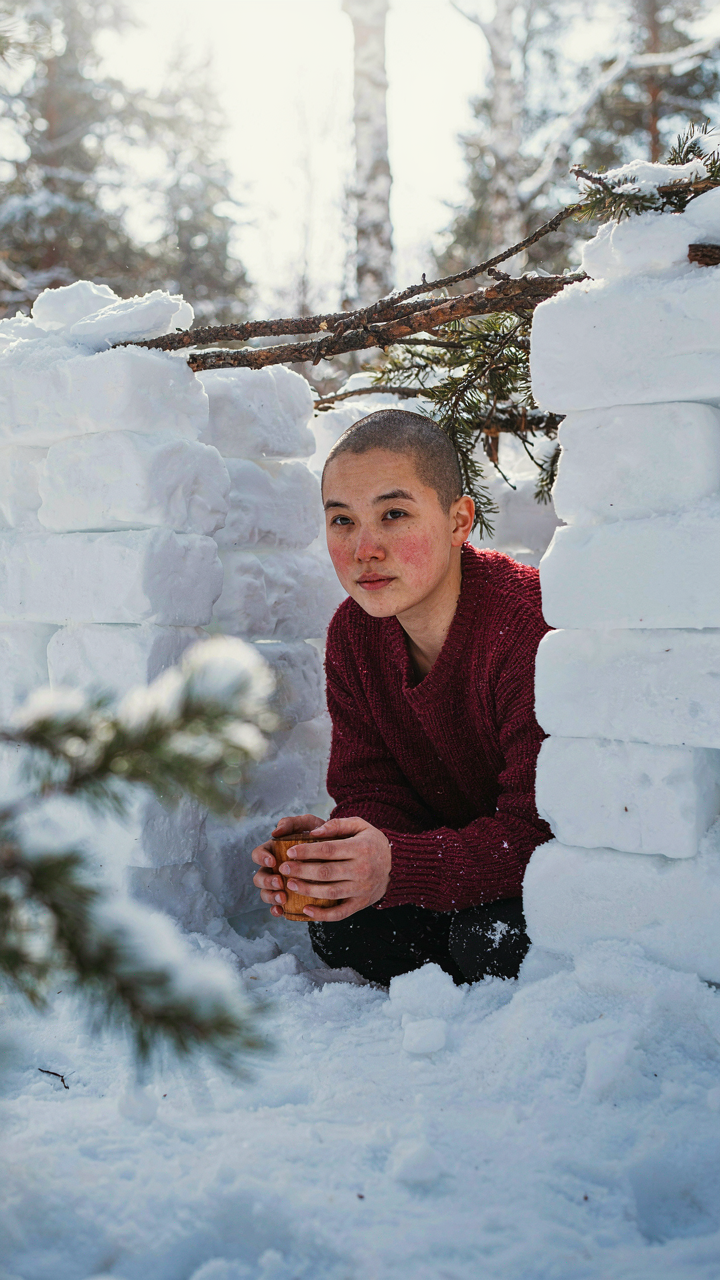
Build a survival shelter using whatever breaks wind: fallen branches, snow blocks, your pack as a wall. The goal is a small chamber that traps your body heat rather than bleeding it into open air. Line it with dry debris for insulation below you, because ground contact kills faster than air exposure. Never use plastic as your only shelter—it condenses moisture and accelerates heat loss. Get inside something that shields you from wind and holds your warmth in a contained space.
The Real Obstacle Isn’t The Cold Outside, But Your Naive Understanding Of Its Transfer Within
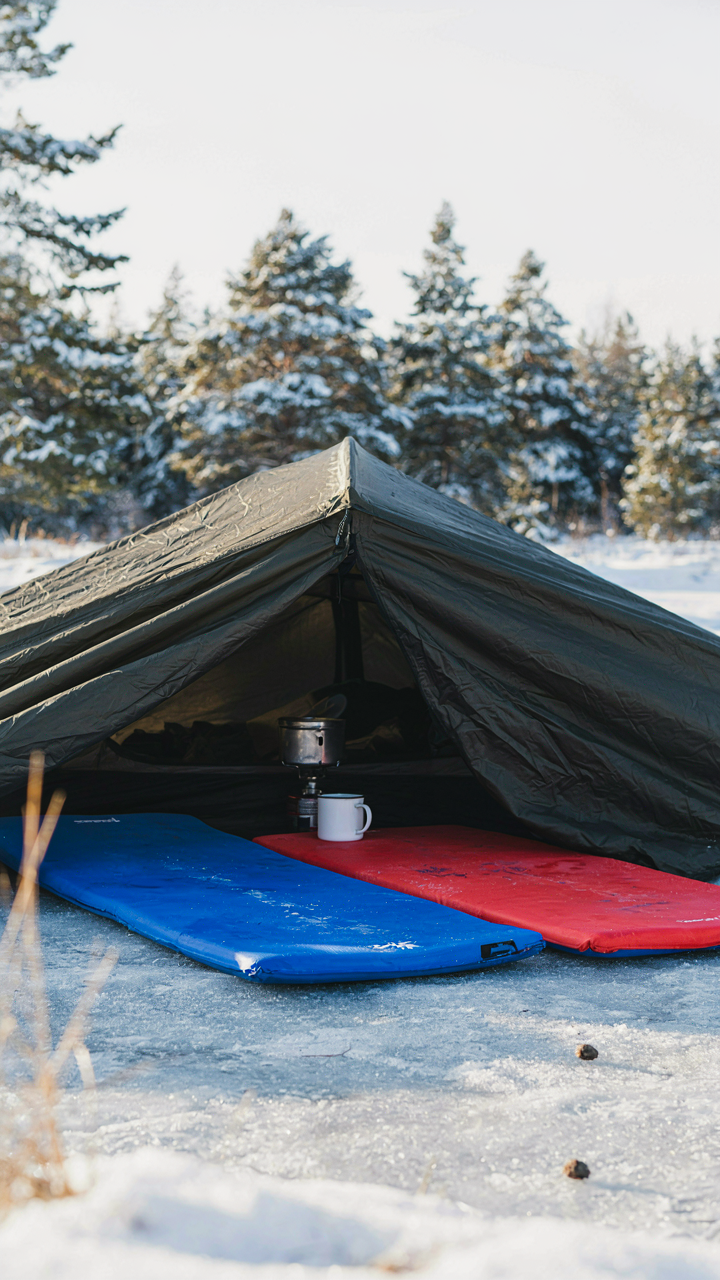
You’ve been thinking about cold wrong. It’s not a force attacking you. It’s the absence of heat escaping your body. Stop insulating better and start blocking the three transfer methods: conduction, convection, radiation. Your sleeping bag means nothing if you’re sleeping on frozen ground. Buy a foam pad today. Put it under you, not on top. The ground steals more heat than the air ever will. Your comfort on winter nights depends entirely on what you’ve already decided matters.