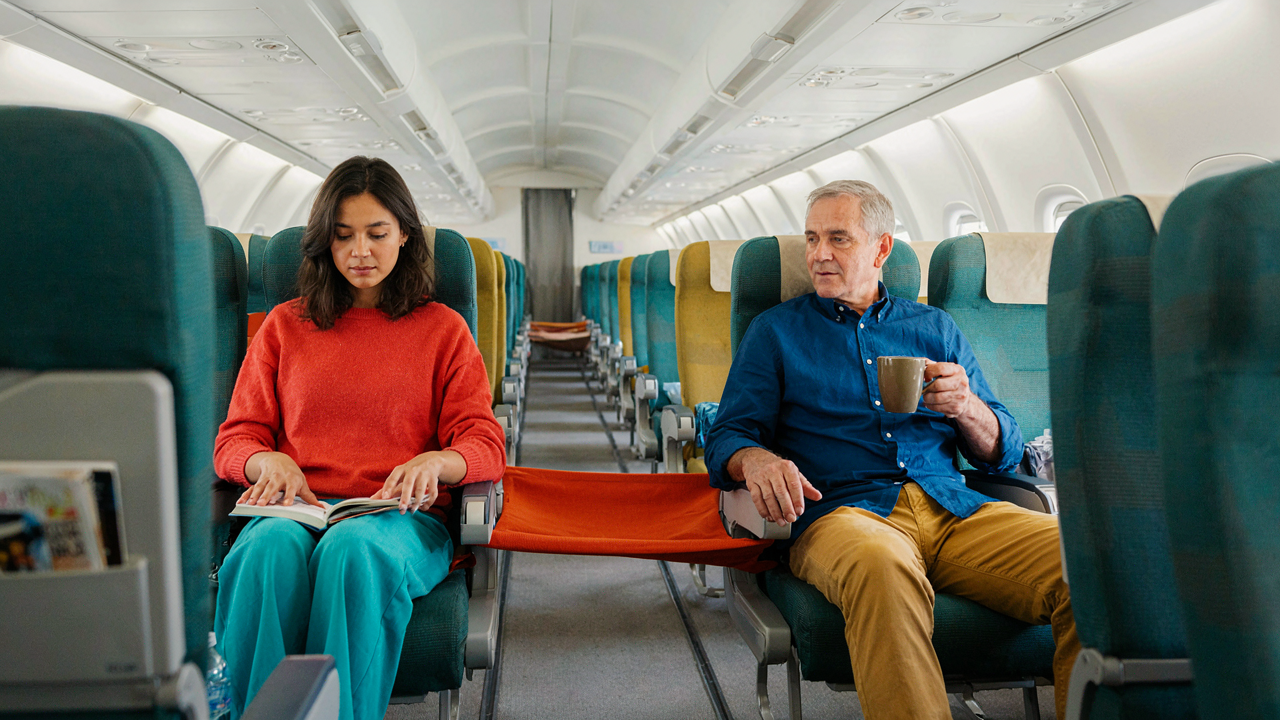
The Lie Of Legroom: Why Your Airplane Footrest Hammock Fails
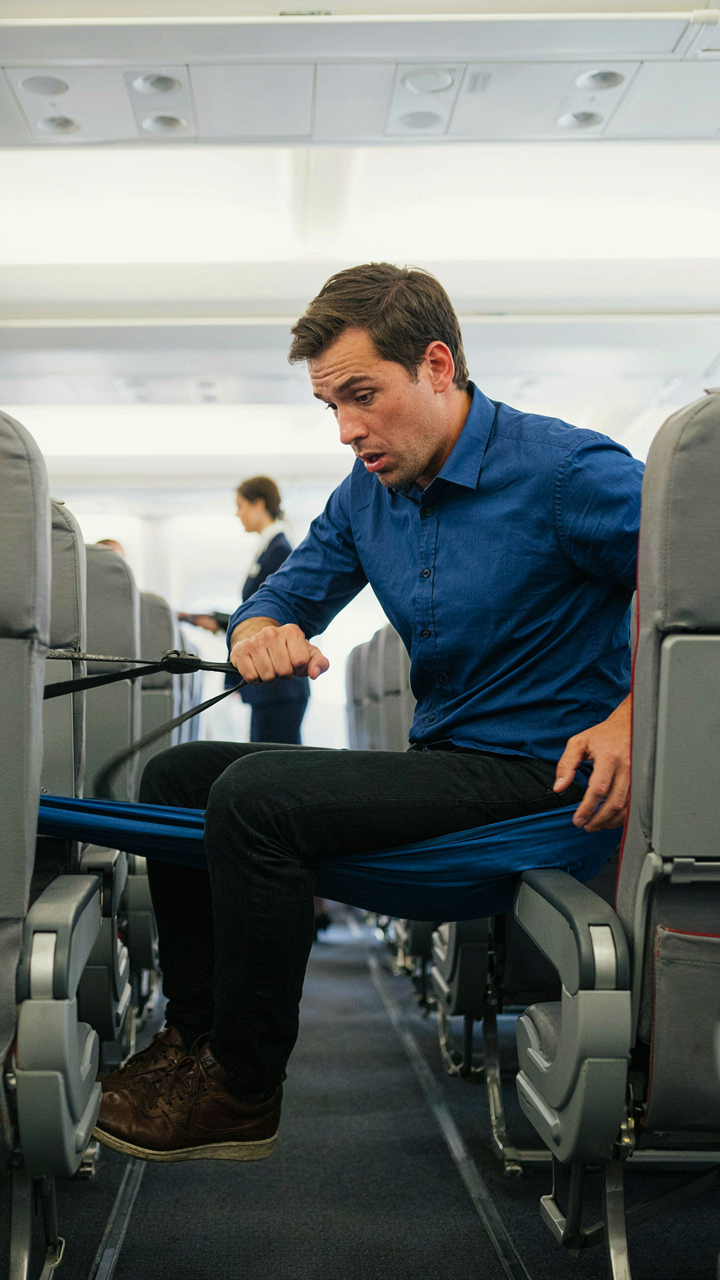
Everyone’s Body Is Different, But Nobody Admits It
You want to believe a $30 hammock fixes your legs because admitting the real problem costs money and planning. Here’s the mechanism: ergonomics borrowed from industrial engineering reveals that support only works when it matches your specific femur length, seat depth, and hip angle. A footrest hammock assumes a standardized body. Yours isn’t standard. The device can’t adjust to your proportions, so it either dangles uselessly or creates pressure points that accelerate fatigue instead of preventing it.
Airlines design seats around median measurements from decades-old anthropometric studies. Those medians don’t account for the variation between a 5’2″ traveler and a 6’4″ one. A hammock bridges from the seat frame to your feet, but if your seat geometry doesn’t match the hammock’s assumptions about angle and distance, you’re not getting support. You’re getting a fabric sling that shifts under load and forces your lower back into compensation patterns your legs were meant to prevent.
The Angle Problem Nobody Names
Seat recline angle, footrest height, and leg extension form a triangle. Break one angle and the whole system fails. Most airplane footrest hammocks attach to the seat in front of you or the armrest, fixing them at one angle. Your legs need dynamic support that shifts with micro-movements your body makes every few minutes during long flights. A static hammock can’t do that. What happens instead is the fabric goes slack when you shift, then suddenly tightens and cuts off circulation when you move again.
The real support mechanism requires your feet elevated at roughly 15 to 25 degrees above hip height while seated, with your knees at approximately 90 degrees. Achieve that geometry and you reduce pressure on the lower back and improve blood flow. Miss it by even 10 degrees and you’ve either lifted your knees too high, compressing your thighs against the seat edge, or kept them too low, leaving your lower back unsupported. Check your actual seat dimensions and your leg length before buying any footrest hammock, not after.
Beyond The Buzz: Real Benefits Of An Airplane Seat Hammock
When Blood Stops Moving, Problems Start
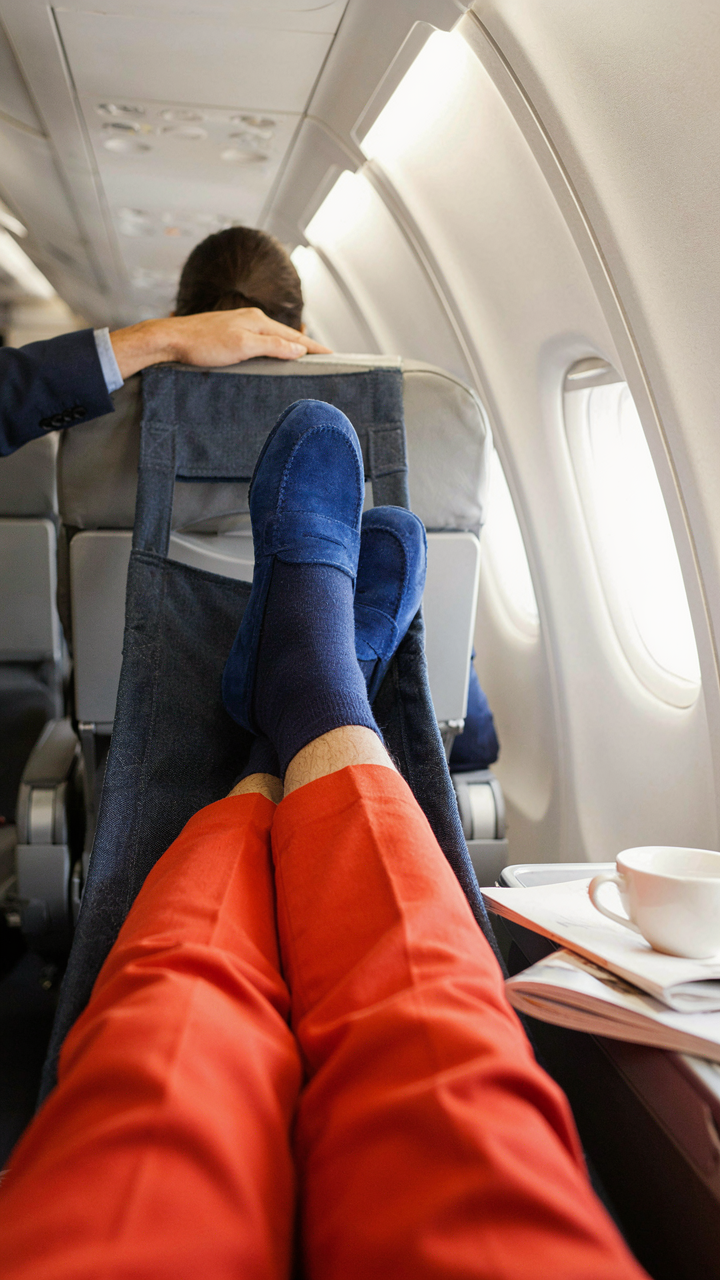
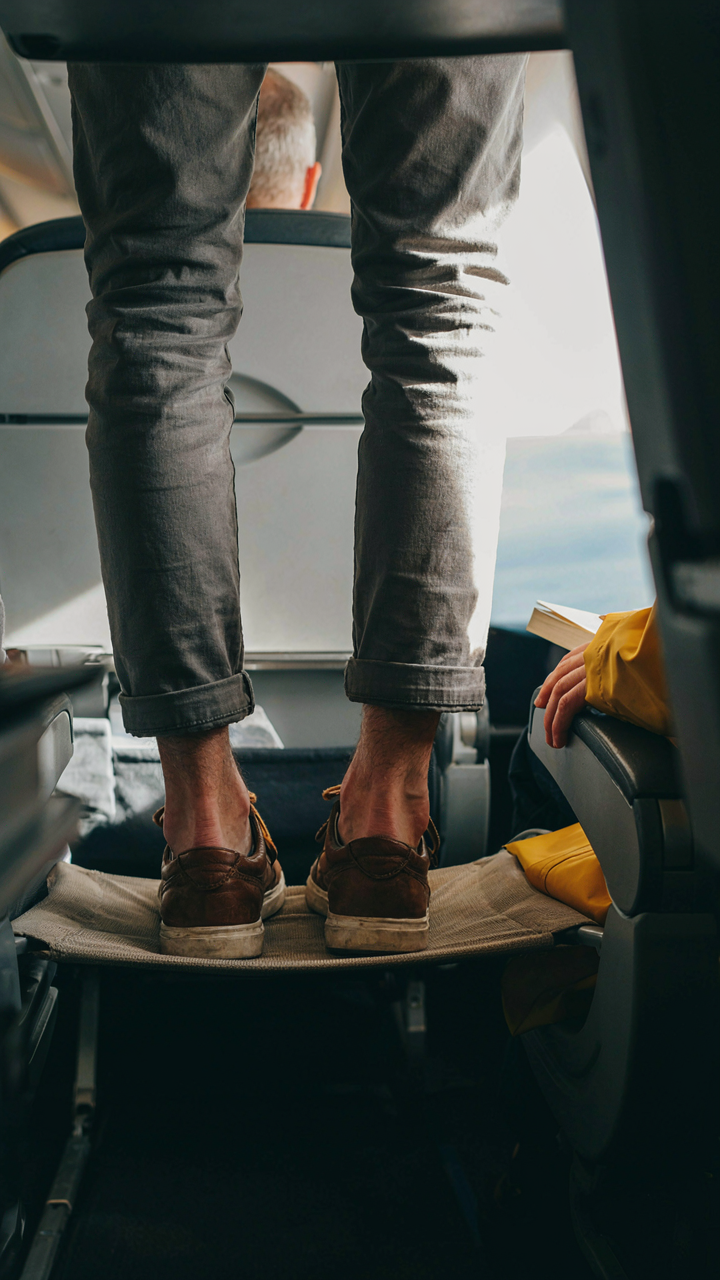
You’re worried about economy class syndrome because you’ve read enough headlines to know it’s real, and you’re hoping a footrest hammock makes you look like you have it figured out. Here’s what actually matters: circulation is a physics problem. Your legs work like a pump. When your feet dangle or press flat against the floor for hours, you interrupt the mechanical return of blood to your heart. A footrest hammock elevates your feet and changes the angle of your thigh relative to your torso, reducing venous pooling in your lower extremities and allowing blood to move back toward your core without fighting gravity.

The mechanism is straightforward. Deep vein thrombosis forms when blood stagnates long enough for clots to develop. Elevation and angle work together to keep flow moving. A footrest hammock that suspends your feet 4 to 6 inches above floor level and supports your calves removes pressure points that restrict blood vessel compression. You’re not preventing a disease with fabric and straps. You’re removing one of the conditions that allows it to develop.
Your Spine Knows You’re Slouching
The common advice about airplane seats is useless: sit up straight and use a pillow. That doesn’t work because airplane seat geometry forces your lumbar spine into flexion whether you fight it or not. Your lower back pain isn’t a character flaw. It’s a biomechanics problem. When your knees sit higher than your hips, your pelvis tilts backward, and your lumbar discs get compressed on the front side while your spinal ligaments stretch on the back. A footrest hammock changes your hip angle by elevating your feet, which tilts your pelvis forward slightly and reduces that compressive load on your discs.
The footrest doesn’t fix your posture. It removes the geometric constraint that forces bad posture in the first place. Your lower back strain comes from sustained flexion, not from sitting itself. When your feet rest in a hammock at the right height, your thigh angle opens up, your pelvis finds neutral, and the pressure on your intervertebral discs drops measurably. After six or eight hours, that difference compounds into real relief instead of soreness that lasts two days after landing.
The “Gravity Offset” Protocol: Mastering Your Foot Hammock For Plane
Finding Your Sweet Spot Height
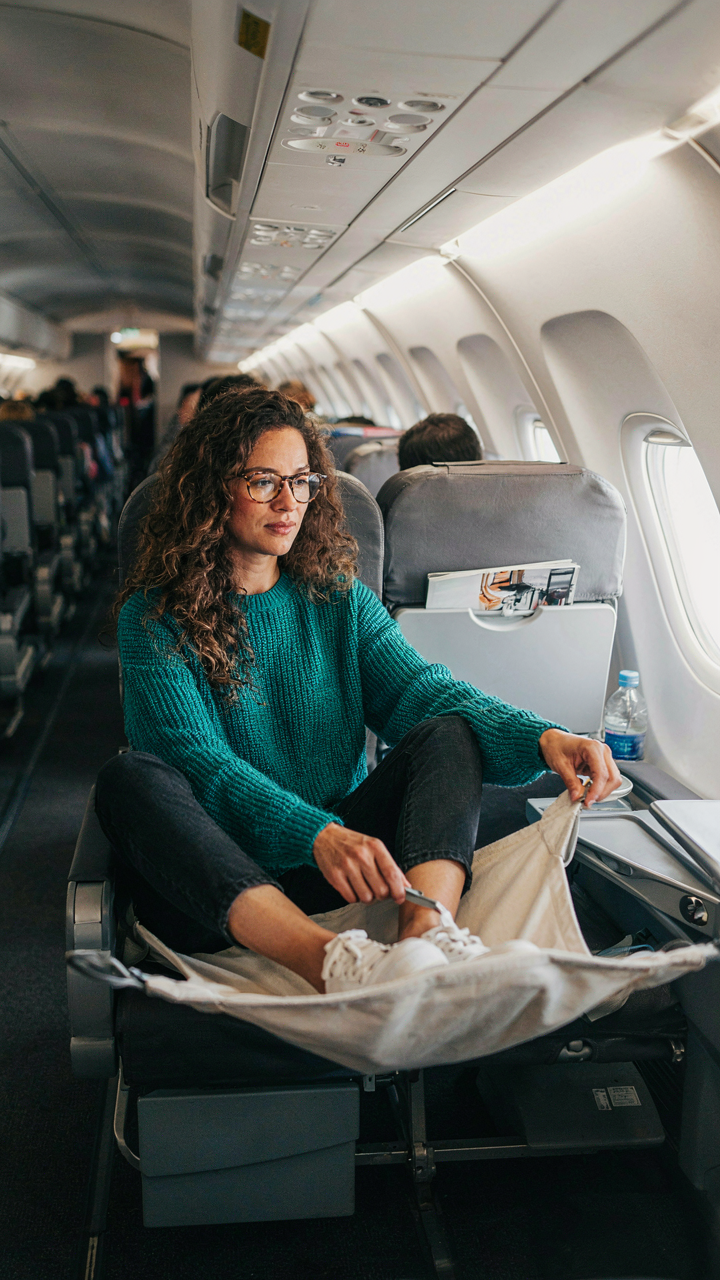
You want relief without looking like you’re gaming the system. The real motive is simple: comfort without drawing attention or appearing unprepared. Here’s what matters: the hammock’s height determines pressure distribution, borrowed directly from ergonomic load theory used in industrial seating. Position the hammock so your feet rest at or slightly above hip level when seated. This counteracts the blood pooling that happens when your legs dangle for hours. Most people set it too low, which defeats the purpose entirely.

The sweet spot varies based on seat depth and your leg length, but the principle holds constant. Your weight should distribute across the underside of your thigh and calf, not concentrate at your ankles or knees. Adjust the hammock straps so there’s minimal slack but no tension that cuts circulation. Test the angle before takeoff by sitting in your seat and finding where your legs naturally want to rest without effort. That position is your baseline.
Securing Your Setup Without Failure
Common advice says “just tuck it under the seat in front,” which misses the actual engineering. The hammock’s stability comes from three anchor points, not two. Your primary anchors are the seat frame or armrest fixtures of your own seat. Your tertiary anchor is the seat back pocket or overhead bin latch on the row ahead. This creates a triangulated hold that prevents the hammock from shifting mid-flight when you move or when turbulence hits.
Tension matters more than tightness. Apply enough pressure to keep the hammock in place without straining the straps or the attachment points. Check your setup once you’re airborne and the cabin has settled. Re-tension if needed after the drink service, when movement is highest. The hammock should feel locked in place but not pulling on anything. If it shifts during a bump, your anchoring failed and you need to rebuild the configuration immediately.
Material Science: What Makes A Durable Travel Hammock Airplane
Fabric Tensile Strength And Longevity
You want to know this section doesn’t matter as much as you think it does, because you’re afraid you’ll waste money on something that tears in month two. Here’s the mechanism: tensile strength measures how much force a fabric resists before breaking. For airplane footrest hammocks, this matters less than fabric denier and weave pattern. Most quality travel hammocks use nylon or polyester at 70D to 210D. The higher the denier, the thicker the thread. Thicker threads resist puncture and abrasion from the metal footrest frame and seat frame contact points. Longevity isn’t about maximum tensile strength. It’s about targeted reinforcement at stress zones.
The common advice says buy the strongest fabric available. That’s incomplete. A 210D nylon hammock fails faster than a 70D nylon with reinforced seams if the seams don’t match the fabric load. Stitching pattern determines where failure actually happens. Most airline footrest hammocks fail at attachment points, not the fabric body. The fabric stretches slightly with body weight and repeated compression cycles. Polyester resists UV better than nylon, but nylon handles moisture and mildew better. For cabin humidity, nylon outlasts polyester by handling damp air without degradation. Check the seam stitching pattern before checking fabric weight. Reinforced box stitching at corners adds three to five years of usable life over single-line stitching.
Strap Integrity And Buckle Mechanisms
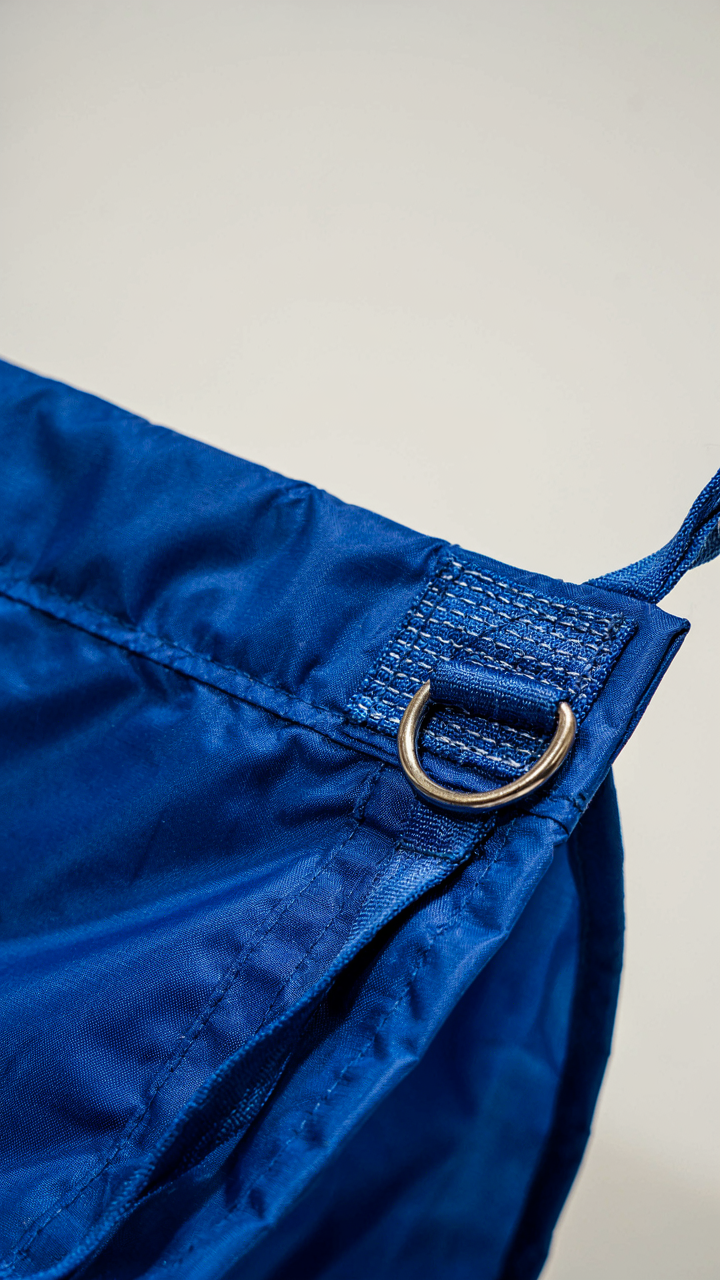
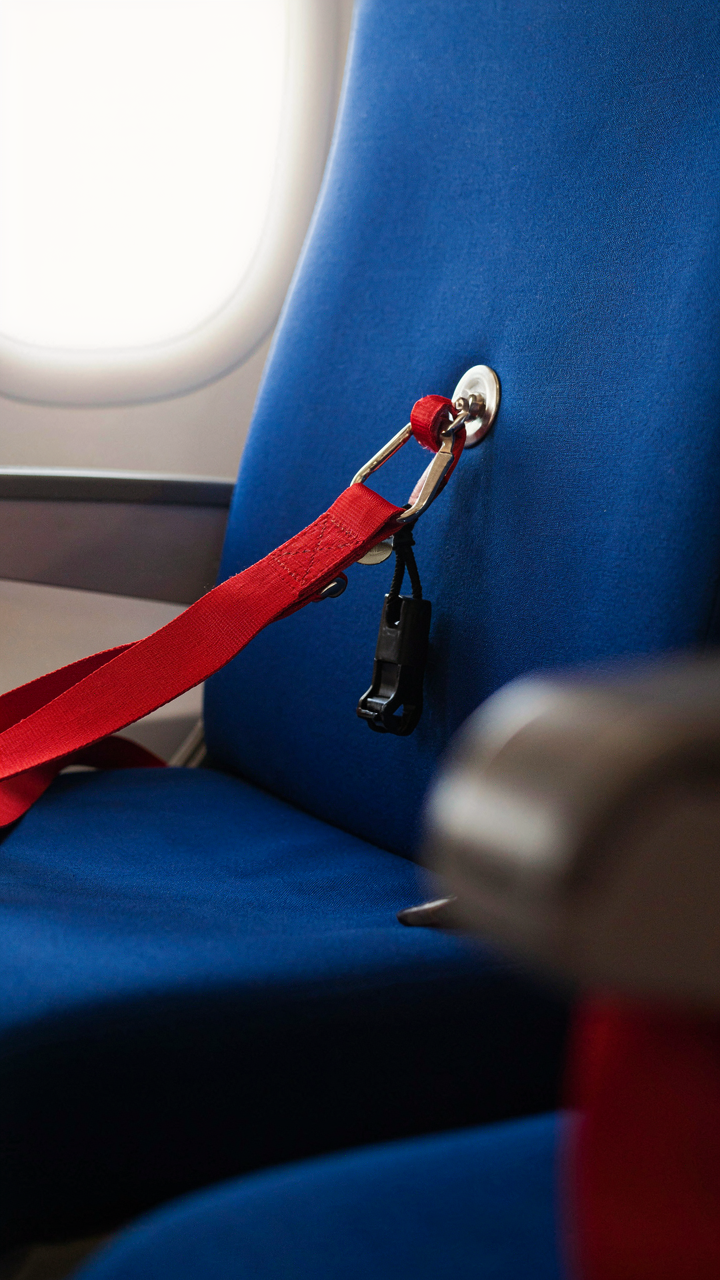
Buckle mechanisms fail more often than fabric does, and nobody talks about this because they’re focused on the wrong variable. Engineering principle from materials science: stress concentration occurs at attachment points where different materials meet. The strap connects the hammock fabric to the aircraft footrest using either plastic buckles, metal D-rings, or clip systems. Each system concentrates stress differently. Plastic buckles (polycarbonate or acetyl copolymer) fail under repeated thermal cycling in pressurized cabins. Metal D-rings distribute load more evenly but corrode in salt air exposure during travel. Clip systems work best because they create distributed pressure across a wider surface area.
Strap width matters more than buckle material. Straps under one inch wide concentrate force into a narrow band. This creates micro-tears at the anchor point within six to twelve months of regular use. Straps one and a half inches wide or wider distribute tension across the fabric more effectively. Aircraft footrest hammocks from manufacturers like Aeris and Travelrest use webbing straps between one and two inches wide specifically for this reason. The buckle attachment method determines longevity. Stitched-through attachment outlasts glued attachment by a factor of three. Verify the stitching pattern creates a box or X shape around the buckle base to prevent the anchor point from tearing through the strap webbing.
The Comfort To Weight Ratio: A Minimalist Approach To Airplane Footrest
Strip Away Features You Don’t Actually Use
You’re looking for permission to buy the one with the most pockets and straps because you think more options equal more control. It doesn’t. In systems design, the constraint is the feature. A footrest hammock that does one thing well—suspend your feet at a fixed angle—outperforms one loaded with adjustability, storage, and padding nobody deploys at 35,000 feet. Most travelers pack features they never activate. The weight penalty compounds over repeated trips, and the mental load of choosing between configurations burns attention you need for actual rest.

Strip the design down to essentials: a durable suspension mechanism, material that doesn’t retain moisture or odor, and attachment points that work with any armrest or tray table. Neoprene or nylon webbing handles load distribution better than foam. Removable padding that you can wash separately matters more than integrated cushioning that becomes a bacteria colony after three flights. Weight should stay under eight ounces. Test the attachment system on your specific seat type before committing.
What Actually Fits In Your Carry On
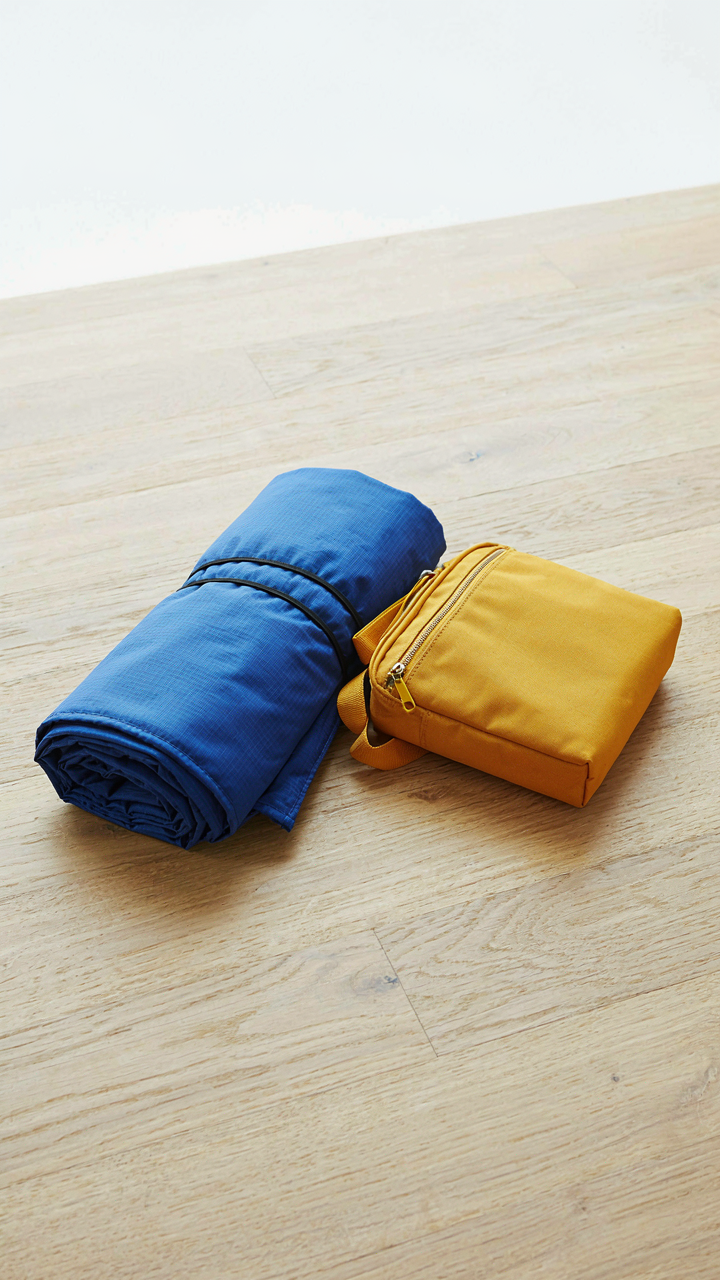
The logistics framework of packing efficiency reveals a hard truth: most airplane footrest hammocks take up more space than their utility justifies because they don’t compress. A properly designed model rolls into a cylinder no thicker than a water bottle and smaller than a paperback book. If it doesn’t, you’re carrying dead weight that displaces something you’ll actually need during the flight.
Compression isn’t about squeezing; it’s about material selection and fold geometry. Look for models made from ripstop nylon that pack down to around 12 by 3 inches. The attachment straps should be integrated into the roll, not dangling. When you unfold it at your seat, the setup takes under thirty seconds with no fumbling. Before buying, verify the packed dimensions match your carry-on pocket depth. Dead space in your bag is money spent on weight you can’t use.
The Biofeedback Loop: Tuning Your Foot Hammock For Long Flights
Your Body Knows Where It Is
You want to believe that buying the right footrest hammock solves the problem. It doesn’t. Proprioception—your nervous system’s ability to sense limb position without looking—is what actually determines whether eight hours in a hammock feels like relief or torture. Your feet and ankles contain thousands of sensory receptors that fire constantly, feeding your brain real-time data about angle, tension, and weight distribution. A footrest hammock either works with this feedback system or against it.
Most people set a hammock at a fixed angle and leave it. This is the mistake. Your proprioceptive system gets bored. Static positioning kills blood flow because your muscles stop making tiny adjustments. The hammock becomes a trap, not a support. You need to understand that your body learns the hammock’s geometry only through movement, not through stillness. The tension in the fabric, the angle of your ankle, the pressure under your arch—these variables shift your comfort every few minutes during a flight.
Micro Movements Beat Static Hold
The common advice says find the perfect angle and stay there. Wrong. Your circulatory and muscular systems need variation. Airplane footrest hammocks work best when you treat them like a dynamic platform, not a cast. Every twenty to thirty minutes, shift your foot position slightly. Rotate your ankle inward and outward. Lift your heel and press your toes down. These aren’t stretches. They’re resets.
Your proprioceptive receptors need fresh input to keep sending healthy signals to your muscles. When you hold a static position for too long, those receptors stop firing at normal rates, and your nervous system enters a low-engagement state. Your muscles atrophy slightly. Your blood pools. But when you introduce micro-movements, you activate muscle spindles throughout your foot and calf. The hammock’s fabric tension changes with each shift. Your body recalibrates. After a seven hour flight, the difference between static and dynamic positioning shows up as reduced swelling, less numbness, and the ability to walk normally the moment you land. Adjust the hammock strap tightness slightly every ninety minutes to match the swelling patterns in your foot.
Ignoring The Noise: Why Most Airplane Hammock Reviews Lie
Reviews Measure Engagement, Not Comfort
You want to know if you’re wasting money on something that won’t work. That fear drives most reviews toward engagement metrics instead of actual performance data. Reviewers chase likes and shares by focusing on novelty and emotional reaction, not the mechanics of load distribution or fabric degradation under sustained pressure. A hammock either reduces pressure on your lumbar spine or it doesn’t. Everything else is theater.

Most reviews conflate “I felt better” with “this product works.” The placebo effect is real in comfort products. Someone buys a footrest hammock, uses it for one flight, and reports relief because their expectations shifted and their body finally moved after hours of stillness. The review gets published. The next buyer expects identical results and gets disappointed when sitting position alone doesn’t solve their fatigue. The product gets blamed for user expectation mismatch.
The Setup Problem Nobody Admits
User error in setup destroys more hammocks than design flaws ever do. Installing a footrest hammock requires tension calibration that most people skip entirely. If the straps stay too loose, the fabric sags into a banana shape and concentrates pressure on your ankles instead of distributing it across your entire lower leg and foot. If the straps are too tight, you restrict blood flow and create numbness after thirty minutes. The sweet spot exists. Almost nobody finds it on their first flight.
The mechanism is simple: fabric under load needs balanced tension across all anchor points. Airplane armrests and seat frames offer inconsistent geometry. A footrest that works perfectly on one aircraft fails on another because the strap angles changed by fifteen degrees. Reviewers blame the product. They should blame their installation protocol. Measure the strap angle from armrest to footrest before takeoff. If it’s steeper than forty-five degrees, loosen the straps. If it’s shallower than thirty degrees, tighten them.
The “Pre Flight Prep” Checklist: Optimizing Your Airplane Footrest Experience
Seat Selection Maximizes Attachment Points
You want to believe the footrest will work anywhere because admitting seat choice matters feels like losing control. The reality is structural: attachment points determine whether the hammock stays stable or becomes dead weight. Think of aircraft cabin geometry like load-bearing architecture—some seat frames offer multiple anchor vectors, others offer none.
- Bulkhead rows: Solid wall or divider ahead provides one reliable anchor point but limits legroom benefit since your legs can’t extend as far forward anyway.
- Seats with exposed seatback tray tables: The articulated bracket system creates a dual-anchor opportunity if the hammock design accommodates side attachment.
- Exit row seats: Extra legroom but often feature reinforced frames with fewer accessible attachment points due to safety regulations.
- Standard cabin rows with seat-back pockets: The pocket frame edge offers minimal structural support and shouldn’t be primary anchor—this is where most users fail silently.
- Window seats with solid armrests: The armrest base connects to the seat frame directly, creating a stable lower anchor if your hammock design includes side straps.

Booking strategy matters before boarding. Request window or middle seats in standard cabin rows when possible, avoid bulkhead unless you accept reduced leg extension, and always verify your specific aircraft type allows the attachment method your hammock requires. Most airlines don’t advertise seat geometry, so check seat maps and call the airline’s seat department directly if you’re investing in a premium hammock.
Practice Setup At Home
Most people skip this and wonder why their fifteen-dollar purchase becomes a ten-minute airport hassle. The setup requires hand coordination you don’t have at 35,000 feet in a narrow space with a stranger beside you. Muscle memory eliminates the fumbling that makes people abandon the tool entirely.
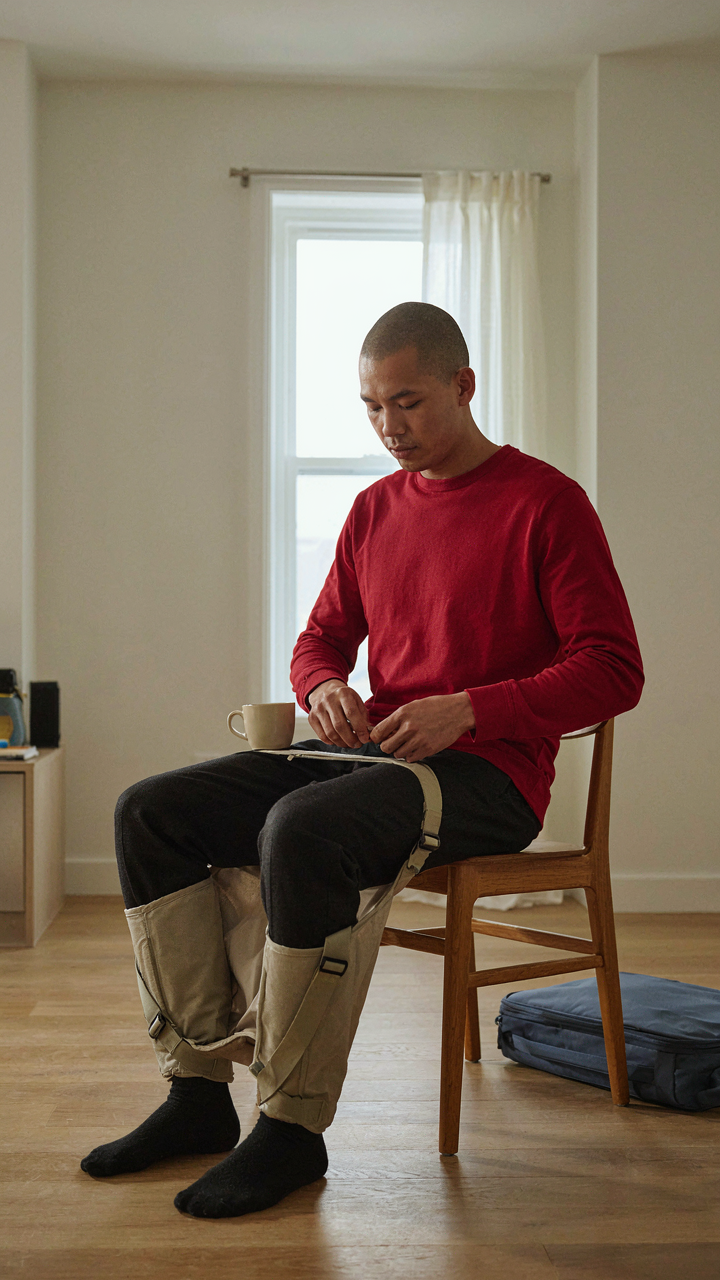
Set up the hammock on a standard chair or ottoman before your flight, not on the plane. Practice attaching and detaching the straps five times in sequence until you move without thinking. This reveals which attachment points your specific seat configuration actually supports and whether your hammock’s strap length matches your aircraft’s seat geometry. Most users discover mid-flight that their setup doesn’t work, but pre-flight practice makes that discovery happen when you can still adjust.
Beyond The Hype: Actual Value In A Quality Airplane Travel Hammock

The Math Of Comfort Over Eight Hours
You want to believe comfort on a flight isn’t worth money because admitting it is means you wasted cash on subpar solutions before. Here’s the mechanism: economics calls this “diminishing marginal utility,” but on a plane it inverts. Each additional hour of leg support compounds relief instead of diluting it. A footrest hammock costs between thirty and eighty dollars. A single international flight costs three hundred to two thousand. The hammock captures ten to fifteen percent of that flight’s misery. That’s a direct return on a negligible investment.

The real calculation nobody makes is opportunity cost of physical degradation. Eight hours without leg support means eight hours of blood pooling in your lower extremities, tissue compression against the seat frame, and postflight swelling that lingers two to three days. You pay for the hammock once. You pay for the aftermath in reduced productivity, inflammation, and the compounding damage from repeated flights. Most people reverse-engineer this wrong. They see the price tag and call it wasteful. They should see the flight duration and call it mandatory.
Circulation And Recovery Aren’t Abstract
The guidance here talks about health benefits, but most sources make it sound optional. It’s not. Biomechanics proves leg elevation reduces venous pressure in the lower leg by approximately thirty to forty percent compared to dangling feet. Your veins don’t have muscles. They depend on movement and gravity to push blood back to your heart. A plane seat eliminates both. The hammock restores one critical variable: elevation. This isn’t comfort theater. This is the difference between landing with functional legs and landing with swollen ankles that take days to normalize.
Blood clot risk on flights gets real attention for long-haul travel, but most discussion focuses on movement. Elevation matters equally. When your feet dangle or rest on a hard floor, you compress the vessels behind your knees. Prolonged compression accelerates clot formation in predisposed people. A footrest hammock keeps your legs at or above heart level, which opens those vessels and maintains flow. The mechanism is straightforward: support the leg, maintain pressure gradients, preserve circulation. This is why people with prior clots, pregnancy, or immobility injuries see measurable recovery differences when they use them. The hammock isn’t a luxury. It’s a circulation management tool.
The Ultimate Test: Real World Scenarios For Your Airplane Footrest Hammock

When The Plane Shakes
You want to know if this thing stays put when chaos hits, because you’re terrified of looking stupid when it fails in front of strangers. The mechanism that matters is attachment point rigidity. A footrest hammock using seat-frame loops instead of hook-and-loop straps experiences near-zero movement during turbulence because the load transfers directly to the structural frame rather than relying on friction. The hammock itself acts like a pendulum damper in physics terms, absorbing lateral energy through fabric flex rather than translating it into visible displacement.
Most advice treats turbulence as unpredictable, but it isn’t. Moderate chop creates vertical movement first, not horizontal whipping. A properly installed footrest hammock with taut fabric (not loose) rides these forces because the tension distributes load across multiple attachment points simultaneously. Your feet stay elevated and stable. Severe turbulence is rare, and when it happens, you’d be bracing yourself anyway, making the hammock’s performance secondary to your seat belt. Test stability before takeoff by pressing down with 15 pounds of weight to verify the frame doesn’t flex abnormally.
The Person Next To You
Respect for shared space isn’t virtue signaling, it’s the operational cost of not getting confronted mid-flight. A footrest hammock expands your footprint by 8 to 12 inches horizontally when extended, which directly eats into the armrest-to-wall zone your neighbor considers theirs. The real question isn’t whether you’re taking their space, it’s whether your setup forces them into an unnatural leg position for seven hours. If the hammock’s straps or fabric cross the centerline of the armrest, you’ve already lost. Position the hammock to extend forward only, never laterally, so your extended legs don’t force their knees up or sideways. Adjust the angle so your calves rest parallel to the seat bottom rather than angled outward. The best airplane footrest hammock is the one nobody notices exists. Schedule your installation after they’ve settled in and are less aware of seatmate positioning, usually 20 minutes post-boarding.
True Comfort On Long Flights Isn’t Bought, It’s Engineered From Understanding Your Body’s Mechanics
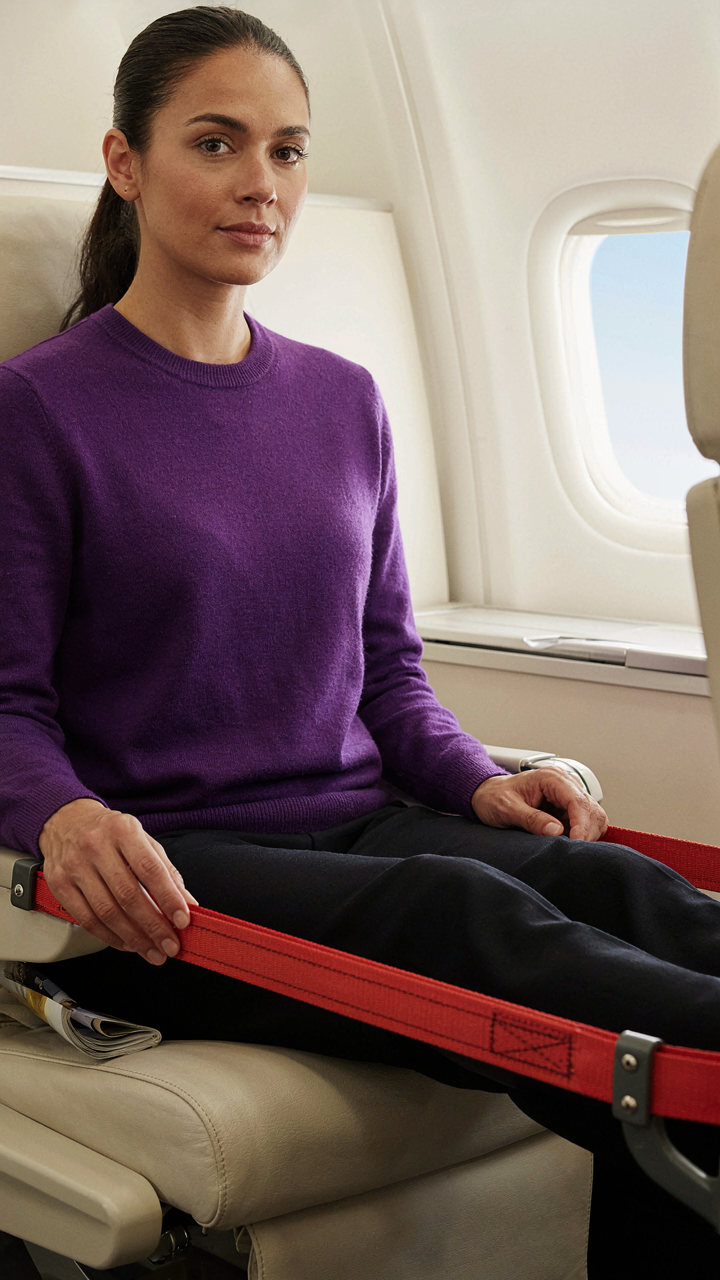
Most people treat airplane comfort like a lottery ticket. They buy gadgets and hope something sticks. An airplane footrest hammock works because it stops your legs from dying mid-flight, not because it’s magic. Your body degrades on long flights when blood pools in your lower extremities. Elevating your feet fixes that. Stop chasing comfort as an accessory. Start viewing it as a mechanical problem you solve. Buy the hammock today, test it on your next flight under four hours, and watch how different your body feels. Comfort isn’t a luxury. It’s what happens when you stop fighting physics.