The Liminal Zone: Why Layover Survival Is A Myth

Survival Means Extracting Value
You’re reading this because you’re afraid of wasting time. That’s the real problem. Most layover advice treats the airport as a prison you endure until departure. Economics calls this “dead time.” But dead time only exists if you show up with no frame for what you’re actually doing there. A layover isn’t something that happens to you. It’s a compressed window with zero social friction, unlimited foot traffic, and time that doesn’t count against your day.
The shift is simple: stop defending against boredom and start extracting. A layover becomes leverage the moment you treat it as operational time, not downtime. This means having a pre-planned task that compounds something in your life, not a distraction that numbs you. The mechanism isn’t motivation. It’s structure. You walk into the airport with a single, concrete output you’ll produce before boarding. No options. No scrolling. No “see what happens.”
The Tax Of Borrowed Attention
The common advice fails here: “Just relax” or “Enjoy the break.” These are permission slips to surrender your attention to whatever grabs it first, which is designed to grab it. You’ll lose four hours to airport retail, airline apps, and content feeds. That’s not relaxation. That’s cognitive surrender. Every minute spent on algorithmic content or impulse shopping is a minute you could’ve invested in something that compounds. The airport is the most expensive real estate in your attention economy because you feel you deserve a break.
Your airport layover is borrowed time with a hidden cost: the person you could’ve become with that attention. Airports are engineered environments designed to extract money and attention. You either enter with a plan or you exit with less time and less resources than you entered with. The mechanism is execution. Decide your output before you land, not after.
The “Adaptive Traveler” Protocol: Pre Flight Intelligence
Mapping Power And Quiet Before You Land
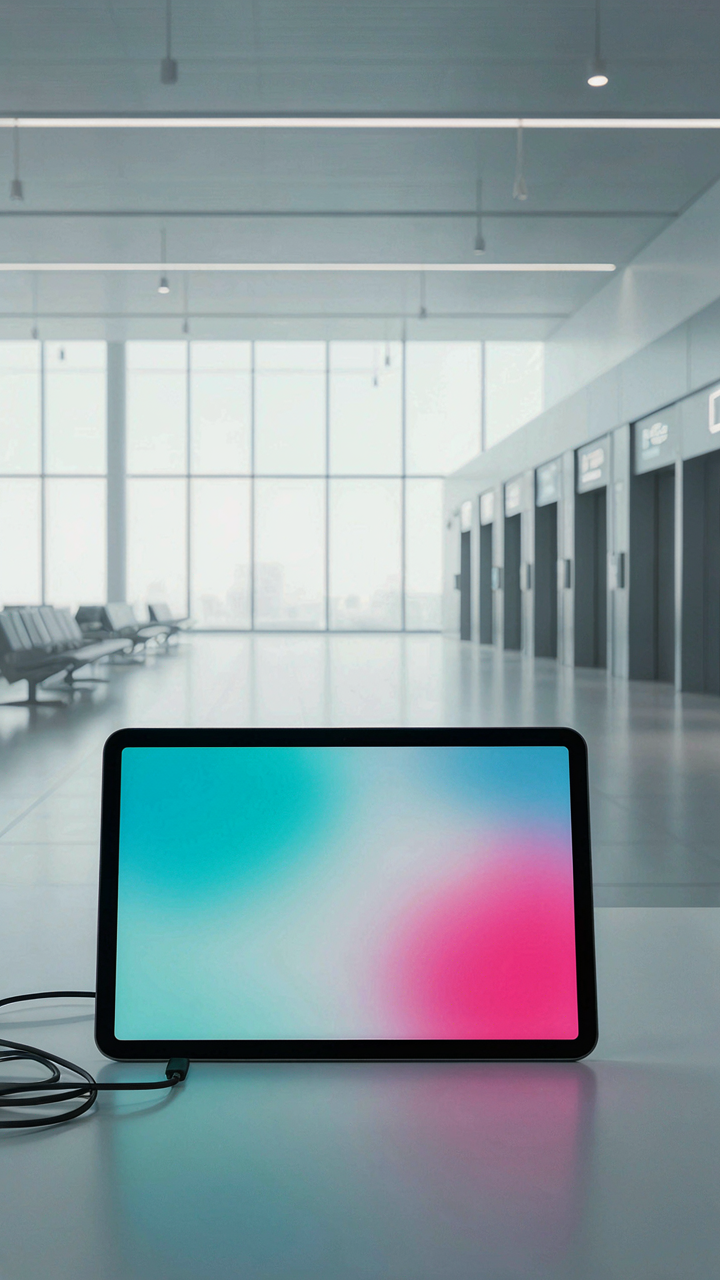
You want to feel in control during a layover because airports strip that away the moment you enter them. The real mechanism is reconnaissance: airports are designed around passenger flow, not comfort, which means power outlets and quiet zones exist in predictable dead zones that most travelers never find. Think of airport layout like military terrain analysis. You identify high-value positions before you need them.

Major airports publish terminal maps online before you arrive. Download them. Mark gate clusters, family restrooms (quieter than main bathrooms), corners near lesser-used concourses, and charging stations near less trafficked seating. Most people charge phones at the main concourse where foot traffic peaks. You charge near gates 30-45 in terminals people avoid. Quiet zones sit adjacent to bookstores, prayer rooms, and business lounges. This thirty-minute pre-flight exercise compounds into hours of recovered focus during your actual layover.
Rhythm Building For Layover Recovery
Most layover advice treats time as a bucket to fill. Wrong. Time during a layover is a recovery cycle you can engineer. Borrow a term from athletic training: periodization. Your layover needs work blocks (focused, productive) and recovery blocks (parasympathetic activation, not phone scrolling). A four-hour layover breaks into ninety-minute cycles, not eight thirty-minute segments.
After landing, move immediately to a mapped quiet zone for fifteen minutes of seated stillness or reading. This primes recovery. Then execute one focused task in your second ninety minutes: work, writing, planning. Third cycle is food and movement. Fourth cycle is transition prep. The protocol works because it matches your nervous system’s actual recovery rhythm, not arbitrary activity switching that drains mental resources. Execute this cycle structure every layover, adjusted for your specific layover length, and layovers stop being dead time.
Minimalist Carry: Your True Survival Kit

Things That Do Multiple Jobs
You want to pack light so you look prepared, not desperate. Here’s what actually matters: every item must solve two problems or it doesn’t make the cut. This is the constraint that forces real thinking instead of grabbing whatever fits in a packing list.

A merino wool sweater handles temperature swings and layering. A phone charger cable doubles as a makeshift luggage strap. A travel pillow compresses flat and props your head or your lower back. The mechanism is brutal efficiency: eliminate the single-purpose item entirely. Most people pack redundancy disguised as variety. You pack multiplication.
When You Actually Need To Function
The rule comes from triage medicine: address what kills you first, then what disables you, then what annoys you. For a layover, this maps to three survival tiers: battery life, basic hygiene, and mental endurance.
- Power bank (20,000mAh minimum): Keeps your phone alive long enough to navigate connections, check gate changes, and occupy your mind. One full charge extends your layover window by hours without panic.
- Wet wipes and travel toothbrush: Cuts through the specific discomfort of feeling unwashed after 8+ hours trapped in recirculated air. Hygiene resets your baseline energy more than you expect.
- Noise-canceling earbuds: Blocks airport chaos so your nervous system doesn’t stay in overdrive. Silence or your own audio is worth more than sleep in a terminal.
- Compression socks: Prevents DVT risk on long flights and reduces swelling during standing layovers. The physiological difference between sitting still and moving blood flow is measurable.
- Snacks with protein and fat: Airports charge 300% markup for food. Nuts, jerky, or nut butter packets stabilize blood sugar so fatigue doesn’t become desperation.
Battery life and hygiene aren’t optional. They determine whether your layover is a reset or an extension of the same exhaustion. Mental endurance follows once the first two are handled. You stack these in order of execution when you land.
Digital Detox Or Deep Work: The Focus Flow Framework

Reclaim Your Attention Before It’s Gone
You want to believe a layover is free time. It’s not. Your phone has already decided what you’ll do with it. The mechanism is simple: airports trigger dopamine depletion because you’re displaced, bored, and surrounded by screens. Your brain compensates by seeking stimulation. The real move is planned offline intervals, which rebuild attention capacity instead of draining it further. This isn’t meditation nonsense. This is restoring your ability to focus when it matters.
The pattern works like this: after two hours of phone use in an airport, your dopamine baseline shifts upward. You need more stimulation to feel normal. A deliberate 45-minute offline block—no phone, no screens—resets that baseline downward. Walk, read a physical book, or sit in silence. This isn’t about virtue. It’s about making your brain available again for actual work when you land. The specific protocol: offline block every 90 minutes of screen time, non-negotiable.
Convert Downtime Into Measurable Output
Most people waste layovers because they confuse relaxation with productivity. They’re different states. The targeted task execution model from project management applies here: break a single project into one discrete, completable unit that takes 60 to 90 minutes. Not email. Not scrolling through work. One specific output. This removes the friction that kills execution during layovers.
Select a task before you land. Not during the layover when decision fatigue hits. Write the first section of a report. Outline a proposal. Record three short-form video scripts. Design one landing page mockup. Download everything you need offline before boarding. Set a timer. Stop when time expires. The output doesn’t need to be perfect. It needs to exist when you walk off the plane. Incomplete work shipped beats perfect work that never started.
The Bio Optimization Principle Mitigating Travel Strain

Light Exposure And Strategic Napping
You want to arrive functional, not wrecked. That’s the real reason you care about this section. The mechanism is circadian rhythm manipulation, borrowed directly from chronobiology. Your body runs on a 24-hour clock that responds to light intensity and timing. Airports are poorly lit warehouses designed to keep you awake and spending money, not to sync your biology to your destination’s time zone. You can override this.

Bright light exposure before your flight resets your circadian rhythm faster than any other intervention. Seek direct sunlight or use a 10,000 lux light therapy lamp for 20-30 minutes in the terminal. If your layover lands in a new time zone, time this exposure to match your destination’s morning. Skip this and your body stays locked to your departure city’s clock for 3-5 days. Napping works only if you time it right. A 20-minute nap taken 6-8 hours before sleep onset improves alertness without causing sleep inertia. Anything longer disrupts your circadian adjustment.
Micro Workouts And Hydration Protocols
The standard airport advice is to “take a walk” and “drink water.” That’s incomplete. Applied exercise physiology shows that brief, high-intensity movement triggers vasodilation and improves blood oxygen circulation more effectively than casual walking. You need 10-15 minutes of movement that elevates your heart rate, not a stroll past the gift shops.
Perform bodyweight circuits in a quiet corner: 2 sets of 15 squats, 10 push ups against a wall, 20-second planks. This takes 8 minutes and floods your system with oxygenated blood, counteracting the compression and stillness of the cabin. Hydration matters, but volume is not the point. Electrolyte balance is. Plain water alone dilutes your sodium concentration on a long flight. Consume water with added electrolytes or a sports drink with sodium and potassium every 2-3 hours. Stop consuming it 90 minutes before boarding to avoid bathroom emergencies mid-flight.
Noise Cancellation And Deep Focus: Unpacking The Sensory Shield

Active Noise Canceling: Creating Your Portable Cone Of Silence
You want noise canceling because silence signals control, and airports strip that from you the moment you land. The mechanism is simple physics: active noise canceling works by generating inverse sound waves that cancel ambient noise before it reaches your ear. Most people buy cheap headphones and wonder why they still hear screaming kids. Quality matters because the processing chip must respond in real time to chaotic, unpredictable airport noise—crying, announcements, luggage wheels, conversations overlapping at different frequencies.

A capable ANC headphone isolates you from environmental chaos without requiring you to stay plugged into media. Bring wired earbuds as backup because batteries die and Bluetooth fails. The goal isn’t entertainment. It’s permission to think. Put them on whether music plays or not. The brain recognizes the seal and stops processing the external threat. You reclaim cognitive bandwidth the airport was extracting for free.
Visual Blockers: Strategic Seating And Eye Masks For Uninterrupted Flow
Most layover advice says find a quiet corner. That’s incomplete. You need three things: a wall at your back, no direct sightline to screens or movement, and darkness when you need it. Airports design seating to face outward, forcing you to absorb visual stimuli constantly. Reject this. Sit facing walls or find corners where columns block your periphery. Movement in your visual field triggers alertness whether you notice it consciously or not.
An eye mask isn’t luxury—it’s a reset button. Fifteen minutes with complete darkness drops your nervous system faster than sleep because you remove the input entirely. Wear it during a layover and you land at your destination with mental energy intact instead of depleted. Pack a silk eye mask because it doesn’t leave pressure marks and slides on easily over glasses. Use it deliberately during the layover, not just on the plane.
Beyond The Gate: Re Entry And Post Layover Integration

Reset Your Operating System
You want to feel sharp when you land, not hollowed out. The real mechanism is this: your nervous system doesn’t know the difference between layover mode and destination mode. It’s still in transit. You need an explicit shutdown protocol, not wishful thinking about “relaxing.”

The cognitive load of airports—decisions, movement, noise, unfamiliar spaces—keeps your sympathetic nervous system activated. You can’t just walk off a plane and expect clarity. Spend the last thirty minutes of your layover in a quiet zone away from gates and shops. Close your eyes. Breathe deliberately. Acknowledge the transition happened. This isn’t meditation theater. It’s a system reboot before you hand over your attention to what comes next.
Capture And Catalog What Mattered
Don’t lose the signal in the noise. Write down three specific things during your layover: what worked, what you’d do differently, and one observation about your own behavior under travel conditions. Most people skip this. They treat layovers as dead time instead of data.
Open a note on your phone. Title it with the date and cities. Be specific: “Gate area C was quieter than usual,” “the protein bowl at Terminal 2 kept me stable for four hours,” “I scrolled for two hours before I recognized boredom.” This isn’t journaling. It’s a feedback loop. The next layover, you reference your own notes and stop repeating failures. Each layover becomes incrementally sharper because you’re building a personal knowledge base about what your body and attention need under pressure.
The Unseen Advantage: Leveraging The Layover As A Strategic Asset

Skill Acquisition In Dead Time
You want to feel productive during a layover because sitting still makes you feel like you’re losing. Here’s the mechanism: a layover is borrowed time your brain hasn’t claimed yet. Use it before your mind defaults to scrolling. Bring one specific skill work item—a language app set to offline mode, a design course downloaded, a writing prompt list. Three focused 20-minute sprints beat eight hours of distraction.

The real constraint isn’t the layover length. It’s pre-commitment. You don’t decide what to learn at the gate. You decide three days before, download everything, and show up with the work already selected. This removes the decision friction that kills most layover work sessions. Airport Wi-Fi is unreliable, so offline-first tools matter. Bring headphones. Work in the quietest corner you can find, usually near the less popular gates.
Conversation Capital Over Small Talk
Most people network at conferences. Smart operators network at airports because the friction is lower and the people are stranded too. This isn’t forced mingling. It’s recognizing that a three-hour layover puts you near people with high intent and free attention.
Sit near your gate and talk to someone reading a book you’ve read, or someone working on a laptop. One honest conversation beats a hundred LinkedIn connections made nowhere. The person sitting next to you might run something you’d want to know about. They might need something you offer. The only rule: ask about their work first, listen longer than you speak, and exchange one contact method if the conversation goes past ten minutes. Then actually follow up within 48 hours. Most people don’t.
The True Obstacle Isn’t The Layover; It’s Your Default Surrender To Circumstance
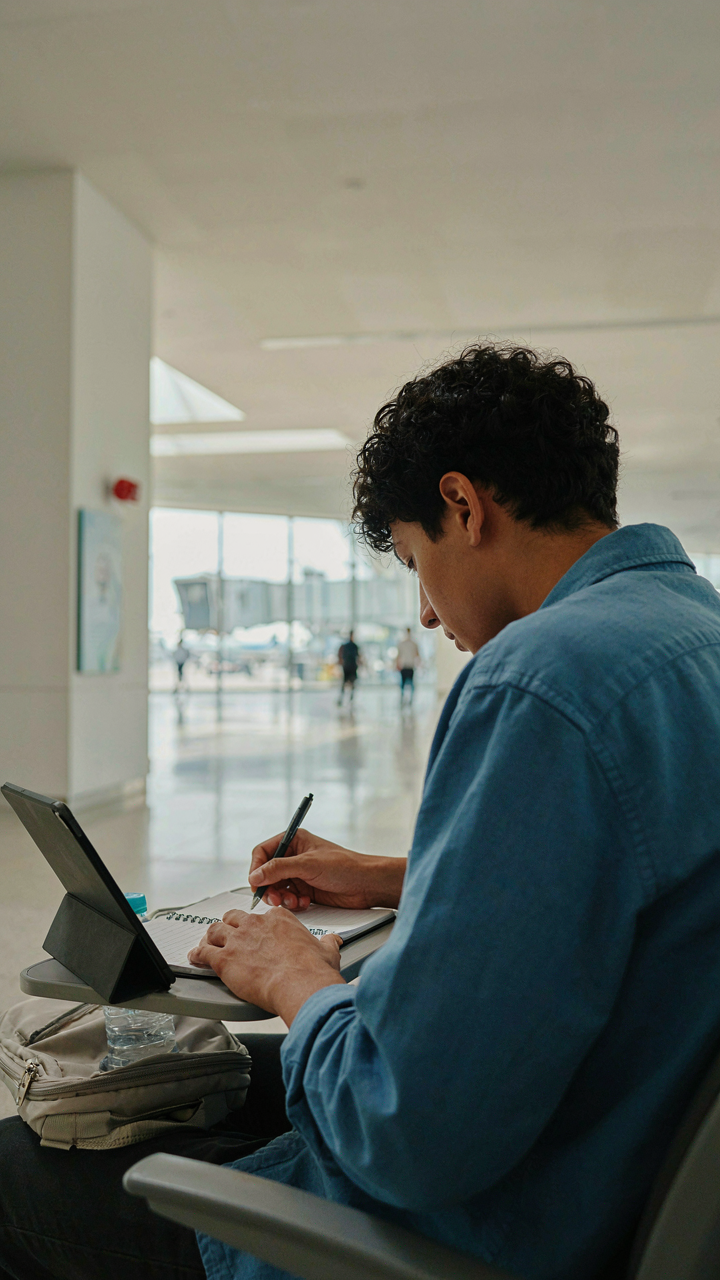
Most travelers treat layovers like prison sentences. They scroll, they wait, they atrophy. You’re different if you actually build an airport layover survival kit and use it. The shift isn’t about having snacks or noise-canceling headphones. It’s about refusing to let dead time stay dead. Pick one skill to practice during your next layover. Learn a language on Duolingo. Write a difficult email. Read that book collecting dust. You don’t need motivation; you need friction removed. The person who controls their layover controls their life.